
Chef Juliette
Various Almond Preparations
Five almond preparations, one discipline: remove the skins cleanly, dry every kernel through, then cut, toast, or cloak it in pale caramel without letting its fragrant oils escape.
A cooking platform built around craft, culture, and the stories behind what we eat.
Created by Chef Juliette
Based on No. 2509, Indian Souffléd Pudding, from Le Guide Culinaire (1907) by Auguste Escoffier
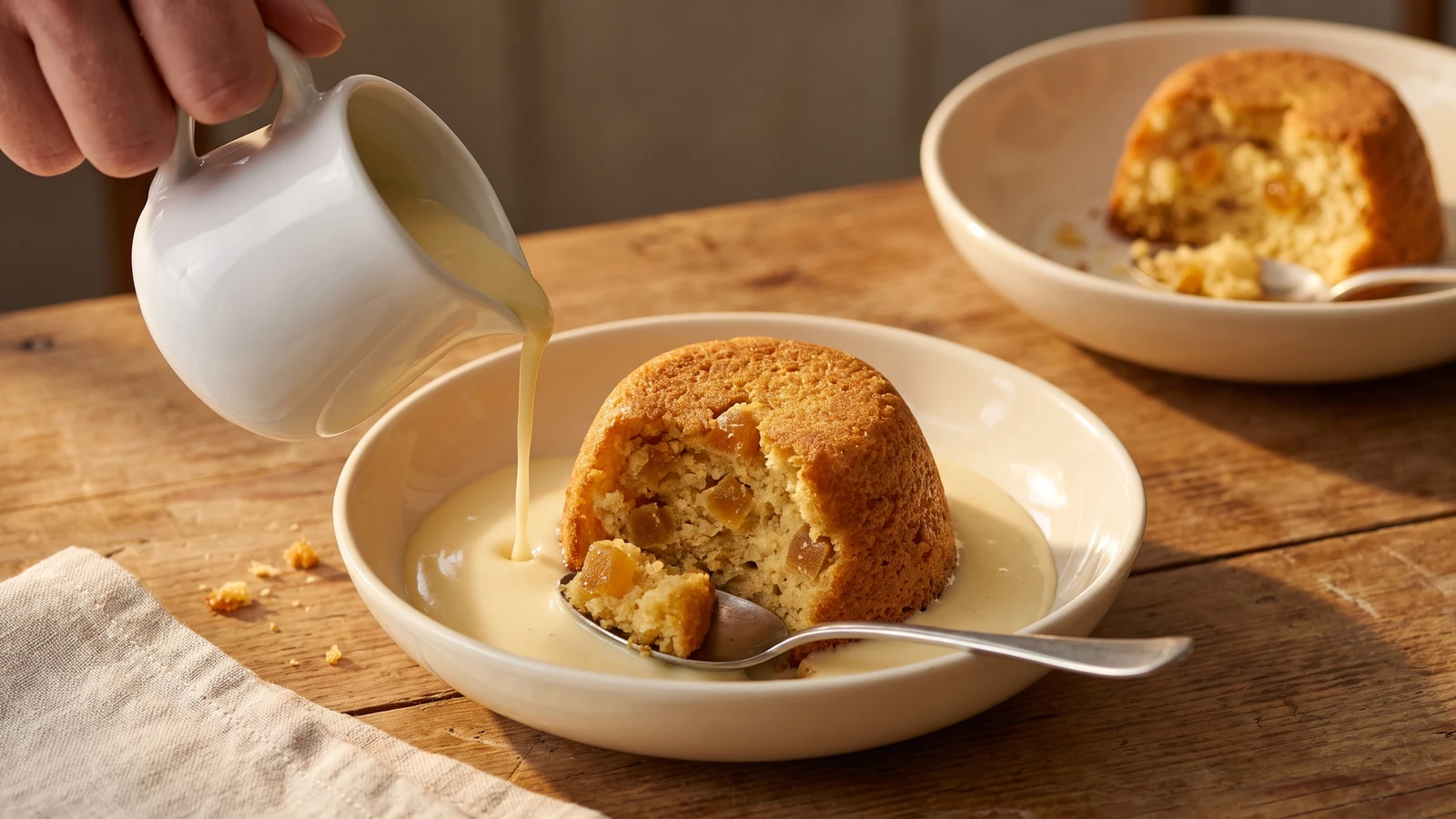
Two gingers do different work in this French souffléd pudding: ground ginger carries the heat, candied dice give the bite, and ginger custard catches every warm, tender spoonful.
Pouding soufflé à l’Indienne teaches that a souffléd pudding is not won by height alone. It is won by keeping a flour-thickened panade light enough to rise while carrying a frankly extravagant load of ginger. Ground ginger gives the heat; candied dice give the bite. The one true thing to know before you touch a pan is this: the dice go in last, and every turn of the spatula must earn its place.
The original formula assumed a pastry cook could dry the base over a fierce range, another hand could watch the English custard, and a bank of molds could slip into a waiting bain-marie. At home, make the custard first, halve the brigade quantity for four ramekins, and use a roasting tin of hot water in an ordinary oven. The extra hands were scaffolding. The dried panade, properly beaten whites, and gentle water poach are the dish, so they stay. One cook, one stove, one evening.
Expect a butter-gold pudding with a tender, open interior, sharp ginger warmth, and little amber pieces that meet the spoon with a proper chew. Make your last fold the quietest one. That is the step that decides the pudding.
Pouding soufflé à l’Indienne belongs to the French grand-kitchen and international French-service table, not to an Indian regional repertoire. In classical menu language, à l’Indienne signaled spices entering French kitchens through trade; here the identity is an emphatic pairing of powdered and candied ginger laid onto the flour-thickened base of Saxon Pudding (No. 2504), with English custard beside it. The name records French menu practice rather than an origin claim, and the bain-marie method keeps the dish closer to a tender molded pudding than to a free-standing oven soufflé.
Quantity
1/2 batch Saxon Pudding (No. 2504)
prepared through yolk enrichment, with its egg whites reserved separately
Quantity
5 tablespoons (75 ml / 28 g)
sifted
Quantity
Scant 1/2 cup (100 ml / 71 g)
cut into 5 mm dice
Quantity
1 tablespoon (15 ml / 14 g)
softened, for the molds
Quantity
1 1/4 cups (300 ml / 300 g)
Quantity
1 teaspoon (5 ml / 2 g)
Quantity
3
Quantity
3 tablespoons (45 ml / 38 g)
Quantity
1 pinch
| Ingredient | Quantity |
|---|---|
| Saxon Pudding souffléd-pudding preparationprepared through yolk enrichment, with its egg whites reserved separately | 1/2 batch Saxon Pudding (No. 2504) |
| ground ginger for the puddingsifted | 5 tablespoons (75 ml / 28 g) |
| candied gingercut into 5 mm dice | Scant 1/2 cup (100 ml / 71 g) |
| unsalted buttersoftened, for the molds | 1 tablespoon (15 ml / 14 g) |
| whole milk | 1 1/4 cups (300 ml / 300 g) |
| ground ginger for the custard | 1 teaspoon (5 ml / 2 g) |
| large egg yolks | 3 |
| superfine sugar | 3 tablespoons (45 ml / 38 g) |
| fine salt | 1 pinch |
Heat the oven to 180°C (350°F) with a rack in the lower-middle position. Brush four straight-sided 240 ml ramekins generously with the softened butter, working upward along the sides so the batter has a clean path as it rises. Set the ramekins in a deep roasting tin and bring a kettle of water to the boil, but do not fill the tin yet.
For the crème anglaise au gingembre, the ginger custard, combine the milk and its teaspoon of ground ginger in a heavy saucepan. Bring it just below a simmer, then cover, remove from the heat, and infuse for 10 minutes. Pass the milk through a fine sieve, pressing lightly on the ginger sediment, and return it to the clean saucepan.
Whisk the yolks, sugar, and salt until smooth, without beating in a head of foam. Pour in one-third of the warm ginger milk while whisking, then add the rest. Return everything to low heat and stir constantly with a flexible spatula, sweeping the floor and corners, until the custard reaches 80 to 82°C (176 to 180°F) and coats the back of a spoon; a finger drawn through it should leave a clean path. Do not let it boil. If a few grains appear at the edge, ça se rattrape: immediately strain the custard into a chilled bowl and blend briefly until smooth. If it tightens too far, loosen it with a spoonful of milk. Hold the finished custard over barely warm water, stirring occasionally.
Make the half batch of Saxon Pudding (No. 2504) exactly as its own entry directs, stopping after the yolks have enriched the cooked preparation and keeping its egg whites separate. If the half batch leaves fractional eggs, weigh the beaten yolks and whites rather than rounding them. Sift the 28 g of ground ginger over the warm base in three additions, mixing each one in completely so no harsh pockets remain. Let the mixture cool until warm rather than hot before folding in the whites.
Beat the reserved whites from the Saxon Pudding (No. 2504) until they hold firm, glossy peaks but have not turned dry or clumpy. Stir one-third into the ginger base to loosen it, then fold in the remaining whites in two additions, cutting down through the center and lifting the heavier base over the top. Scatter in the candied ginger dice last and give the batter only two or three broad folds. If it begins to slacken, stop. Ça se rattrape: portion it immediately and accept a gentler dome; the panade will still give you a tender pudding, while further folding can only drive out more air.
Divide the batter among the buttered ramekins, filling each about three-quarters full, and smooth the tops with one light pass of the spatula. Put the roasting tin on the pulled-out oven rack, then carefully pour in boiling water until it reaches halfway up the ramekins. Bake for 28 to 34 minutes without opening the oven during the first 22 minutes. The puddings are ready when they are well risen and butter-gold, the edges feel set, and a slender skewer emerges with moist crumbs rather than wet batter. Lift out the ramekins individually and leave the water bath in place until it is safe to move.
Rest the puddings for 2 minutes, then run a thin knife around each edge and invert onto warm shallow bowls. If one clings, wrap the base of its ramekin in a hot damp cloth for 10 seconds and try again; never wrench it apart. Pour the warm ginger custard around each pudding rather than drowning its domed top, and serve at once while the interior is still open and tender. À table!
1 serving (about 255g)
Culinary guides, cultural storytelling, and the editorial depth that makes cooking meaningful.
Discover Culinary ExplorerChef Juliette
Five almond preparations, one discipline: remove the skins cleanly, dry every kernel through, then cut, toast, or cloak it in pale caramel without letting its fragrant oils escape.

Chef Juliette
A pastry pantry lesson in one tray: filberts warmed only until their red skins release, rubbed clean, cooled, and chopped into a fragrant mise-en-place for cakes, creams, pralines, and petits fours.

Chef Juliette
The smallest pâtisserie discipline decides whether a cake leaves its mould intact: clarified butter in every corner, followed by the lightest veil of dry flour or fécule.

Chef Juliette
Four whites, one spotless bowl, and a patient change of speed: whisk gently until loosened, then briskly to glossy stiffness, with powdered sugar waiting if the foam begins to granulate.