Culinary Explorer

A cooking platform built around craft, culture, and the stories behind what we eat.
Discover Culinary Explorer
Saxon Pudding

Saxon Pudding

Created by Chef Juliette

Based on No. 2504, Saxon Pudding, from Le Guide Culinaire (1907) by Auguste Escoffier

A milk panade dried as firmly as choux, enriched with yolks, then lifted with stiff whites: Pouding Saxon rises gently in a bain-marie and arrives soft, butter-gold, and ready for custard.

Desserts
French
Dinner Party
Special Occasion
Make Ahead
25 min
Active Time
40 min cook1 hr 10 min total
Yield4 servings

Pouding saxon (Saxon pudding) teaches the souffléd panade, and the one true thing to know before touching the pan is this: the rise is earned on the stove, not in the oven. Dry the milk, butter, sugar, and flour until the paste gathers firmly and leaves the saucepan clean. If it remains wet, the whites spend all their strength carrying excess moisture, and the pudding never properly rises.

The original formula assumed a fierce range, a separate basin, a row of buttered moulds, and another pair of hands ready to beat the whites. No saucier, standing stockpot, or salamander belongs to this branch of the grammar. At home, one heavy saucepan replaces the basin and cooking pan, an electric mixer replaces the whisking arm, and four ramekins replace the service moulds. I have scaled the formula to three-fifths so its five eggs become three while every defining ratio remains intact. The separate basin was brigade scaffolding and can go. Drying the panade, folding the whites, and poaching in a bain-marie must stay. They are the dish.

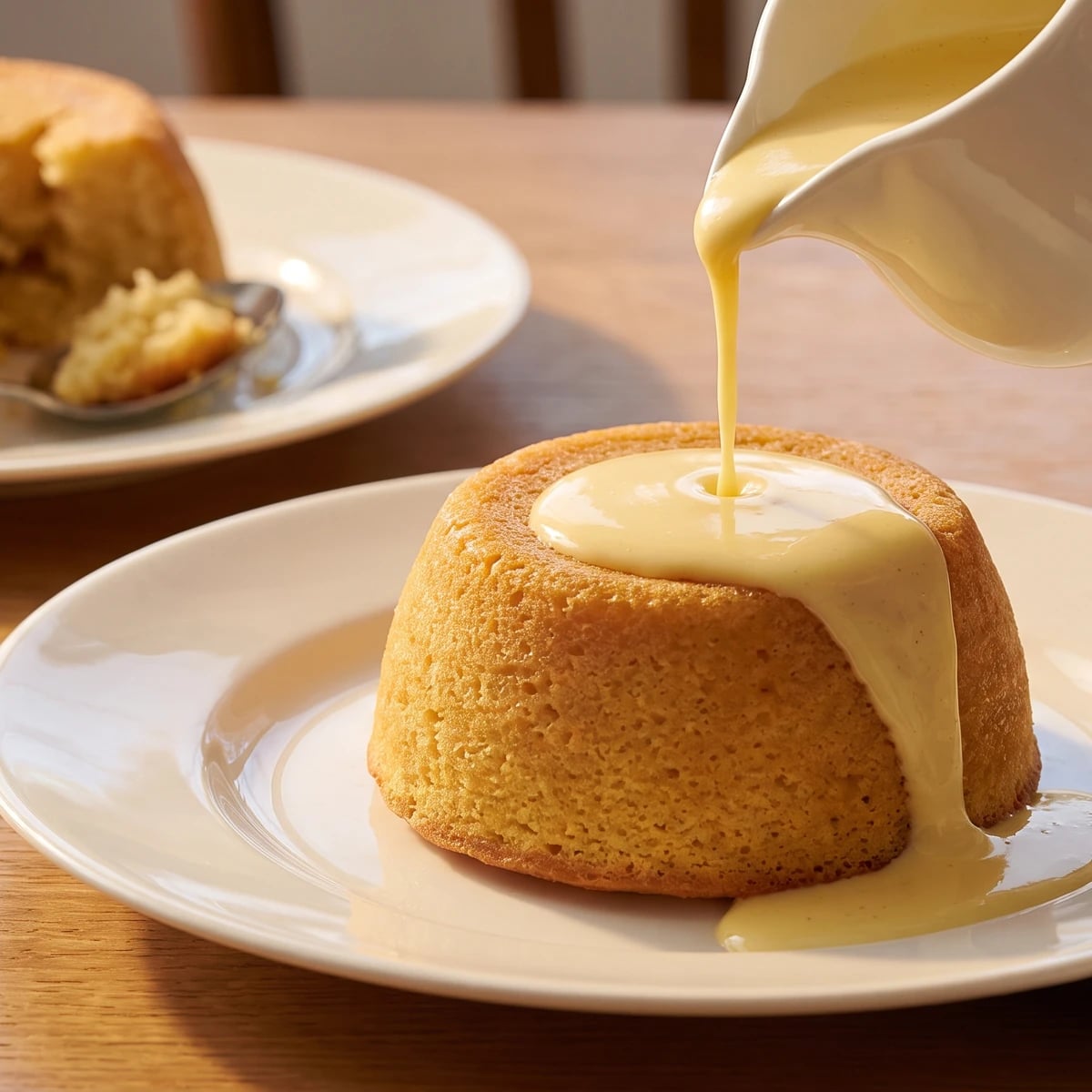
When it is right, the Pouding saxon rises into a softly rounded, butter-gold pudding with a fine, tender crumb, ready for a generous pool of English custard or Sabayon. Watch the panade without blinking. Once that is properly dried, the whites and the gentle water bath do the rest.

Pouding saxon belongs to the Parisian grand-kitchen repertoire of molded puddings, where geographical names often identified a house formula rather than proving a regional household origin. Despite its Saxon title, this version speaks entirely in French classical grammar: a milk panade dried like choux, yolks for richness, whipped whites for lift, then a gentle poach in a bain-marie. As the pudding moved to home tables, the service moulds became ramekins and the hand whisk became electric, but the decisive drying of the panade never changed.

The technique, the tradition, and the story behind every dish.

Discover Culinary Explorer

Ingredients

unsalted butter

Quantity

4 3/4 tablespoons (68 g)

softened

unsalted butter for the ramekins

Quantity

1 tablespoon (15 ml / 14 g)

softened

powdered sugar

Quantity

1/2 cup plus 1 tablespoon (68 g)

sifted all-purpose flour

Quantity

1/2 cup plus 1 tablespoon (68 g), with Ordinary Pâte à Choux (No. 2373) as the panade-drying reference

whole milk

Quantity

Scant 1 cup (227 ml / 234 g)

large eggs

Quantity

3

separated

vanilla-scented English custard or flavored Sabayon

Quantity

1 cup English custard (240 ml / about 250 g), or 1 cup Sabayon (240 ml / about 180 g)

warmed for serving

Equipment Needed

  • 2-quart heavy saucepan
  • Four 8-ounce (240 ml) ramekins or dariole moulds
  • Deep roasting pan for the bain-marie
  • Electric hand mixer or balloon whisk
  • Firm wooden spoon
  • Rubber spatula
  • Kettle

Instructions

  1. 1

    Prepare the bain-marie

    Heat the oven to 350°F (175°C) with a rack just below the middle. Brush four 8-ounce (240 ml) ramekins generously with the softened butter, carrying the strokes upward along the sides. Set them in a deep roasting pan on a folded kitchen towel so they cannot skate. Bring a kettle of water to the boil; this will become the bain-marie, a hot-water bath that cooks the puddings gently and evenly.

  2. 2

    Make the pommade

    Work the softened butter directly in a cool, heavy saucepan until it reaches a pommade, a smooth and spreadable cream. Beat in the powdered sugar, then the sifted flour, until no dry pockets remain. Bring the milk to a full boil in a small pan or microwave-safe jug, then whisk it gradually into the butter mixture. If small lumps appear, remove the pan from the heat and whisk firmly while the mixture is still fluid; pass it through a sieve only if stubborn lumps remain.

  3. 3

    Dry the panade

    Set the saucepan over medium-high heat and stir constantly with a firm wooden spoon. Let the mixture boil, then keep beating and turning it for 4 to 6 minutes as it changes from a thick cream into a cohesive panade that pulls from the sides and leaves a fine film across the pan floor. Dry it to the same standard used for Ordinary Pâte à Choux (No. 2373): the paste should hold its shape when pushed to one side, with only a faint buttery sheen at the edge. If it spreads or slumps, keep cooking. Ça se rattrape now; after the yolks go in, excess moisture cannot be removed without ruining the eggs.

  4. 4

    Beat in yolks

    Take the pan from the heat and let the panade stand for 2 minutes, stirring twice so its strongest heat escapes. Beat in the yolks one at a time, fully incorporating each before adding the next. The paste may briefly look split and slick after a yolk enters; keep beating off the heat and it will become smooth again. If the first yolk forms a few cooked flecks, immediately scrape the paste into a cool bowl and press it through a medium sieve before continuing.

  5. 5

    Fold in whites

    Beat the egg whites in a perfectly clean bowl until they form stiff, glossy peaks that stand upright without looking dry. Stir one-third of the whites firmly into the panade to loosen it, then fold in the remainder in two additions, cutting down through the center and lifting the heavier paste over the whites. Stop as soon as no broad white streaks remain. If the whites become slightly dry and clumpy, soften the first addition with more assertive stirring, then fold the rest gently; the rise may be a little lower, but the pudding is not lost.

  6. 6

    Poach the puddings

    Divide the batter among the buttered ramekins, filling each about two-thirds full, and smooth the tops lightly without pressing out the air. Pour the boiling water into the roasting pan until it reaches halfway up the ramekins, then transfer the pan carefully to the oven. Poach for 30 to 35 minutes without opening the door during the first 25 minutes. The puddings are ready when their crowns are risen and pale gold, the centers spring back gently, and a fine skewer emerges with moist crumbs rather than wet batter. The bain-marie should only tremble; if it begins boiling hard, lower the oven to 325°F (165°C) and add a small splash of cool water to the pan.

  7. 7

    Unmould and sauce

    Lift the ramekins from the bain-marie and rest them for 4 to 5 minutes. Run a thin knife around each edge, invert onto warm dessert plates, and lift the ramekins away. If one pudding clings, do not maul it into submission; serve it proudly in its ramekin. Spoon warm English custard or freshly made Sabayon around each pudding and serve at once. À table!

Chef Tips

  • The equal weights of butter, powdered sugar, and flour are the architecture of this pudding. A scale makes the relationship plain and keeps the smaller batch faithful to the source.
  • The Ordinary Pâte à Choux (No. 2373) reference governs only how thoroughly the panade is dried. No prepared pâte à choux is added to the pudding.
  • Separate the eggs while cold, when the yolks are less likely to break, then let the whites lose their chill before whipping. A trace of yolk or grease in the bowl prevents them from reaching their proper volume.
  • English custard gives the pudding a calm, creamy finish and can wait for dinner. Sabayon is lighter and more exuberant, but it should be made close to serving. Choose one sauce, not both.
  • A small glass of demi-sec Vouvray suits the buttery pudding and custard without overwhelming their delicacy. Cooking well is not cooking fancy.

Advance Preparation

  • The panade can be prepared through the addition of the yolks up to 6 hours ahead. Press reusable wrap directly against its surface, chill it, then let it stand for about 30 minutes and beat it smooth before folding in freshly whipped whites.
  • English custard can be made up to 2 days ahead and chilled with its surface covered. Warm it gently before serving. Sabayon does not wait nearly so well and should be whisked shortly before the puddings are unmoulded.
  • The ramekins may be buttered earlier in the day and kept chilled. Fold in the whites and poach the puddings only when the table is nearly ready, because their finest rise belongs to the first serving.

Frequently Asked Questions

Nutrition Information

1 serving (about 200g)

Calories
460 calories
Total Fat
26 g
Saturated Fat
15 g
Trans Fat
1 g
Unsaturated Fat
10 g
Cholesterol
295 mg
Sodium
110 mg
Total Carbohydrates
46 g
Dietary Fiber
0 g
Sugars
33 g
Protein
11 g

Note: Chef personas and recipes are created with AI assistance. Cook with care: follow safe food-handling practices, check doneness with a thermometer when needed, and adapt for allergies and your kitchen.

Where cooking meets culture.

Culinary guides, cultural storytelling, and the editorial depth that makes cooking meaningful.

Discover Culinary Explorer

More from Entremets (Sweets) - Puddings

Browse the full collection