
Chef Juliette
Flan aux Carottes
A pale short-paste shell holds silken, lightly sweet carrot purée beneath neat glazed half-discs, their butter syrup catching the light: a classical tart poised between vegetable course and sweet.
A cooking platform built around craft, culture, and the stories behind what we eat.

Created by Chef Juliette
Based on No. 2373, Ordinary Pâte à Choux, from Le Guide Culinaire (1907) by Auguste Escoffier
Pâte à choux teaches controlled drying: boil, beat, dry, then take the eggs two at a time. Get the panade right and the oven gives you crisp, hollow shells.
Pâte à choux ordinaire (ordinary choux pastry) teaches one true thing: its rise is decided in the saucepan. Water, butter, and flour become a panade, and that panade must be dried until it quits both spoon and pan. The oven cannot repair a wet paste. It can only reveal what you built.
The full formula assumed a pâtissier's bench, a broad saucepan, and enough arms to beat sixteen eggs into hot paste. For the home kitchen I have quartered it exactly: four eggs, a smaller pan, and one baking sheet. The sixteen-egg volume and extra hands were brigade scaffolding, so they can go. The proportions, flour added all at once, drying over moderate heat, eggs incorporated two at a time, and orange-flower water added last are the dish itself, so they stay. One cook, one stove, one evening.
When it is right, the paste sits glossy and substantial on the spoon, then rises into butter-gold shells with crisp fissures and hollow centres. Do not rush the drying. Stop only when the panade no longer sticks and the butter shows its first faint bead at the edge.
Pâte à choux found its working home in Parisian pâtisserie, then traveled from grand kitchens to shop ovens and home tables because one cooked paste could take many shapes. Its name comes from the small baked rounds resembling choux, little cabbages, not from any cabbage in the dough. The word ordinaire marks the foundational formula rather than an inferior one, and tales crediting a single foreign inventor are tidier than the generations of French pastry cooks who refined the method.
Quantity
1/2 cup (120 ml / 120 g)
Quantity
1/4 cup (60 ml / 57 g)
Quantity
3/8 teaspoon (2 ml / 2.4 g)
Quantity
1 3/4 teaspoons (9 ml / 7 g)
Quantity
Scant 1 cup (225 ml / 113 g)
sifted
Quantity
4 (about 200 g without shells)
at room temperature
Quantity
3/4 teaspoon (4 ml / 4 g)
| Ingredient | Quantity |
|---|---|
| water | 1/2 cup (120 ml / 120 g) |
| unsalted butter | 1/4 cup (60 ml / 57 g) |
| fine salt | 3/8 teaspoon (2 ml / 2.4 g) |
| granulated sugar | 1 3/4 teaspoons (9 ml / 7 g) |
| plain all-purpose floursifted | Scant 1 cup (225 ml / 113 g) |
| large eggsat room temperature | 4 (about 200 g without shells) |
| orange-flower water | 3/4 teaspoon (4 ml / 4 g) |
Heat the oven to 400°F (200°C), or 360°F (180°C) with a fan, and line a 13 by 18-inch (33 by 46 cm) baking sheet with parchment. Sift the flour onto a sheet of paper so it can go into the pan in one movement. Crack the eggs into two small bowls, two eggs in each; together they should weigh close to 200 g without shells.
Put the water, butter, salt, and sugar in a heavy saucepan over medium heat. Let the butter melt completely, then bring the liquid to a full rising boil. Remove the pan from the heat as soon as it surges upward. The flour must meet boiling liquid, but prolonged boiling throws away water and disturbs the proportions.
Tip in all the sifted flour at once and beat firmly with a wooden spoon until no dry flour remains. Return the pan to medium-low heat and work the panade, the flour paste cooked on the stove, for 2 to 4 minutes. It is ready when it gathers into one smooth mass, stops clinging to the spoon, leaves a thin film across the pan, and shows the faintest bead of butter at the edge. If the butter runs out in a puddle, the heat is too fierce. Remove the pan and beat until the fat is absorbed, then return it to gentler heat. Ça se rattrape.
Take the pan from the heat and beat the panade for 1 minute to release its fiercest heat. Add the first two eggs together, exactly as the formula directs, and beat until every trace is absorbed before adding the second pair. The paste will separate into slippery pieces at first. Keep beating; it will gather into a smooth, glossy mass that falls from the raised spoon in a heavy ribbon. If it still looks curdled, it usually needs more beating, not more flour.
If the finished paste pours like batter instead of dropping heavily from the spoon, the panade was underdried. Do not stir in raw flour. Make a corrective panade with 2 tablespoons (30 ml / 30 g) water, 1 tablespoon (15 ml / 14 g) butter, and 1/4 cup (60 ml / 28 g) flour. Dry it firmly, cool it for a minute, then beat it into the loose paste one spoonful at a time until the proper heavy ribbon returns. You may not need all of it.
Beat in the orange-flower water only after all four eggs have disappeared into the paste. This final addition preserves the book's sequence and gives the ordinary sweet paste its quiet floral note. The pâte à choux is now complete and ready to shape.
Transfer the paste to a piping bag fitted with a 1/2-inch (12 mm) plain tip. Pipe 24 mounds about 1 1/4 inches (3 cm) wide, leaving 2 inches (5 cm) between them. Hold the bag upright and stop squeezing before lifting it away. Press down any sharp tips with a fingertip dipped in water so they do not scorch. Two spoons will also shape honest little puffs if you have no piping bag.
Bake for 15 minutes without opening the door. Reduce the temperature to 350°F (180°C), or 320°F (160°C) with a fan, and continue for 18 to 22 minutes, until the puffs are deeply golden, rigid at the sides, and light when lifted. Pale choux collapses because its walls have not set. Turn off the oven, prick each puff once near its base, and return the tray for 5 to 10 minutes with the door slightly ajar to dry the interiors.
Cool the shells completely on a rack before cutting or filling them. If they soften as they stand, bake them again at 350°F (180°C) for 5 minutes and cool once more. Keep fillings separate until close to serving so the shells retain their crisp, delicate walls. À table!
1 serving (about 14g)
Culinary guides, cultural storytelling, and the editorial depth that makes cooking meaningful.
Discover Culinary ExplorerChef Juliette
A pale short-paste shell holds silken, lightly sweet carrot purée beneath neat glazed half-discs, their butter syrup catching the light: a classical tart poised between vegetable course and sweet.
Chef Juliette
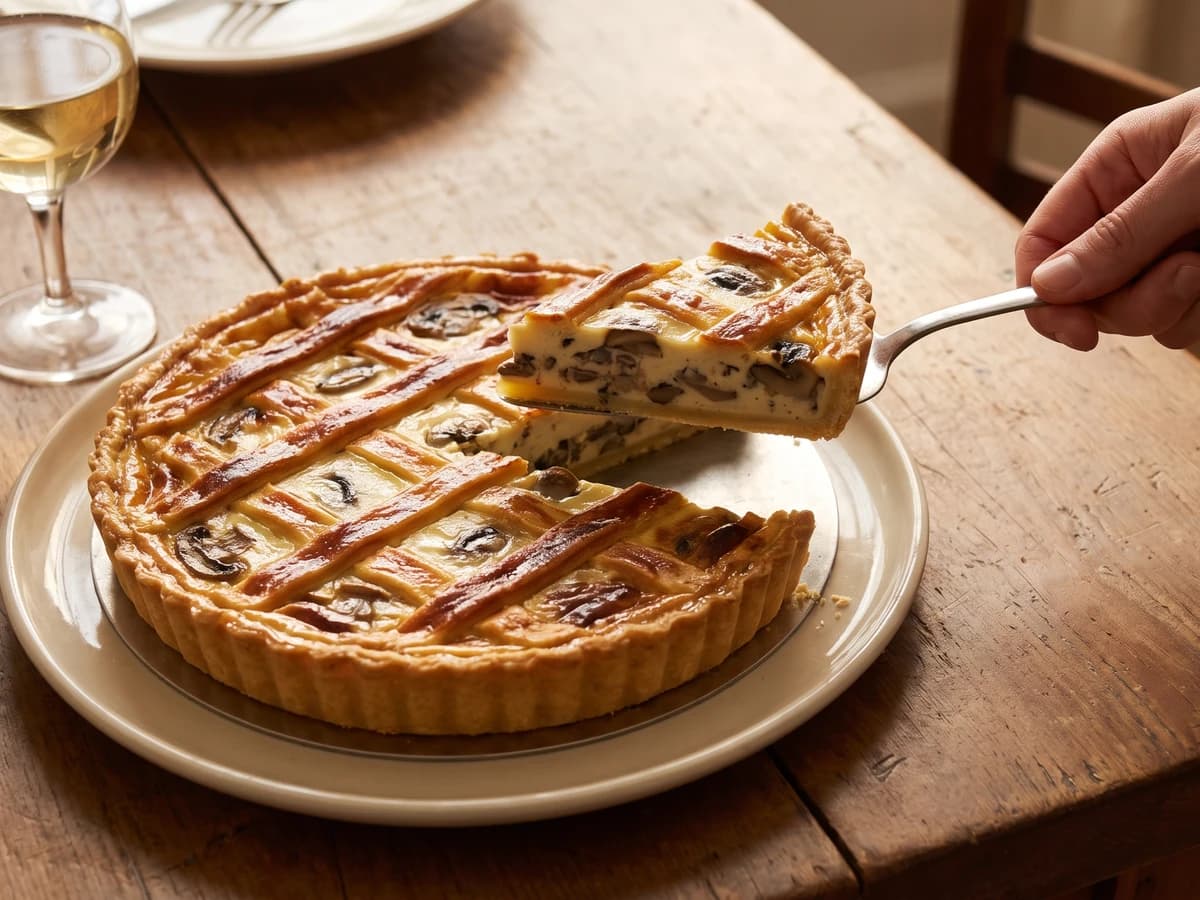
A hot mushroom flan under a butter-gold lattice, with cream reduced close around barely opened caps and a crisp short-paste base protected by one discipline: cool the filling completely.

Chef Juliette
Four little mushroom flans, latticed and gilded, baked hard and fast until butter-gold: a classical garnish scaled to the meat it accompanies and served before its crispness has time to fade.
Chef Juliette
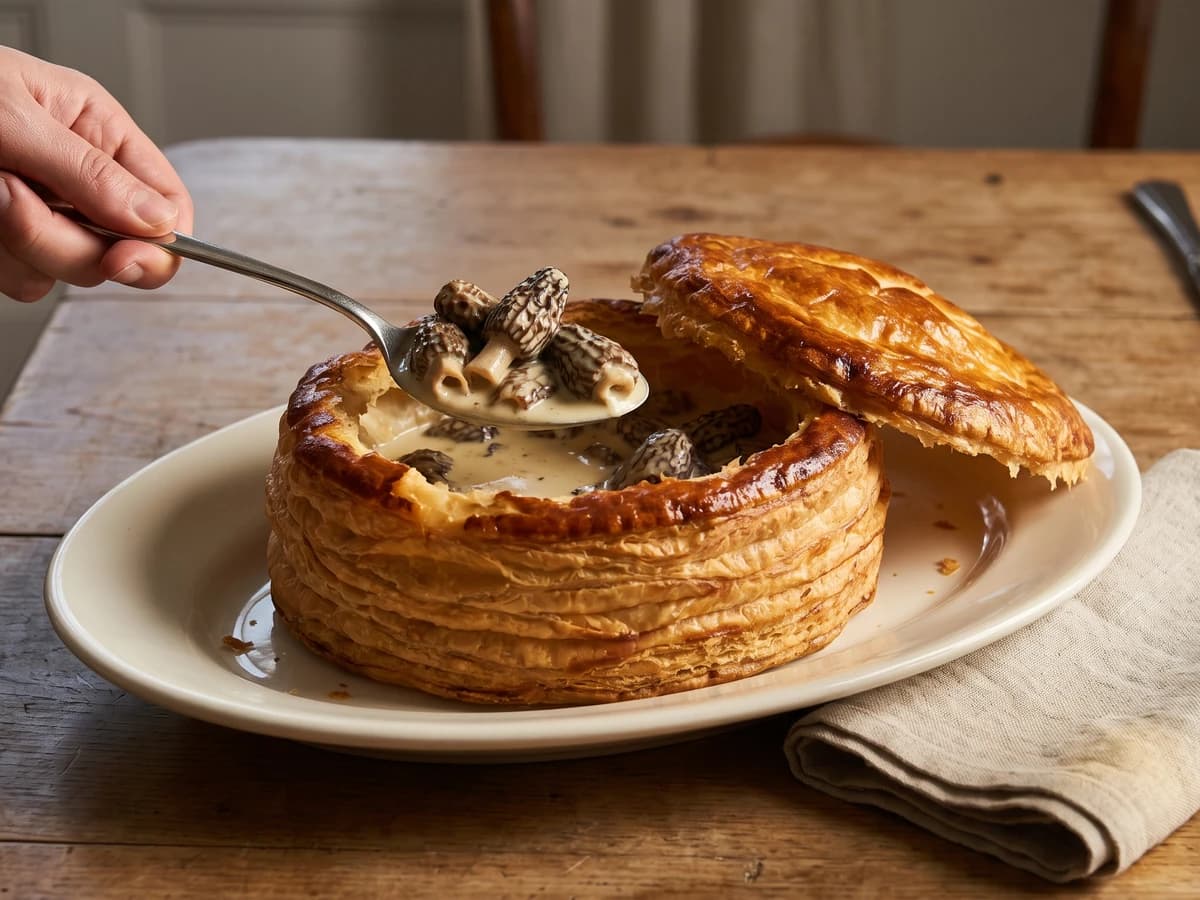
Morels surrender their liquor, then take it back as a glossy cream-and-butter sauce inside burnished puff pastry. The lesson is simple and absolute: reduce with patience, then heat gently and never boil.