
Chef Juliette
Various Almond Preparations
Five almond preparations, one discipline: remove the skins cleanly, dry every kernel through, then cut, toast, or cloak it in pale caramel without letting its fragrant oils escape.
A cooking platform built around craft, culture, and the stories behind what we eat.
Created by Chef Juliette
Based on No. 2483, Cabinet Pudding, from Le Guide Culinaire (1907) by Auguste Escoffier
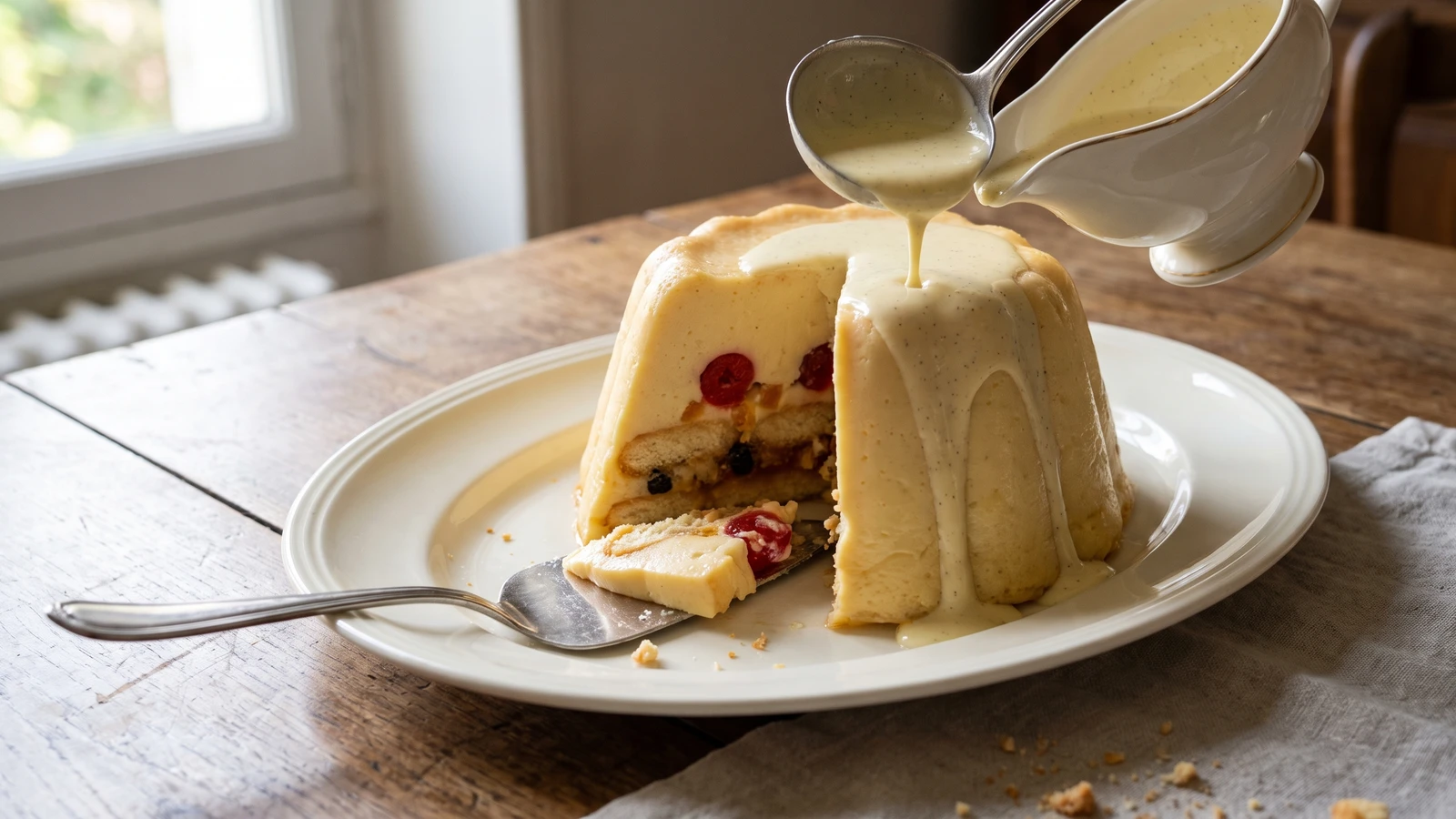
Liqueur-soaked biscuits, jewel-bright fruit, and vanilla custard are packed into one mould and poached without a bubble. Fill slowly, and every slice holds its cabinet of colours.
Pouding Cabinet teaches the quietest custard lesson in the canon: fill the mould little by little. The Crème à la Vanille, Moulée (No. 2639) must thread its way between liqueur-soaked biscuits, a salpicon (small, even dice) of candied fruit, and currants. Pour it all at once and you trap dry pockets; pour patiently and the cut face becomes a tender mosaic held in one smooth set.
The original formula assumed an entremets station with both vanilla preparations waiting, a tall lidded cylinder mould, and a cook free to guard the bain-marie (hot-water bath). At home, a 1¼ litre straight-sided charlotte mould or deep cake tin, a roasting pan, and an instant-read thermometer do the work. Here, the brigade quantity becomes six generous servings, and parchment with foil replaces the fitted lid. Those things were scaffolding. The kirsch-soaked layers, incremental filling, and nonboiling poach are the dish, and they stay. One cook, one stove, one evening.
Unmoulded at the last moment, the pudding stands pale gold beneath a glossy coat of crème anglaise (English custard), with ruby fruit and dark currants showing through each slice. The decisive act comes before the oven: pour the custard in stages until it has found every gap.
Pouding Cabinet has its first home at the British table, among decorated moulded puddings of sponge, dried fruit, and custard, then crossed into the Parisian entremets repertoire. The French formula makes that exchange visible: ladyfingers, a salpicon of candied fruit, kirsch, apricot jam, and vanilla custard are gently poached, then finished with crème anglaise. It is often mistaken for a regional French pudding, but its place in the canon comes from grand-kitchen adoption, not from Lyon, Normandy, or Provence.
Quantity
1½ tablespoons (22 ml / 21 g)
softened
Quantity
20 biscuits (about 5 oz / 140 g)
Quantity
½ cup (120 ml / 115 g)
divided
Quantity
¾ cup (180 ml / 125 g)
cut into a 5 mm salpicon
Quantity
⅓ cup (80 ml / 50 g)
Quantity
¼ cup (60 ml / 80 g)
warmed until spreadable
Quantity
3 cups (720 ml / about 760 g) Crème à la Vanille, Moulée (No. 2639)
prepared according to its own entry and ready for moulding
Quantity
1½ cups (360 ml / about 380 g)
| Ingredient | Quantity |
|---|---|
| unsalted buttersoftened | 1½ tablespoons (22 ml / 21 g) |
| crisp ladyfingers | 20 biscuits (about 5 oz / 140 g) |
| kirschdivided | ½ cup (120 ml / 115 g) |
| mixed candied cherries and citrus peelcut into a 5 mm salpicon | ¾ cup (180 ml / 125 g) |
| dried currants | ⅓ cup (80 ml / 50 g) |
| apricot jamwarmed until spreadable | ¼ cup (60 ml / 80 g) |
| Crème à la Vanille, Mouléeprepared according to its own entry and ready for moulding | 3 cups (720 ml / about 760 g) Crème à la Vanille, Moulée (No. 2639) |
| vanilla-flavoured crème anglaise | 1½ cups (360 ml / about 380 g) |
Combine the candied-fruit salpicon and currants with ¼ cup (60 ml) of the kirsch. Cover and leave for 30 minutes, stirring once, until the fruit is glossy and fragrant. Keep the dice small and even. Large pieces tear the custard when the pudding is sliced, while a proper salpicon travels neatly through every layer.
Butter the mould thoroughly, covering the base, sides, and especially the upper rim. Reserve two ladyfingers for repairs, then trim and arrange the others across the base and around the sides, fitting them closely without crushing them. Brush with the remaining ¼ cup (60 ml) kirsch in two passes, allowing the first to soak in before adding the second. They should be saturated and flexible but still hold their shape. If one collapses, patch the space with a reserved dry piece rather than pressing the damaged biscuit back into place.
Lift the macerated fruit from its bowl with a slotted spoon, keeping the kirsch left behind. Arrange a thin layer of salpicon and currants over the biscuit base, add a few small dabs of apricot jam, then cover with pieces of ladyfinger. Brush those pieces with a little of the reserved fruit liquor. Continue in alternate layers, distributing the jam here and there rather than making a solid band, and finish about 2 cm below the rim.
Pour the Crème à la Vanille, Moulée (No. 2639) into the mould in three or four additions. After each addition, wait for the custard to sink, tap the mould gently against a folded towel, and tilt it a little in each direction so the liquid reaches the walls. If custard pools at the top while dry spaces remain below, slide a thin skewer down beside the biscuits to open a channel, then continue. Do not stir the layers. Stop with about 1 cm of headroom and leave the filled mould for 5 minutes before poaching.
Heat the oven to 300°F (150°C). Cover the mould with a buttered round of parchment and a snug layer of foil, then set it on a folded kitchen towel in a deep roasting pan. Add water heated to 185°F (85°C) until it reaches halfway up the mould. Poach for 65 to 80 minutes, keeping the water close to 185°F (85°C), until the centre trembles as one mass rather than moving like liquid; an instant-read thermometer inserted near the centre should register 170 to 175°F (77 to 79°C). The water must never boil, because boiling overheats the air in the custard and leaves it riddled with holes. If bubbles appear, lower the oven, remove a cup of hot water, and replace it with cool water at once. Ça se rattrape.
Lift the mould from the bain-marie, uncover it, and rest for 15 to 20 minutes. Meanwhile, warm the crème anglaise over very gentle heat until it flows easily, never letting it simmer; if it begins to look grainy, remove it immediately and pass it through a fine sieve. Loosen only the upper edge of the pudding with a slim knife, invert a warm serving platter over the mould, turn both together, and wait one full minute before lifting the mould. If the pudding refuses to release, wrap the mould in a hot damp towel for 20 seconds and try again. Coat it generously with crème anglaise, letting the sauce pool around the base, and serve at once. À table!
1 serving (about 270g)
Culinary guides, cultural storytelling, and the editorial depth that makes cooking meaningful.
Discover Culinary ExplorerChef Juliette
Five almond preparations, one discipline: remove the skins cleanly, dry every kernel through, then cut, toast, or cloak it in pale caramel without letting its fragrant oils escape.

Chef Juliette
A pastry pantry lesson in one tray: filberts warmed only until their red skins release, rubbed clean, cooled, and chopped into a fragrant mise-en-place for cakes, creams, pralines, and petits fours.

Chef Juliette
The smallest pâtisserie discipline decides whether a cake leaves its mould intact: clarified butter in every corner, followed by the lightest veil of dry flour or fécule.

Chef Juliette
Four whites, one spotless bowl, and a patient change of speed: whisk gently until loosened, then briskly to glossy stiffness, with powdered sugar waiting if the foam begins to granulate.