
Chef Juliette
Various Almond Preparations
Five almond preparations, one discipline: remove the skins cleanly, dry every kernel through, then cut, toast, or cloak it in pale caramel without letting its fragrant oils escape.
A cooking platform built around craft, culture, and the stories behind what we eat.
Created by Chef Juliette
Based on No. 2639, Crème à la Vanille, Moulée, from Le Guide Culinaire (1907) by Auguste Escoffier
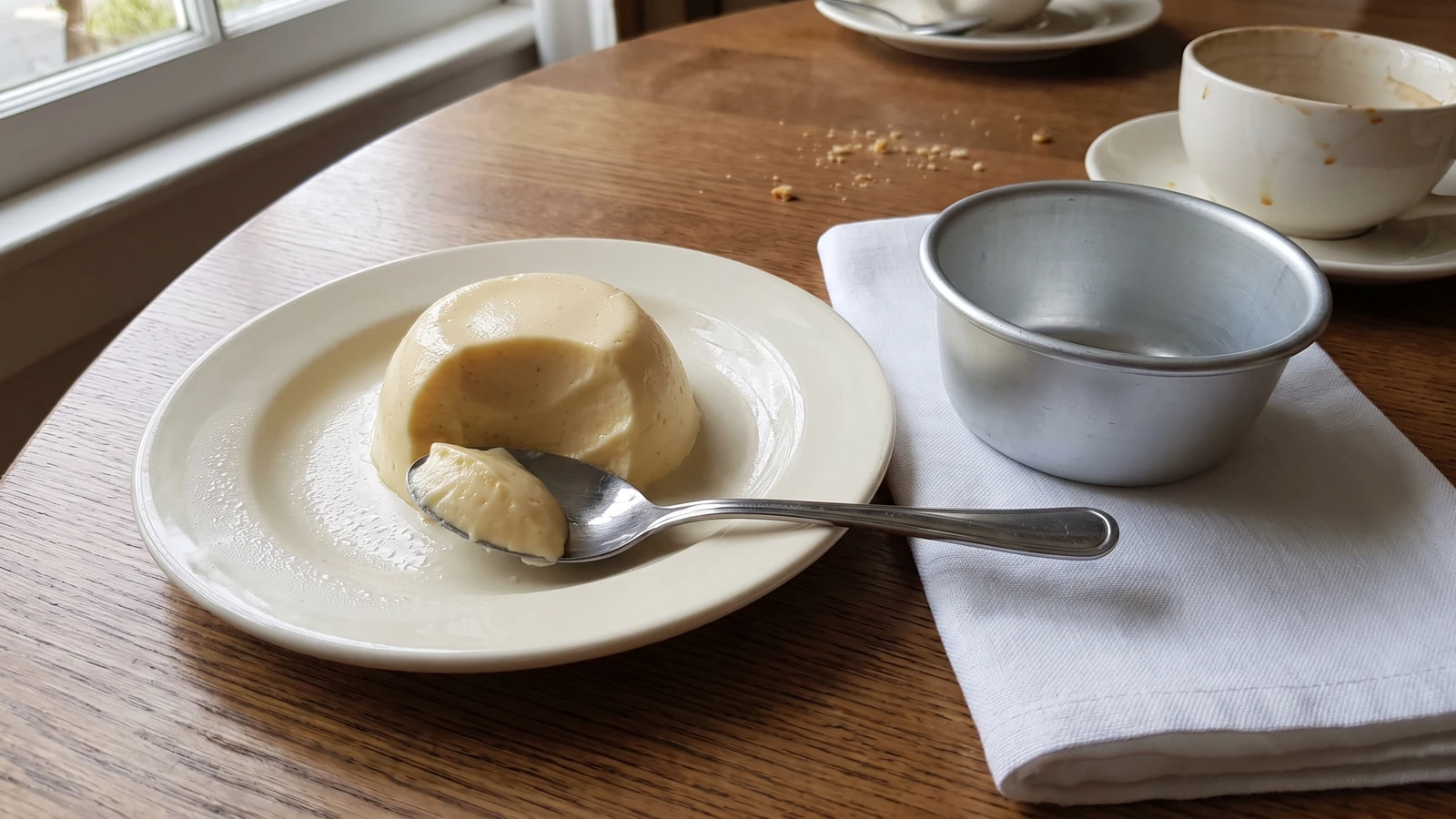
Crème à la Vanille, Moulée is quiet precision: milk, sugar, whole eggs, and yolks poached in a bain-marie at 185°F until satin-smooth, then chilled and turned out in one confident piece.
Crème à la Vanille, Moulée teaches the gentlest law of egg cookery: the water cooks the custard, not the oven. A bain-marie (hot-water bath) held near 185°F surrounds the eggs with even heat, letting them coagulate into a smooth, trembling cream without curds, bubbles, or the little holes left by boiling water.
The original quantity assumed a quart of milk, a battery of covered moulds, and a practiced cook tending the bath by eye. For four servings, the formula is halved exactly: three whole eggs and eight yolks to the quart become 75 grams of beaten whole egg and four yolks to the pint. Smooth ramekins replace dedicated custard moulds, foil replaces fitted lids, and a thermometer keeps watch. Those are brigade scaffolding made practical. Straining, removing every trace of froth, and holding the bath below a boil are the dish itself and must stay.
One cook, one stove, one evening, though most of that evening belongs to the refrigerator. If the water grows too hot, cool it immediately; ça se rattrape when caught early. The poach is the moment that matters: guard the bain-marie, and the custard will unmould like pale satin.
Crème à la vanille moulée belongs to the Parisian entremets repertoire, where a smooth custard was poached in a covered mould, cooled, and overturned for service in the dining room. From grand kitchens it passed naturally to the French bourgeois table because its discipline requires no special apparatus beyond a mould and a bain-marie. It is often confused with crème caramel, but this vanilla custard carries no caramel at all; its perfectly plain, unbroken surface is the point.
Quantity
2 cups (475 ml / 490 g)
Quantity
½ cup plus 1 tablespoon (133 ml / 113 g)
Quantity
½ bean
split lengthwise
Quantity
5 tablespoons (75 ml / 75 g)
measured from about 1½ large eggs
Quantity
4
Quantity
2 teaspoons (10 ml / 9 g)
softened, for the moulds
Quantity
As needed, according to its own entry
| Ingredient | Quantity |
|---|---|
| whole milk | 2 cups (475 ml / 490 g) |
| granulated sugar | ½ cup plus 1 tablespoon (133 ml / 113 g) |
| vanilla beansplit lengthwise | ½ bean |
| beaten whole eggmeasured from about 1½ large eggs | 5 tablespoons (75 ml / 75 g) |
| large egg yolks | 4 |
| unsalted buttersoftened, for the moulds | 2 teaspoons (10 ml / 9 g) |
| Pralin (No. 2352), for a separate alternate-flavoured batch (optional) | As needed, according to its own entry |
Heat the oven to 250°F (120°C). Brush four smooth-sided 6-ounce moulds or ramekins with the thinnest complete film of softened butter, reaching into the bottom edges without leaving visible clumps. Set them in a deep roasting pan with enough space between them for water to circulate.
Combine the milk and sugar in a saucepan and bring them just to a full boil, stirring along the bottom until the sugar dissolves. Remove the pan from the heat immediately, add the split vanilla bean, cover, and infuse for 20 minutes. Lift out the bean without squeezing it. Keep this batch vanilla. The book also names Pralin (No. 2352) as a separate flavouring for moulded custards; for that alternate batch, omit the vanilla and use the finished Pralin according to its own entry rather than making it here.
Whisk the measured whole egg and four yolks in a heatproof bowl until completely blended. Pour in the hot infused milk little by little, whisking briskly as the first additions meet the eggs, then continuing in a thin steady stream. This gradual tempering raises the eggs' temperature without scrambling them. If a few fine strands set, don't throw out the bowl. Ça se rattrape: the sieve in the next step will catch them. If the eggs form broad curds, they have gone too far and the base must be remade.
Pass the custard through a fine-mesh sieve into a clean jug. Let it stand for 2 minutes, then skim away every patch of froth with a shallow spoon. Pour the custard evenly into the prepared moulds, stopping about ½ inch below their rims, and remove any new bubbles from the surface. This is not decorative fuss. Trapped air expands during poaching and marks the finished custard with holes.
Cover each mould with a loose foil lid, then place the roasting pan on the oven rack. Pour 180 to 185°F (82 to 85°C) water into the pan until it reaches halfway up the moulds. Poach for 40 to 55 minutes, checking the water every 15 minutes and keeping it near 185°F. The custards are ready when the edges are set, the centres tremble softly as one mass, and an instant-read thermometer at the centre registers about 170°F (77°C). Remove them from the bath at once. If the water begins to boil, lift the pan from the oven and replace some hot water with cool water immediately. Ça se rattrape if you catch it quickly; if the finished custards are already pocked, chill and serve them in their moulds rather than turning them out.
Remove the foil and leave the custards on a rack until they reach room temperature, about 30 minutes. Cover them once cold and refrigerate for at least 4 hours, preferably overnight. The chill finishes the set and contracts the custard slightly from the mould, which makes a clean release possible.
Wipe each mould completely dry. Loosen only the uppermost edge with the point of a thin knife, place a chilled dessert plate over the mould, and invert both together. Leave the mould in place for 2 minutes before lifting it straight up. If the custard clings, wrap the mould briefly in a warm damp towel and try again; don't shake it into submission. Serve plain, cool rather than icy, while its vanilla perfume is open. À table!
1 serving (about 180g)
Culinary guides, cultural storytelling, and the editorial depth that makes cooking meaningful.
Discover Culinary ExplorerChef Juliette
Five almond preparations, one discipline: remove the skins cleanly, dry every kernel through, then cut, toast, or cloak it in pale caramel without letting its fragrant oils escape.

Chef Juliette
A pastry pantry lesson in one tray: filberts warmed only until their red skins release, rubbed clean, cooled, and chopped into a fragrant mise-en-place for cakes, creams, pralines, and petits fours.

Chef Juliette
The smallest pâtisserie discipline decides whether a cake leaves its mould intact: clarified butter in every corner, followed by the lightest veil of dry flour or fécule.

Chef Juliette
Four whites, one spotless bowl, and a patient change of speed: whisk gently until loosened, then briskly to glossy stiffness, with powdered sugar waiting if the foam begins to granulate.