
Chef Juliette
Flan aux Carottes
A pale short-paste shell holds silken, lightly sweet carrot purée beneath neat glazed half-discs, their butter syrup catching the light: a classical tart poised between vegetable course and sweet.
A cooking platform built around craft, culture, and the stories behind what we eat.
Created by Chef Juliette
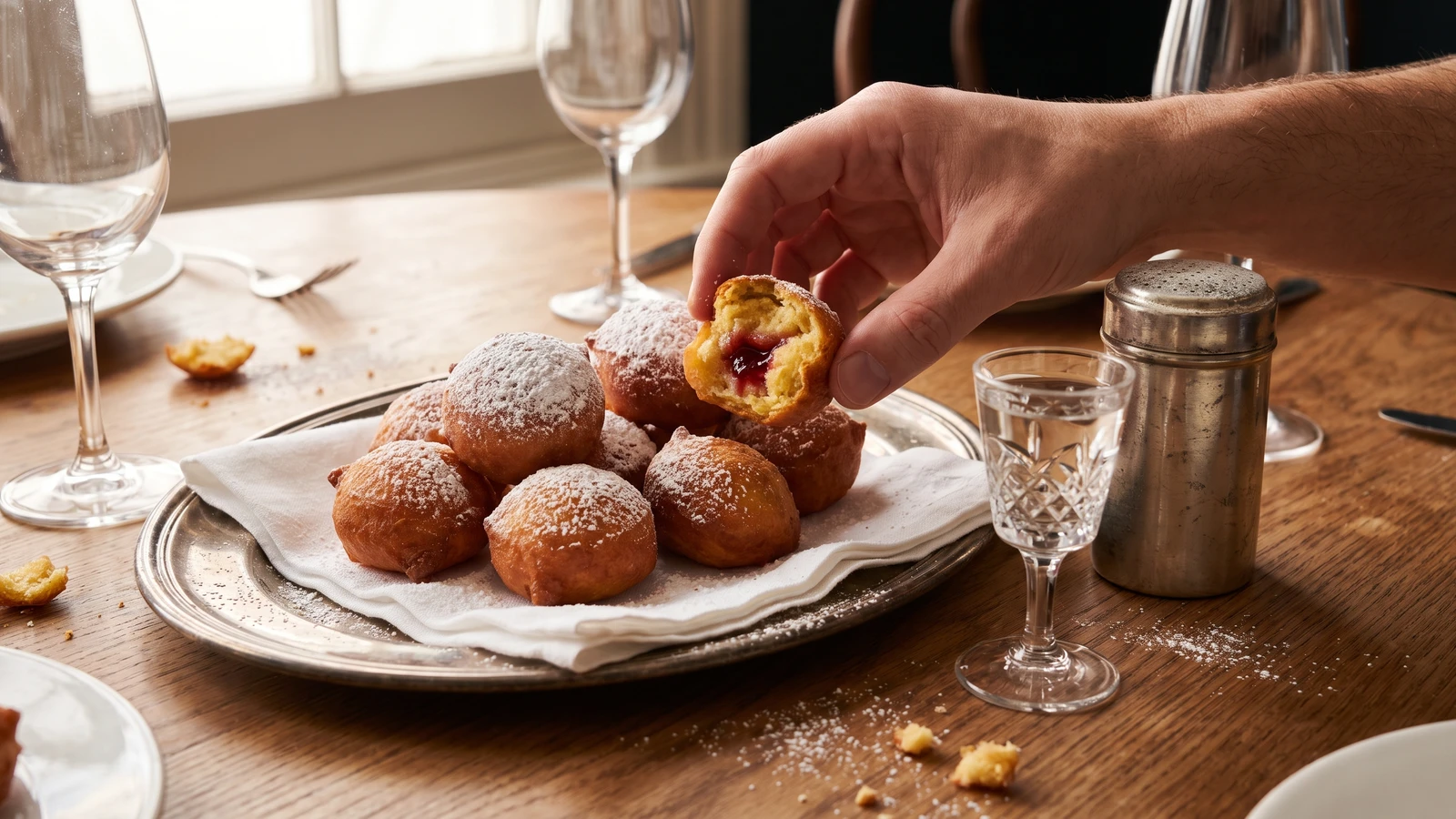
Based on No. 2434, Minion Fritters, from Le Guide Culinaire (1907) by Auguste Escoffier
Soft almond macaroons drink kirsch syrup, meet a seam of jam, then take a panure à l’anglaise, an egg-and-crumb coat, before a quick fry. Dip, lift, drain: restraint keeps the tender center intact.
Beignets mignons (Minion fritters) teach the discipline of saturation without collapse. The soft macaroon must drink enough kirsch syrup to perfume its almond crumb, but it cannot lounge in the bowl. Dip and lift. That is the one true thing to know before you touch the pan.
The original assumed a pastry section with Regina Fritters (No. 2433) already underway, trays of specially shaped biscuit half-balls, and deep fat held ready for service. Your honest equivalent is eight small fritters made from good soft almond macaroons, a wide saucepan, and a thermometer. The biscuit-making is brigade scaffolding and goes entirely; the jam join, panure à l’anglaise, quick frying, and snowfall of icing sugar are the dish and must stay. One cook, one stove, one evening.
Kirsch replaces the Regina fritter’s cream and maraschino soak, giving these smaller pastries a clear cherry warmth beneath their crisp coat. Work one macaroon at a time, and watch the syrup dip above everything else. Too long and the tender crumb loosens, but if one merely cracks, ça se rattrape, and the cold and crumb coating will hold it together.
Beignets mignons belong to the formal French entremets table rather than to a single regional pastry tradition, where small prepared cakes were filled, coated, and fried just before service. This variation travels directly through Regina Fritters (No. 2433): soft almond macaroons replace specially baked biscuit half-balls, while kirsch syrup replaces cream scented with maraschino. The word mignons describes their small, neat form, not a place of origin.
Quantity
½ cup (120 ml / 120 g)
Quantity
½ cup (120 ml / 100 g)
Quantity
¼ cup (60 ml / 56 g)
Quantity
16, about 1½ inches (4 cm) across, 11 oz (320 g) total
Quantity
1 home-scale batch Regina Fritters (No. 2433)
Use its jam, panure à l’anglaise, frying fat, and icing sugar; omit its biscuit half-balls and cream-maraschino soak
| Ingredient | Quantity |
|---|---|
| water | ½ cup (120 ml / 120 g) |
| granulated sugar | ½ cup (120 ml / 100 g) |
| kirsch | ¼ cup (60 ml / 56 g) |
| soft French almond macaroons | 16, about 1½ inches (4 cm) across, 11 oz (320 g) total |
| Regina FrittersUse its jam, panure à l’anglaise, frying fat, and icing sugar; omit its biscuit half-balls and cream-maraschino soak | 1 home-scale batch Regina Fritters (No. 2433) |
Bring the water and sugar to a gentle boil, stirring only until the sugar dissolves. Simmer for 2 minutes, then remove it from the heat and cool it completely before stirring in the kirsch. A hot syrup drives away the kirsch’s perfume and attacks the macaroons too aggressively, so give it the full cooling time.
Set out the jam, panure à l’anglaise, frying fat, and icing sugar from the home-scale Regina Fritters (No. 2433) preparation. Do not make its biscuit half-balls or cream-maraschino soak. Those belong to the Regina fritter; here the soft macaroons and kirsch syrup take their place.
Pour the cold kirsch syrup into a shallow dish. Lower one macaroon into it, turn it once, and lift it out immediately, allowing no more than 2 to 3 seconds in the syrup. It should darken slightly and feel heavier while keeping its outline. Drain it on a rack and repeat. If one cracks, press it gently back together and chill it for 10 minutes. Ça se rattrape: the cold firms the almond crumb, and the later coating supplies its shell.
Following Regina Fritters (No. 2433), place a modest spoonful of its jam filling on the flat face of eight soaked macaroons and top each with another macaroon. Press only until the jam reaches near the edge. Do not hollow the macaroons as you would the Regina biscuit half-balls; removing their tender centers would make them collapse. Chill the joined fritters for 15 minutes so the jam and syrup-soaked crumb settle.
Coat the chilled pairs with the panure à l’anglaise from Regina Fritters (No. 2433), keeping the layer fine and complete, especially around the seam. Handle them with open palms rather than fingertips, which leave dents in the softened macaroon. If a bare patch appears, dab it with the wet part of the coating and press on fresh crumbs. A complete coat keeps the jam inside the fritter and the frying fat outside.
Heat the frying fat specified in Regina Fritters (No. 2433) to 350°F (175°C) in a deep, wide saucepan filled no more than one-third full. Lower in two fritters at a time and fry for 60 to 90 seconds, turning once, until evenly bronzed and crisp. Keep the temperature between 340°F and 355°F (170°C and 180°C). If it falls and a fritter emerges pale, drain it while the fat reheats, then return it for 20 seconds. Ça se rattrape. Crowding, not the recipe, is usually the culprit.
Lift the fritters onto a rack over a tray and let excess fat drain for 2 minutes. Arrange them on a napkin-lined serving dish as directed for Regina Fritters (No. 2433), then dust generously with its icing sugar. Serve them warm, when the crumb coat is crisp, the macaroon is tender with kirsch, and the jam has just softened. À table!
1 serving (about 195g)
Culinary guides, cultural storytelling, and the editorial depth that makes cooking meaningful.
Discover Culinary ExplorerChef Juliette
A pale short-paste shell holds silken, lightly sweet carrot purée beneath neat glazed half-discs, their butter syrup catching the light: a classical tart poised between vegetable course and sweet.
Chef Juliette
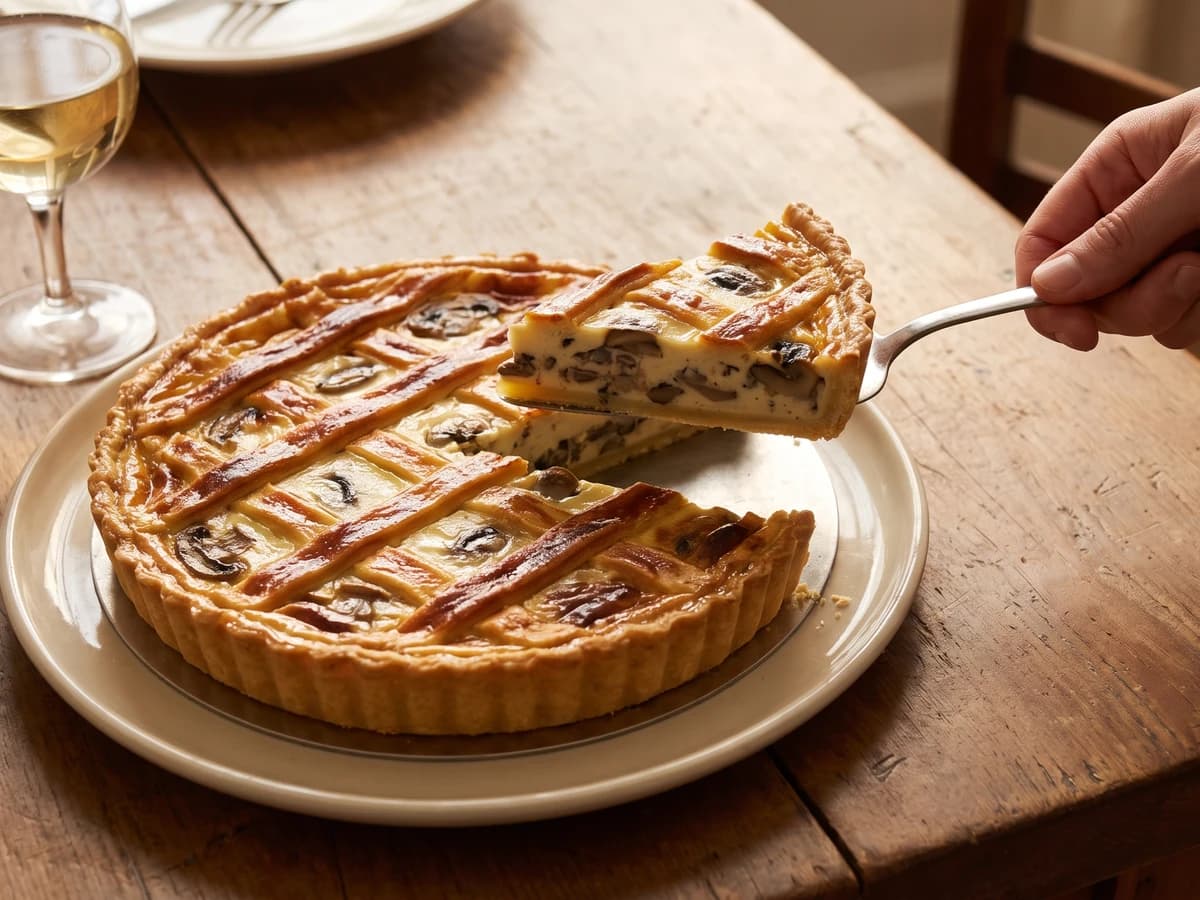
A hot mushroom flan under a butter-gold lattice, with cream reduced close around barely opened caps and a crisp short-paste base protected by one discipline: cool the filling completely.

Chef Juliette
Four little mushroom flans, latticed and gilded, baked hard and fast until butter-gold: a classical garnish scaled to the meat it accompanies and served before its crispness has time to fade.
Chef Juliette
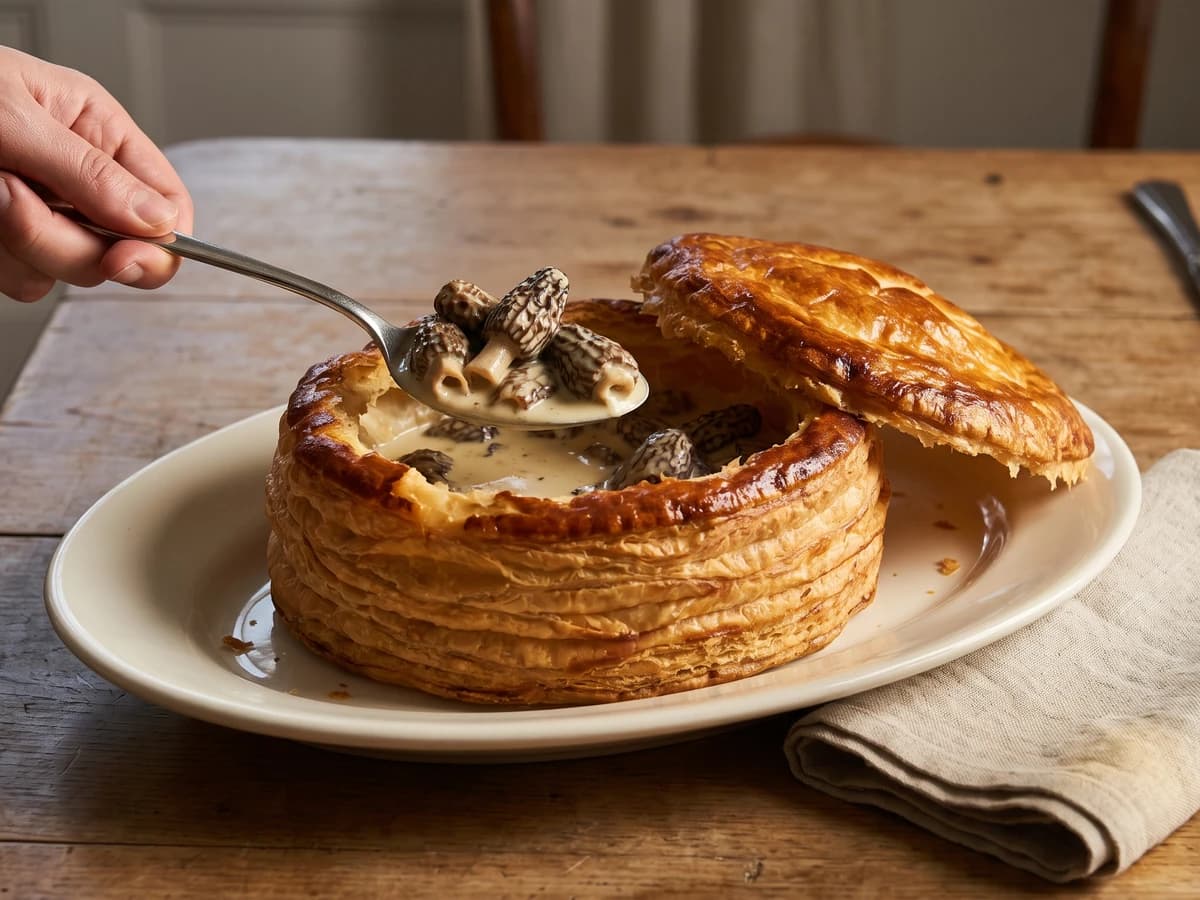
Morels surrender their liquor, then take it back as a glossy cream-and-butter sauce inside burnished puff pastry. The lesson is simple and absolute: reduce with patience, then heat gently and never boil.