
Chef Juliette
Flan aux Carottes
A pale short-paste shell holds silken, lightly sweet carrot purée beneath neat glazed half-discs, their butter syrup catching the light: a classical tart poised between vegetable course and sweet.
A cooking platform built around craft, culture, and the stories behind what we eat.
Created by Chef Juliette
Based on No. 2433, Regina Fritters, from Le Guide Culinaire (1907) by Auguste Escoffier
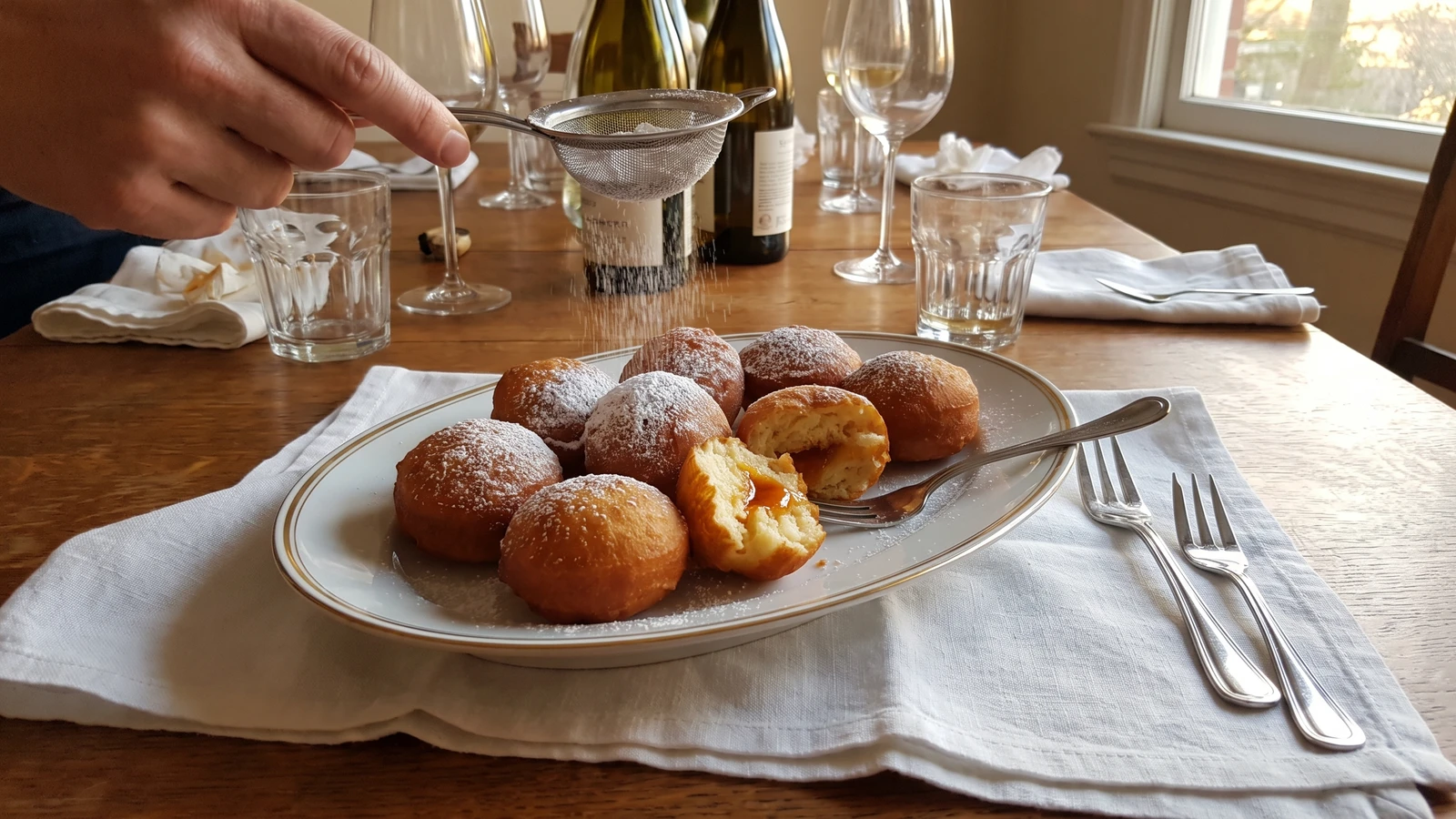
Beignets Régina turn airy biscuit domes into a celebration sweet: apricot at the centre, maraschino cream soaked through, and a fine crumb fried crisp around the tender heart.
Beignets Régina (Regina fritters) teach a severe little lesson beneath all their finery: absorption and adhesion are opposites. The biscuit must drink the maraschino cream to its centre, then shed every loose drop before its coating à l’anglaise (egg and fine breadcrumbs) goes on. Soak deeply, drain patiently. That is the dish.
The source entry assumed biscuit paste and anglaise waiting among the day’s preparations, several hands to shape a service tray of half-balls, and a deep pan of frying fat held hot. Here we make eight fritters, pipe sixteen domes on parchment, and fry two at a time in a small heavy saucepan. The standing mise en place and brigade quantity are scaffolding; hollowing the biscuits, joining them around jam, soaking them thoroughly, breading them finely, and frying them hot must stay. One cook, one stove, one evening.
At the table, each fritter wears a crisp golden shell and a veil of icing sugar, while the inside remains tender with cream and holds a bright seam of apricot. Before you touch a pan, remember the one true thing: the soaked balls must be full of cream inside and merely damp outside.
Beignets Régina belong to the Parisian grand-kitchen repertoire rather than a regional bakery tradition, assembled from the pastry station’s standing preparations for formal celebration menus. The method turns the familiar lady’s-finger biscuit into an entremets by hollowing, joining, soaking, breading, and frying it, so this is not a batter fritter despite the name. Régina is a grand-menu title rather than a place name; maraschino, apricot, and icing sugar are the dish’s own classical signatures.
Quantity
1¼ cups (300 ml / 190 g) Lady’s-finger Biscuit Paste (No. 2378)
freshly prepared
Quantity
⅓ cup (80 ml / 110 g)
Quantity
1¼ cups (300 ml / 300 g)
Quantity
3 tablespoons (45 ml / 45 g)
Quantity
½ cup (120 ml / 60 g)
Quantity
½ cup (120 ml / 110 g) Anglaise (for Egg-and-bread-crumbing) (No. 174)
freshly prepared
Quantity
2 cups (480 ml / 120 g)
Quantity
6 cups (1.5 L / 1.35 kg)
for frying
Quantity
¼ cup (60 ml / 30 g)
| Ingredient | Quantity |
|---|---|
| Lady’s-finger Biscuit Pastefreshly prepared | 1¼ cups (300 ml / 190 g) Lady’s-finger Biscuit Paste (No. 2378) |
| smooth apricot jam | ⅓ cup (80 ml / 110 g) |
| fresh heavy cream | 1¼ cups (300 ml / 300 g) |
| maraschino liqueur | 3 tablespoons (45 ml / 45 g) |
| plain flour | ½ cup (120 ml / 60 g) |
| Anglaise (for Egg-and-bread-crumbing)freshly prepared | ½ cup (120 ml / 110 g) Anglaise (for Egg-and-bread-crumbing) (No. 174) |
| very fine fresh white breadcrumbs | 2 cups (480 ml / 120 g) |
| refined peanut or sunflower oilfor frying | 6 cups (1.5 L / 1.35 kg) |
| icing sugar | ¼ cup (60 ml / 30 g) |
Heat the oven to 175°C (350°F), or 165°C (330°F) with a fan, and line two baking sheets with parchment. Fit a piping bag with a ½-inch (12 mm) plain tip and fill it with the Lady’s-finger Biscuit Paste (No. 2378). Holding the tip upright, pipe at least sixteen compact round mounds, each 1½ inches (4 cm) across, building them slightly upward rather than spreading the paste in a spiral. Bake for 12 to 15 minutes, until the domes are pale biscuit-gold, spring back under a fingertip, and peel cleanly from the paper. Cool them completely on a rack; warm sponge tears when hollowed.
Turn each cold dome flat-side up. With the point of a small paring knife, remove a neat plug from the centre and gently hollow the biscuit, leaving a shell about ¼ inch (6 mm) thick. Save the crumbs. Stir the apricot jam until smooth, warming it only enough to loosen it, then cooling it again before use. Fill every cavity level with jam and press matching domes together in pairs to make eight balls. If a dome cracks, mix a pinch of the reserved biscuit crumb with jam and press it over the crack from inside. Let the joined balls stand for 10 minutes so the jam grips the seams.
Combine the fresh cream and maraschino in a narrow bowl without whipping them. Lower two biscuit balls into the cream at a time, spooning it over the tops and turning them gently for 3 to 4 minutes, until they feel distinctly heavier and the seams have absorbed cream. Lift them with two spoons onto a rack set over a tray. Drain for 10 to 15 minutes, turning once. The centres must remain saturated, but the surfaces should feel damp rather than slick. If a ball becomes dangerously soft, chill it uncovered for 10 minutes before handling; the cold firms the soaked crumb without undoing the soak.
Arrange the flour, the Anglaise (for Egg-and-bread-crumbing) (No. 174), and the very fine breadcrumbs in three shallow dishes. Roll each drained ball lightly in flour and shake off every excess, coat it completely in the anglaise, then roll it through the crumbs without pressing hard. Set the coated fritters on a clean rack for 10 minutes so the crust settles. If the coating slides away, stop; the surface is still too wet. Drain the ball for another five minutes, dust the bare place with flour, then patch it with anglaise and crumbs. Ça se rattrape.
Pour the oil into a heavy 4-quart (4 L) saucepan, giving yourself about 2½ inches (6 cm) of depth while keeping the pan no more than half full. Heat it to 180°C (355°F), checking with a deep-fry thermometer. Set a rack over a tray beside the stove before you begin; once the crust colours, there is no time to search for somewhere to put it.
Lower two fritters at a time into the hot oil with a spider or slotted spoon. Fry for 75 to 90 seconds, turning gently, until the crust is evenly deep gold and crisp. The biscuit is already baked, so this frying is for the resisting crust and a warm centre, not prolonged cooking. If the first fritter remains pale after 30 seconds, lift it out and let the oil return to temperature; if it darkens before you can turn it, lower the heat. Allow the oil to recover fully between batches.
Hold each fritter over the saucepan for a few seconds, then drain it on the rack for 2 minutes. Arrange the fritters on a clean folded napkin set over a serving platter and sift the icing sugar generously over them. Serve warm, while the crumb is crisp and the maraschino cream remains tender inside. À table!
1 serving (about 235g)
Culinary guides, cultural storytelling, and the editorial depth that makes cooking meaningful.
Discover Culinary ExplorerChef Juliette
A pale short-paste shell holds silken, lightly sweet carrot purée beneath neat glazed half-discs, their butter syrup catching the light: a classical tart poised between vegetable course and sweet.
Chef Juliette
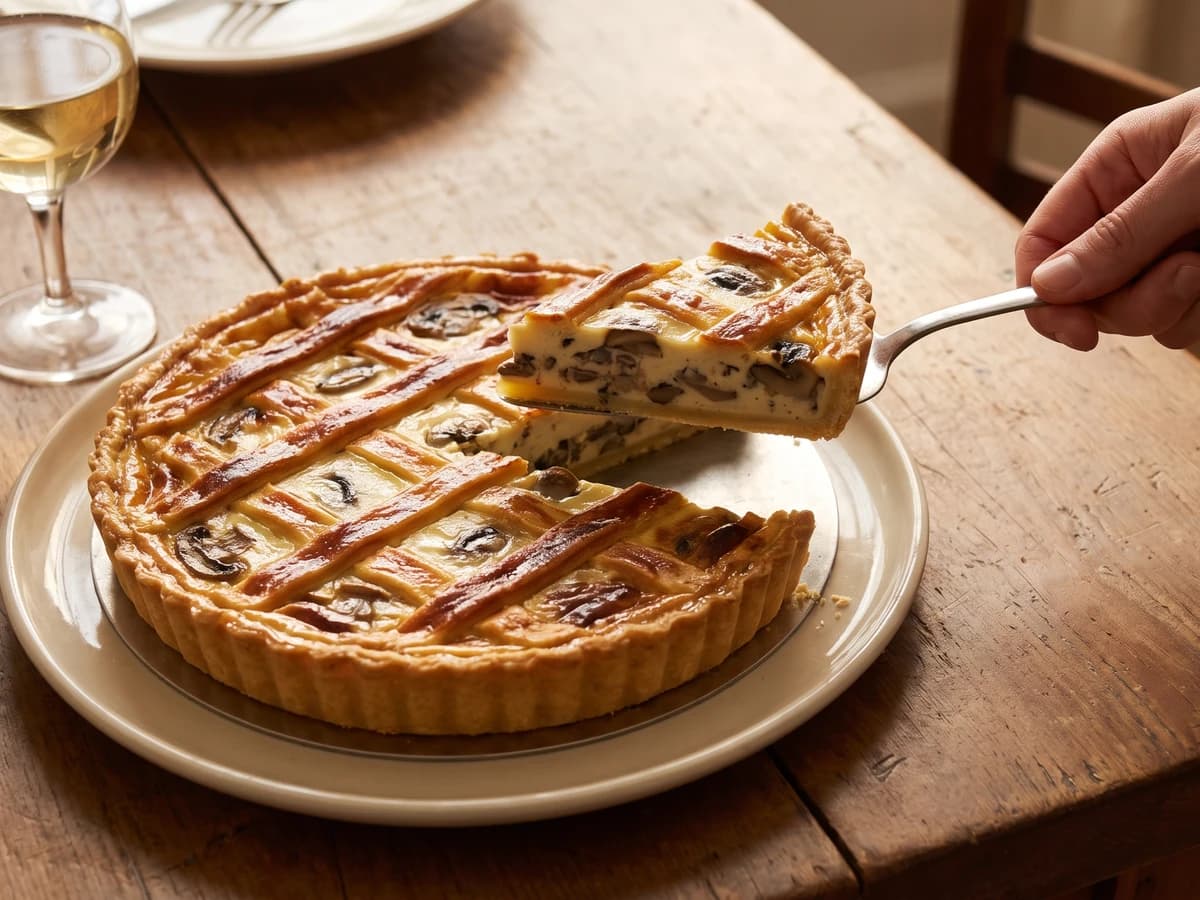
A hot mushroom flan under a butter-gold lattice, with cream reduced close around barely opened caps and a crisp short-paste base protected by one discipline: cool the filling completely.

Chef Juliette
Four little mushroom flans, latticed and gilded, baked hard and fast until butter-gold: a classical garnish scaled to the meat it accompanies and served before its crispness has time to fade.
Chef Juliette
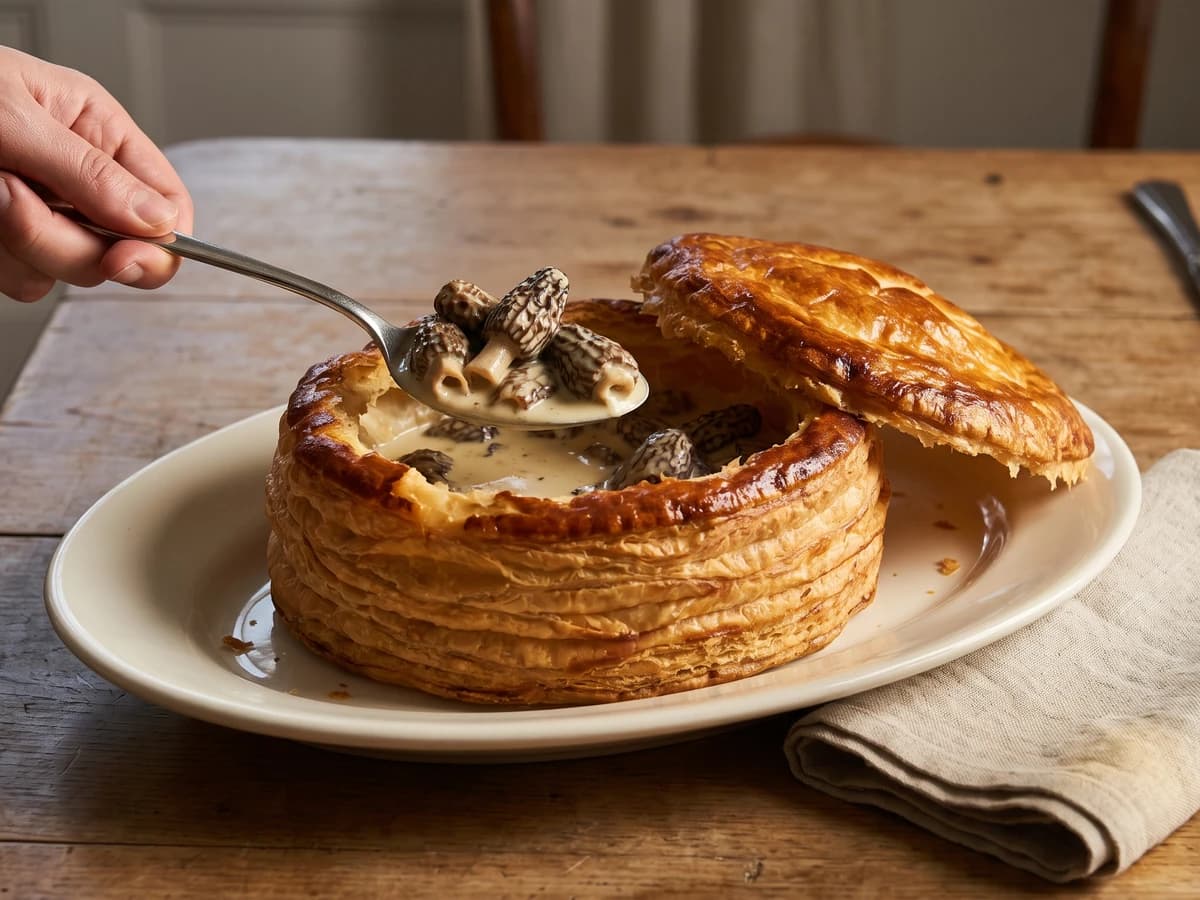
Morels surrender their liquor, then take it back as a glossy cream-and-butter sauce inside burnished puff pastry. The lesson is simple and absolute: reduce with patience, then heat gently and never boil.