
Chef Juliette
Various Almond Preparations
Five almond preparations, one discipline: remove the skins cleanly, dry every kernel through, then cut, toast, or cloak it in pale caramel without letting its fragrant oils escape.
A cooking platform built around craft, culture, and the stories behind what we eat.
Created by Chef Juliette
Based on No. 2378, Lady’s-finger Biscuit Paste, from Le Guide Culinaire (1907) by Auguste Escoffier
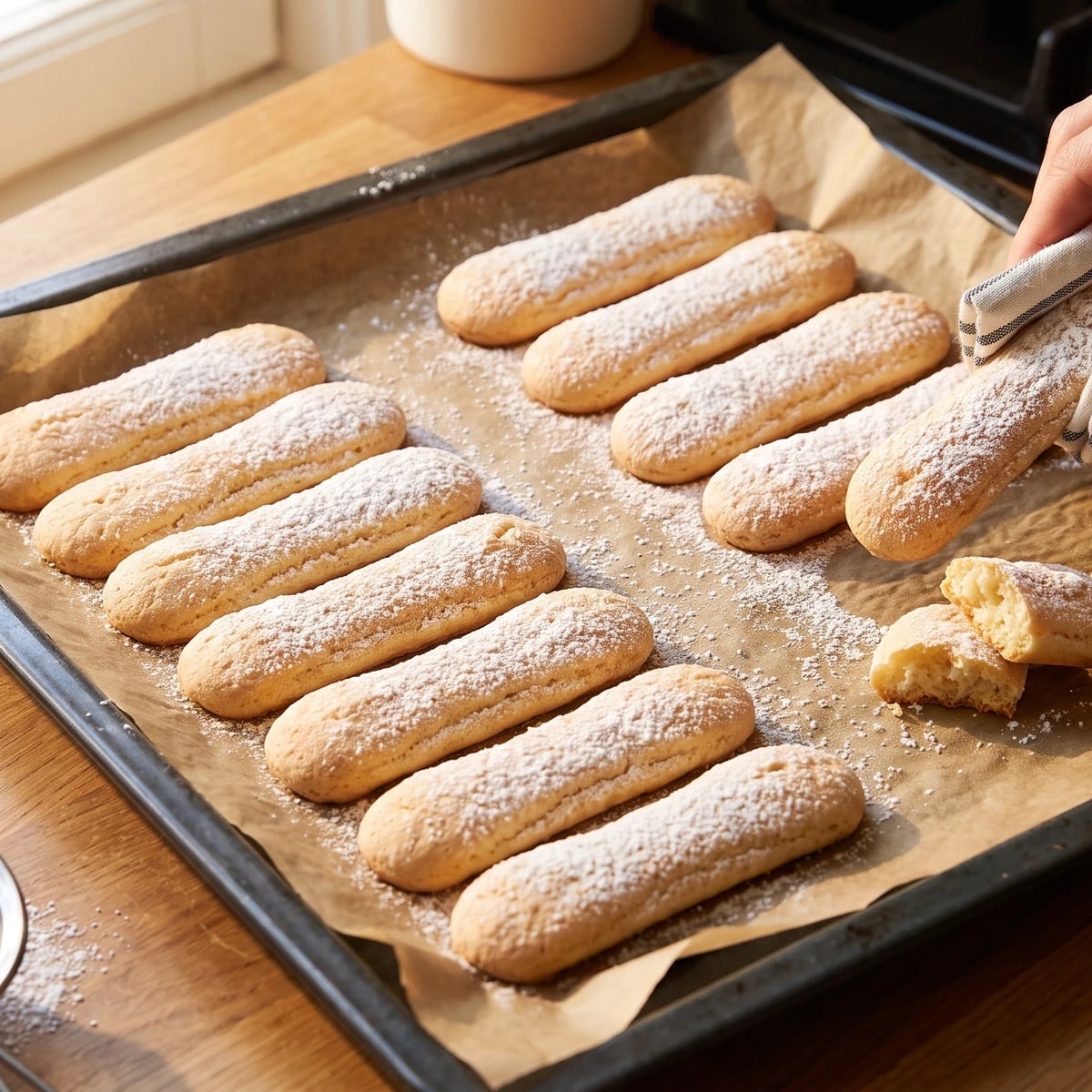
Ribboned yolks, stiff whites, and a careful spatula make these orange-flower biscuits rise without leavening, while powdered sugar and a few drops of water bake into their proper pearled crust.
Pâte à biscuits à la cuillère (lady’s-finger biscuit paste) teaches the central law of sponge work: air is an ingredient, even when it isn't written on the list. There is no added leavening here. The yolks hold one part of the air, the stiff whites hold the rest, and every impatient stroke of the spatula spends it.
The original preparation assumed sixteen yolks, sixteen whites, a canvas piping bag, sheets of strong paper, and a very moderate oven judged by a practiced hand. Tonight's batch is exactly one quarter of that brigade quantity, with the proportions and sequence untouched. Electric beaters replace the long whisking, parchment replaces the strong paper, a 12 mm / ½ inch plain tip replaces the canvas bag's open pipe, and a measured oven replaces guesswork. Those are scaffolding changes, made because one cook doesn't need thirty-two eggs waiting on the bench. One cook, one stove, one evening.
The book's Pâte à Génoise Fine (No. 2376) is the named cousin that shows the same ribbon stage, but it stays whole and separate. This paste takes its flour before its whites and no butter at all. The flour must still be raised and cut into the mixture, the stiff whites must still be folded without crushing them, and the sugared fingers must still receive their few drops of water before a slow bake. Those steps are the biscuits.
When they are right, the tops are pale and delicately domed, the sugar sits in little white pearls, and the crumb breaks open into fine, thirsty bubbles made for charlottes and creams. The fold decides everything: cut down, lift up, turn the bowl, and stop the moment the last white streak disappears.
Biscuits à la cuillère sit in the French pâtisserie canon standardized in Parisian pastry kitchens, while Savoy and Piedmont preserve related finger biscuits known as savoiardi across the Italian table; the family resemblance does not make every formula interchangeable. The French name recalls soft batter deposited by spoon before the plain piping tube became customary, not a biscuit intended to be eaten with a spoon. Pâtissiers valued the airy, dry crumb for charlottes and entremets because it drinks syrup and cream while keeping the mould's shape, and the beaded sugar crust remains its identifying finish.
Quantity
4 (about ¼ cup / 72 g)
at room temperature
Quantity
½ cup plus 1 tablespoon (135 ml / 113 g)
Quantity
¾ teaspoon (3.75 ml / 4 g)
Quantity
⅔ cup plus 2 teaspoons (170 ml / 85 g)
sifted
Quantity
4 (about ½ cup / 120 g)
at room temperature
Quantity
⅓ cup (80 ml / 40 g)
sifted, for coating
Quantity
1 teaspoon (5 ml / 5 g)
for flicking over the sugar
Quantity
1 small finished portion Pâte à Génoise Fine (No. 2376)
| Ingredient | Quantity |
|---|---|
| large egg yolksat room temperature | 4 (about ¼ cup / 72 g) |
| granulated sugar | ½ cup plus 1 tablespoon (135 ml / 113 g) |
| orange-flower water | ¾ teaspoon (3.75 ml / 4 g) |
| plain floursifted | ⅔ cup plus 2 teaspoons (170 ml / 85 g) |
| large egg whitesat room temperature | 4 (about ½ cup / 120 g) |
| powdered sugarsifted, for coating | ⅓ cup (80 ml / 40 g) |
| cold waterfor flicking over the sugar | 1 teaspoon (5 ml / 5 g) |
| Pâte à Génoise Fine, prepared and kept separate for ribbon-stage comparison (optional) | 1 small finished portion Pâte à Génoise Fine (No. 2376) |
Heat the oven to 160°C / 325°F conventional, or 150°C / 300°F fan, with racks in the upper and lower middle positions. Line two flat 33 by 46 cm / 13 by 18 inch baking sheets with ungreased parchment. Fit a large piping bag with a plain 12 mm / ½ inch round tip and stand it in a tall jug, cuffing the open end over the rim. If even length matters, draw 9 cm / 3½ inch guides on the underside of the parchment.
Beat the yolks and granulated sugar with an electric mixer for 6 to 8 minutes, until the mixture has whitened slightly, grown thick, and falls from the beaters in a broad ribbon that rests on the surface for several seconds before sinking. Beat in the orange-flower water. If the sugar remains stubbornly gritty, set the bowl over barely warm water for 20 seconds while whisking, then remove it and continue; the bowl must feel warm, never hot. The finished Pâte à Génoise Fine (No. 2376), if you have prepared it, remains whole and separate as the book's visual reference for this ribbon. Do not mix it into the biscuit paste.
In a completely clean, dry bowl, whisk the egg whites at medium speed until foamy, then at medium-high speed until they stand in stiff but moist peaks. Stop while the surface still looks satiny. Dry, grainy whites break into lumps when folded and cost the paste its lift.
Sift half the flour over the yolk mixture and fold with a flexible spatula, cutting down through the centre, sweeping across the bottom, and lifting the paste over itself as you turn the bowl. Fold in the remaining flour the same way. The base will become thick and resistant. Fold in one-third of the whites a little more firmly to loosen it, then add the rest in two portions with broad, gentle strokes. Stop as soon as no white streaks remain. Raising and cutting is the dish; stirring around the bowl knocks out the air. If the paste has already gone slack, don't bury it under extra flour. Ça se rattrape: pipe shorter fingers and bake them immediately. They will be flatter, but still porous enough to line a charlotte.
Transfer the paste to the piping bag little by little, filling it no more than halfway so its own weight doesn't press out the air. Hold the tip just above the parchment and pipe straight fingers about 9 cm / 3½ inches long and 12 mm / ½ inch wide, leaving 2.5 cm / 1 inch between them. Release pressure before lifting the tip so each biscuit finishes neatly rather than with a long tail.
Sift the powdered sugar generously and evenly over the piped fingers. Instead of lifting slick modern parchment upright as the old strong paper allowed, sweep the loose sugar from the spaces between the biscuits with a dry pastry brush. Dip the brush in the cold water, shake it almost dry, then flick a sparse scatter of distinct droplets over the sugared tops. The water is what gathers the sugar into little pearls; wet the surface heavily and the coating dissolves into a glaze.
Bake both sheets at once for 15 to 18 minutes. After 9 minutes, when the structure has set, turn the sheets front to back and exchange their rack positions. The biscuits are ready when the sides are faintly golden, the tops feel dry and spring back gently, and the sugar has formed irregular beads. They should remain pale, not deeply browned. Cool on the sheets for 5 minutes, then peel the parchment away from the biscuits and transfer them to a rack. Let them cool completely before storing or serving. À table!
1 serving (about 10g)
Culinary guides, cultural storytelling, and the editorial depth that makes cooking meaningful.
Discover Culinary Explorer
Chef Juliette
Five almond preparations, one discipline: remove the skins cleanly, dry every kernel through, then cut, toast, or cloak it in pale caramel without letting its fragrant oils escape.

Chef Juliette
A pastry pantry lesson in one tray: filberts warmed only until their red skins release, rubbed clean, cooled, and chopped into a fragrant mise-en-place for cakes, creams, pralines, and petits fours.

Chef Juliette
Three states, one lesson: control butter’s water and texture before it meets the pastry, then soften, work to pommade, or clarify according to the job it must do.

Chef Juliette
The smallest pâtisserie discipline decides whether a cake leaves its mould intact: clarified butter in every corner, followed by the lightest veil of dry flour or fécule.