Chef Juliette
Bouillabaisse à la Marseillaise
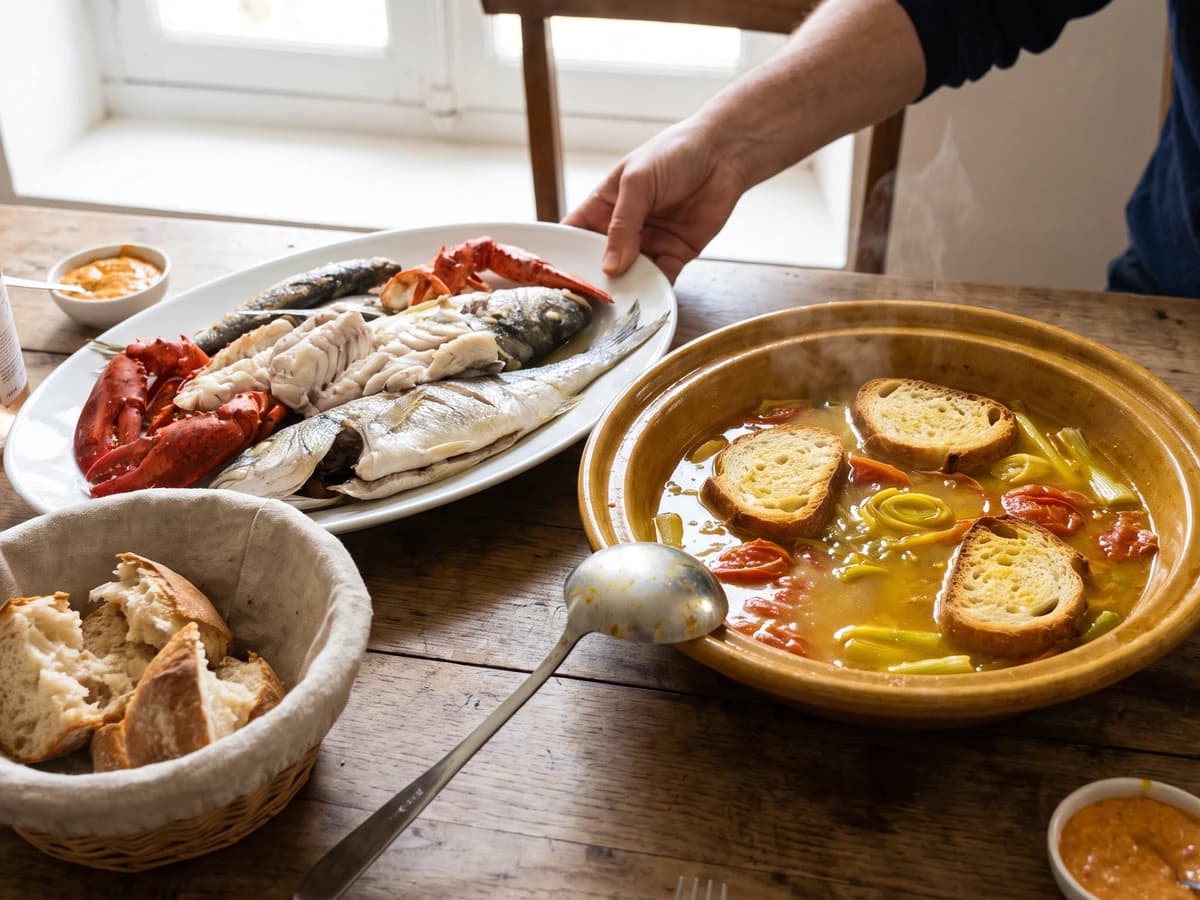
Marseille's great fish stew, saffron-gold and garlic-scented, proves that a hard boil can be the careful choice: it binds olive oil into broth before the whole pot meets bread.
A cooking platform built around craft, culture, and the stories behind what we eat.
Created by Chef Juliette
Based on No. 242, The Veloutés, from Le Guide Culinaire (1907) by Auguste Escoffier
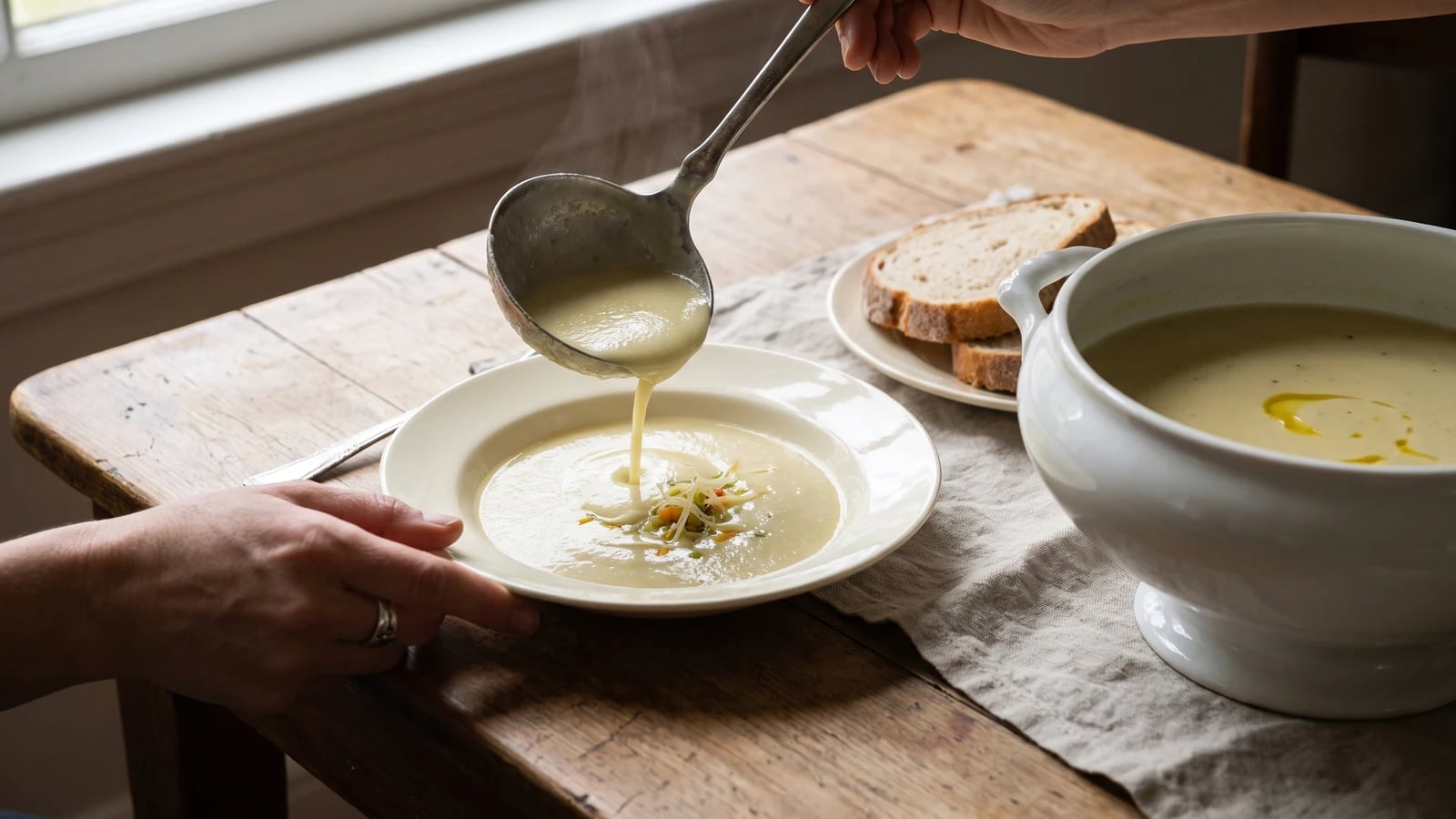
Les veloutés teach the classical soup grammar: matching sauce, character purée, clear consommé, then a yolk-and-cream liaison kept below the boil and finished with cold butter.
Les veloutés (classical soups bound with a matching velouté sauce) teach one true thing: silkiness is built, not blended into existence. A blender makes particles small; it cannot replace a pale roux, a clear stock that agrees with the soup's character, or the liaison of yolks and cream that gives the finish its quiet richness. The word carries the technique.
The brigade formula assumed a saucier on staff, a stockpot never off the fire, a mortar, a tammy, and four quarts moving toward service. Here it becomes about two quarts, the pounding becomes a blender, and the tammy becomes a fine-mesh sieve. Those are honest equipment changes. The separate Ordinary Velouté Sauce (No. 25), the matching purée, the sieve, and the liaison stay, because they are the dish. Long hot holding was brigade scaffolding, so a home cook may finish and serve instead. One cook, one stove, one evening.
When it is right, the velouté pours in a broad ivory ribbon, tastes first of its character, and leaves no floury weight on the tongue. The step that decides it is the liaison: temper it, keep the pot below a boil once it enters, and if the surface turns grainy, stop at once. Ça se rattrape, and the method gives you the rescue exactly where you need it.
Les veloutés belong to the French classical kitchen, especially the sauce and soup stations of Paris, rather than to one provincial larder. Their logic traveled from leading sauce to soup: a pale roux-thickened liquid matched to vegetables, poultry, game, fish, or shellfish, then refined with the purée of that same ingredient. On many menus velouté means any smooth blended soup, but in the classical canon the defining elements are the matching sauce and the final liaison of yolks and cream.
Quantity
4 cups (960 ml / about 960 g) Ordinary Velouté Sauce (No. 25)
prepared with a liquid matching the chosen character
Quantity
Enough to yield 2 cups (480 ml / 450 to 500 g) smooth purée: about 1½ pounds (680 g) trimmed vegetables, cleaned poultry, game, or fish; use 2 pounds (910 g) shell-on shellfish
choose one family and prepare as directed
Quantity
1 cup (240 ml / about 150 g) Mirepoix (No. 228)
for the shellfish version only
Quantity
4 tablespoons (60 ml / 57 g)
for gently sautéing vegetables
Quantity
2 cups (480 ml / about 480 g)
ordinary consommé for vegetables or game, chicken consommé for poultry, fish fumet for fish or shellfish
Quantity
6
Quantity
1 cup (240 ml / 240 g)
chilled, with 2 tablespoons reserved
Quantity
½ cup (120 ml / 113 g)
cut into small cubes for finishing
Quantity
½ cup (120 ml / about 30 g) Chiffonade (No. 215)
for a vegetable or herb garnish
Quantity
1 cup (240 ml / about 140 g)
printanier or brunoise vegetables; poached poultry, game, or fish in dice or julienne; small quenelles or royales; or diced shellfish
Quantity
6 tablespoons (90 ml / about 90 g)
Quantity
as needed
Quantity
¼ teaspoon (1.25 ml / 0.6 g), plus more as needed
| Ingredient | Quantity |
|---|---|
| Ordinary Velouté Sauceprepared with a liquid matching the chosen character | 4 cups (960 ml / about 960 g) Ordinary Velouté Sauce (No. 25) |
| characterizing ingredient for the puréechoose one family and prepare as directed | Enough to yield 2 cups (480 ml / 450 to 500 g) smooth purée: about 1½ pounds (680 g) trimmed vegetables, cleaned poultry, game, or fish; use 2 pounds (910 g) shell-on shellfish |
| Mirepoix (optional)for the shellfish version only | 1 cup (240 ml / about 150 g) Mirepoix (No. 228) |
| unsalted butterfor gently sautéing vegetables | 4 tablespoons (60 ml / 57 g) |
| matching consommé or very clear fish fumetordinary consommé for vegetables or game, chicken consommé for poultry, fish fumet for fish or shellfish | 2 cups (480 ml / about 480 g) |
| large egg yolks | 6 |
| heavy creamchilled, with 2 tablespoons reserved | 1 cup (240 ml / 240 g) |
| cold unsalted buttercut into small cubes for finishing | ½ cup (120 ml / 113 g) |
| Chiffonade (optional)for a vegetable or herb garnish | ½ cup (120 ml / about 30 g) Chiffonade (No. 215) |
| appropriate garnish (optional)printanier or brunoise vegetables; poached poultry, game, or fish in dice or julienne; small quenelles or royales; or diced shellfish | 1 cup (240 ml / about 140 g) |
| cooked rice (optional) | 6 tablespoons (90 ml / about 90 g) |
| fine salt | as needed |
| ground white pepper | ¼ teaspoon (1.25 ml / 0.6 g), plus more as needed |
Set out the Ordinary Velouté Sauce (No. 25) as the finished foundation. Its liquid must agree with the character of the soup: ordinary consommé for vegetables or game, chicken consommé for poultry, and very clear fish fumet for fish or shellfish. Reserve about 1 cup of the velouté for cooking and blending the character ingredient, then keep the remainder over very low heat. Do not rebuild the referenced sauce here; its roux and clarification belong to its own preparation.
For lettuce, chicory, celery, or mixed tender herbs, scald the trimmed ingredient for 5 minutes, drain it thoroughly, then sauté it gently in the 4 tablespoons of butter without letting it colour. For carrots, turnips, or onions, mince them finely and sweat them directly in the butter until supple but still pale. Add the reserved cup of velouté and complete the cooking at a gentle simmer. For poultry or fish, cook the selected piece gently in that reserved velouté, then lift it out and remove every bone and scrap of skin. Roast or sauté game separately before boning it. For shellfish, cook it with the Mirepoix (No. 228), reserve the best pieces of meat for garnish, and keep the cooking mixture for the purée. Poultry must reach 165°F (74°C); fish is ready when its flesh separates cleanly.
Work the cooked character ingredient in a countertop blender with only enough of its cooking liquid to make it move freely, aiming for 2 cups of smooth purée. Return it to the remaining velouté and blend again until completely uniform. Pass the whole soup through a fine-mesh sieve, pressing with a ladle and scraping the smooth purée from the underside. For shellfish, crush hard shells in a sturdy pan and steep them in the cooking liquid rather than asking an ordinary household blender to mill them, then strain twice. The blender replaces the mortar and the sieve replaces the tammy, but passing the soup is not dispensable; that final sieve is what removes fibres, bone fragments, and shell grit.
Whisk in the 2 cups of matching consommé or fumet, preserving the classical proportion of one-half velouté, one-quarter character purée, and one-quarter regulating liquid. Bring the soup to a full boil while stirring steadily, then boil for 2 minutes so the roux is fully opened and the consistency settles. It should coat a spoon in a thin, even veil and pour without falling in lumps. If it catches on the bottom, do not scrape; pour the unburned soup immediately into a clean saucepan and leave the scorched layer behind.
If serving within 10 minutes, cover the soup and keep it off direct heat. The brigade's long bain-marie hold was service scaffolding, not the soul of the dish. For a dinner party, set the covered saucepan in a larger pan of barely simmering water for up to 30 minutes, keeping the water below the soup's level. Stir occasionally and do not let the velouté reduce or form a skin.
Whisk the 6 yolks with all but the reserved 2 tablespoons of cream in a heatproof bowl. Bring the velouté just below a boil, then whisk 2 cups of it into the liaison a ladle at a time. Return this mixture to the saucepan over the lowest heat and stir constantly until it reaches 165 to 175°F (74 to 79°C), lightly thickens, and leaves a clean track on the back of a spoon. Once the liaison enters, the soup must never boil. If the surface turns grainy, remove the pan immediately, whisk in the reserved cold cream, blend briefly, and pass it through the clean sieve. Ça se rattrape.
Take the pan completely off the heat. Monter au beurre, finish by whisking in the cold butter one cube at a time, waiting until each disappears before adding the next. Taste for fine salt and white pepper. The velouté should now gleam and fall from the ladle in a broad ribbon. If oily beads appear, the soup is too hot; whisk in 1 tablespoon of cold water and continue more slowly.
Warm the serving bowls. Finish a vegetable or herb velouté with Chiffonade (No. 215), a fine printanier, or a tender brunoise. For poultry or game, use poached fillet in small dice or julienne, little quenelles, or royales. Fish receives butter-poached dice or julienne, while shellfish receives the reserved meat. Add the cooked rice only when a more substantial soup suits the table. Ladle at once and serve while the butter still gives the surface its gloss. À table!
1 serving (about 240g)
Culinary guides, cultural storytelling, and the editorial depth that makes cooking meaningful.
Discover Culinary ExplorerChef Juliette
Marseille's great fish stew, saffron-gold and garlic-scented, proves that a hard boil can be the careful choice: it binds olive oil into broth before the whole pot meets bread.
Chef Juliette
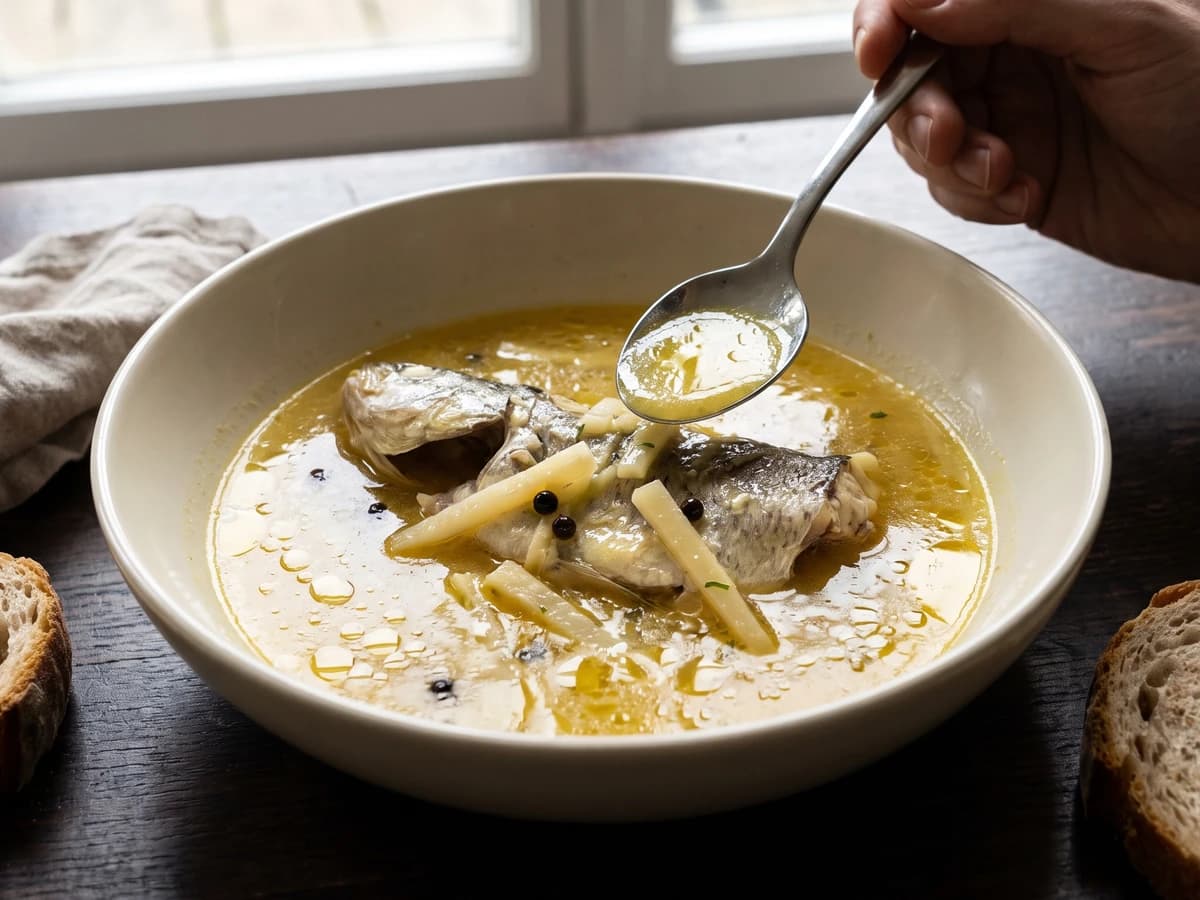
Waterzoi asks fresh, bone-in river fish to thicken its own buttery broth, with parsley root and pepper for company. No flour, no stockpot, just a brisk simmer watched closely.
Chef Juliette
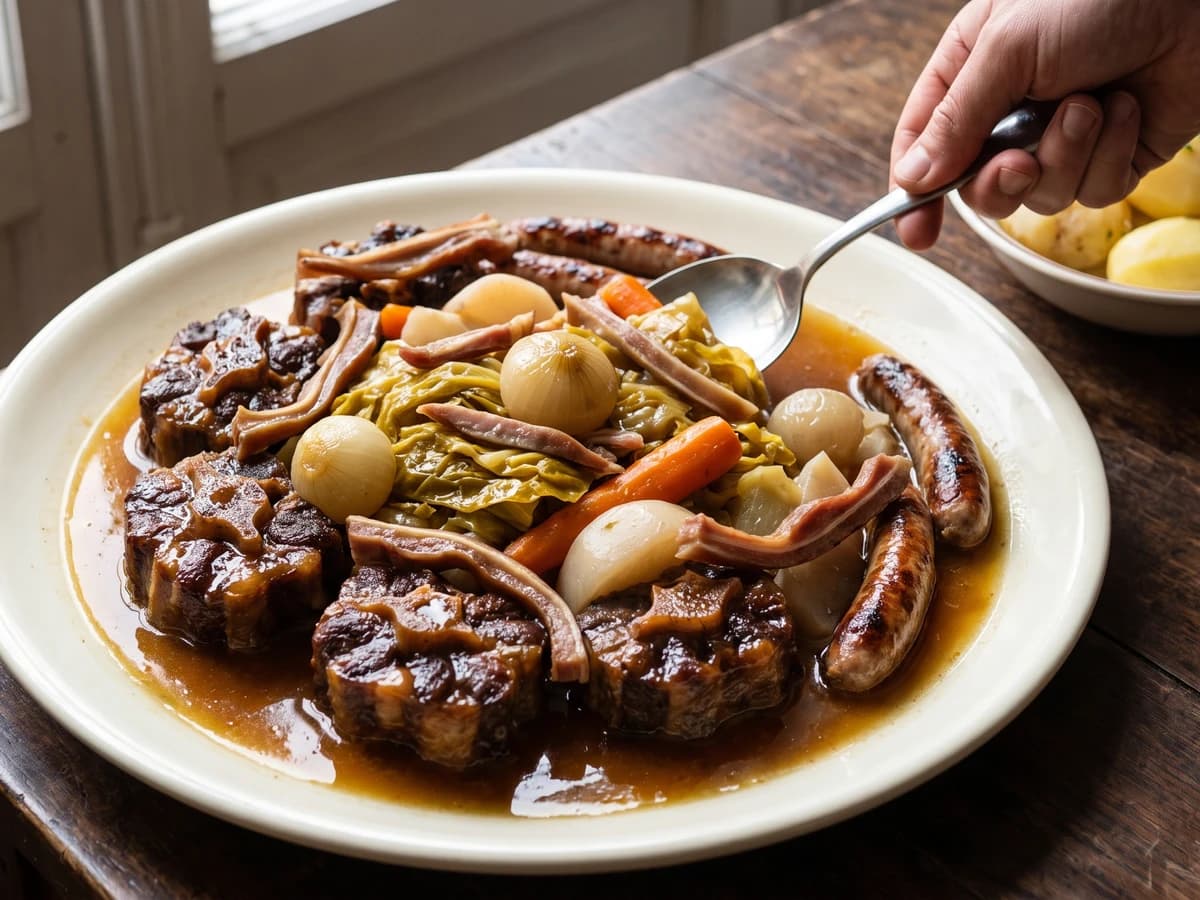
Queue de Bœuf en Hochepot gathers oxtail, pig's trotter and ear, cabbage, roots, and grilled chipolatas around a clear, gelatin-rich broth whose quiet simmer keeps every piece tender and distinct.
Chef Juliette
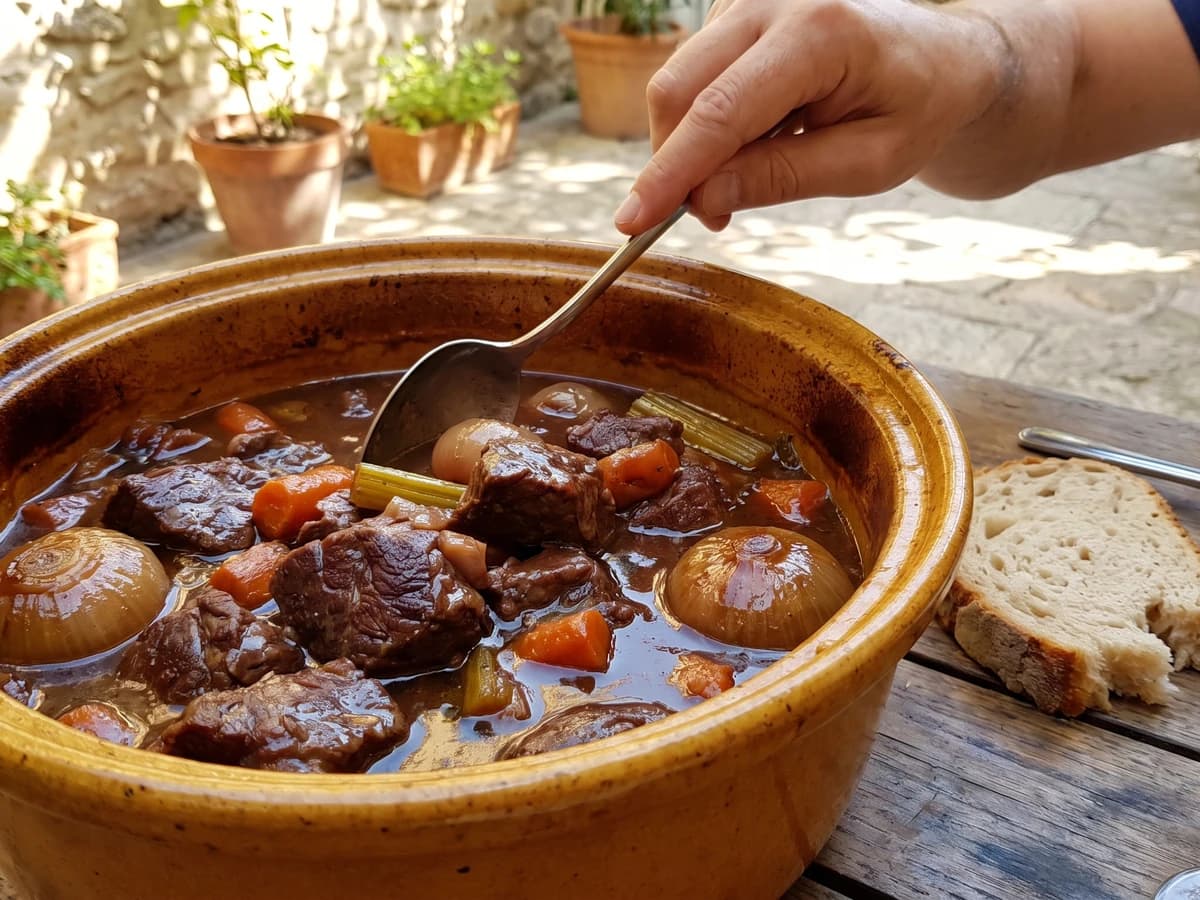
Beef shoulder larded with bacon, sharpened by red wine and vinegar, then sealed with garlic, vegetables, and dry lemon peel until the low oven turns it yielding and the gravy darkly glossy.