Chef Juliette
Ordinary or White Consommé
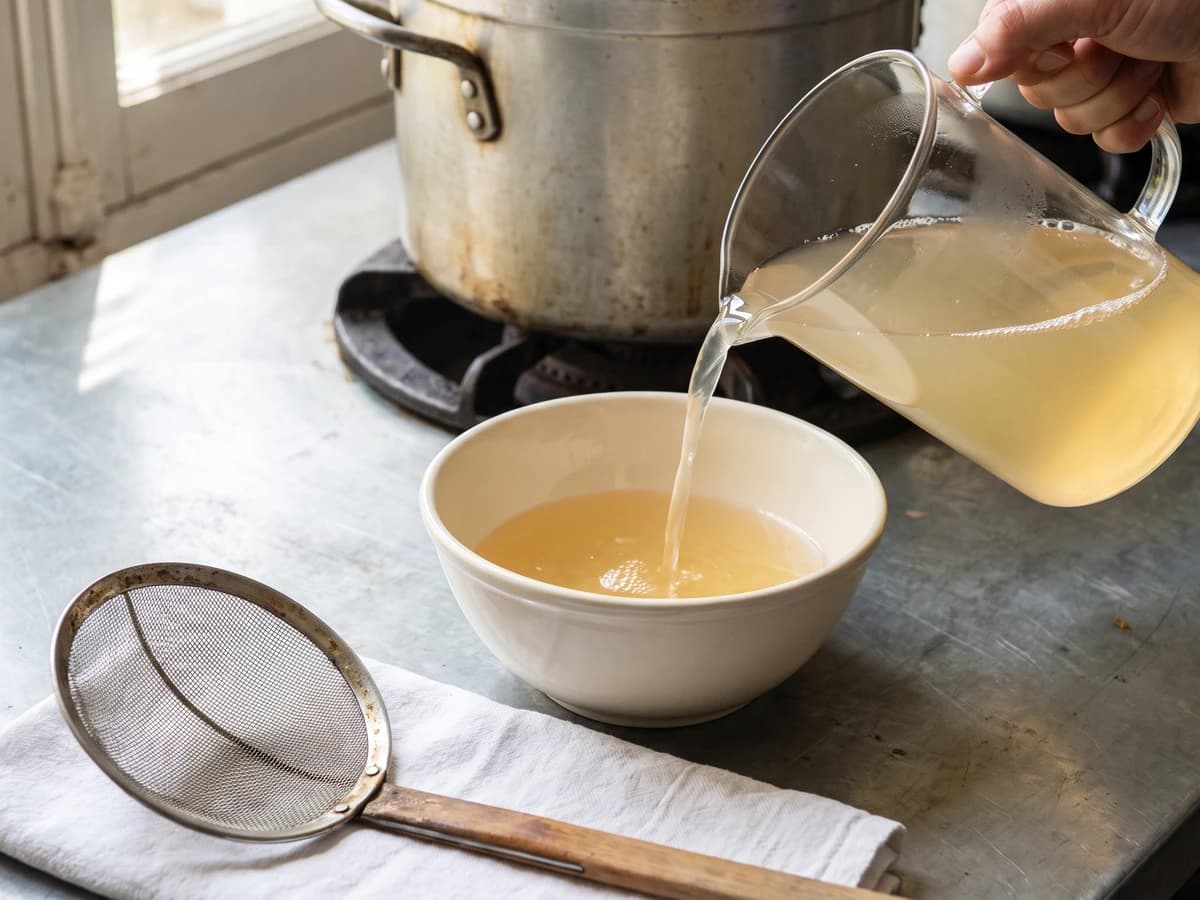
Beef shin, lean beef, and fowl begin in cold water and rise slowly toward a tremble. Skim before the boil, and you learn the quiet discipline that gives every clear French broth its backbone.
A cooking platform built around craft, culture, and the stories behind what we eat.
Created by Chef Juliette
Based on No. 25, Ordinary Velouté Sauce, from Le Guide Culinaire (1907) by Auguste Escoffier
Sauce Velouté Ordinaire is the white mother sauce stripped to its grammar: fragrant veal stock, pale roux, patient skimming, and no clove to prop up a weak foundation.
Sauce Velouté Ordinaire (ordinary velouté sauce) teaches the cleanest equation in the French sauce canon: a pale roux thickens, but the stock speaks. Before you touch the pan, taste the stock. It must be fragrant and complete on its own, because no clove, carrot, or bouquet garni will arrive later to disguise a weak foundation.
The source formula assumed four-quart batches, a saucier beside an open fire, and white stock never off the stove. This version halves the quantity without disturbing its proportions. A heavy saucepan replaces the open-fire pot, an off-center burner gives the same one-sided simmer, damp cheesecloth replaces muslin, and an ice bath makes cooling a wide tureen manageable for one cook, one stove, one evening.
Repeated saucepan changes belong to the scaffolding of a large brigade batch and can go. The slow dépouiller, two careful strainings, and full two hours of skimming are the sauce itself, so they stay. Hold the simmer at one quiet edge and skim patiently; that is the step that decides whether your velouté tastes clean and feels like silk.
Velouté belongs to the classical sauce kitchen of France rather than to one regional larder, with Paris serving as the professional crossroads from which it passed into poultry, veal, and fish derivatives. Its name means velvety and describes texture, not the presence of cream; ordinary velouté is built from white stock and pale roux alone. In working kitchens it traveled less as a table sauce than as a prepared foundation, ready for the cook to finish according to the meat, fish, or garnish it would accompany.
Quantity
2¾ quarts (11 cups / 2.6 L / about 2.6 kg) White Veal Stock, and Poultry Stock (No. 10)
use the white veal stock preparation, cold, divided into 2½ quarts plus 1 cup
Quantity
½ ounce (2⅓ teaspoons / 11.5 ml / 14 g)
Quantity
1 small pinch
Quantity
1 small pinch
Quantity
2 ounces (1 loosely packed cup / 57 g)
Quantity
No amount added; method reference only, Brown Sauce or Espagnole (No. 22)
| Ingredient | Quantity |
|---|---|
| Pale Rouxfinished and pliable but not hot | 8 ounces (about 1 cup / 227 g) Pale Roux (No. 20) |
| White Veal Stock, and Poultry Stockuse the white veal stock preparation, cold, divided into 2½ quarts plus 1 cup | 2¾ quarts (11 cups / 2.6 L / about 2.6 kg) White Veal Stock, and Poultry Stock (No. 10) |
| fine table salt | ½ ounce (2⅓ teaspoons / 11.5 ml / 14 g) |
| ground nutmeg | 1 small pinch |
| finely ground white pepper | 1 small pinch |
| clean white mushroom parings (optional) | 2 ounces (1 loosely packed cup / 57 g) |
| Brown Sauce or Espagnole | No amount added; method reference only, Brown Sauce or Espagnole (No. 22) |
Measure 2½ quarts of the cold white veal preparation from White Veal Stock, and Poultry Stock (No. 10), then reserve the remaining 1 cup separately. Taste the stock before proceeding. It should smell distinctly of veal and vegetables and taste complete without clove or added aromatics; this sauce exposes its stock rather than concealing it.
Place the Pale Roux (No. 20) in a heavy 5-quart saucepan. Whisk in about 1 cup of the measured cold White Veal Stock, and Poultry Stock (No. 10), a little at a time, until the roux becomes a perfectly smooth cream, then gradually whisk in the rest of the 2½ quarts. If small lumps appear, stop adding stock and work them smooth with another splash of cold stock. If they persist, ça se rattrape: force the mixture through a fine sieve before heating.
Add the salt, nutmeg, white pepper, and the mushroom parings if using. Set the pan over medium heat and stir continuously with a flat-edged spatula or whisk, sweeping the bottom and corners, until the sauce reaches its first full boil. The stirring matters because flour settles before it thickens. If the bottom begins to catch but has not burned, immediately pour the upper sauce into a clean pan without scraping the floor; a burned taste cannot be strained away.
Dépouiller means to purify by slow simmering and skimming. Move the saucepan to the lowest burner and position it slightly off-center so only one edge gives a lazy bubble while the rest remains nearly still. Follow the despumation discipline preserved in Brown Sauce or Espagnole (No. 22), though none of that sauce enters this velouté: skim away every patch of foam, floury skin, and fat as it gathers, without whisking it back in. Continue for 1½ hours. The repeated pan changes needed for a large Espagnole batch are brigade scaffolding; this smaller batch needs controlled heat, a heavy pan, and your attention.
Rinse a double layer of cheesecloth with cold water, wring it out, and use it to line a fine-mesh sieve over the smaller saucepan. Pass the sauce through without pressing the mushroom parings or collected residue, which would cloud and darken it. Stir in the reserved 1 cup of White Veal Stock, and Poultry Stock (No. 10), return the sauce to the same one-sided bare simmer, and dépouiller for another 30 minutes.
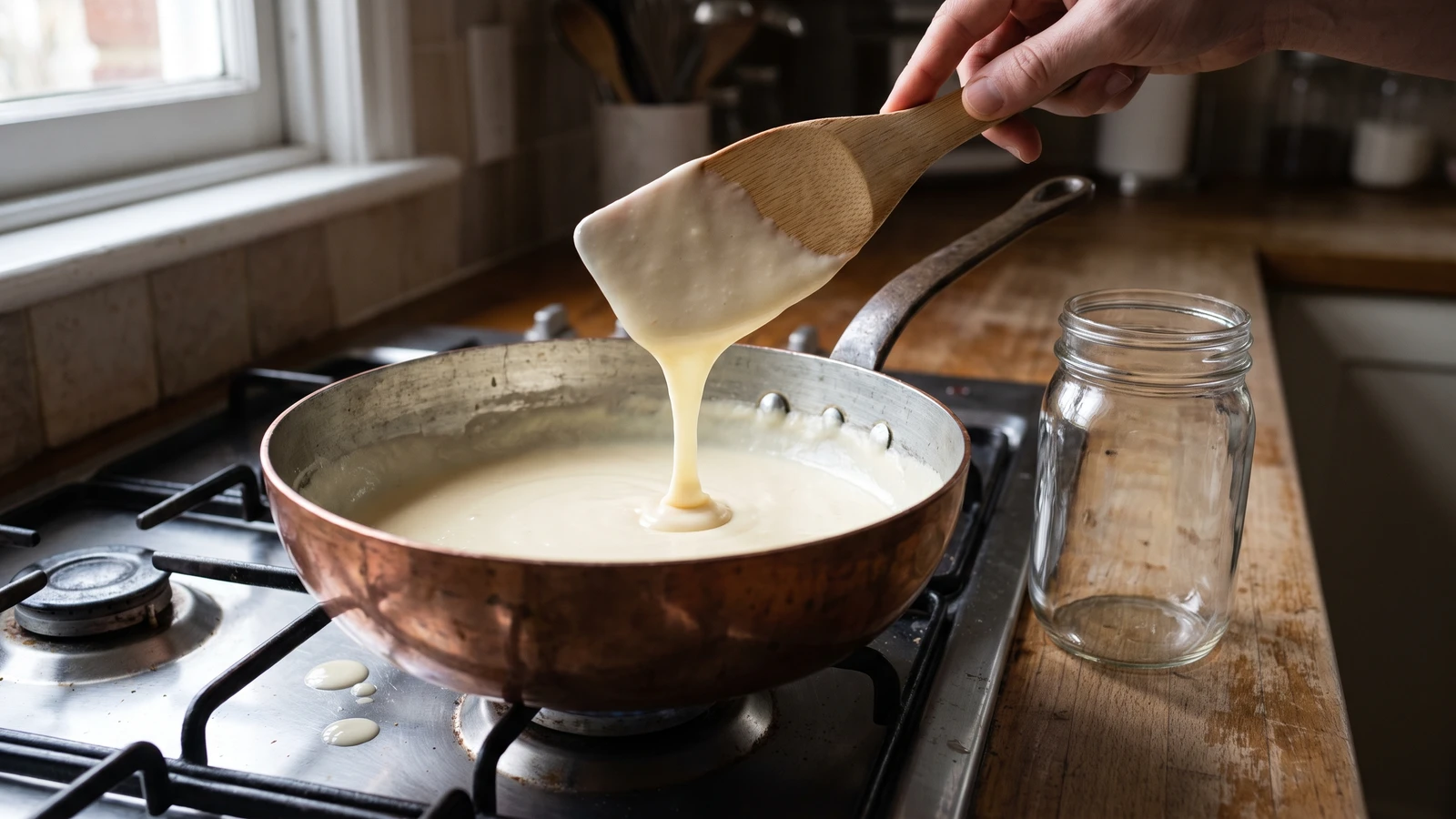
Pass the velouté through a clean fine-mesh sieve into a wide stainless-steel bowl. Do not force through any residue left in the sieve. The sauce should be pale ivory, glossy, free of specks, and thick enough to leave a light, even veil on the back of a spoon rather than a heavy paste.
Set the bowl in a larger bowl of ice water and keep the sauce moving with a spatula as it cools, scraping the sides back into the center. This replaces the brigade's wide tureen and constant stirring while preserving their purpose: rapid cooling without a rubbery skin. If a skin does form, whisk it smooth and pass the sauce through the sieve once more. Portion and refrigerate as soon as it is cold. You now have the mother sauce ready for its derivatives. À table!
1 serving (about 245g)
Culinary guides, cultural storytelling, and the editorial depth that makes cooking meaningful.
Discover Culinary ExplorerChef Juliette
Beef shin, lean beef, and fowl begin in cold water and rise slowly toward a tremble. Skim before the boil, and you learn the quiet discipline that gives every clear French broth its backbone.
Chef Juliette
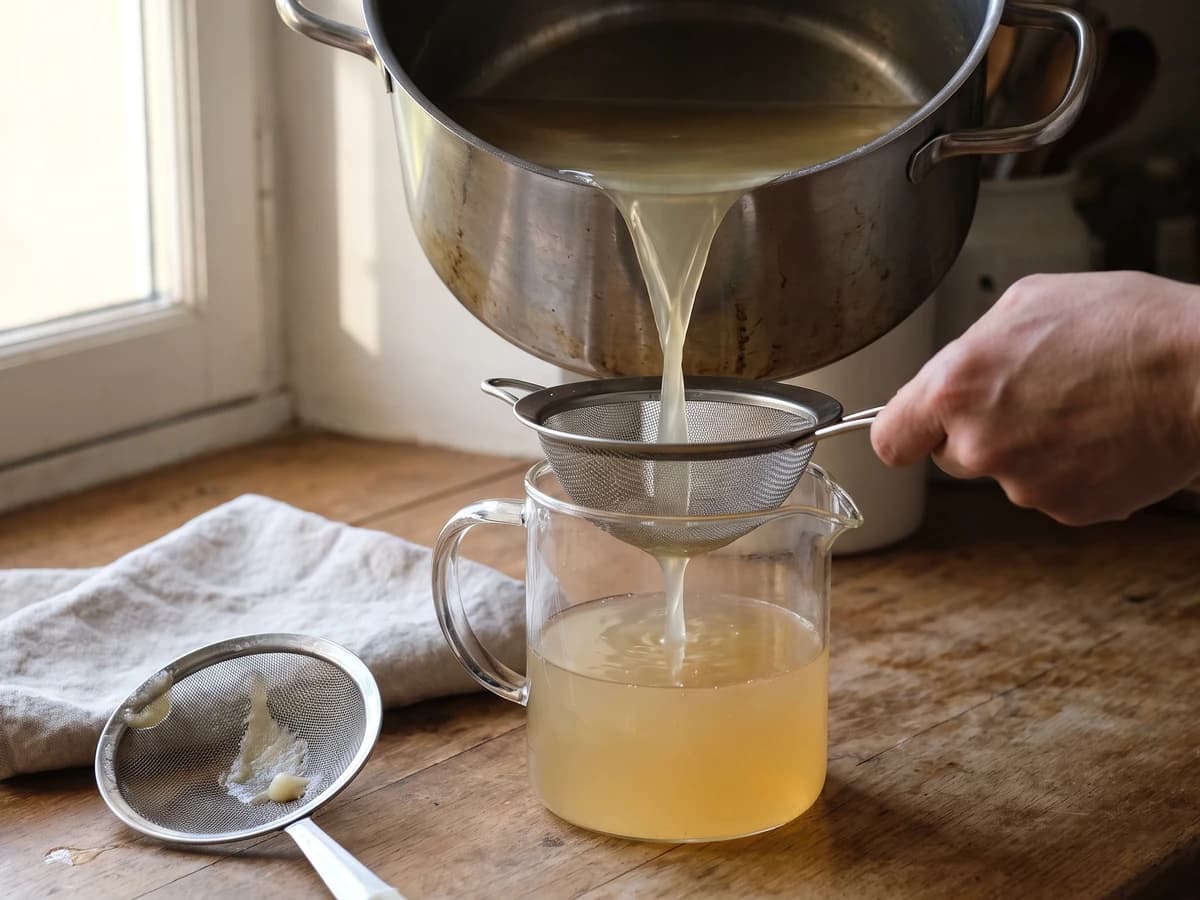
Break the veal bones small, then give them eight hours at a bare tremble. This pale, gelatinous fond becomes the quiet foundation beneath velouté, blanquette, and every sauce that must stay light.
Chef Juliette
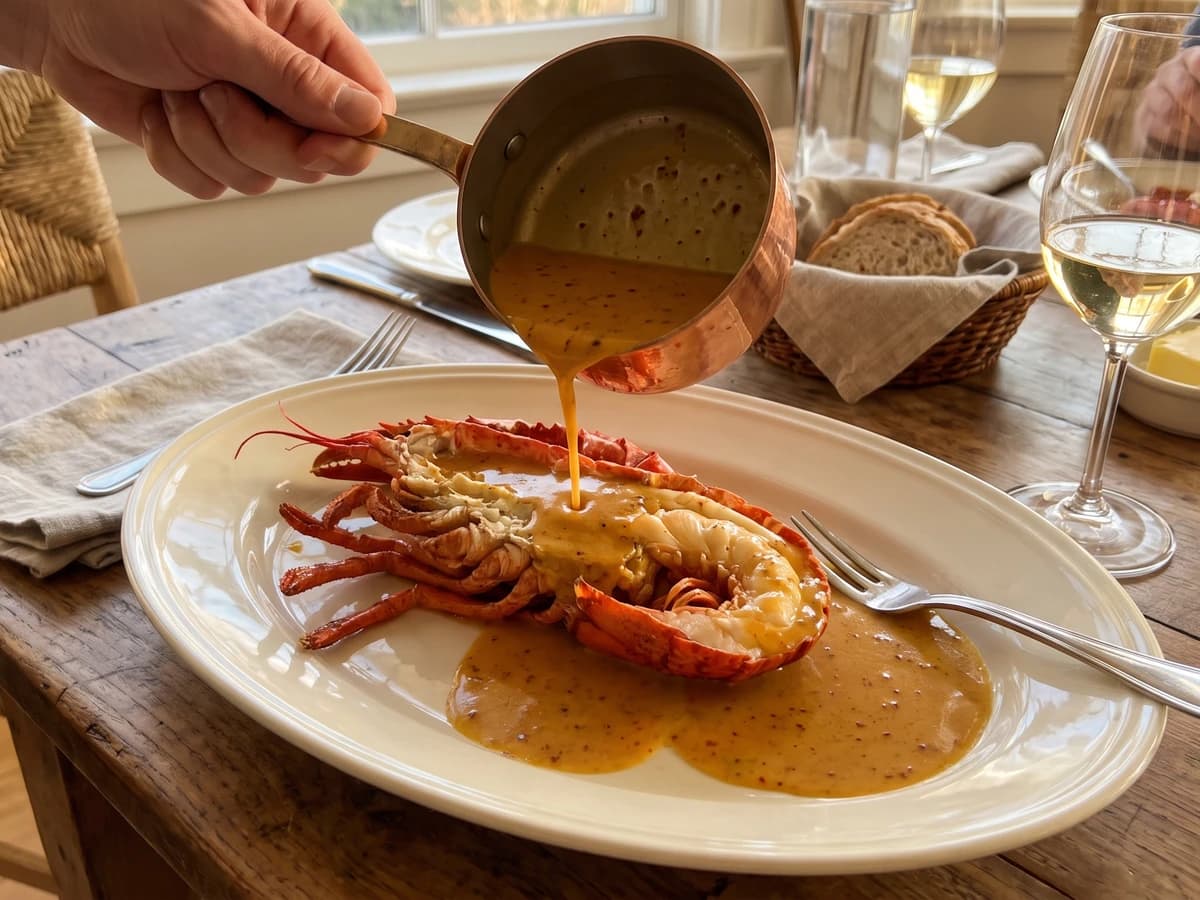
Sauce Orientale concentrates lobster-rich American Sauce with curry, then folds in cream away from the fire: a glossy, gently spiced derivative made for lobster, crayfish, and firm fish.
Chef Juliette
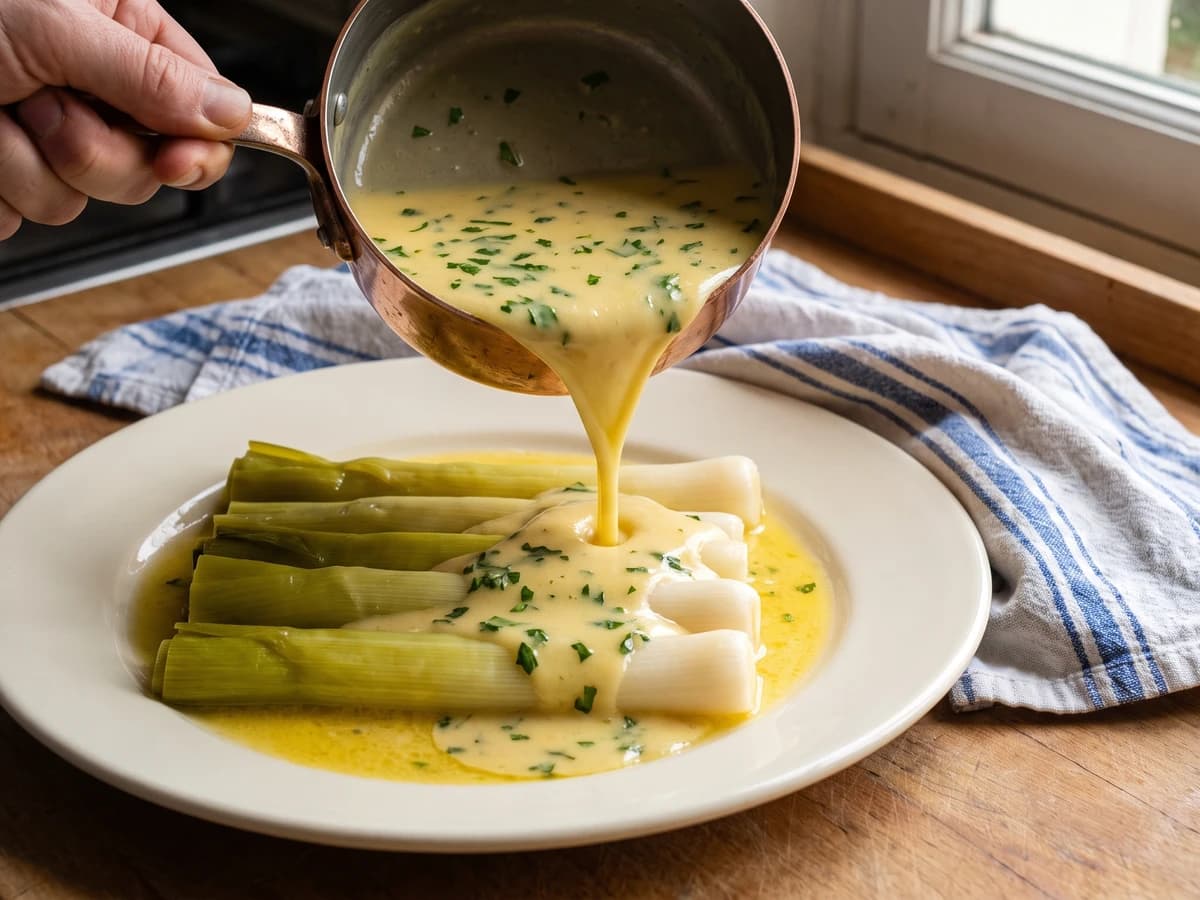
An old lesson in sauce families: Sauce Allemande takes mushroom liquor, then butter, lemon, and parsley, becoming a glossy Poulette for sheep's trotters, leeks, cauliflower, and anything needing gentle richness with a bright edge.