Chef Juliette
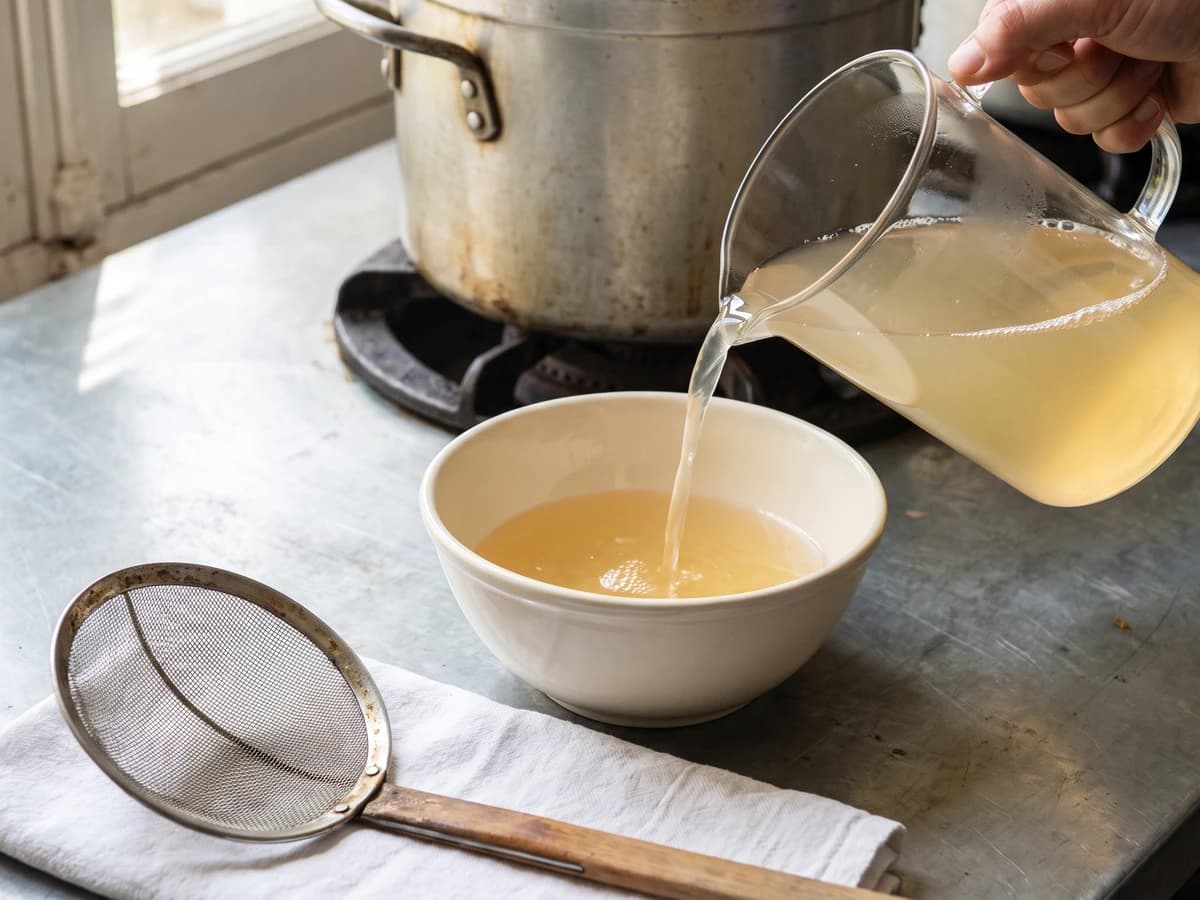
Ordinary or White Consommé
Beef shin, lean beef, and fowl begin in cold water and rise slowly toward a tremble. Skim before the boil, and you learn the quiet discipline that gives every clear French broth its backbone.
A cooking platform built around craft, culture, and the stories behind what we eat.
Created by Chef Juliette
Based on No. 21, White Roux, from Le Guide Culinaire (1907) by Auguste Escoffier
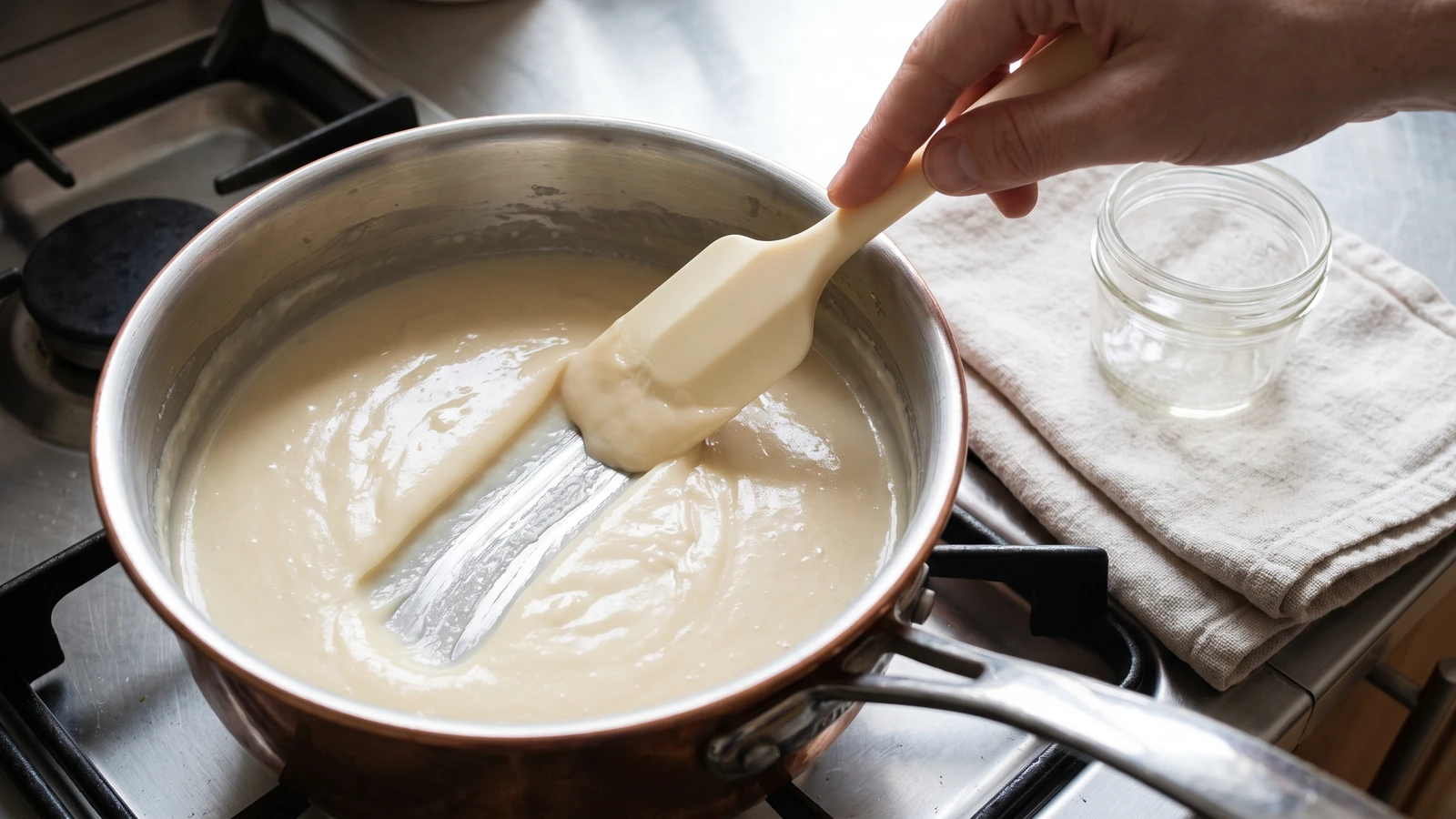
Roux blanc is the pale foundation beneath béchamel and velouté: butter and flour cooked just long enough to lose rawness, never long enough to colour. Trust your eyes and nose, not the clock alone.
Roux blanc (white roux) teaches the narrowest, most useful line in sauce making: flour must cook enough to lose its raw taste, but never long enough to colour. That is the one true thing to know before touching the pan. Roux blanc should remain pale ivory, with the scent of warm grain but none of the toasted nuttiness that belongs to a darker roux.
The original kitchen assumed a saucier on staff, clarified butter ready by the pot, and brigade quantities made for a full service. Your honest equivalent is a pale, heavy saucepan, a flexible spatula, and a 275-gram batch sufficient to thicken about two quarts of finished sauce. The constant production and great volume were scaffolding, so they can go. The butter-to-flour proportion, low heat, and brief cooking are the dish itself, and they stay. One cook, one stove, one evening.
Watch the roux more closely than the clock. Stir into every corner, breathe in its changing aroma, and take it from the heat while it is still ivory. Pulling it before the first golden fleck appears is the step that decides everything.
Roux blanc belongs to the classical French sauce kitchen rather than to a single region, serving as the pale thickening foundation for béchamel and velouté at the saucier's station. From the grand kitchen it passed naturally into cuisine bourgeoise, where a small saucepan and wooden spoon replaced the great service batches. Its brief cooking is often mistaken for undercooking, but the distinction is exact: the raw-flour taste must disappear while colour and toasted aroma must not begin.
Quantity
½ cup plus 1 tablespoon (135 ml / 125 g)
Quantity
1¼ cups (300 ml / 150 g)
sifted
| Ingredient | Quantity |
|---|---|
| clarified unsalted butter | ½ cup plus 1 tablespoon (135 ml / 125 g) |
| plain floursifted | 1¼ cups (300 ml / 150 g) |
Weigh the clarified butter and sifted flour before heating the pan. This smaller batch preserves the source formula's butter-to-flour proportion while replacing brigade volume with an amount useful at home. Use the volume measures if needed, but trust the weights when you can; flour settles capriciously in a cup.
Put the clarified butter in the saucepan over low heat and let it become completely fluid and glossy without sizzling or taking colour. If it begins to brown, remove it for another dish and start with fresh butter. Browned butter can be splendid, but it cannot make roux blanc.
Add the sifted flour all at once and stir immediately with the spatula, pressing and folding until no dry flour remains. The mixture will form a smooth, heavy paste. If you find small dry pockets, crush them against the side of the pan and keep stirring; don't add liquid or alter the proportion. Ça se rattrape.
Cook over the lowest steady heat for 3 to 4 minutes, stirring continuously and scraping the base, sides, and corners. The roux should loosen slightly, remain pale ivory, and lose the dusty smell of raw flour in favour of a quiet aroma of warm cereal. It must not smell toasted. If one or two golden flecks appear, lift the pan from the heat and scrape the roux immediately into a cool bowl, leaving those flecks behind. If the whole batch turns beige, it cannot become white again, but it is not wasted; label it roux blond and use it where a pale roux belongs.
Use the roux while warm with cool liquid, or cool it completely before whisking it into hot liquid. Opposite temperatures help the flour disperse without clumping. For storage, spread the roux in a shallow heatproof dish until cold, then seal it in a clean container. Don't cover it while warm, since trapped condensation shortens its keeping time.
1 serving (about 17g)
Culinary guides, cultural storytelling, and the editorial depth that makes cooking meaningful.
Discover Culinary ExplorerChef Juliette
Beef shin, lean beef, and fowl begin in cold water and rise slowly toward a tremble. Skim before the boil, and you learn the quiet discipline that gives every clear French broth its backbone.
Chef Juliette
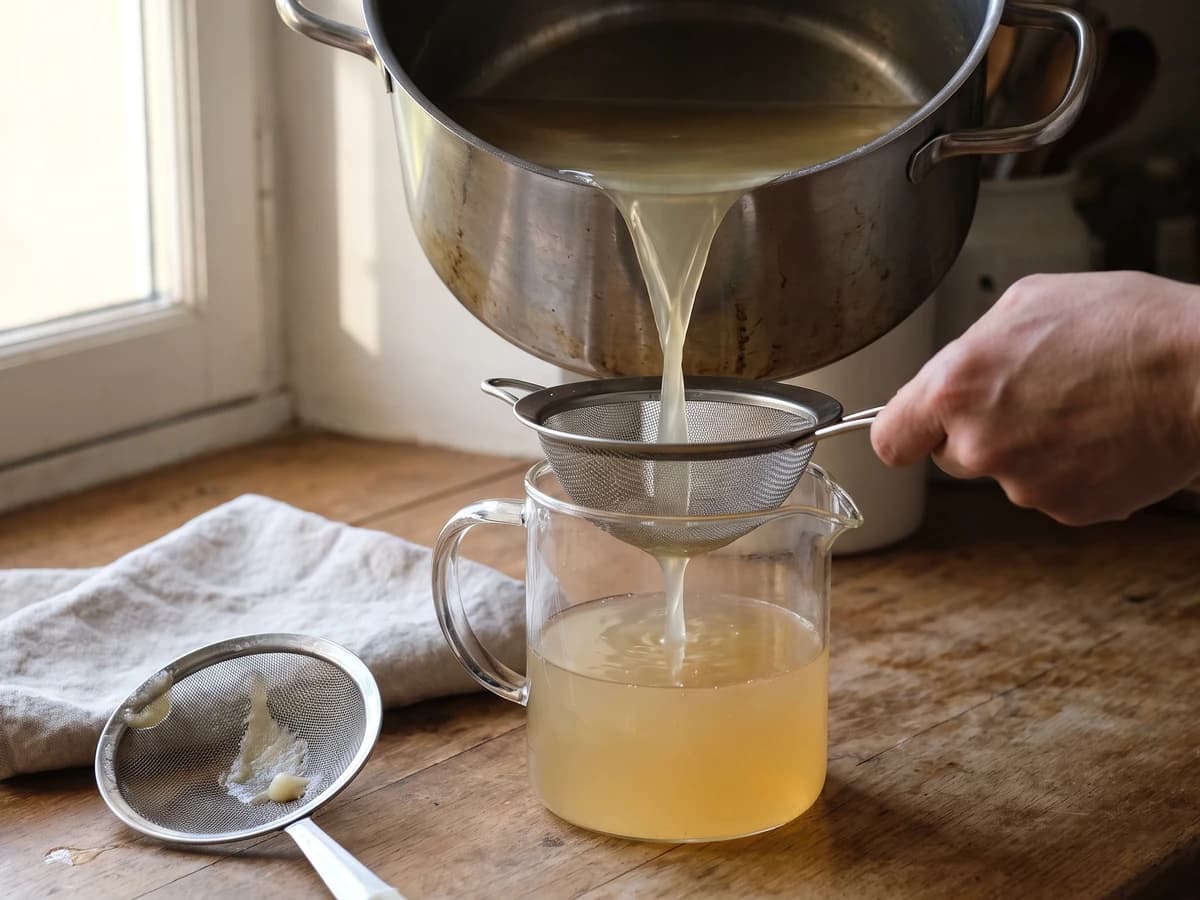
Break the veal bones small, then give them eight hours at a bare tremble. This pale, gelatinous fond becomes the quiet foundation beneath velouté, blanquette, and every sauce that must stay light.
Chef Juliette
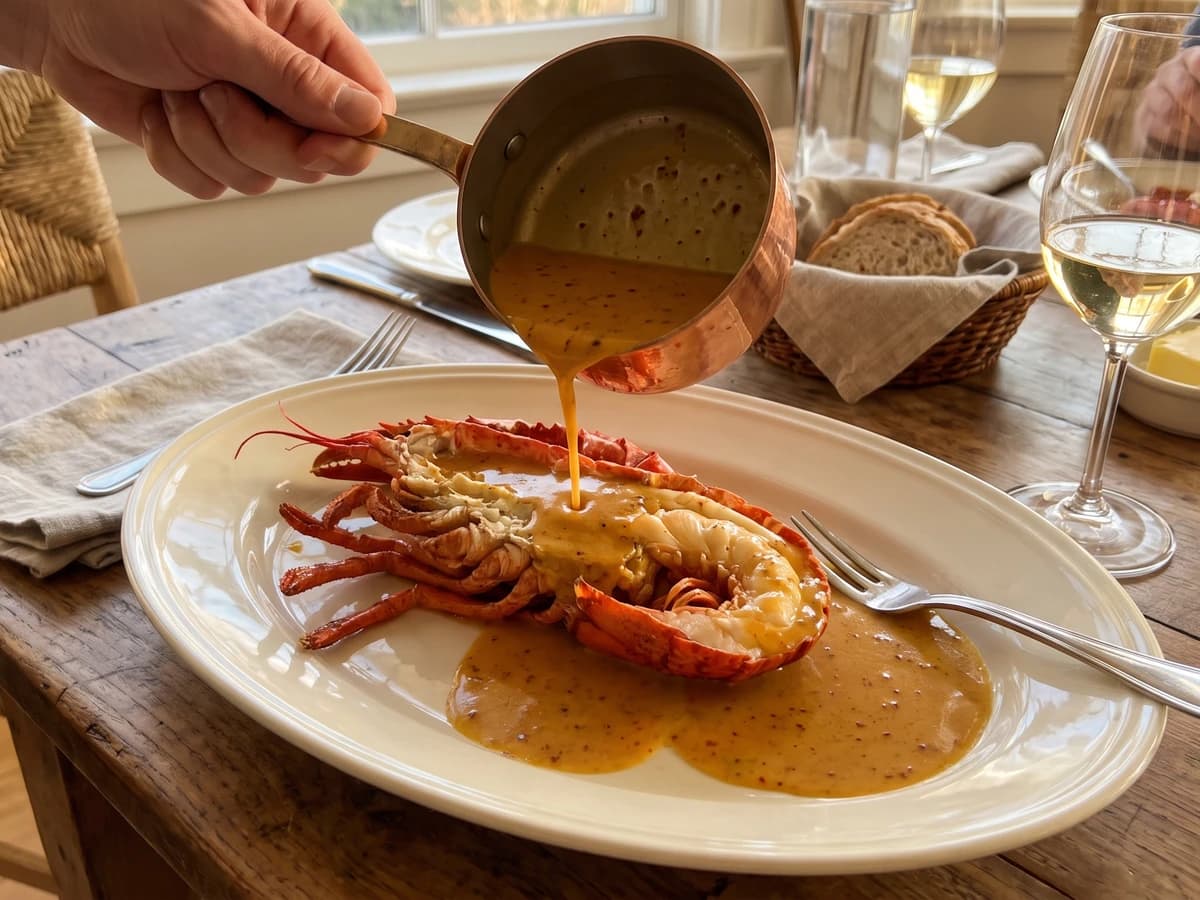
Sauce Orientale concentrates lobster-rich American Sauce with curry, then folds in cream away from the fire: a glossy, gently spiced derivative made for lobster, crayfish, and firm fish.
Chef Juliette
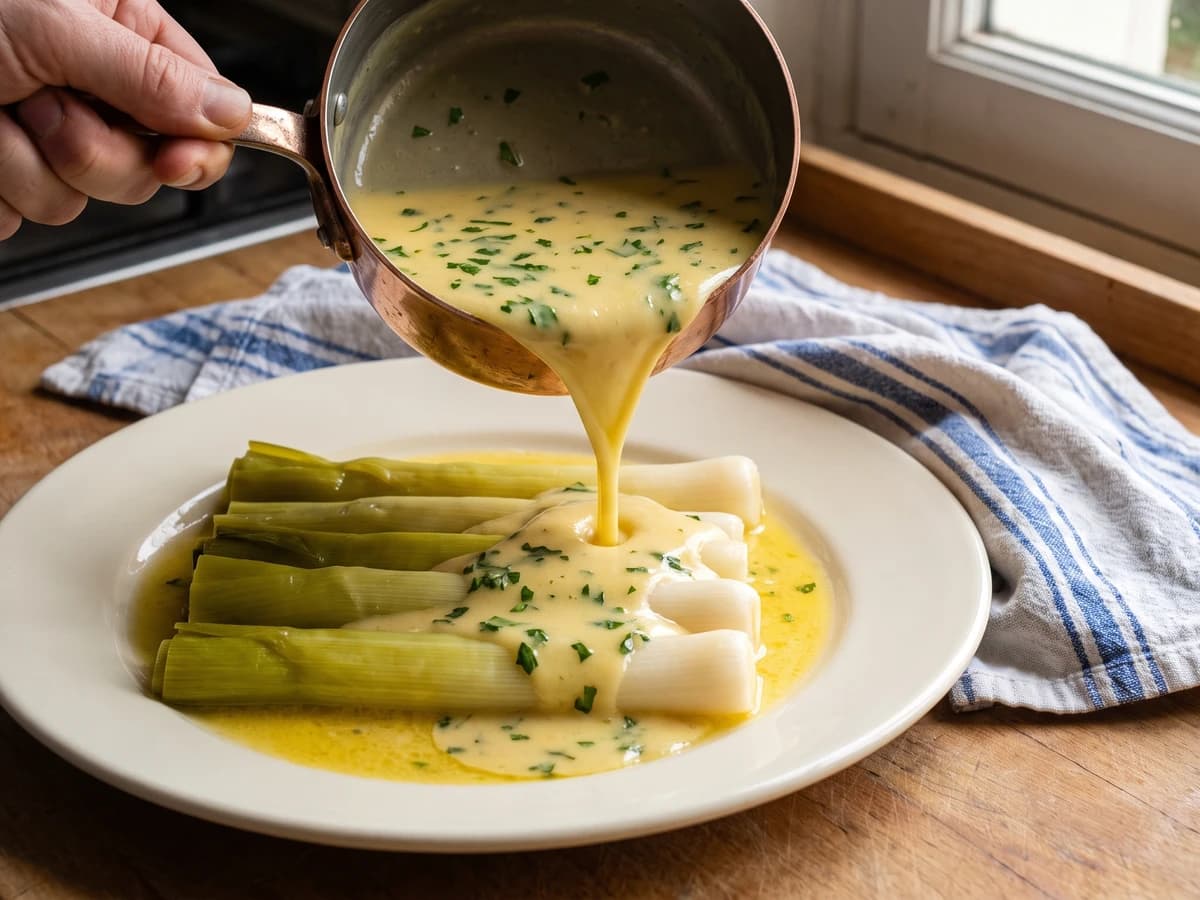
An old lesson in sauce families: Sauce Allemande takes mushroom liquor, then butter, lemon, and parsley, becoming a glossy Poulette for sheep's trotters, leeks, cauliflower, and anything needing gentle richness with a bright edge.