Chef Juliette
Ordinary or White Consommé
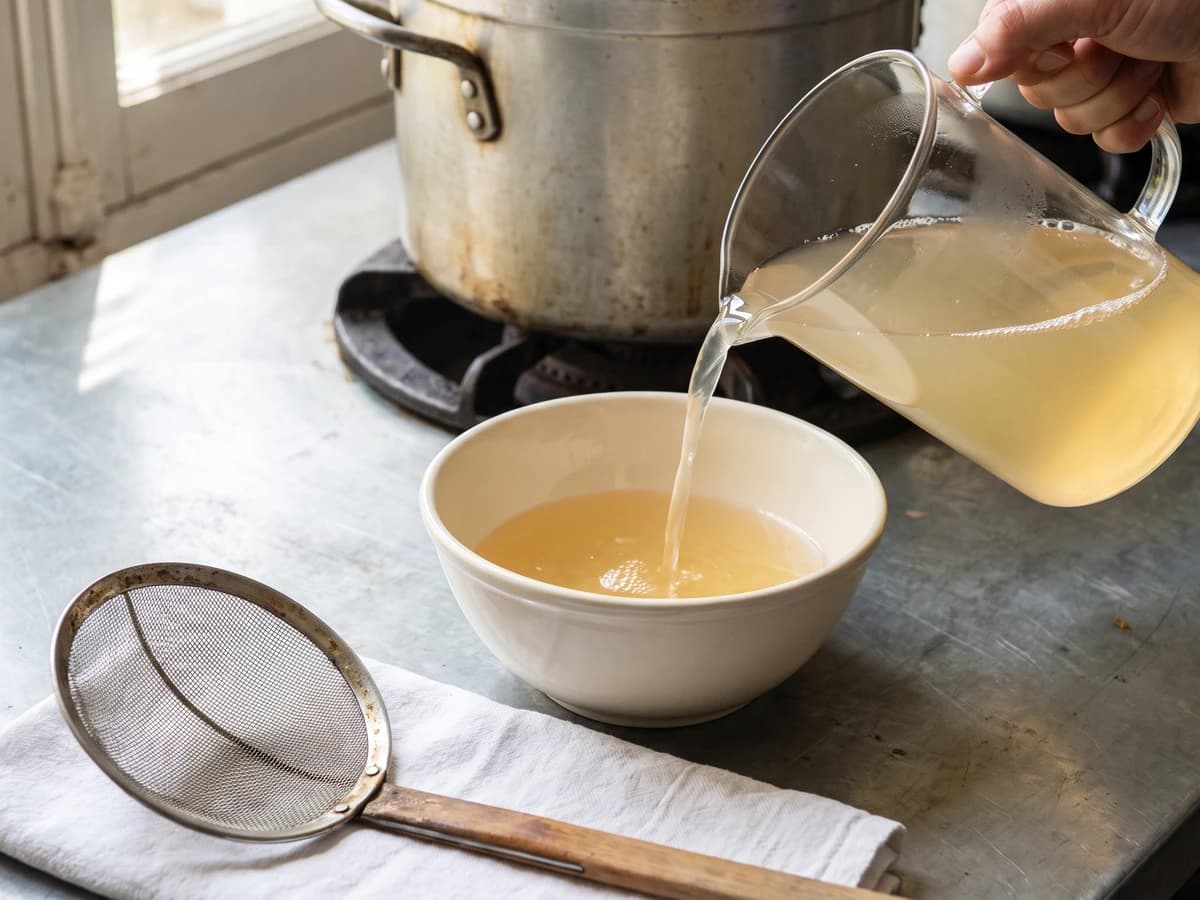
Beef shin, lean beef, and fowl begin in cold water and rise slowly toward a tremble. Skim before the boil, and you learn the quiet discipline that gives every clear French broth its backbone.
A cooking platform built around craft, culture, and the stories behind what we eat.
Created by Chef Juliette
Based on No. 23, Half Glaze, from Le Guide Culinaire (1907) by Auguste Escoffier
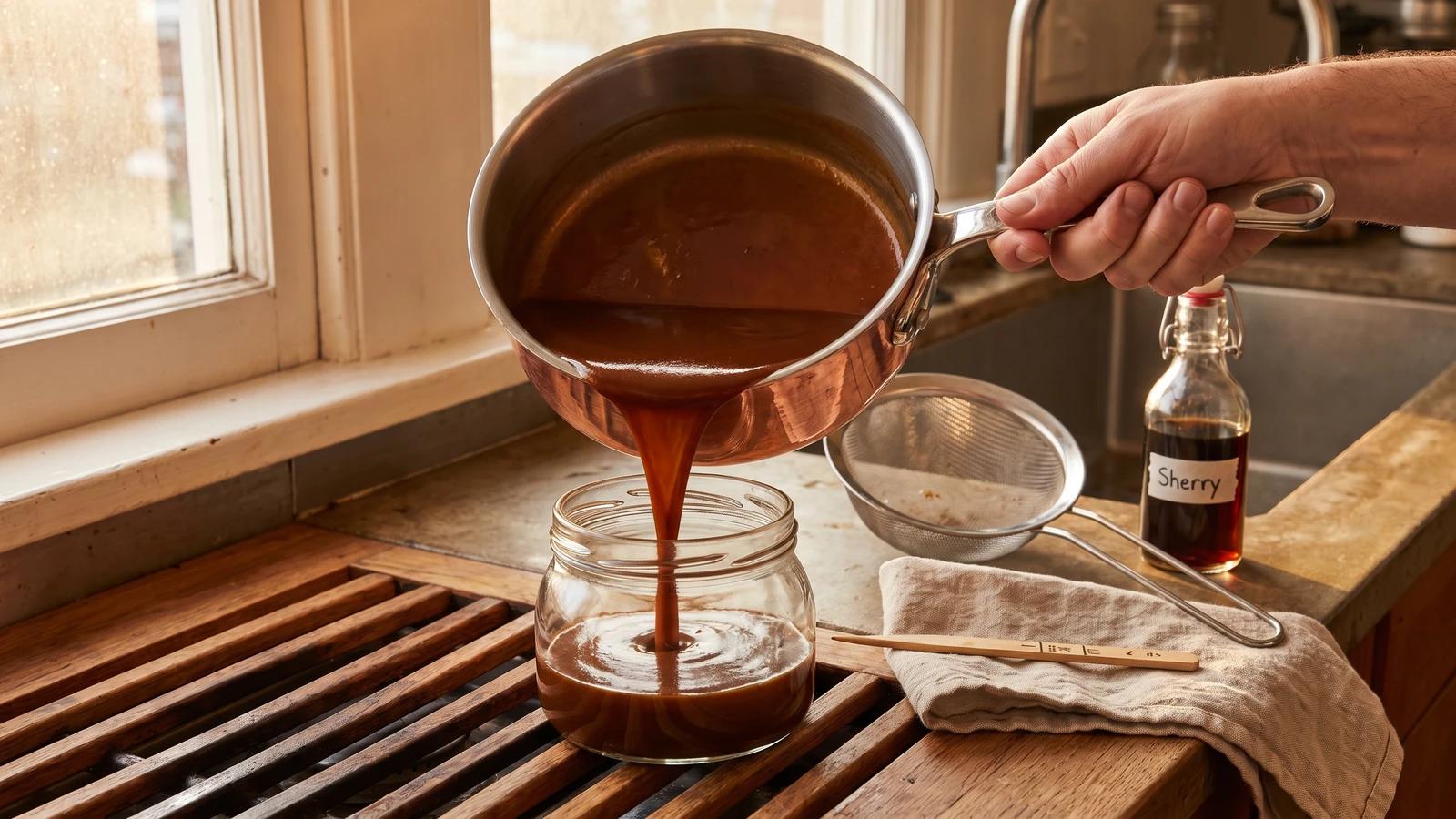
Demi-glace is the grammar of brown sauces: Espagnole and first-class brown stock reduced slowly, skimmed clean, strained fine, and sharpened with sherry off the heat until the sauce gleams and coats a spoon.
Demi-glace teaches the governing principle of every reduced brown sauce: concentration must deepen flavor and body without muddying either one. The one true thing to know before touching the pan is that reduction is measured by volume, not impatience. A raging boil gets you there faster and leaves the sauce greasy, cloudy, or scorched. A bare simmer gives the impurities time to rise and the sauce time to polish itself.
The original entry assumed a saucier on watch, first-class stock never off the fire, and a bain-marie (hot-water bath) waiting at service. Your home equivalent is one wide pot, a skimmer, a fine strainer, and a wooden skewer marked at the prescribed finishing volume. The book's one-quart formula is doubled here only to provide the requested two-quart make-ahead batch; its ratios and sequence remain exact. Continuous holding and repeated transfers were brigade scaffolding. Slow reduction, dépouillement, fine straining, and sherry added off the fire are the dish, and those stay.
Finished properly, the demi-glace pours mahogany-dark and glossy, with roasted depth from the Espagnole, clean gelatinous body from the stock, and sherry brightening the finish without announcing itself. Keep the simmer quiet and stop precisely at the marked volume. That is the step that decides everything.
Demi-glace belongs to the professional sauce kitchens of Paris and the national system of grande cuisine, not to a single regional farmhouse table. It became the working bridge between Sauce Espagnole and the smaller brown sauces, prepared in quantity, held in a bain-marie, and altered at the last moment for a particular meat or garnish. The often-missed point is that this formula is not simply brown stock reduced by half: equal Espagnole and first-class brown stock reduce well below half their combined volume, then sherry restores the final measure and brightens the glaze.
Quantity
8 cups (1.9 L / about 2 kg)
Quantity
8 cups (1.9 L / about 1.9 kg)
well skimmed
Quantity
4/5 cup (190 ml / 190 g)
Quantity
1 teaspoon (5 ml / 5 g)
softened, for preventing a skin
Quantity
Up to 1 cup (240 ml / 240 g)
only for correcting an over-reduction
| Ingredient | Quantity |
|---|---|
| finished Sauce Espagnole | 8 cups (1.9 L / about 2 kg) |
| finished first-class brown stockwell skimmed | 8 cups (1.9 L / about 1.9 kg) |
| excellent sherry | 4/5 cup (190 ml / 190 g) |
| unsalted butter (optional)softened, for preventing a skin | 1 teaspoon (5 ml / 5 g) |
| boiling water (optional)only for correcting an over-reduction | Up to 1 cup (240 ml / 240 g) |
Pour exactly 1.8 quarts (7.2 cups / 1.70 L) water into the empty reduction pot. Stand a clean wooden skewer upright against the center of the pot floor and score it at the waterline, then empty and dry the pot. This mark is your true measure: after the Espagnole and stock reduce to that level, the sherry will restore the sauce to its final two-quart yield.
Combine the Sauce Espagnole and first-class brown stock in the wide pot. Warm them over medium heat, stirring gently until any chilled gel has melted and the mixture is completely even, then bring it only to a bare simmer. Leave the pot uncovered. Do not season now, because reduction concentrates every grain of salt already present in the two foundations.
Hold the sauce at the quietest steady simmer for 2 to 3 hours, stirring across the pot floor every 15 minutes and skimming away the foam and fat that gather on top. This is dépouillement, the slow skimming that leaves a brown sauce clear-tasting and polished. If the sauce boils hard and turns cloudy or greasy, lower the heat, leave it undisturbed for five minutes, then skim what rises. Ça se rattrape. If you smell scorching, stop stirring at once and ladle the unburned sauce into a clean pot without scraping the floor; bitterness that has spread through the whole sauce cannot honestly be hidden.
Begin checking with the marked skewer as the sauce approaches half its starting volume. When it reaches the mark, pass it through a fine-mesh chinois into a clean heatproof vessel without pressing on anything caught in the strainer. Confirm that you have 1.8 quarts (7.2 cups / 1.70 L). If there is more, return it to the rinsed pot and reduce gently; if it slipped below the measure, restore it with only enough boiling water to reach the target. You are replacing lost water, not diluting the intended sauce.
Take the strained reduction completely off the heat and stir in the sherry. Do not boil it afterward; the off-fire finish preserves the sherry's lifted, nutty aroma against the deep roasted foundation. The demi-glace should be nappant (coating), flowing from a spoon in a glossy ribbon and leaving a fine film across its back. Taste before reaching for salt, because the foundations have already concentrated.
For service within an hour, cover the sauce and keep it in a bain-marie, with the container set over gently heated water that reaches halfway up its sides. If a lid is impractical, smooth the optional butter lightly across the surface. Should a skin form, lift it away instead of beating it back into the sauce. For make-ahead storage, divide the demi-glace among shallow containers, cool them promptly in an ice bath, then cover and refrigerate within two hours. The sauce will set firmly in the cold and melt back to its gloss over gentle heat. One cook, one stove, one evening, and the whole brown sauce family is waiting.
1 serving (about 240g)
Culinary guides, cultural storytelling, and the editorial depth that makes cooking meaningful.
Discover Culinary ExplorerChef Juliette
Beef shin, lean beef, and fowl begin in cold water and rise slowly toward a tremble. Skim before the boil, and you learn the quiet discipline that gives every clear French broth its backbone.
Chef Juliette
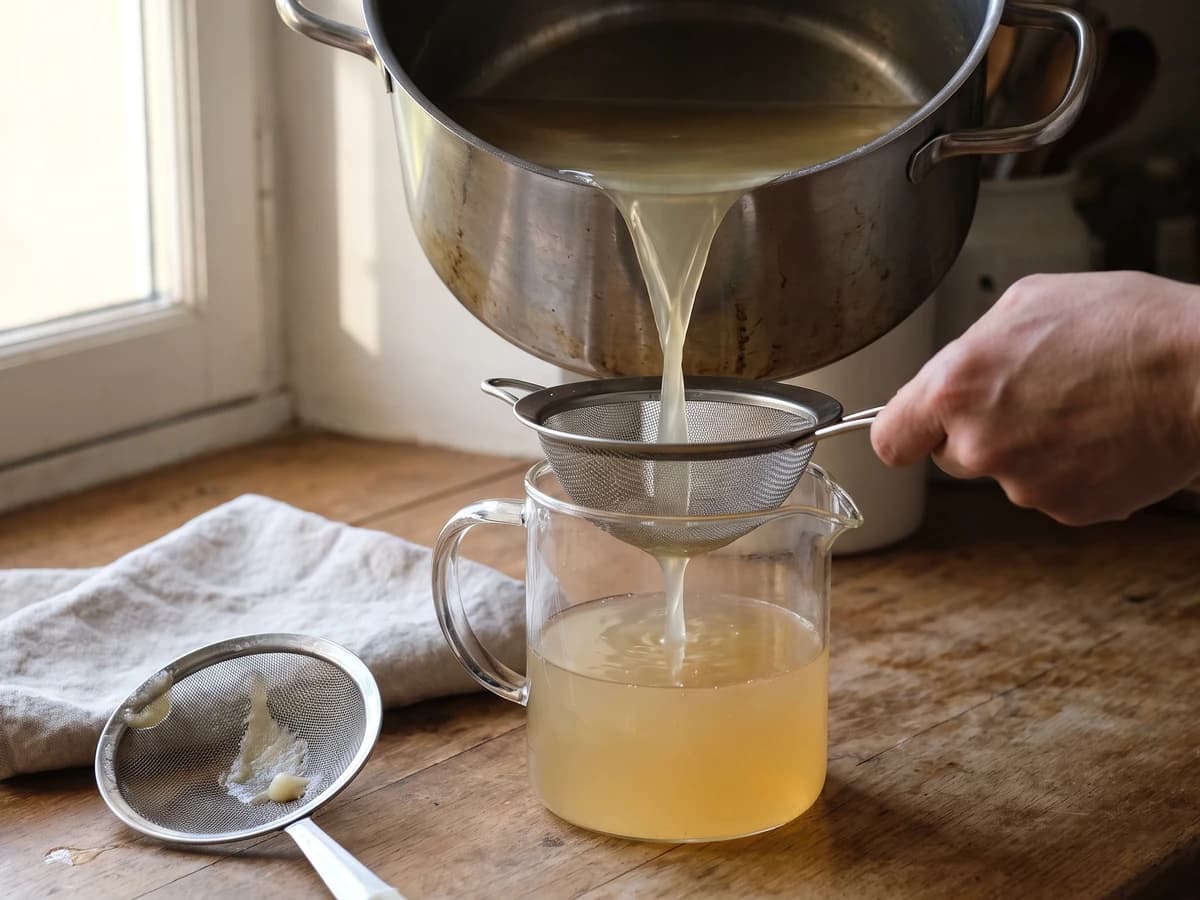
Break the veal bones small, then give them eight hours at a bare tremble. This pale, gelatinous fond becomes the quiet foundation beneath velouté, blanquette, and every sauce that must stay light.
Chef Juliette
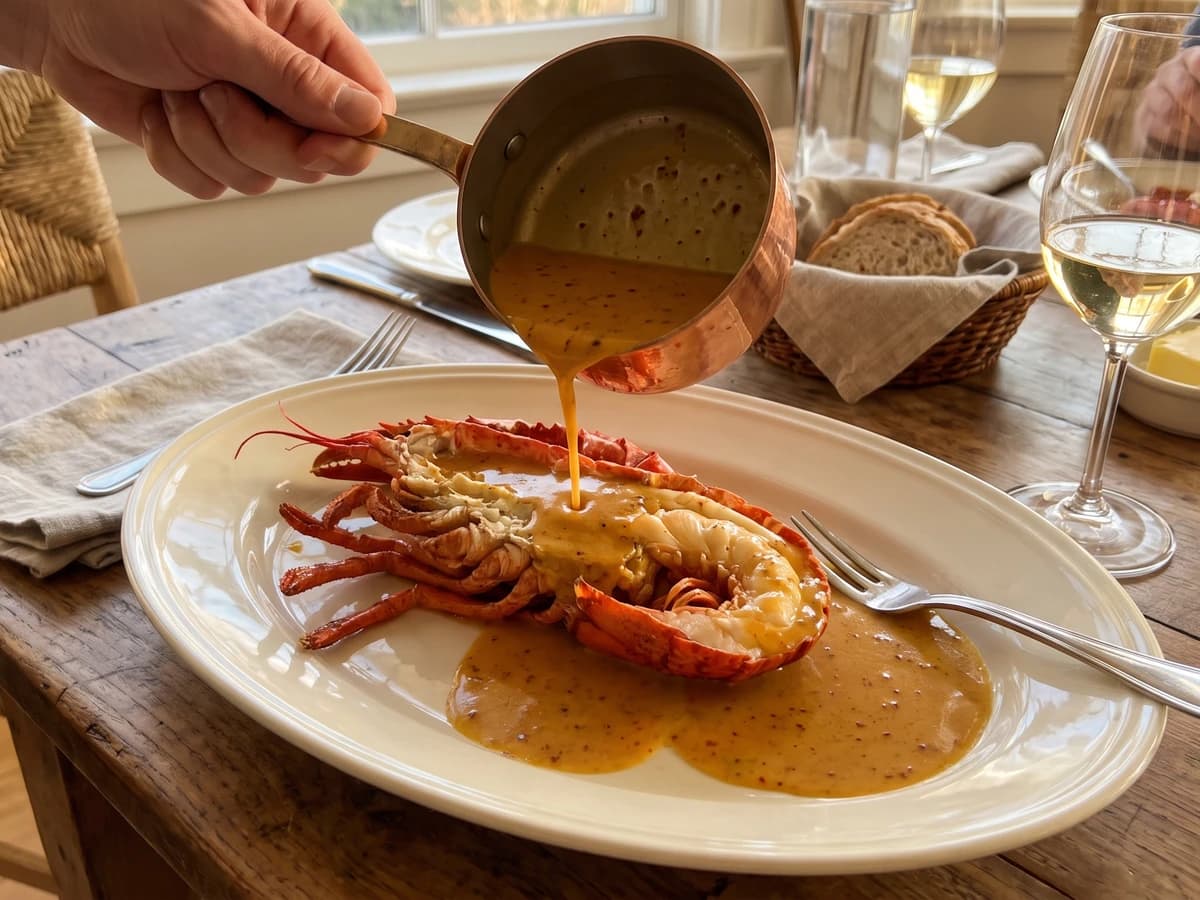
Sauce Orientale concentrates lobster-rich American Sauce with curry, then folds in cream away from the fire: a glossy, gently spiced derivative made for lobster, crayfish, and firm fish.
Chef Juliette
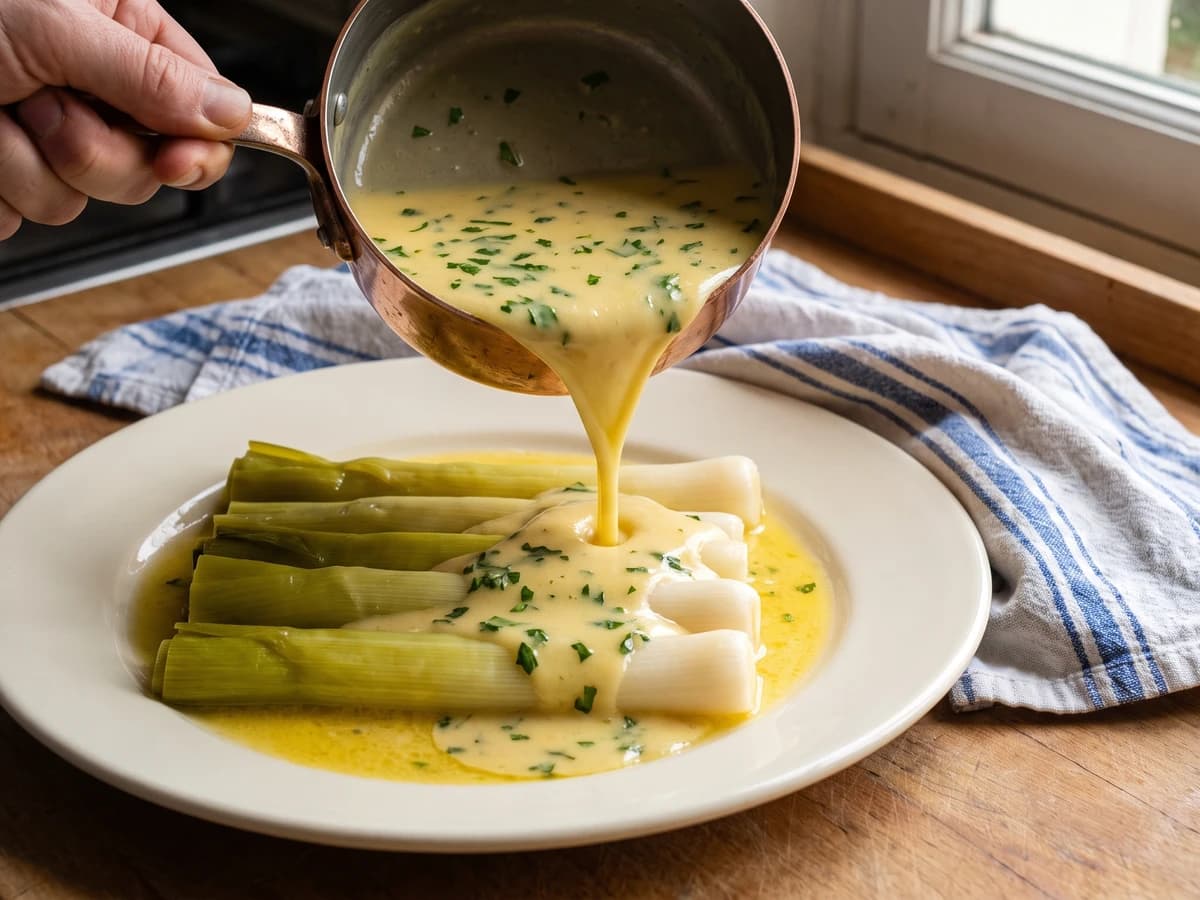
An old lesson in sauce families: Sauce Allemande takes mushroom liquor, then butter, lemon, and parsley, becoming a glossy Poulette for sheep's trotters, leeks, cauliflower, and anything needing gentle richness with a bright edge.