Chef Juliette
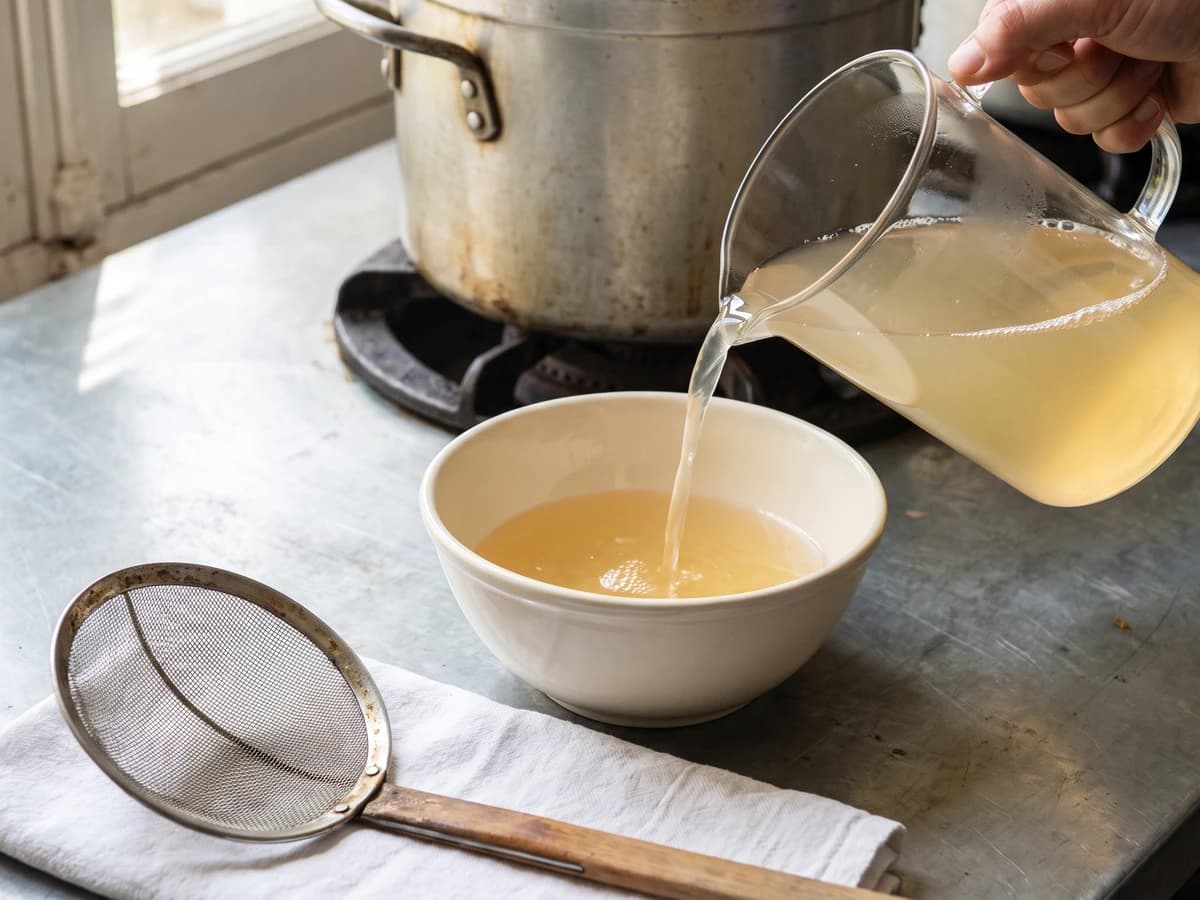
Ordinary or White Consommé
Beef shin, lean beef, and fowl begin in cold water and rise slowly toward a tremble. Skim before the boil, and you learn the quiet discipline that gives every clear French broth its backbone.
A cooking platform built around craft, culture, and the stories behind what we eat.
Created by Chef Juliette
Based on No. 20, Pale Roux, from Le Guide Culinaire (1907) by Auguste Escoffier
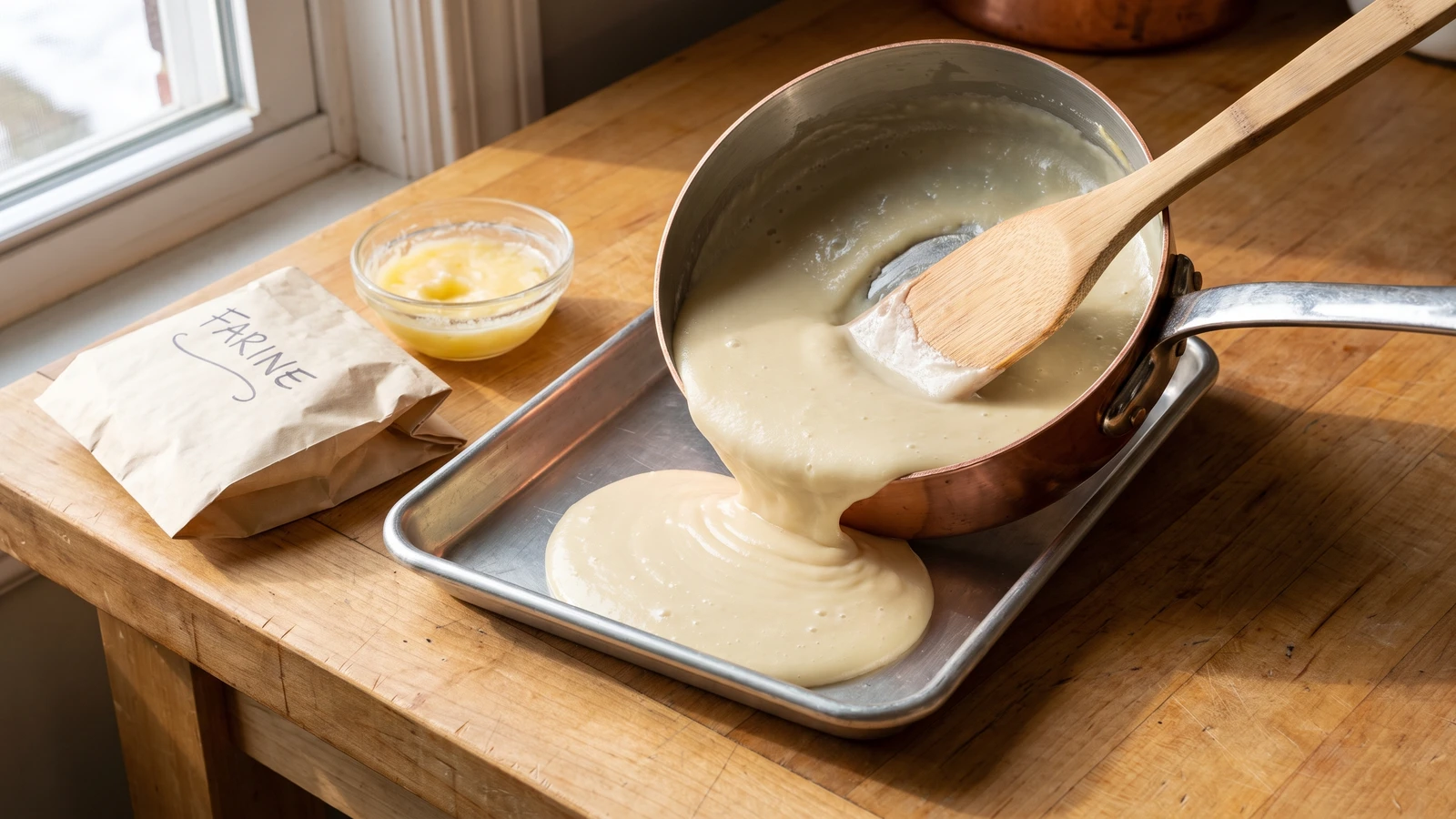
Roux blond is flour and clarified butter cooked to the edge of colour, then stopped cold: the ivory foundation of velouté, and a lesson in cooking starch without browning it.
Roux blond teaches the difference between cooking flour and colouring it. The one true thing to know before touching the pan is this: gentle heat must remove the flour's rawness before visible browning begins. Too soon and the roux tastes chalky; one shade too far and you've entered another sauce family.
The source formula assumed a saucier keeping a large batch moving beside stock that never left the fire. At home, a heavy saucepan with a light interior, a flexible spatula, and your full attention are the honest equivalents. A salamander has no work here; fierce top heat is exactly what this preparation must avoid. The brigade quantity was scaffolding, so I've reduced it to enough for about two quarts of sauce while preserving the classical 8:9 ratio of clarified butter to flour by weight. The low heat and precise stopping point are the dish, and they stay.
Watch the colour, not the clock. The roux should lose its raw flour smell, become satin-smooth, and remain ivory as the first warm tint approaches. Scrape it from the hot pan the instant that change begins, because residual heat keeps cooking after the burner is off. That transfer is the step that matters most. One cook, one stove, one evening.
Roux blond belongs to the professional sauce kitchens of Paris, where the saucier organized sauces into families built from stocks, thickeners, reductions, and finishes. From the sauce station it passed into cuisine bourgeoise as the quiet foundation for velouté, cream soups, and pale derivatives. Its pallor is not evidence of haste: the flour is cooked gently until its raw character disappears, then stopped before browning weakens its thickening power and changes its flavour.
Quantity
½ cup (120 ml / 113 g)
Quantity
1 cup (240 ml / 127 g)
| Ingredient | Quantity |
|---|---|
| clarified unsalted butter | ½ cup (120 ml / 113 g) |
| plain flour | 1 cup (240 ml / 127 g) |
Weigh the clarified butter and flour separately. The classical 8:9 ratio by weight is preserved here, so weigh the butter after its water and milk solids have been removed. Volume measures are provided, but the scale gives you the source formula without guesswork.
Set a heavy saucepan with a light-coloured interior over low heat. Add the clarified butter and warm it only until fluid and glistening, with no browning. Tip in the flour all at once and whisk briskly for about 30 seconds, then change to a flexible spatula and press out every dry pocket. The paste should be smooth, thick, and evenly ivory.
Keep the heat low and cook for 8 to 10 minutes, stirring steadily across the entire floor and into the corners of the pan. At first the roux smells chalky; as it cooks, that raw smell softens into warm wheat and butter, while fine bubbles move through the glossy paste. It must remain ivory. Do not wait for visible gold, because that belongs to the next roux.
The instant the ivory tone begins to warm toward straw, remove the pan from the heat and scrape the roux immediately onto a cool, shallow metal tray. Spread it about 1 cm thick so the retained heat escapes. If it has turned lightly tan but still smells clean, ça se rattrape: reserve it for a darker preparation and begin the roux blond again. Colour cannot be cooked backward. If you see dark specks or smell bitterness, discard it.
Leave the roux uncovered until completely cool, about 20 minutes, then transfer it to an airtight container. Refrigerate it for up to two weeks, or freeze it in 2-tablespoon portions for up to three months. Label the portions clearly; an ivory cube of roux and a cube of stock can look surprisingly alike in a crowded freezer.
To make about 2 quarts of medium-bodied sauce, rewarm the roux gently until supple and whisk in cool liquid one ladle at a time, smoothing each addition before adding the next. You may instead whisk pieces of cold roux into liquid held at a simmer. If lumps form, remove the pan from the heat and whisk firmly from the centre outward; pass the sauce through a fine sieve only if a few persist. Return it to a bare simmer for at least 15 minutes so the starch hydrates fully and the sauce becomes smooth.
1 serving (about 240g)
Culinary guides, cultural storytelling, and the editorial depth that makes cooking meaningful.
Discover Culinary ExplorerChef Juliette
Beef shin, lean beef, and fowl begin in cold water and rise slowly toward a tremble. Skim before the boil, and you learn the quiet discipline that gives every clear French broth its backbone.
Chef Juliette
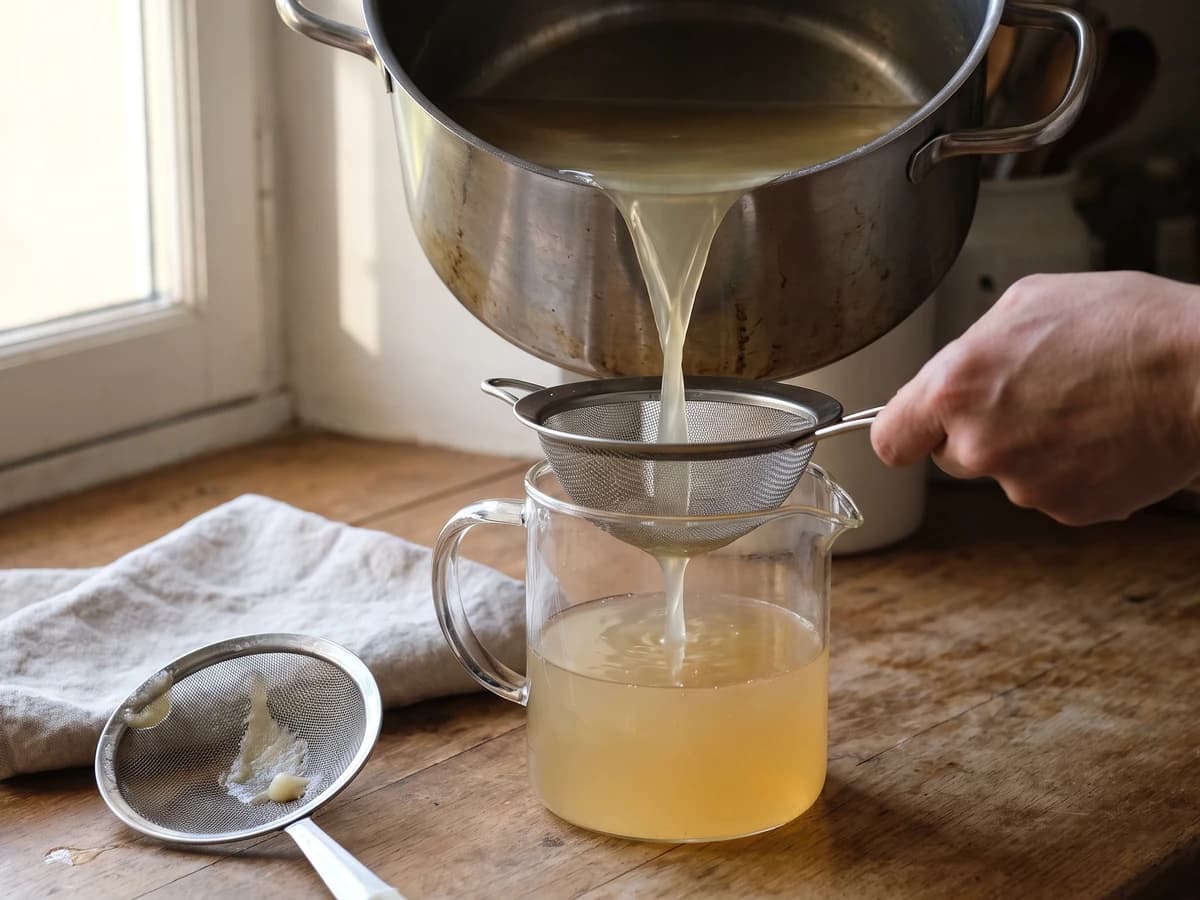
Break the veal bones small, then give them eight hours at a bare tremble. This pale, gelatinous fond becomes the quiet foundation beneath velouté, blanquette, and every sauce that must stay light.
Chef Juliette
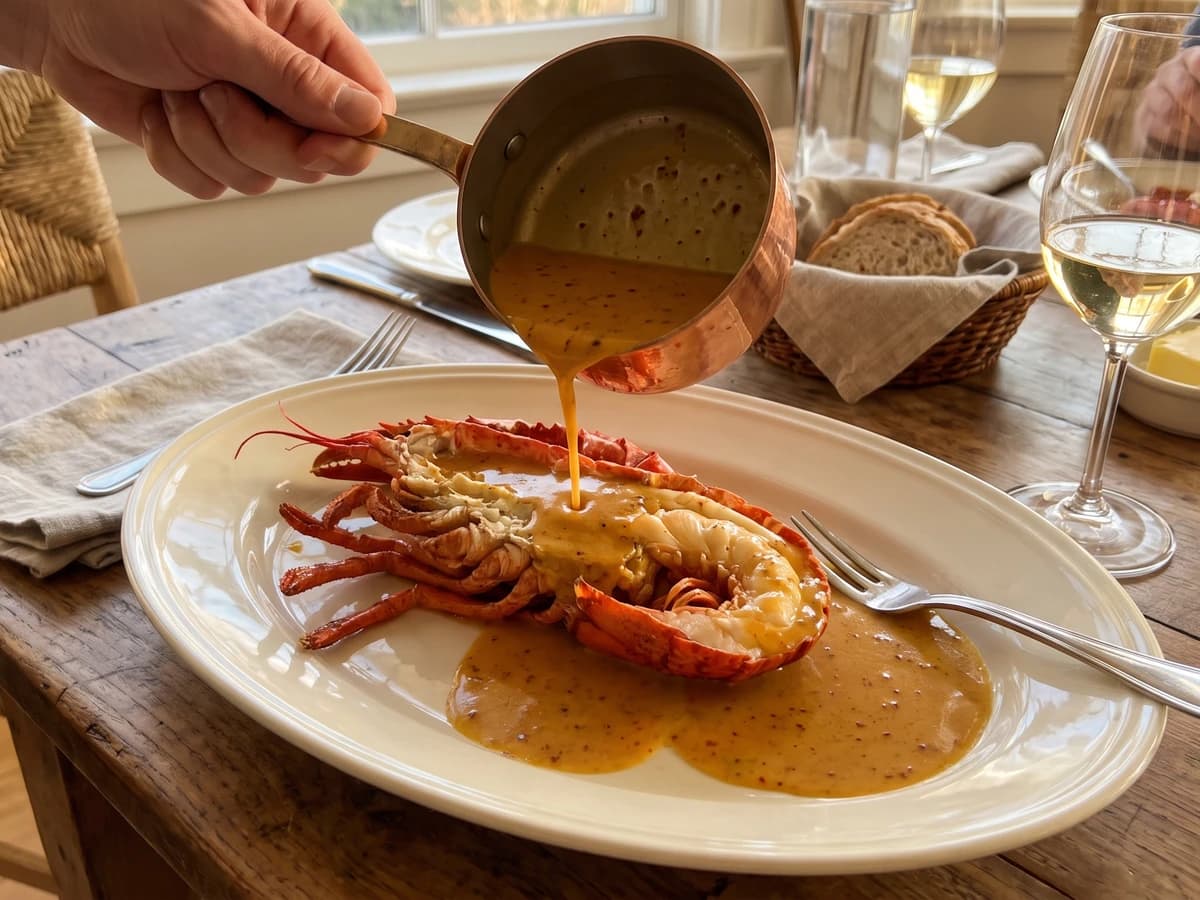
Sauce Orientale concentrates lobster-rich American Sauce with curry, then folds in cream away from the fire: a glossy, gently spiced derivative made for lobster, crayfish, and firm fish.
Chef Juliette
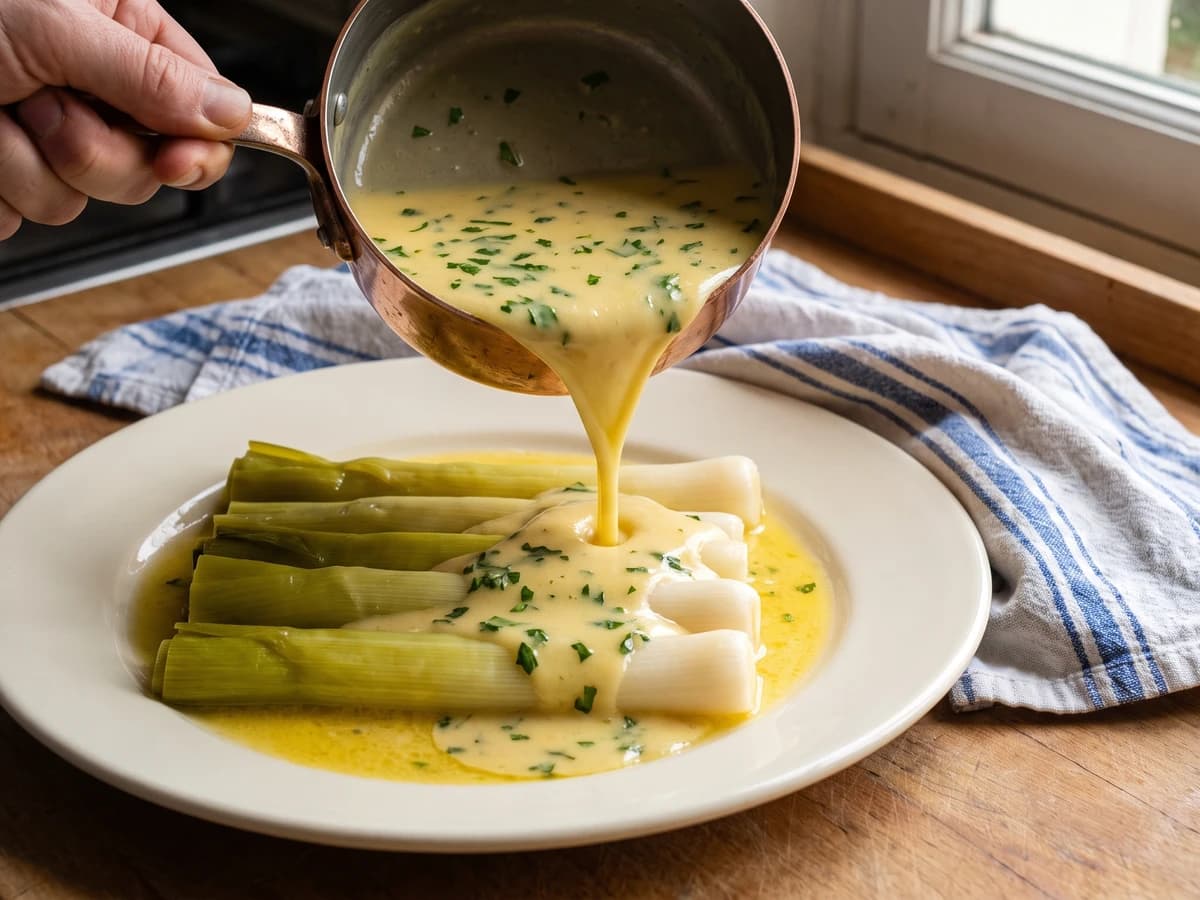
An old lesson in sauce families: Sauce Allemande takes mushroom liquor, then butter, lemon, and parsley, becoming a glossy Poulette for sheep's trotters, leeks, cauliflower, and anything needing gentle richness with a bright edge.