Chef Juliette
Ordinary or White Consommé
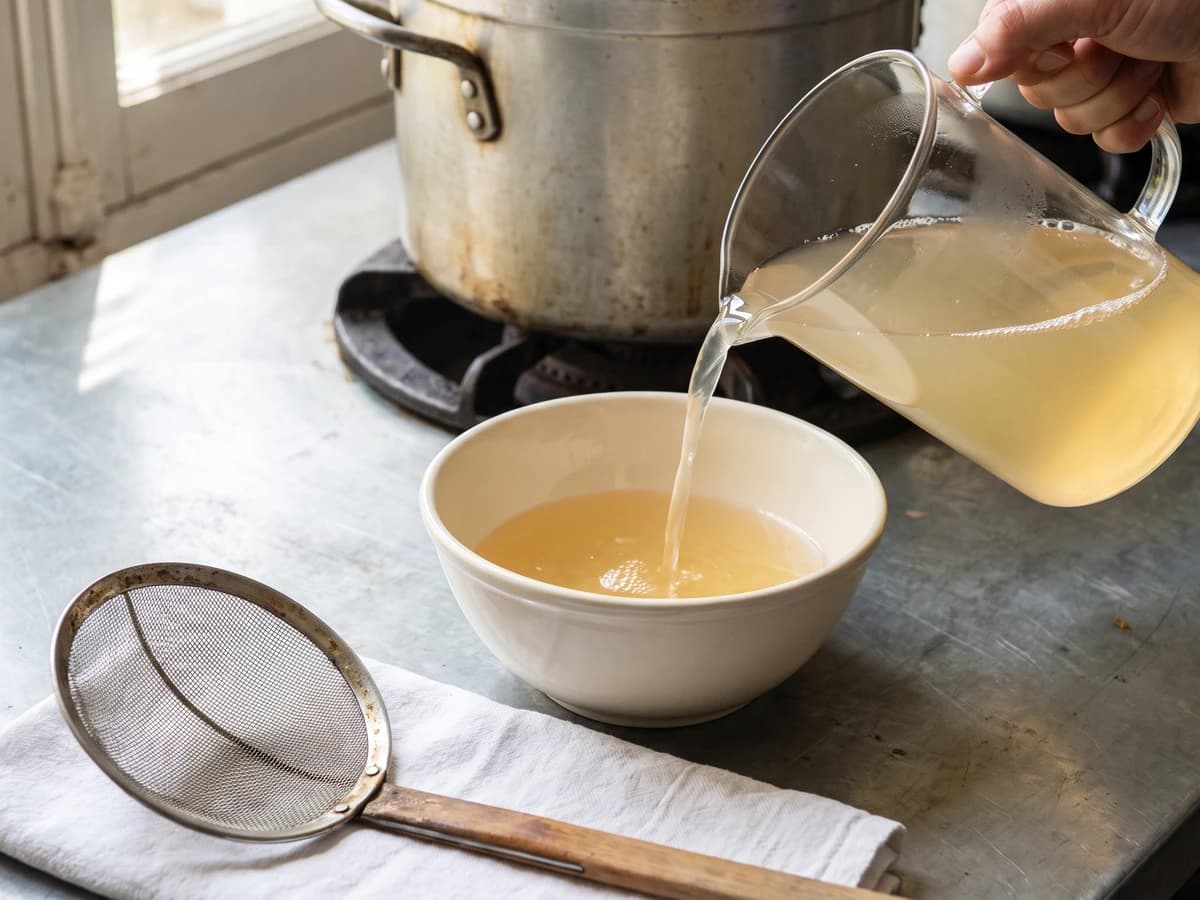
Beef shin, lean beef, and fowl begin in cold water and rise slowly toward a tremble. Skim before the boil, and you learn the quiet discipline that gives every clear French broth its backbone.
A cooking platform built around craft, culture, and the stories behind what we eat.
Created by Chef Juliette
Based on No. 22, Brown Sauce or Espagnole, from Le Guide Culinaire (1907) by Auguste Escoffier
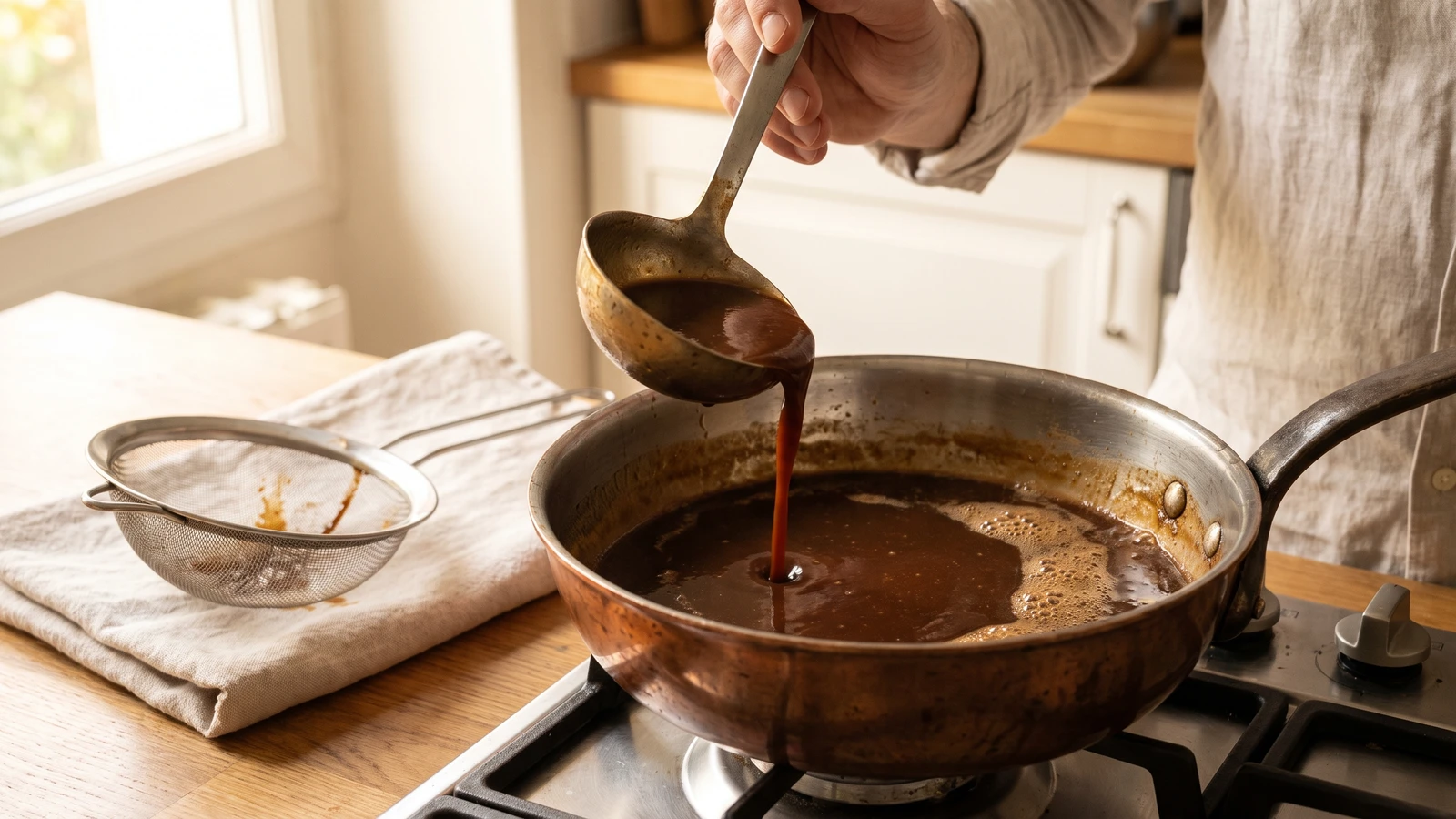
Espagnole (brown sauce) is the grand lesson in roux, stock, and patient skimming: deep mahogany, clear rather than muddy, and ready to carry the whole family of classical brown sauces.
Sauce Espagnole (brown sauce) teaches the foundation of the classical brown-sauce family: clarity is built before concentration. The one true thing to know before you touch the pan is that strong, clear stock and a scrupulously cooked brown roux decide everything. Skimming can refine a sound foundation; it cannot give a weak one backbone.
The original recipe assumed a saucier on staff, brown stock never off the fire, and an open range where a tall saucepan could be wedged at an angle. For this two-quart batch, a heavy eight-quart saucepan set slightly off-centre over the smallest burner replaces that tilted open-fire arrangement, and one mid-cook straining replaces two or three changes of saucepan. Those repeated transfers were brigade scaffolding. The six-hour dépouillement, the slow simmering and skimming that clarify the sauce, is the dish and stays. One cook, one stove, one evening.
Done properly, Espagnole turns deep mahogany yet brilliant, lightly coats a spoon, and tastes of roasted stock rather than flour. The step that matters most is the dépouillement: one quiet simmering point, patient skimming, and no stirring once the first boil is reached.
Espagnole belongs to the classical sauce kitchens of Paris, where it was organized as the brown mother sauce of the French canon. It traveled not as a sauce usually served alone, but as the working base from which cooks built a broad family of reductions and finished brown sauces. Despite its name, it is not a regional Spanish sauce; its identity is brown stock, brown roux, tomato, diced aromatics, and the disciplined skimming that makes a dark sauce clear.
Quantity
3½ quarts (3.3 L / about 3.4 kg)
divided into 3 quarts for the sauce and 2 cups held hot for replenishing
Quantity
1 cup (240 ml / 225 g)
at room temperature
Quantity
2½ cups (590 ml / 455 g) fresh tomatoes, or 1¾ cups (415 ml / 455 g) tomato purée
roughly cut if using fresh tomatoes
Quantity
1½ cups (355 ml / 225 g) Mirepoix (No. 228)
| Ingredient | Quantity |
|---|---|
| strong, clear, unsalted brown stock or estouffadedivided into 3 quarts for the sauce and 2 cups held hot for replenishing | 3½ quarts (3.3 L / about 3.4 kg) |
| prepared brown roux made with flour and clarified butterat room temperature | 1 cup (240 ml / 225 g) |
| ripe fresh tomatoes or unsalted tomato puréeroughly cut if using fresh tomatoes | 2½ cups (590 ml / 455 g) fresh tomatoes, or 1¾ cups (415 ml / 455 g) tomato purée |
| Mirepoix | 1½ cups (355 ml / 225 g) Mirepoix (No. 228) |
Bring 3 quarts (2.8 L) of the brown stock or estouffade just to a simmer. Keep the remaining 2 cups (475 ml) hot in a small saucepan; this reserved stock replaces what evaporates during the long clarification, exactly as the larger kitchen batch required.
Set the brown roux in the heavy saucepan off the heat. Whisk in one cup of hot stock slowly, working it into a perfectly smooth paste, then add the remaining stock in three or four additions. If small lumps appear, stop adding liquid and whisk the paste smooth before continuing. If stubborn lumps remain, pass the mixture through a fine sieve now; ça se rattrape, and this is the moment to do it.
Set the saucepan over medium heat and stir continuously with the whisk or a flat wooden spatula, reaching well into the corners, until the sauce comes to its first full boil. Do not leave it before that moment. The flour is most likely to settle and catch while the sauce is heating; once it boils, remove the whisk and do not stir again.
Move the saucepan to the smallest burner and position it slightly off-centre so a bare simmer breaks at only one edge. Never wedge or tilt a hot pot. For about three hours, skim away the grey froth, loose particles, and excess fat as they collect near that quiet boiling point. Do not stir them back through the sauce. If you smell scorching, don't scrape the bottom: pour the clean upper sauce into a heatproof bowl, leave the stuck layer behind, wash the saucepan, and continue. A light catch can be rescued; a bitter, burnt sauce cannot.
After about three hours, pass the sauce through the fine-mesh chinois into a large heatproof bowl without pressing. Wash the saucepan thoroughly, return the strained sauce to it, and add the reserved 2 cups of hot stock. Resume the same one-point simmer for another hour, skimming as needed. At this scale, one careful transfer removes what two or three saucepan changes handled in the brigade batch.
When roughly two hours remain and the sauce looks clearer, more brilliant, and slower to throw scum, add the tomatoes or tomato purée and the Mirepoix (No. 228). Fold them through once, then restore the bare simmer. Continue the dépouillement for two hours, skimming the surface without stirring the solids through the sauce.
Pass the Espagnole through a clean fine-mesh chinois without pressing the tomato or aromatic solids, since pressure forces cloudiness back into the sauce. Measure it. If you have more than 2 quarts, return it to the clean pan and reduce gently; if it has fallen short or become pasty, whisk in enough hot brown stock to restore 2 quarts. It should coat the back of a spoon lightly, run in a smooth ribbon, and shine rather than sit like gravy.
If the Espagnole is not being used at once, pour it into a wide stainless-steel bowl set over an ice bath and keep it moving with a clean whisk until the first heat leaves it. Stir frequently and replenish the ice until the sauce reaches 40°F (4°C), then cover and refrigerate. If a skin begins to form while the sauce is still warm, whisk it smooth and strain once more before storing.
1 serving (about 60g)
Culinary guides, cultural storytelling, and the editorial depth that makes cooking meaningful.
Discover Culinary ExplorerChef Juliette
Beef shin, lean beef, and fowl begin in cold water and rise slowly toward a tremble. Skim before the boil, and you learn the quiet discipline that gives every clear French broth its backbone.
Chef Juliette
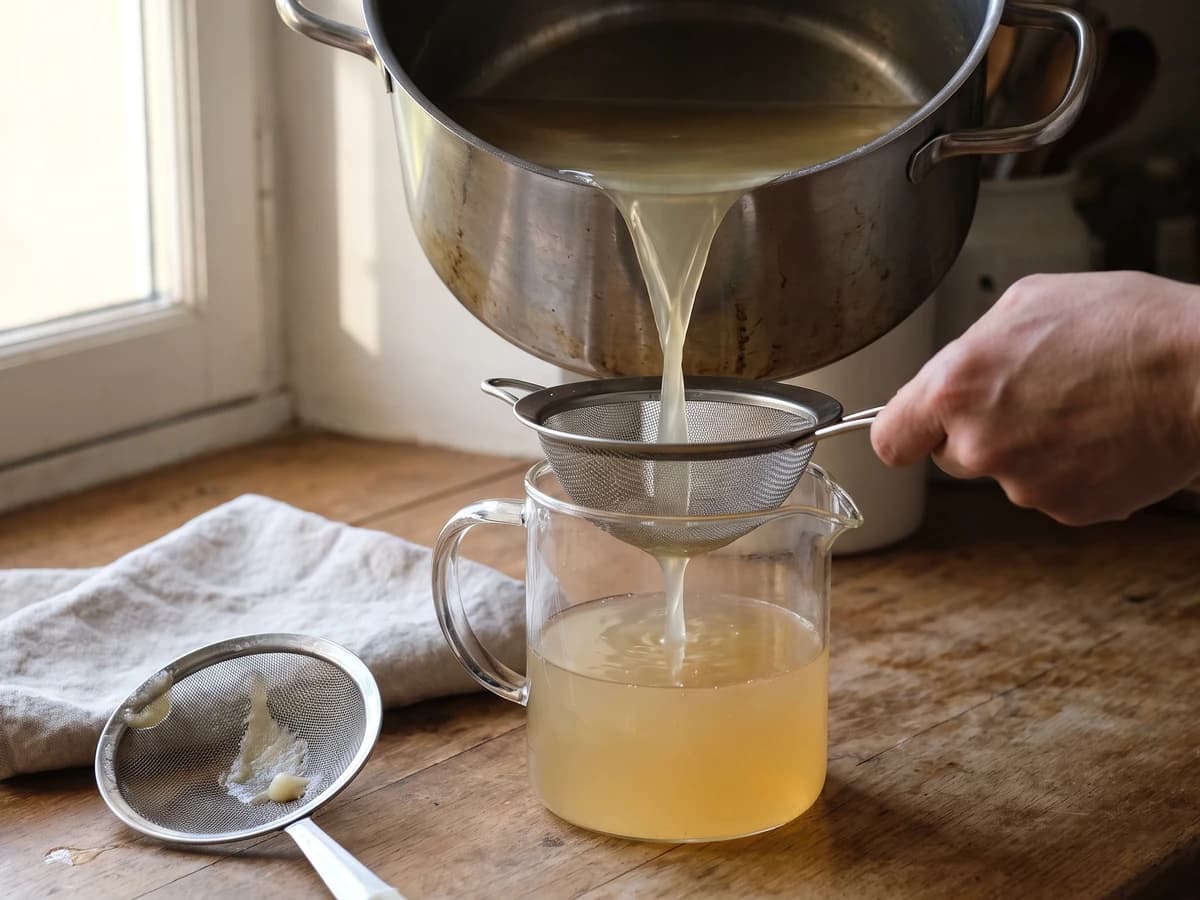
Break the veal bones small, then give them eight hours at a bare tremble. This pale, gelatinous fond becomes the quiet foundation beneath velouté, blanquette, and every sauce that must stay light.
Chef Juliette
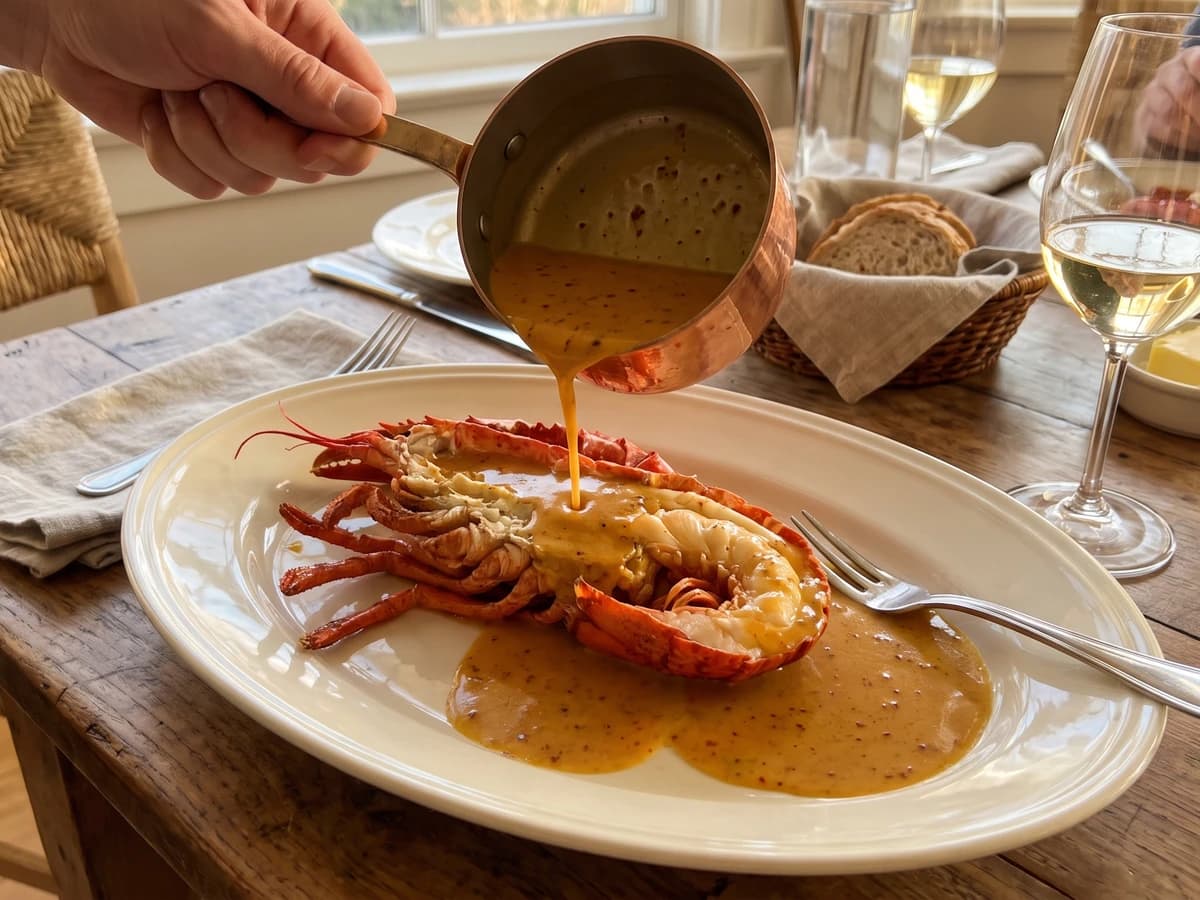
Sauce Orientale concentrates lobster-rich American Sauce with curry, then folds in cream away from the fire: a glossy, gently spiced derivative made for lobster, crayfish, and firm fish.
Chef Juliette
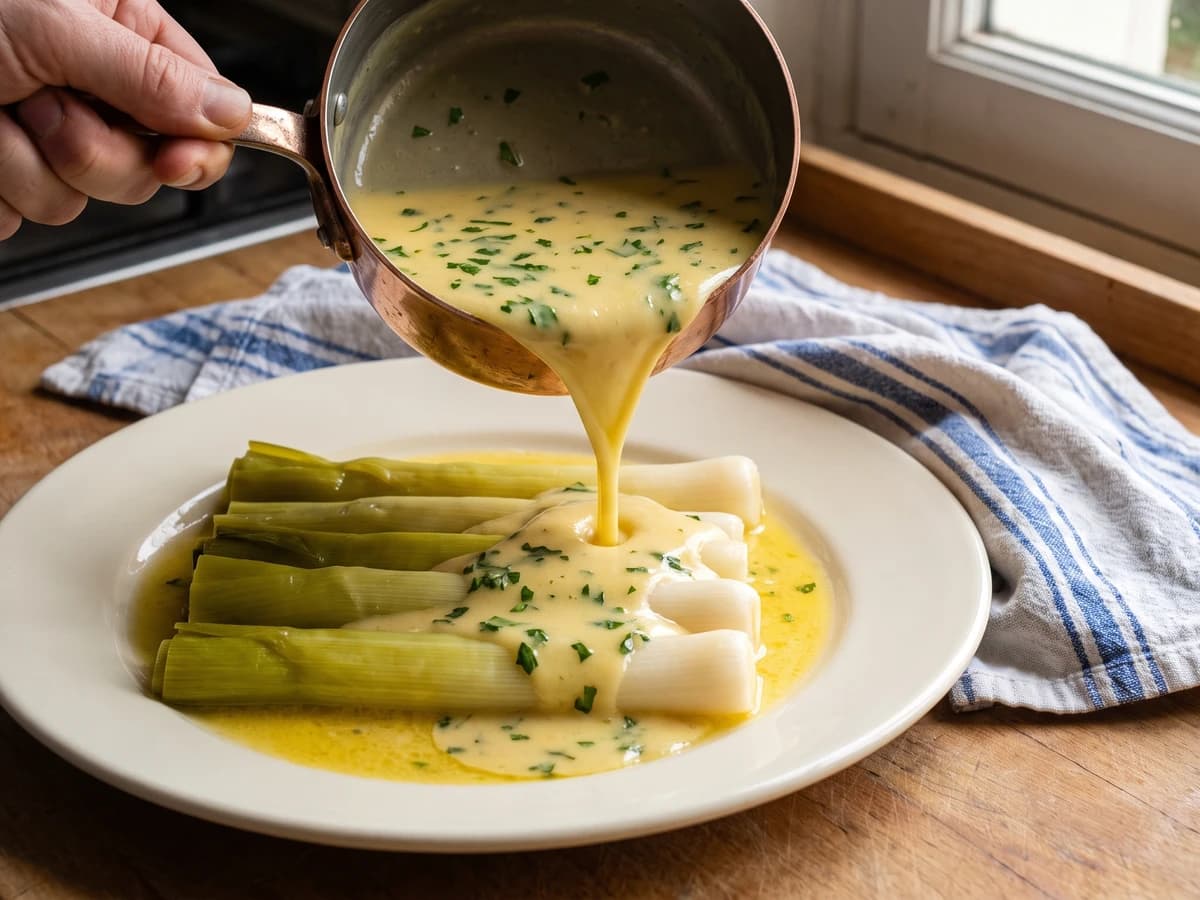
An old lesson in sauce families: Sauce Allemande takes mushroom liquor, then butter, lemon, and parsley, becoming a glossy Poulette for sheep's trotters, leeks, cauliflower, and anything needing gentle richness with a bright edge.