Chef Juliette
Ordinary or White Consommé
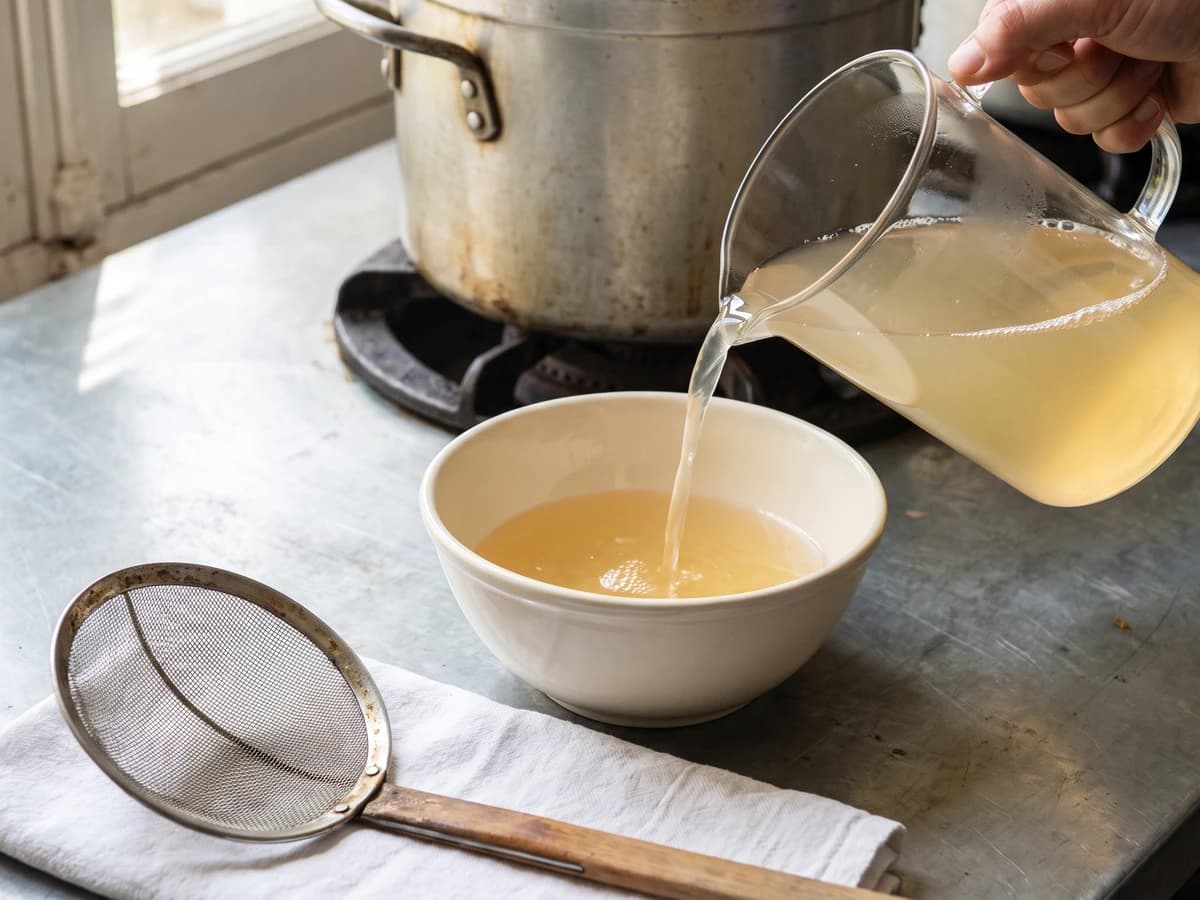
Beef shin, lean beef, and fowl begin in cold water and rise slowly toward a tremble. Skim before the boil, and you learn the quiet discipline that gives every clear French broth its backbone.
A cooking platform built around craft, culture, and the stories behind what we eat.
Created by Chef Juliette
Based on No. 19, Brown Roux, from Le Guide Culinaire (1907) by Auguste Escoffier
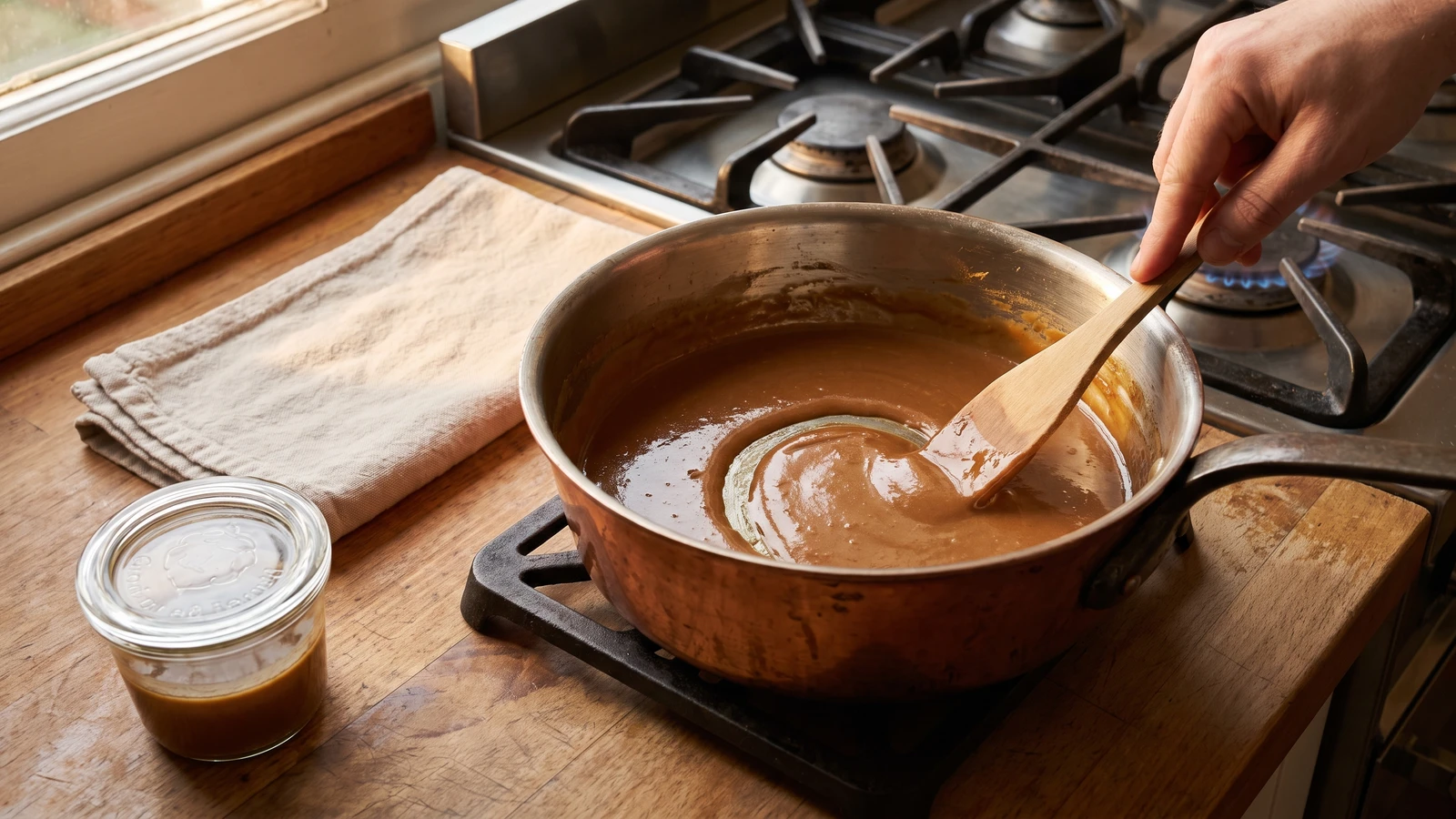
Flour and clarified butter, cooked slowly to a fine hazelnut brown: the foundational roux that gives dark French sauces depth while preserving enough starch to bind them.
Roux brun (brown roux) teaches the bargain at the heart of every browned thickener: gentle heat builds flavor, while fierce heat destroys the starch that must bind the sauce. The one true thing to know before you touch the pan is this: color must arrive slowly through the whole paste, never as dark flecks at the bottom. Rush it and no amount of stock or simmering will take the bitterness away.
The old sauce kitchen assumed a saucier on staff, stock never off the fire, and a salamander nearby, although this preparation itself relied on a thick stewpan held at the fire's cooler edge and someone free to stir it repeatedly. For one cook, one stove, one evening, a heavy saucepan in a moderate oven supplies that same enveloping heat. This version halves the source's roughly one-pound batch while keeping its eight parts clarified butter to nine parts flour exactly. Constant attendance was brigade scaffolding; moderate heat and repeated stirring are the dish, and they stay.
At the finish, the roux should gleam a fine light brown and smell unmistakably of baked flour and hazelnuts. Stir more often as the color begins to move, then get it out of the hot pan the instant that full hazelnut scent arrives. That final minute decides whether you have a foundation or a bitter pot of paste.
Roux brun belongs to France's national classical sauce kitchen rather than to one region, where it became a foundation for brown sauces and ragouts in professional and cuisine bourgeoise kitchens alike. It traveled easily from the saucier's thick stewpan into the home oven because steady surrounding heat browns a batch more evenly than a fierce flame. Classical manuals were unsentimental about flour and even debated purified starch as a clearer binder, but roux brun endured because its baked hazelnut character contributes flavor as well as thickness.
Quantity
½ cup (120 ml / 113 g)
Quantity
1 cup (240 ml / 128 g)
spooned and leveled if measuring by volume
| Ingredient | Quantity |
|---|---|
| clarified unsalted butter | ½ cup (120 ml / 113 g) |
| unbleached all-purpose flourspooned and leveled if measuring by volume | 1 cup (240 ml / 128 g) |
Set a rack in the middle of the oven and heat it to 325°F (165°C). Put the clarified butter in a heavy 2-quart ovenproof saucepan and warm it over the lowest stovetop heat just until fluid, with no sizzling or color, then take the pan off the heat. Clarified butter matters here because its milk solids are gone; whole butter would brown before the flour could reveal its own proper color.
Add the flour to the butter all at once and work it thoroughly with a heatproof spatula or flat wooden spoon. Scrape the bottom and corners until every dry pocket disappears and the roux becomes a thick, smooth paste. If you find small flour lumps, press them firmly against the side of the pan now; once browned, they become stubborn little pellets.
Put the uncovered pan in the oven. Cook for 60 to 90 minutes, stirring from the bottom and corners every 10 minutes at first, then every 5 minutes once the roux begins to color. Each stirring must redistribute the entire paste, because the goal is one even light brown through its full depth, not a pale center hiding over a scorched floor. The exact time belongs to your oven, so trust the color and scent rather than the clock.
The roux brun is ready when it is uniformly fine light brown, glossy with butter, and smells distinctly of baked flour and hazelnuts. Do not chase a darker color for bravado. Browning develops flavor while steadily reducing the starch's binding power, and the source intends hazelnut brown, not coffee brown. Scrape the finished roux into a shallow heatproof bowl at once and stir for a minute so the hot saucepan cannot carry it past its mark.
Let the roux cool uncovered until it reaches room temperature, then portion and refrigerate it in an airtight container. To use it, whisk cool roux a little at a time into hot liquid, or add cool liquid gradually to warm roux, then simmer the finished sauce long enough to lose every trace of raw flour. If small lumps appear, take the pan off the heat and whisk firmly before continuing; a fine sieve will rescue any that remain.
1 serving (about 241g)
Culinary guides, cultural storytelling, and the editorial depth that makes cooking meaningful.
Discover Culinary ExplorerChef Juliette
Beef shin, lean beef, and fowl begin in cold water and rise slowly toward a tremble. Skim before the boil, and you learn the quiet discipline that gives every clear French broth its backbone.
Chef Juliette
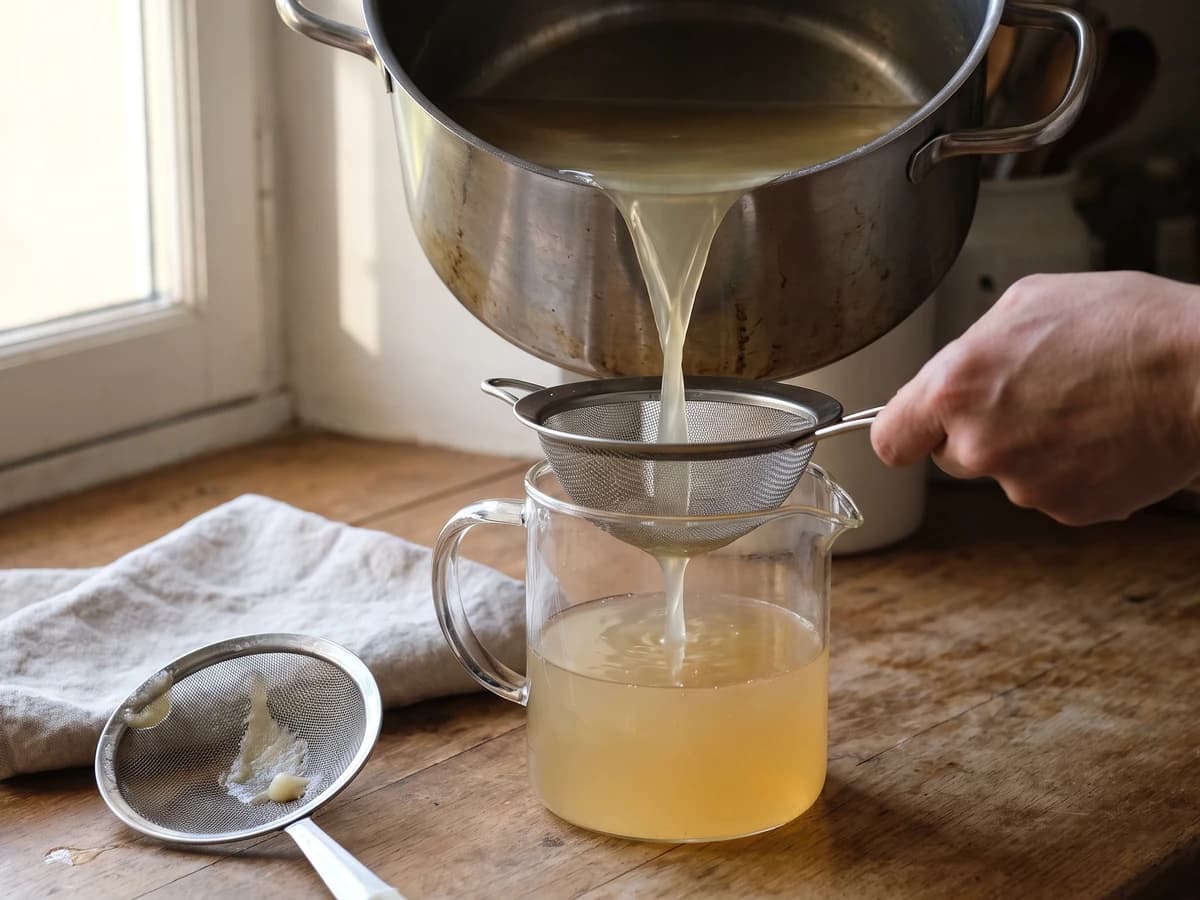
Break the veal bones small, then give them eight hours at a bare tremble. This pale, gelatinous fond becomes the quiet foundation beneath velouté, blanquette, and every sauce that must stay light.
Chef Juliette
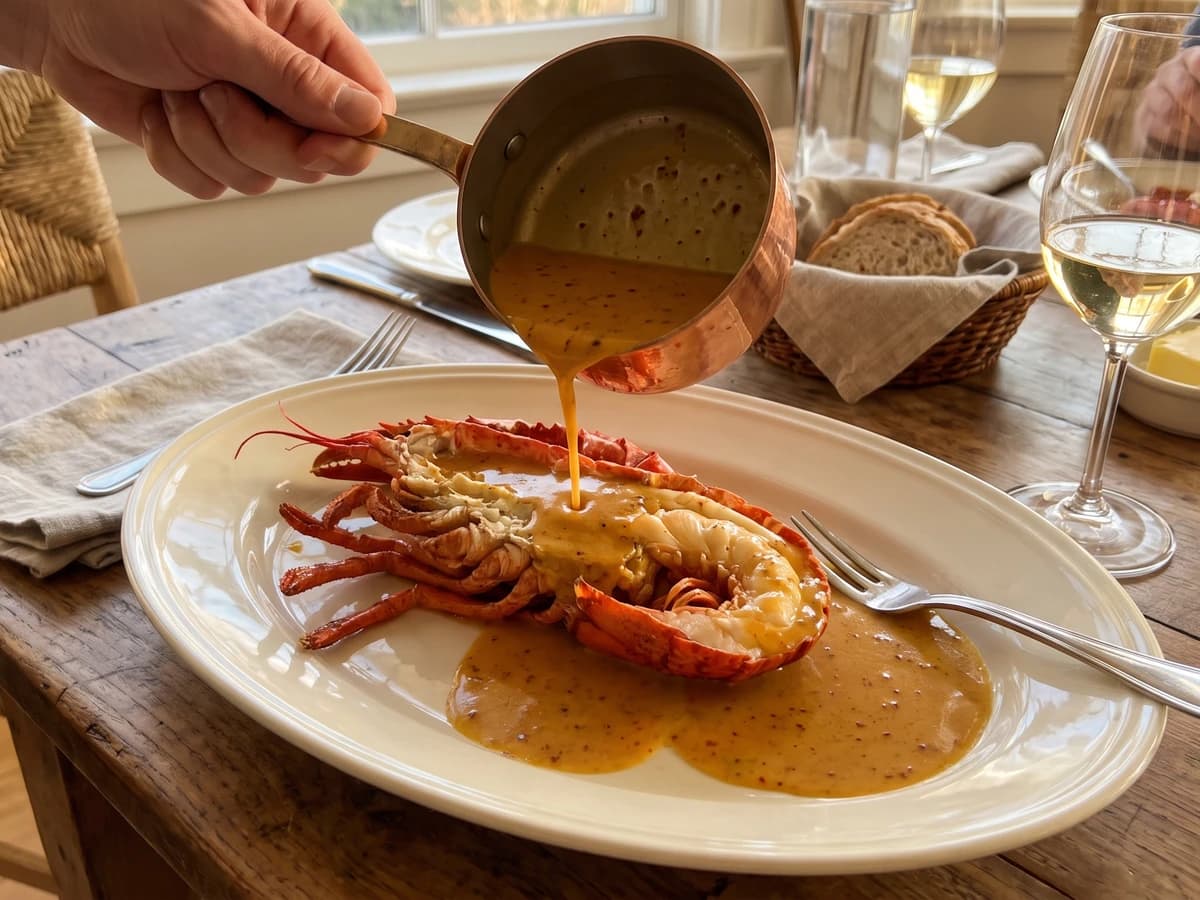
Sauce Orientale concentrates lobster-rich American Sauce with curry, then folds in cream away from the fire: a glossy, gently spiced derivative made for lobster, crayfish, and firm fish.
Chef Juliette
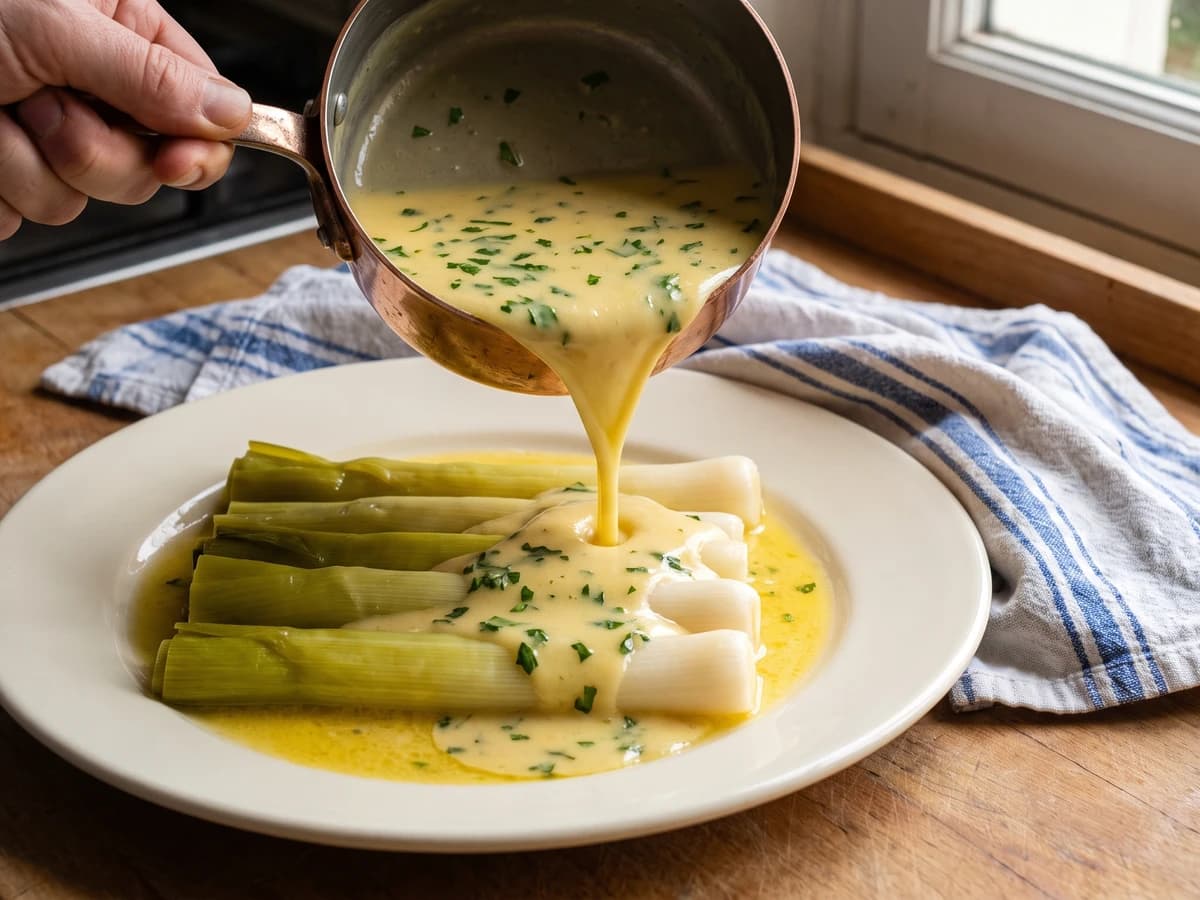
An old lesson in sauce families: Sauce Allemande takes mushroom liquor, then butter, lemon, and parsley, becoming a glossy Poulette for sheep's trotters, leeks, cauliflower, and anything needing gentle richness with a bright edge.