Chef Juliette
Bouillabaisse à la Marseillaise
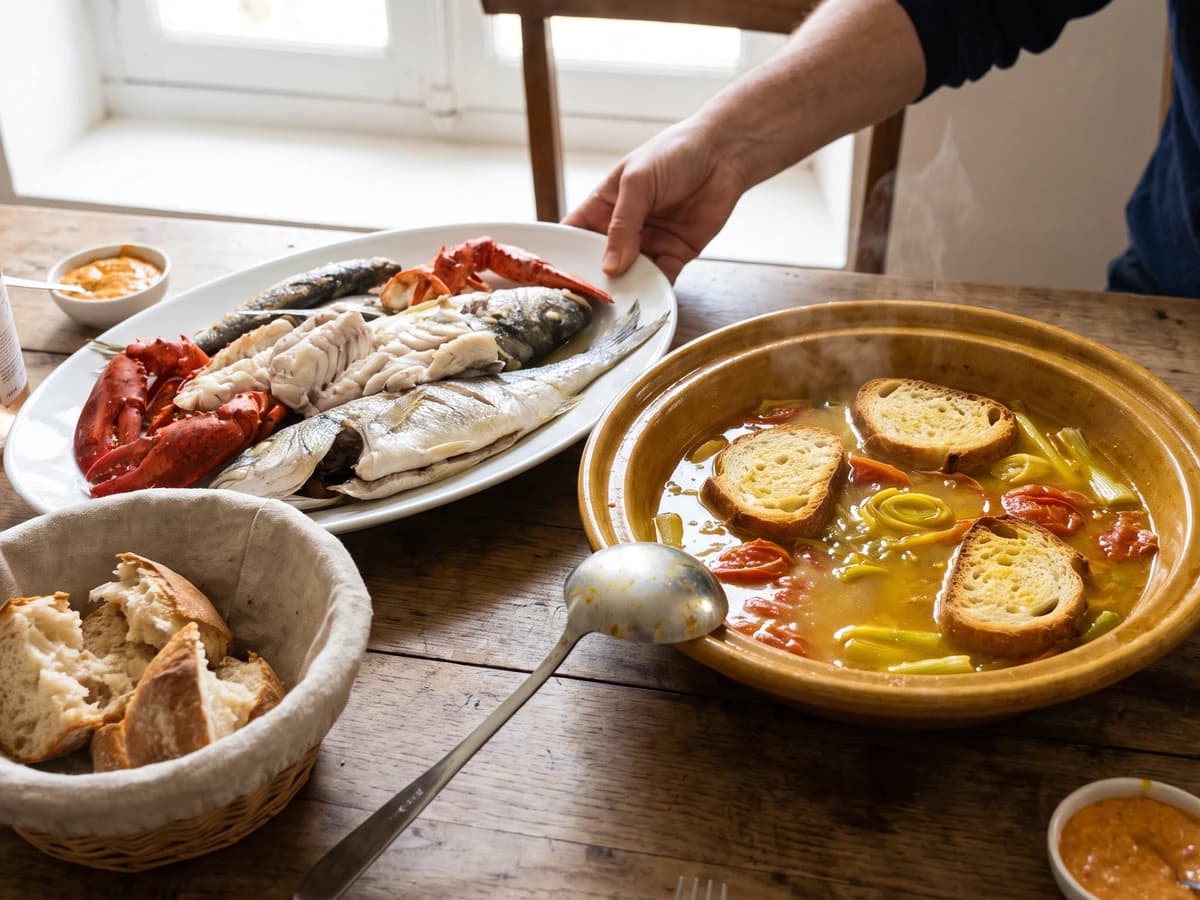
Marseille's great fish stew, saffron-gold and garlic-scented, proves that a hard boil can be the careful choice: it binds olive oil into broth before the whole pot meets bread.
A cooking platform built around craft, culture, and the stories behind what we eat.
Created by Chef Juliette
Based on No. 215, Chiffonade, from Le Guide Culinaire (1907) by Auguste Escoffier
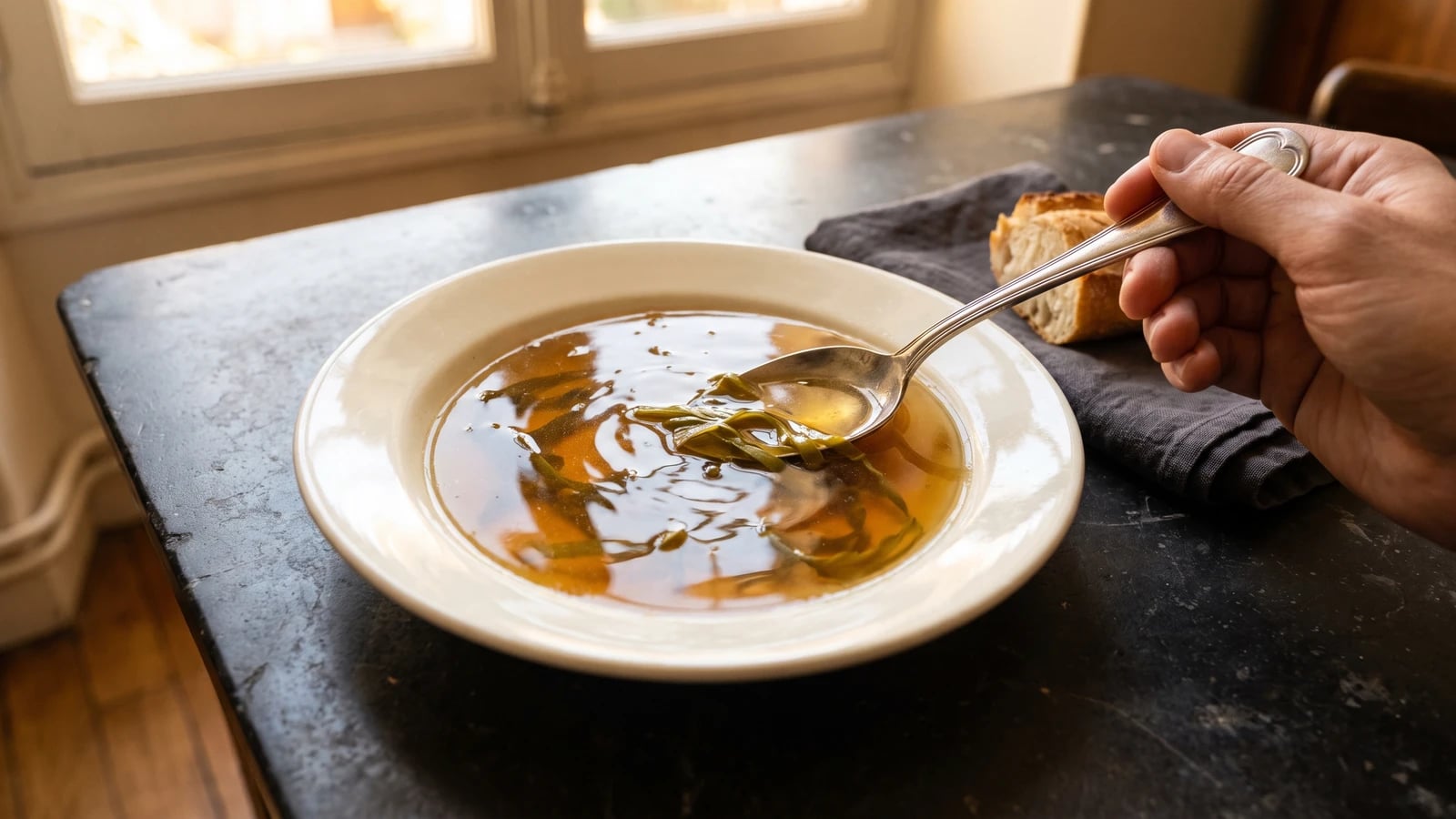
Chiffonade turns tender sorrel or lettuce into threads that melt through a spoonful, lending clear consommé or thick potage a precise green freshness without stealing the bowl.
Chiffonade (fine ribbons of tender sorrel or lettuce) teaches precision with purpose. It isn't a soup by itself, nor decorative confetti scattered at the last moment. It is a cooked complement, cut finely enough to soften into each spoonful while remaining recognizably leaf. That evenness is the one true thing to understand before touching a pan.
The classical entry assumed a potage station, a stockpot never off the fire, and a cook who judged an unmeasured handful against the day's soup. Here that service judgment becomes 100 grams of sorrel or 125 grams of lettuce for one home pot holding about 2 quarts. The old instruction compressed wet leaves between hand and worktable; clean towels, a compact stack, and a sharp knife accomplish the same work more safely and bruise the leaves less. The brigade's holding arrangement is scaffolding and can go. Tender leaves, removed ribs, and the two distinct cooking methods are the dish and must stay. One cook, one stove, one evening.
For clear consommé, the chiffonade cooks directly in the broth. For a thick potage, it first melts in real butter, takes a little broth, and simmers before joining the soup. Drying and slicing the leaves into narrow, even ribbons is the step that decides both versions.
Within the classical Parisian potage repertoire, chiffonade named a specific cooked complement of tender sorrel or lettuce for Potage de santé, le Germiny, and clear consommés such as Julienne. Its name comes from chiffon, a scrap of cloth, describing the narrow, loosely folded ribbons, but the soup station treated the cut as function rather than ornament. What became a general term for sliced leafy herbs is narrower here: leaves cooked in consommé or first softened in butter for a thick potage.
Quantity
6 loosely packed cups (1.4 L / 100 g sorrel or 125 g lettuce)
firm ribs removed
Quantity
2 tablespoons (30 ml / 28 g)
for the thick-soup method
Quantity
½ cup (120 ml / 120 g)
for the thick-soup method
Quantity
7½ to 8 cups (1.8 to 1.9 L / about 1.8 to 1.9 kg)
kept hot but not boiling
| Ingredient | Quantity |
|---|---|
| very tender sorrel or soft green lettuce leavesfirm ribs removed | 6 loosely packed cups (1.4 L / 100 g sorrel or 125 g lettuce) |
| unsalted butter (optional)for the thick-soup method | 2 tablespoons (30 ml / 28 g) |
| clear consommé or light broth (optional)for the thick-soup method | ½ cup (120 ml / 120 g) |
| finished clear consommé or thick French soupkept hot but not boiling | 7½ to 8 cups (1.8 to 1.9 L / about 1.8 to 1.9 kg) |
Use only tender leaves. Pinch or cut away every firm central rib and any coarse stem, then measure the leaves after trimming. Small sorrel leaves need little work; butterhead lettuce should be reduced to its supple inner leaves. The ribs cook at a different pace and remain intrusive in the spoon, so removing them is part of the technique, not decoration.
Wash the leaves in plenty of cold water, lift them away from any grit, and dry them thoroughly in a spinner or between clean towels. Stack six to eight leaves at a time, compress them into a firm roll without crushing, and cut crosswise into ribbons about 1 to 2 mm wide. Wet leaves skid and give ragged strips. If the roll loosens or the cuts grow wide, stop, dry the leaves again, and re-stack them; wide ribbons can be sliced once more, but don't chop across them into a mince.
For a clear consommé, follow this step and then skip to the finish. Bring 8 cups of finished consommé to the barest simmer and add the chiffonade 30 minutes before serving, exactly as the classical method requires. Hold the broth at a quiet tremble so the ribbons cook through without being battered apart. If it breaks into a hard boil, pull the pot from the heat for a minute and lower the burner before continuing.
For a thick soup, skip the clear-consommé method. Melt the butter in a 30 cm skillet over low heat and add the chiffonade while the butter is still pale. Turn the ribbons until they collapse and become glossy, about 3 to 5 minutes, without letting them brown. Moisten with the ½ cup of consommé or broth, bring it to a lively but controlled simmer, and cook for 10 minutes. If the pan begins drying or the butter threatens to color, add another spoonful of broth and lower the heat. Ça se rattrape. The leaves should be tender and moist, not fried.
For clear consommé, taste once the chiffonade has completed its 30-minute simmer and serve directly. For a thick potage, stir the butter-softened chiffonade and all its cooking liquid into 7½ cups of hot soup, then hold it at a bare simmer for 1 minute so the two become one. Taste the finished soup before adjusting its seasoning, particularly when using sorrel, whose clean acidity changes the balance of salt. Ladle at once. À table!
1 serving (about 410g)
Culinary guides, cultural storytelling, and the editorial depth that makes cooking meaningful.
Discover Culinary ExplorerChef Juliette
Marseille's great fish stew, saffron-gold and garlic-scented, proves that a hard boil can be the careful choice: it binds olive oil into broth before the whole pot meets bread.
Chef Juliette
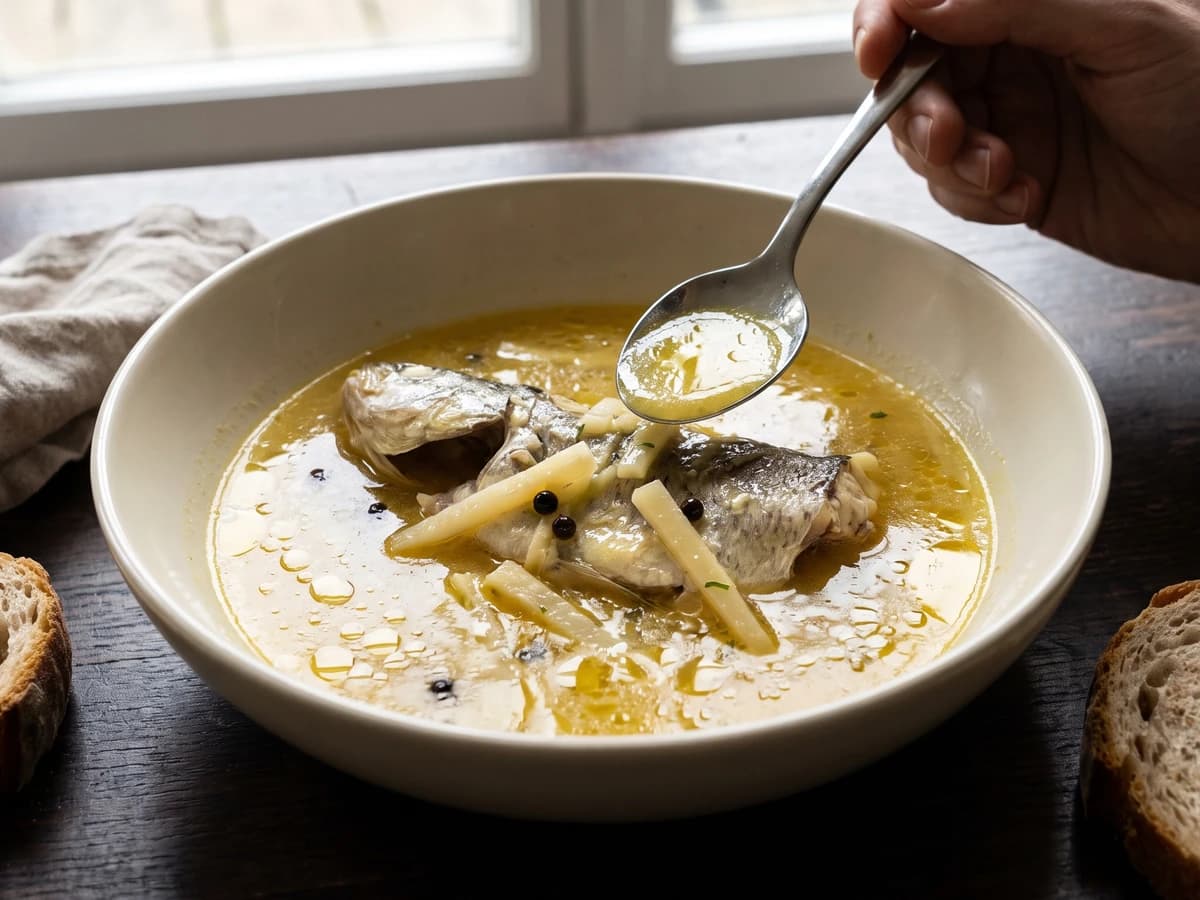
Waterzoi asks fresh, bone-in river fish to thicken its own buttery broth, with parsley root and pepper for company. No flour, no stockpot, just a brisk simmer watched closely.
Chef Juliette
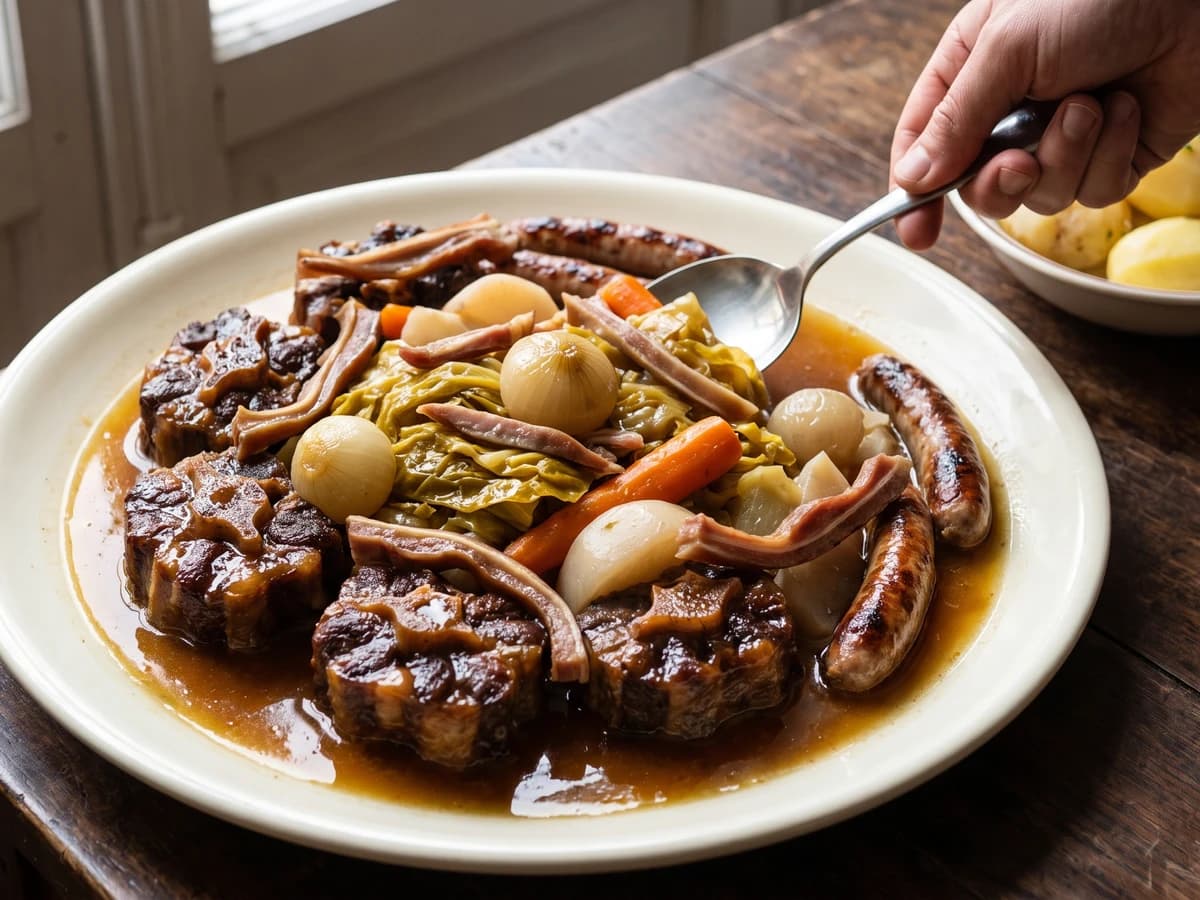
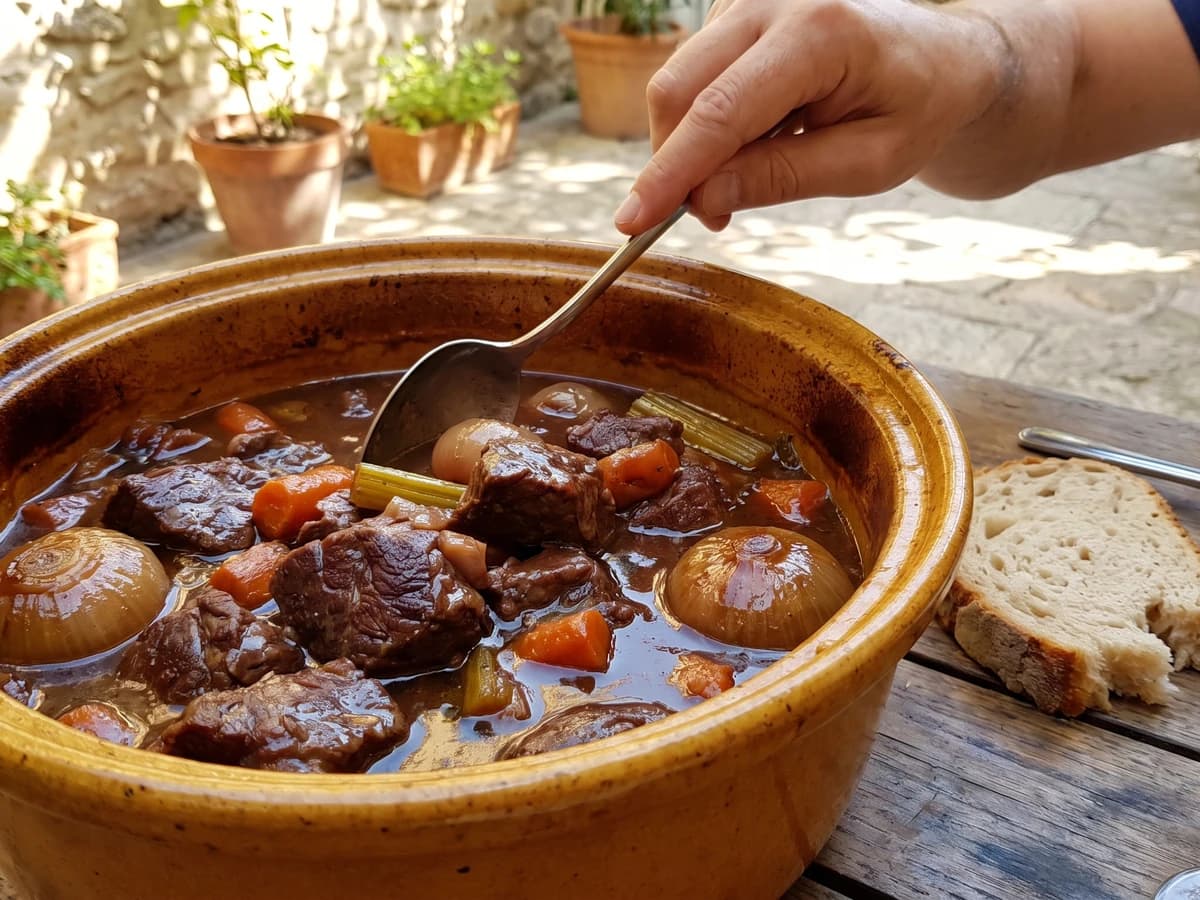
Queue de Bœuf en Hochepot gathers oxtail, pig's trotter and ear, cabbage, roots, and grilled chipolatas around a clear, gelatin-rich broth whose quiet simmer keeps every piece tender and distinct.
Chef Juliette
Beef shoulder larded with bacon, sharpened by red wine and vinegar, then sealed with garlic, vegetables, and dry lemon peel until the low oven turns it yielding and the gravy darkly glossy.