Chef Juliette
Ordinary or White Consommé
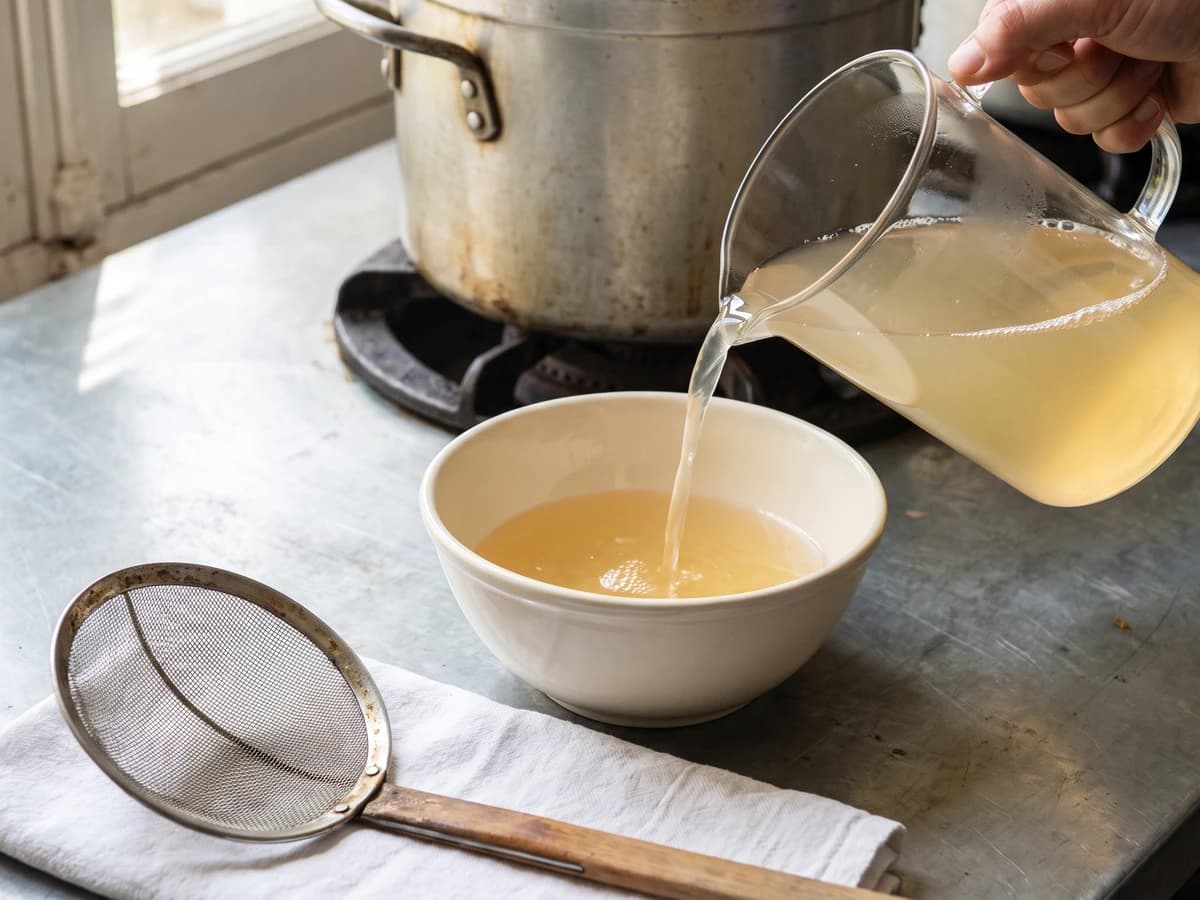
Beef shin, lean beef, and fowl begin in cold water and rise slowly toward a tremble. Skim before the boil, and you learn the quiet discipline that gives every clear French broth its backbone.
A cooking platform built around craft, culture, and the stories behind what we eat.
Created by Chef Juliette
Based on No. 2413, Hazel-nut Sauce, from Le Guide Culinaire (1907) by Auguste Escoffier
Sauce aux Noisettes turns crème anglaise into a deep hazelnut sauce by two acts alone: toast the nuts until fragrant, then steep them fully before stirring in measured filbert Pralin (No. 2352).
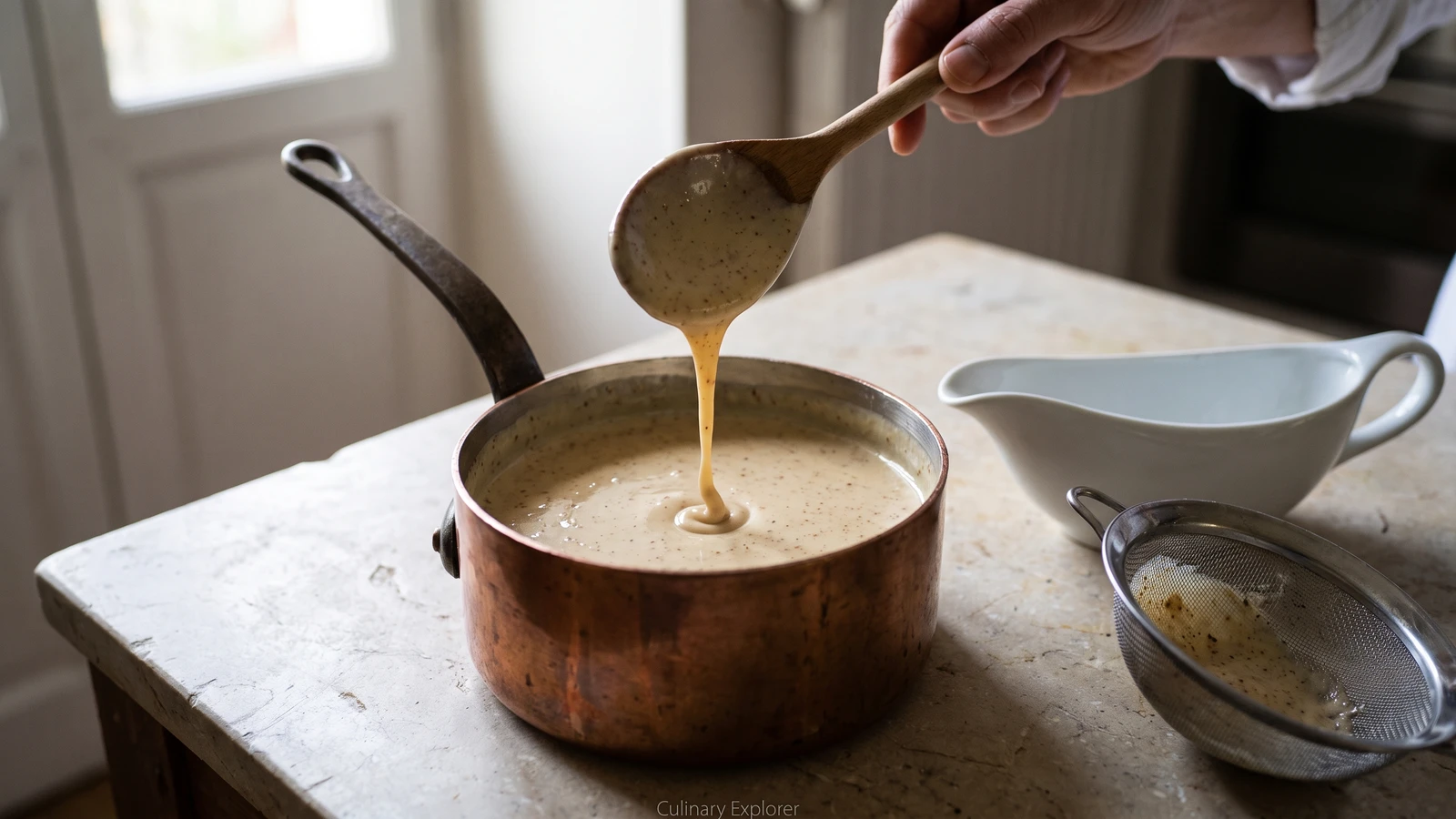
Sauce aux Noisettes teaches the quiet power of infusion. Hazelnuts merely stirred into finished custard taste added; hazelnuts toasted until their aroma fills the kitchen, then left to steep in milk, make the whole sauce taste born of the nut. It should fall from a spoon in an ivory ribbon, glossy and deeply roasted, never gritty.
The original entry assumed crème anglaise waiting at the saucier's elbow, hazelnuts grilled under a salamander, and Pralin (No. 2352) prepared in quantity by the pastry section. At home, a rimmed baking sheet replaces the salamander, one saucepan builds the custard, and a fine sieve finishes the infusion. That brigade scaffolding can go. The dish cannot: toasted-nut infusion first, then two tablespoonfuls of Pralin (No. 2352) for each quart of custard. This batch keeps that ratio and scales the work to about two quarts for one cook, one stove, one evening.
The one step that decides it happens before the yolks meet heat. Toast the hazelnuts to old gold, stopping the moment they smell like the finished sauce. Pale nuts give the milk a polite whisper; blackened nuts give bitterness no sugar can hide.
Sauce aux Noisettes belongs to the entremets course of the French classical table, not to a single regional larder: it is a derivative of crème anglaise built in pastry kitchens and served with puddings, fruit, cakes, and soufflés. The English-custard wording points to crème anglaise, the French stirred yolk custard, while Pralin (No. 2352) means dry pounded nougat powder rather than the smooth nut paste sold under a similar name. Its passage from pastry bench to home table is natural, because infusion, gentle custard cooking, and measured pralin require attention rather than brigade equipment.
Quantity
2½ cups (590 ml / 340 g)
Quantity
7½ cups (1.8 L / 1.85 kg)
divided
Quantity
16
Quantity
1½ cups (360 ml / 300 g)
Quantity
¼ cup (4 tablespoons / 60 ml / 40 g) Pralin (No. 2352)
nougat-powder form prepared with filberts
| Ingredient | Quantity |
|---|---|
| shelled skin-on hazelnuts | 2½ cups (590 ml / 340 g) |
| whole milkdivided | 7½ cups (1.8 L / 1.85 kg) |
| large egg yolks | 16 |
| caster sugar | 1½ cups (360 ml / 300 g) |
| Pralinnougat-powder form prepared with filberts | ¼ cup (4 tablespoons / 60 ml / 40 g) Pralin (No. 2352) |
Heat the oven to 350°F (175°C). Spread the hazelnuts in one layer on a rimmed baking sheet and toast for 12 to 16 minutes, shaking the sheet once, until the exposed flesh is old gold and the kitchen smells distinctly of roasted hazelnuts. This is the step that makes the sauce; colour brings flavour. Rub away the loose dark skins in a clean towel, then crush the warm nuts coarsely so the milk can reach their cut surfaces.
Put 7 cups (1.65 L) of the milk and the crushed hazelnuts in a heavy saucepan. Bring them slowly to the point where small bubbles gather around the edge, then remove the pan from the heat, cover it, and steep for 45 minutes. Pass the milk through a fine-mesh sieve into a clean bowl, pressing the nuts gently but not forcing their pulp through. Add enough reserved milk to restore the strained infusion to 7 cups (1.65 L).
Return the infused milk to the clean saucepan and heat it until bubbles again gather at the edge. Whisk the yolks and sugar in a large bowl just until smooth and slightly lightened, without beating in a mass of air. Pour one-third of the hot milk over the yolks in a slow stream while whisking constantly, then whisk this tempered mixture back into the remaining milk.
Cook over low heat, stirring continuously with a heatproof spatula and sweeping the floor and corners of the pan. Stop when the crème anglaise reaches 180 to 183°F (82 to 84°C), coats the spatula, and holds a clean line when you draw a finger through it. Never let it boil. If the first fine grains appear, remove the pan immediately and whisk in 2 tablespoons of cold reserved milk. Ça se rattrape: blend for 10 seconds and pass it through the fine sieve. Large, firm scrambled curds mean the eggs have gone too far, and an honest sauce must be restarted.
Strain the warm custard into a clean bowl and measure it before finishing. The book's proportion is exact: two tablespoonfuls of Pralin (No. 2352) for every quart of custard. This batch should give about 2 quarts, so whisk in the full ¼ cup (4 tablespoons / 60 ml / 40 g) until evenly dispersed. If small lumps remain, blend briefly and strain once more. The finished sauce should nap the spoon in a smooth, glossy ribbon; if it tightens too far, loosen it with reserved milk one tablespoon at a time.
For warm service, bring the Sauce aux Noisettes to the table at once or hold it over barely warm water for no longer than 30 minutes, stirring occasionally. For cold service, set the bowl over an ice bath and stir until cool before covering and refrigerating. Whisk gently before serving with poached pears, plain cakes, puddings, or a warm soufflé. À table!
1 serving (about 65g)
Culinary guides, cultural storytelling, and the editorial depth that makes cooking meaningful.
Discover Culinary ExplorerChef Juliette
Beef shin, lean beef, and fowl begin in cold water and rise slowly toward a tremble. Skim before the boil, and you learn the quiet discipline that gives every clear French broth its backbone.
Chef Juliette
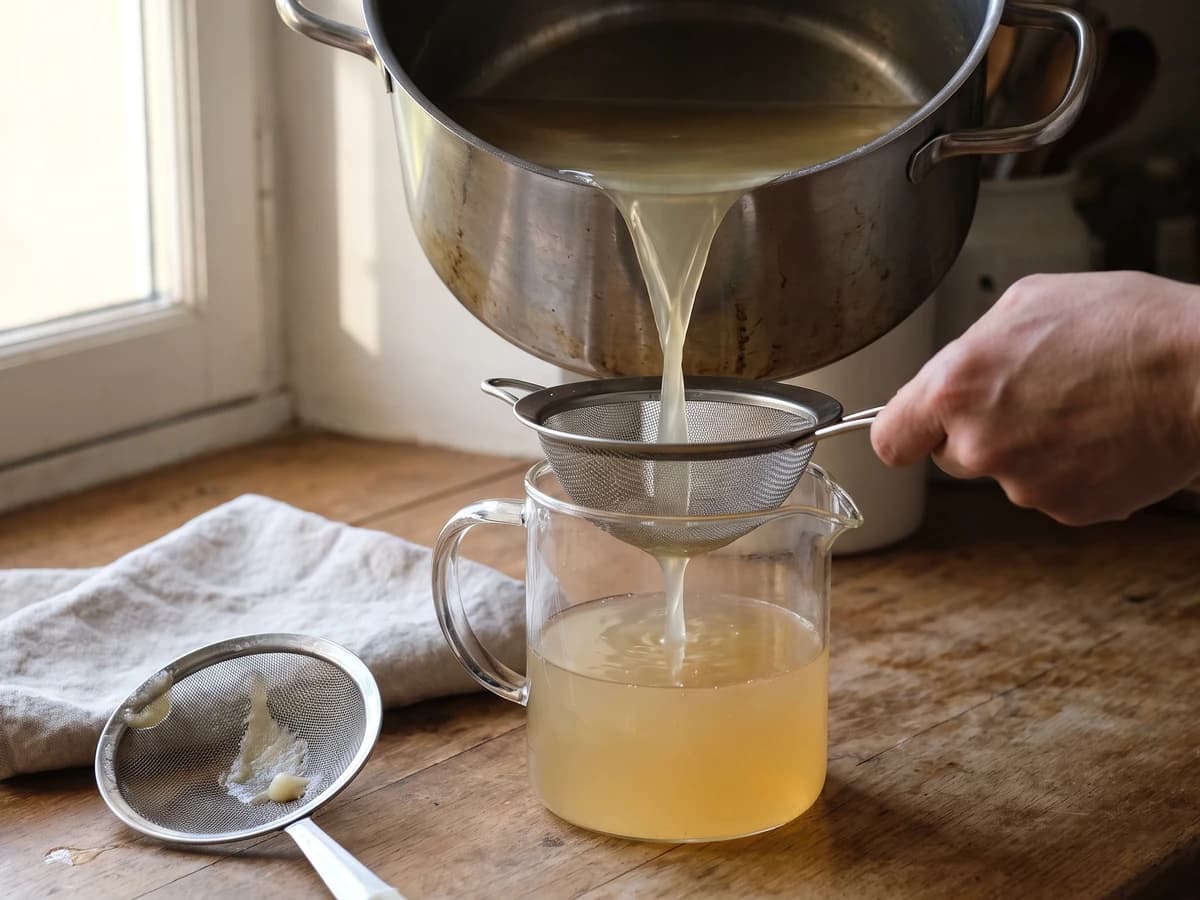
Break the veal bones small, then give them eight hours at a bare tremble. This pale, gelatinous fond becomes the quiet foundation beneath velouté, blanquette, and every sauce that must stay light.
Chef Juliette
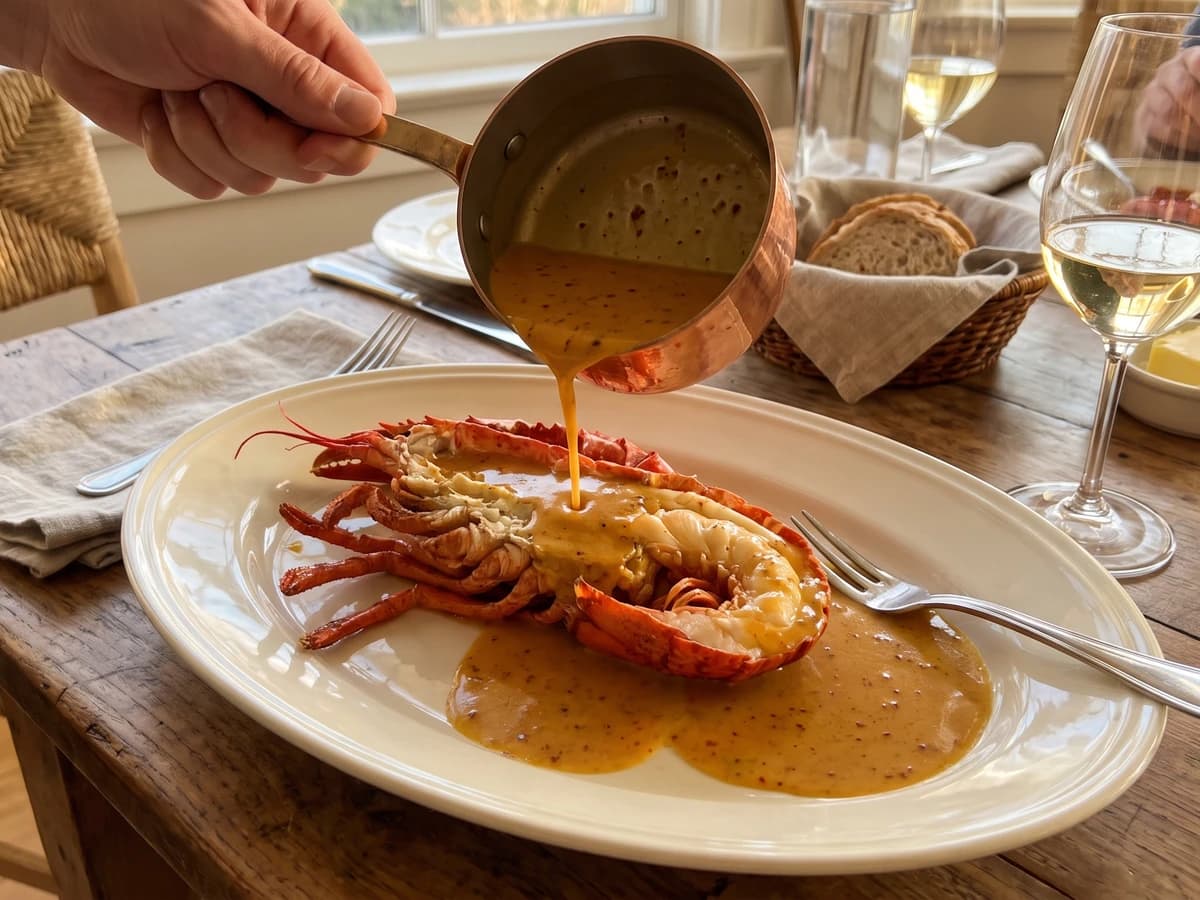
Sauce Orientale concentrates lobster-rich American Sauce with curry, then folds in cream away from the fire: a glossy, gently spiced derivative made for lobster, crayfish, and firm fish.
Chef Juliette
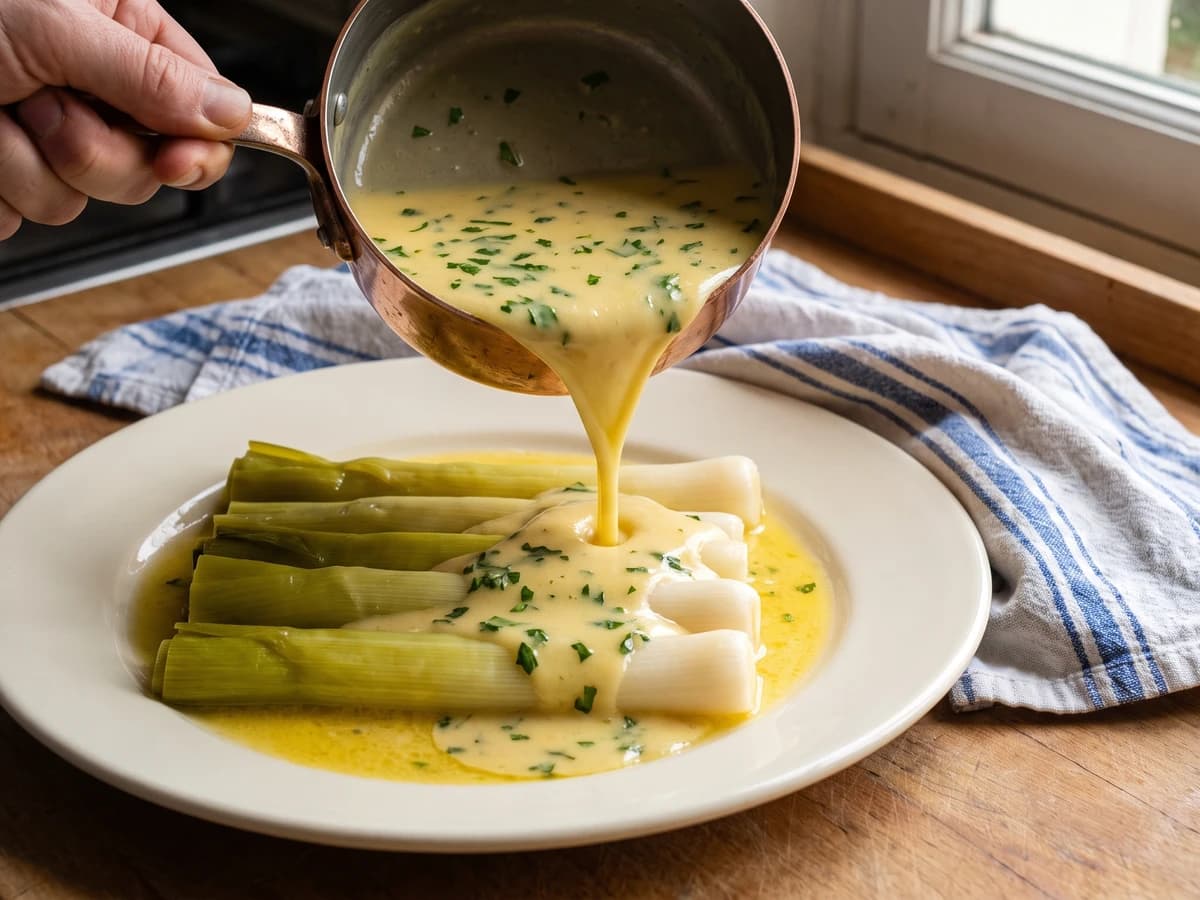
An old lesson in sauce families: Sauce Allemande takes mushroom liquor, then butter, lemon, and parsley, becoming a glossy Poulette for sheep's trotters, leeks, cauliflower, and anything needing gentle richness with a bright edge.