Chef Juliette
Ordinary or White Consommé
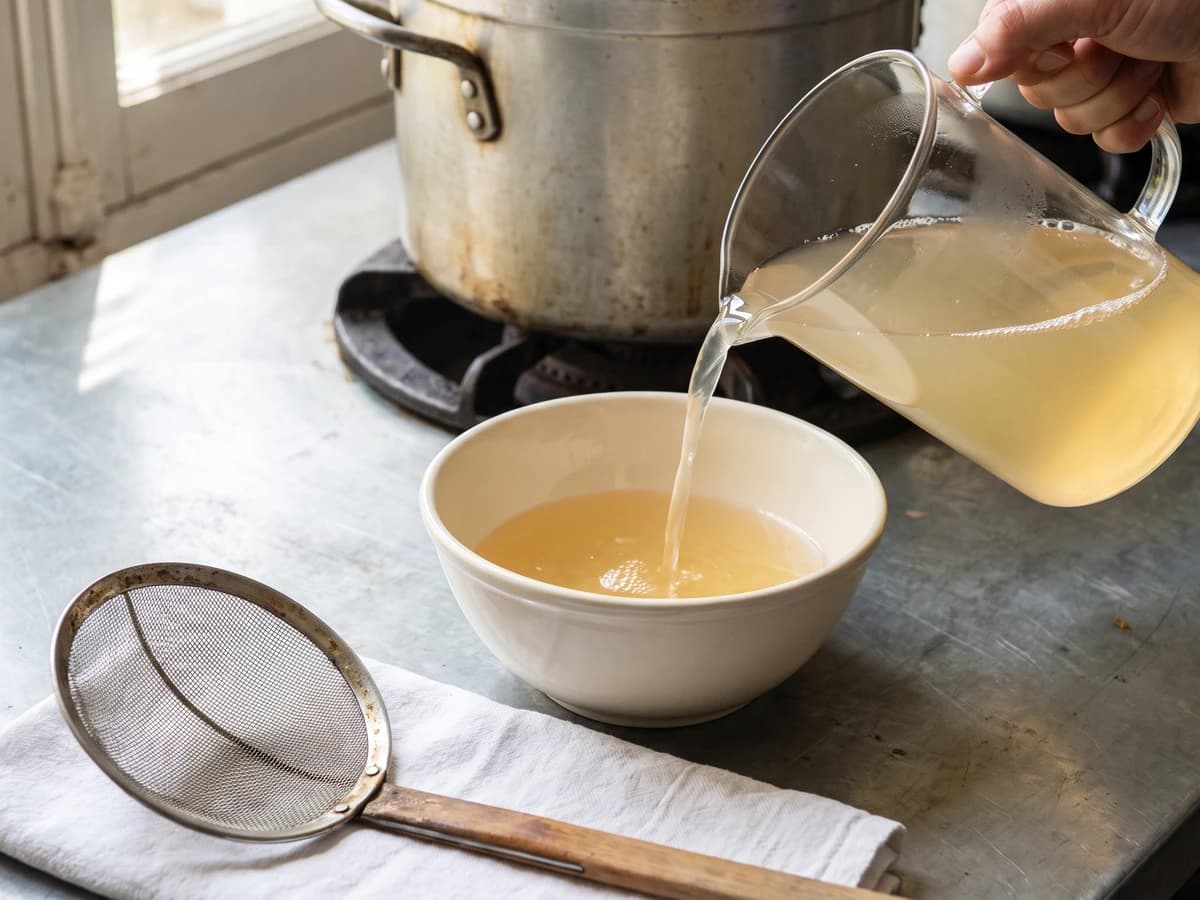
Beef shin, lean beef, and fowl begin in cold water and rise slowly toward a tremble. Skim before the boil, and you learn the quiet discipline that gives every clear French broth its backbone.
A cooking platform built around craft, culture, and the stories behind what we eat.
Created by Chef Juliette
Based on No. 2406, English Sauce, from Le Guide Culinaire (1907) by Auguste Escoffier
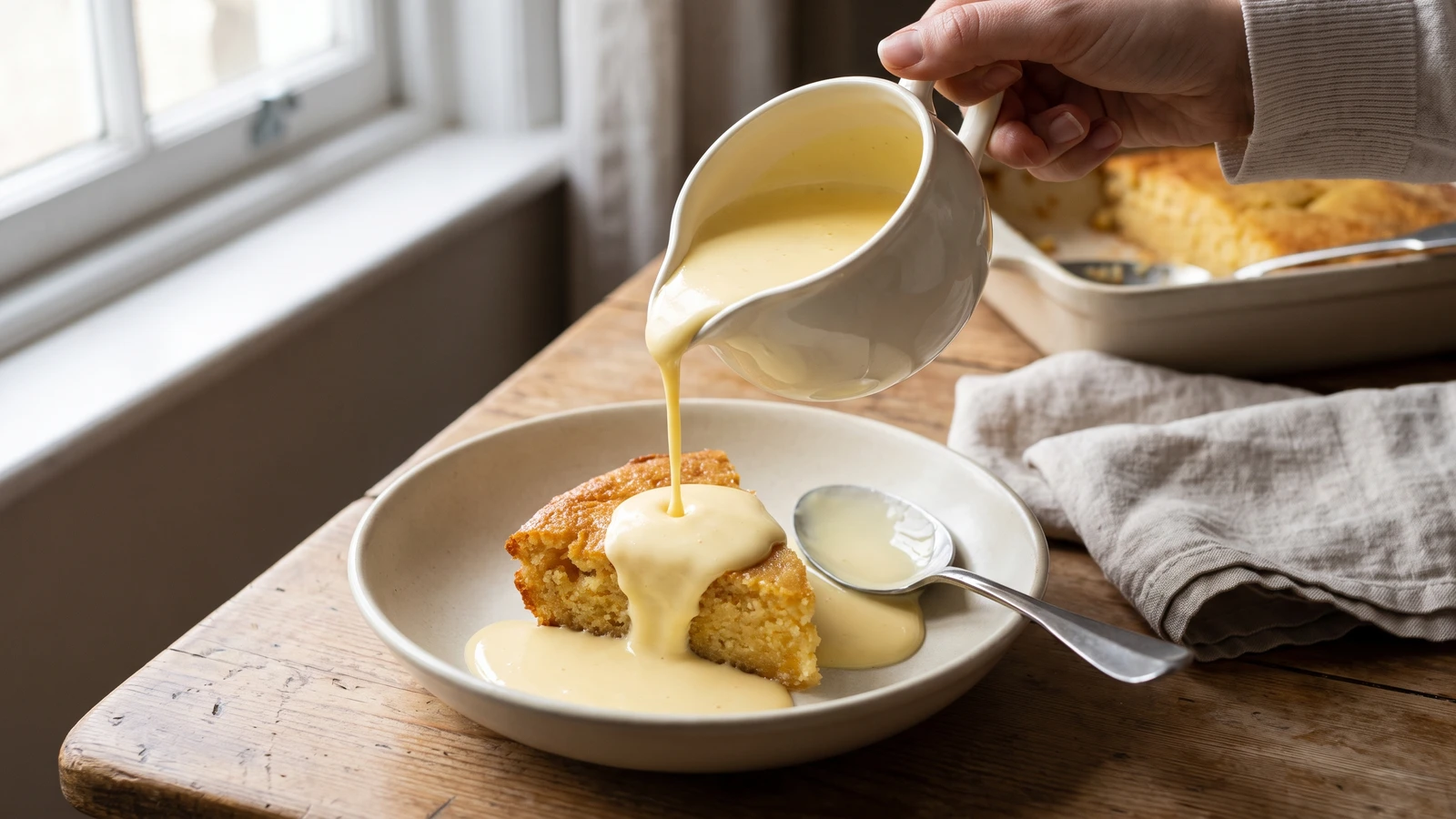
Crème anglaise in its warm sauce-boat register, vanilla-scented, satin-smooth, and just thick enough to cloak a spoon, with arrowroot keeping the yolks calm beside a hot pudding.
Crème anglaise (English sauce) teaches the narrow boundary between thickened and curdled. The one true thing to know before touching the pan is simple: it must never boil. You are aiming for cuisson à la nappe, cooking until the sauce coats a spoon in a smooth, pale film, not a set custard.
The classical formula points you to Crème Anglaise (No. 2397) and assumes a pastry hand free to stir continuously, with a bain-marie already waiting through service. At home, a heavy saucier, an instant-read thermometer, and a heatproof bowl over barely simmering water perform the same work. We keep the referenced custard whole, scale it to about two quarts for a holiday table, and use arrowroot at the source proportion for hot sweets. Continuous stirring stays because it is the dish; a dedicated pastry hand and permanent hot holding are brigade scaffolding, so they go. One cook, one stove, one evening.
The finished crème anglaise should pour in a glossy ivory ribbon, settling generously around a hot pudding without running like milk or standing like cream. Arrowroot gives the yolks honest protection, but it does not grant permission to boil. The step that decides everything is the final gentle cooking, while you stir without stopping and remove the pan the instant the sauce reaches à la nappe.
Within the French canon, crème anglaise belongs to the Parisian pâtisserie kitchen and the entremets table, where it became the principal poured accompaniment to moulded creams, poached desserts, and warm puddings. Its French name preserves a cross-Channel truth: French cooks associated flowing custard with the English custom of serving it beside hot puddings, so English Sauce describes a table register rather than a separate custard formula. Arrowroot is no modern compromise; classical pastry kitchens used it when the sauce had to remain smooth while held warm in a bain-marie.
Quantity
about 2 quarts (1.9 liters / about 2 kg) Crème Anglaise (No. 2397)
prepare according to its entry, reserving 4 tablespoons of its measured milk before cooking
Quantity
2 tablespoons (30 ml / 16 g)
| Ingredient | Quantity |
|---|---|
| Crème Anglaiseprepare according to its entry, reserving 4 tablespoons of its measured milk before cooking | about 2 quarts (1.9 liters / about 2 kg) Crème Anglaise (No. 2397) |
| arrowroot | 2 tablespoons (30 ml / 16 g) |
Prepare the Crème Anglaise (No. 2397) by its own formula for use as an accompaniment. Before heating the milk specified there, reserve 4 tablespoons (60 ml / 60 g) of it and whisk that cold milk with the arrowroot until perfectly smooth. Add this slurry to the mixed custard before its final cooking stage. The milk, yolk, sugar, and vanilla proportions remain those of the referenced preparation; the arrowroot is the source-prescribed protection for a sauce destined for hot sweets.
Transfer the custard to a heavy 4-quart saucier and set it over low heat. Stir continuously with a flexible spatula, sweeping the bottom, corners, and sides so no pocket cooks faster than the rest. Stop when the sauce reaches 80 to 82°C (176 to 180°F) and coats the back of a spoon; a finger drawn through that coating should leave a clean path. Do not wait for bubbles. If the sauce begins to look grainy, pull it from the heat immediately, immerse the pan base in cold water, blend for 10 seconds with the blender head kept beneath the surface, and strain. Ça se rattrape, provided you catch it before large curds form.
Pour the cooked sauce through a fine-mesh strainer as soon as it reaches à la nappe. For immediate service, strain it into a warm heatproof bowl; for later service, strain it into a wide metal bowl set over ice and stir until thoroughly cold. Straining removes the vanilla pod and any tiny cooked flecks while the wide bowl stops residual heat from carrying the yolks too far.
For hot service, set the bowl over a bain-marie of barely simmering water, keeping the sauce between 60 and 65°C (140 and 149°F). Stir every few minutes and keep the bowl clear of the water itself. Hold it this way for no more than 30 minutes, since prolonged heat weakens arrowroot and dulls the vanilla. If made ahead, reheat only the amount required over the same gentle bain-marie, stirring until the sauce flows freely.
Transfer the crème anglaise to a warmed sauce boat and serve it at once, allowing 2 to 3 tablespoons per portion. Pour it beside or over the hot pudding so the ivory sauce pools around the dessert while retaining its own silky body. This is a sauce, not a decorative drizzle. Bring the boat to the table and expect it to return empty. À table!
1 serving (about 110g)
Culinary guides, cultural storytelling, and the editorial depth that makes cooking meaningful.
Discover Culinary ExplorerChef Juliette
Beef shin, lean beef, and fowl begin in cold water and rise slowly toward a tremble. Skim before the boil, and you learn the quiet discipline that gives every clear French broth its backbone.
Chef Juliette
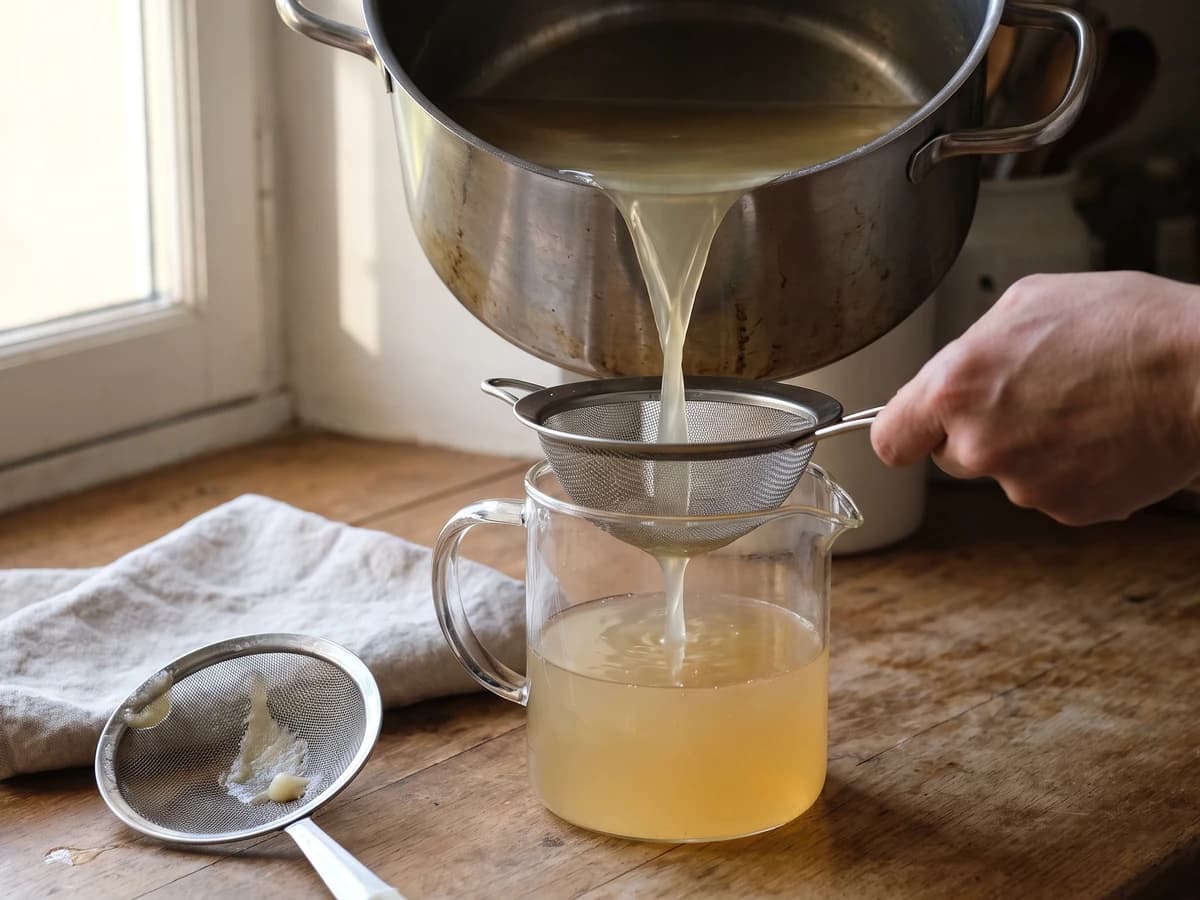
Break the veal bones small, then give them eight hours at a bare tremble. This pale, gelatinous fond becomes the quiet foundation beneath velouté, blanquette, and every sauce that must stay light.
Chef Juliette
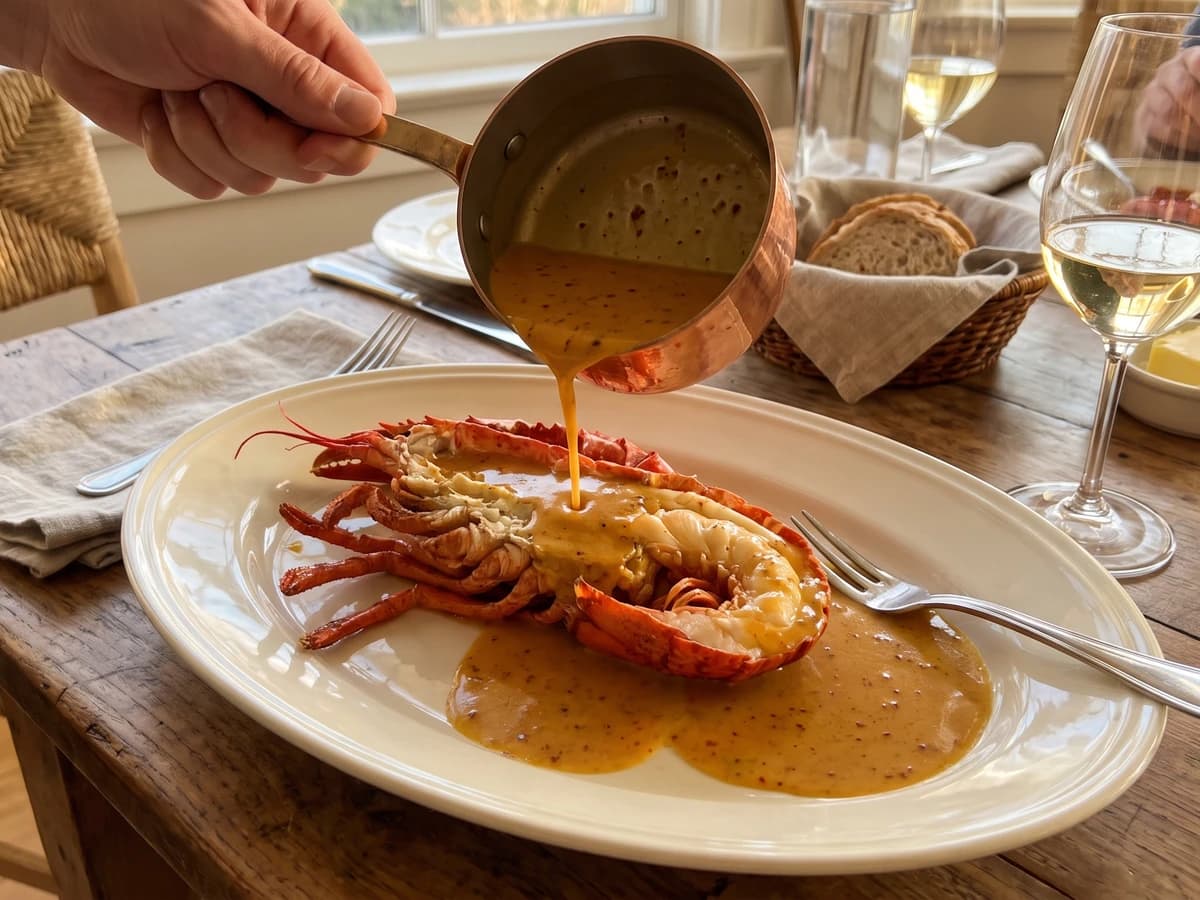
Sauce Orientale concentrates lobster-rich American Sauce with curry, then folds in cream away from the fire: a glossy, gently spiced derivative made for lobster, crayfish, and firm fish.
Chef Juliette
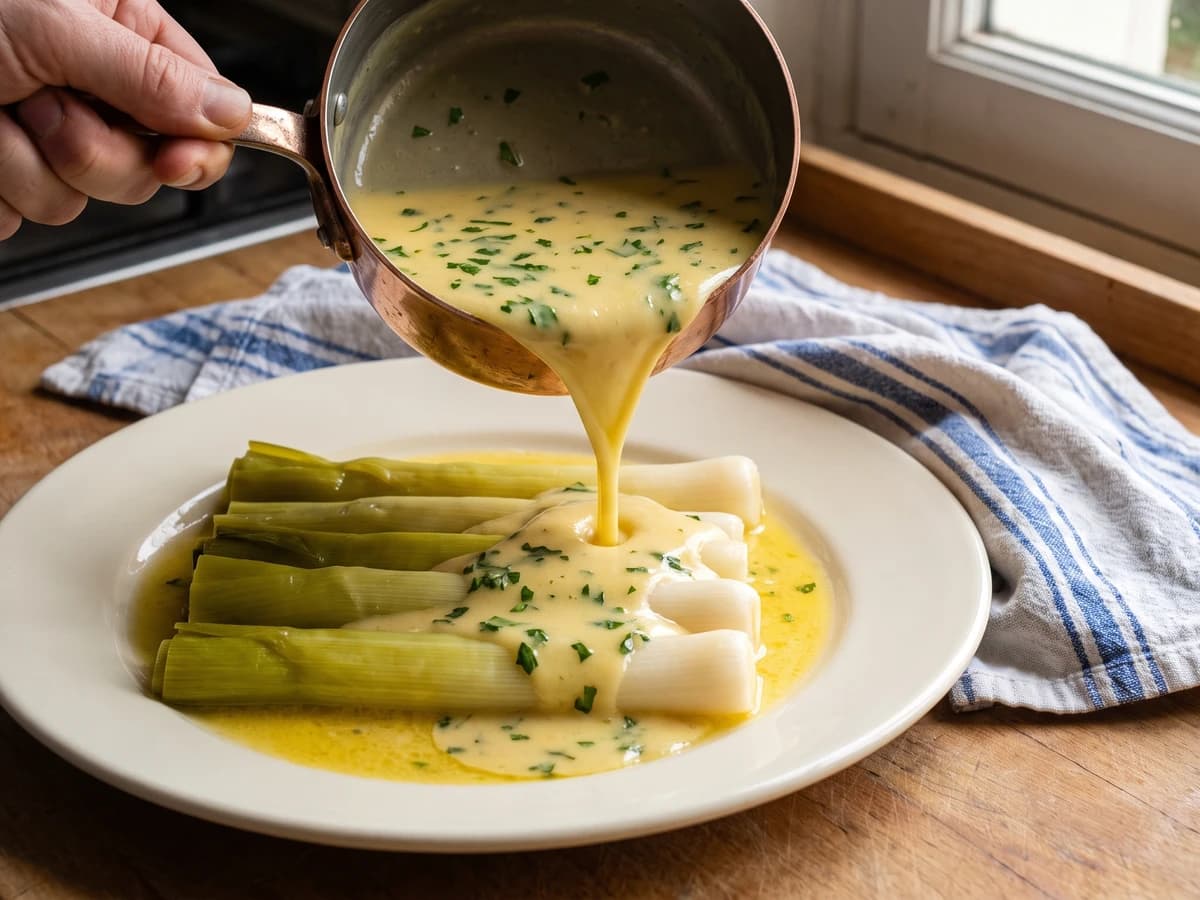
An old lesson in sauce families: Sauce Allemande takes mushroom liquor, then butter, lemon, and parsley, becoming a glossy Poulette for sheep's trotters, leeks, cauliflower, and anything needing gentle richness with a bright edge.