Chef Juliette
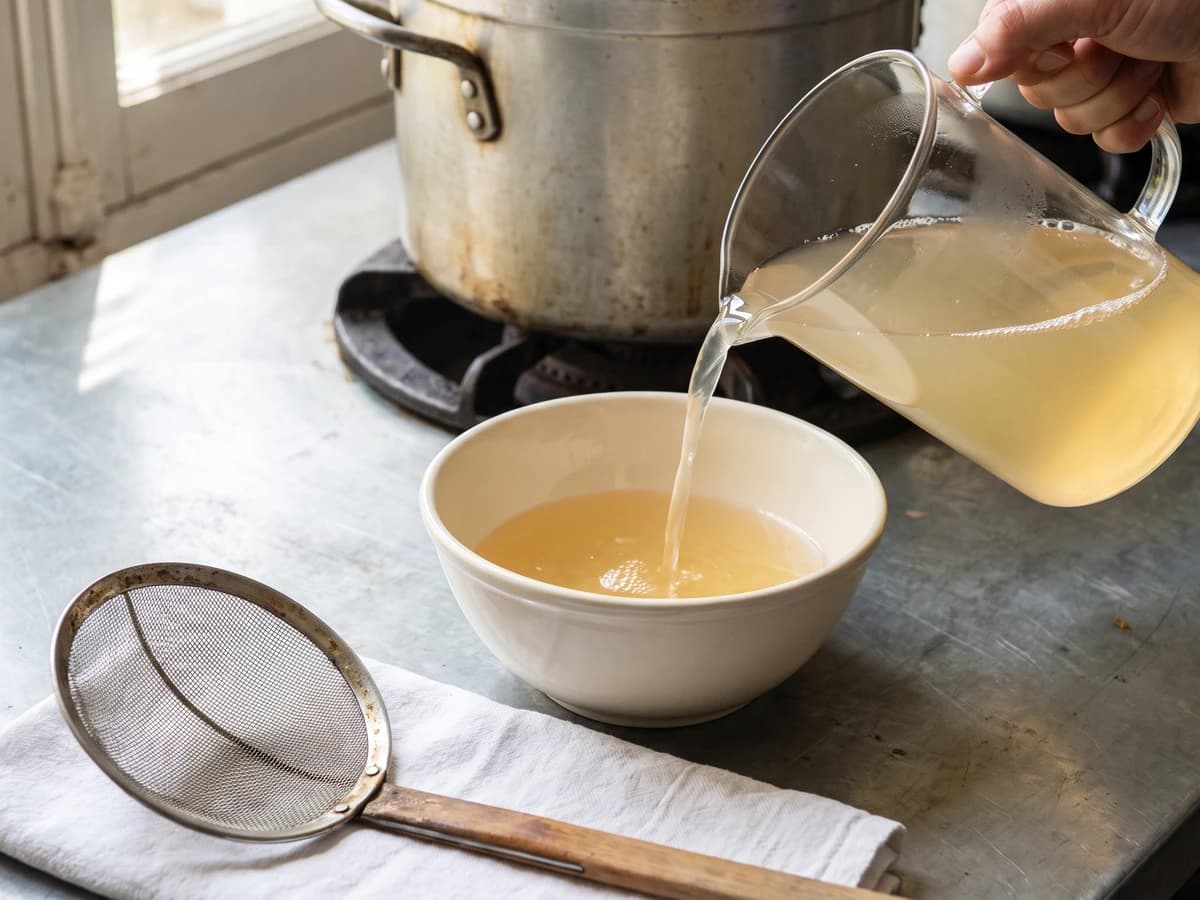
Ordinary or White Consommé
Beef shin, lean beef, and fowl begin in cold water and rise slowly toward a tremble. Skim before the boil, and you learn the quiet discipline that gives every clear French broth its backbone.
A cooking platform built around craft, culture, and the stories behind what we eat.
Created by Chef Juliette
Based on No. 235, Provençale (preparation for stuffing cutlets à la Provençale), from Le Guide Culinaire (1907) by Auguste Escoffier
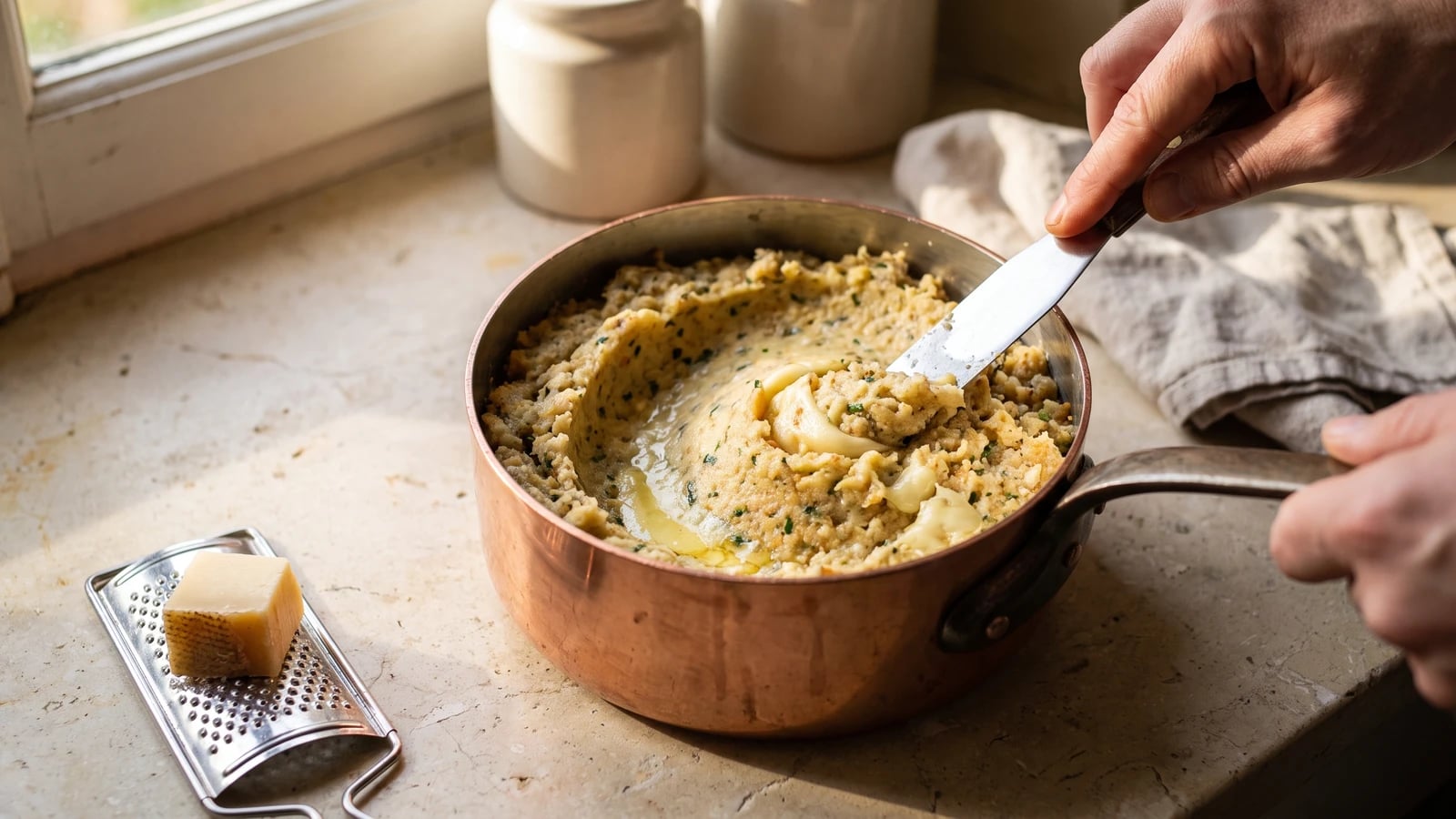
Farce Provençale turns dense Béchamel into a garlic-scented, cheese-rich filling for four cutlets. Reduce until the spatula leaves a clean road, then bind with yolks and finish away from the fire.
Farce Provençale pour côtelettes (garlic-and-cheese stuffing for Provençal cutlets) teaches the discipline of reduction. Finished Béchamel, the milk-and-roux mother sauce, must become a paste before the yolks and cheese arrive. If it remains merely thick sauce, it will seep from the cutlets; when the spatula opens a clean road across the pan and the mixture closes slowly behind it, you are ready.
The original formula assumed a saucier watching a broad vegetable pan and made a pint at a time. At home, a small heavy saucepan and a flexible spatula give you better control. This half batch keeps the proportions intact: one cup of Béchamel, two yolks, two ounces of cheese, and a restrained half-pea measure of garlic, enough for four cutlets. The broad pan and extra hands were brigade scaffolding; the reduction, liaison (yolk binding), and off-fire finish are the dish, so they stay.
Keep the liaison below a simmer. If the yolks begin to grain, pull the pan away, whisk hard, and strain the mixture while it is still warm. Ça se rattrape. Above all, judge the Béchamel reduction by the clean road left by your spatula, not by the clock; that is the step that decides the stuffing.
Within the classical national repertoire, this Provençale is a stuffing for côtelettes rather than the tomato, olive, and herb sauce many cooks expect from Provence. Its southern marker is a restrained breath of garlic, absorbed into a dense Béchamel and cheese base as Provençal flavors traveled from regional cooking into grand-kitchen garnitures. The name records that influence, not a claim that this dairy-rich preparation is everyday Provençal household cooking.
Quantity
1 cup (240 ml / 250 g)
warm
Quantity
2
beaten until smooth
Quantity
1/8 teaspoon (0.6 ml / 0.5 g)
crushed or finely grated
Quantity
1/2 cup (120 ml / 57 g)
finely grated
| Ingredient | Quantity |
|---|---|
| finished Béchamelwarm | 1 cup (240 ml / 250 g) |
| large egg yolksbeaten until smooth | 2 |
| fresh garlic pastecrushed or finely grated | 1/8 teaspoon (0.6 ml / 0.5 g) |
| Gruyèrefinely grated | 1/2 cup (120 ml / 57 g) |
Have the warm Béchamel, beaten yolks, measured garlic paste, and finely grated cheese beside the stove. Use a small heavy saucepan rather than a broad sauté pan; the smaller surface slows evaporation enough for one cook to control it. Once the yolks enter, the work moves quickly, so grate and measure first.
Put the Béchamel in the saucepan over medium-low heat. Let it bubble gently while you stir continuously with a flexible spatula, sweeping the floor, sides, and corners. After 8 to 12 minutes it should be dense enough to mound softly, and the spatula should leave a clean road across the pan for a moment before the mixture closes behind it. This reduction is the dish, not a disposable preliminary. If the bottom catches, do not scrape it up; lift the clean mixture into a fresh pan and continue over gentler heat. Ça se rattrape.
Take the pan completely off the heat. Whisk about 2 tablespoons of the hot reduced Béchamel into the beaten yolks, then pour this liaison back into the pan while stirring briskly. Return it to the lowest heat for 60 to 90 seconds, stirring without pause, until it reaches 160°F (71°C), grows heavier, and remains smooth. Never let it simmer. If fine yellow grains appear, scrape the mixture immediately into a cool bowl, whisk hard, and press it through a fine sieve; do not return it to the heat.
Remove the pan from the fire and stir in the garlic paste, then add the Gruyère in three small handfuls, letting each disappear before the next goes in. Residual heat is sufficient; boiling after the cheese enters can make the stuffing oily and stringy. The finished Farce Provençale should hold a soft mound while remaining easy to spread. If it tightened too far during reduction, whisk in hot water 1 teaspoon at a time, only until supple; you are replacing moisture cooked away, not turning it back into sauce.
Scrape the Farce Provençale into a shallow bowl and press parchment directly against its surface. Let it cool for 10 minutes, then chill for 20 to 30 minutes, until firm enough to stay where it is placed. Divide it into four portions and spread one inside each prepared cutlet, leaving a clear border so the filling does not escape when the edges are sealed. Keep the stuffed cutlets cold until their coating and cooking begin.
1 serving (about 68g)
Culinary guides, cultural storytelling, and the editorial depth that makes cooking meaningful.
Discover Culinary ExplorerChef Juliette
Beef shin, lean beef, and fowl begin in cold water and rise slowly toward a tremble. Skim before the boil, and you learn the quiet discipline that gives every clear French broth its backbone.
Chef Juliette
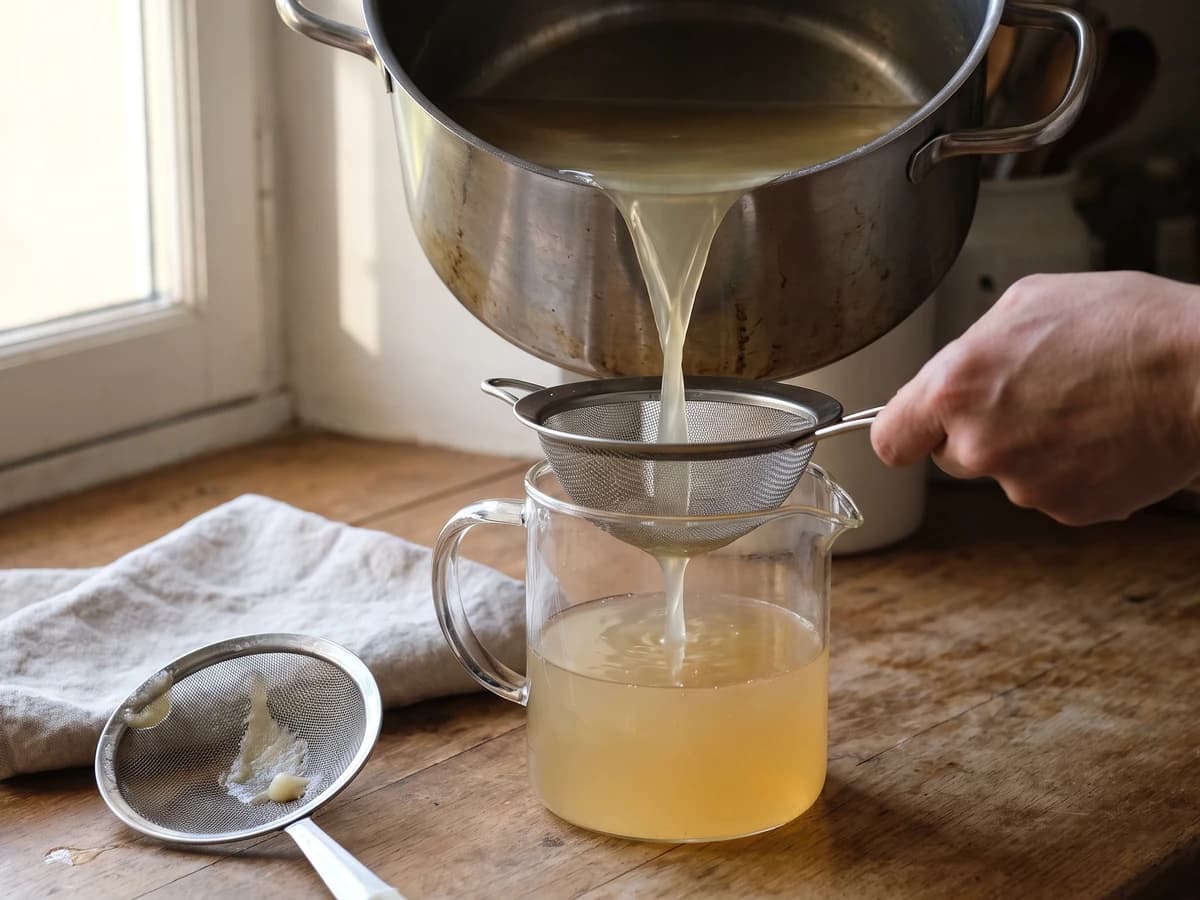
Break the veal bones small, then give them eight hours at a bare tremble. This pale, gelatinous fond becomes the quiet foundation beneath velouté, blanquette, and every sauce that must stay light.
Chef Juliette
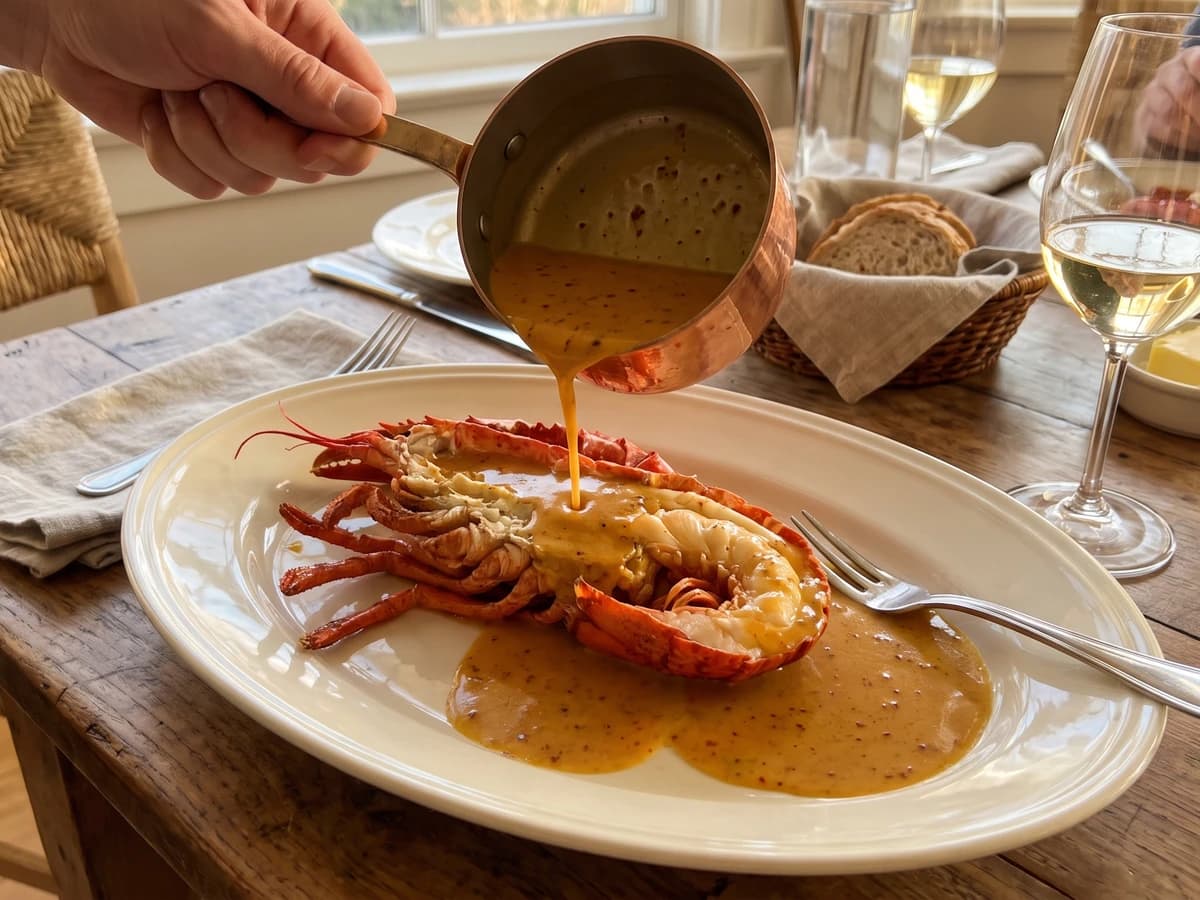
Sauce Orientale concentrates lobster-rich American Sauce with curry, then folds in cream away from the fire: a glossy, gently spiced derivative made for lobster, crayfish, and firm fish.
Chef Juliette
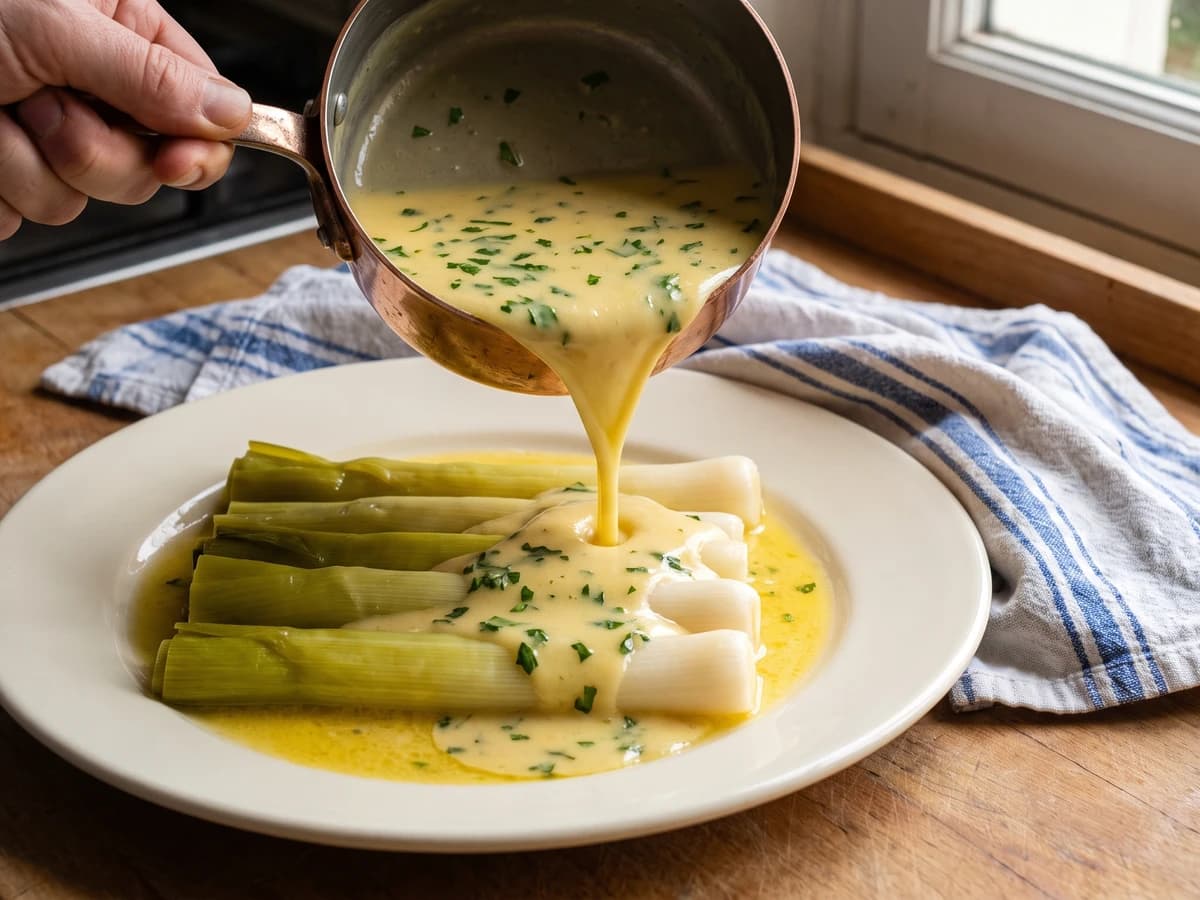
An old lesson in sauce families: Sauce Allemande takes mushroom liquor, then butter, lemon, and parsley, becoming a glossy Poulette for sheep's trotters, leeks, cauliflower, and anything needing gentle richness with a bright edge.