
Chef Juliette
Smelt (Éperlans)
Tiny éperlans, lightly floured and fried until their tails stand crisp, arrive in a generous heap on a napkin with fried parsley and grooved lemon, a weeknight lesson in heat and restraint.
A cooking platform built around craft, culture, and the stories behind what we eat.
Created by Chef Juliette
Based on No. 2307, Canapes Ivanhoe, from Le Guide Culinaire (1907) by Auguste Escoffier
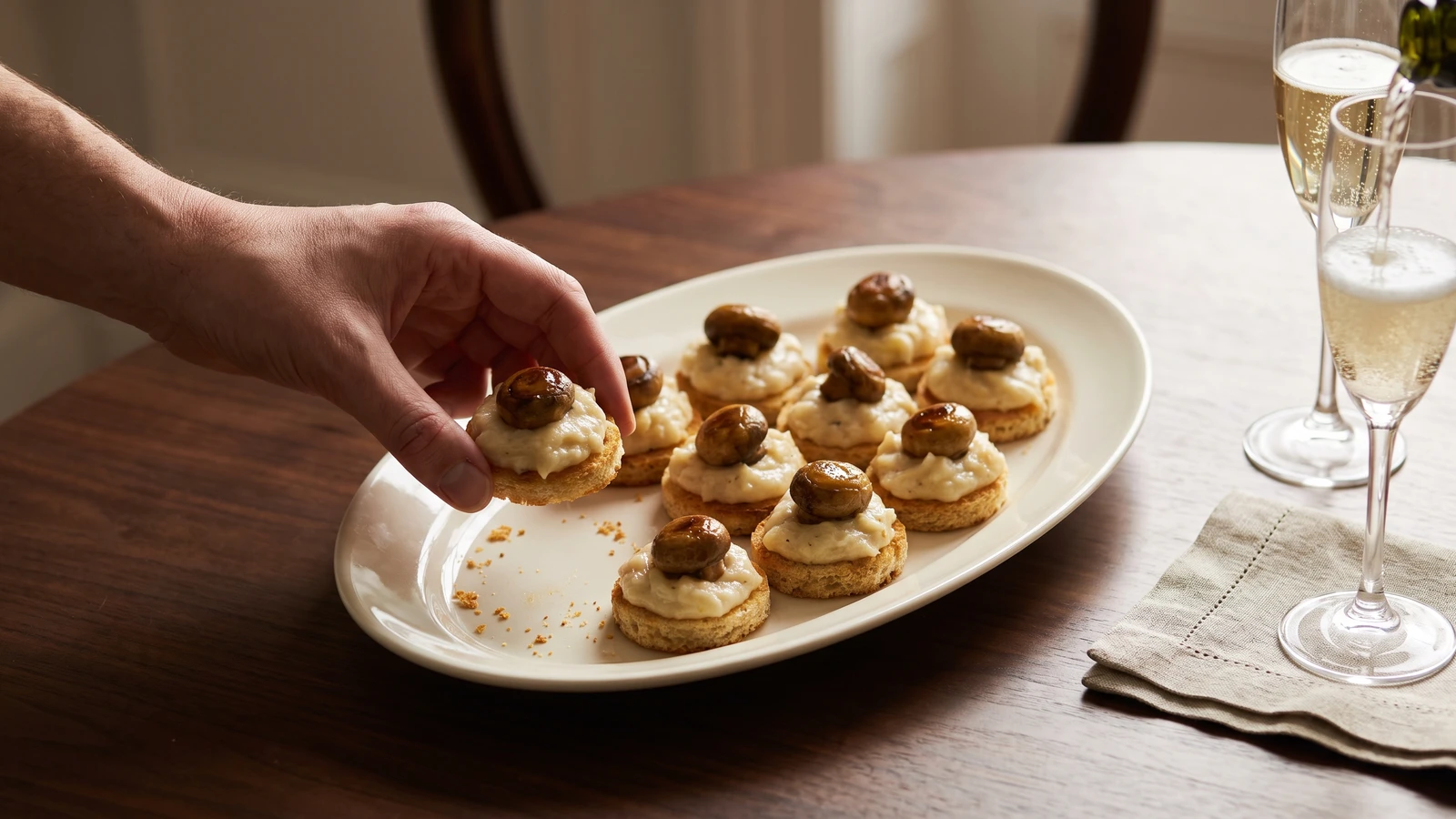
Canapés Ivanhoé turn three precise layers into one generous bite: butter-crisp toast, warm smoked haddock purée, and a tiny mushroom bronzed under the grill, with no garnish there merely for show.
Canapés Ivanhoé (buttered toast rounds with smoked haddock purée and grilled mushrooms) teach the discipline of contrast in two bites. The toast must crack cleanly, the purée must be soft and smoky rather than wet, and the mushroom must arrive browned and buttery. Water is the enemy, so dry the mushrooms well and assemble only when the toast is ready.
The compact source entry assumed a cold station with haddock purée already made, bread rounds cut by the tray, and a salamander throwing fierce heat over tiny mushrooms. At home, poach one fillet in milk, bind it with real butter and cream, and use the domestic broiler for both mushroom and toast. The batch work was brigade scaffolding and can go. The gentle poach and the exact order of toast, purée, mushroom are the dish, and they stay. We don't apologize for butter; here it binds the fish, bronzes the mushroom, and protects the toast. One cook, one stove, one evening.
The only unforgiving moment comes before the processor ever turns. Keep the milk below a simmer; a hard boil tightens the fish and makes its salt shout, while gentle heat leaves the flesh ready to take butter into a smooth purée. If bubbles race, lift the fish and pull the pan from the heat at once. Ça se rattrape. The gentle poach is the one step that decides the dish.
Canapés Ivanhoé belong to the named hors-d'oeuvre repertoire of the French classical table, not to a particular region; their place is the canapé tray, among compact compositions whose titles fix the base, spread, and garnish. In French kitchen vocabulary, haddock means smoked églefin rather than fresh fish, so the smoke in the purée is the intended flavor, not an added embellishment. Ivanhoé is a repertoire name rather than a geographical claim, and the construction passed naturally from brigade trays to the home apéritif because each canapé remains only toast, purée, and one carefully grilled mushroom.
Quantity
8 ounces (225 g)
preferably undyed
Quantity
1 cup (240 ml / 245 g)
Quantity
5 tablespoons (75 ml / 71 g)
divide into 2 tablespoons softened and 3 tablespoons melted
Quantity
2 tablespoons (30 ml / 30 g)
Quantity
1/8 teaspoon (0.6 ml / 0.3 g)
Quantity
6 large slices, about 6 ounces (170 g), each 1/2 inch (1.25 cm) thick
Quantity
12, about 4 ounces (115 g)
stems trimmed flush
Quantity
Up to 1/8 teaspoon (0.6 ml / 0.75 g)
use only if needed
| Ingredient | Quantity |
|---|---|
| smoked haddock filletpreferably undyed | 8 ounces (225 g) |
| whole milk | 1 cup (240 ml / 245 g) |
| unsalted butterdivide into 2 tablespoons softened and 3 tablespoons melted | 5 tablespoons (75 ml / 71 g) |
| heavy cream | 2 tablespoons (30 ml / 30 g) |
| finely ground white pepper | 1/8 teaspoon (0.6 ml / 0.3 g) |
| pain de mie or firm white sandwich bread | 6 large slices, about 6 ounces (170 g), each 1/2 inch (1.25 cm) thick |
| extra-small white button mushroomsstems trimmed flush | 12, about 4 ounces (115 g) |
| fine sea salt (optional)use only if needed | Up to 1/8 teaspoon (0.6 ml / 0.75 g) |
Use a 2-inch (5 cm) cutter to stamp two rounds from each slice of bread. Keep them covered while you prepare the topping so their surfaces don't dry before toasting. Wipe the mushrooms clean and dry them thoroughly; moisture left on the caps will make them shed water beneath the broiler instead of browning.
Lay the smoked haddock in a small saucepan and pour the milk around it. Warm over medium-low heat until the milk shows only a faint movement at the edge, about 170 to 175°F (77 to 80°C), then lower the heat and poach for 6 to 8 minutes, turning once if the fillet isn't submerged, until the thickest part is opaque and separates into broad flakes. Never let the milk boil. If bubbles race around the pan, remove it from the heat and lift out the fish immediately; return the fish only if its center remains translucent after the milk settles. If the outside has tightened, ça se rattrape: use an extra teaspoon or two of warm poaching milk when binding the purée and process it only briefly. Reserve 1/2 cup of the milk.
Remove the skin and every pin bone while the haddock is still warm, then break the flesh into a small food processor. Pulse three or four times. Add the 2 tablespoons of softened butter, the cream, and white pepper, then pulse in short bursts just until the purée is smooth enough to spread. Add reserved poaching milk one teaspoon at a time until it holds a soft mound without flowing. The warm fish and real butter form the simple emulsion that gives the purée its gloss. Taste before adding any salt. If it looks grainy, press it through a fine sieve with a spoonful of warm milk; if it becomes loose, stir it over the lowest heat for 30 seconds at a time until it regains body.
Set an oven rack 5 to 6 inches (13 to 15 cm) below the broiler and heat it on high. Coat the mushrooms with 1 1/2 tablespoons of melted butter and a tiny pinch of salt, then arrange them on a small rimmed metal sheet. Broil for about 3 minutes, turn them, and broil for another 2 to 3 minutes, until the caps are deep gold, glossy, and tender without shriveling. If the pan fills with mushroom liquid, pour it away and return the mushrooms to the broiler for another minute. Hold them on a warm plate.
Wipe the baking sheet dry and arrange the bread rounds in one layer. Broil them for 30 to 60 seconds per side, watching without distraction, until both faces are evenly golden and the edges feel crisp. Brush both sides immediately with the remaining 1 1/2 tablespoons of melted butter. Toast first and butter second: the bread becomes crisp all through, while the butter forms a rich barrier beneath the moist purée. If one face catches slightly, grate away any bitter black edge and place that side underneath the topping.
If the purée has cooled and tightened, stir it over the lowest heat with a teaspoon of reserved milk until soft and warm. Set the buttered toast rounds on a platter and spoon one generous tablespoon of haddock purée onto each, spreading it just shy of the crisp rim. Crown every mound with one whole grilled mushroom. Serve as soon as the last canapé is assembled, while the toast still answers the teeth and the mushroom retains its buttered gloss. À table!
1 serving (about 135g)
Culinary guides, cultural storytelling, and the editorial depth that makes cooking meaningful.
Discover Culinary ExplorerChef Juliette
Tiny éperlans, lightly floured and fried until their tails stand crisp, arrive in a generous heap on a napkin with fried parsley and grooved lemon, a weeknight lesson in heat and restraint.

Chef Juliette
Brandade de Morue turns salt cod, warm olive oil, and milk into a pale, silky emulsion: keep everything warm and add the oil slowly, then crown the generous dome with butter-fried bread.

Chef Juliette
Salt cod worked warm with cream, one patient spoonful at a time, until the rough flakes become a glossy Nîmes paste, domed generously and ringed with butter-fried croutons for the table.

Chef Juliette
Wine-poached char packed in its earthenware crock beneath butter gold: a make-ahead first course that turns careful cooling, thorough boning, and one unbroken seal into quiet abundance.