Chef Juliette
Ordinary or White Consommé
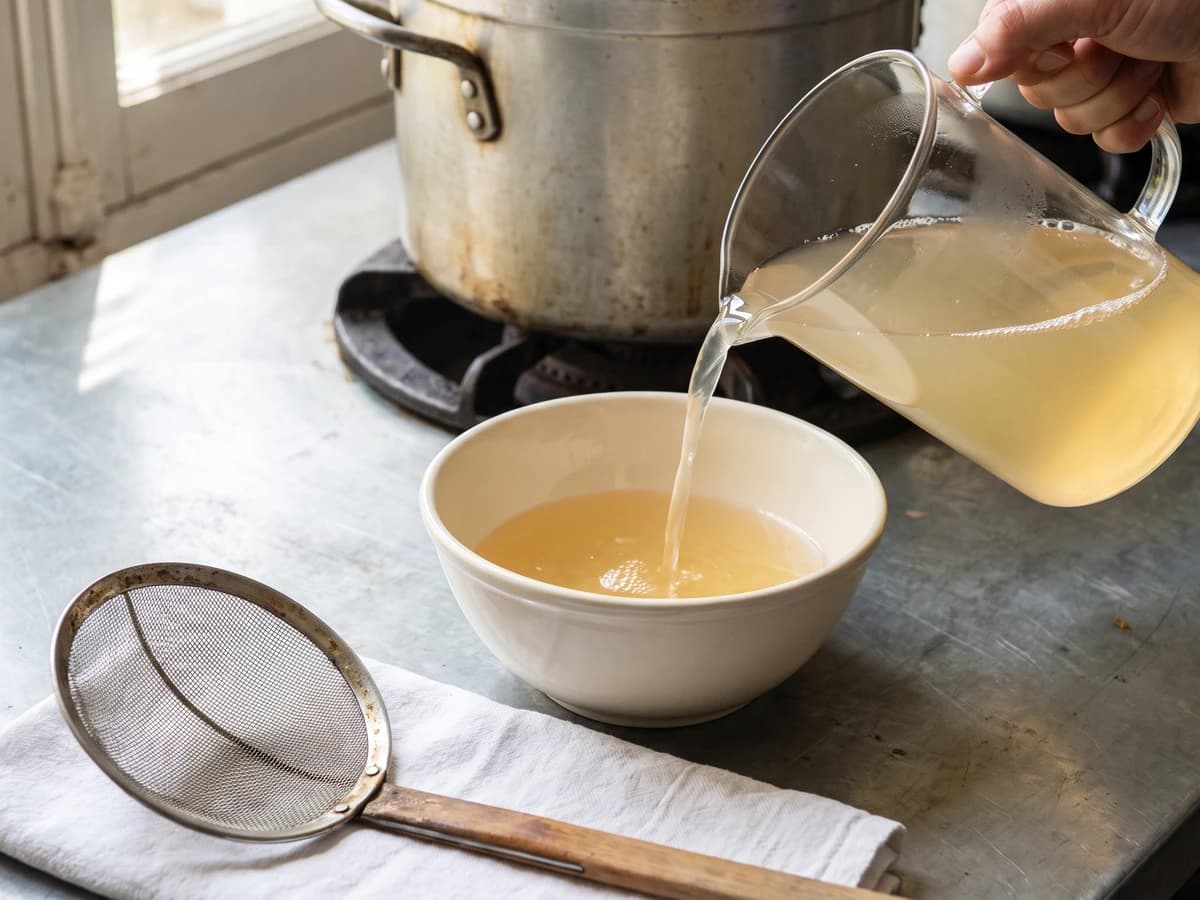
Beef shin, lean beef, and fowl begin in cold water and rise slowly toward a tremble. Skim before the boil, and you learn the quiet discipline that gives every clear French broth its backbone.
A cooking platform built around craft, culture, and the stories behind what we eat.
Created by Chef Juliette
Based on No. 229, Fine or Bordelaise Mirepoix, from Le Guide Culinaire (1907) by Auguste Escoffier
Carrot, onion, and parsley stalks cut rice-fine, pressed dry, then softened in butter: a make-ahead Bordeaux foundation for crayfish and lobster that proves moisture control is flavor control.
Mirepoix fine ou bordelaise (fine diced aromatic base from Bordeaux) teaches one true thing before the knife comes out: in a preparation meant to wait, moisture is not harmless. Carrot, onion, and parsley stalks must be cut very fine, pressed dry, then étuvés (stewed gently) in butter until tender without taking color. Leave vegetable water trapped inside and the neat little batch turns dull, musty, and eventually ferments.
The original formula assumed a saucier maintaining a prepared pantry batch, a towel corner reserved for squeezing vegetables, and a cold larder ready to hold it. Here its quantities are halved into a compact home batch, a clean lint-free towel supplies the pressure, and a lidded bowl in the refrigerator replaces the larder. The old white paper and brigade quantity are scaffolding. The fine cut, hard press, and slow butter cooking are the dish and must stay.
Press harder than seems necessary. That is the decisive step. If the vegetables still release a puddle in the pan, keep them uncovered over the lowest heat until it has vanished before counting the cooking time. Ça se rattrape. One cook, one stove, one evening.
The name Bordelaise places this fine mirepoix in Bordeaux's shellfish repertoire, where it chiefly supported crayfish and lobster rather than serving as a general stock vegetable. Classical kitchens distinguished it from coarse mirepoix, which went into preparations immediately: the Bordelaise version was chopped finer, pressed, butter-stewed, and held ready. Its pressing was practical rather than decorative, since lingering vegetable water encouraged mustiness and fermentation during storage.
Quantity
½ cup (120 ml / 57 g)
cut into 3 mm dice
Quantity
½ cup (120 ml / 57 g)
cut into 3 mm dice
Quantity
⅓ cup loosely packed (80 ml / 14 g)
thinly sliced
Quantity
1½ tablespoons (22 ml / 21 g)
Quantity
1 small pinch, about 1/16 teaspoon (0.3 ml / less than 0.1 g)
Quantity
1 small pinch, about 1/16 teaspoon (0.3 ml / less than 0.1 g)
Quantity
¼ teaspoon (1 ml / 1 g)
for the parchment
| Ingredient | Quantity |
|---|---|
| outer orange carrot fleshcut into 3 mm dice | ½ cup (120 ml / 57 g) |
| yellow onioncut into 3 mm dice | ½ cup (120 ml / 57 g) |
| parsley stalksthinly sliced | ⅓ cup loosely packed (80 ml / 14 g) |
| unsalted butter | 1½ tablespoons (22 ml / 21 g) |
| ground thyme | 1 small pinch, about 1/16 teaspoon (0.3 ml / less than 0.1 g) |
| ground bay leaf | 1 small pinch, about 1/16 teaspoon (0.3 ml / less than 0.1 g) |
| softened unsalted butterfor the parchment | ¼ teaspoon (1 ml / 1 g) |
Peel the carrot, then slice the deeply orange outer flesh away from its paler central core. Weigh the outer flesh after trimming. Cut the carrot and onion into even 3 mm dice, thinly slice the parsley stalks, then chop the three together until the pieces range from pinhead to rice-grain size. Stop before they become a paste. The fine cut is the dish, but crushed vegetables surrender more water than flavor.
Pile the chopped vegetables in the center of a clean lint-free towel. Gather the corners, twist tightly, and squeeze over the sink. Open the towel, loosen the compressed vegetables, move them to a dry section, and squeeze again. They are ready when the mixture feels loose and barely damp rather than wet. If it still leaves a watery smear, ça se rattrape: rewrap it in a dry section and press once more. This hard press prevents mustiness while the mirepoix waits.
Melt the 1½ tablespoons butter in the smallest heavy saucepan you own over low heat. Add the pressed vegetables, ground thyme, and ground bay, then stir until every piece carries a buttery sheen. Étuver, stirring frequently, for 20 to 25 minutes, until the carrot is tender, the onion has lost its raw bite, and the mixture smells sweet and aromatic without taking color. If water gathers on the pan floor, keep cooking uncovered until it disappears before judging tenderness. If the edges begin to brown, lift the pan from the heat, stir from the outside inward, and lower the burner before continuing.
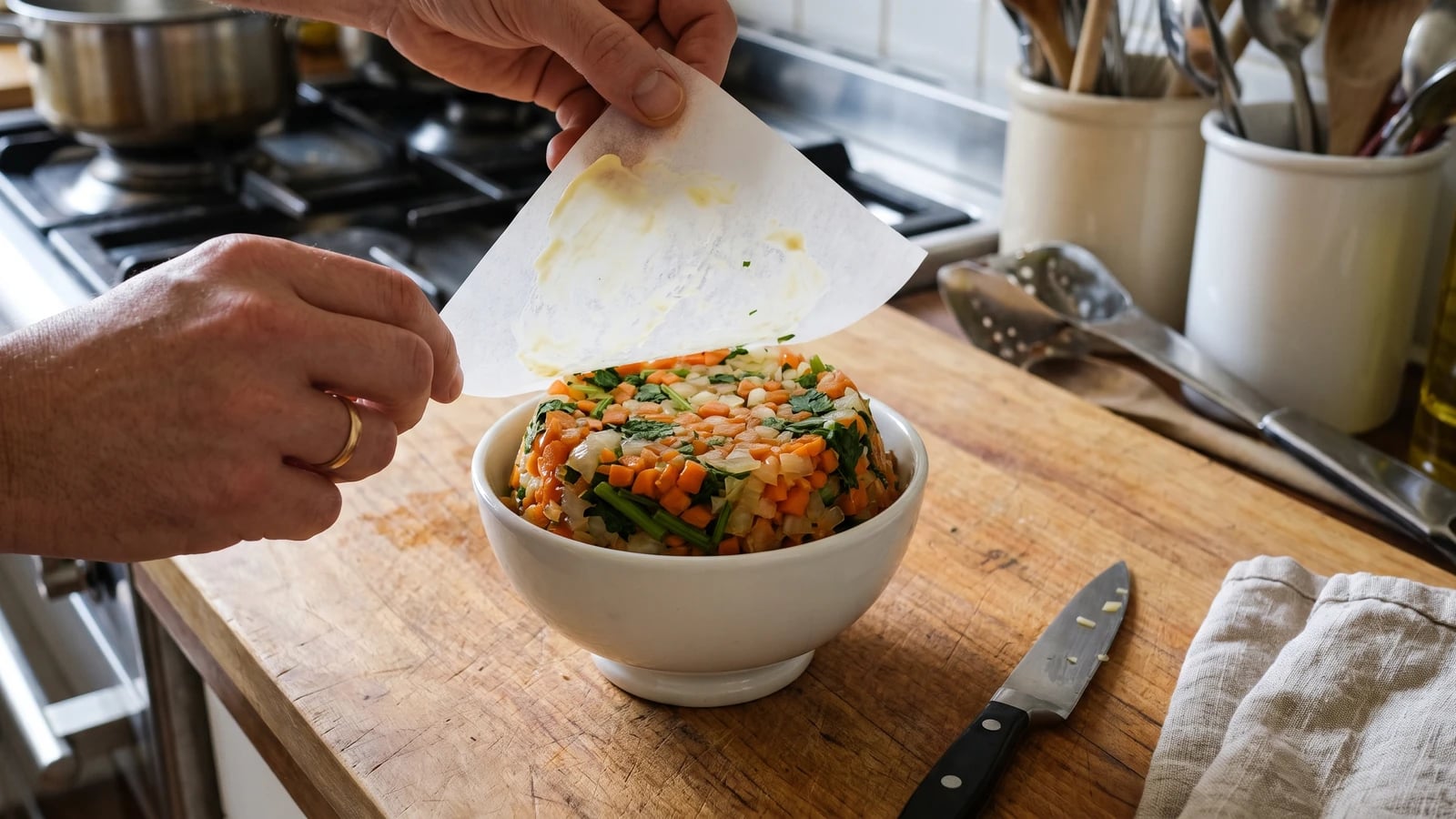
Turn the cooked mirepoix into a small heatproof bowl while it is still pliable. Heap it together and press it firmly with the back of a fork, leaving no loose edges. Cut a parchment round to fit, rub one side with the softened butter, and lay that side directly against the surface. Buttered parchment is the honest home equivalent of the original white buttered paper, and direct contact keeps the surface from drying.
Let the covered mirepoix cool for about 20 minutes, then seal the bowl and refrigerate it. If condensation collects beneath the parchment, replace it with a fresh buttered round before storage. Use a clean spoon to remove what you need and return the remainder promptly to the cold. Keep for up to 3 days, or freeze in small portions. A sour or musty batch is discarded, not rescued.
1 serving (about 135g)
Culinary guides, cultural storytelling, and the editorial depth that makes cooking meaningful.
Discover Culinary ExplorerChef Juliette
Beef shin, lean beef, and fowl begin in cold water and rise slowly toward a tremble. Skim before the boil, and you learn the quiet discipline that gives every clear French broth its backbone.
Chef Juliette
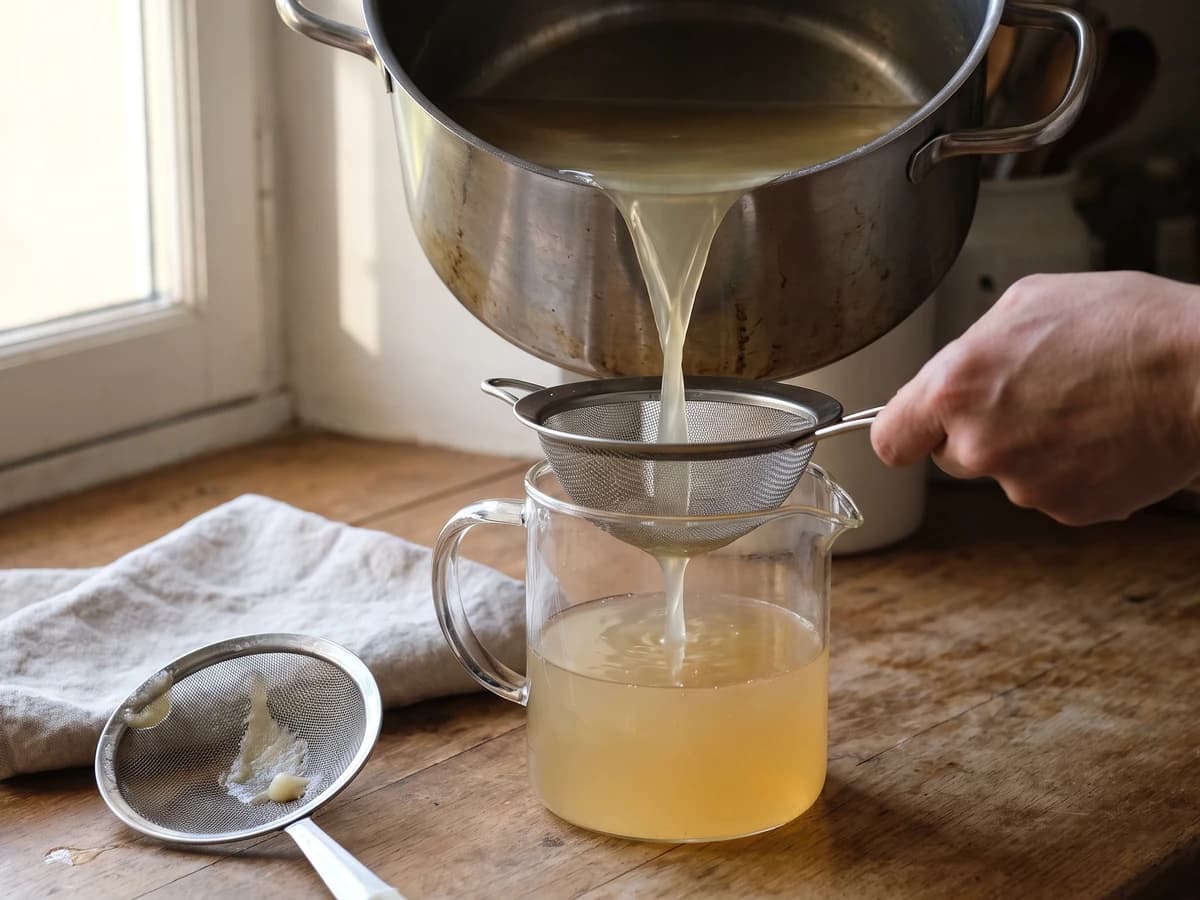
Break the veal bones small, then give them eight hours at a bare tremble. This pale, gelatinous fond becomes the quiet foundation beneath velouté, blanquette, and every sauce that must stay light.
Chef Juliette
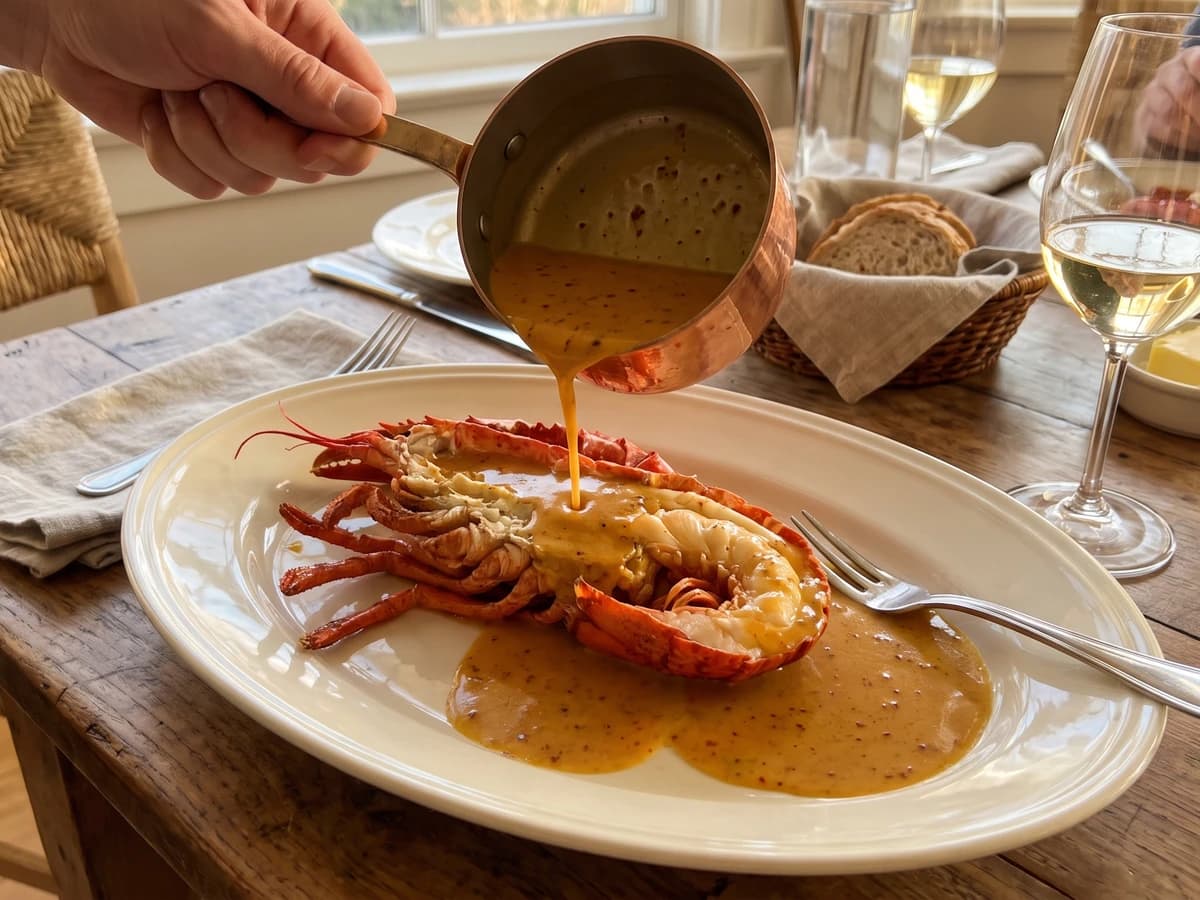
Sauce Orientale concentrates lobster-rich American Sauce with curry, then folds in cream away from the fire: a glossy, gently spiced derivative made for lobster, crayfish, and firm fish.
Chef Juliette
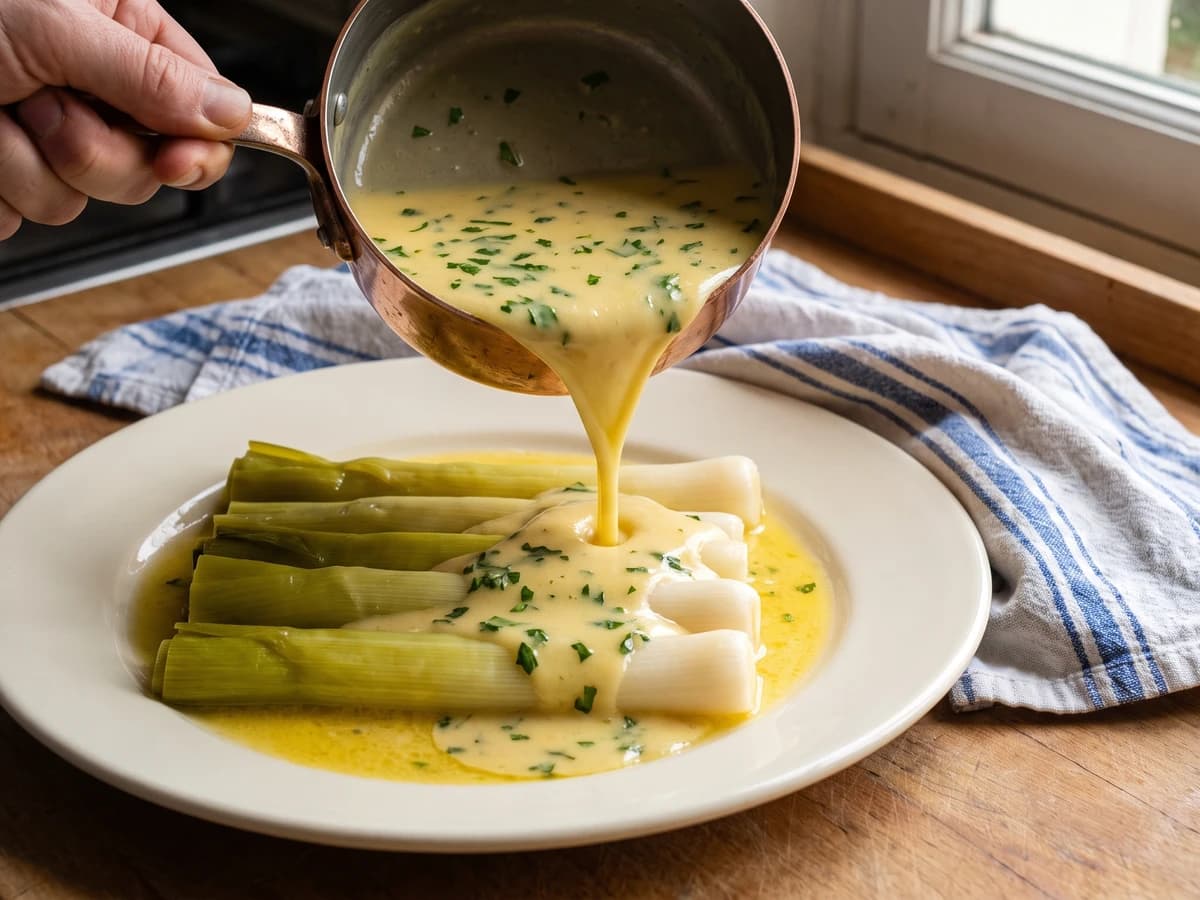
An old lesson in sauce families: Sauce Allemande takes mushroom liquor, then butter, lemon, and parsley, becoming a glossy Poulette for sheep's trotters, leeks, cauliflower, and anything needing gentle richness with a bright edge.