Chef Juliette
Ordinary or White Consommé
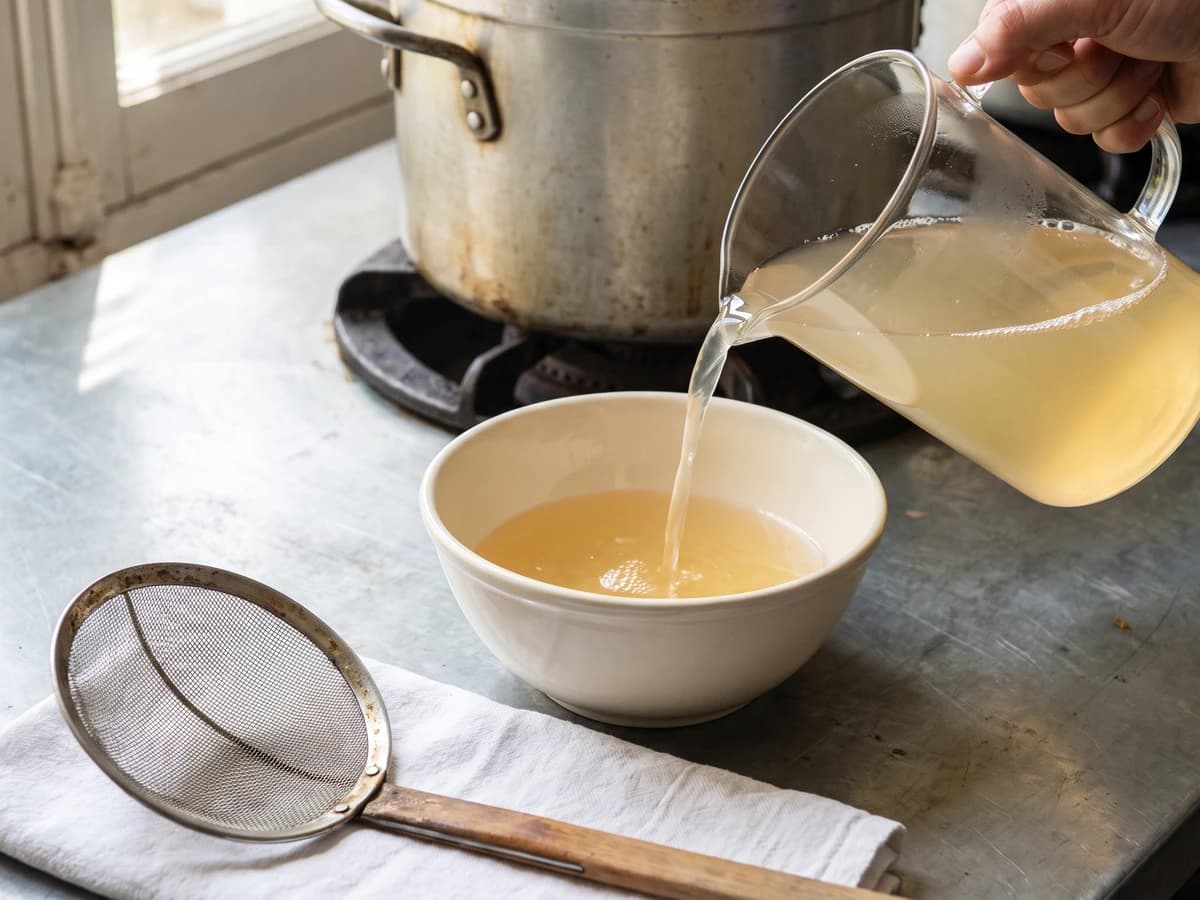
Beef shin, lean beef, and fowl begin in cold water and rise slowly toward a tremble. Skim before the boil, and you learn the quiet discipline that gives every clear French broth its backbone.
A cooking platform built around craft, culture, and the stories behind what we eat.
Created by Chef Juliette
Based on No. 225, Duxelle for Garnishing Small Pies, Onions, Cucumbers, etc., from Le Guide Culinaire (1907) by Auguste Escoffier
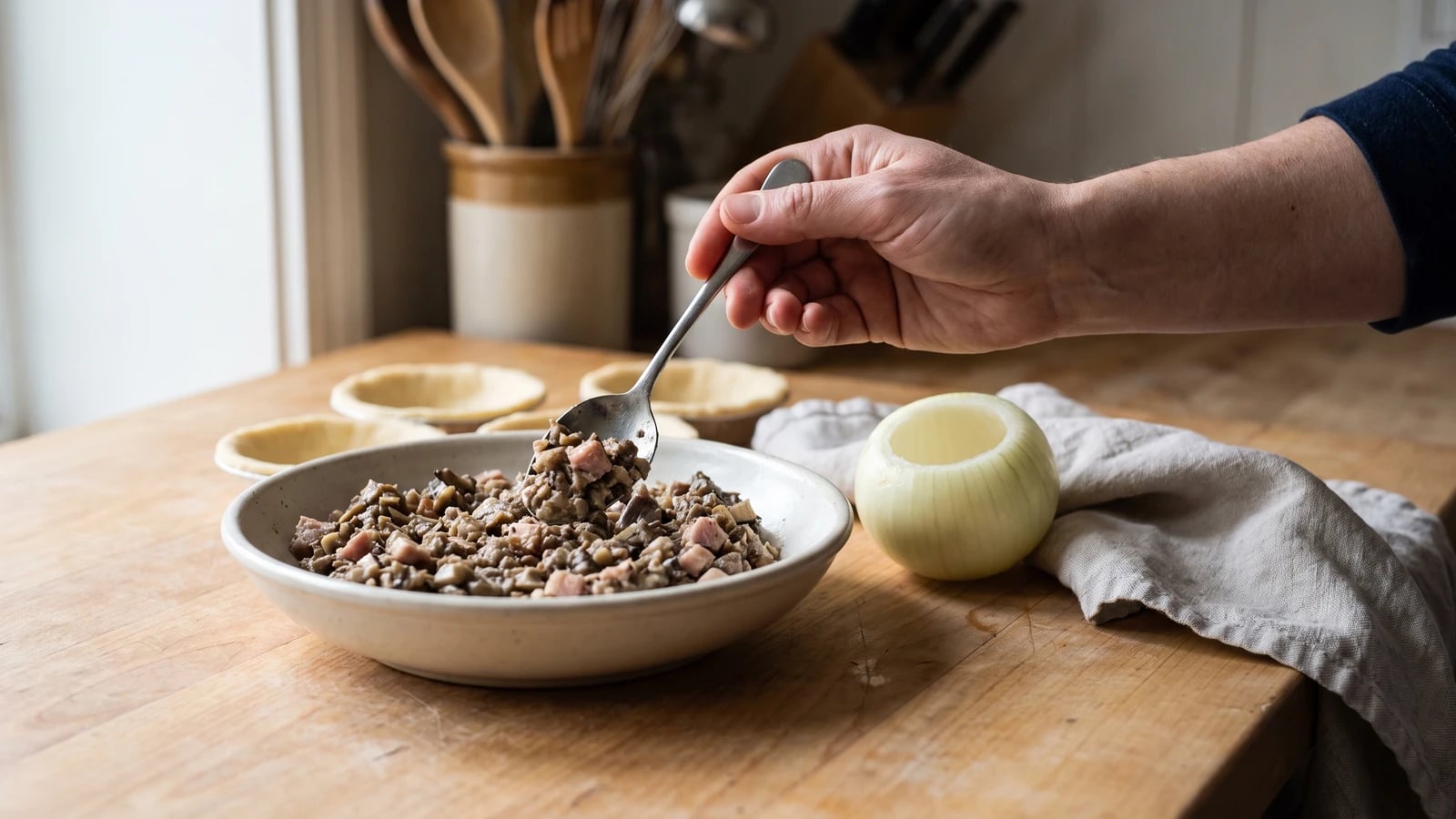
Equal measures of dry duxelle and seasoned pork filling make a supple garnish for small pies and hollowed vegetables, with mushroom depth that lightens the meat without loosening its hold.
Duxelle pour petits pâtés, oignons et concombres (dry mushroom and pork filling) teaches a small but decisive rule: a filling holds only when every component brings flavor without bringing stray water. The mushroom mixture must be truly dry before it touches the meat. If it's wet, pastry softens and hollowed vegetables leak; if it's dry, the filling stays tender, cohesive, and distinctly mushroomy.
The original formula assumed a garde-manger, the cold-preparation station, with finished duxelle on one tray and finished farce on another. At home, the honest equivalent is a chilled bowl, a flexible spatula, and an eight-tablespoon batch: four tablespoons of each component. The brigade's mortar work belongs to the cross-referenced preparation and stays there; repeating it here is scaffolding, while the equal-volume ratio is the dish. One cook, one stove, one evening.
Fold, don't knead. Overworking warms the pork fat and turns a supple filling pasty. The step that decides everything comes first: prove the duxelle is dry, then cool it completely before mixing.
Duxelle comes from the grand-household branch of the French classical kitchen, and its name preserves an association with the Burgundian house of d'Uxelles before the preparation entered the Paris-centered canon. Finely chopped mushrooms cooked dry traveled readily from garnishes into farces, pâtés, and stuffed vegetables because they brought savor without bringing water. This formula's quiet ingenuity is its balance: duxelle meets the pork filling in equal volume, keeping the mixture bound while making it lighter on the tongue.
Quantity
4 tablespoons (60 ml / about 55 g)
completely cooled and chilled
| Ingredient | Quantity |
|---|---|
| dry duxellecompletely cooled and chilled | 4 tablespoons (60 ml / about 55 g) |
| Pork Forcemeat for Divers Uses (No. 196)chilled | 4 tablespoons (60 ml / about 65 g) |
Press the chilled dry duxelle against the side of its bowl. It should hold in a compact mound without leaving a watery halo. If moisture gathers, return it to a small skillet over medium-low heat and stir until the pan is dry, then spread it thinly on a plate and chill it completely. Ça se rattrape. Warm or damp duxelle melts the pork fat and loosens the finished filling.
Place 4 tablespoons (60 ml / about 55 g) of the dry duxelle in a chilled bowl. Add 4 tablespoons (60 ml / about 65 g) of chilled Pork Forcemeat for Divers Uses (No. 196) in several small pieces. Preserve the equal-volume ratio given by the formula; the weights differ because the two preparations have different densities.
Cut down through the center with a flexible spatula, turn the mixture over, and repeat just until the mushrooms are evenly distributed and no large streaks remain. Don't beat or smear it against the bowl. If the mixture turns slick, soft, or greasy, stop and chill it for 10 minutes before finishing the fold. Ça se rattrape.
Use 2 to 3 teaspoons for miniature pies or about 2 tablespoons for each small hollowed vegetable. Set the filling in lightly rather than compressing it, since tight packing produces a dense center and slows cooking. Keep unused filling chilled as you work, and don't taste it raw.
Cook the filling as part of the final pie or stuffed-vegetable recipe until the pastry is browned or the vegetable is tender and the center of the pork filling reaches 160°F (71°C). Cooking time belongs to that final dish and is not included in this component recipe. If pastry colors before the center is ready, shield it loosely with foil and continue at gentler heat. Rest for 5 minutes before serving. À table!
1 serving (about 30g)
Culinary guides, cultural storytelling, and the editorial depth that makes cooking meaningful.
Discover Culinary ExplorerChef Juliette
Beef shin, lean beef, and fowl begin in cold water and rise slowly toward a tremble. Skim before the boil, and you learn the quiet discipline that gives every clear French broth its backbone.
Chef Juliette
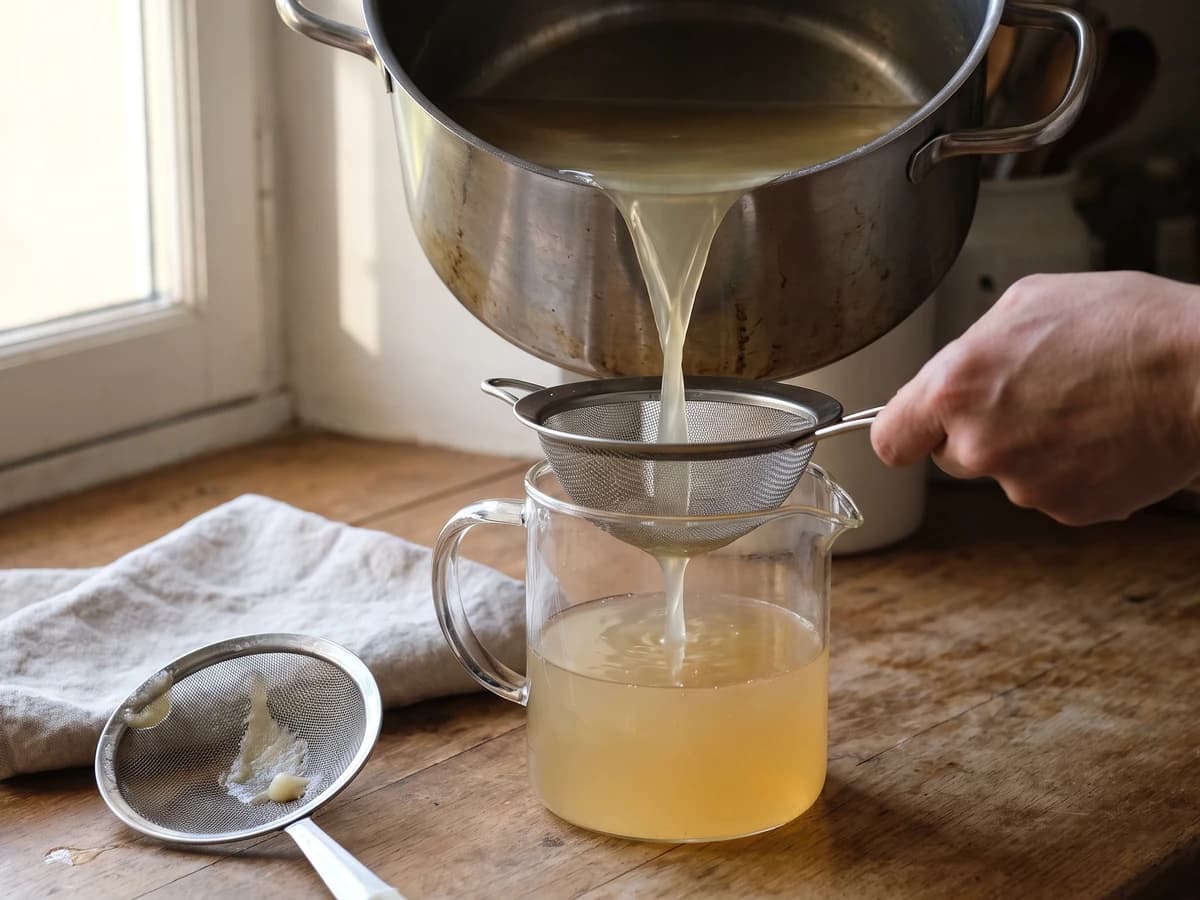
Break the veal bones small, then give them eight hours at a bare tremble. This pale, gelatinous fond becomes the quiet foundation beneath velouté, blanquette, and every sauce that must stay light.
Chef Juliette
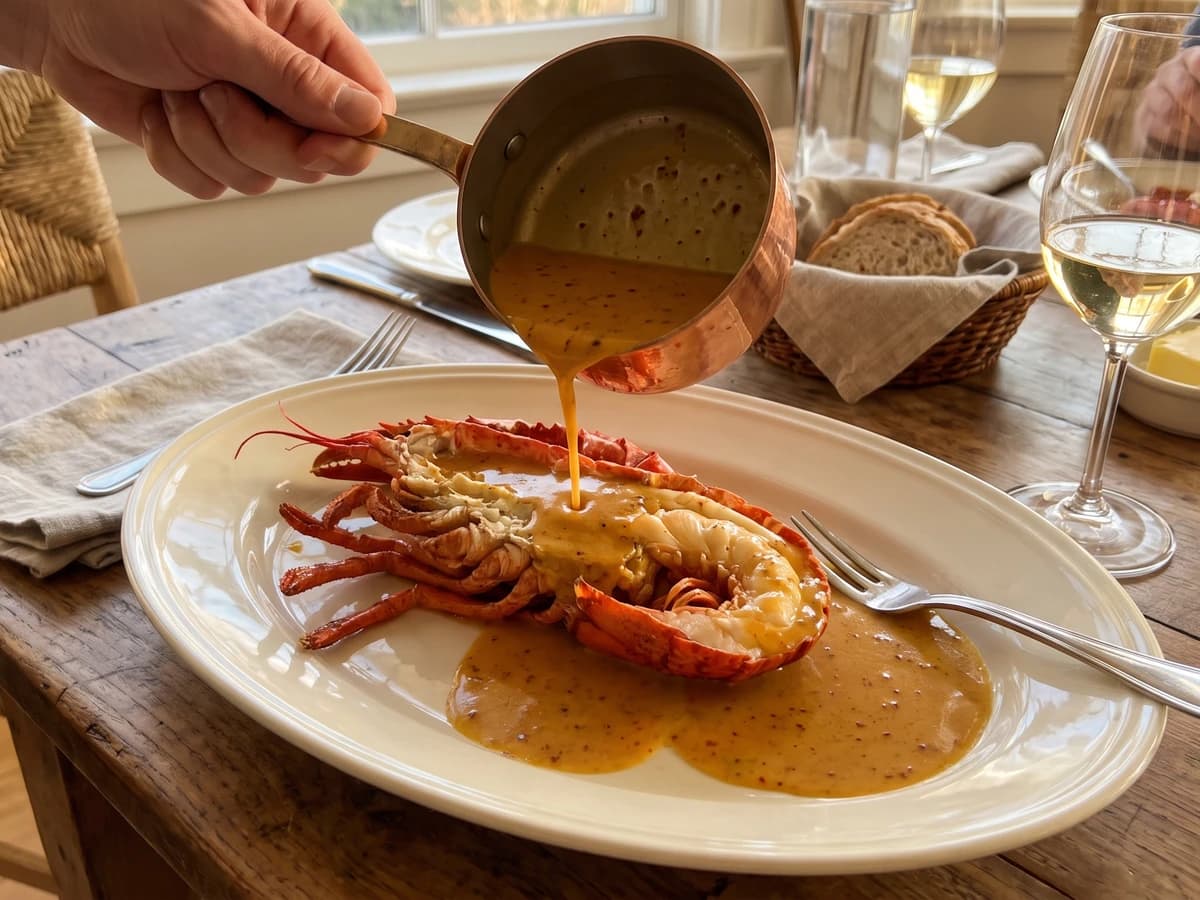
Sauce Orientale concentrates lobster-rich American Sauce with curry, then folds in cream away from the fire: a glossy, gently spiced derivative made for lobster, crayfish, and firm fish.
Chef Juliette
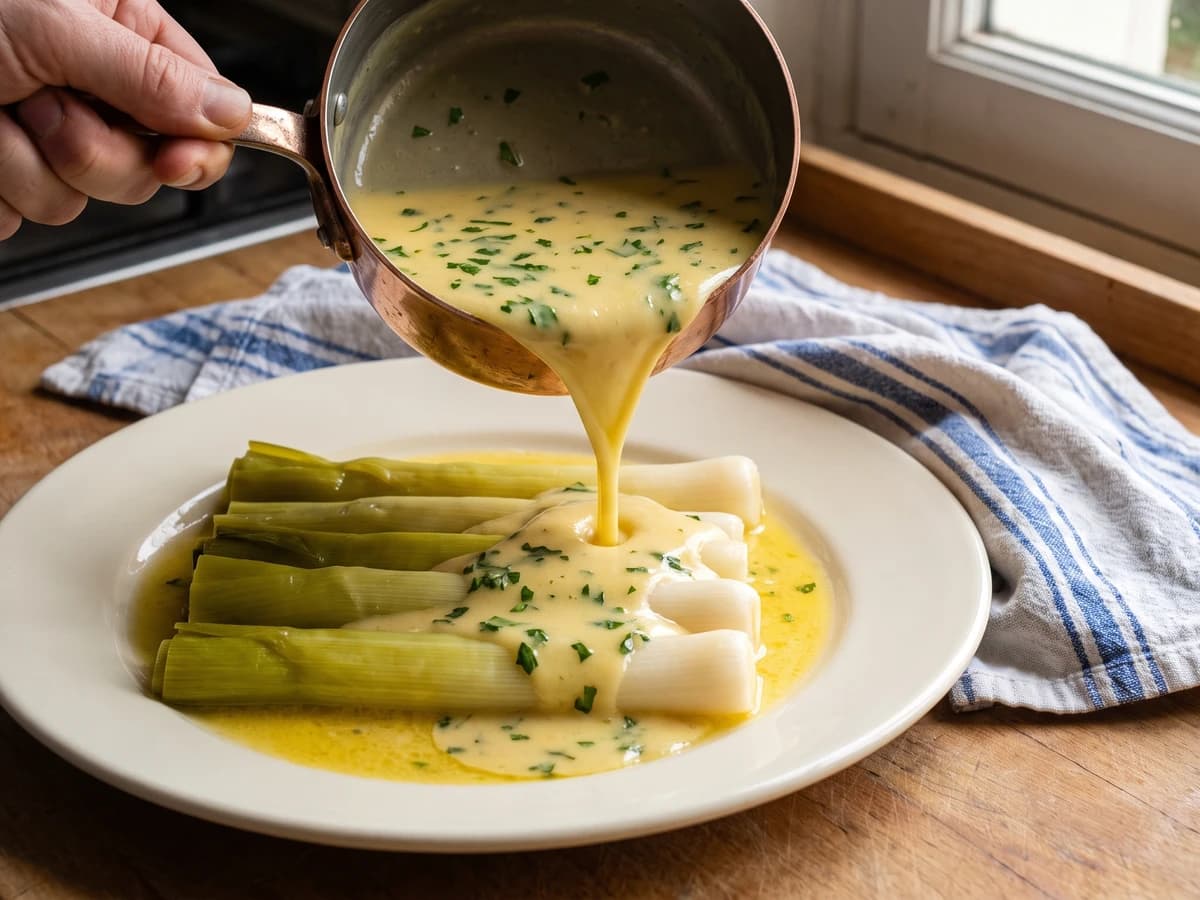
An old lesson in sauce families: Sauce Allemande takes mushroom liquor, then butter, lemon, and parsley, becoming a glossy Poulette for sheep's trotters, leeks, cauliflower, and anything needing gentle richness with a bright edge.