Chef Juliette
Ordinary or White Consommé
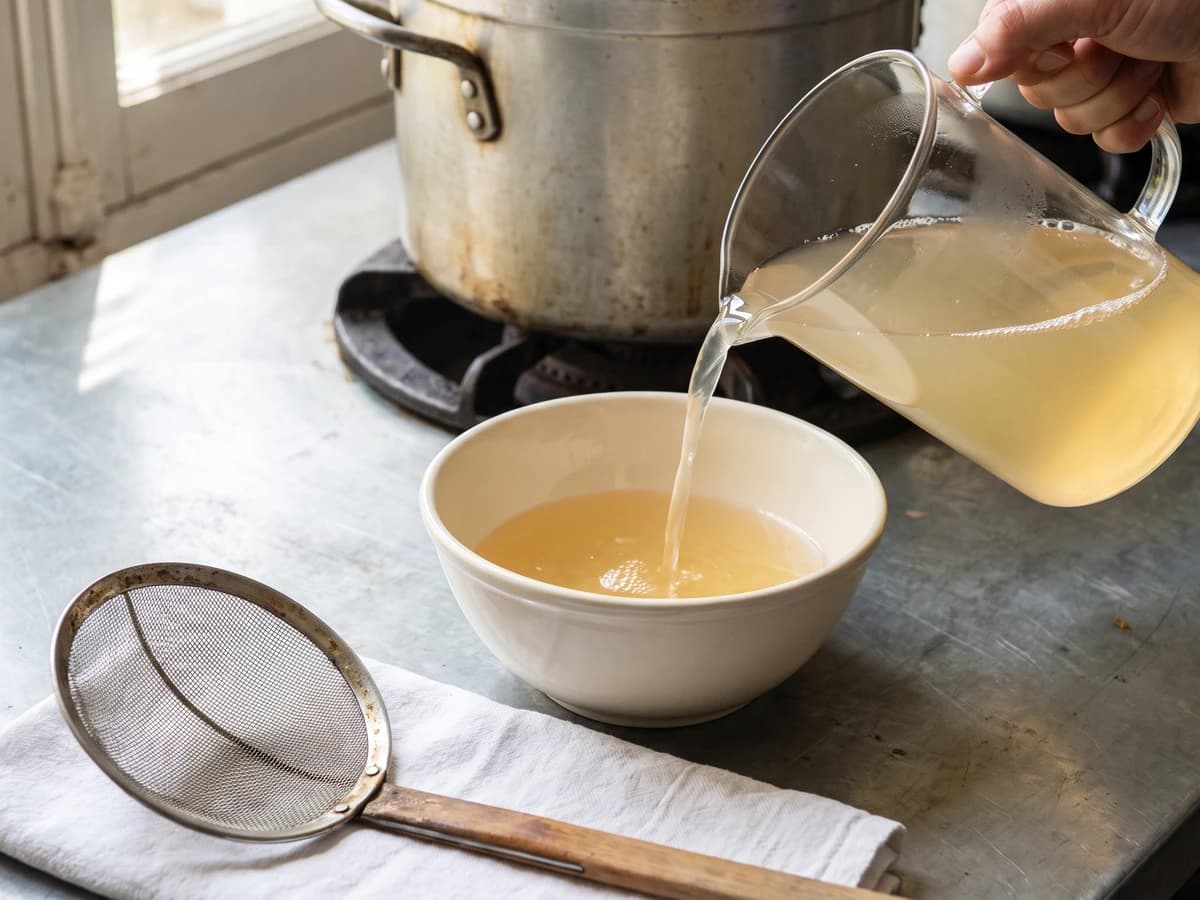
Beef shin, lean beef, and fowl begin in cold water and rise slowly toward a tremble. Skim before the boil, and you learn the quiet discipline that gives every clear French broth its backbone.
A cooking platform built around craft, culture, and the stories behind what we eat.
Created by Chef Juliette
Based on No. 224, Duxelle for Stuffed Vegetables (Tomatoes, Mushrooms, &c.), from Le Guide Culinaire (1907) by Auguste Escoffier
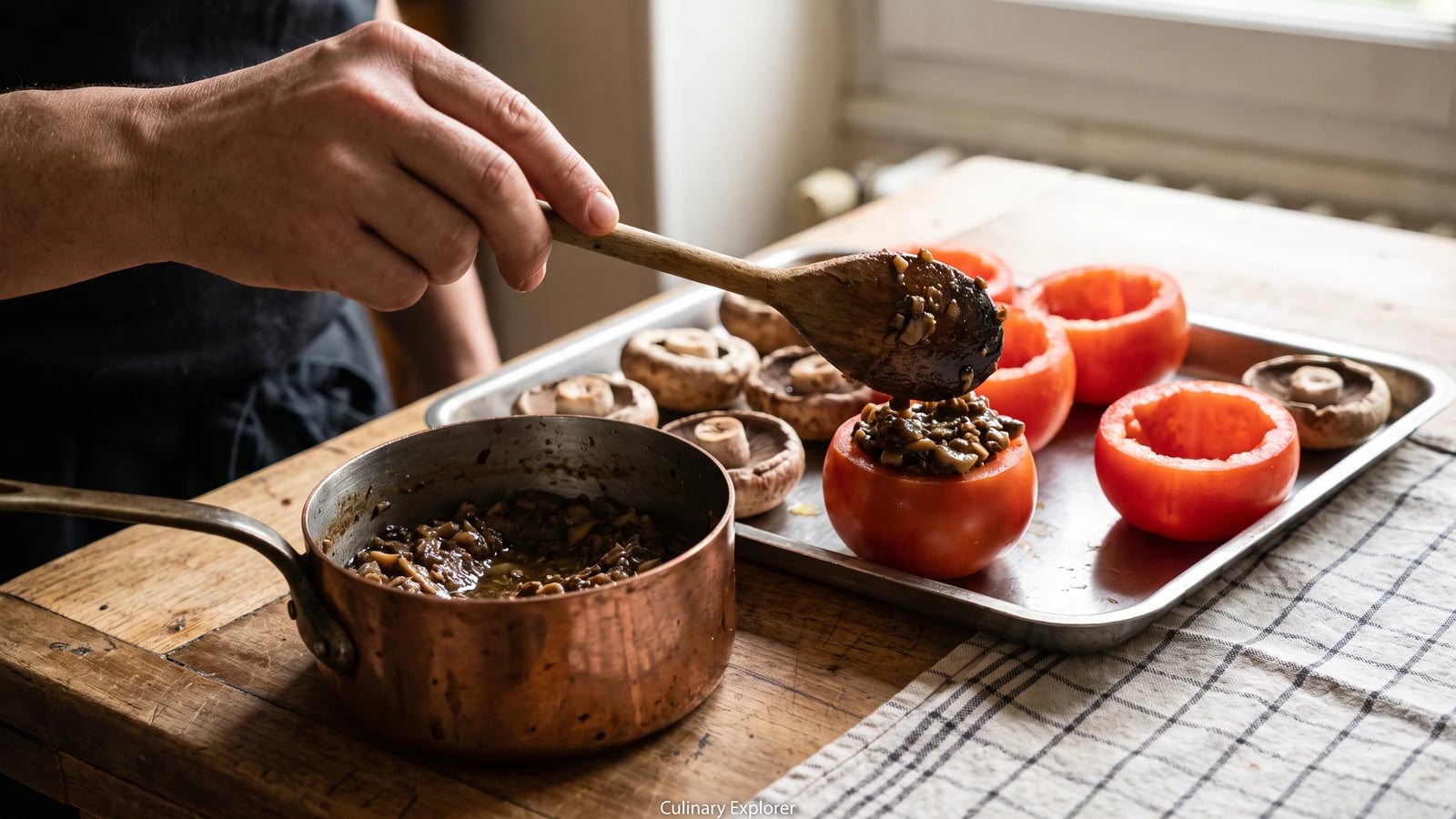
Duxelle for stuffed vegetables is a lesson in control: mushrooms, tomato-rich half-glaze, white wine, and garlic simmered until the spoon leaves a clean path and the filling holds its shape.
Duxelle pour Légumes Farcis (dry mushroom stuffing for vegetables) teaches the first law of a filling: its moisture must leave before it goes into the vegetable. A wet duxelle floods a tomato, softens a mushroom cap, and carries every good flavor away with it. Reduce until the mixture mounds on the spoon and leaves no watery trail.
The source assumes a saucier on staff, Dry Duxelle already prepared, and a tomato-rich Half-Glaze Sauce drawn from stock never off the fire. At home, those remain finished components made or thawed ahead, then measured into the smallest heavy saucepan you own. The separate sauce station is brigade scaffolding and can go; the exact six-to-three-to-two ratio and the patient reduction are the dish and must stay. This formula is already compact, so I haven't inflated it into a catering batch. One cook, one stove, one evening.
The finished duxelle should be dark, glossy, and concentrated, with garlic barely announcing itself. Watch the final minutes closely. If the mixture catches before it reaches the proper consistency, lower the heat and loosen the pan with a teaspoon of hot water. Ça se rattrape.
Duxelles belongs to the Parisian classical repertoire, though its name points to Uxelles: finely chopped mushrooms were cooked almost dry so they could season forcemeats, sauces, and stuffed vegetables without flooding them. This tomato-rich derivative moved easily from the grand kitchen to the cuisine bourgeoise because it turns modest amounts of prepared mushroom and sauce into a stable, savory filling. It is often mistaken for a mushroom sauté, but its deliberate dryness is its identity, not a side effect.
Quantity
6 tablespoons (90 ml / 90 g)
prepared
Quantity
3 tablespoons (45 ml / 45 g)
finished
Quantity
1 pea-sized piece (about ¼ teaspoon / 1 g)
crushed
Quantity
2 tablespoons (30 ml / 30 g)
Quantity
1 tablespoon (15 ml / 5 g)
| Ingredient | Quantity |
|---|---|
| Dry Duxelleprepared | 6 tablespoons (90 ml / 90 g) |
| tomato-rich Half-Glaze Saucefinished | 3 tablespoons (45 ml / 45 g) |
| garliccrushed | 1 pea-sized piece (about ¼ teaspoon / 1 g) |
| dry white wine | 2 tablespoons (30 ml / 30 g) |
| fine fresh breadcrumbs (optional) | 1 tablespoon (15 ml / 5 g) |
Have the Dry Duxelle and tomato-rich Half-Glaze Sauce ready as finished preparations, then measure every ingredient before heating the pan. Their separate methods remain separate here; this recipe begins where the classical sauce station once began, with those components waiting beside the stove.
Put the Dry Duxelle into a 1-quart heavy saucepan. Add the tomato-rich Half-Glaze Sauce, crushed garlic, and white wine, then stir until the mixture is even and the garlic is dispersed. Use a small pan: too much empty surface encourages the glaze at the edges to scorch before the center has reduced.
Set the pan over medium-low heat and bring the mixture to a bare simmer. Cook uncovered for 8 to 12 minutes, stirring and scraping the corners often, until a spoon drawn across the bottom leaves a clean path for two seconds and the duxelle holds a soft mound. This reduction is the one step that decides the dish. If it begins catching while still loose, lower the heat and stir in 1 teaspoon of hot water. Ça se rattrape. If anything smells bitter, lift the unburned mixture into a clean pan without scraping up the scorched layer.
If the flavor is concentrated but the duxelle still releases a little liquid, stir in 1 teaspoon of the fine fresh breadcrumbs and let it stand for a minute. Add more only as needed, up to the full tablespoon. The source gives the crumb as a correction, not the foundation; reduction should do most of the work, while the crumb catches the last excess moisture without turning the filling bready.
Take the pan from the heat and let the duxelle stand for 5 minutes. It will firm slightly as the glaze settles. Spoon about 2 tablespoons into each drained medium tomato shell or about 2 teaspoons into each prepared mushroom cap, then finish the vegetables according to their own cooking time. The filling should stay where you put it when the vegetable is tilted. À table!
1 serving (about 30g)
Culinary guides, cultural storytelling, and the editorial depth that makes cooking meaningful.
Discover Culinary ExplorerChef Juliette
Beef shin, lean beef, and fowl begin in cold water and rise slowly toward a tremble. Skim before the boil, and you learn the quiet discipline that gives every clear French broth its backbone.
Chef Juliette
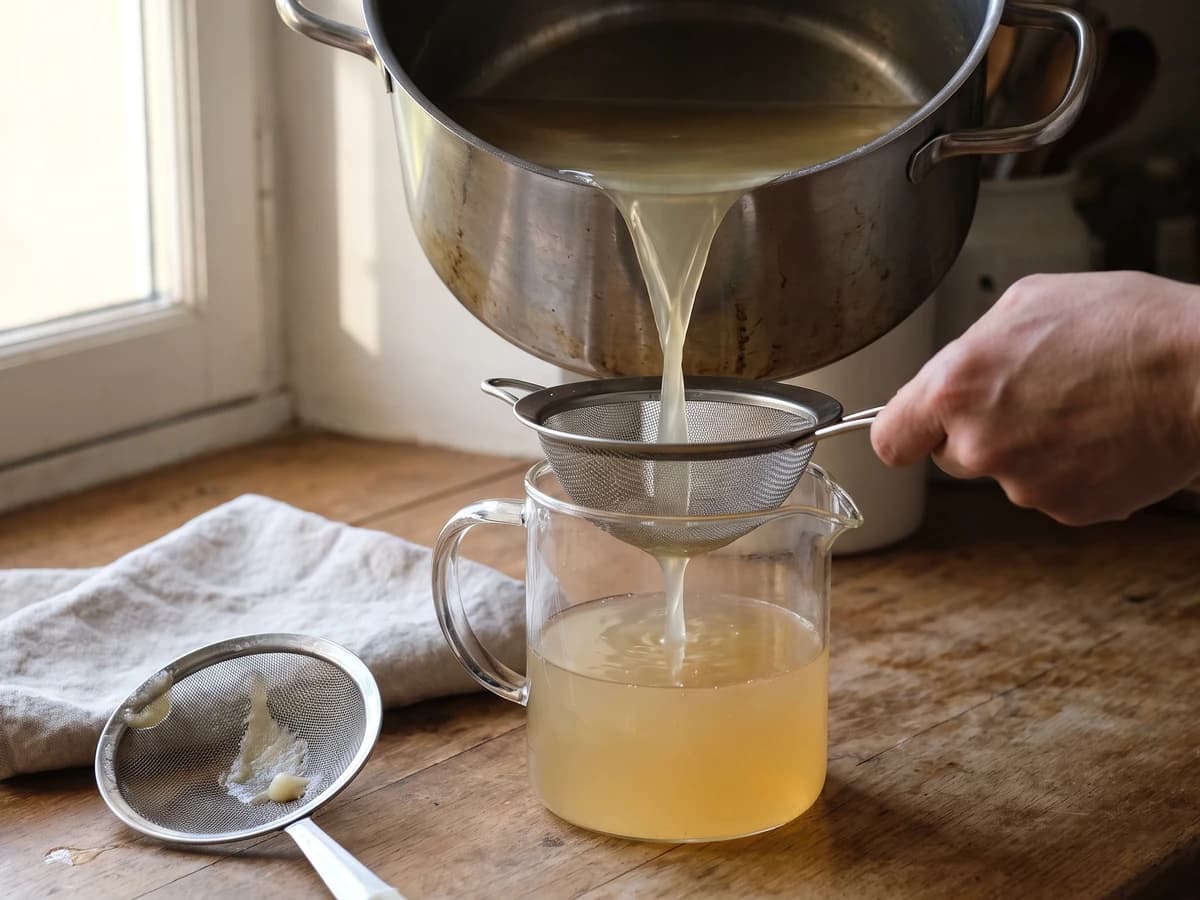
Break the veal bones small, then give them eight hours at a bare tremble. This pale, gelatinous fond becomes the quiet foundation beneath velouté, blanquette, and every sauce that must stay light.
Chef Juliette
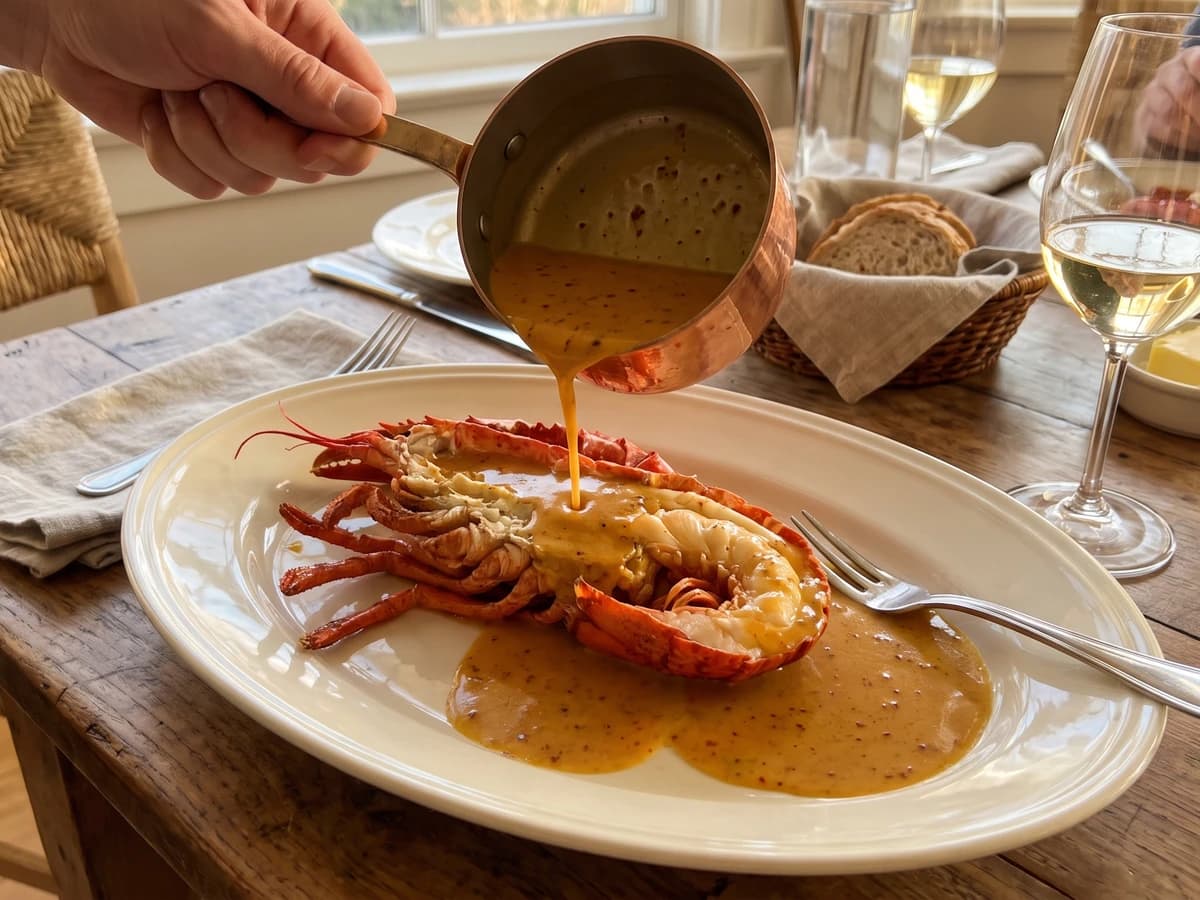
Sauce Orientale concentrates lobster-rich American Sauce with curry, then folds in cream away from the fire: a glossy, gently spiced derivative made for lobster, crayfish, and firm fish.
Chef Juliette
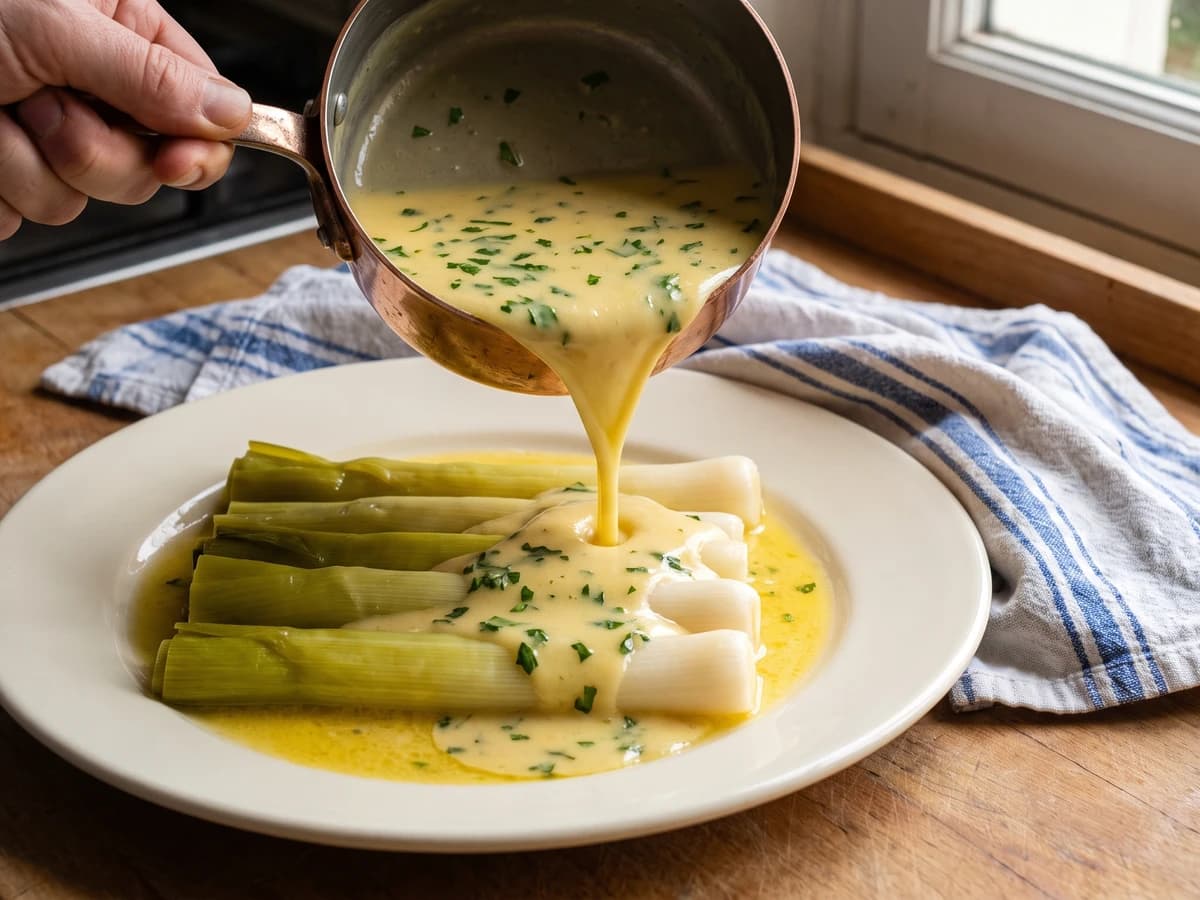
An old lesson in sauce families: Sauce Allemande takes mushroom liquor, then butter, lemon, and parsley, becoming a glossy Poulette for sheep's trotters, leeks, cauliflower, and anything needing gentle richness with a bright edge.