Chef Juliette
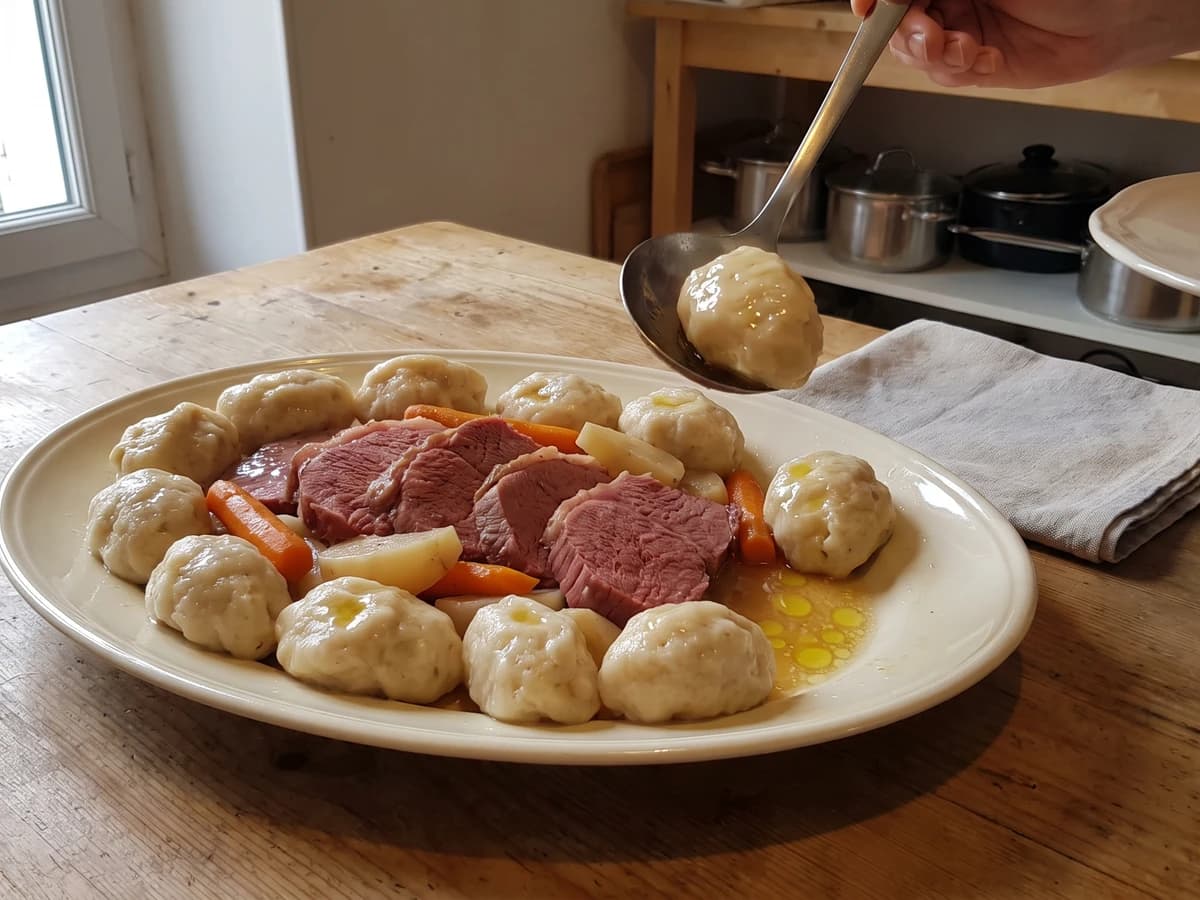
Suet Dumpling
Boulettes au suif, poached beside salt beef, turn equal weights of flour and finely chopped suet into tender, rich dumplings. Keep the beef liquor at a bare tremble and the old garnish works beautifully at home.
A cooking platform built around craft, culture, and the stories behind what we eat.
Created by Chef Juliette
Based on No. 2187, Sweet Potatoes, from Le Guide Culinaire (1907) by Auguste Escoffier
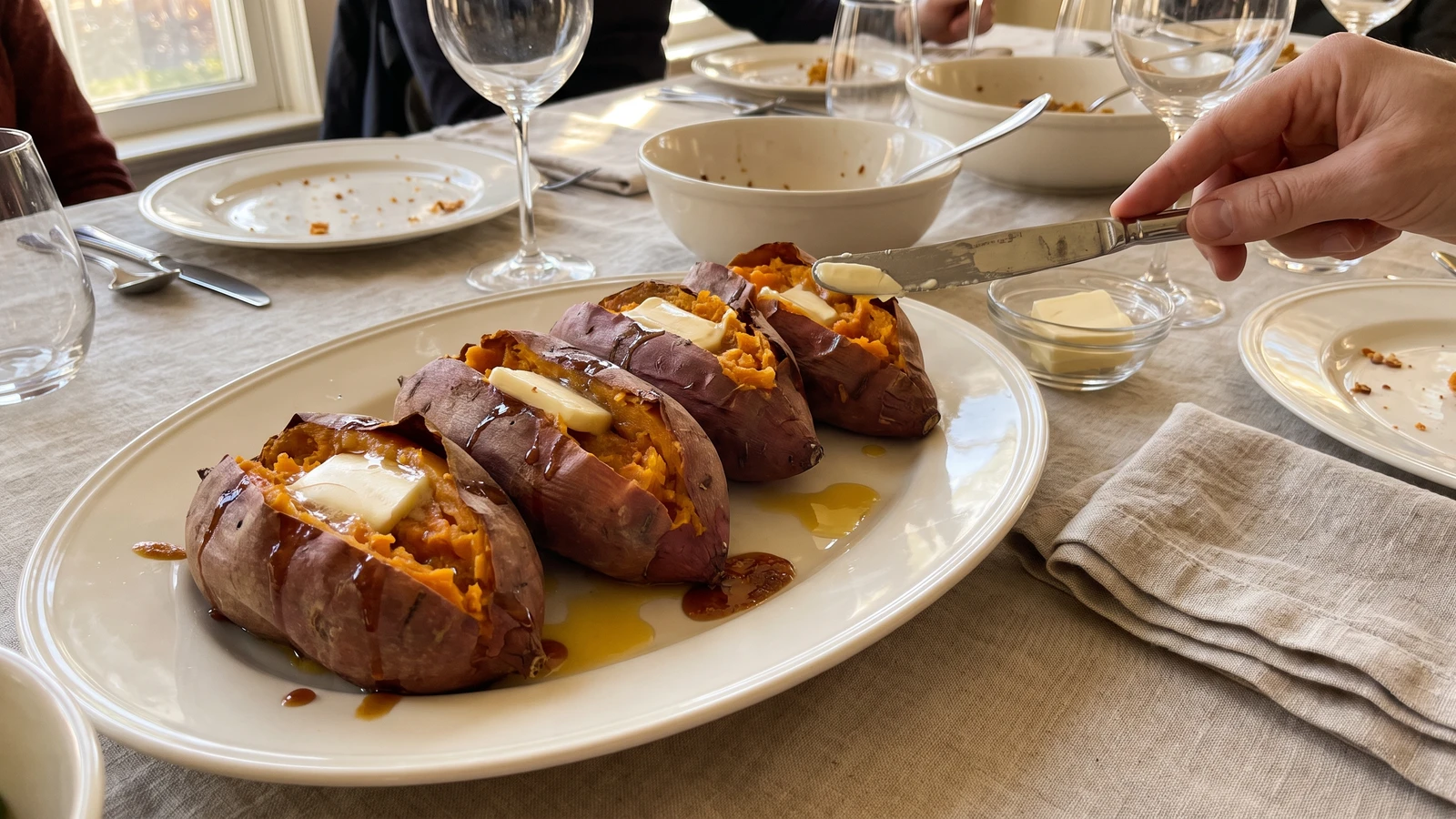
Patates douces au four, beurre frais teaches complete cooking: bronzed skins, soft amber flesh, and fresh butter melting into every split, with the classical potato repertoire waiting as four honest alternatives.
Patates douces au four, beurre frais (baked sweet potatoes with fresh butter) teach complete cooking. The one true thing to know before touching the pan is that tenderness isn't enough: the flesh must yield without the least chalky center, or the butter sits on top instead of disappearing into it. Done properly, the skin wrinkles and bronzes while the inside loosens into deep amber softness.
The source assumes a service kitchen able to send the same vegetable baked, gratinée, mashed, Duchesse, fried, or soufflé according to the meal, with a fierce oven ready and several hands to finish each order. At home, this becomes four baked potatoes and a hot domestic oven, while the named formulas remain separate alternatives rather than a parade on one platter. That menu breadth was brigade scaffolding. Complete cooking, real butter, and immediate service are the dish.
This is one cook, one stove, one evening. Bake the potatoes unwrapped so their skins dry, and judge the centers with a skewer, not the clock. The step that matters most is the last inch of cooking: don't split them until the skewer passes from end to end without resistance.
Patates douces do not belong to one French region in the way gratin dauphinois belongs to Dauphiné; their home in the French canon is the codified service kitchen, which received an American tuber and applied the potato repertoire already in daily use. The telling detail is the absence of added sugar: French classical practice treats the tuber's sweetness as part of the vegetable, pairing it with fresh butter or translating it through gratin, purée, Duchesse, frying, and soufflé methods. What traveled into the grand kitchen was not a single regional specialty but a flexible ingredient taught through established technique.
Quantity
4 medium (about 2 lb / 900 g total)
scrubbed, dried, and evenly sized
Quantity
1/2 cup (120 ml / 113 g)
soft enough to slice but not melted
Quantity
1 teaspoon (5 ml / 6 g)
Quantity
1 home-scale batch Pommes de Terre Gratinées (No. 2224)
prepared with sweet potatoes according to its own formula
Quantity
1 home-scale batch Mashed Potatoes (No. 2248)
prepared with sweet potatoes according to its own formula
Quantity
1 home-scale batch Pommes de Terre à la Duchesse (No. 2212)
prepared with sweet potatoes according to its own formula
Quantity
1 home-scale batch Soufflé de Pommes de Terre (No. 2250)
prepared with sweet potatoes according to its own formula
| Ingredient | Quantity |
|---|---|
| orange-fleshed sweet potatoesscrubbed, dried, and evenly sized | 4 medium (about 2 lb / 900 g total) |
| fresh unsalted buttersoft enough to slice but not melted | 1/2 cup (120 ml / 113 g) |
| fine sea salt | 1 teaspoon (5 ml / 6 g) |
| optional gratinée preparation (optional)prepared with sweet potatoes according to its own formula | 1 home-scale batch Pommes de Terre Gratinées (No. 2224) |
| optional mashed preparation (optional)prepared with sweet potatoes according to its own formula | 1 home-scale batch Mashed Potatoes (No. 2248) |
| optional Duchesse preparation (optional)prepared with sweet potatoes according to its own formula | 1 home-scale batch Pommes de Terre à la Duchesse (No. 2212) |
| optional soufflé preparation (optional)prepared with sweet potatoes according to its own formula | 1 home-scale batch Soufflé de Pommes de Terre (No. 2250) |
Use the baked path below for the source's primary service. If you prefer one of its cited alternatives, prepare a single home-scale batch of Pommes de Terre Gratinées (No. 2224), Mashed Potatoes (No. 2248), Pommes de Terre à la Duchesse (No. 2212), or Soufflé de Pommes de Terre (No. 2250), following that formula intact and using sweet potato where it calls for potato. These are separate finished preparations, not four things to heap onto one plate. For a Sauté (tossed over lively heat in butter) or fried service, cook it last and carry it directly to the table because sweet potato loses its crisp surface quickly.
Heat the oven to 425°F (220°C), or 400°F (200°C) with a fan. Scrub the sweet potatoes thoroughly, trim only any dry root ends, and dry the skins completely. Pierce each potato four or five times with a skewer, then set them on a wire rack over a rimmed sheet. Leave them unwrapped. Foil traps moisture and gives you damp skin when this preparation wants a dry jacket around soft flesh.
Bake for 50 to 70 minutes, turning the potatoes once, until the skins look wrinkled, a little dark syrup beads at the punctures, and a slender skewer passes through the thickest center without resistance. Size decides the time. If the skins darken before the centers soften, lower the oven to 375°F (190°C) and continue gently. If you split one and discover a firm, pale core, close it loosely and return it to the oven for 10 minutes. Ça se rattrape.
While the potatoes finish, divide the fresh butter into eight generous slices and place them in a small serving dish. Keep the butter pliable but solid. Don't melt it in advance; watching cool butter surrender to the hot amber flesh is part of the preparation, and the diner should have more within reach. Butter, not margarine. The dish depends on its clean dairy flavor.
Let the potatoes settle for only 2 minutes. Cut a deep slit along each top, press the ends inward to open the flesh, and loosen the center once with a fork without scraping away the skin. Season lightly, tuck one slice of butter into each potato, and bring the remaining butter and salt to the table. Serve immediately, while the butter still runs gold through the rough folds. À table!
1 serving (about 210g)
Culinary guides, cultural storytelling, and the editorial depth that makes cooking meaningful.
Discover Culinary ExplorerChef Juliette
Boulettes au suif, poached beside salt beef, turn equal weights of flour and finely chopped suet into tender, rich dumplings. Keep the beef liquor at a bare tremble and the old garnish works beautifully at home.

Chef Juliette
Bread, flour, frangipane, and rice become four cool, supple panades for binding forcemeats, each changing body and flavor while preserving tenderness. The finest Mousselines need none, and knowing that distinction is the lesson.

Chef Juliette
Panade au pain is bread, milk, salt, heat, and attention: stir until the paste releases cleanly, butter it against a skin, and you have the quiet binder behind tender French farces.

Chef Juliette
Panade de farine teaches the drying stroke behind pâte à choux: flour meets boiling buttered water, then stays over the fire until the paste gathers, smooths, and quits the pan cleanly.