Chef Juliette
Suet Dumpling
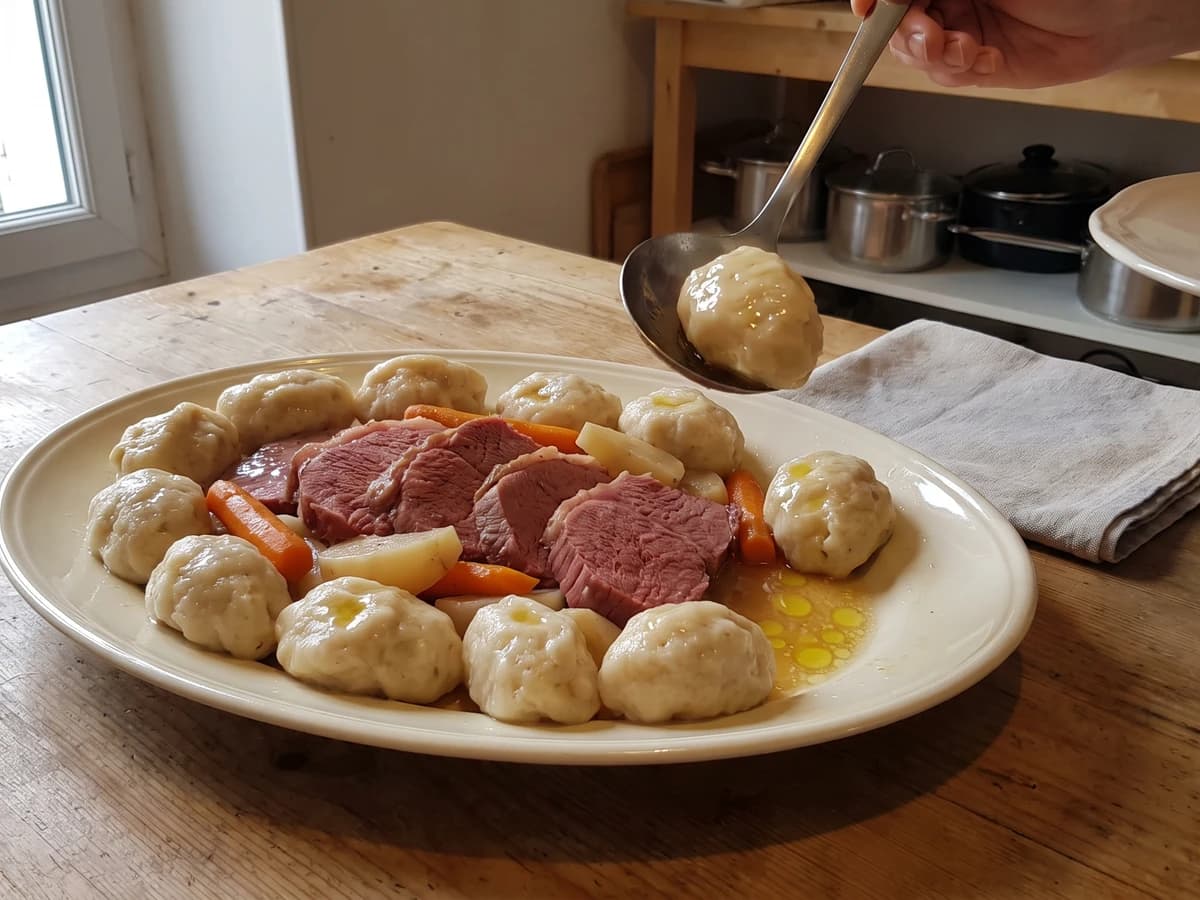
Boulettes au suif, poached beside salt beef, turn equal weights of flour and finely chopped suet into tender, rich dumplings. Keep the beef liquor at a bare tremble and the old garnish works beautifully at home.
A cooking platform built around craft, culture, and the stories behind what we eat.
Created by Chef Juliette
Based on No. 2212, Pommes de Terre à la Duchesse, from Le Guide Culinaire (1907) by Auguste Escoffier
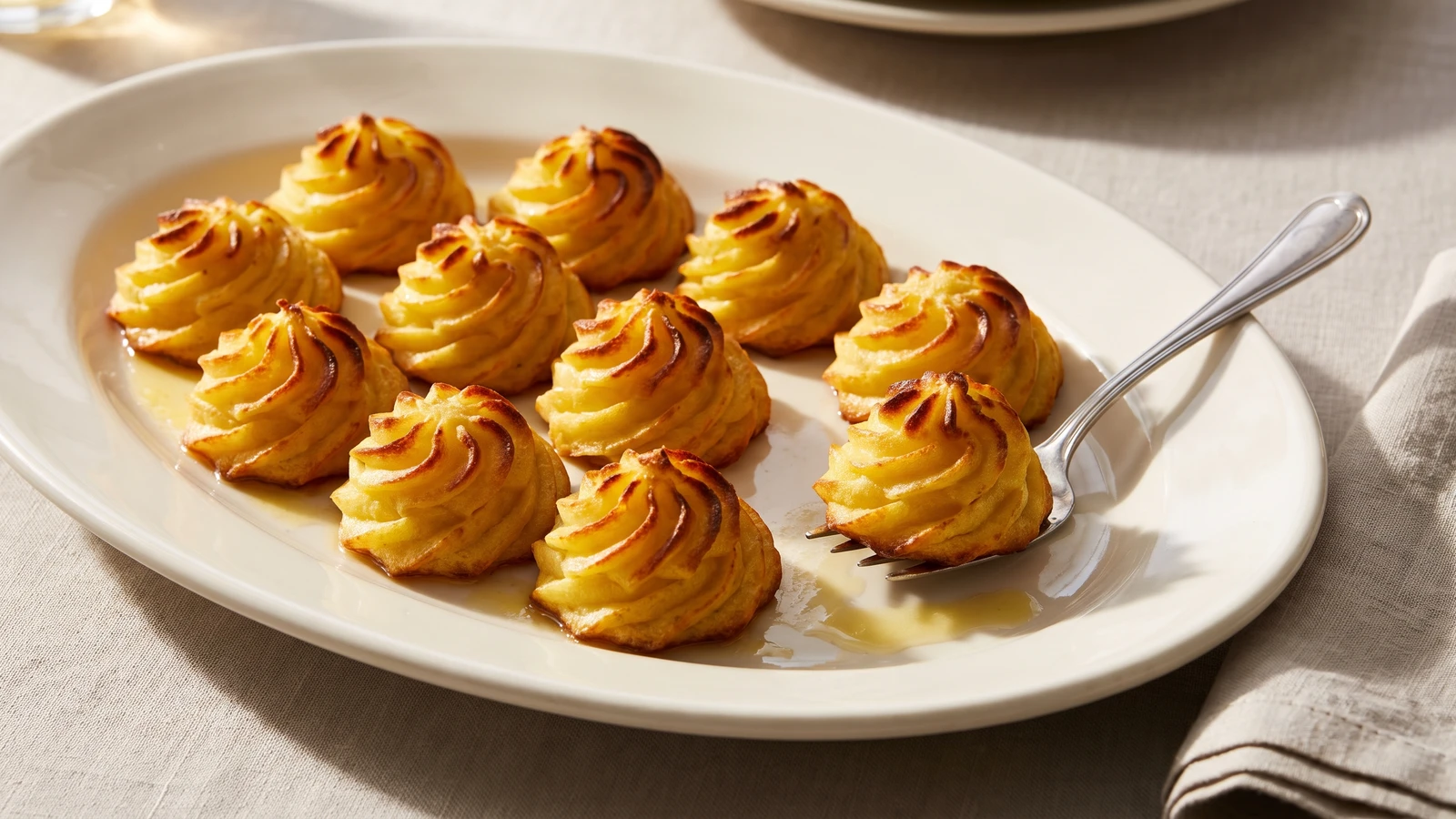
Ridged rosettes of buttered, yolk-bound potato purée, lightly gilded and fiercely baked for eight minutes, with bronze edges outside and a tender, buttery heart within.
Pommes de terre à la duchesse (duchess potatoes) teach control of moisture: a purée rich enough to taste generous, dry enough to stand in ridges, and supple enough to pass cleanly through a piping bag. That balance is the one true thing to know before you touch a pan. Get it right and fierce heat bronzes the egg-gilded edges while the centres remain tender and buttery.
The source assumes the potato paste from Croquettes de Pommes de Terre (No. 2210) is already waiting in brigade quantity, with buttered trays and a fierce service oven ready seven or eight minutes before serving. At home, 1½ pounds of paste gives twelve of the prescribed two-ounce portions on one tray, and the upper third of a fully preheated domestic oven supplies the fierce heat. No saucier or stockpot is hiding behind these potatoes, and no salamander is needed. One cook, one stove, one evening.
Multiple trays and last-minute brigade juggling are scaffolding, so they can go. The croquette paste, two-ounce portions, defined shapes, egg gilding, and seven-to-eight-minute bake are the dish, so they stay. Begin with the paste at cool room temperature and watch the first piped ridge: it must remain standing cleanly before you shape the rest.
Pommes de terre à la duchesse belong to the Parisian classical table, where shaped potato garnitures were arranged around roast meats with the same care given to pastry. The name follows the canon's fondness for aristocratic titles, but no single duchess can be credited reliably with their invention. Despite the croquette cross-reference, pommes duchesse are not croquettes: they share the same yolk-bound paste, but they are gilded and oven-coloured, never coated à l’anglaise or fried.
Quantity
3 cups (720 ml / 680 g) Croquettes de Pommes de Terre (No. 2210)
stopped at the paste stage, before shaping, coating à l’anglaise, or frying
Quantity
1 tablespoon (15 ml / 14 g)
softened, for the tray
Quantity
1
beaten until uniform, for gilding
| Ingredient | Quantity |
|---|---|
| prepared potato pastestopped at the paste stage, before shaping, coating à l’anglaise, or frying | 3 cups (720 ml / 680 g) Croquettes de Pommes de Terre (No. 2210) |
| unsalted buttersoftened, for the tray | 1 tablespoon (15 ml / 14 g) |
| large eggbeaten until uniform, for gilding | 1 |
Set a rack in the upper third of the oven and heat it to 475°F (245°C), or 450°F (230°C) with convection, for a full thirty minutes. Spread the softened butter in a thin, complete film over a light-coloured metal baking sheet. Use the bare buttered tray called for in the preparation, not parchment; the direct contact helps the bases colour and release cleanly.
Bring the prepared potato paste from Croquettes de Pommes de Terre (No. 2210) to cool room temperature. Divide it into twelve equal two-ounce portions, about 57 g each, preserving the book's portion exactly while reducing only the total quantity. Keep the portions covered as you work so the surface doesn't form a skin. Don't loosen the paste with milk or cream; a softer table purée cannot hold the shape this dish requires.
Fit a large piping bag with a ½-inch (12 to 15 mm) open-star tip and fill it no more than two-thirds full. Pipe each portion into a broad fluted mound about 2 inches (5 cm) across, finishing with a smaller crown to suggest a cottage brioche. Leave 1½ inches (4 cm) between pieces. You may instead mould equal galettes, flat rounds about ¾ inch (2 cm) thick, or small loaves, but keep one shape and one height across the tray so everything colours together. If the ridges slump, the paste is too warm. Scrape it back into the bag, chill it for ten minutes, and pipe again. If it tears and refuses to flow, leave the filled bag at room temperature for five minutes and massage it gently with your hands. Don't add liquid. Ça se rattrape.
Beat the egg only until the white and yolk lose their separate identities, keeping it fluid rather than frothy. Gild each shape with the thinnest possible coat, brushing upward along the ridges so you don't flatten them. The egg should shine, not collect in the hollows. If it pools around a base, lift the excess at once with a clean, nearly dry brush; pooled egg cooks into a rubbery yellow skirt.
Bake immediately in the upper third of the fierce oven for seven to eight minutes. Keep the door closed for the first six. The duchesse are ready when the raised ridges are deep butter-gold, the hollows remain a shade paler, and the bases have taken a fine bronze edge. If the colour is uneven at seven minutes, turn the tray and move it one rack higher for the final minute. Don't lengthen the bake simply to chase a darker crust; the tender centre is part of the dish.
Let the duchesse stand on the tray for one minute, just long enough for the gilded surface to settle, then lift them with a thin offset spatula onto a warm serving platter. Don't cover them, since trapped moisture softens the ridges. Serve beside a roast or sauced main course, placing any jus around the potatoes rather than over their bronzed tops. À table!
1 serving (3 pieces, about 170g)
Culinary guides, cultural storytelling, and the editorial depth that makes cooking meaningful.
Discover Culinary ExplorerChef Juliette
Boulettes au suif, poached beside salt beef, turn equal weights of flour and finely chopped suet into tender, rich dumplings. Keep the beef liquor at a bare tremble and the old garnish works beautifully at home.

Chef Juliette
Bread, flour, frangipane, and rice become four cool, supple panades for binding forcemeats, each changing body and flavor while preserving tenderness. The finest Mousselines need none, and knowing that distinction is the lesson.

Chef Juliette
Panade au pain is bread, milk, salt, heat, and attention: stir until the paste releases cleanly, butter it against a skin, and you have the quiet binder behind tender French farces.

Chef Juliette
Panade de farine teaches the drying stroke behind pâte à choux: flour meets boiling buttered water, then stays over the fire until the paste gathers, smooths, and quits the pan cleanly.