Chef Juliette
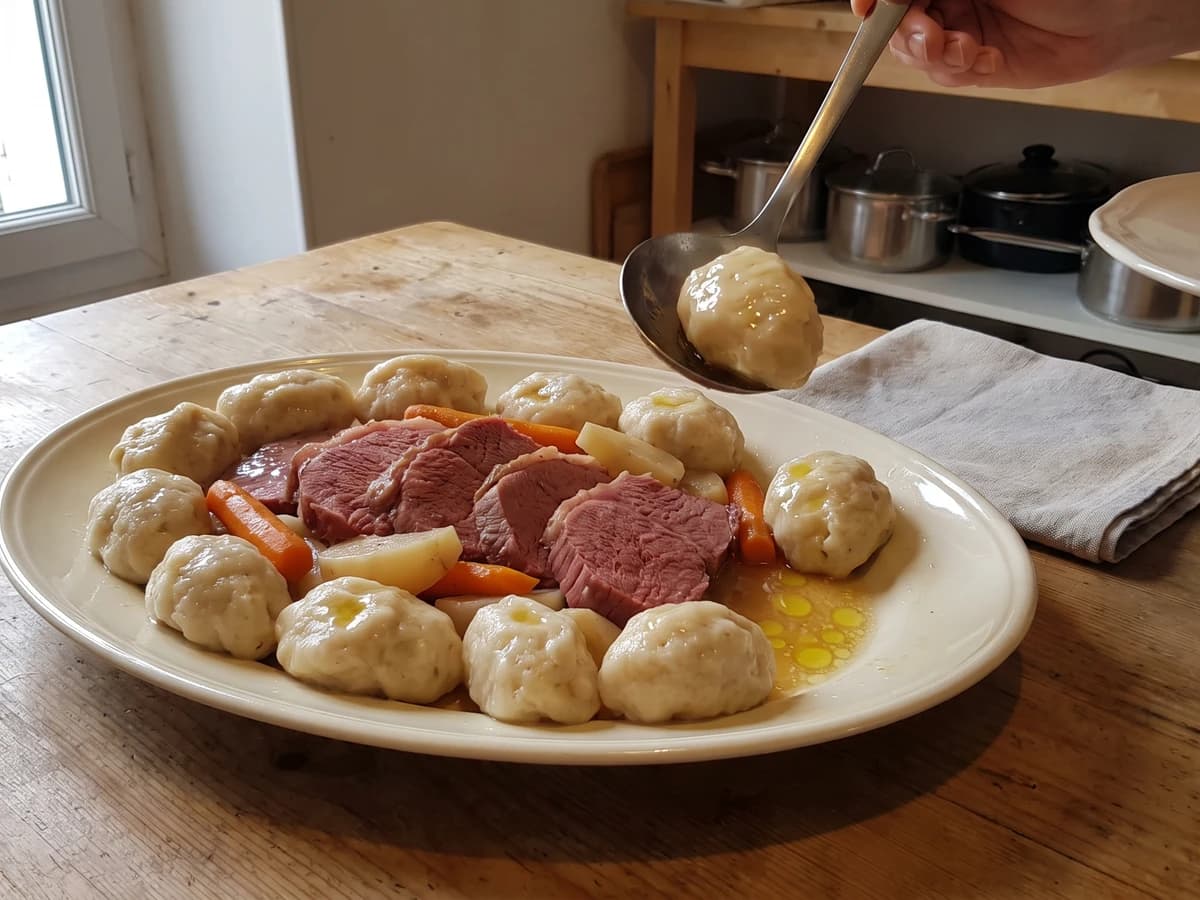
Suet Dumpling
Boulettes au suif, poached beside salt beef, turn equal weights of flour and finely chopped suet into tender, rich dumplings. Keep the beef liquor at a bare tremble and the old garnish works beautifully at home.
A cooking platform built around craft, culture, and the stories behind what we eat.
Created by Chef Juliette
Based on No. 2210, Croquettes de Pommes de Terre, from Le Guide Culinaire (1907) by Auguste Escoffier
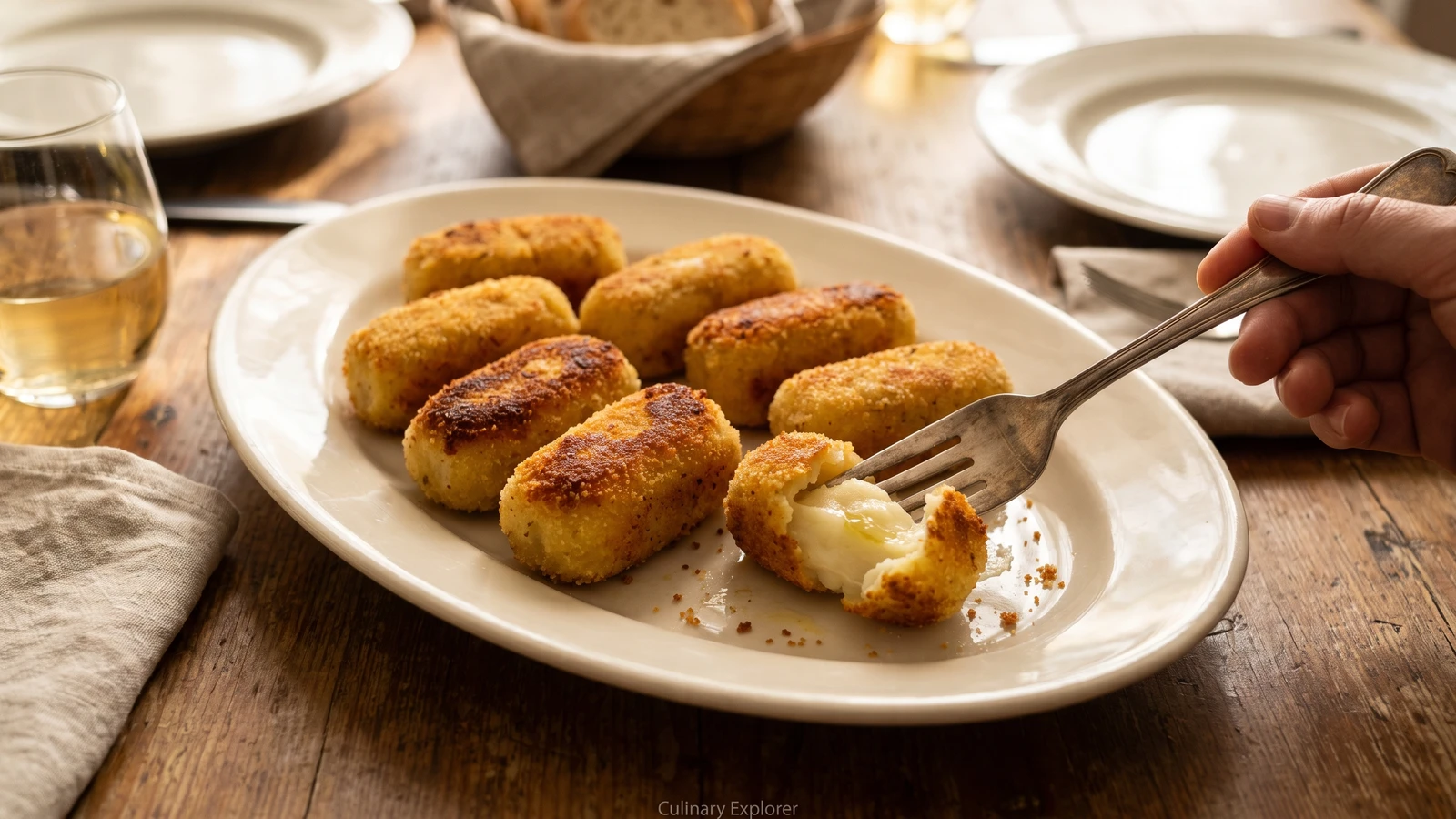
Croquettes de pommes de terre teach the protective crust: dry potato paste, shape it cleanly, coat it completely à l’anglaise, and hot fat gives you a golden shell around a tender center.
Croquettes de Pommes de Terre (potato croquettes) teach one hard, useful truth: the filling stays tender only when the coat is complete. The potato paste must be dry enough to hold a cork shape, then à l’anglaise (floured, egg-coated, and crumbed) must cover every pinhole. Hot fat sets that coat at once. A gap lets the purée escape, and no amount of hopeful staring will put it back.
The book’s kitchen assumed Potato Croquettes (No. 219) and Anglaise (for Egg-and-bread-crumbing) (No. 174) waiting as house preparations, identical two-ounce portions shaped by practiced hands, and a fryer held ready for service. At home, make those two referenced preparations from their own entries, weigh eight corks, use a heavy pot with a thermometer, and give the breaded pieces a short chill before frying in two batches. The always-ready fryer and service crew were scaffolding; the dried purée, complete à l’anglaise coat, and very hot fat are the dish. One cook, one stove, one evening.
The finished croquettes should be evenly golden, with a shell that gives cleanly under the fork and a seasoned, almost creamy potato center. Before you touch the fat, inspect the coat under bright light and patch every bare place. That is the one step that decides the dish; if the test croquette leaks, ça se rattrape, and the method tells you how.
Croquettes de pommes de terre belong to classical French service, particularly the Parisian grand kitchen and the bourgeois dining table, where shaped potato preparations became formal accompaniments to roasted and sauced meats. Their name comes from croquer, to crunch, and their defining practice is paner à l’anglaise, a coat made to set immediately in hot fat. They are sometimes mistaken for a use for any loose leftover mash, but the canon requires deliberately dried, yolk-bound purée because the croquette’s structure begins before the breading.
Quantity
About 2 cups (475 ml / 454 g) Potato Croquettes (No. 219)
prepared as paste and completely cooled
Quantity
½ cup (120 ml / 60 g)
Quantity
About ½ cup (120 ml / 115 g) Anglaise (for Egg-and-bread-crumbing) (No. 174)
prepared and cool
Quantity
1½ cups (360 ml / 150 g)
Quantity
8 cups (1.9 L / 1.75 kg), or enough for a 3-inch depth
| Ingredient | Quantity |
|---|---|
| croquette paste from Potato Croquettesprepared as paste and completely cooled | About 2 cups (475 ml / 454 g) Potato Croquettes (No. 219) |
| all-purpose flour | ½ cup (120 ml / 60 g) |
| Anglaise (for Egg-and-bread-crumbing)prepared and cool | About ½ cup (120 ml / 115 g) Anglaise (for Egg-and-bread-crumbing) (No. 174) |
| fine dry breadcrumbs or raspings | 1½ cups (360 ml / 150 g) |
| neutral high-heat frying oil | 8 cups (1.9 L / 1.75 kg), or enough for a 3-inch depth |
Line a tray with parchment and dust the work surface very lightly with flour. Divide the prepared Potato Croquettes (No. 219) paste into eight 2-ounce (57 g) portions, preserving the book’s service size, then roll each into a compact cork about 2½ inches long and 1¼ inches thick. Keep the ends flat and the surface free of cracks. If the paste smears or slumps, stop and chill it for 15 minutes rather than kneading in more flour. Ça se rattrape: cold firms the butter and yolks without making the center heavy.
Arrange three shallow dishes in order: flour, the prepared Anglaise (for Egg-and-bread-crumbing) (No. 174), and fine breadcrumbs. Roll each cork lightly in flour and shake off the excess, immerse it completely in the Anglaise, then roll it through the crumbs. Pat the crumbs firmly onto every side while restoring the cork shape. Inspect the ends and seams closely; a bare pinhole is enough for the purée to escape, so dab any exposed place with more Anglaise and crumbs.
Place the coated croquettes on the lined tray without letting them touch and chill them uncovered for 20 minutes. This brief rest firms the filling and bonds the crumbs to the egg coat. The croquettes should feel dry and secure under your fingers, not tacky or loose.
Pour the frying oil into a deep, heavy pot, keeping the vessel less than half full, and heat it to 355°F (180°C). Very hot fat means controlled heat, not smoking fat. A thermometer is the honest home equivalent of the brigade fryer, and it matters here because cooler oil delays the setting of the egg coat.
Lower one croquette gently into the oil as a test. It should bubble briskly at once and begin taking color within 30 seconds. Fry, turning once or twice, until evenly golden, about 3 minutes, then drain it on a wire rack. If it splits, lift it out promptly, return the oil to 355°F (180°C), coat the remaining croquettes once more with Anglaise and crumbs, and chill them for another 10 minutes. Ça se rattrape. Fry the rest in two small batches, allowing the oil to recover between them; crowding cools the fat and gives you a greasy, fragile crust.
Transfer the croquettes to a warmed platter as soon as the excess oil has drained. Serve them within five or six minutes, while the crumb coat is crisp and the buttered potato center remains tender. They need no garnish and no sauce of their own; they belong beside the roast or braise they were made to accompany. À table!
1 serving (about 175g)
Culinary guides, cultural storytelling, and the editorial depth that makes cooking meaningful.
Discover Culinary ExplorerChef Juliette
Boulettes au suif, poached beside salt beef, turn equal weights of flour and finely chopped suet into tender, rich dumplings. Keep the beef liquor at a bare tremble and the old garnish works beautifully at home.

Chef Juliette
Bread, flour, frangipane, and rice become four cool, supple panades for binding forcemeats, each changing body and flavor while preserving tenderness. The finest Mousselines need none, and knowing that distinction is the lesson.

Chef Juliette
Panade au pain is bread, milk, salt, heat, and attention: stir until the paste releases cleanly, butter it against a skin, and you have the quiet binder behind tender French farces.

Chef Juliette
Panade de farine teaches the drying stroke behind pâte à choux: flour meets boiling buttered water, then stays over the fire until the paste gathers, smooths, and quits the pan cleanly.