Chef Juliette
Suet Dumpling
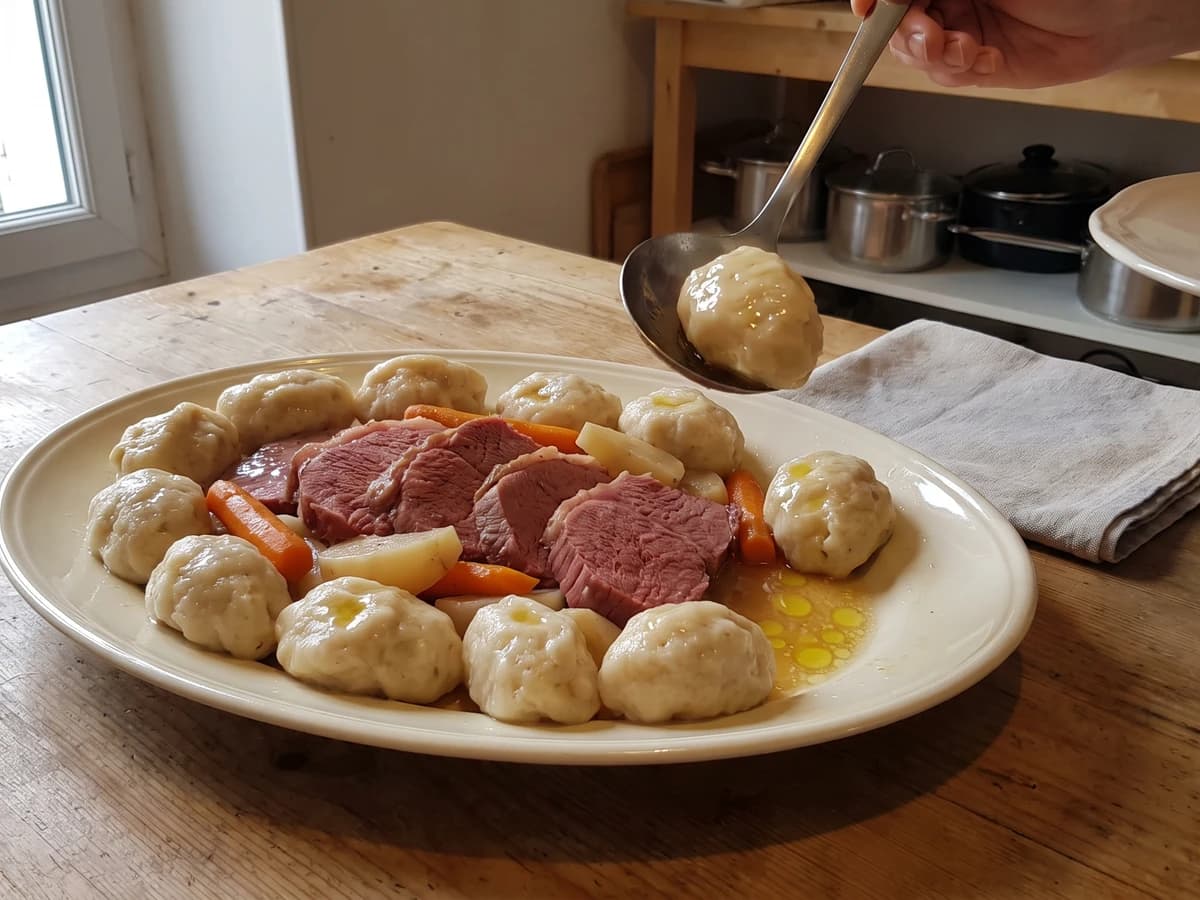
Boulettes au suif, poached beside salt beef, turn equal weights of flour and finely chopped suet into tender, rich dumplings. Keep the beef liquor at a bare tremble and the old garnish works beautifully at home.
A cooking platform built around craft, culture, and the stories behind what we eat.
Created by Chef Juliette
Based on No. 219, Potato Croquettes, from Le Guide Culinaire (1907) by Auguste Escoffier
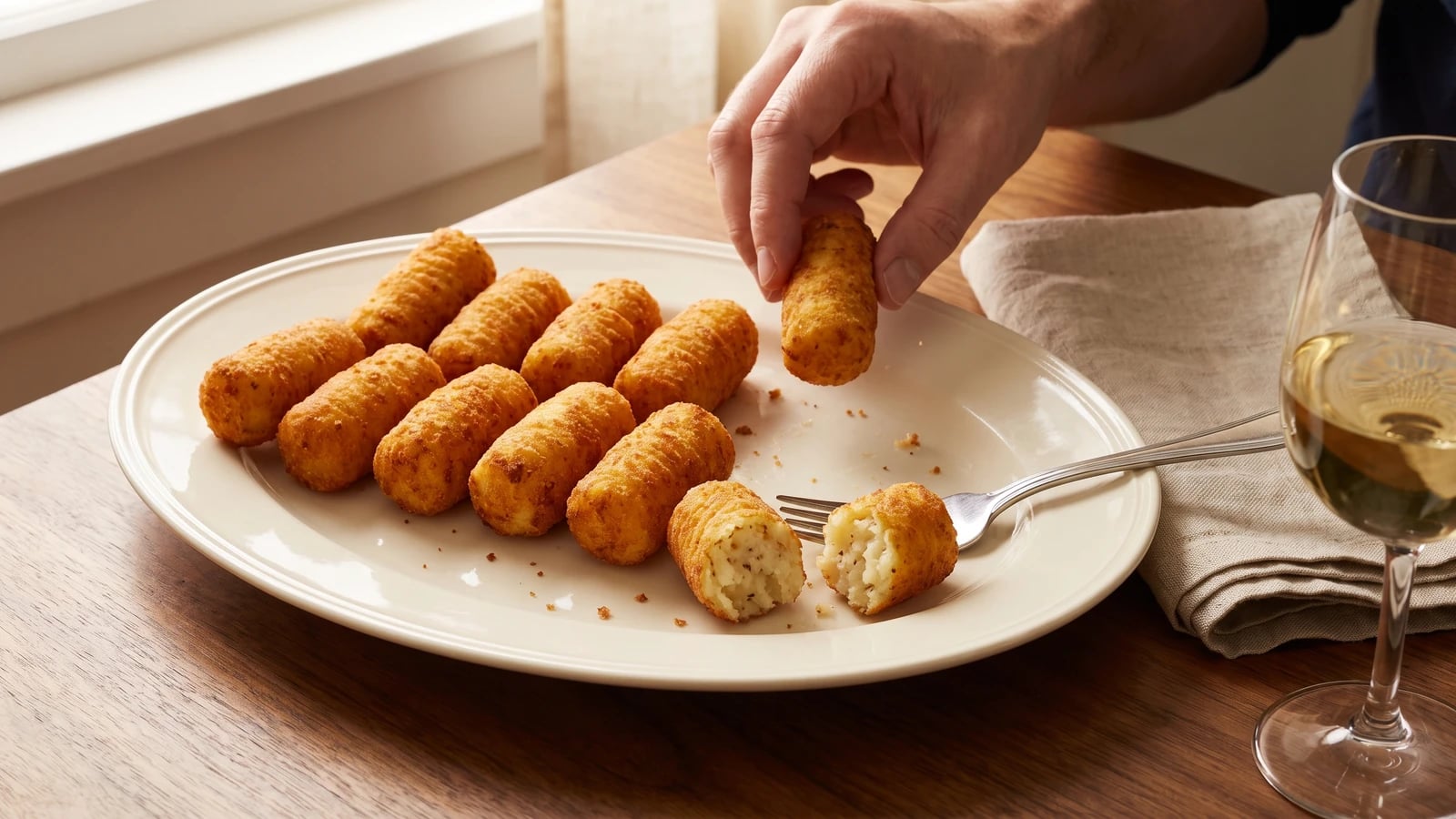
Dry the purée until it becomes a paste, bind it with yolks, then crumb à l'anglaise and fry: crisp golden croquettes with a tender center that hold their shape in hot fat.
Croquettes de pommes de terre (potato croquettes) teach the discipline of removing water before adding richness. The one true thing is this: dry the potato purée hard enough and the croquettes stay light within and sealed inside their golden crust; leave it damp and they split in the fat. This isn't leftover mashed potato wearing breadcrumbs. It is a purpose-built paste, seasoned with nutmeg, enriched with butter and yolks, then pané à l'anglaise, coated in the classical sequence before frying.
The professional kitchen kept Anglaise (for Egg-and-bread-crumbing) (No. 174) ready, dried the potatoes at the mouth of the oven, pressed them through a cloth-backed sieve, and had a standing fryer under a practiced eye. Here the book's two-pound formula is reduced exactly to two-thirds, enough for four people while preserving its butter and yolk proportions and the original one-and-one-half-ounce croquette. A hot empty pot replaces the oven front, a ricer replaces the sieve without rubbing the potato, and a thermometer gives one cook the control once supplied by the brigade. One cook, one stove, one evening.
Those old pieces of equipment were scaffolding. The brisk drying, yolk binding, firm chilling, and complete crumb coat are the dish, and none should go. Before you shape a single croquette, dry the purée until a spatula leaves a clean trail across the pan and the mixture gathers into one consistent paste.
Croquettes de pommes de terre belong to the French classical and cuisine bourgeoise table rather than to one particular region, where they traveled between Parisian dining rooms, bistros, and home kitchens as a crisp garnish for roasts and braised meats. Their name is tied to croquer, to crunch, which explains why the sealed crumb crust matters as much as the potato within. Proper croquettes were never merely a use for loose leftover mash: the canon begins with deliberately dried purée, yolk binding, and a coat applied à l'anglaise.
Quantity
About 4 cups (1⅓ lb / 605 g)
peeled and quartered evenly
Quantity
1 tablespoon plus ¾ teaspoon (19 ml / 22 g)
divided
Quantity
¼ teaspoon (1.25 ml / 0.6 g)
Quantity
⅛ teaspoon (0.6 ml / 0.25 g)
Quantity
1 tablespoon plus 1 teaspoon (20 ml / 19 g), plus 2 teaspoons (10 ml / 9 g) for the dish and surface
the final 2 teaspoons softened
Quantity
2
Quantity
⅓ cup (80 ml / 40 g)
Quantity
¾ cup (180 ml / about 180 g) Anglaise (for Egg-and-bread-crumbing) (No. 174)
prepared
Quantity
1½ cups (360 ml / 150 g)
Quantity
6 cups (1.4 L / about 1.3 kg), or enough for a 3-inch depth
| Ingredient | Quantity |
|---|---|
| floury potatoes, such as Russetspeeled and quartered evenly | About 4 cups (1⅓ lb / 605 g) |
| fine saltdivided | 1 tablespoon plus ¾ teaspoon (19 ml / 22 g) |
| finely ground white pepper | ¼ teaspoon (1.25 ml / 0.6 g) |
| freshly grated nutmeg | ⅛ teaspoon (0.6 ml / 0.25 g) |
| unsalted butterthe final 2 teaspoons softened | 1 tablespoon plus 1 teaspoon (20 ml / 19 g), plus 2 teaspoons (10 ml / 9 g) for the dish and surface |
| large egg yolks | 2 |
| all-purpose flour | ⅓ cup (80 ml / 40 g) |
| Anglaise (for Egg-and-bread-crumbing)prepared | ¾ cup (180 ml / about 180 g) Anglaise (for Egg-and-bread-crumbing) (No. 174) |
| fine dry breadcrumbs or bread raspings | 1½ cups (360 ml / 150 g) |
| neutral frying oil | 6 cups (1.4 L / about 1.3 kg), or enough for a 3-inch depth |
Put the evenly quartered potatoes in a 4-quart saucepan and cover them with cold water by about 1 inch. Add 1 tablespoon of the salt, bring the water promptly to a boil, then hold it at a strong, steady simmer for 12 to 15 minutes. The potatoes are ready when a small knife passes through without resistance, but before their corners begin collapsing into the water. Drain them thoroughly.
Return the drained potatoes to the empty hot saucepan and shake them over low heat for 2 minutes, until their surfaces look chalky and the last water has disappeared. Pass them through a potato ricer into a wide sauté pan; if using a sieve, press the potato straight through with a scraper and never rub it around, which works the starch into glue. Add the remaining ¾ teaspoon salt, the white pepper, nutmeg, and the 1 tablespoon plus 1 teaspoon butter. Stir over medium-high heat for 4 to 6 minutes, turning the purée over firmly until it becomes a consistent paste, pulls from the sides, and leaves a clean trail behind the spatula. If it still slumps back into that trail, don't add the yolks. Keep drying it. Ça se rattrape now; once the yolks are in, excess water is much harder to correct.
Take the pan off the heat and let the fiercest heat subside for 30 seconds. Beat in the yolks one at a time, mixing each completely before adding the next; the paste should turn richer and smoother without becoming loose. Butter a shallow dish or quarter sheet pan with half the softened butter, spread the paste about ½ inch thick, then brush the remaining softened butter lightly over its surface to prevent a skin. Cool for 15 minutes, then refrigerate for about 30 minutes, until firm and cold enough to hold a clean shape.
Dust the work surface and your hands lightly with some of the flour. Divide the cold paste into 15 portions of about 1½ ounces (42 g) each, keeping the portions equal so they fry at the same pace. Roll each into a compact cork about 2 inches long and 1 inch thick, closing every crack with your fingertips. Balls or small quoits are also classical shapes, but choose one form for the batch. If the paste softens or sticks instead of rolling cleanly, return it to the cold for 15 minutes; don't bury it in flour.
Arrange the remaining flour, the prepared Anglaise (for Egg-and-bread-crumbing) (No. 174), and the fine breadcrumbs in three shallow dishes. Roll each croquette very lightly in flour and shake off the excess, coat it completely in the Anglaise, then roll it through the crumbs. Pat the crumbs firmly over the entire surface while correcting the cork shape, paying particular attention to the ends and any fine seam. This continuous coat becomes the resisting crust that keeps the potato inside. Set the breaded croquettes on a rack or lined tray and chill for 15 minutes so the coating settles.
Pour the oil into a heavy 3-quart saucepan to a depth of about 3 inches, never filling the pan more than halfway. Heat it to 350°F (180°C) and keep the thermometer clipped where it doesn't touch the bottom. The fat must be properly hot before the first croquette enters, because the Anglaise must set at once; lukewarm oil soaks the crust before it can seal.
Fry one croquette as a test, lowering it gently with a spider and turning it once, until evenly golden, crisp, and hot through, about 2½ to 3 minutes. If it holds, fry the rest in batches of three or four, allowing the oil to return to 350°F (180°C) between batches. If the test croquette cracks or leaks, lift it out immediately, chill the remaining croquettes for another 20 minutes, and patch every visible crack with a little flour, Anglaise, and crumbs. Ça se rattrape. If the crust darkens before the center warms, let the oil fall slightly to 340°F (170°C). Drain the finished croquettes on a wire rack, season with a small pinch of salt if needed, and serve at once while the crust still answers the fork. À table!
1 serving (about 210g)
Culinary guides, cultural storytelling, and the editorial depth that makes cooking meaningful.
Discover Culinary ExplorerChef Juliette
Boulettes au suif, poached beside salt beef, turn equal weights of flour and finely chopped suet into tender, rich dumplings. Keep the beef liquor at a bare tremble and the old garnish works beautifully at home.

Chef Juliette
Bread, flour, frangipane, and rice become four cool, supple panades for binding forcemeats, each changing body and flavor while preserving tenderness. The finest Mousselines need none, and knowing that distinction is the lesson.

Chef Juliette
Panade au pain is bread, milk, salt, heat, and attention: stir until the paste releases cleanly, butter it against a skin, and you have the quiet binder behind tender French farces.

Chef Juliette
Panade de farine teaches the drying stroke behind pâte à choux: flour meets boiling buttered water, then stays over the fire until the paste gathers, smooths, and quits the pan cleanly.