Chef Juliette
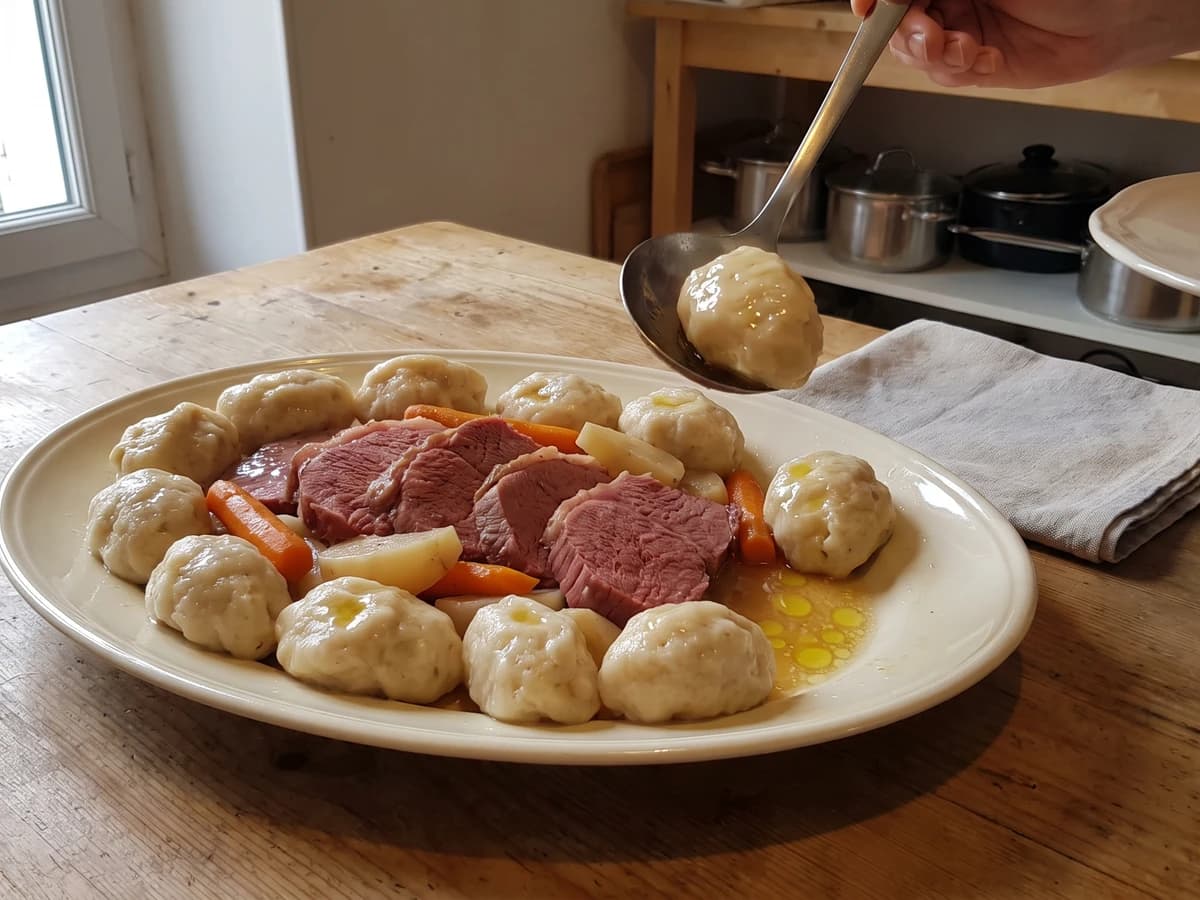
Suet Dumpling
Boulettes au suif, poached beside salt beef, turn equal weights of flour and finely chopped suet into tender, rich dumplings. Keep the beef liquor at a bare tremble and the old garnish works beautifully at home.
A cooking platform built around craft, culture, and the stories behind what we eat.
Created by Chef Juliette
Based on No. 2248, Mashed Potatoes, from Le Guide Culinaire (1907) by Auguste Escoffier
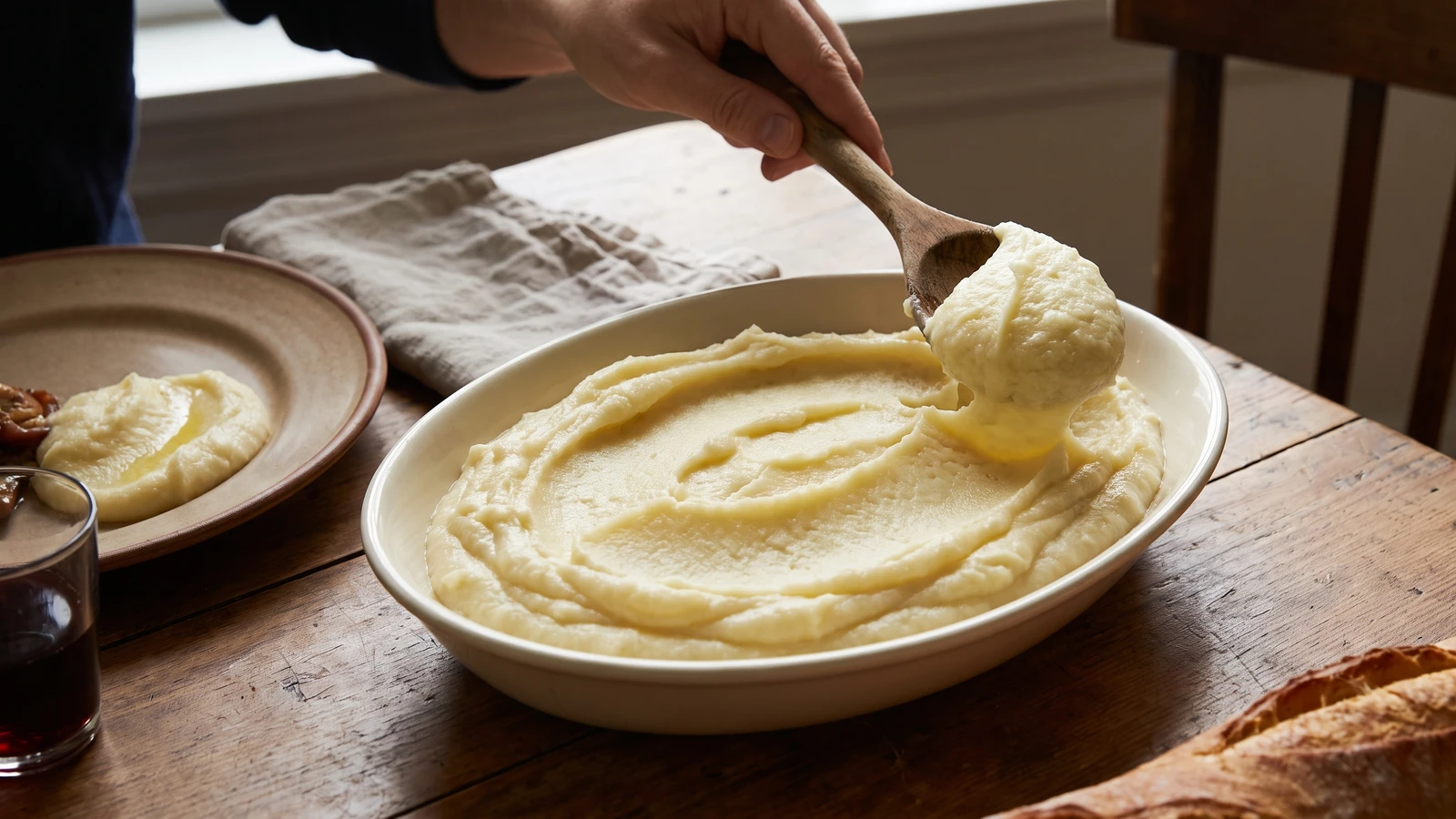
Purée de pommes de terre teaches the order that matters: butter enters the hot, sieved potatoes first, boiling milk follows, and the bowl goes straight to the table while the purée is supple and glossy.
Purée de pommes de terre (mashed potatoes) teaches the order that matters: butter first, milk second. Butter worked into the hot, sieved potato coats the starch and builds a supple emulsion; pour in the milk first and you lose the texture the entry is asking for. Cooking well is not cooking fancy.
The source entry assumed a broad drum sieve, brigade quantities, another pair of hands to keep the milk boiling, and a hot pass that could send the bowl out immediately. At home, a sturdy fine-mesh sieve, a small milk pan, and a serving bowl warmed with hot water do the same honest work. This batch fixes the quantity at one pound of potatoes for four side portions and keeps the proportions exactly: three ounces of butter and one-half imperial pint of milk per pound. Only the batch size and tool footprint have changed.
The brigade's broad sieve and hot pass are scaffolding; the sieve itself, the butter-first sequence, boiling milk, gentle final heat, and immediate service are the dish. Have the table ready before you drain. Push the potatoes through while they are still hot, then beat in every bit of butter before a drop of milk touches them. That order decides the bowl.
Purée de pommes de terre belongs to cuisine bourgeoise, the well-run household table found across France, and to the classical dining room, where its smoothness made it a quiet companion to roasts and braises. The canon distinguishes potatoes merely crushed from a true purée passed through a sieve; the word describes the texture as much as the ingredient. Butter first and hot milk second, without cream, cheese, or garnish, carried the preparation between home kitchens and grand ones.
Quantity
1 pound (454 g / about 3 medium)
peeled and quartered
Quantity
2 quarts (1.9 L / 1.9 kg)
Quantity
1 tablespoon (15 ml / 18 g)
for the cooking water
Quantity
6 tablespoons (90 ml / 85 g)
cut into 6 pieces
Quantity
About 1 cup plus 3 tablespoons (285 ml / 294 g)
| Ingredient | Quantity |
|---|---|
| high-starch potatoes, such as Russetpeeled and quartered | 1 pound (454 g / about 3 medium) |
| cold water | 2 quarts (1.9 L / 1.9 kg) |
| fine sea saltfor the cooking water | 1 tablespoon (15 ml / 18 g) |
| unsalted buttercut into 6 pieces | 6 tablespoons (90 ml / 85 g) |
| whole milk | About 1 cup plus 3 tablespoons (285 ml / 294 g) |
Fill the serving bowl with the hottest tap water and leave it to warm. Set the sieve, scraper, wooden spoon, butter, and measured milk within reach. Once the potatoes are drained, there must be no idle interval; the home equivalent of a hot pass is simply a warm bowl and everyone already called to the table.
Put the quartered potatoes in a 3-quart saucepan, add the cold water and salt, and bring quickly to a boil. Lower the heat enough to maintain a lively, steady simmer and cook uncovered for 12 to 15 minutes. Test with a thin skewer: it should pass through the centre without resistance, while the pieces still hold their edges. Only just cooked means exactly that. If the edges begin to split and feather, drain at once; ça se rattrape, but those potatoes may need less milk. During the final 5 minutes, warm the milk in its own small pan until it reaches the edge of a boil, then cover it.
Drain the potatoes immediately and shake the colander firmly for about 10 seconds, until no droplets fall. Wipe the cooking pan dry, set the sieve over it, and push the potatoes through in two or three small batches with a flexible scraper or wooden spoon. Scrape every ribbon of potato from the underside of the sieve into the pan. Work promptly, because a potato allowed to cool before sieving becomes heavy and reluctant.
Set the pan over the lowest heat. Add the butter and work the purée vigorously with a wooden spoon for 60 to 90 seconds, until every yellow streak disappears and the mixture looks cohesive and glossy. Vigorously means fast, not endlessly. If the butter remains streaky, the potatoes have cooled too far; keep the pan over the gentlest heat and continue just until it incorporates. If the purée begins pulling into sticky strings, stop beating and move directly to the milk. Ça se rattrape: boiling milk will loosen it, though no rescue can completely undo prolonged overworking.
Bring the milk to a full boil. Add it to the buttered purée little by little, about one-quarter at a time, beating each addition in before judging the next. Use as much as the potatoes accept, usually nearly all of it. The finished purée should fall from the spoon in a broad, supple ribbon and settle into a soft mound rather than stand stiffly. If it becomes too loose, hold it over the lowest heat and stir gently until broad folds return; never let it boil. If it remains tight, add the last spoonfuls of boiling milk. Heat only until evenly hot.
Empty and dry the warmed serving bowl, spoon in the purée, and draw one broad sweep across the surface with the back of the spoon. Carry it directly to the table. Holding dulls the butter's gloss and turns the texture close and heavy, so this is not the moment to carve the roast or begin the sauce. They should already be ready. À table!
1 serving (about 210g)
Culinary guides, cultural storytelling, and the editorial depth that makes cooking meaningful.
Discover Culinary ExplorerChef Juliette
Boulettes au suif, poached beside salt beef, turn equal weights of flour and finely chopped suet into tender, rich dumplings. Keep the beef liquor at a bare tremble and the old garnish works beautifully at home.

Chef Juliette
Bread, flour, frangipane, and rice become four cool, supple panades for binding forcemeats, each changing body and flavor while preserving tenderness. The finest Mousselines need none, and knowing that distinction is the lesson.

Chef Juliette
Panade au pain is bread, milk, salt, heat, and attention: stir until the paste releases cleanly, butter it against a skin, and you have the quiet binder behind tender French farces.

Chef Juliette
Panade de farine teaches the drying stroke behind pâte à choux: flour meets boiling buttered water, then stays over the fire until the paste gathers, smooths, and quits the pan cleanly.