Chef Juliette
Ordinary or White Consommé
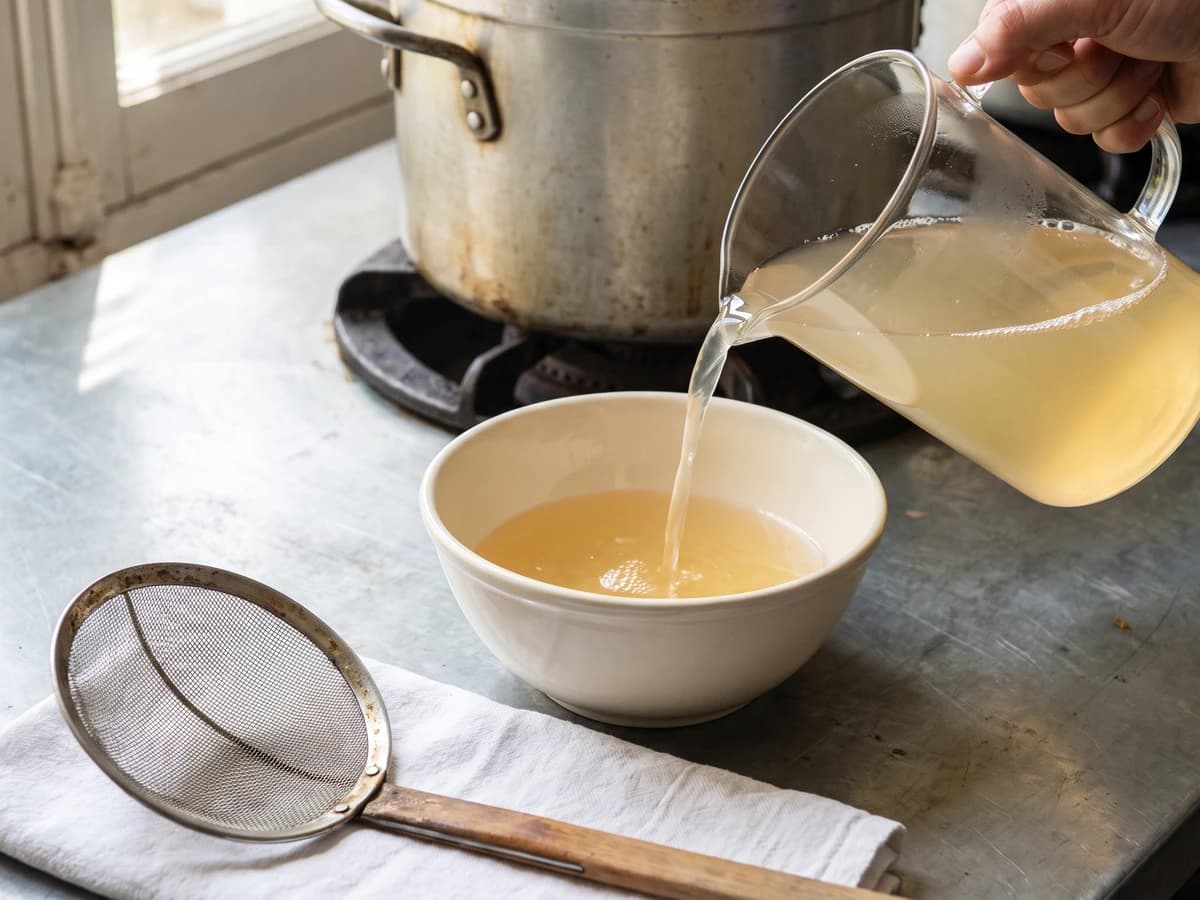
Beef shin, lean beef, and fowl begin in cold water and rise slowly toward a tremble. Skim before the boil, and you learn the quiet discipline that gives every clear French broth its backbone.
A cooking platform built around craft, culture, and the stories behind what we eat.
Created by Chef Juliette
Based on No. 2184, Purée d’Oignons, dite Soubise, from Le Guide Culinaire (1907) by Auguste Escoffier
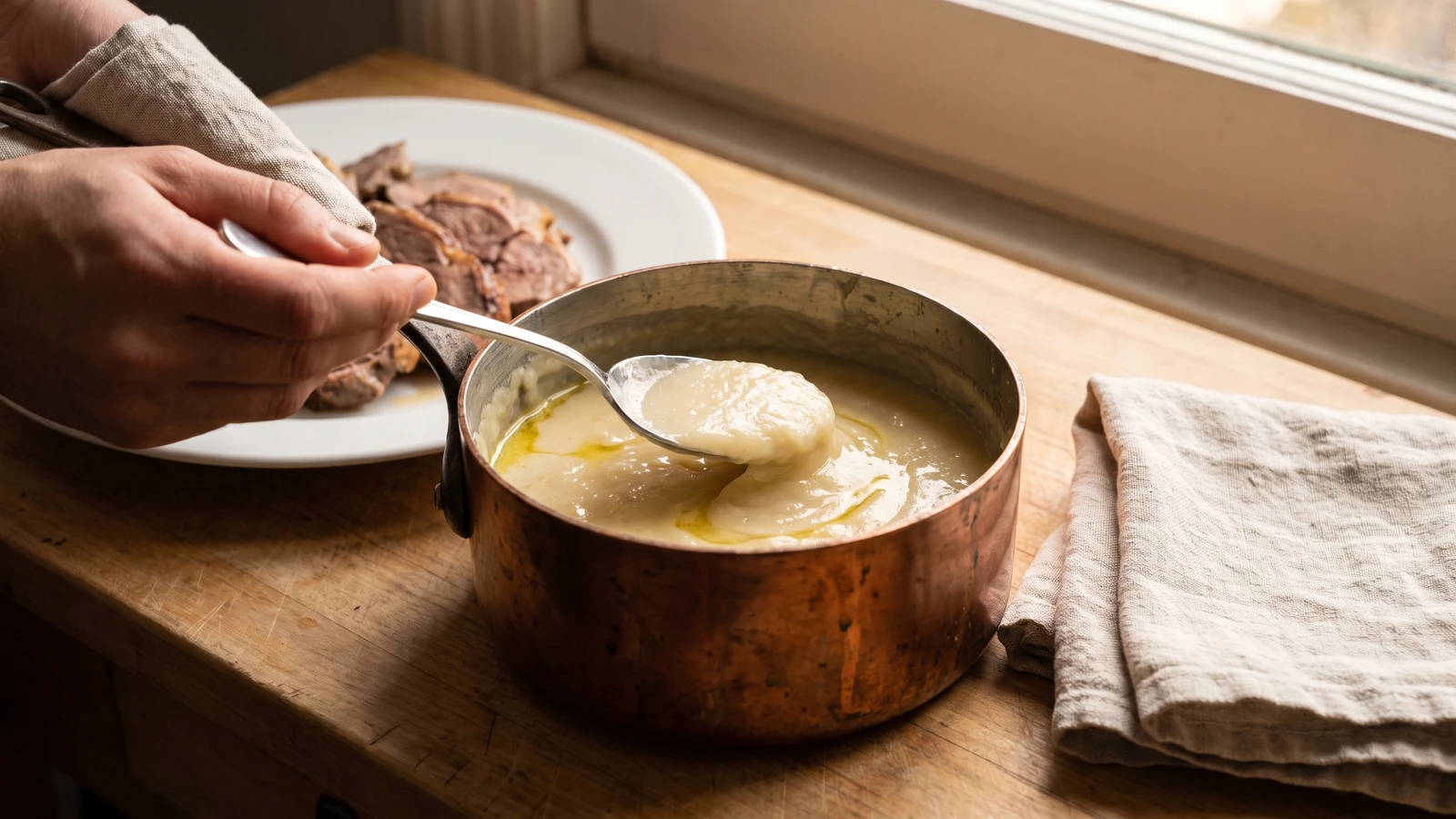
Scalded onions, dried well and stewed slowly in butter until sweet but still pale, then bound with Béchamel and passed fine: Soubise proves that deep onion flavor does not require browning.
Purée d’Oignons, dite Soubise (silken onion purée) teaches the difference between depth and darkness. The onions must grow sweeter and fuller in butter without taking color. Brown them and you have made a good onion sauce, but not Soubise. The one true thing before you touch the pan is this: gentle stewing, not caramelizing, makes the flavor.
The source formula, Soubise Sauce (No. 104), assumed a saucier tending the pan, thick Béchamel waiting at the sauce station, and a broad tammy through which a brigade could pass the onions quickly. At home, one wide pan replaces the station, prepared Béchamel supplies the foundation, and a fine-mesh sieve does the tammy’s work. I have changed the equipment and reduced the service routine to one measured, make-ahead batch. I have not changed the sequence or the onion-to-Béchamel proportion. The brigade was scaffolding. The slow butter stewing is the dish.
When it is right, Soubise is ivory-colored, softly sweet, and glossy enough to hold the trail of a spoon before settling. It tastes first of onion made round and deep, then of cream and butter, never of browned sugar. One cook, one stove, one evening. Watch the onions during that pale butter stew, because this is the step that decides the sauce.
Purée d’Oignons, dite Soubise belongs to the Parisian classical sauce repertoire and takes its name from the princely house of Soubise, part of the French custom of attaching grand names to refined preparations. At bourgeois and grand tables it became a pale companion to lamb, veal, eggs, and vegetables, carrying concentrated onion flavor without caramelized sweetness. Some classical soubises use rice as their binder, but Soubise Sauce (No. 104) belongs to the Béchamel-bound line; the distinction is technique, not decoration.
Quantity
14 cups (3.3 L / 1.8 kg)
finely minced
Quantity
¾ cup (180 ml / 170 g)
for stewing
Quantity
2⅓ cups (560 ml / 560 g)
warmed
Quantity
2 teaspoons (10 ml / 8 g)
Quantity
2 teaspoons (10 ml / 12 g), plus more as needed
divided
Quantity
½ cup (120 ml / 120 g)
Quantity
½ cup (120 ml / 113 g)
diced, for finishing
| Ingredient | Quantity |
|---|---|
| yellow onionsfinely minced | 14 cups (3.3 L / 1.8 kg) |
| unsalted butterfor stewing | ¾ cup (180 ml / 170 g) |
| thickened Béchamel, the finished binder called for in Soubise Sauce (No. 104)warmed | 2⅓ cups (560 ml / 560 g) |
| powdered sugar | 2 teaspoons (10 ml / 8 g) |
| fine sea saltdivided | 2 teaspoons (10 ml / 12 g), plus more as needed |
| heavy cream | ½ cup (120 ml / 120 g) |
| cold unsalted butterdiced, for finishing | ½ cup (120 ml / 113 g) |
Bring a large pot of water to a full boil. Mince the onions finely and evenly, working in batches if you use a food processor and pulsing only until the pieces are small, not wet paste. Scald the onions in the boiling water for exactly 3 minutes, then drain them thoroughly. Spread them over clean towels and press firmly until their surfaces feel dry. This scalding tempers the raw sulfurous edge, but the drying is just as important: wet onions simmer in water instead of stewing honestly in butter.
Melt the stewing butter in a wide, heavy pan over low heat without letting it brown. Add the dried onions and turn them through the butter until every piece glistens. Cover loosely and stew for 25 to 35 minutes, stirring from the bottom every few minutes, until the onions are completely tender, ivory-colored, and deeply fragrant. This stewing increases their flavor, and it must stay pale. If golden spots begin forming, pull the pan from the heat, add 2 tablespoons (30 ml / 30 g) water, and scrape the pale fond into the onions before lowering the heat. Ça se rattrape. A few blond flecks can be stopped; a pan of mahogany onions has become another sauce.
Stir in the warmed thickened Béchamel specified for Soubise Sauce (No. 104), followed by the powdered sugar and 1½ teaspoons (7.5 ml / 9 g) of the salt. Bring the mixture only to a lazy bubble, then cook uncovered over the gentlest heat for 30 minutes, stirring frequently across the pan floor. It should thicken into a soft, cohesive purée without catching. At the first scorched speck, stop stirring and transfer the unburned upper portion to a clean pan without scraping the bottom; loosen it with a tablespoon of the measured cream and continue gently. Burnt flavor cannot be whisked away, but an early catch can be left behind.
While the mixture is still warm, press it through a sturdy fine-mesh sieve or chinois with a flexible scraper, working in manageable portions. This is the home equivalent of the tammy, and it removes the last onion fibers while preserving the sauce’s dense, satin texture. Scrape the underside of the sieve often, because much of the finest purée gathers there. Do not abandon the solids after one pass; keep pressing until only a dry spoonful of fibrous residue remains.
Return the sieved purée to a clean pan over low heat and stir in the cream. Taste, then add the remaining salt only as needed. Remove the pan from the heat and monter au beurre, mount with butter, by whisking in the cold diced butter a few pieces at a time until each addition disappears. The finished Soubise should gleam, mound softly on a spoon, and settle without running like soup. Never boil it after the final butter. If butter pools on the surface, take the pan off the heat and whisk in 1 tablespoon (15 ml / 15 g) cold cream; if needed, begin with another spoonful of cold cream in a clean bowl and whisk the sauce into it gradually. Ça se rattrape.
Serve the Soubise warm beside roast lamb, veal, poached eggs, or plainly cooked vegetables. For a short hold, press a buttered round of parchment directly against the surface and set the covered pan over barely warm water for no longer than 30 minutes. Stir gently before serving and loosen with a spoonful of cream if it has tightened. Bring the sauce generously, not in decorative dots. À table!
1 serving (about 240g)
Culinary guides, cultural storytelling, and the editorial depth that makes cooking meaningful.
Discover Culinary ExplorerChef Juliette
Beef shin, lean beef, and fowl begin in cold water and rise slowly toward a tremble. Skim before the boil, and you learn the quiet discipline that gives every clear French broth its backbone.
Chef Juliette
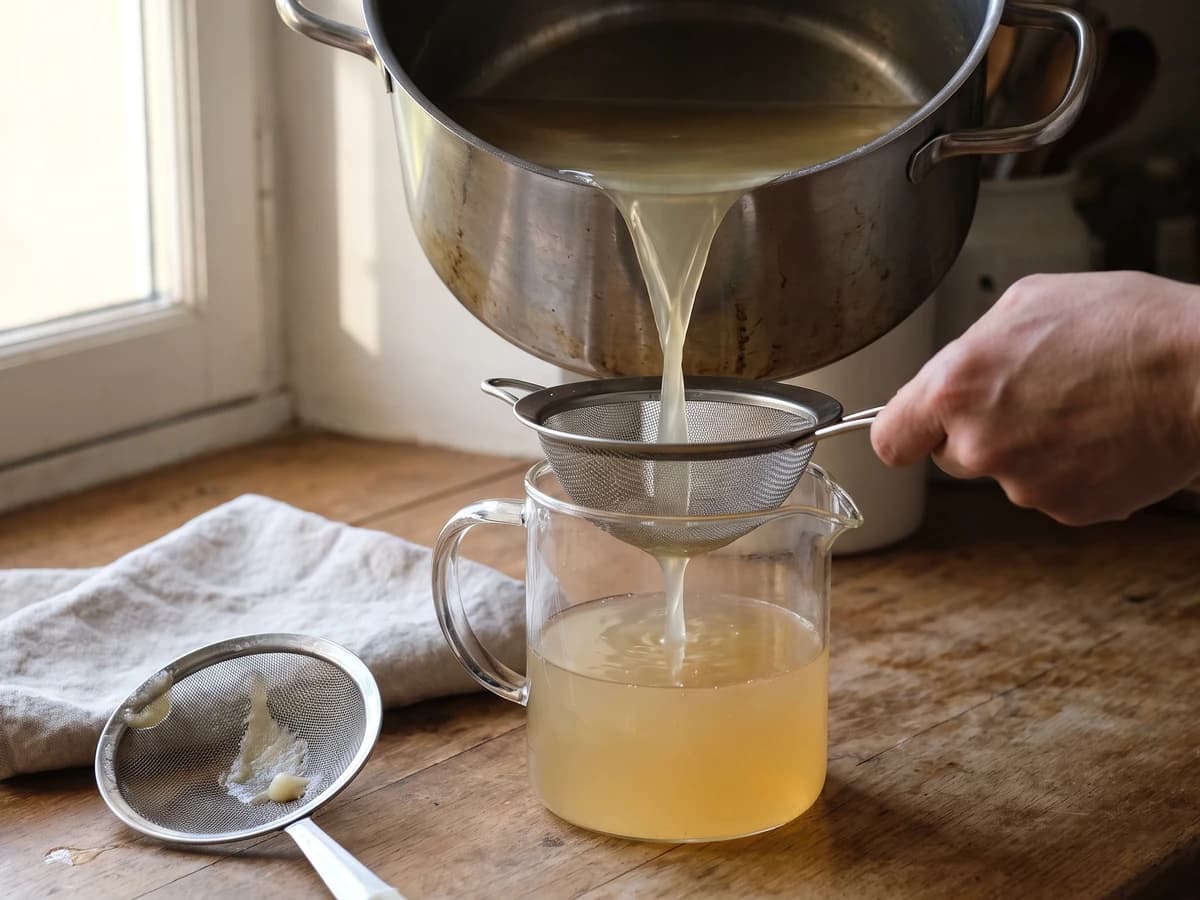
Break the veal bones small, then give them eight hours at a bare tremble. This pale, gelatinous fond becomes the quiet foundation beneath velouté, blanquette, and every sauce that must stay light.
Chef Juliette
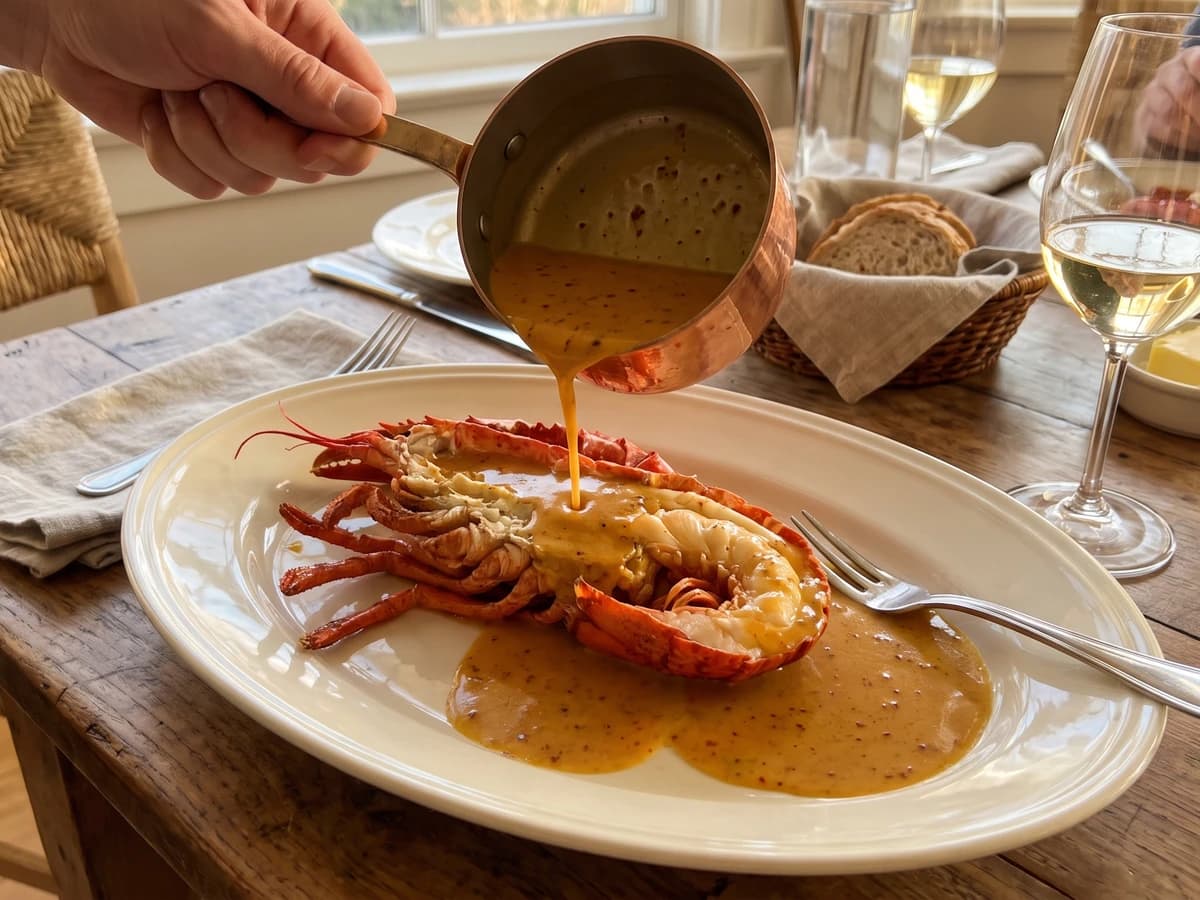
Sauce Orientale concentrates lobster-rich American Sauce with curry, then folds in cream away from the fire: a glossy, gently spiced derivative made for lobster, crayfish, and firm fish.
Chef Juliette
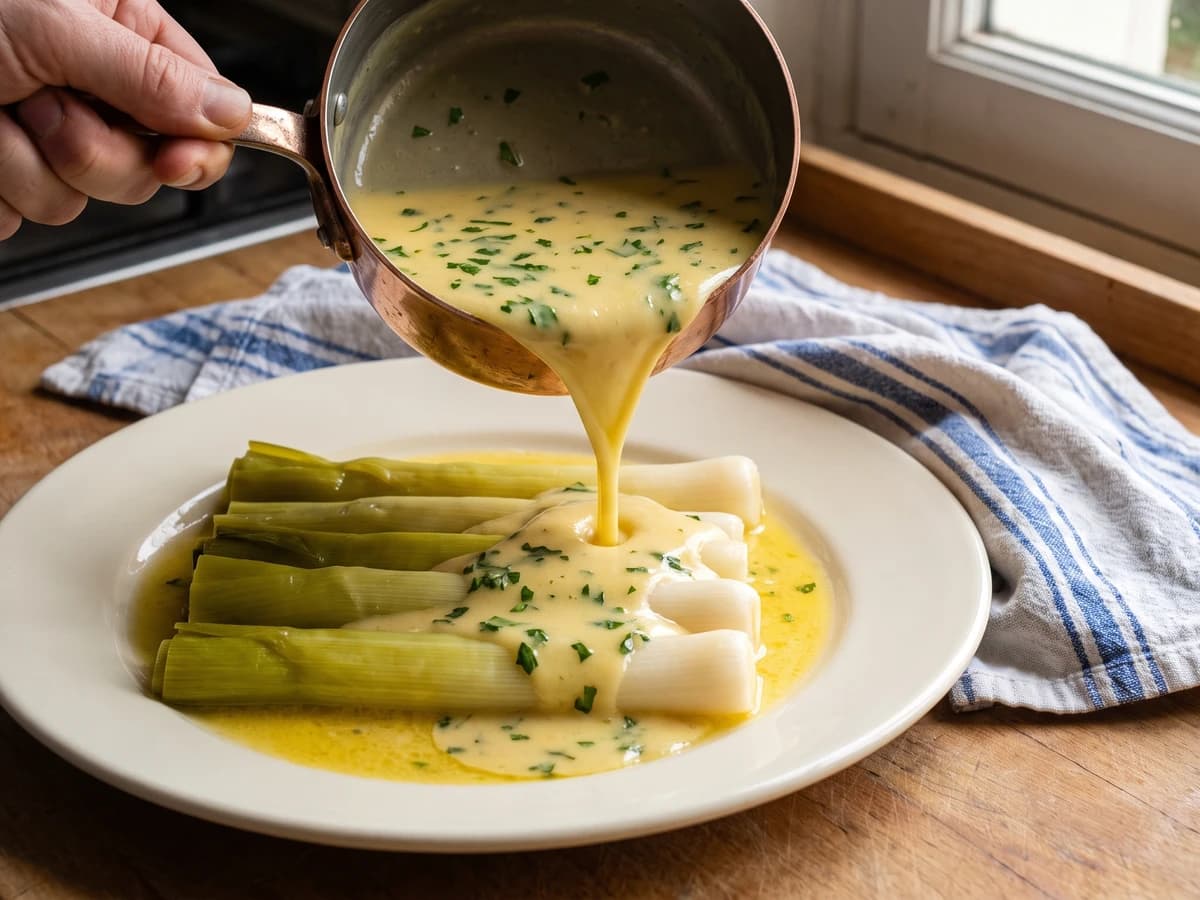
An old lesson in sauce families: Sauce Allemande takes mushroom liquor, then butter, lemon, and parsley, becoming a glossy Poulette for sheep's trotters, leeks, cauliflower, and anything needing gentle richness with a bright edge.