Chef Juliette
Ordinary or White Consommé
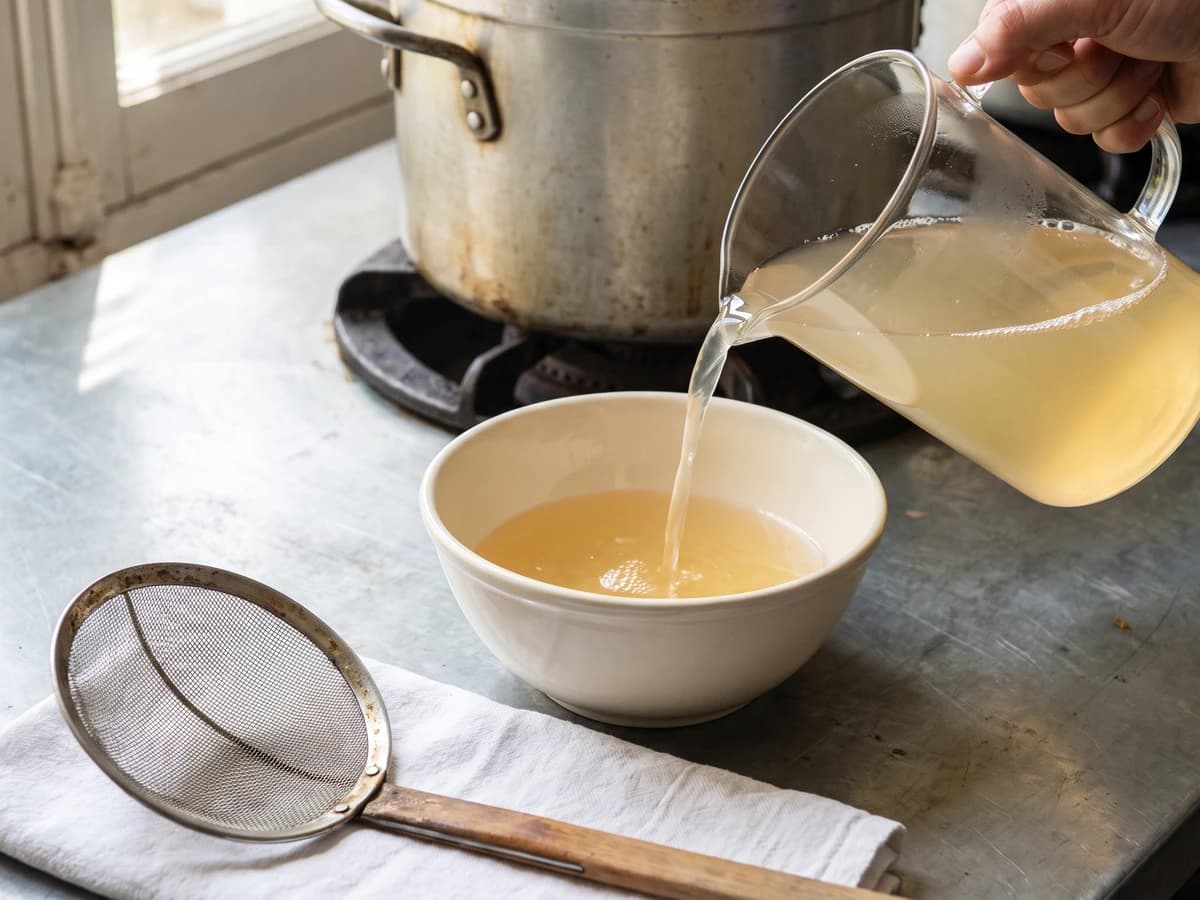
Beef shin, lean beef, and fowl begin in cold water and rise slowly toward a tremble. Skim before the boil, and you learn the quiet discipline that gives every clear French broth its backbone.
A cooking platform built around craft, culture, and the stories behind what we eat.
Created by Chef Juliette
Based on No. 2099, Marinaded Red Cabbages for Hors-d’œuvre, from Le Guide Culinaire (1907) by Auguste Escoffier
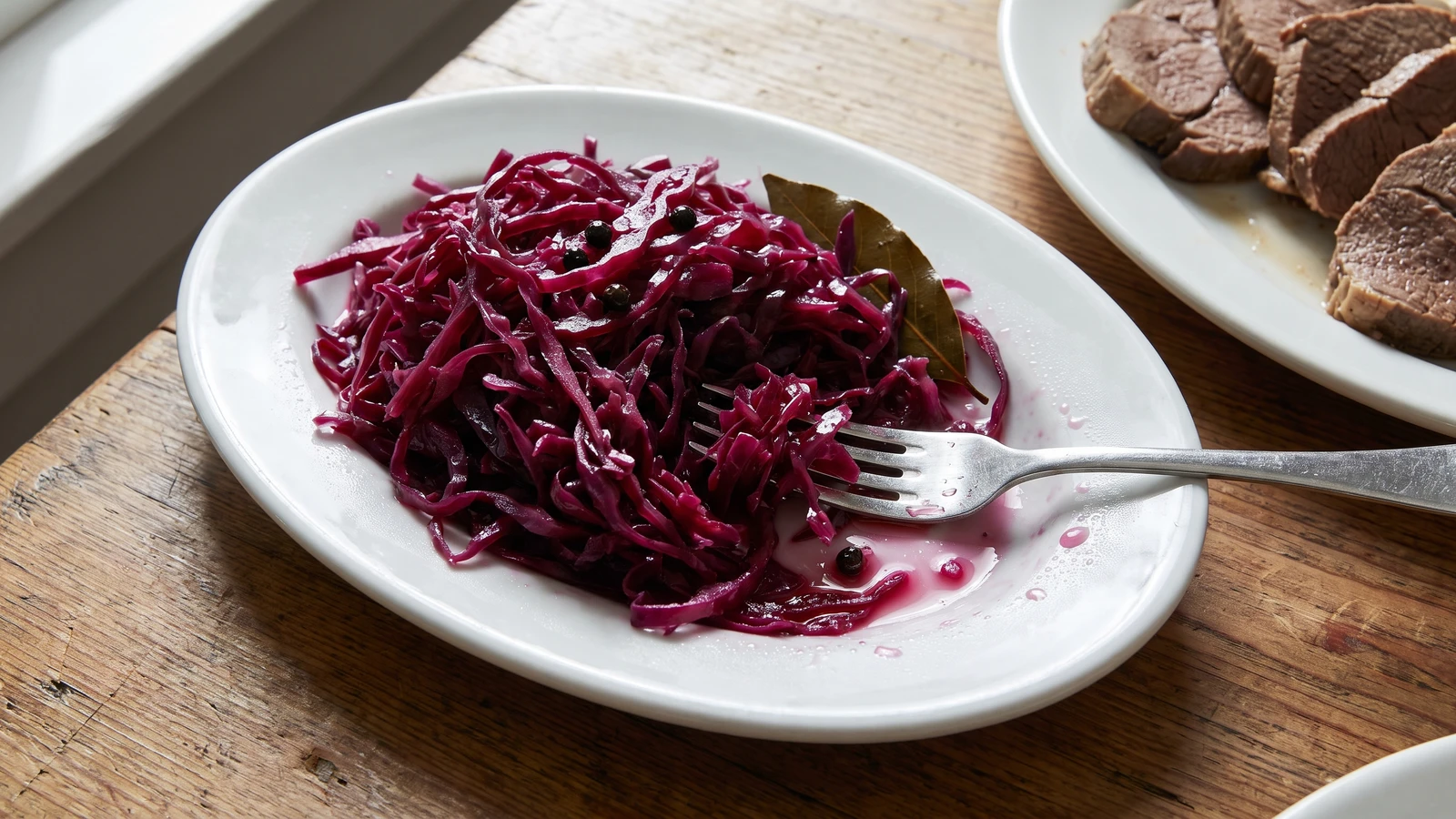
A cold-larder lesson in patience: fine red cabbage salted for two days until crisp-tender, then steeped with vinegar, garlic, peppercorns, and bay for the sharp spoonful boiled beef needs.
Chou rouge mariné pour hors-d’œuvre (marinated red cabbage for the opening course) teaches the first rule of a good vinegar pickle: salt must finish its work before vinegar enters. The two-day macération draws water from the cabbage, seasons every strand, and leaves it supple without surrendering its bite. Rush that stage and the cabbage dilutes its own marinade.
The original method assumed a deep crock in a cold larder and kitchen hands available to stir the cabbage frequently. Here, one small cabbage goes into a two-quart nonreactive bowl in the refrigerator and gets two thorough turns each day. The large crock and constant attendance were brigade scaffolding; the two-day salting and the final vinegar rest are the dish itself, and neither should be cut.
Expect wine-purple strands with a clean snap, bright acidity, and quiet warmth from garlic, peppercorns, and bay. It belongs among cold hors-d’œuvre, but its finest work is done beside boiled beef, where one sharp forkful wakes the whole plate. The step that matters most is the macération: distribute the salt evenly, keep the cabbage cold, and turn it twice a day.
Chou rouge mariné belongs to the cuisine bourgeoise cold table across France, where small vinegared vegetables opened a meal or sharpened plainly boiled meats. The preparation moved from the household preserving crock into the codified hors-d’œuvre repertoire without losing its thrifty purpose: salt, vinegar, and winter cabbage made a vivid condiment from an inexpensive vegetable. It should not be confused with the sweet-sour red cabbage of Alsace, which is generally cooked; this version stays raw, crisp, and distinctly tart.
Quantity
1 small head (about 2 lb / 900 g)
cored and cut into a fine julienne
Quantity
2 tablespoons (30 ml / 36 g)
Quantity
4 cups (950 ml / 950 g), or enough to cover
Quantity
2 cloves
lightly crushed
Quantity
2 teaspoons (10 ml / 4 g)
Quantity
1
Quantity
4 cups (950 ml / about 950 g) Cooked Marinade for Venison (No. 168)
completely cooled, in place of the vinegar, garlic, peppercorns, and bay
| Ingredient | Quantity |
|---|---|
| red cabbagecored and cut into a fine julienne | 1 small head (about 2 lb / 900 g) |
| fine table salt | 2 tablespoons (30 ml / 36 g) |
| raw red wine vinegar with 5% acidity | 4 cups (950 ml / 950 g), or enough to cover |
| garliclightly crushed | 2 cloves |
| black peppercorns | 2 teaspoons (10 ml / 4 g) |
| bay leaf | 1 |
| Cooked Marinade for Venison (optional)completely cooled, in place of the vinegar, garlic, peppercorns, and bay | 4 cups (950 ml / about 950 g) Cooked Marinade for Venison (No. 168) |
Remove the loose outer leaves, quarter the cabbage, and cut away the hard core. Slice each quarter across the grain into a fine julienne, a matchstick cut about 1/16 inch or 2 mm wide. Keep the strands even; thick pieces remain obstinately raw while fine ones soften, and salt cannot correct the knife work afterward.
Put one-third of the cabbage into a large nonreactive bowl, scatter over one-third of the salt, and repeat the layers twice. Toss and squeeze lightly with clean hands until every strand feels faintly damp. Cover and refrigerate for 48 hours, turning the cabbage thoroughly morning and evening so the brine moves through it evenly. If dry, stiff patches remain after the first turn, break them apart and redistribute the wet cabbage around them; add no water.
Tip the cabbage into a colander and let it drain for 30 minutes, turning it once and pressing gently so trapped brine escapes. Taste a strand. It should be distinctly seasoned but still pleasant; if it is fiercely salty, rinse it once under very cold water, drain for another 30 minutes, and press it dry between clean towels. Ça se rattrape. Do not soak it, or you will wash away the seasoning the two-day macération built.
For the direct preparation, use the red wine vinegar raw. If you prefer the source’s second option, bring the vinegar just to a boil in a nonreactive saucepan, then cool it completely before it touches the cabbage; warm vinegar softens the julienne. For the book’s separate, fuller variation, omit the measured vinegar, garlic, peppercorns, and bay, then reach for 4 cups of completely cooled Cooked Marinade for Venison (No. 168). Because that finished marinade is gentler than full-strength vinegar, keep that variation refrigerated, marinate it for one day, and serve it within three days.
Pack the drained cabbage into a clean two-quart glass jar with the crushed garlic, peppercorns, and bay leaf distributed through the strands. Pour in enough raw or completely cooled vinegar to cover every piece, pressing the cabbage beneath the surface with a clean spoon. If the measured vinegar falls short, add more of the same full-strength vinegar, never water. A smaller jar or a nonreactive pickling weight will rescue cabbage that keeps rising above the liquid.
Cover and refrigerate for 24 to 48 hours, turning the closed jar once or twice so the aromatics circulate. The chou rouge mariné is ready when the strands remain crisp but bend without stiffness, the color has deepened to bright garnet, and the vinegar tastes seasoned rather than merely sharp.
Lift out only what you need with a clean fork and let the excess vinegar fall back into the jar. Serve the chou rouge mariné as a small hors-d’œuvre or beside boiled beef, especially pot-au-feu, where its acidity cuts through the rich broth-softened meat. Keep the remaining cabbage submerged and cold. À table!
1 serving (about 120g)
Culinary guides, cultural storytelling, and the editorial depth that makes cooking meaningful.
Discover Culinary ExplorerChef Juliette
Beef shin, lean beef, and fowl begin in cold water and rise slowly toward a tremble. Skim before the boil, and you learn the quiet discipline that gives every clear French broth its backbone.

Chef Juliette
Break the veal bones small, then give them eight hours at a bare tremble. This pale, gelatinous fond becomes the quiet foundation beneath velouté, blanquette, and every sauce that must stay light.
Chef Juliette
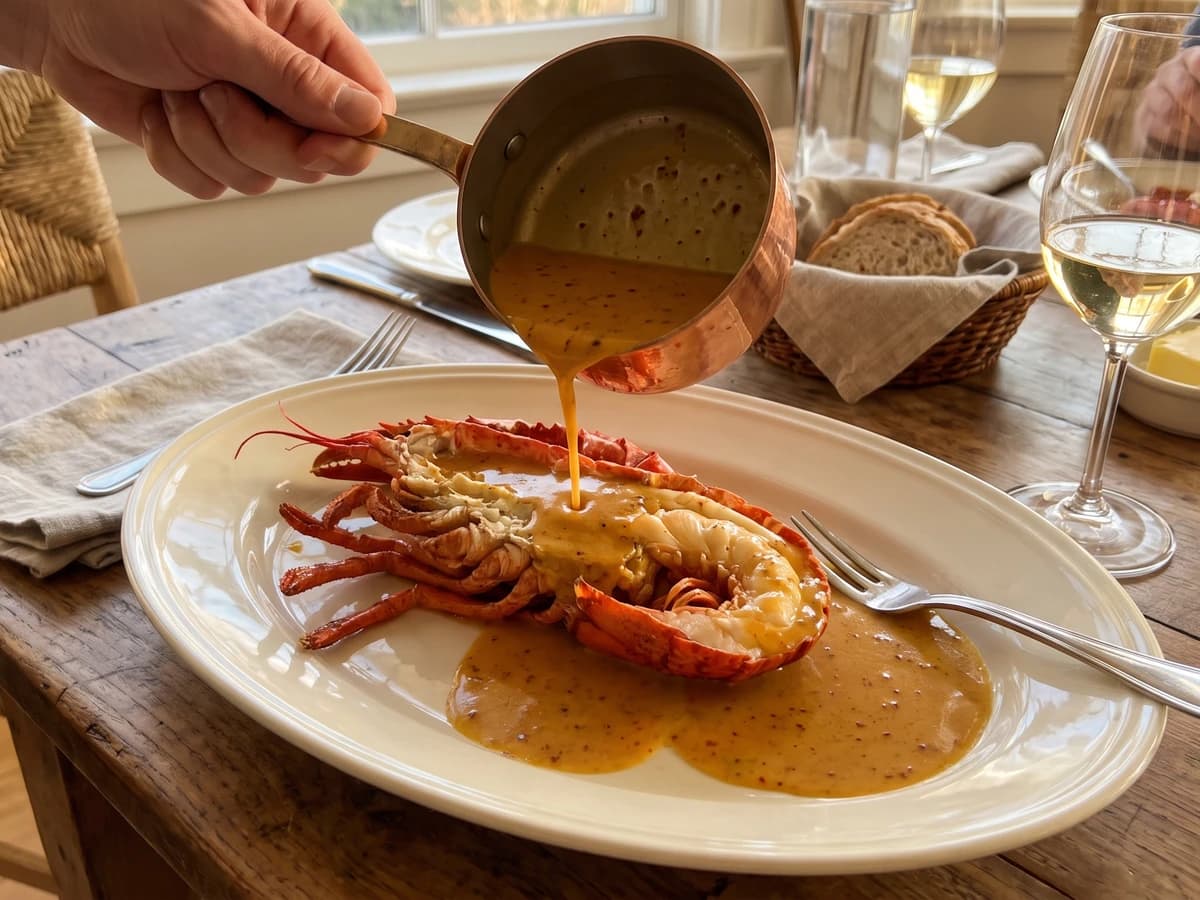
Sauce Orientale concentrates lobster-rich American Sauce with curry, then folds in cream away from the fire: a glossy, gently spiced derivative made for lobster, crayfish, and firm fish.
Chef Juliette
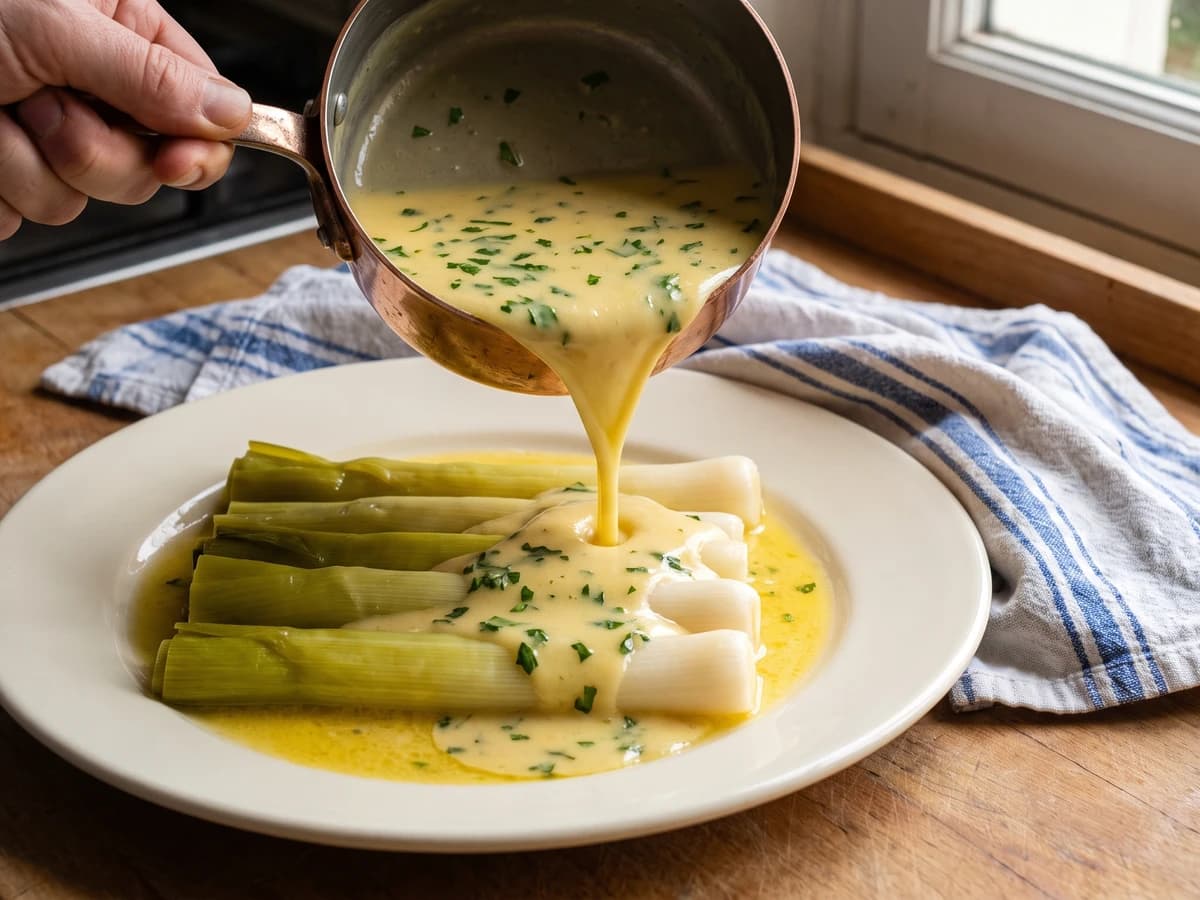
An old lesson in sauce families: Sauce Allemande takes mushroom liquor, then butter, lemon, and parsley, becoming a glossy Poulette for sheep's trotters, leeks, cauliflower, and anything needing gentle richness with a bright edge.