
Chef Juliette
Smelt (Éperlans)
Tiny éperlans, lightly floured and fried until their tails stand crisp, arrive in a generous heap on a napkin with fried parsley and grooved lemon, a weeknight lesson in heat and restraint.
A cooking platform built around craft, culture, and the stories behind what we eat.
Created by Chef Juliette
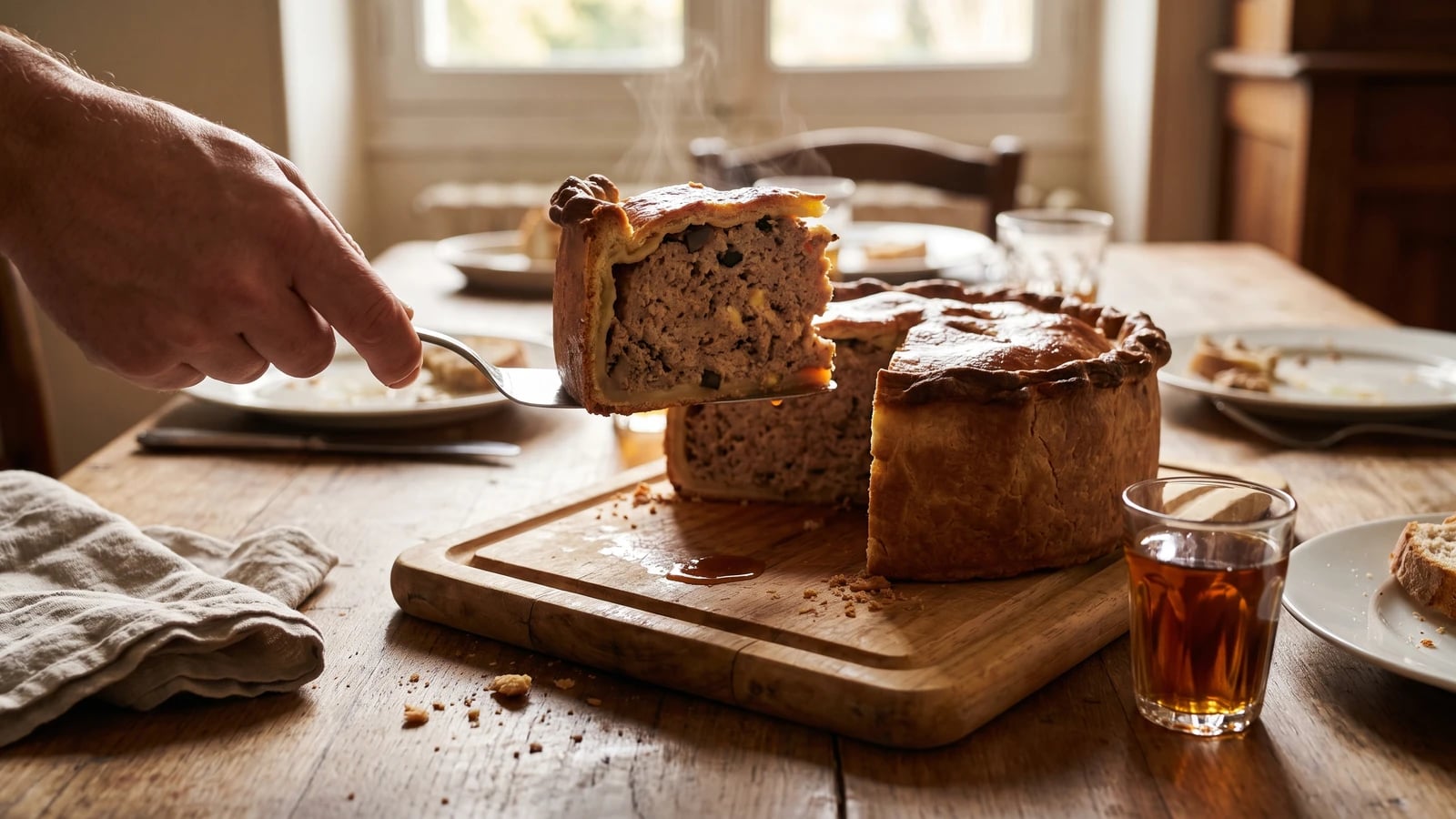
Based on No. 202, Gratin Forcemeat for Ordinary Hot, Raised Pies, from Le Guide Culinaire (1907) by Auguste Escoffier
Farce à gratin turns bacon, veal, and calf's liver into a silken, Madeira-scented pie filling, but its deep flavor begins with one uncompromising act: hard, fast browning.
Farce à gratin pour pâtés chauds ordinaires (gratin forcemeat for ordinary hot raised pies) teaches the decisive use of heat: bacon, veal, and calf's liver must brown fast and dark before they are worked smooth. That browning is not a prelude. It is the dish, the deep savor that gives gratin its name here.
The brigade formula assumed a saucier, the sauce cook, beside a pot of reduced Espagnole never far from the fire, a mortar, a tamis, or fine drum sieve, and enough hands to pound warm meat while the sauce stayed cold. Despite the name, the salamander does not make this forcemeat; it belongs only to certain finishes in Gratins (No. 268), where a strong home broiler is its honest equivalent. For one cook, one stove, one evening, I have halved the formula, replaced the mortar's labor with a food processor, and kept the tamis because the final pass is not brigade scaffolding. It is what makes the paste fine.
Keep the mixture cool as the butter and yolks go in. If it turns greasy, stop and chill it; ça se rattrape. Before you touch the pan, remember this: hard, fast browning is the step that matters most.
Farce à gratin belongs to the French pâtissier's work of pâtés chauds, where raised pastry, charcuterie forcemeats, and the classical sauce kitchen meet. It became especially at home in the grand kitchens and bourgeois celebration pies of Paris, carrying professional pie technique onto generous domestic tables. Gratin here does not mean cheese or a browned topping: it describes a forcemeat whose meats are rapidly browned before pounding, so the browned fond flavors every slice.
Quantity
1 tablespoon (15 ml / 14 g)
Quantity
4 ounces (113 g)
rind removed and cut into 1-inch (2.5-cm) cubes
Quantity
4 ounces (113 g)
cut into 1-inch (2.5-cm) cubes
Quantity
4 ounces (113 g)
trimmed and cut into 1-inch (2.5-cm) cubes
Quantity
½ teaspoon (2.5 ml / 3 g), plus more after testing
Quantity
¼ teaspoon (1.25 ml / 0.6 g), plus more after testing
Quantity
⅓ cup (80 ml / 28 g)
finely chopped
Quantity
2 tablespoons (30 ml / 14 g)
finely chopped, or drained if preserved
Quantity
1 small, about 2 tablespoons (30 ml / 20 g)
finely chopped
Quantity
1 small sprig
Quantity
¼ leaf
Quantity
¼ cup plus 2 teaspoons (70 ml / 70 g)
Quantity
6 tablespoons (90 ml / 85 g)
cool and pliable, cut into small pieces
Quantity
3
Quantity
6 tablespoons plus 1 teaspoon (95 ml / 100 g)
prepared separately and chilled
Quantity
1 prepared hot raised pie (No. 268), ready for this forcemeat
| Ingredient | Quantity |
|---|---|
| unsalted butter for browning | 1 tablespoon (15 ml / 14 g) |
| fresh fatty unsmoked baconrind removed and cut into 1-inch (2.5-cm) cubes | 4 ounces (113 g) |
| veal filletcut into 1-inch (2.5-cm) cubes | 4 ounces (113 g) |
| pale calf's livertrimmed and cut into 1-inch (2.5-cm) cubes | 4 ounces (113 g) |
| fine sea salt | ½ teaspoon (2.5 ml / 3 g), plus more after testing |
| finely ground white pepper | ¼ teaspoon (1.25 ml / 0.6 g), plus more after testing |
| button mushroom parings or trimmed stemsfinely chopped | ⅓ cup (80 ml / 28 g) |
| fresh black truffle parings or preserved truffle peelingsfinely chopped, or drained if preserved | 2 tablespoons (30 ml / 14 g) |
| shallotfinely chopped | 1 small, about 2 tablespoons (30 ml / 20 g) |
| thyme | 1 small sprig |
| dried bay leaf | ¼ leaf |
| dry Madeira | ¼ cup plus 2 teaspoons (70 ml / 70 g) |
| unsalted butter for the forcemeatcool and pliable, cut into small pieces | 6 tablespoons (90 ml / 85 g) |
| large egg yolks | 3 |
| cold, well-reduced Espagnole sauceprepared separately and chilled | 6 tablespoons plus 1 teaspoon (95 ml / 100 g) |
| Gratins | 1 prepared hot raised pie (No. 268), ready for this forcemeat |
Have the reduced Espagnole cold before you begin and keep the diced butter cool but pliable. Pat the bacon, veal, and liver very dry, keeping each meat separate. Wet surfaces give you gray meat and liquid in the pan; this forcemeat depends upon rapid browning, not simmering in its own juices.
Heat the tablespoon of butter in a wide sauté pan over high heat until its foam subsides. Add the bacon in one uncrowded layer and brown it quickly on several faces, about 2 minutes, without rendering it dry. Lift it onto a rimmed plate and leave the browned fat and fond in the pan.
Brown the veal briskly in the same fat until its broad faces are deep bronze but its center remains underdone, then drain it beside the bacon. Repeat with the calf's liver, working even faster because liver toughens when overcooked. Keep every batch small enough that the pan stays fiercely hot. Pale browning makes pale flavor, and no later seasoning can replace the fond you failed to build here.
Return the bacon and veal to the pan with the liver. Add the salt, white pepper, mushroom parings, truffle parings, shallot, thyme, and bay. Toss over high heat for exactly 2 minutes, just long enough for the shallot to soften and the truffle and herbs to perfume the fat. Tip everything into a sieve set over a bowl, reserving every spoonful of gravy, then discard the thyme and bay.
Return the empty pan to high heat and pour in the Madeira. Scrape the floor thoroughly as it bubbles for 30 to 60 seconds, dissolving the dark glaze without reducing the wine dry. Pour this Madeira deglazing liquor into a separate cup. Let both it and the reserved gravy cool until barely warm, since hot liquid would melt the butter and loosen the forcemeat.
Put the drained bacon, veal, liver, mushrooms, truffle, and shallot in the food processor and work them quickly to a very fine paste. With the machine running, add the butter one small piece at a time, followed by the yolks one by one, the reserved gravy, the cold reduced Espagnole, and finally the Madeira, keeping precisely that order. Stop once to scrape the bowl, then process only until smooth. If the mixture becomes shiny with loose fat, stop immediately. Chill the bowl for 10 minutes, then restart with one spoonful of cold Espagnole until it binds again; ça se rattrape.
Press the forcemeat through a fine tamis or sturdy fine-mesh sieve into a chilled bowl, using a flexible scraper and discarding the sinew left behind. The food processor is useful scaffolding; the tamis stays because it gives the forcemeat its close, silken texture. Smooth it firmly with a wooden spoon. Fry a teaspoonful until completely cooked, taste it, and correct the salt and pepper. Never taste the uncooked forcemeat.
This is a forcemeat, not a ready-to-eat pâté. Use it in the separately prepared hot raised pie from Gratins (No. 268), packing it firmly enough to remove air pockets without crushing the pastry. Follow that pie's baking instructions and verify that the center of the forcemeat reaches 160°F (71°C) before serving. Let the pie rest as directed so the filling settles cleanly beneath the crust. À table!
1 serving (about 295g)
Culinary guides, cultural storytelling, and the editorial depth that makes cooking meaningful.
Discover Culinary ExplorerChef Juliette
Tiny éperlans, lightly floured and fried until their tails stand crisp, arrive in a generous heap on a napkin with fried parsley and grooved lemon, a weeknight lesson in heat and restraint.

Chef Juliette
Brandade de Morue turns salt cod, warm olive oil, and milk into a pale, silky emulsion: keep everything warm and add the oil slowly, then crown the generous dome with butter-fried bread.

Chef Juliette
Salt cod worked warm with cream, one patient spoonful at a time, until the rough flakes become a glossy Nîmes paste, domed generously and ringed with butter-fried croutons for the table.

Chef Juliette
Wine-poached char packed in its earthenware crock beneath butter gold: a make-ahead first course that turns careful cooling, thorough boning, and one unbroken seal into quiet abundance.