Chef Juliette
Ordinary or White Consommé
Beef shin, lean beef, and fowl begin in cold water and rise slowly toward a tremble. Skim before the boil, and you learn the quiet discipline that gives every clear French broth its backbone.
A cooking platform built around craft, culture, and the stories behind what we eat.
Created by Chef Juliette
Based on No. 18, Fish Glaze, from Le Guide Culinaire (1907) by Auguste Escoffier
The classical fish reduction that teaches restraint: keep White Fish Stock delicate as fumet, then reduce only the portion a sauce needs, stopping before sweetness and clarity turn coarse.
Glace de poisson (fish glaze) teaches a cook when not to concentrate. Fish stock does not reward the severe reduction given to veal: taken too far, its clean sweetness turns blunt and insistently marine. The classical correction is fumet (fish essence), reduced only until the sauce in front of you tastes complete.
The book assumed a saucier beside a stockpot that never went cold, ladling and reducing to order. At home, hold about two quarts of White Fish Stock (No. 11) in measured portions, then reduce a cup only when a sauce asks for it. What changed is the service system, not the technique. The always-on pot is brigade scaffolding and can go; reduction to the sauce's exact strength is the dish and must stay. One cook, one stove, one evening.
Before you touch a pan, taste the stock cold and leave it unsalted. Salt and fish flavor both sharpen under reduction. Watch the spoon rather than the clock, and stop while the fumet still flows cleanly; if it becomes sticky or coarse, loosen it with reserved stock. Ça se rattrape.
Glace de poisson belongs to the classical sauce kitchens of Paris, where a saucier could draw from fresh stock and reduce only what a particular sauce required during service. Unlike the dark, gelatinous meat glazes, fish glaze never held the same standing because prolonged concentration can harden its delicate marine flavor. The canon's own correction is fumet made from White Fish Stock (No. 11), a lighter essence that moved readily from the grand kitchen to the bourgeois table.
Quantity
2 quarts (1.9 L / about 1.9 kg) White Fish Stock (No. 11)
freshly made or thawed and unsalted
| Ingredient | Quantity |
|---|---|
| White Fish Stockfreshly made or thawed and unsalted | 2 quarts (1.9 L / about 1.9 kg) White Fish Stock (No. 11) |
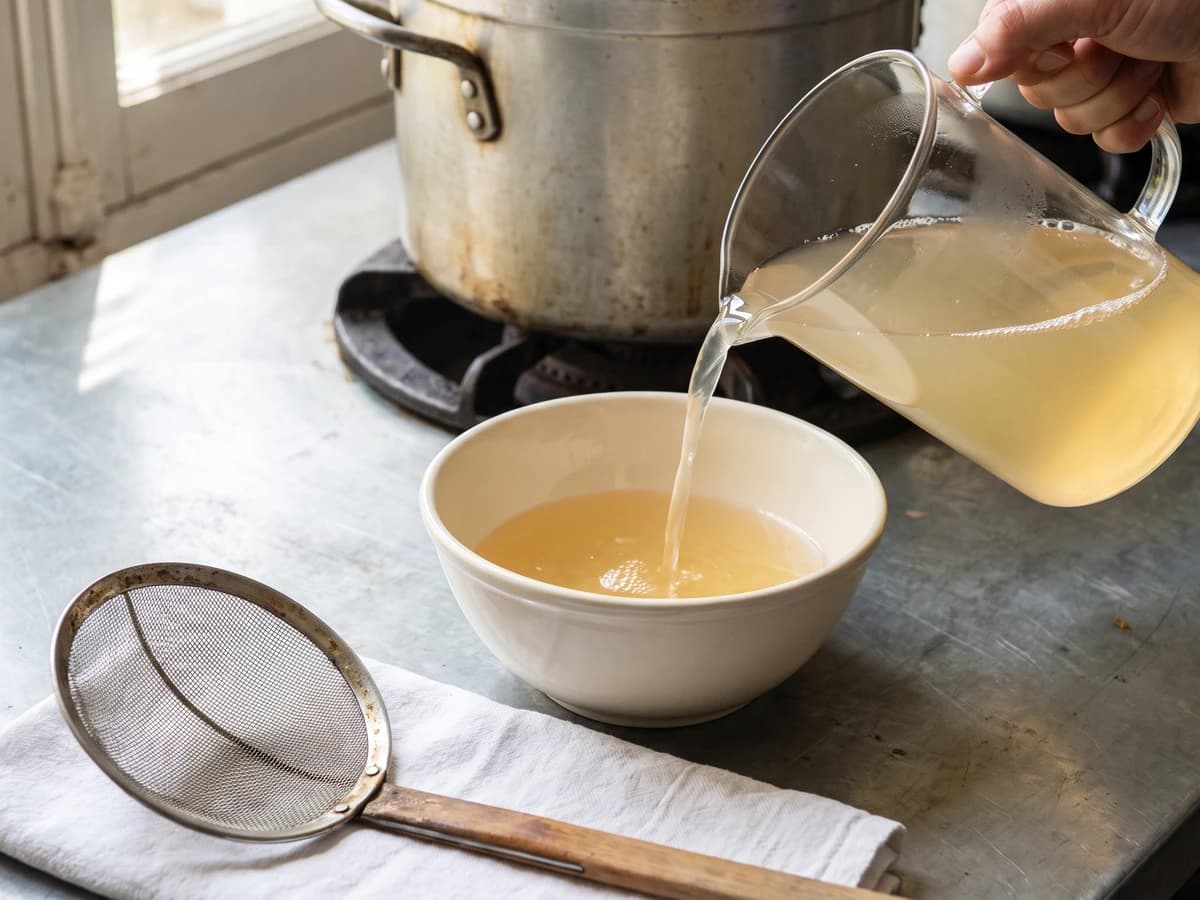
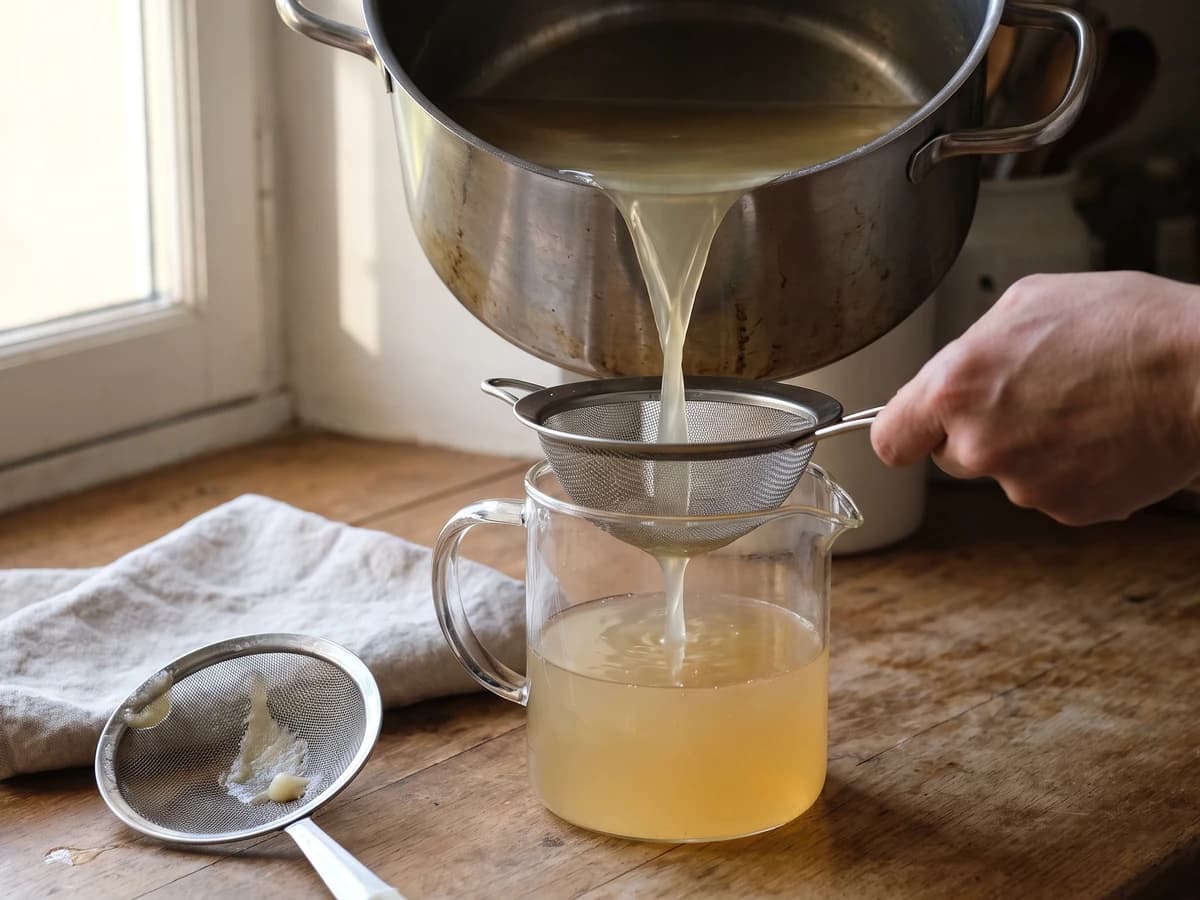
Pass the White Fish Stock (No. 11) through a fine-mesh sieve lined with dampened cheesecloth into a clean bowl. Let it drain under its own weight and do not press the sediment through; pressure gives a cloudy, muddy-tasting reduction. If the stock is cold and firmly gelled, warm it over the lowest heat only until it becomes pourable.
Divide the strained stock into 1-cup (240 ml / about 240 g) portions. Keep one portion for the reduction and chill the remainder promptly in shallow containers. This measured reserve replaces the brigade's stockpot: you have fresh fumet ready when needed without keeping several quarts simmering all day.
Pour one 1-cup (240 ml / about 240 g) portion into a wide 1-quart saucier. Bring it quickly to a controlled, uncovered simmer and skim once if pale foam gathers. Reduce to about 3/4 cup (180 ml / about 180 g), tasting after the first few minutes. The aroma should grow sweeter and more distinct while the liquid remains clear, fluid, and only lightly coating on a spoon. For most finished fish sauces, this delicate fumet is strong enough.
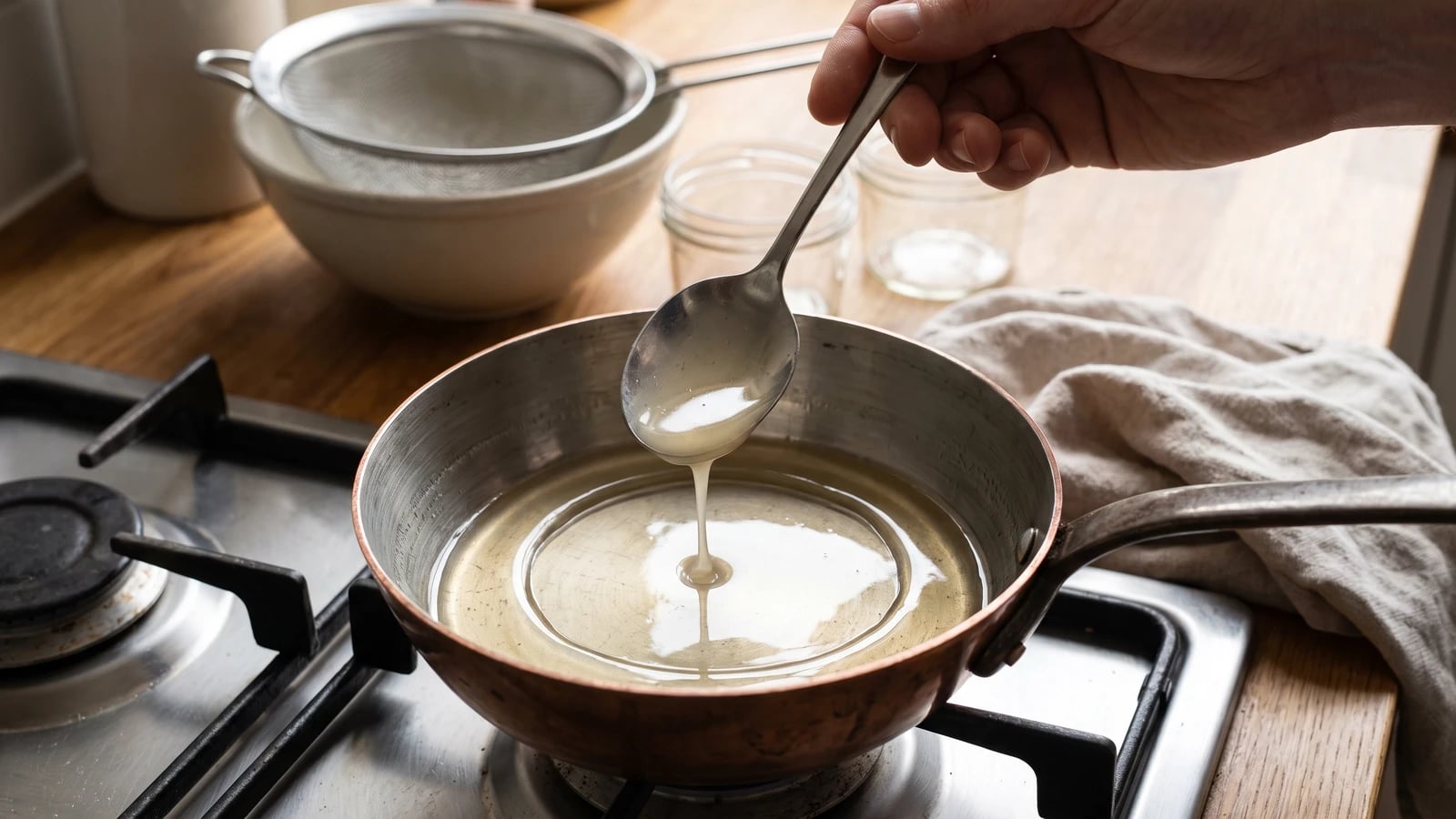
If a preparation specifically requires true glace de poisson, lower the heat and continue reducing the same portion to 2 to 3 tablespoons (30 to 45 ml / about 30 to 45 g). Watch without leaving the pan now; the final change happens quickly. The glaze is ready when it coats a cold spoon in a clear, glossy film and falls in slow drops, before it darkens or becomes stringy.
If the glaze turns tacky, tastes harsh, or becomes too salty, remove it from the heat immediately. Whisk in reserved White Fish Stock (No. 11), 1 tablespoon (15 ml / about 15 g) at a time, until the flavor opens and the liquid flows cleanly again. Ça se rattrape. Water would thin the fault without restoring the stock's balance, so use the fumet you wisely kept back.
Transfer the fumet or finished glaze to clean shallow containers and cool promptly over an ice bath. Refrigerate the fumet for up to 2 days or freeze it for up to 3 months. The true glaze will set into a firm jelly when cold; that is its natural gelatin, not a failure. Stir fumet into sauces by the spoonful, or use the stronger glaze by the teaspoon, tasting between additions.
1 serving (about 15g)
Culinary guides, cultural storytelling, and the editorial depth that makes cooking meaningful.
Discover Culinary ExplorerChef Juliette
Beef shin, lean beef, and fowl begin in cold water and rise slowly toward a tremble. Skim before the boil, and you learn the quiet discipline that gives every clear French broth its backbone.
Chef Juliette
Break the veal bones small, then give them eight hours at a bare tremble. This pale, gelatinous fond becomes the quiet foundation beneath velouté, blanquette, and every sauce that must stay light.
Chef Juliette
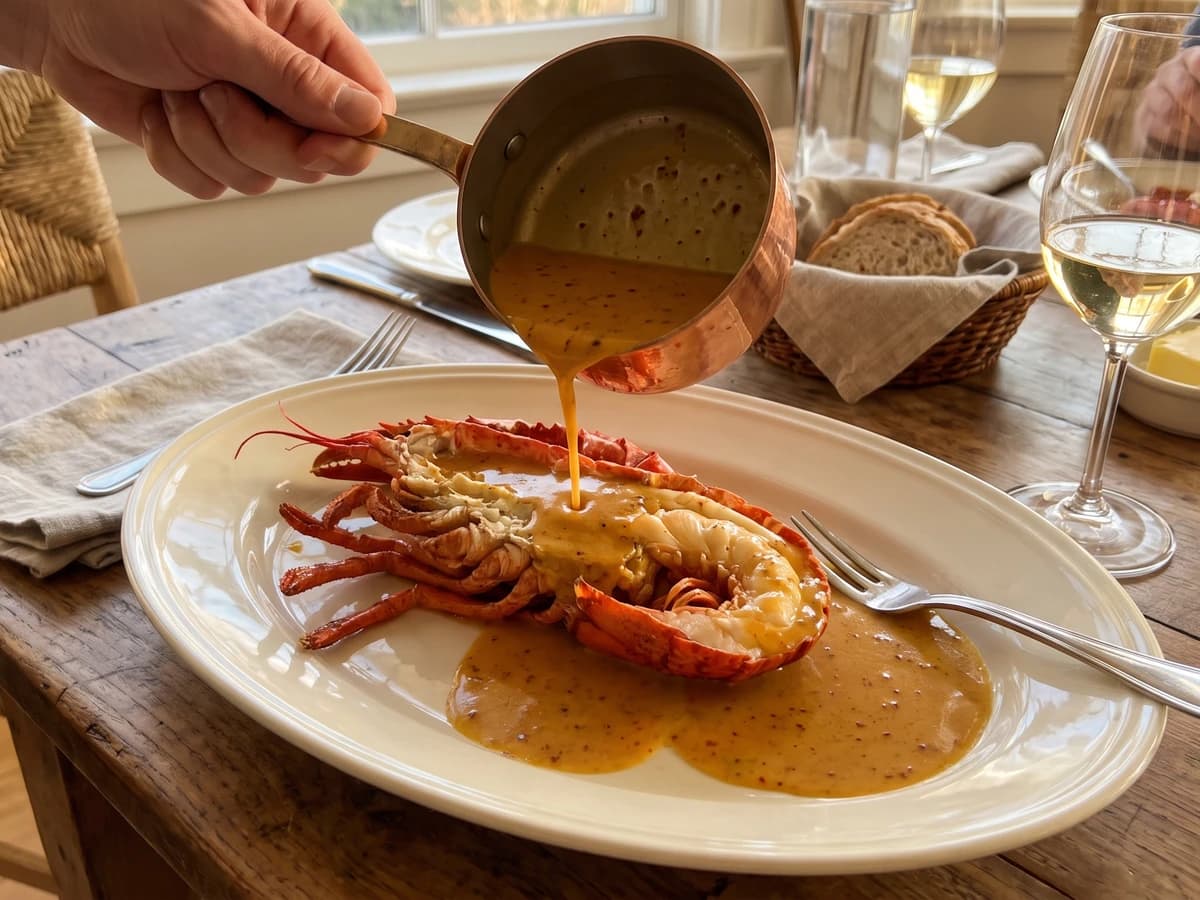
Sauce Orientale concentrates lobster-rich American Sauce with curry, then folds in cream away from the fire: a glossy, gently spiced derivative made for lobster, crayfish, and firm fish.
Chef Juliette
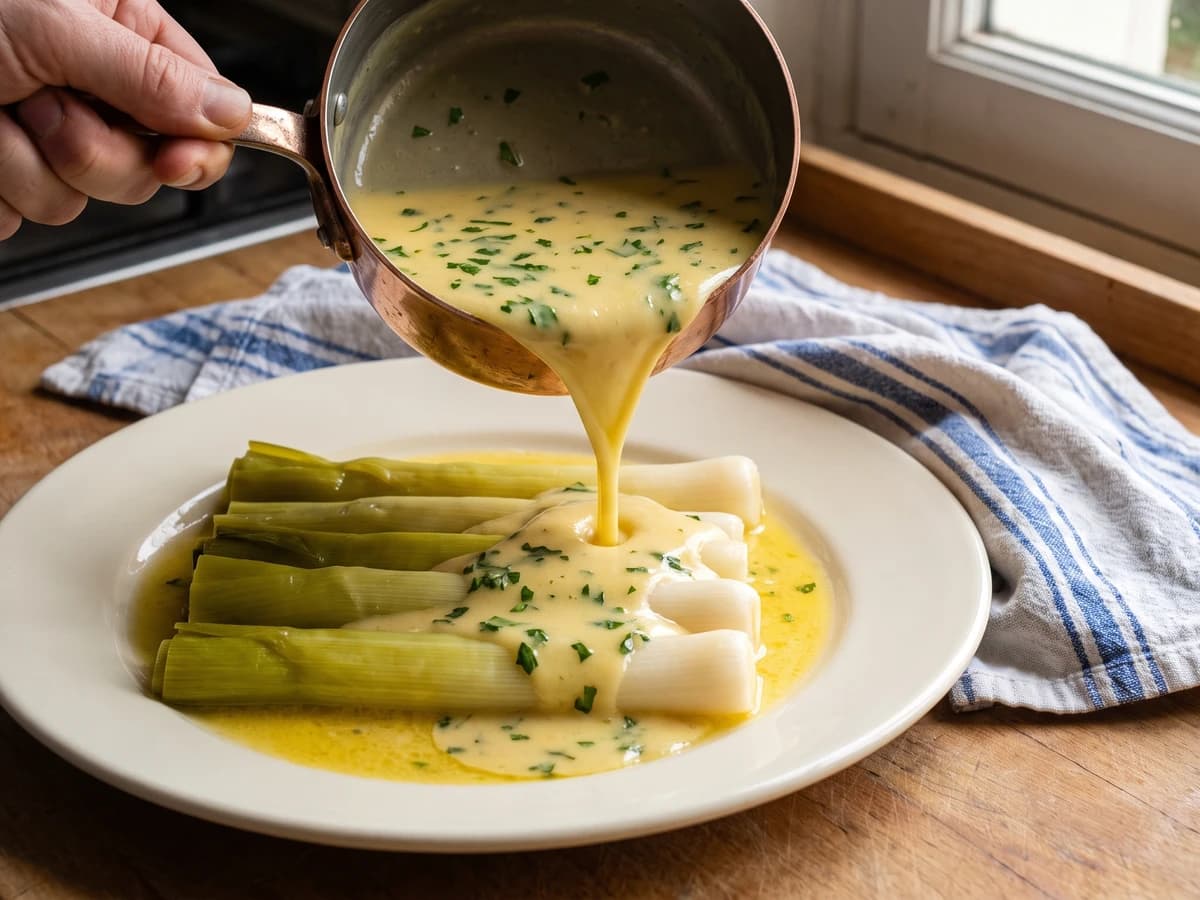
An old lesson in sauce families: Sauce Allemande takes mushroom liquor, then butter, lemon, and parsley, becoming a glossy Poulette for sheep's trotters, leeks, cauliflower, and anything needing gentle richness with a bright edge.