Chef Juliette
Ordinary or White Consommé
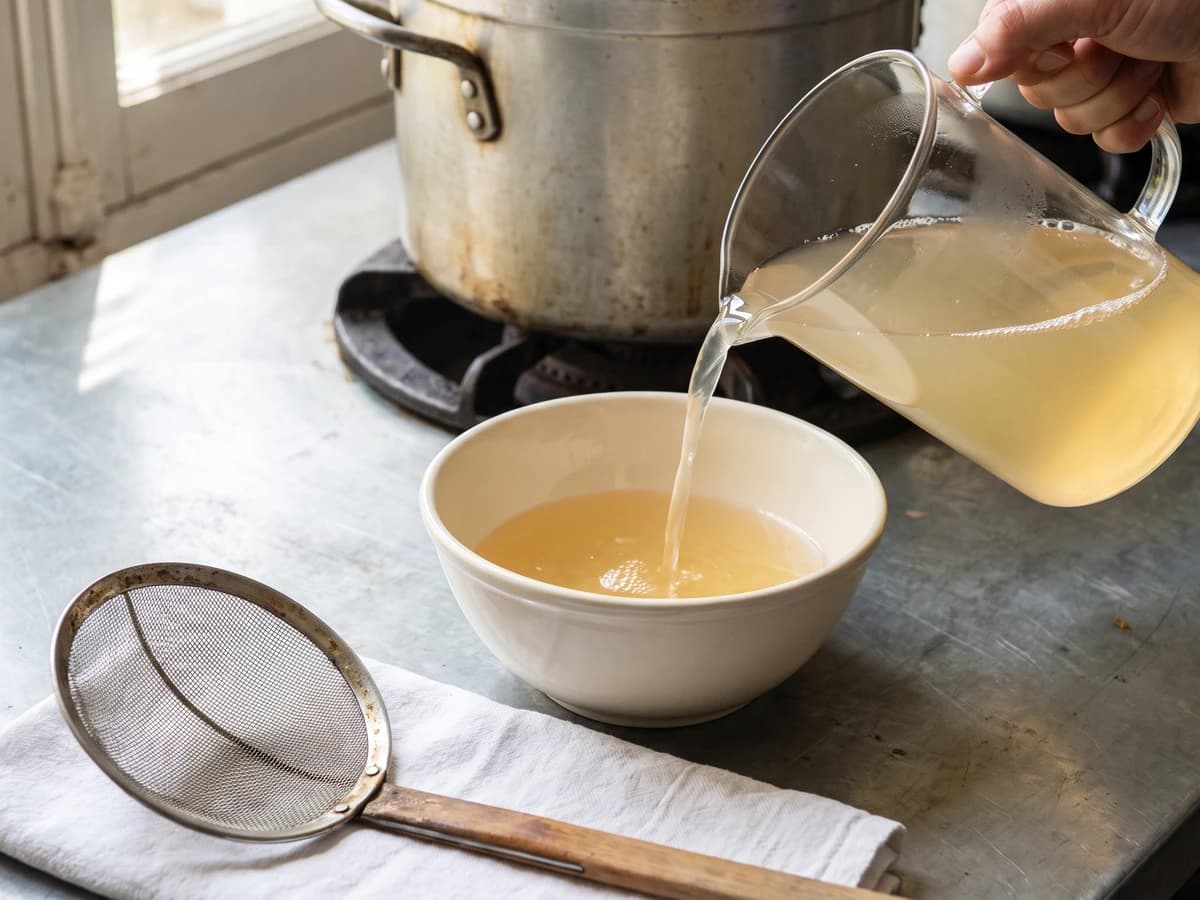
Beef shin, lean beef, and fowl begin in cold water and rise slowly toward a tremble. Skim before the boil, and you learn the quiet discipline that gives every clear French broth its backbone.
A cooking platform built around craft, culture, and the stories behind what we eat.
Created by Chef Juliette
Based on No. 179, Peeled, Channelled, and Zested Lemons, from Le Guide Culinaire (1907) by Auguste Escoffier
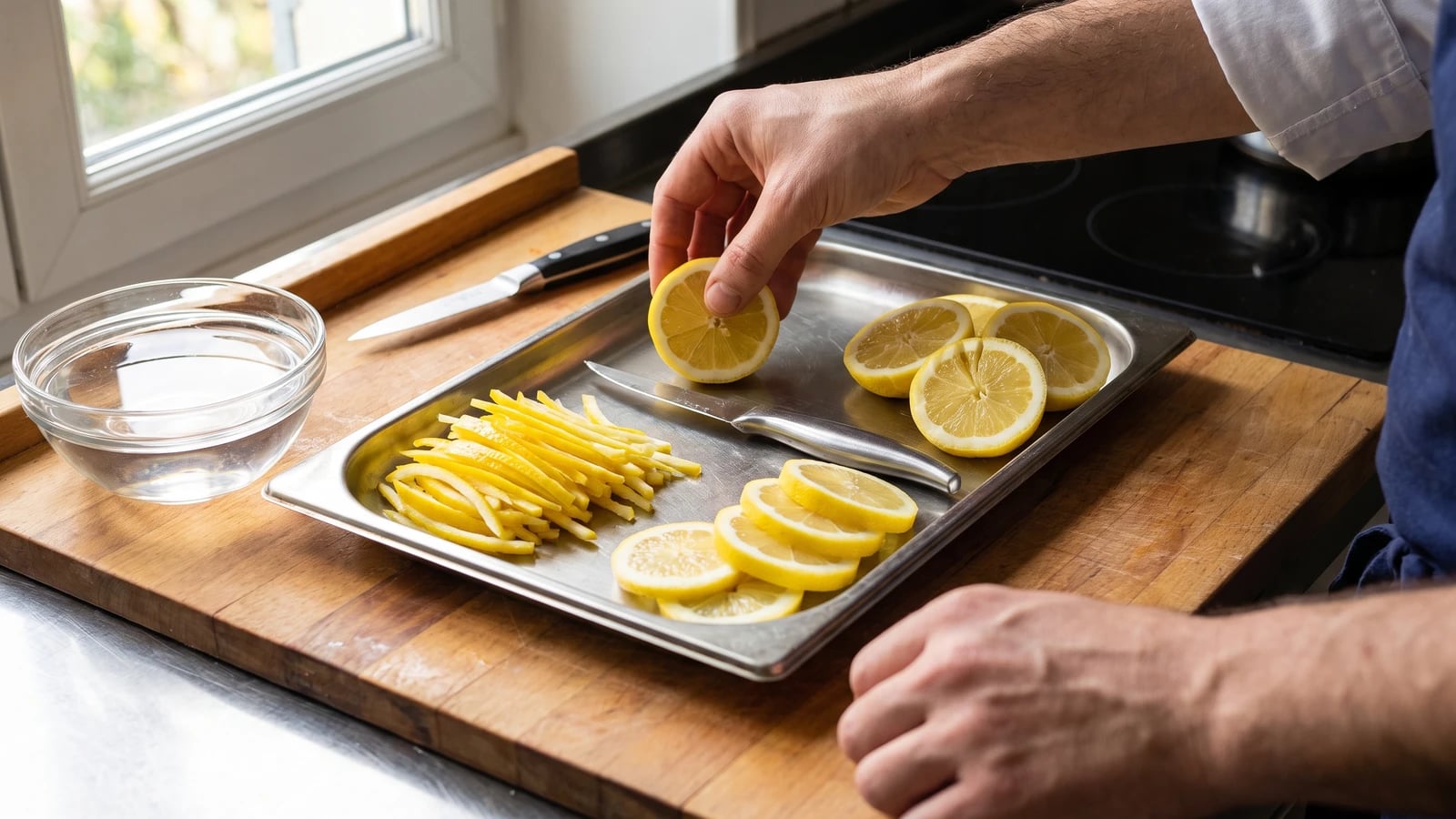
Citrons pelés, cannelés et zestés turn one lemon into three precise tools: clean pulp for marinades, serrated slices for the platter, and fine julienne zest softened by a five-minute scald.
Citrons pelés, cannelés et zestés (peeled, channelled, and zested lemons) teach the clean division of a lemon into pulp, shape, and perfume. Know one thing before touching the pan: zest is the glossy yellow film alone. The white pith beneath it is not zest, and its blunt bitterness has no place in the fine julienne.
The original preparation assumed a commis cutting enough lemons for an entire service, a flexible knife kept keen, and a special canneleur ready at the garnish station. At home, four lemons, one sharp flexible knife, and an inexpensive channel knife do the same work. The brigade quantity and dedicated station were scaffolding, so they go. Removing the pith, cutting evenly, and scalding the julienne for five minutes are the preparation itself, so they stay. One cook, one worktop, half an hour.
Prepare the lemons as close to service as you can. Their colour stays brighter, the pulp remains firm, and the aroma belongs to the dish rather than the refrigerator. Before you begin, sharpen the knife. The deciding step is holding its blade nearly flat while you shave every trace of white from the underside of the rind.
This preparation belongs to the French grand-kitchen garnish station, where lemons served the saucier's blancs, the marinade bench, and platters of fried fish, oysters, and game. From there, channelled slices and carefully pared halves passed naturally onto bistro and home tables because the technique needs attention, not elaborate equipment. One useful correction survived the journey: zest means only the coloured glossy skin, while the bitter white pith must be removed.
Quantity
4
scrubbed and dried
Quantity
8 cups (1.9 L / 1.9 kg)
divided between scalding and cooling
Quantity
As needed Cooked Marinade for Venison (No. 168)
fully prepared and cooled
| Ingredient | Quantity |
|---|---|
| medium firm lemonsscrubbed and dried | 4 |
| fresh waterdivided between scalding and cooling | 8 cups (1.9 L / 1.9 kg) |
| Cooked Marinade for Venison (optional)fully prepared and cooled | As needed Cooked Marinade for Venison (No. 168) |
For a complete practice set, reserve two lemons for peeled slices and julienne zest, one for channelled half-discs, and one for the simple halved garnish. Scrub and dry them well before cutting. A damp lemon slips under the knife, while a dry one gives you control.
Trim a thin slice from both ends of the first two lemons so they stand securely. Following each lemon's curve, cut away the yellow rind and the entire layer of white pith in downward strips, leaving clean pulp exposed. Turn the lemon after every cut rather than twisting your wrist. Slice the peeled fruit crosswise, thinly for garnish or more generously for marinade use. If the knife bites deeply into the pulp, ça se rattrape: keep those less regular slices for the marinade and reserve the cleanest rounds for the platter.
Lay the removed rind flat with its white inner surface facing upward. Hold a very sharp flexible knife nearly parallel to the board and shave away every remaining trace of pith without stripping off the coloured film. Cut the cleaned zest into panels about 1 inch (2.5 cm) wide, then cut laterally across them into very fine julienne-fashion matchsticks. If the rind breaks, line up the smaller pieces and cut shorter matchsticks. The aroma and colour remain, and nothing has been lost.
Bring 4 cups (950 ml / 950 g) of the water to a boil in a small saucepan. Add the julienne zest and scald it for exactly 5 minutes, keeping the water at a controlled boil. This softens the rind and tempers its bitterness without cooking away its character. Lift the zest immediately into the remaining 4 cups (950 ml / 950 g) of cold fresh water, cool it completely, then drain with care and blot gently. If it has softened more than intended, chop it finely and use it in that form. Ça se rattrape.
Draw a channel knife lengthwise over the third lemon, removing narrow parallel ribbons of coloured rind and exposing the white pith beneath. Space the channels evenly around the fruit. Cut the lemon lengthwise through its core, trim both ends straight, and slice each half laterally into thin, regular half-discs with serrated yellow-and-white edges. For full serrated rounds, cut across the whole channelled lemon at right angles to its core instead.
For the plain garnish preferred with fried fish, oysters, and certain game, trim the final lemon's two ends quite straight and halve it through the centre. Pare a rough narrow band of rind from the cut edge of each half so the pulp is easy to squeeze. Cooking well is not cooking fancy, and this direct little garnish is often the best one.
Use the prepared lemons at once whenever possible. If the peeled or channelled pieces must wait, submerge them in fresh cold water, cover, and refrigerate briefly, then drain and blot them before service. Keep the blanched julienne zest well drained and covered. If using the peeled slices with the Cooked Marinade for Venison (No. 168), reach for that marinade fully prepared and cold, adding only the quantity of lemon required for the intended service; its separate formula remains whole. À table!
1 serving (about 225g)
Culinary guides, cultural storytelling, and the editorial depth that makes cooking meaningful.
Discover Culinary ExplorerChef Juliette
Beef shin, lean beef, and fowl begin in cold water and rise slowly toward a tremble. Skim before the boil, and you learn the quiet discipline that gives every clear French broth its backbone.
Chef Juliette
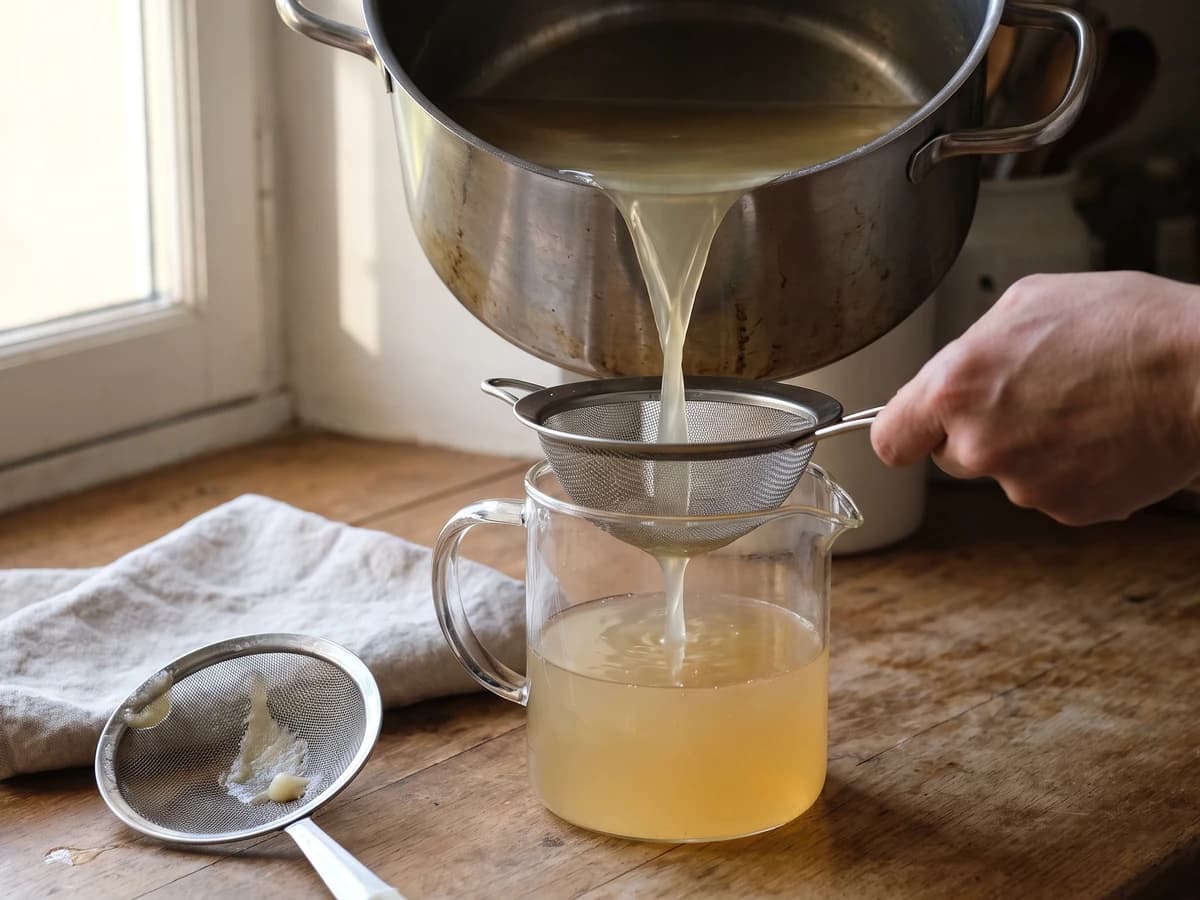
Break the veal bones small, then give them eight hours at a bare tremble. This pale, gelatinous fond becomes the quiet foundation beneath velouté, blanquette, and every sauce that must stay light.
Chef Juliette
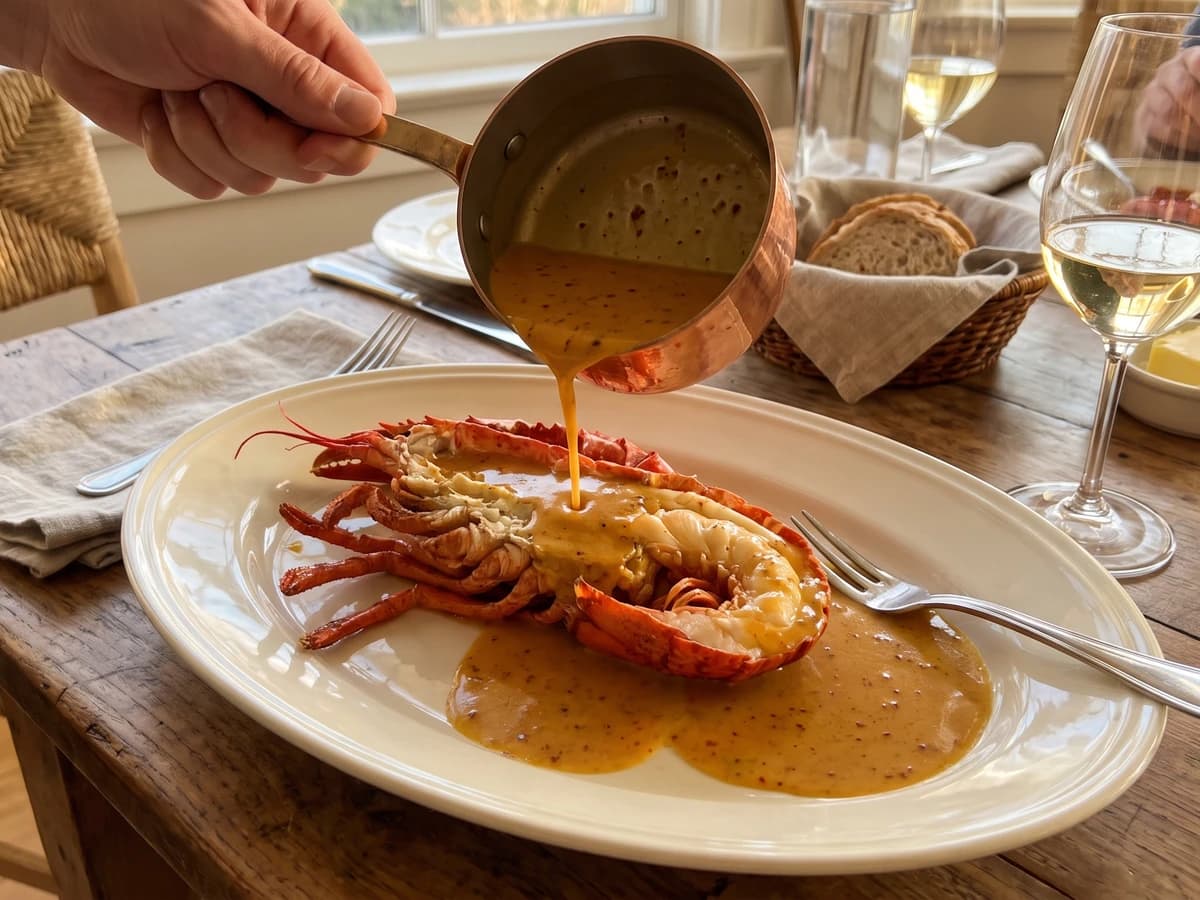
Sauce Orientale concentrates lobster-rich American Sauce with curry, then folds in cream away from the fire: a glossy, gently spiced derivative made for lobster, crayfish, and firm fish.
Chef Juliette
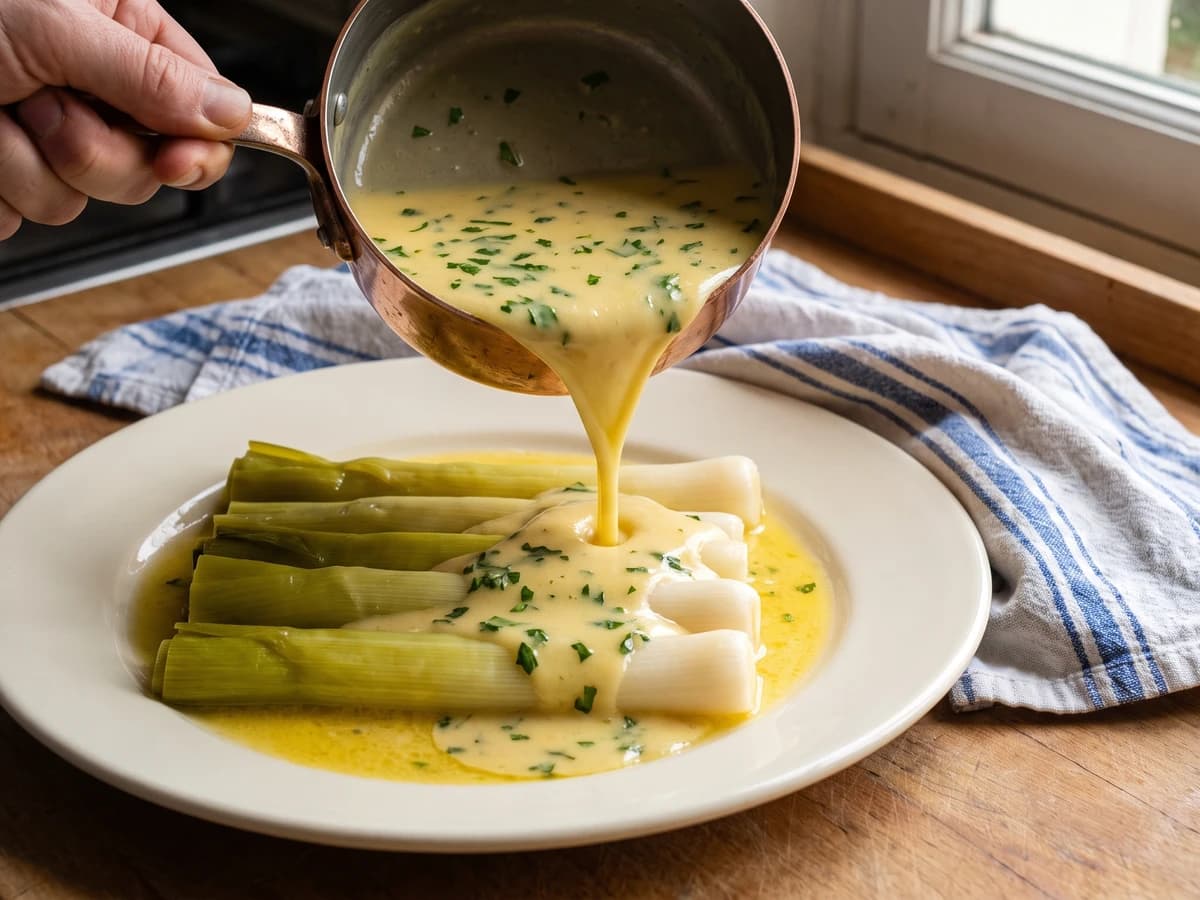
An old lesson in sauce families: Sauce Allemande takes mushroom liquor, then butter, lemon, and parsley, becoming a glossy Poulette for sheep's trotters, leeks, cauliflower, and anything needing gentle richness with a bright edge.