Chef Juliette
Ordinary or White Consommé
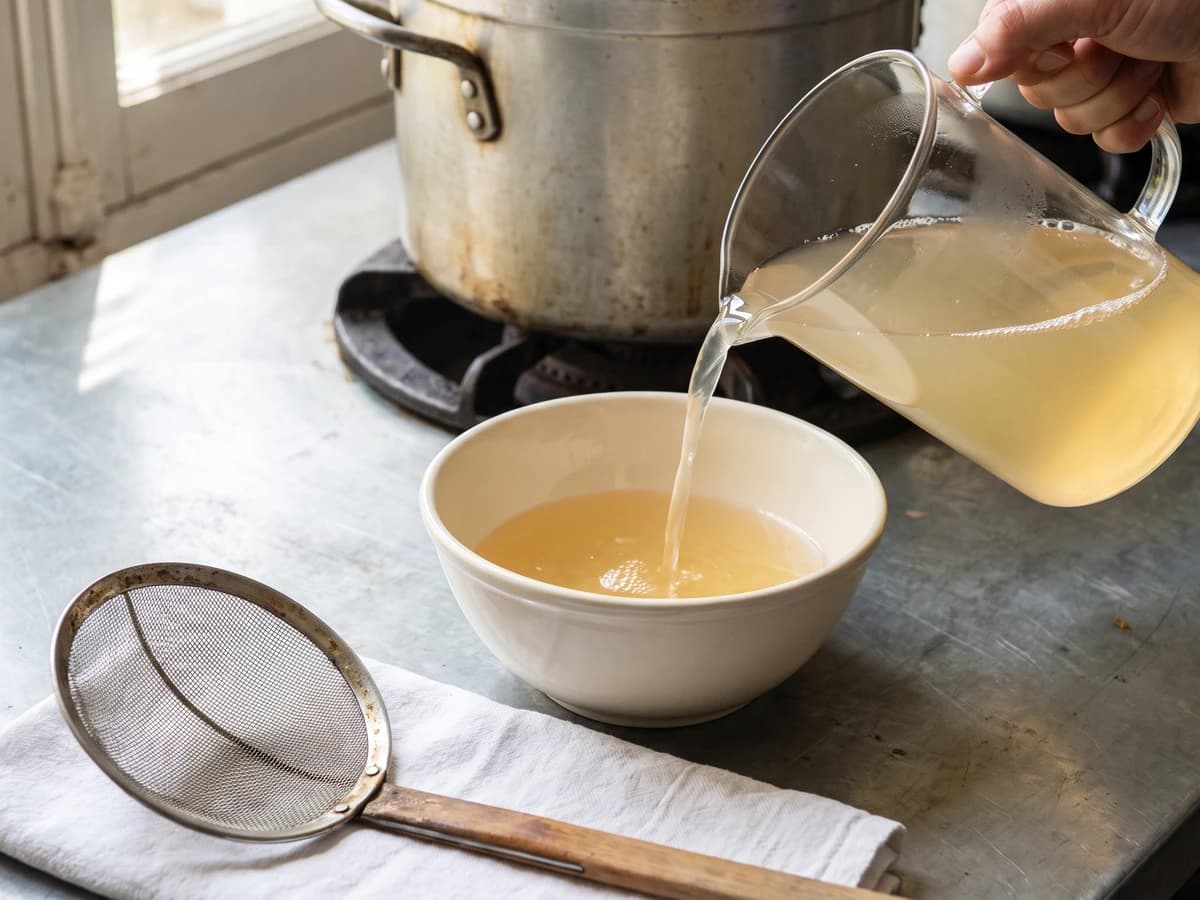
Beef shin, lean beef, and fowl begin in cold water and rise slowly toward a tremble. Skim before the boil, and you learn the quiet discipline that gives every clear French broth its backbone.
A cooking platform built around craft, culture, and the stories behind what we eat.
Created by Chef Juliette
Based on No. 172, Brine, from Le Guide Culinaire (1907) by Auguste Escoffier
Saumure teaches the first law of curing: salt must reach the centre before the edges harden. A floating potato reads strength, while measured Cure #1 makes the old method safe at home.
Saumure (brine) teaches one true thing: a thick piece of meat must cure from the centre and the surface together. Submersion alone salts the edges first, leaving the heart behind, so a beef joint or ox tongue needs injection before it enters the brine. That isn't fussy equipment pretending to be technique. It is the technique.
The original preparation assumed fifty quarts, a tinned copper pan over an open fire, a stone reservoir, a wooden lattice, and a special curing syringe. Here the salt, water, and brown sugar retain the book's proportions at home scale, while a stainless-steel pot, a narrow food-safe vessel, a small rack, and a meat injector do the same work. The direct saltpetre ratio cannot be transferred safely, so it is replaced with Cure #1 containing 6.25 percent sodium nitrite, weighed for the exact combined mass of water and meat. That is the one ratio changed, and safety is the reason.
The stone vat was brigade scaffolding and can go. Full circulation, exact dosing, cold storage, and injection must stay. One cook, one stove, one evening to make it, then a quiet week in the refrigerator. Cool the saumure completely before the curing salt or meat touches it; that is the step that matters most.
Saumure belongs to charcuterie workshops and farmhouse salting rooms across France, with Paris and Lyon both carrying brined ox tongue from the curing vat to the cold table and the braising pot. The floating potato was a practical density gauge for cooks handling great vats, while the wooden lattice beneath the meat ensured the liquid reached every face. Saltpetre fixed the rosy colour and supported preservation, but accurately formulated curing salt now carries that intent with far greater control.
Quantity
8 cups (1.89 L / 1.89 kg)
Quantity
About 4 cups (950 ml / 1.016 kg)
weighed rather than measured by volume
Quantity
1/3 cup (80 ml / 64 g)
firmly packed
Quantity
About 1 3/4 teaspoons (8.6 ml / exactly 10.4 g)
Quantity
1
peeled
Quantity
5 lb (2.27 kg)
Quantity
As needed (1 cup equals 240 ml / 240 g)
Quantity
1 separate batch Cooked Marinade for Venison (No. 168)
prepared separately and used only for venison
| Ingredient | Quantity |
|---|---|
| cold water | 8 cups (1.89 L / 1.89 kg) |
| gray sea saltweighed rather than measured by volume | About 4 cups (950 ml / 1.016 kg) |
| brown sugarfirmly packed | 1/3 cup (80 ml / 64 g) |
| Cure #1 containing 6.25 percent sodium nitrite | About 1 3/4 teaspoons (8.6 ml / exactly 10.4 g) |
| medium potatopeeled | 1 |
| fresh beef or ox tongue | 5 lb (2.27 kg) |
| cold water for soaking | As needed (1 cup equals 240 ml / 240 g) |
| Cooked Marinade for Venison (optional)prepared separately and used only for venison | 1 separate batch Cooked Marinade for Venison (No. 168) |
Cooked Marinade for Venison (No. 168) is the book's separate finished preparation for venison, not an ingredient to pour into this saumure. Keep it whole and reach for it only when treating venison. This brine proceeds with beef or ox tongue.
Weigh the water, salt, meat, and Cure #1. The listed 10.4 grams of Cure #1 is calculated for exactly 1.89 kilograms of water and 2.27 kilograms of meat, using Cure #1 at 0.25 percent of their combined mass. If the meat weighs differently, calculate 0.25 percent of the new combined water and meat weight. The gram figure governs; a spoon is only an approximate visual measure.
Combine the 1.89 kilograms of water and 1.016 kilograms of gray salt in a stainless-steel pot. Bring to a boil, stirring for five minutes. This source formula begins near or beyond saturation, so a layer of crystals may remain even when the liquid has taken all the salt it can hold. Let them settle, then carefully pour the clear brine into a clean pot, leaving the stubborn crystals behind. Do not add unmeasured water to force them into solution.
Lower the peeled potato into the hot brine. It should float, confirming the high density that the old kitchens judged by eye. The original method diluted or reduced the liquid until the potato hovered at the boundary between floating and sinking, but potatoes vary too much for safe curing calculations. Here the potato remains a useful visual check while the scale controls the formula. If it sinks, ça se rattrape: verify the water and salt weights, return the brine to the boil, and test again. If the measurements are uncertain, remake the batch rather than guessing.
Remove the potato. Stir in the brown sugar until completely dissolved, then take the pot off the heat. Cool the saumure until it is no longer warm, cover it, and refrigerate until it reaches 4°C or colder. The sugar belongs in the hot liquid; the curing salt does not.
Weigh exactly 10.4 grams of Cure #1 and whisk it into the fully chilled saumure until no pink grains remain. Never add extra for colour or reassurance. If the wrong curing product or an uncertain amount enters the pot, discard the brine and begin again; an inaccurate nitrite dose is not a failure to salvage.
Trim beef of loose tissue and heavy surface fat. For ox tongue, remove nearly all the throat cartilage, rinse well, and press it firmly several times beneath a rolling pin or smooth meat mallet without crushing it. Prick the tongue all over with a sterilized trussing needle, concentrating on the thick root. Keep the prepared meat cold throughout.
Draw up an amount of chilled saumure equal to 10 percent of the meat's weight, 227 grams or roughly 1 cup for a 5-pound piece. Insert the injector deeply along the grain and deposit small amounts every 2.5 centimetres while withdrawing the needle slowly. Work through the thickest sections first. If brine spurts back from the puncture, reduce the pressure, turn the needle slightly, and make smaller deposits. A thick piece without injection cures unevenly, so if you have no injector, postpone the cure or divide the meat into pieces no thicker than 5 centimetres.
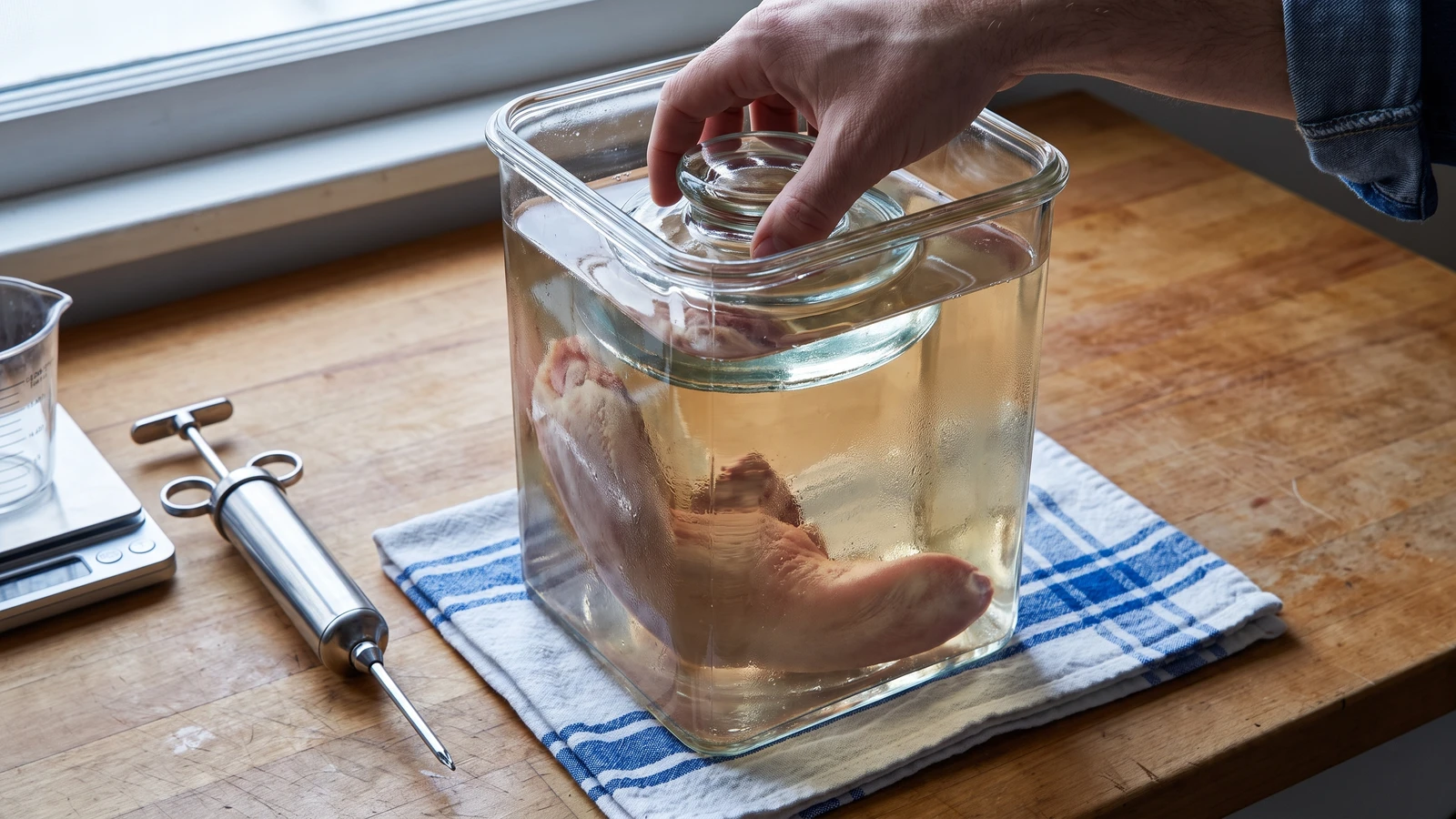
Set a small nonreactive rack in a narrow food-safe vessel, place the meat on it, and pour over the remaining chilled saumure. Weight the meat with a clean glass or ceramic weight so every surface remains submerged. Refrigerate between 1°C and 4°C, turning the meat once daily. Allow seven days for a medium ox tongue and eight days for the beef. If the liquid fails to cover, ça se rattrape: transfer everything to a narrower vessel or prepare another correctly scaled, fully chilled batch. Never top it up with plain water. If the brine becomes slimy, foamy, or sour-smelling, discard both meat and brine.
Lift out the cured meat, rinse it thoroughly, and soak it in fresh cold water for two hours. Change the water, then cook a thin trimming completely and taste it. If it remains fiercely salty, continue soaking and changing the water for up to six hours. The saumure cures the meat but does not cook it, so proceed with the full cooking method appropriate to the cut. Discard the used brine and sanitize the vessel and injector. Never reboil or reuse it. À table!
1 serving (about 115g)
Culinary guides, cultural storytelling, and the editorial depth that makes cooking meaningful.
Discover Culinary ExplorerChef Juliette
Beef shin, lean beef, and fowl begin in cold water and rise slowly toward a tremble. Skim before the boil, and you learn the quiet discipline that gives every clear French broth its backbone.
Chef Juliette
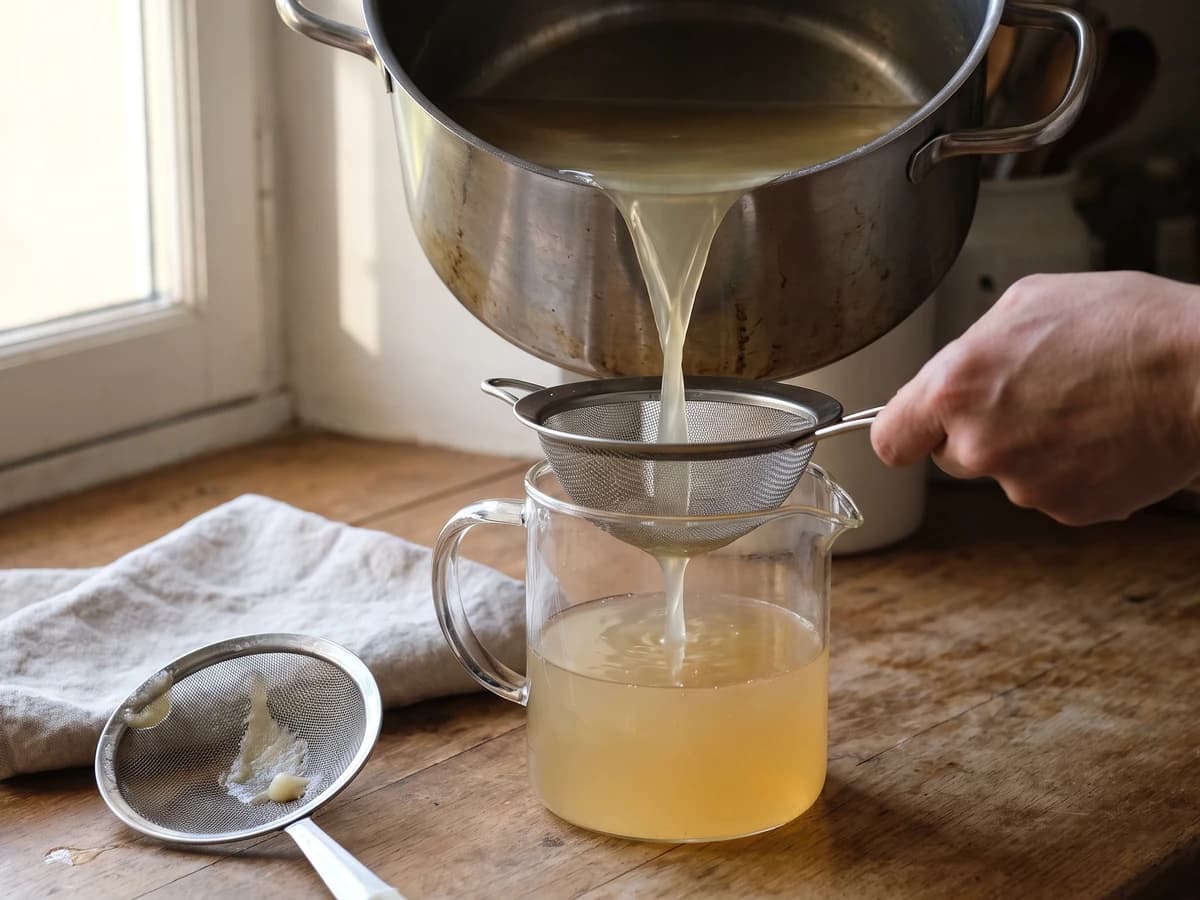
Break the veal bones small, then give them eight hours at a bare tremble. This pale, gelatinous fond becomes the quiet foundation beneath velouté, blanquette, and every sauce that must stay light.
Chef Juliette
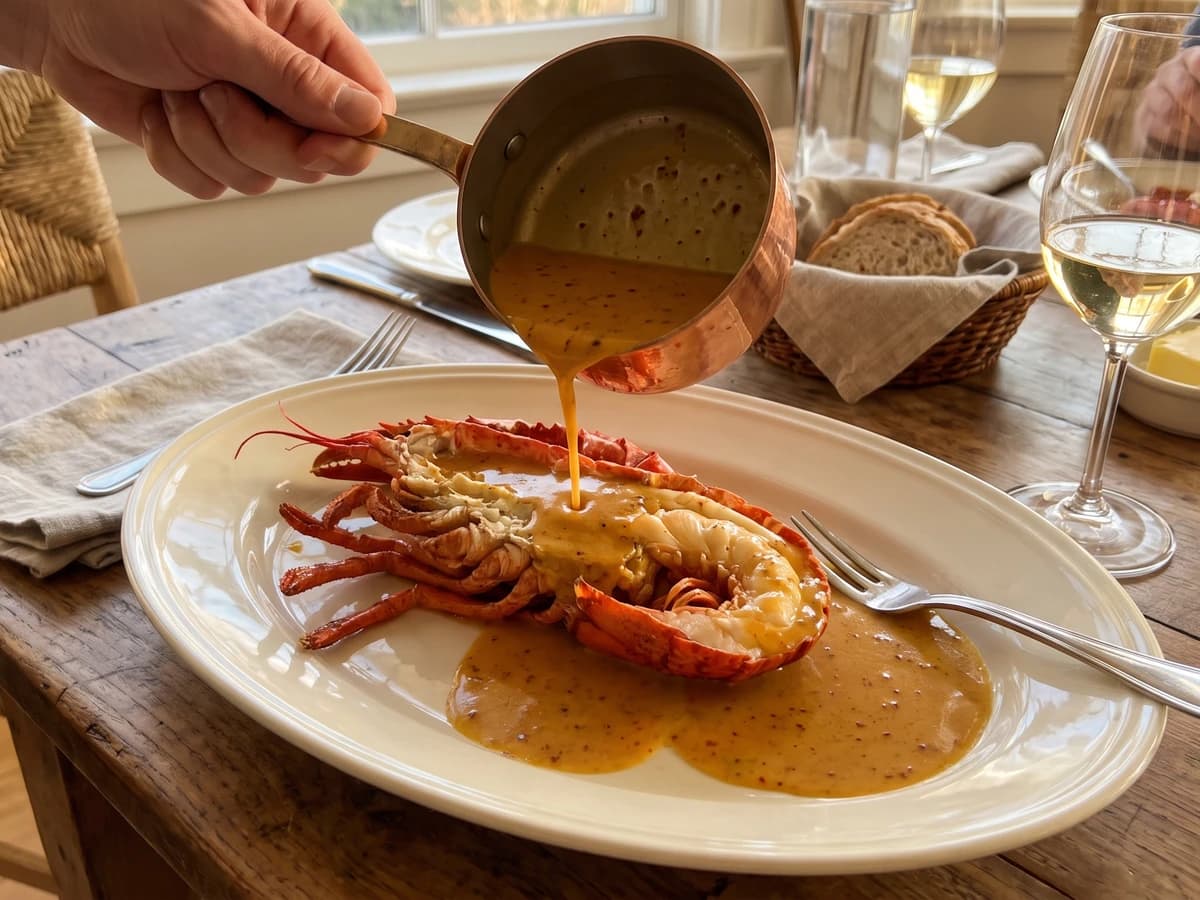
Sauce Orientale concentrates lobster-rich American Sauce with curry, then folds in cream away from the fire: a glossy, gently spiced derivative made for lobster, crayfish, and firm fish.
Chef Juliette
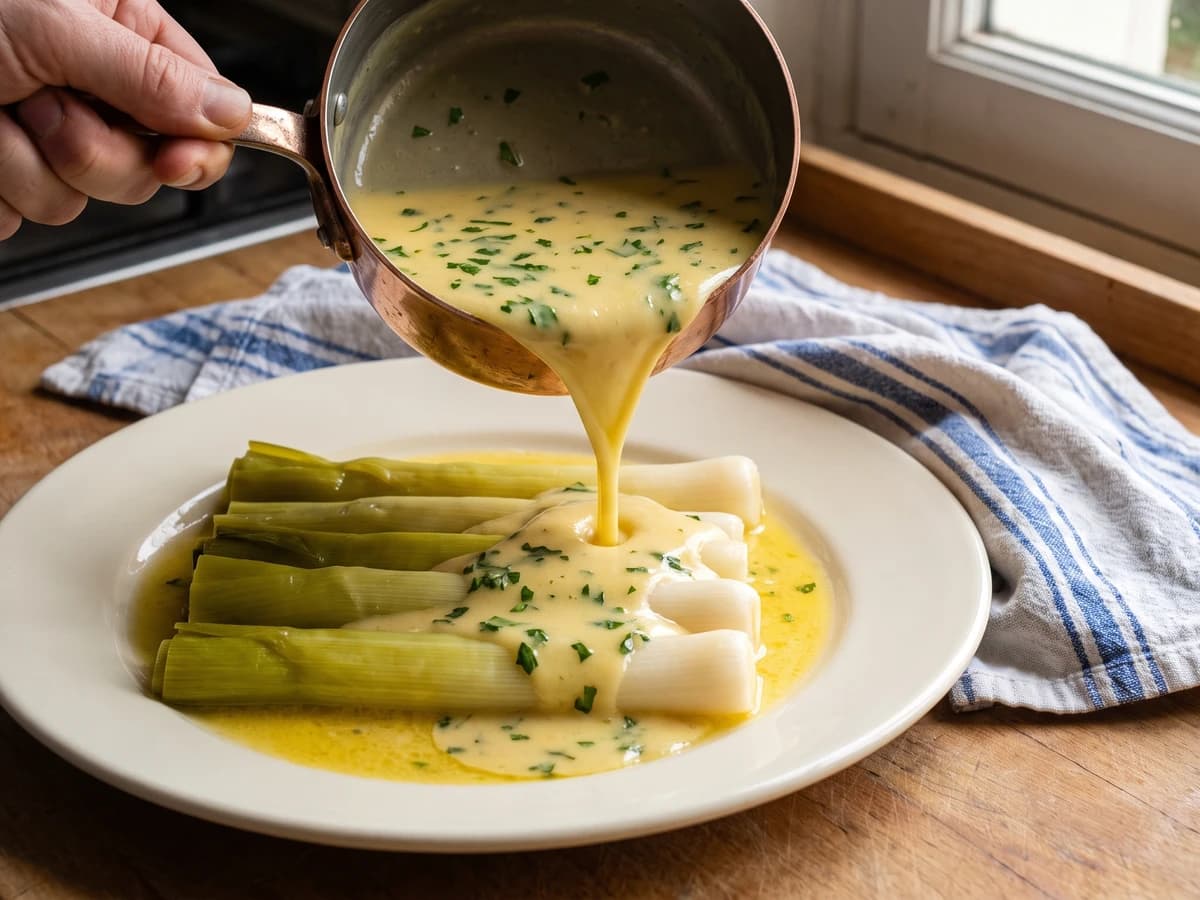
An old lesson in sauce families: Sauce Allemande takes mushroom liquor, then butter, lemon, and parsley, becoming a glossy Poulette for sheep's trotters, leeks, cauliflower, and anything needing gentle richness with a bright edge.