Chef Juliette
Ordinary or White Consommé
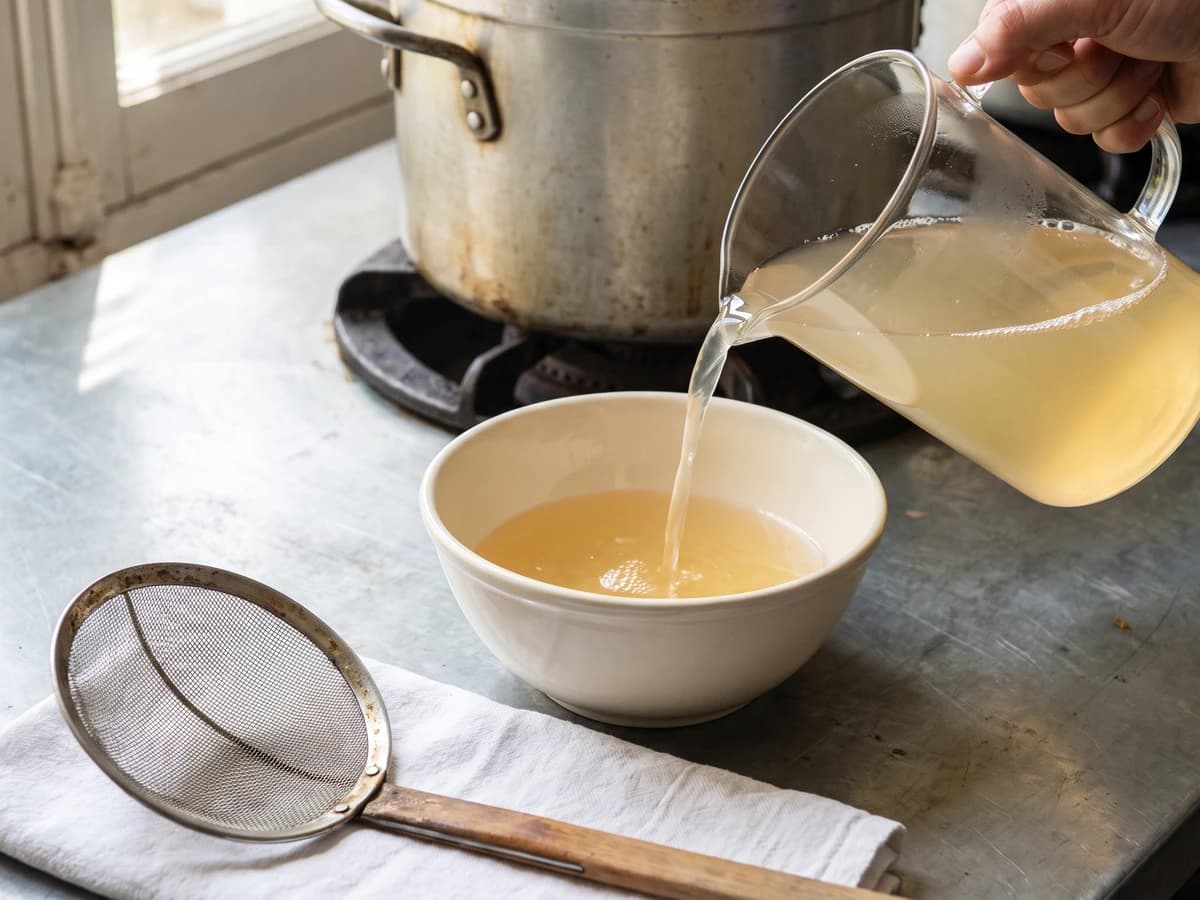
Beef shin, lean beef, and fowl begin in cold water and rise slowly toward a tremble. Skim before the boil, and you learn the quiet discipline that gives every clear French broth its backbone.
A cooking platform built around craft, culture, and the stories behind what we eat.
Created by Chef Juliette
Based on No. 169, Raw Marinade for Butcher’s Meat or Venison, from Le Guide Culinaire (1907) by Auguste Escoffier
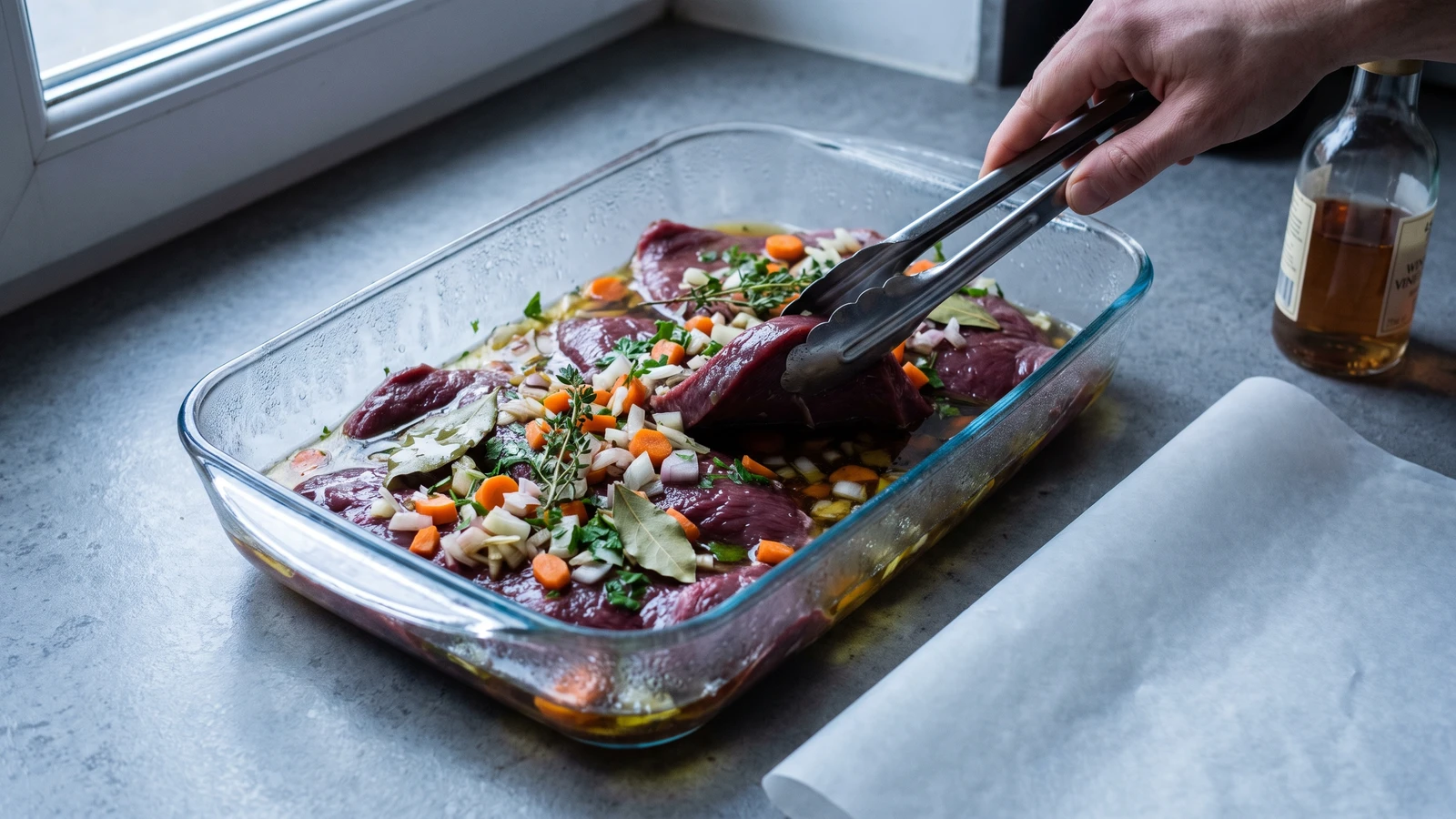
Marinade crue works quickly: salt and pepper meet a bed of minced aromatics, then oil and half as much vinegar season the meat while regular turning keeps every surface under equal discipline.
Marinade crue pour viandes de boucherie ou venaison (raw marinade for butcher’s meat or venison) teaches one plain thing: acid works from the outside in, so time decides the result. Oil carries carrot, onion, shallot, parsley, thyme, and bay across the meat; vinegar brings its brisk edge; salt begins the seasoning before heat ever arrives. This is an active marinade, meant to wake up a cut, not occupy it indefinitely.
The book’s kitchen needed no saucier, stockpot, or salamander for this entry. Its advantage was a cool larder, oil-paper, and enough hands to turn a joint three or four times each day. A snug nonreactive dish in the refrigerator, parchment against the surface, and a reminder on the door do the same work. The liquids here are scaled for one 2-pound cut, with the book’s exact proportion of two parts oil to one part vinegar. The larder and oil-paper are brigade scaffolding and can go; fresh preparation, the aromatic bed, the ratio, and the turning are the dish and must stay.
Three hours is enough for a cutlet or escalope. A small joint may take overnight, while four days is the absolute ceiling for a very large intact saddle or leg. The step that matters most is turning the meat on time, so every surface meets the aromatics and liquid without any one face sitting too long in vinegar.
Marinade crue belongs to the French garde-manger, the cold side of the classical kitchen, and to hunting tables in game country such as Sologne and the Ardennes, where venison and sturdy butcher’s cuts were prepared before roasting or braising. It stands beside marinade cuite, the cooked form, but its brisk raw vinegar makes it the faster treatment and demands closer timing. The method was never permission to disguise poor meat: it seasoned sound meat, tempered a strong game character, and altered the surface of dense cuts.
Quantity
2 lb (900 g)
trimmed of loose silverskin and patted dry
Quantity
2 teaspoons (10 ml / 12 g)
Quantity
1 teaspoon (5 ml / 2 g)
Quantity
2 medium, about 1 cup (240 ml / 130 g)
finely minced
Quantity
1 medium, about 1 cup (240 ml / 150 g)
finely minced
Quantity
2 medium, about ⅓ cup (80 ml / 50 g)
finely minced
Quantity
10
Quantity
4
Quantity
2
Quantity
1 cup (240 ml / 220 g)
Quantity
½ cup (120 ml / 120 g)
| Ingredient | Quantity |
|---|---|
| butcher’s meat or venison cutlets, escalopes, or one small intact jointtrimmed of loose silverskin and patted dry | 2 lb (900 g) |
| fine sea salt | 2 teaspoons (10 ml / 12 g) |
| freshly ground black pepper | 1 teaspoon (5 ml / 2 g) |
| carrotsfinely minced | 2 medium, about 1 cup (240 ml / 130 g) |
| yellow onionfinely minced | 1 medium, about 1 cup (240 ml / 150 g) |
| shallotsfinely minced | 2 medium, about ⅓ cup (80 ml / 50 g) |
| flat-leaf parsley stalks | 10 |
| thyme sprigs | 4 |
| bay leaves | 2 |
| mild-flavored oil | 1 cup (240 ml / 220 g) |
| wine vinegar | ½ cup (120 ml / 120 g) |
Rub the dry meat evenly with the salt and pepper on every face, including the narrow edges. Keep it cold while you prepare the aromatics. Salt belongs directly on the meat rather than stirred into the liquid, because the book’s sequence begins the seasoning before the cut ever reaches its bed.
Combine the minced carrots, onion, and shallots. Scatter half in the bottom of a nonreactive dish only slightly larger than the meat, then add half the parsley stalks, thyme, and bay. Lay the seasoned meat on top and cover it with the remaining vegetables and herbs. A close-fitting dish matters: too much empty space sends the marinade around the meat instead of over it.
Pour the oil copiously over the meat and aromatics, followed by the wine vinegar. Keep the two-to-one proportion exactly: 1 cup oil to ½ cup vinegar. Spoon the liquid over any exposed patches, then press a sheet of parchment close to the surface and cover the dish. The oil and vinegar will separate rather than form an emulsion. That is exactly right; the meat will meet both when it is turned.
Refrigerate the covered dish at 40°F (4°C) or colder. For cutlets or escalopes, marinate for 3 hours and turn at least once halfway through. For a small joint, allow 8 to 24 hours and turn it 3 or 4 times during each full day, bringing the vegetables from underneath over the newly exposed surface each time. Reserve anything approaching 4 days for a very large intact saddle or leg, and never exceed that limit. If you lose track and the outer flesh begins to look pale and soft, drain it immediately, scrape away the aromatics, pat it dry, and cook it now. Ça se rattrape when caught early; once the surface has become mushy, its texture cannot be restored.
Lift the meat from the dish, scrape away every piece of vegetable and herb, and pat the surface thoroughly dry without rinsing it. A wet surface cannot brown properly. Discard the used marinade and aromatics, which have been in contact with raw meat, and cook the cut promptly by the roasting, pan-frying, or braising method chosen for it. The marinade has done its work.
1 serving (about 400g)
Culinary guides, cultural storytelling, and the editorial depth that makes cooking meaningful.
Discover Culinary ExplorerChef Juliette
Beef shin, lean beef, and fowl begin in cold water and rise slowly toward a tremble. Skim before the boil, and you learn the quiet discipline that gives every clear French broth its backbone.
Chef Juliette
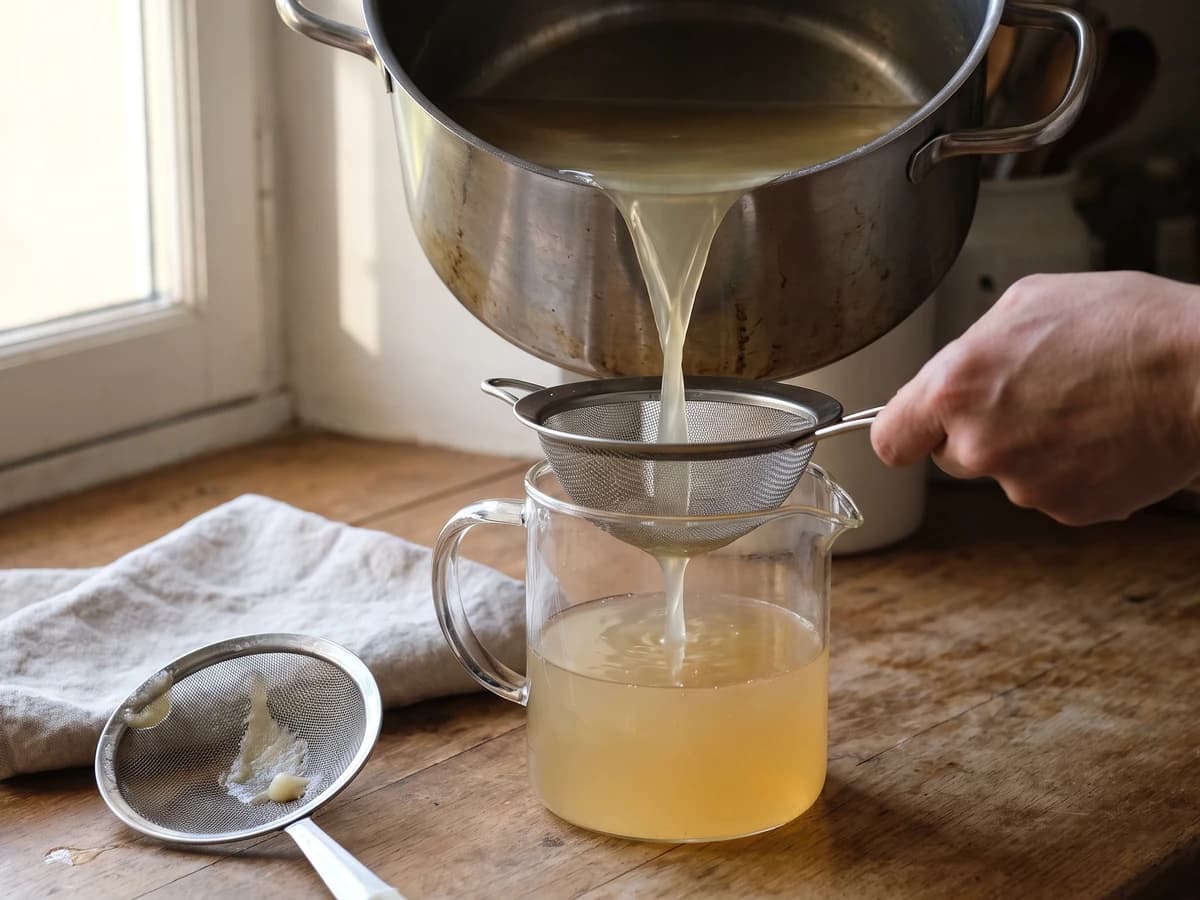
Break the veal bones small, then give them eight hours at a bare tremble. This pale, gelatinous fond becomes the quiet foundation beneath velouté, blanquette, and every sauce that must stay light.
Chef Juliette
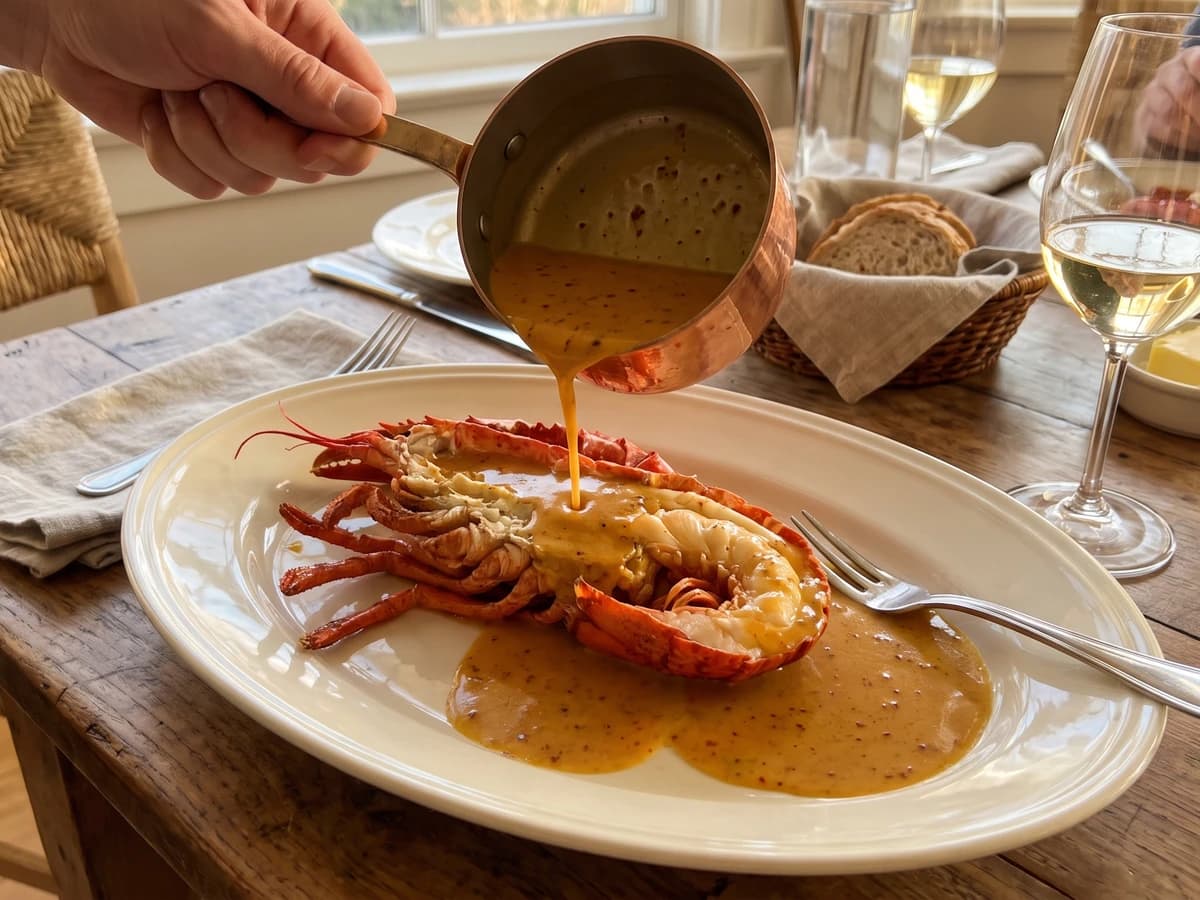
Sauce Orientale concentrates lobster-rich American Sauce with curry, then folds in cream away from the fire: a glossy, gently spiced derivative made for lobster, crayfish, and firm fish.
Chef Juliette
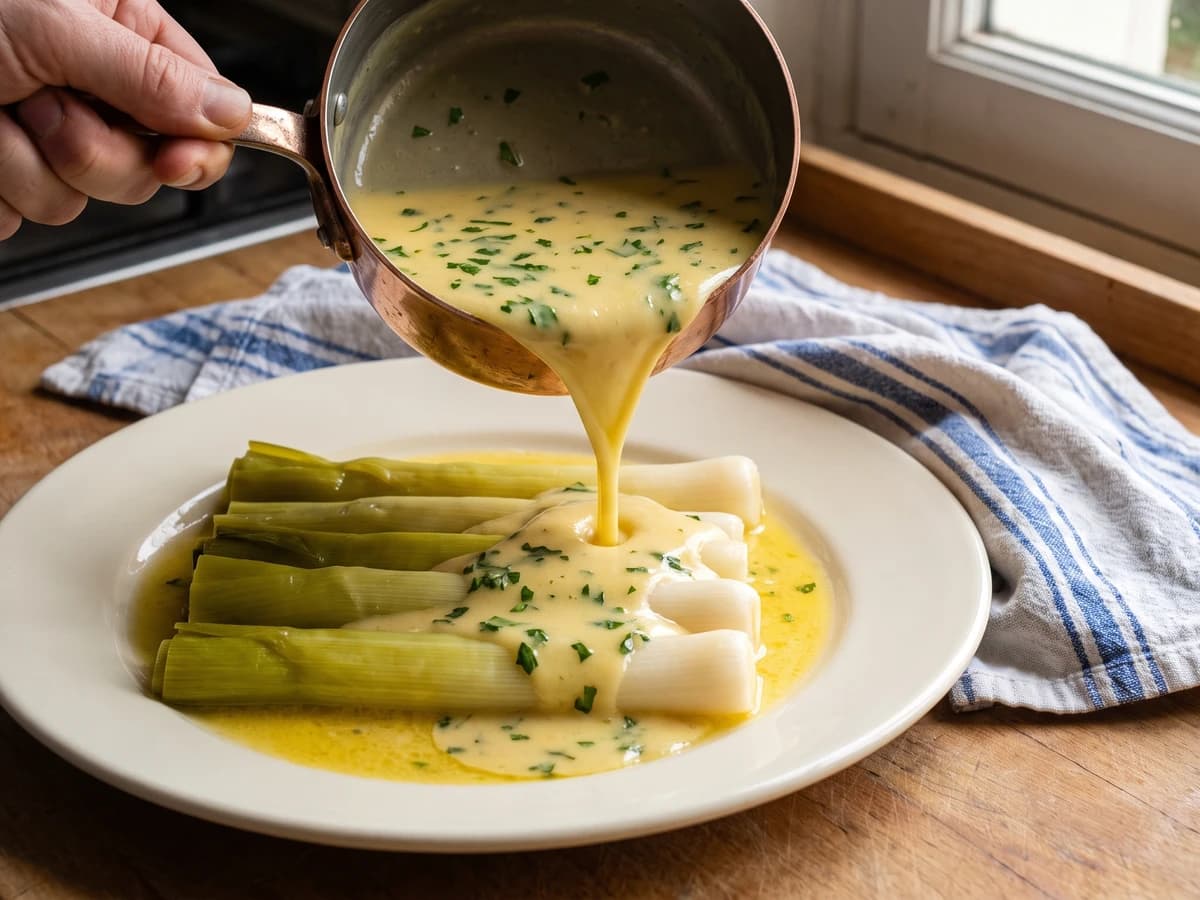
An old lesson in sauce families: Sauce Allemande takes mushroom liquor, then butter, lemon, and parsley, becoming a glossy Poulette for sheep's trotters, leeks, cauliflower, and anything needing gentle richness with a bright edge.