Chef Juliette
Ordinary or White Consommé
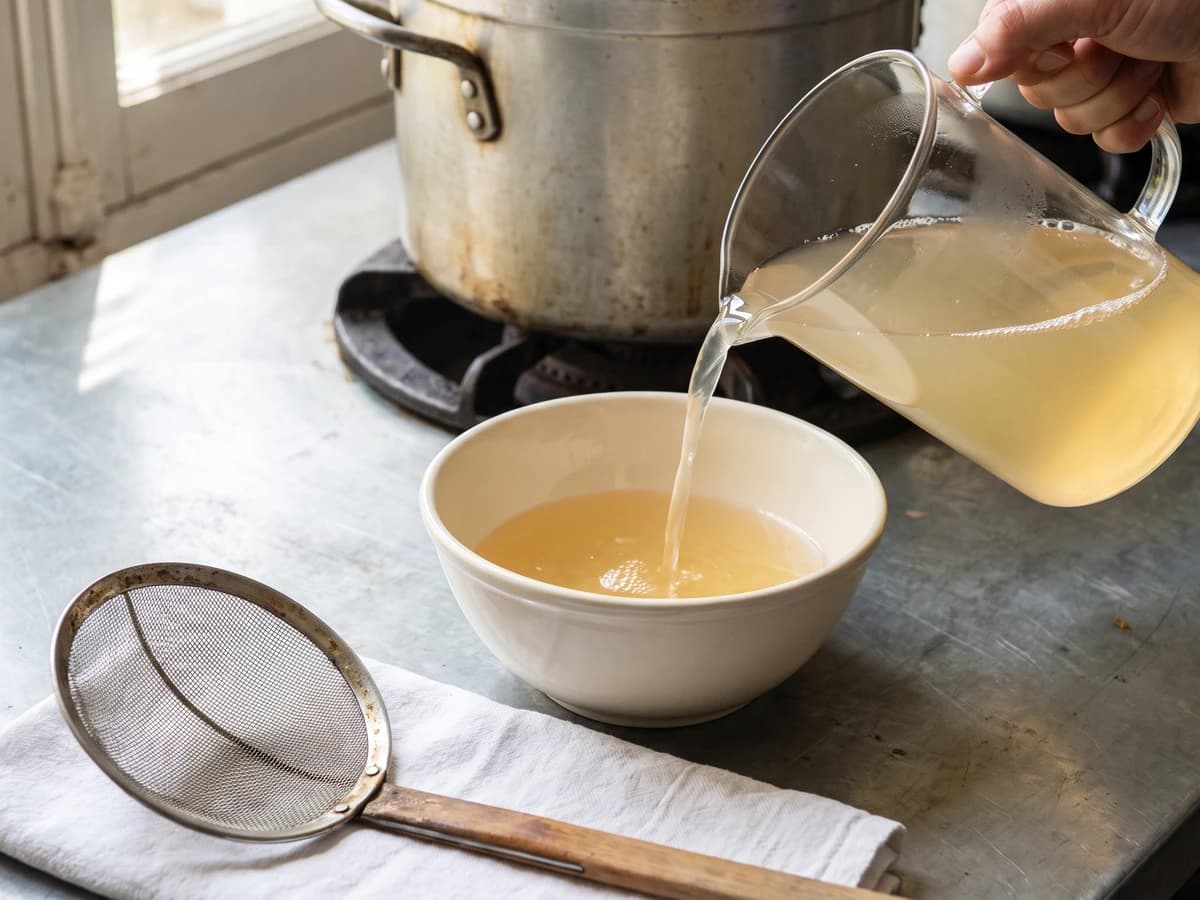
Beef shin, lean beef, and fowl begin in cold water and rise slowly toward a tremble. Skim before the boil, and you learn the quiet discipline that gives every clear French broth its backbone.
A cooking platform built around craft, culture, and the stories behind what we eat.
Created by Chef Juliette
Based on No. 166, Plain Court-bouillon, from Le Guide Culinaire (1907) by Auguste Escoffier
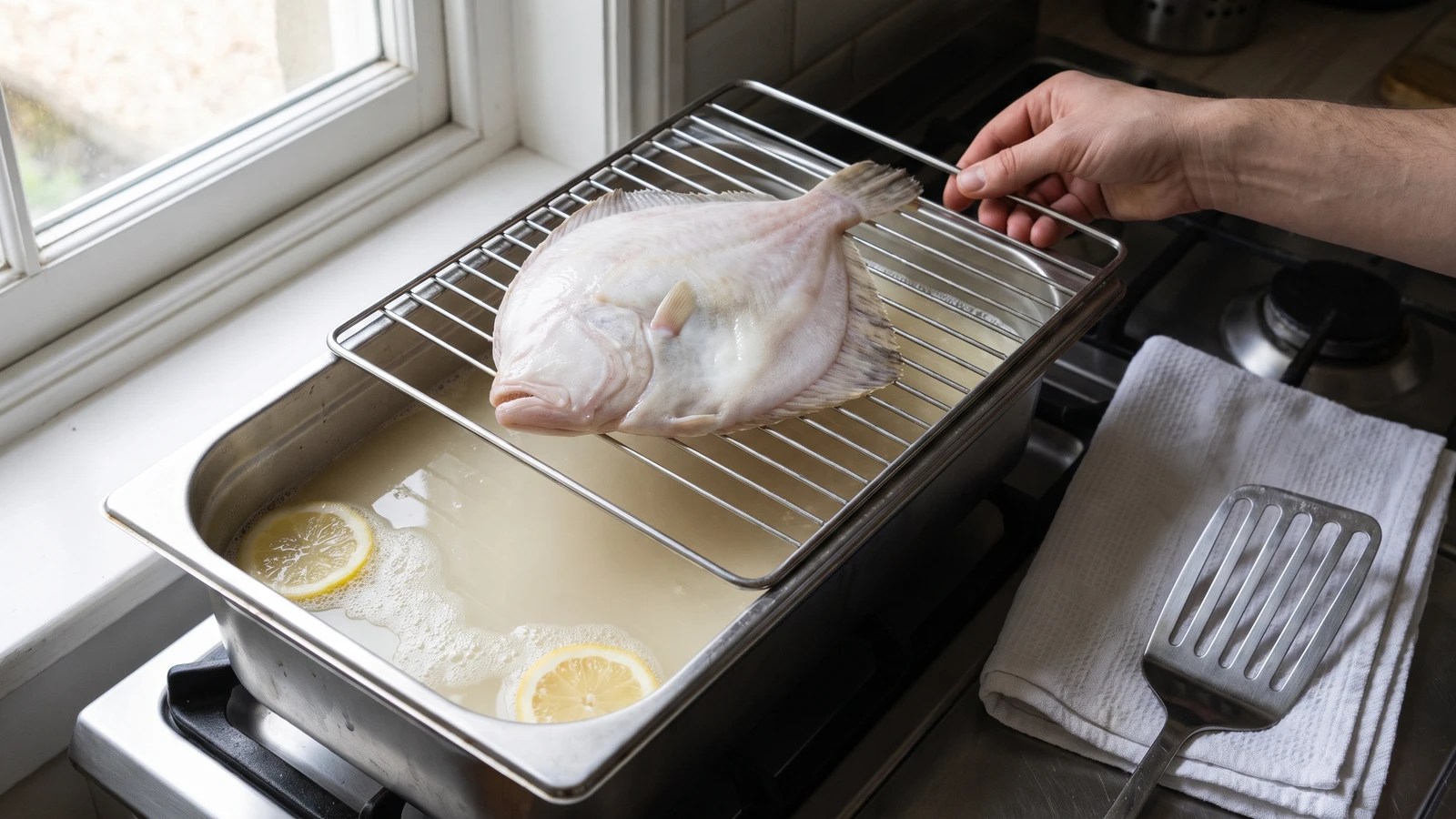
Cold fish, salted water, milk, and lemon rise together toward one quiet boil. Move the pan off heat at once, and whole turbot or brill finishes gently, pale, moist, and intact.
Court-bouillon simple (plain poaching liquor) teaches one true thing: the fish and its liquor must begin cold and warm together, very slowly. This is not a broth prepared first and poured around the fish. The gradual rise in temperature is the technique, keeping a large turbot or brill intact while the flesh cooks evenly from its thin edges to its thick backbone.
The old formula assumed a turbotière, the broad fish kettle made for turbot, and a range where the vessel could be pushed to the side of the fire. A snug fish poacher or a deep, stovetop-safe roasting pan gives one home cook the same control. Brigade quantities are scaffolding and can go, so this version begins with two quarts of water, enough for one modest whole fish in a close-fitting pan. The proportions, the cold start, and the move away from direct heat remain untouched because those steps are the dish.
The milk leaves the flesh pale and gentle, while the single peeled lemon slice per quart gives only a clean edge, never a lemon sauce. Watch for the first true boil. The moment it arrives, the pan comes off direct heat, and that single decision matters more than anything else you do.
Court-bouillon simple belongs to the classical fish kitchens supplied by the Channel and Atlantic ports, especially those of Normandy and Brittany, where turbot and brill arrived whole and were prized for pale, firm flesh. Most court-bouillons are aromatic, but this specialized version is nearly bare: milk, salted water, and one peeled lemon slice per quart, with no wine, roots, or herbs. It was never a stored stock; its work was the controlled ascent from cold around the fish, followed by gentle cooking at the side of the fire.
Quantity
8 cups (1.9 L / 1.9 kg)
Quantity
1 cup (240 ml / 245 g)
Quantity
4 1/4 teaspoons (scant 1 oz / 26 g)
Quantity
2 very thin slices
yellow zest and white pith removed
Quantity
1 fish, 2 1/2 to 3 pounds (1.1 to 1.4 kg)
cleaned, fins trimmed, gills and innards removed
| Ingredient | Quantity |
|---|---|
| cold water | 8 cups (1.9 L / 1.9 kg) |
| whole milk | 1 cup (240 ml / 245 g) |
| fine sea salt | 4 1/4 teaspoons (scant 1 oz / 26 g) |
| lemonyellow zest and white pith removed | 2 very thin slices |
| whole turbot or brillcleaned, fins trimmed, gills and innards removed | 1 fish, 2 1/2 to 3 pounds (1.1 to 1.4 kg) |
Choose the smallest stovetop-safe vessel in which the fish can lie flat without bending. Set the rack or perforated insert in place and test the fit before adding anything. The prepared quantity should cover the fish; if it does not, increase every part of the court-bouillon in proportion rather than topping it up with plain water. A close-fitting pan reduces the amount needed and replaces the brigade fish kettle honestly.
Pour the cold water and cold milk into the vessel, add the salt, and stir until no crystals remain on the bottom. Add the peeled lemon slices. Lower the chilled fish onto the rack, dark skin facing upward, while the court-bouillon is still completely cold. It must cover the fish; do not preheat even part of it, because fish and liquor rising together is the principle of this preparation.
Set the vessel over low to medium-low heat. If it spans two burners, keep both gentle and rotate the pan occasionally so one end does not race ahead. Allow 25 to 35 minutes for the court-bouillon to approach the boil. First you will see tiny bubbles around the rim, then a quiet movement across the surface. Do not stir, turn, or prod the fish. When the first true boil breaks the surface, lift the vessel off direct heat immediately. If it surges into a rolling boil, move it at once and leave the fish still. Ça se rattrape: a few seconds have not ruined it, but restarting the boil will.
Cover the vessel loosely and let the fish finish in the retained heat for 8 to 15 minutes, depending on its thickness. Test at the thickest part beside the backbone, not at the thin fin edge. The flesh is ready when it reaches 145°F (63°C), looks moist and opaque, and lifts from the bone with slight resistance. If it remains underdone after the liquor has cooled below a gentle quiver, return the pan to the lowest heat only until that quiver returns, then move it off again. Patience, not another boil.
Raise the rack slowly and let the fish drain over the vessel for 2 minutes. Transfer it to a warm serving platter with two broad spatulas, keeping its whole shape intact, then remove the skin if the chosen presentation requires it. Serve immediately. The court-bouillon has completed its single task and is neither a finished sauce nor a keeping stock, so discard it after cooking. À table!
1 serving (about 140g)
Culinary guides, cultural storytelling, and the editorial depth that makes cooking meaningful.
Discover Culinary ExplorerChef Juliette
Beef shin, lean beef, and fowl begin in cold water and rise slowly toward a tremble. Skim before the boil, and you learn the quiet discipline that gives every clear French broth its backbone.
Chef Juliette
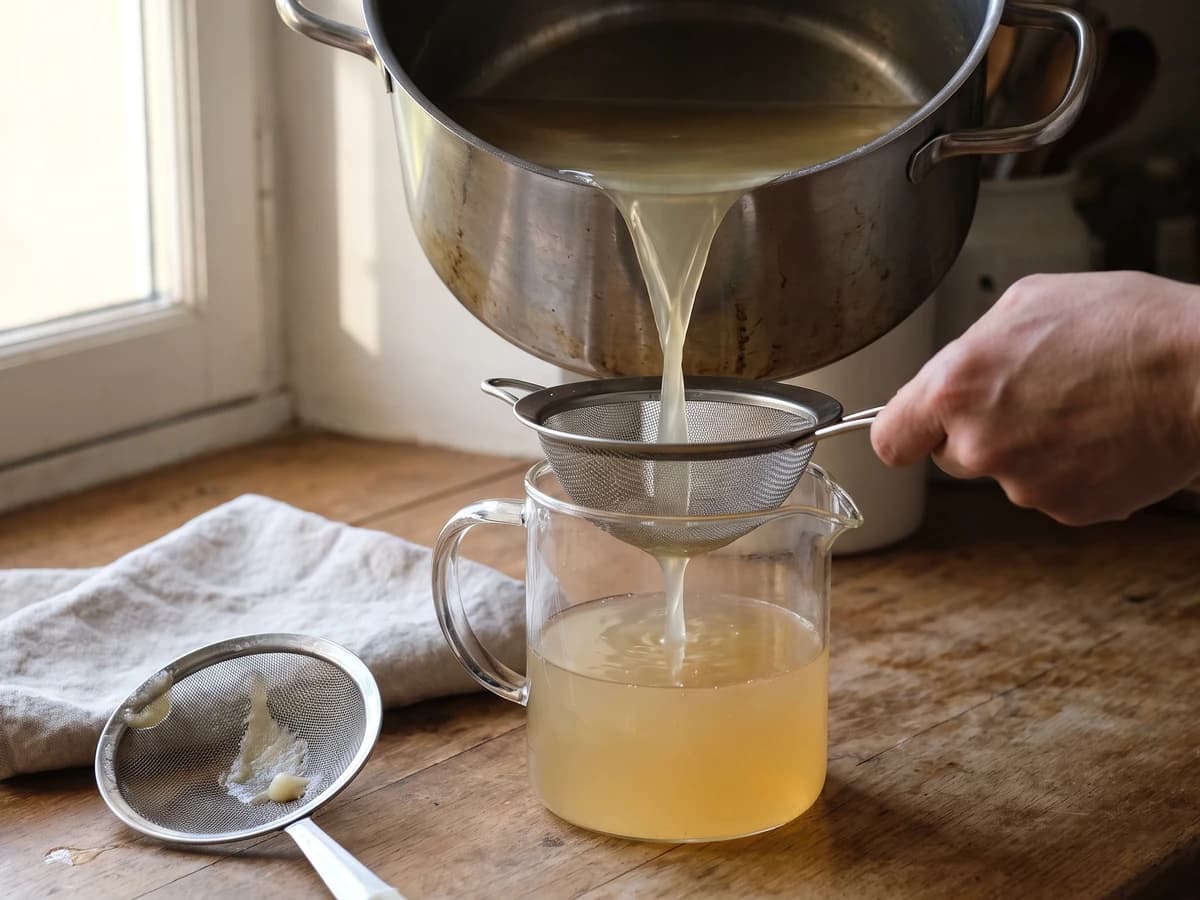
Break the veal bones small, then give them eight hours at a bare tremble. This pale, gelatinous fond becomes the quiet foundation beneath velouté, blanquette, and every sauce that must stay light.
Chef Juliette
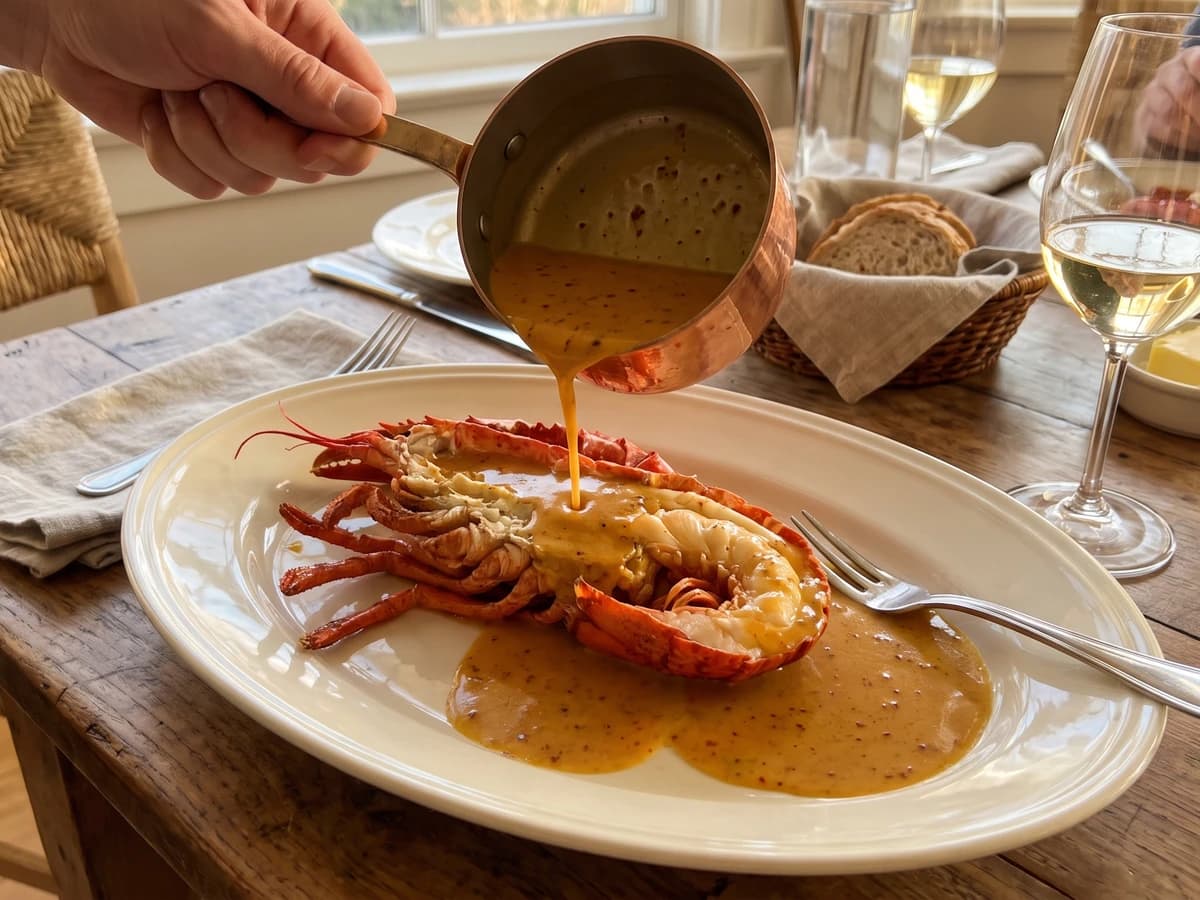
Sauce Orientale concentrates lobster-rich American Sauce with curry, then folds in cream away from the fire: a glossy, gently spiced derivative made for lobster, crayfish, and firm fish.
Chef Juliette
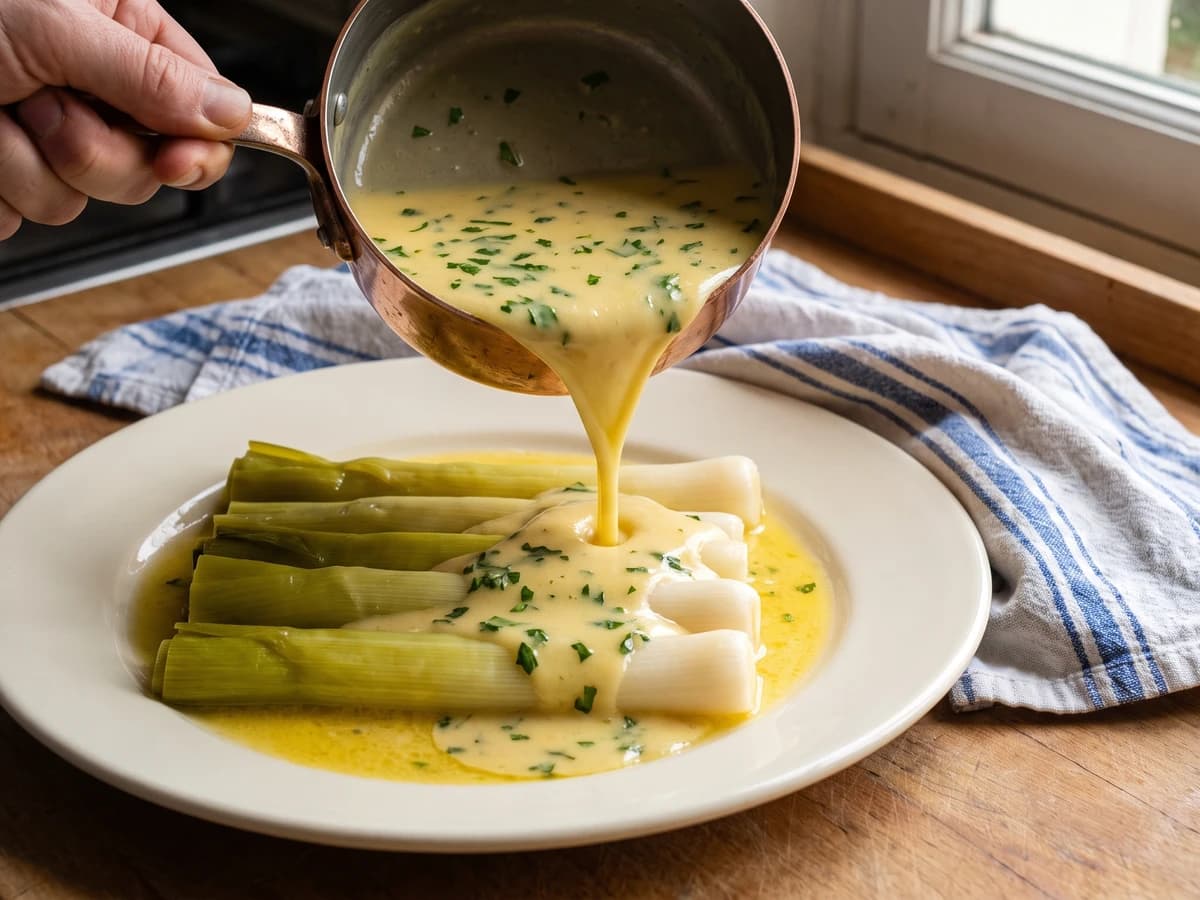
An old lesson in sauce families: Sauce Allemande takes mushroom liquor, then butter, lemon, and parsley, becoming a glossy Poulette for sheep's trotters, leeks, cauliflower, and anything needing gentle richness with a bright edge.