Chef Juliette
Ordinary or White Consommé
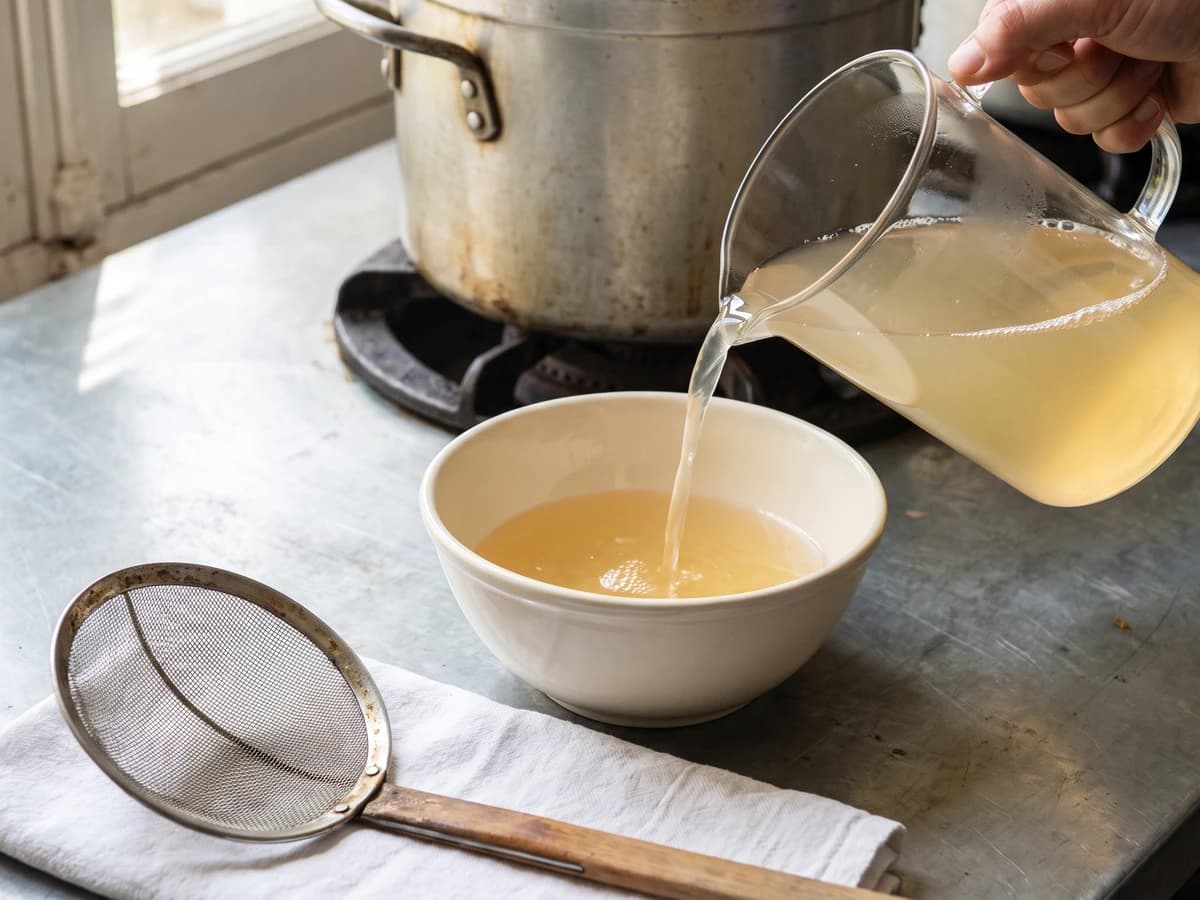
Beef shin, lean beef, and fowl begin in cold water and rise slowly toward a tremble. Skim before the boil, and you learn the quiet discipline that gives every clear French broth its backbone.
A cooking platform built around craft, culture, and the stories behind what we eat.
Created by Chef Juliette
Based on No. 16, Poultry Glaze, from Le Guide Culinaire (1907) by Auguste Escoffier
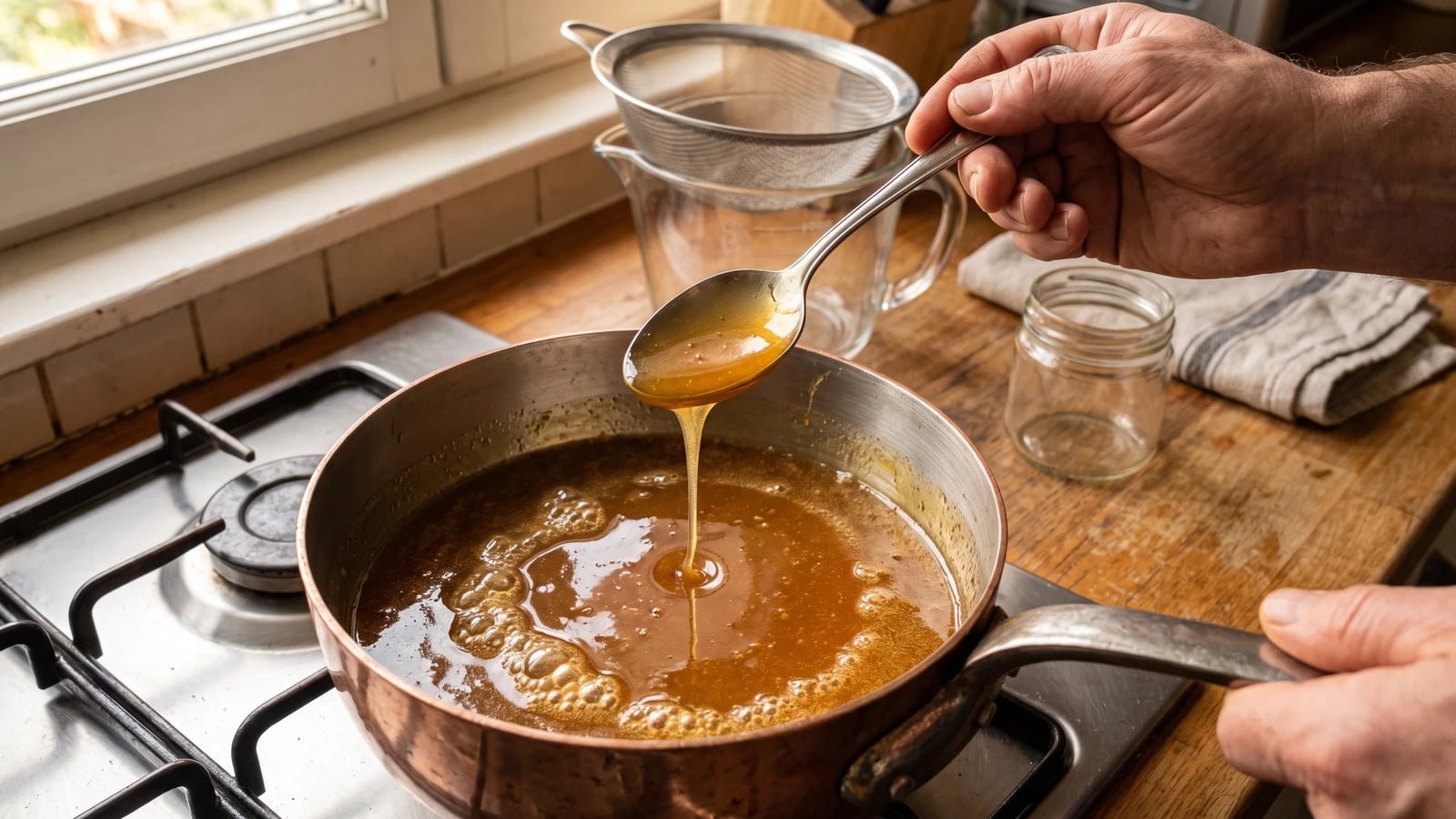
A clear poultry stock reduced slowly until it veneers a spoon, light enough for chicken, concentrated enough to turn a quick pan sauce into something deep, glossy, and unmistakably itself.
Glace de volaille (poultry glaze) teaches the pure grammar of reduction: water leaves, gelatin and flavor remain. The one true thing to know before touching the pan is that the fire must grow gentler as the stock grows stronger. A hard boil near the end can carry a pale, supple glaze from clear to scorched while you reach for a spoon.
The original recipe assumed a saucier on staff, Poultry Stock (No. 10) never far from the fire, an open hearth, and a procession of smaller stew pans with muslin at every transfer. At home, two saucepans and a fine-mesh sieve do the same work. We begin with two quarts and finish with about one cup because the brigade quantity and repeated pan changes are scaffolding; the careful straining, steadily waning heat, and spoon-veiling finish are the dish, and they stay. One cook, one stove, one evening.
Done properly, the glaze is lighter in color and gentler in flavor than Meat Glaze (No. 15), but it is not thin. It should lie over a spoon in an even translucent coat and set to a firm jelly in the cold. Watch the final reduction closely. That slow finish decides everything, and if you take it only a little too far, ça se rattrape.
Glace de volaille belongs not to one French province but to the saucier’s station in the classical kitchen, where concentrated stocks allowed many finished sauces to grow from one disciplined foundation. From the grand kitchen it passed naturally into cuisine bourgeoise, where a small jar could deepen a chicken jus or pan sauce without beginning a stockpot at supper time. Its lightness is often misunderstood: compared with Meat Glaze (No. 15), the flavor and color are gentler, but the finished glaze must still veneer a spoon and set firm in the cold.
Quantity
1 finished preparation, Meat Glaze (No. 15), not added
consulted for the reduction technique
Quantity
Up to ¼ cup (60 ml / 60 g)
only for rescuing an over-reduced glaze
| Ingredient | Quantity |
|---|---|
| unsalted Poultry Stockwell chilled | 2 quarts (1.9 L / about 2 kg) Poultry Stock (No. 10) |
| finished method referenceconsulted for the reduction technique | 1 finished preparation, Meat Glaze (No. 15), not added |
| hot water (optional)only for rescuing an over-reduced glaze | Up to ¼ cup (60 ml / 60 g) |
Lift every trace of firm fat from the chilled Poultry Stock (No. 10), then pass the stock through a fine-mesh sieve into a wide 4-quart saucepan. The finished Meat Glaze (No. 15) supplies the reduction method only; nothing from it enters this pan. The stock must be unsalted because the salt would concentrate along with the gelatin. If it already tastes fully seasoned, use it for another dish and begin with unsalted stock.
Bring the stock to a boil over medium heat, then adjust the fire to maintain a lively but controlled simmer. Leave the pan uncovered. Skim away foam or beads of fat as they gather, and wipe any sticky tide marks from the inner wall with a damp pastry brush so they cannot scorch. At this broad stage the water may leave briskly; continue until about 2 cups (475 ml / roughly 520 g) remain, usually 1½ to 2 hours.
Pass the reduced stock through the clean fine-mesh sieve into a 1½-to-2-quart saucepan, without pressing on anything caught by the mesh. The original kitchen moved the stock through a succession of smaller stew pans and strained at every change. One careful transfer is the honest home equivalent: the extra pans were brigade scaffolding, while removing impurities and narrowing the pan for the final reduction remain essential.
Return the smaller pan to moderate-low heat and let the glaze reduce slowly, lowering the heat again as it concentrates. Watch it continuously once it approaches 1 cup (240 ml): the bubbles will become rounder and more deliberate, and the surface will take on a clear amber gloss. Dip in a metal spoon. The Glace de Volaille is ready when it evenly veneers the spoon in a thin, translucent coat rather than running off like stock or clinging like caramel. If it turns tacky or begins drawing threads but still tastes clean, remove it from the heat and whisk in hot water 1 tablespoon (15 ml / 15 g) at a time until the light coating returns. Ça se rattrape. If it smells burnt, pour the clean upper portion into another pan without scraping the bottom; a scorched flavor cannot be repaired.
Pass the finished glaze through the clean sieve into a heatproof measuring jug. Set the jug in an ice-water bath and stir until the glaze is cool, then transfer it to a clean covered container and refrigerate within 2 hours. It will set into a firm, amber jelly in the cold. Portion it by the tablespoon for freezing, so a chicken pan sauce needs only one small piece rather than the whole batch.
1 serving (about 18g)
Culinary guides, cultural storytelling, and the editorial depth that makes cooking meaningful.
Discover Culinary ExplorerChef Juliette
Beef shin, lean beef, and fowl begin in cold water and rise slowly toward a tremble. Skim before the boil, and you learn the quiet discipline that gives every clear French broth its backbone.
Chef Juliette
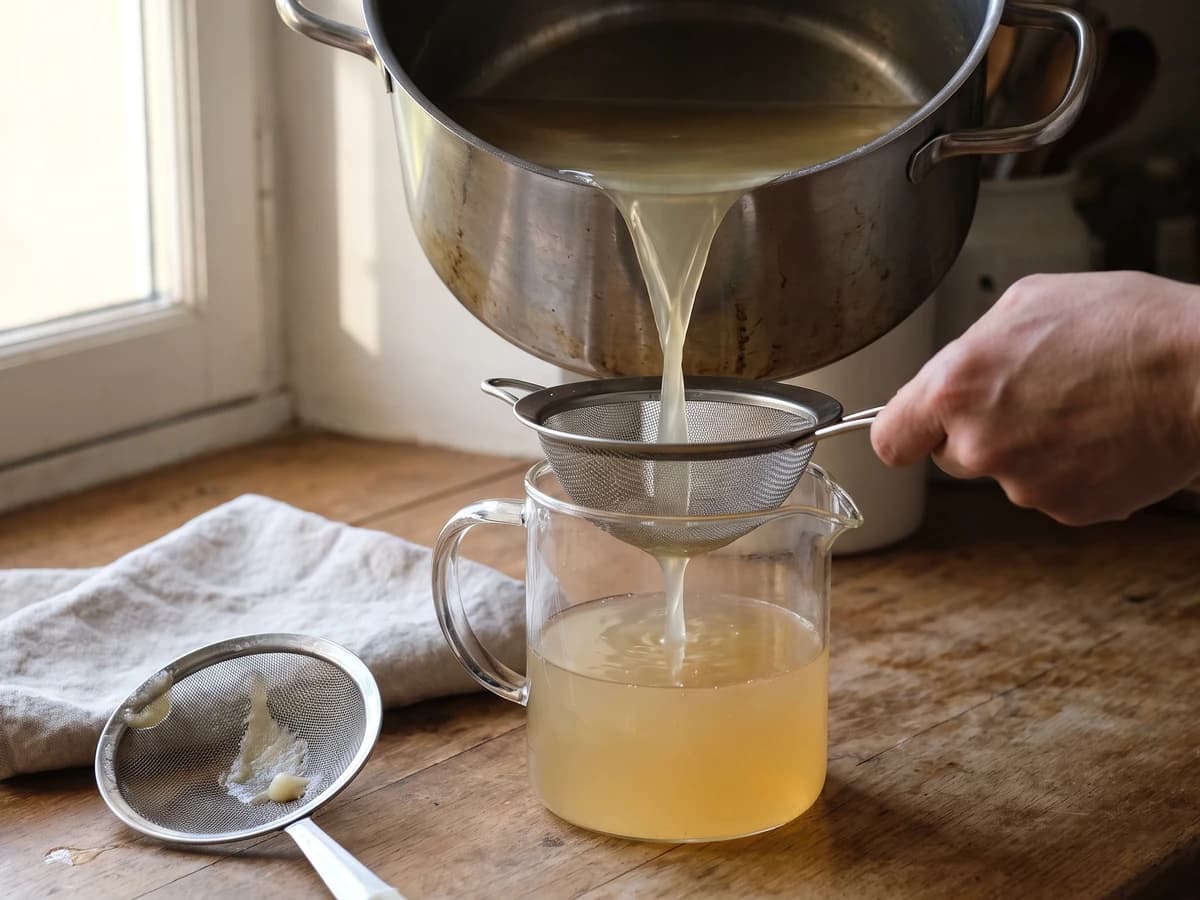
Break the veal bones small, then give them eight hours at a bare tremble. This pale, gelatinous fond becomes the quiet foundation beneath velouté, blanquette, and every sauce that must stay light.
Chef Juliette
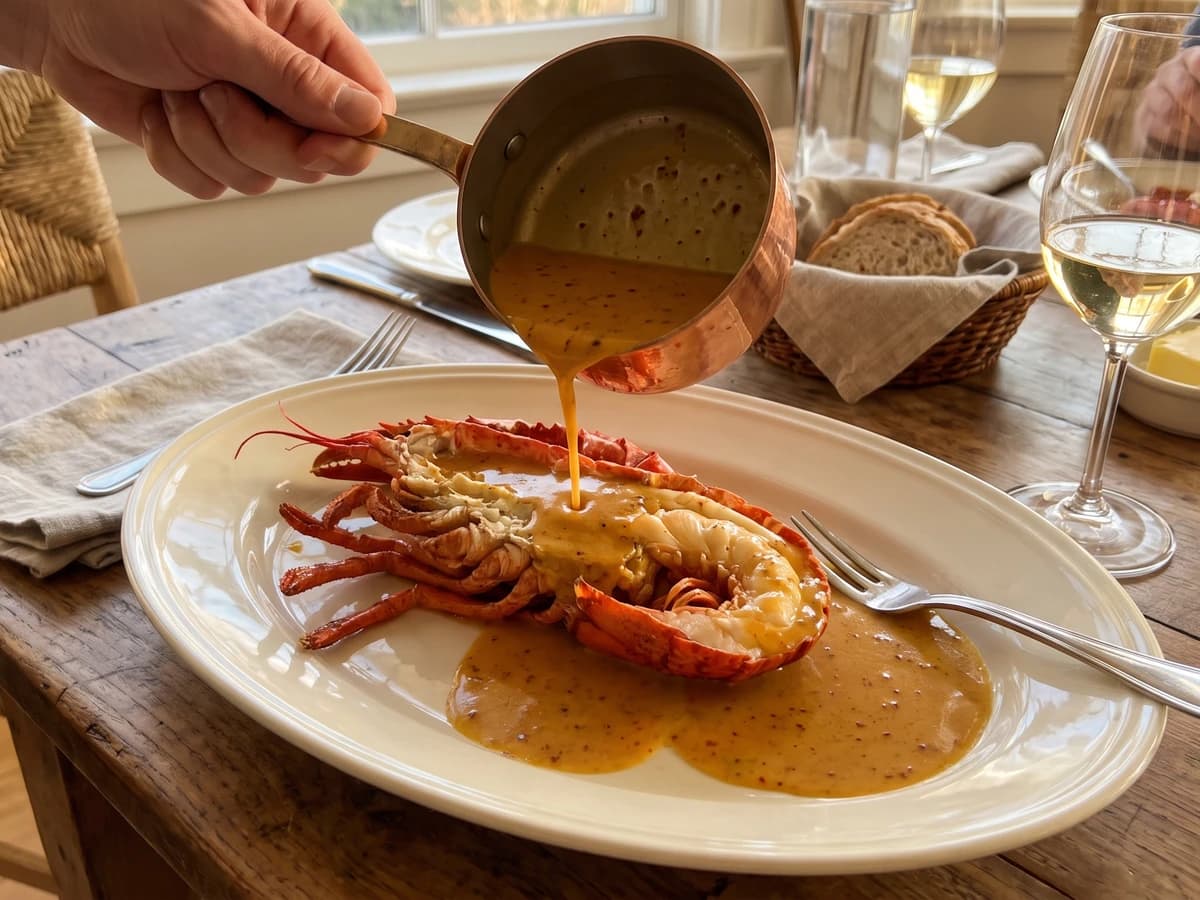
Sauce Orientale concentrates lobster-rich American Sauce with curry, then folds in cream away from the fire: a glossy, gently spiced derivative made for lobster, crayfish, and firm fish.
Chef Juliette
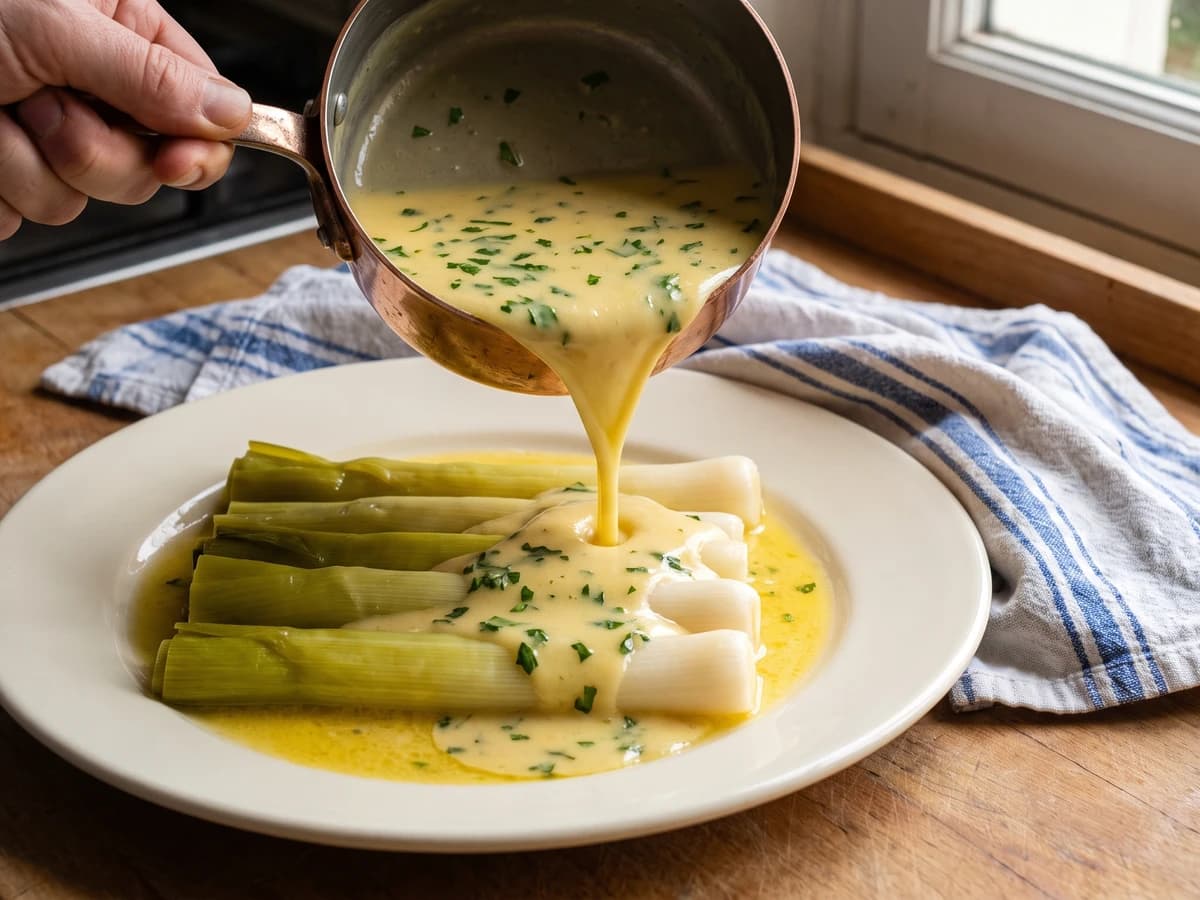
An old lesson in sauce families: Sauce Allemande takes mushroom liquor, then butter, lemon, and parsley, becoming a glossy Poulette for sheep's trotters, leeks, cauliflower, and anything needing gentle richness with a bright edge.