Chef Juliette
Ordinary or White Consommé
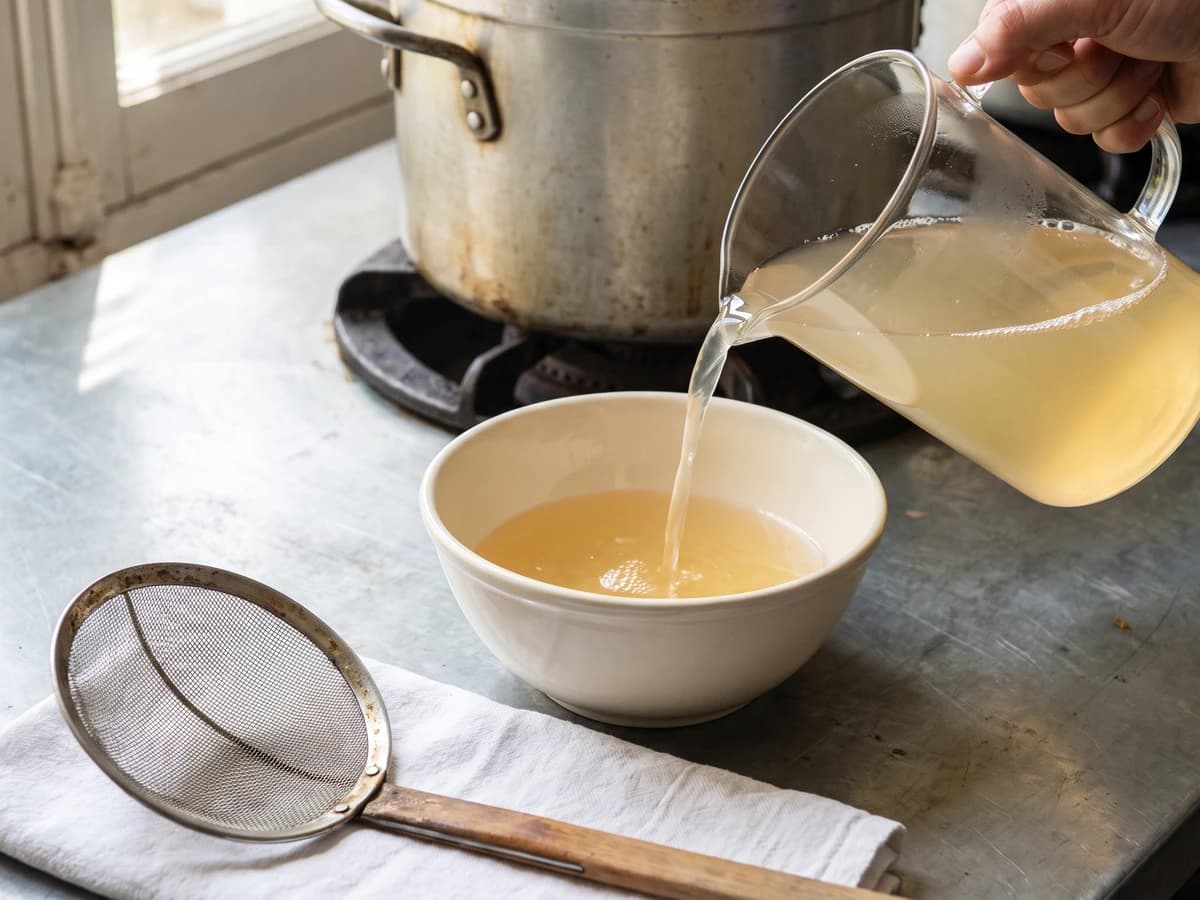
Beef shin, lean beef, and fowl begin in cold water and rise slowly toward a tremble. Skim before the boil, and you learn the quiet discipline that gives every clear French broth its backbone.
A cooking platform built around craft, culture, and the stories behind what we eat.
Created by Chef Juliette
Based on No. 158, Ordinary Aspics, from Le Guide Culinaire (1907) by Auguste Escoffier
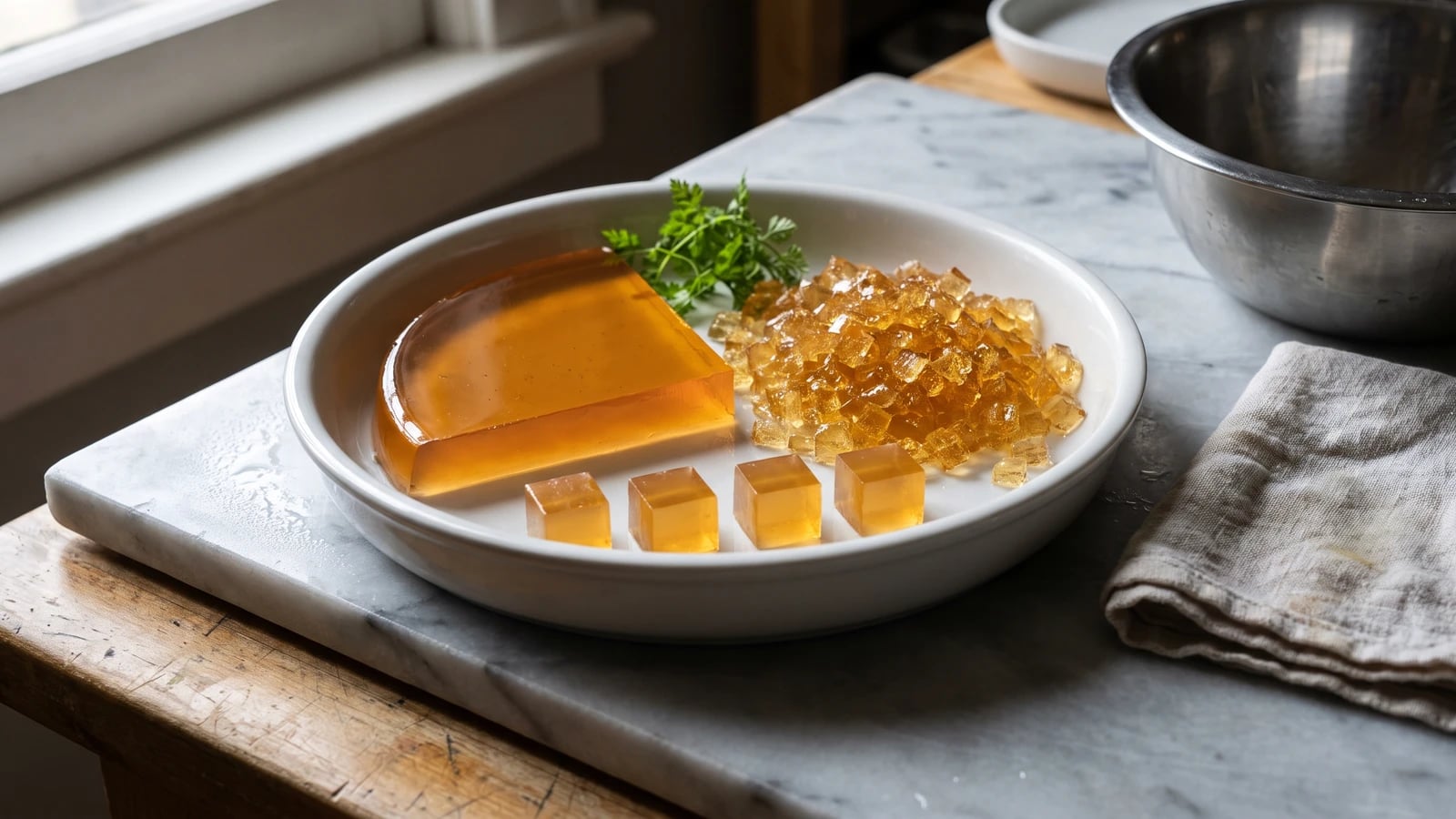
Clear amber gelée ordinaire carries the classical cold table on natural gelatin from veal, calf's feet, beef, and pork rind, then a patient clarification that leaves flavour intact and every suspended morsel visible.
Gelée ordinaire (ordinary aspic) teaches one true thing before you touch the pan: clarity begins in the stockpot, not in the clarification. A slow rise to the boil, exact skimming, and six hours at the gentlest simmer give you amber depth without beating fat and sediment into the liquor. The beef-and-egg-white clarification can polish a careful stock beautifully, but it shouldn't be asked to repair careless boiling.
The original assumed a saucier on staff, a stock never off the fire, a mortar for pounding the clarification meat, and enough floor space to suspend a serviette over an overturned stool. A salamander has no work here. For one cook, the honest equivalents are a large stainless-steel stockpot, a small food processor, and damp muslin nested in a fine sieve. The stool arrangement and hand-pounding were brigade scaffolding, so they can go; the collagen-rich meats, long simmer, cold degreasing, clarification raft, and patient filtration are the dish and must stay. The quantities are halved to make about two quarts while preserving the book's proportions. One cook, one stove, one long evening of attention, then the refrigerator finishes the set.
When it is right, the gelée is transparent and the colour of fine amber, with a clean savour and enough body to tremble, slice, or glaze without becoming rubbery. Keep the first rise to the simmer gentle and skim until the surface is completely clean. That is the step that decides everything afterward.
Gelée ordinaire belongs to the French garde-manger, the cold pantry of grand houses, traiteurs, and bourgeois tables, where clear aspic protected and glazed cold meats, fish, eggs, and vegetables. It traveled from practical cold-table work into the grand classical repertoire, but “ordinary” never meant inferior; it named the dependable foundation beneath decorated aspics. Its natural set came from calf's feet, veal knuckle, bones, and pork rind, with added gelatin reserved for correcting a stock that proved too weak.
Quantity
2 pounds (910 g)
tied securely
Quantity
1½ pounds (680 g)
tied securely
Quantity
1½ pounds (680 g)
well broken
Quantity
1½ feet (3 split half-feet), using Blanchings (No. 273)
boned, blanched, and cooled
Quantity
4 ounces (115 g), using Blanchings (No. 273)
all fat removed, blanched, and cooled
Quantity
4 quarts (3.8 L / 3.8 kg), with Ordinary or White Consommé (No. 1)
Quantity
2¼ teaspoons (11 ml / 14 g)
Quantity
4 ounces (115 g)
sliced
Quantity
3 ounces (85 g)
sliced
Quantity
1 ounce (30 g)
sliced and well washed
Quantity
½ large stalk (about 1 ounce / 30 g)
sliced
Quantity
1 large bouquet
Quantity
1 pound (455 g)
minced and thoroughly chilled
Quantity
1 tablespoon (15 ml / 15 g)
about half the white of a large egg
Quantity
1 tablespoon (15 ml / 3 g)
chopped
Quantity
2 teaspoons (10 ml / 2 g)
chopped
Quantity
¼ teaspoon (1 ml / 1 g)
Quantity
1 to 2 leaves (2 to 4 g)
soaked in cold water
Quantity
scant 1 cup (230 ml / 230 g)
choose this or the non-liqueur wine option
Quantity
1¼ cups (285 ml / 285 g)
choose this or the fortified wine option
| Ingredient | Quantity |
|---|---|
| strung knuckle of vealtied securely | 2 pounds (910 g) |
| strung knuckle of beeftied securely | 1½ pounds (680 g) |
| veal boneswell broken | 1½ pounds (680 g) |
| calf's feetboned, blanched, and cooled | 1½ feet (3 split half-feet), using Blanchings (No. 273) |
| fresh pork rindall fat removed, blanched, and cooled | 4 ounces (115 g), using Blanchings (No. 273) |
| cold water | 4 quarts (3.8 L / 3.8 kg), with Ordinary or White Consommé (No. 1) |
| fine salt | 2¼ teaspoons (11 ml / 14 g) |
| carrotssliced | 4 ounces (115 g) |
| onionssliced | 3 ounces (85 g) |
| leeksliced and well washed | 1 ounce (30 g) |
| celerysliced | ½ large stalk (about 1 ounce / 30 g) |
| bouquet garni of parsley stems, thyme, and bay leaf | 1 large bouquet |
| very lean beefminced and thoroughly chilled | 1 pound (455 g) |
| egg whiteabout half the white of a large egg | 1 tablespoon (15 ml / 15 g) |
| fresh chervilchopped | 1 tablespoon (15 ml / 3 g) |
| fresh tarragonchopped | 2 teaspoons (10 ml / 2 g) |
| fresh lemon juice | ¼ teaspoon (1 ml / 1 g) |
| gelatin leaves (optional)soaked in cold water | 1 to 2 leaves (2 to 4 g) |
| clear dry Sherry, Marsala, or Madeirachoose this or the non-liqueur wine option | scant 1 cup (230 ml / 230 g) |
| clear Champagne, hock, or another dry winechoose this or the fortified wine option | 1¼ cups (285 ml / 285 g) |
Have the butcher break the veal bones, tie the two knuckles, and split and bone the calf's feet. Prepare the calf's feet through Blanchings (No. 273), then cool and drain them thoroughly. Remove every trace of fat from the pork rind, prepare it separately through Blanchings (No. 273), and drain it. These treatments clean the strongly gelatinous pieces without replacing their flavour or their setting power.
Scrub a 10 to 12-quart stainless-steel stockpot until it is spotless. Arrange the veal knuckle, beef knuckle, broken bones, prepared feet, and rind inside, then add the cold water. Bring it up slowly over moderate heat, skimming according to Ordinary or White Consommé (No. 1) until no fresh grey foam rises and the liquid beneath looks clean. Don't let it race to the boil. Agitation disperses grease and scum through the stock, which makes the later clarification work harder.
Only after the stock is thoroughly skimmed, add the salt and move the pot to the gentlest burner. Hold it at a quiet simmer for four hours, with an occasional bubble breaking the surface but no rolling movement. Skim any stray foam or fat without stirring the contents. If the pot boils hard, lower the heat at once and add a small ladleful of cold water around the edge to calm it; don't scrape the bottom. Ça se rattrape, provided you stop the agitation early.
Lift out the knuckles and other large pieces carefully with tongs, keeping the sediment on the pot floor undisturbed. Skim away the exposed fat, then add the carrots, onions, leek, celery, and bouquet garni. Return the pot to the same quiet simmer for two hours. The vegetables go in only now because six hours would drain them of freshness and muddy the clean meat stock.
Ladle the stock through a fine sieve into a scrupulously clean, heatproof basin, leaving the last sediment-heavy cupful behind. Set the basin in an ice-water bath and stir the bath around it until the stock cools rapidly, taking care that no water enters. Refrigerate uncovered until fully cold, then cover once cold and leave until the fat is solid and the stock has taken on whatever natural set it possesses.
Lift off the solid fat and wipe the surface with a clean piece of damp kitchen paper. Warm the basin just enough to loosen the gelée around its edge, then pour it gently into a clean saucepan, stopping before the dark deposit at the bottom follows. Chill a spoonful on a cold saucer for 10 to 15 minutes. It should form a fairly firm jelly that trembles when nudged. If it remains loose, squeeze dry one soaked gelatin leaf, dissolve it in 1 cup of warm stock, return it to the pot, and test again before adding the second. Keep the addition light; rubbery aspic has missed the point.
Warm the decanted gelée only until liquid, then let it cool to room temperature. Pulse the chilled lean beef and egg white in a small food processor until thoroughly combined and sticky, replacing the original mortar work without changing its purpose. Mix in the chervil, tarragon, and lemon juice, then stir this clarification mixture into the liquid stock until evenly dispersed.
Set the saucepan over moderate heat and stir continuously with a flat wooden spatula, reaching across the floor and into the corners, until the liquid approaches its first boil and the beef-and-egg mixture gathers into a floating raft. Stop stirring immediately, lower the heat, and let the gelée simmer at the faintest tremble for 30 minutes. A hard boil tears the raft apart. If that happens, remove the pan from the heat, leave it untouched for 10 minutes, then filter gently in the next step; loose curds can be caught, so don't throw out the stock.
Skim away any beads of grease. Rinse a clean linen cloth or several layers of muslin in cold water, wring it thoroughly, and nest it inside a fine sieve over a spotless bowl. Ladle the gelée through without pushing, pressing, or wringing the raft. Examine a spoonful against the light. If it is not transparent, rinse and re-dampen the cloth, clean the receiving bowl, and pass the liquid through again, repeating as necessary. This is the source's repeated serviette filtration translated to a home counter, and it remains the surest rescue for a mildly cloudy gelée.
Let the clear gelée become tepid before adding the wine, so its aroma remains distinct. Measure the clarified liquid and preserve the source ratio: for each quart, add about ½ cup (115 ml / 115 g) of clear Sherry, Marsala, or Madeira, or a generous ½ cup (140 ml / 140 g) of clear Champagne, hock, or another dry wine. Use wine with no sediment and a taste worth concentrating. Stir gently, then taste for salt without whisking air into the liquid.
Pour the finished gelée into clean shallow containers, cover, and refrigerate for at least four hours, preferably overnight. It is ready when clear, amber, and firm enough to cut while still trembling under the spoon. Use it cold for glazing meats, fish, eggs, terrines, and vegetables, or cut it into neat cubes for a cold platter. To use it as a liquid glaze, remelt only what you need over very gentle heat and never boil it.
1 serving (about 240g)
Culinary guides, cultural storytelling, and the editorial depth that makes cooking meaningful.
Discover Culinary ExplorerChef Juliette
Beef shin, lean beef, and fowl begin in cold water and rise slowly toward a tremble. Skim before the boil, and you learn the quiet discipline that gives every clear French broth its backbone.
Chef Juliette
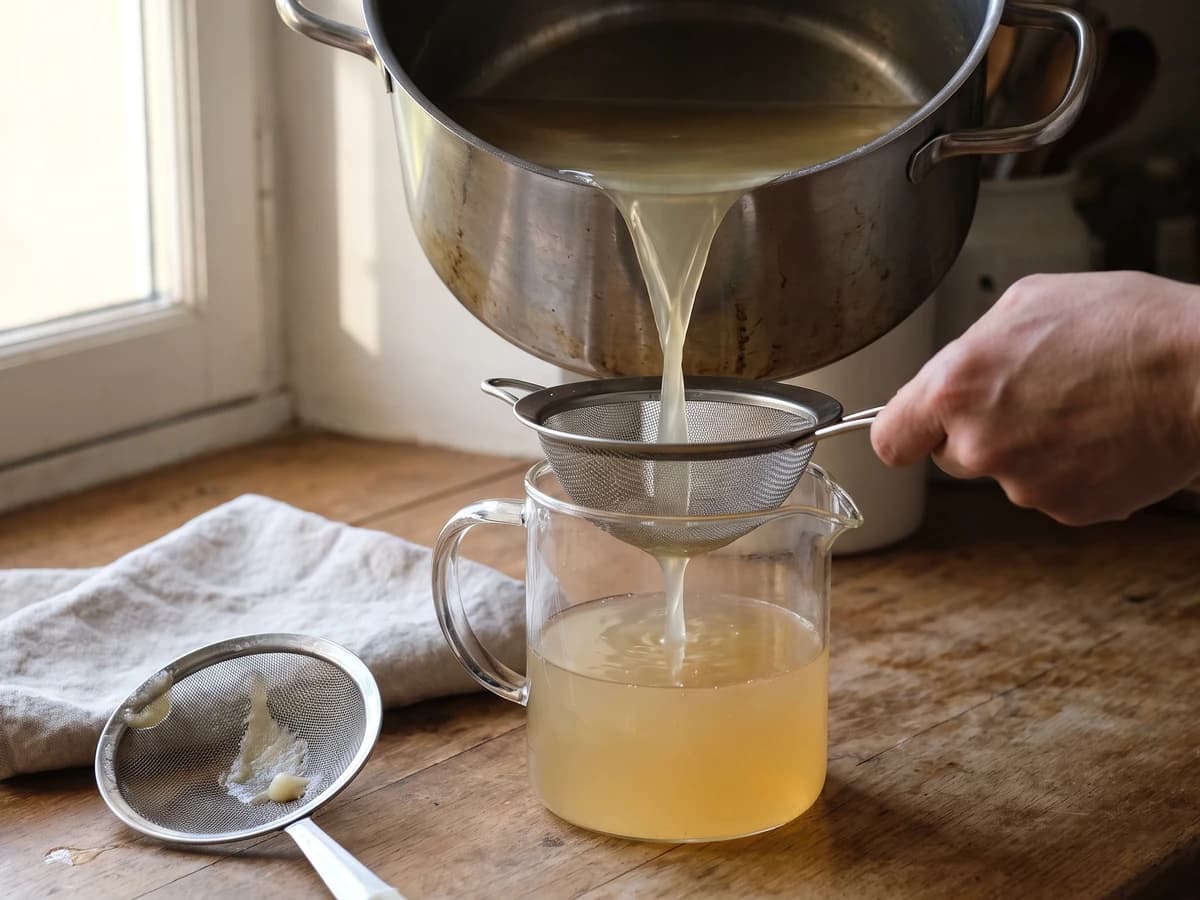
Break the veal bones small, then give them eight hours at a bare tremble. This pale, gelatinous fond becomes the quiet foundation beneath velouté, blanquette, and every sauce that must stay light.
Chef Juliette
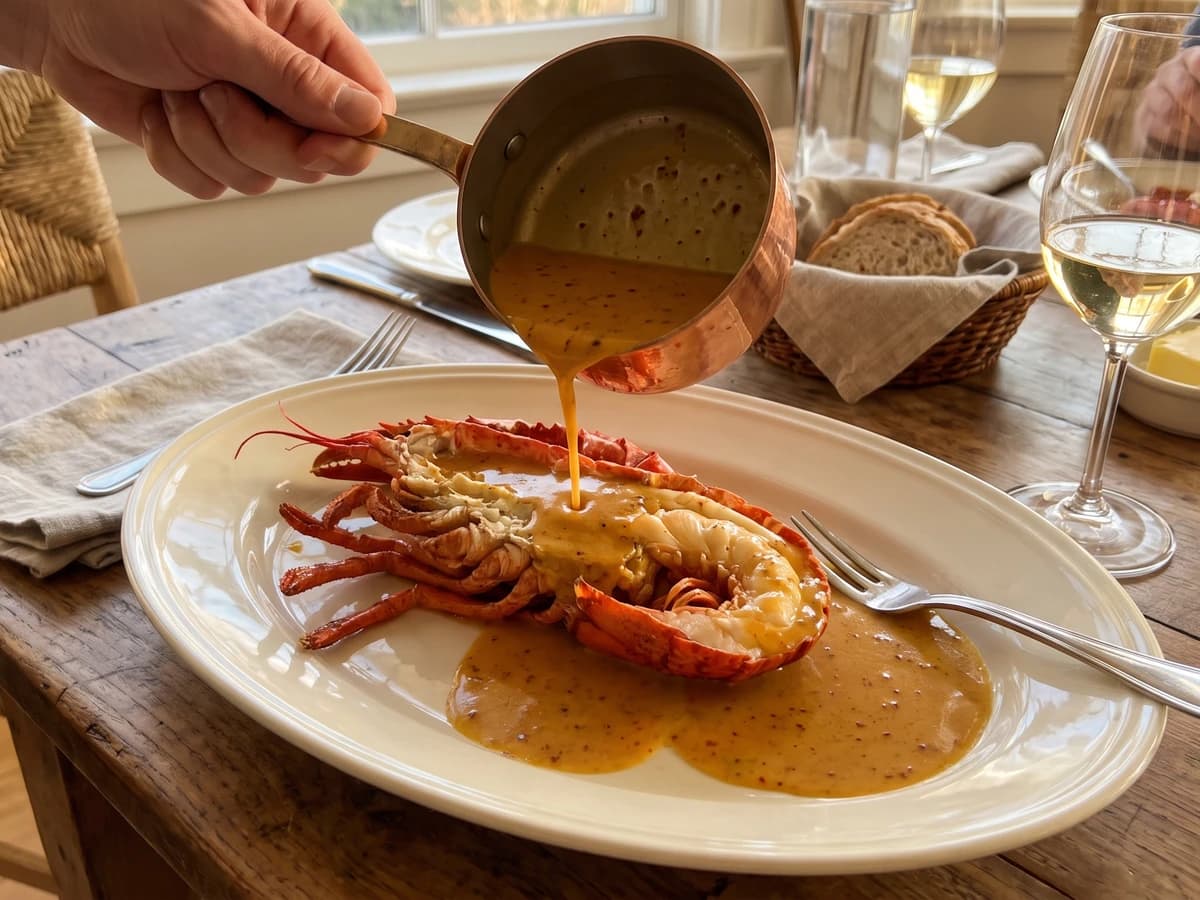
Sauce Orientale concentrates lobster-rich American Sauce with curry, then folds in cream away from the fire: a glossy, gently spiced derivative made for lobster, crayfish, and firm fish.
Chef Juliette
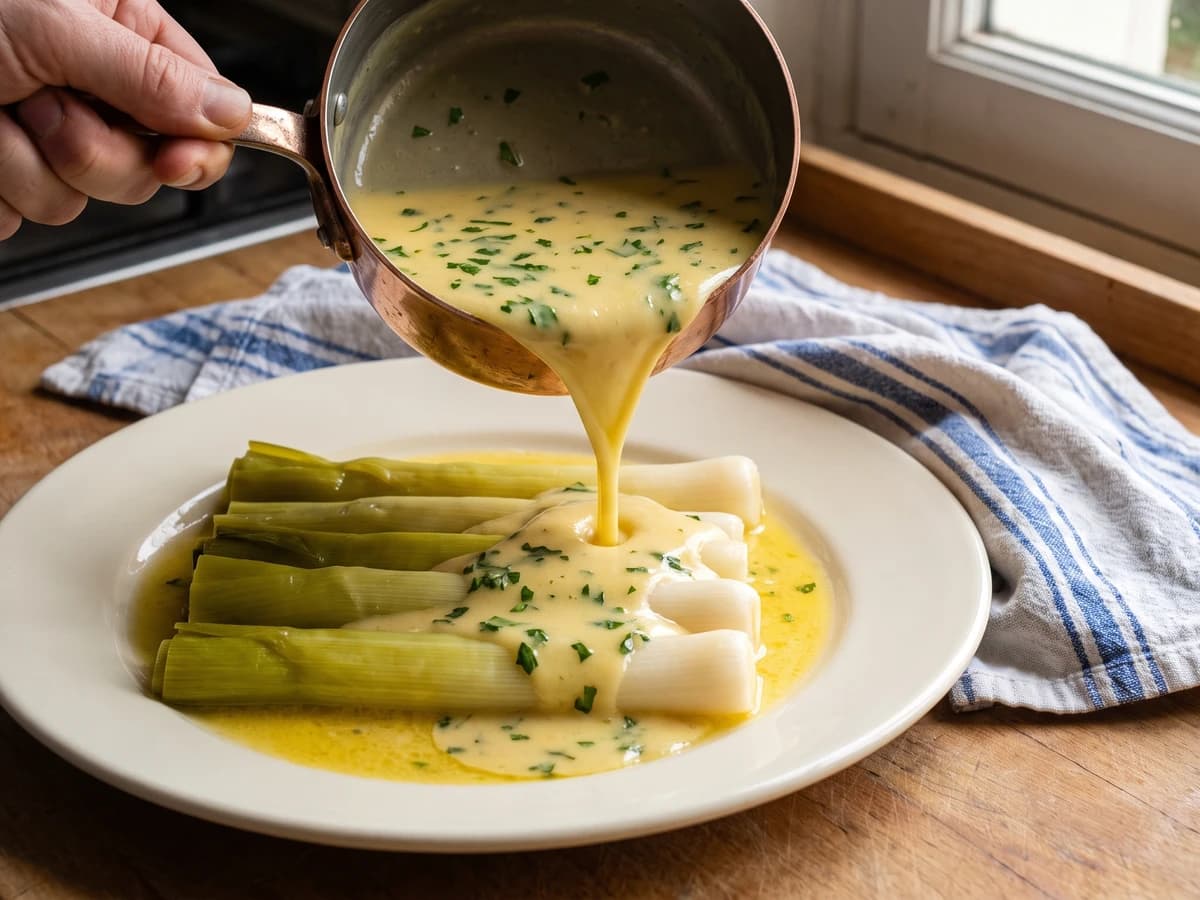
An old lesson in sauce families: Sauce Allemande takes mushroom liquor, then butter, lemon, and parsley, becoming a glossy Poulette for sheep's trotters, leeks, cauliflower, and anything needing gentle richness with a bright edge.