Chef Juliette
Ordinary or White Consommé
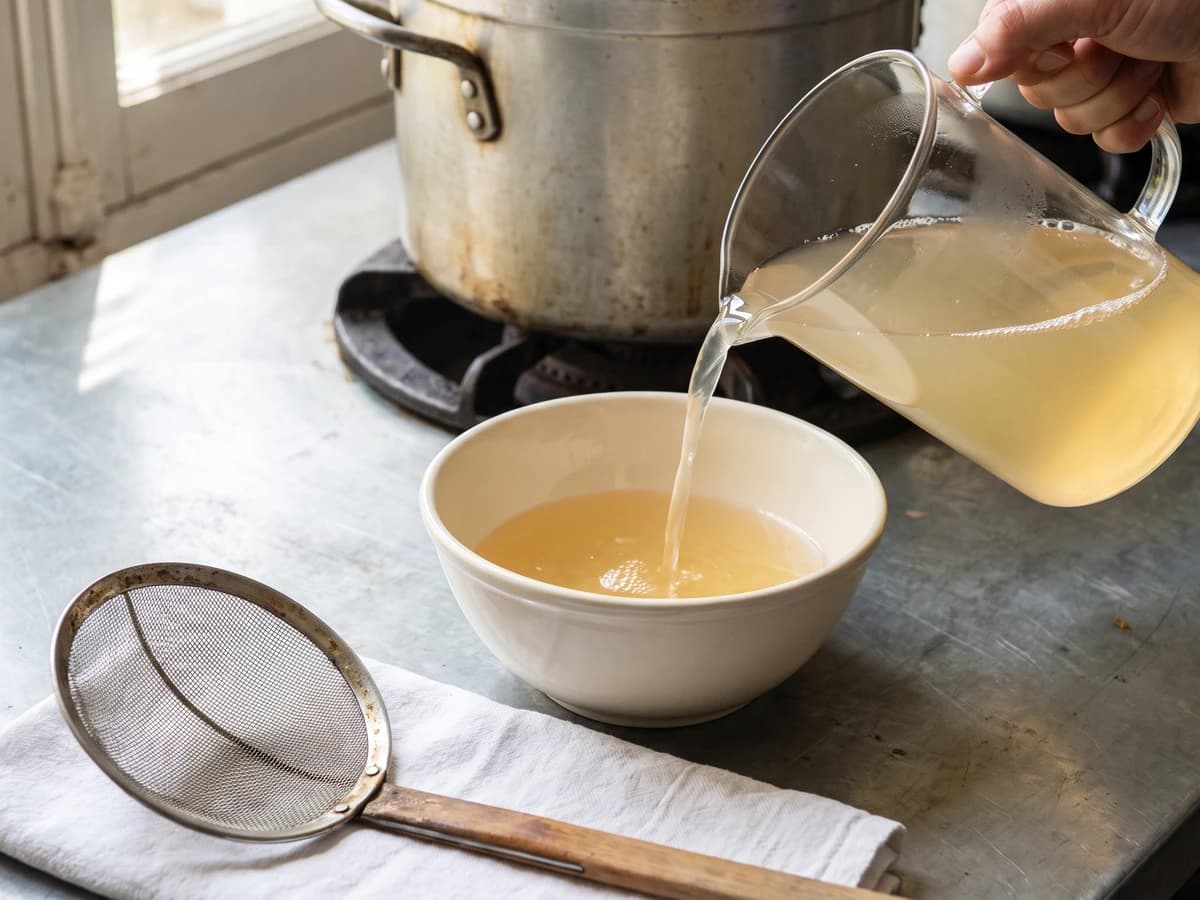
Beef shin, lean beef, and fowl begin in cold water and rise slowly toward a tremble. Skim before the boil, and you learn the quiet discipline that gives every clear French broth its backbone.
A cooking platform built around craft, culture, and the stories behind what we eat.
Created by Chef Juliette
Based on No. 157, Printanier Butter, from Le Guide Culinaire (1907) by Auguste Escoffier
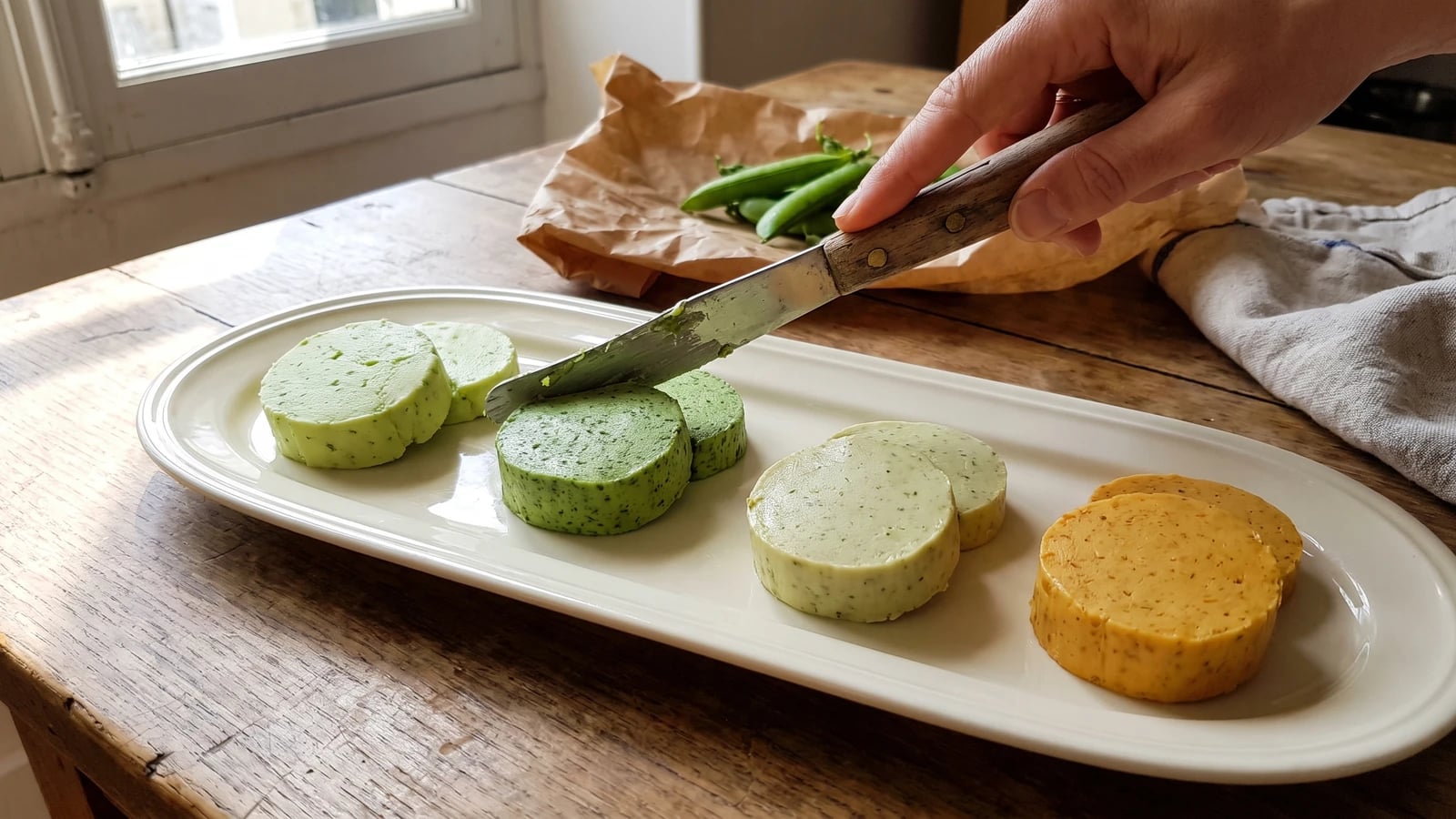
Four early vegetables become four jewel-bright butters, each cooked to preserve its own character, passed smooth, and matched weight for weight with real butter for fish, eggs, or spring vegetables.
Beurre Printanier teaches one exact lesson: the vegetable must be tender, cool, and free of loose water before it meets its own weight in butter. Done properly, each batch keeps a distinct voice, peas sweet and vivid, haricots verts grassy, asparagus delicate, carrots round and savory from their consommé reduction. Butter carries those flavors to the table. It doesn't hide them.
The source recipe assumed a saucier who could pound several batches in a mortar, a stockpot that never went cold, and a tammy broad enough for brigade quantities. At home, one saucepan of good prepared consommé, a food processor, and a fine-mesh sieve replace that scaffolding. The large mortar and brigade scale can go; the separate batches, the dry vegetables, the carrot reduction, and the equal weight of butter must stay. One cook, one stove, one evening.
This is not one muddled four-vegetable butter. Make each Beurre Printanier separately, then use or freeze it by the spoonful. Before you touch the pan, remember the step that decides everything: drain and dry the green vegetables completely, and reduce the carrots until no loose consommé remains.
Beurre printanier belongs to the Parisian classical sauce pantry, where printanier names the first tender vegetables of spring rather than one fixed mixture. The classical method produces separate butters from peas, haricots verts, asparagus tips, or carrots, with the carrots distinguished by their reduction in consommé, sugar, and butter. From the grand kitchen's mortar and tammy, the preparation passed naturally to the cuisine bourgeoise, where a fine sieve preserved the same smooth finish.
Quantity
3 quarts (2.8 L / 2.8 kg)
for blanching
Quantity
2 tablespoons (30 ml / 36 g)
for the blanching water
Quantity
1½ cups (375 ml / 225 g)
fresh, or frozen and not thawed
Quantity
2 cups (500 ml / 225 g)
trimmed and cut into 1-inch pieces
Quantity
2 cups (500 ml / 225 g)
cut into 1-inch pieces
Quantity
2 cups (500 ml / 225 g)
peeled and thinly sliced
Quantity
1 cup (240 ml / 240 g)
preferably low-sodium
Quantity
2 teaspoons (10 ml / 8 g)
Quantity
1 tablespoon (15 ml / 14 g)
Quantity
4 cups (960 ml / 900 g)
softened but cool, divided into four equal 1-cup (240 ml / 225 g) portions
| Ingredient | Quantity |
|---|---|
| waterfor blanching | 3 quarts (2.8 L / 2.8 kg) |
| fine sea saltfor the blanching water | 2 tablespoons (30 ml / 36 g) |
| shelled peasfresh, or frozen and not thawed | 1½ cups (375 ml / 225 g) |
| haricots verts (French beans)trimmed and cut into 1-inch pieces | 2 cups (500 ml / 225 g) |
| asparagus tips and tender stalkscut into 1-inch pieces | 2 cups (500 ml / 225 g) |
| carrotspeeled and thinly sliced | 2 cups (500 ml / 225 g) |
| clear chicken or beef consommépreferably low-sodium | 1 cup (240 ml / 240 g) |
| granulated sugar | 2 teaspoons (10 ml / 8 g) |
| unsalted butter for cooking the carrots | 1 tablespoon (15 ml / 14 g) |
| unsalted buttersoftened but cool, divided into four equal 1-cup (240 ml / 225 g) portions | 4 cups (960 ml / 900 g) |
Set out four labeled bowls so the vegetables remain separate. Bring the water and salt to a full rolling boil in a large pot. Arrange clean kitchen towels beside the stove, fit a fine-mesh sieve over a bowl, and let the butter soften only until a finger leaves a dent. It should remain cool, opaque, and free of any oily sheen.
Cook each green vegetable separately, letting the water return to a full boil between batches. Give fresh peas 2 to 3 minutes, or frozen peas about 1 minute after the boil returns. Cook the haricots verts for 4 to 5 minutes and the asparagus for 2 to 4 minutes. Each should remain vividly colored but become tender enough to crush easily between two fingers. These vegetables are destined for a smooth butter, not a crisp salad.
Lift each batch into a separate colander, shake it hard, then spread it in a single layer on clean towels. Blot the tops and leave the vegetables uncovered until completely cool. Don't rinse them in cold water; that replaces the heat with the very water the finished butter cannot afford. If droplets still cling after blotting, tumble the batch in a dry skillet over the lowest heat for 30 to 60 seconds without coloring it, then spread it out to cool again.
Melt the tablespoon of butter in a small heavy saucepan, then add the carrots, consommé, and sugar. Simmer uncovered over medium-low heat, stirring more frequently as the liquid diminishes, until the carrots are completely tender and the consommé has reduced to a tight glaze, about 18 to 25 minutes. The spatula should leave a clean trail across the pan with no broth running into it. If the liquid disappears before the carrots soften, ça se rattrape: add one tablespoon of water, cover for two minutes, then uncover and reduce again. Spread the glazed carrots on a plate and cool them completely.
Set out the four 225 g portions of softened butter, one for each 225 g vegetable batch. The one-to-one ratio is the structure of Beurre Printanier, not an approximation. If you scale any variation up or down, weigh the prepared vegetable before cooking and give it exactly the same weight of butter.
Working with one vegetable at a time, combine it with its matching butter portion in the food processor. Pulse several times, scrape down the bowl, then process until the vegetable is finely dispersed and the butter is uniform in color. Wash and dry the bowl between variations. If a vegetable was still warm and the butter turns glossy and loose, stop. Ça se rattrape: chill the mixture for 10 to 15 minutes, until opaque but still pliable, then process it briefly again.
Perform the tamisage (passing through a fine sieve) while each butter is still pliable. Press it firmly through the mesh with a flexible scraper, then collect the smooth butter from the underside. Discard the pea skins, bean fibers, and asparagus threads left behind. If the butter is too firm to pass, let it stand for five minutes; never loosen it with water or consommé, which would undo the careful drying.
Pack the four butters into separate labeled jars, or shape them into parchment-wrapped logs, and chill for at least 30 minutes. Let the amount you intend to serve soften for about 15 minutes, then spoon or slice it over poached fish, eggs, new potatoes, asparagus, peas, or haricots verts. Add it after the food leaves the heat so the butter melts into a glossy sauce without boiling. À table!
1 serving (about 14g)
Culinary guides, cultural storytelling, and the editorial depth that makes cooking meaningful.
Discover Culinary ExplorerChef Juliette
Beef shin, lean beef, and fowl begin in cold water and rise slowly toward a tremble. Skim before the boil, and you learn the quiet discipline that gives every clear French broth its backbone.
Chef Juliette
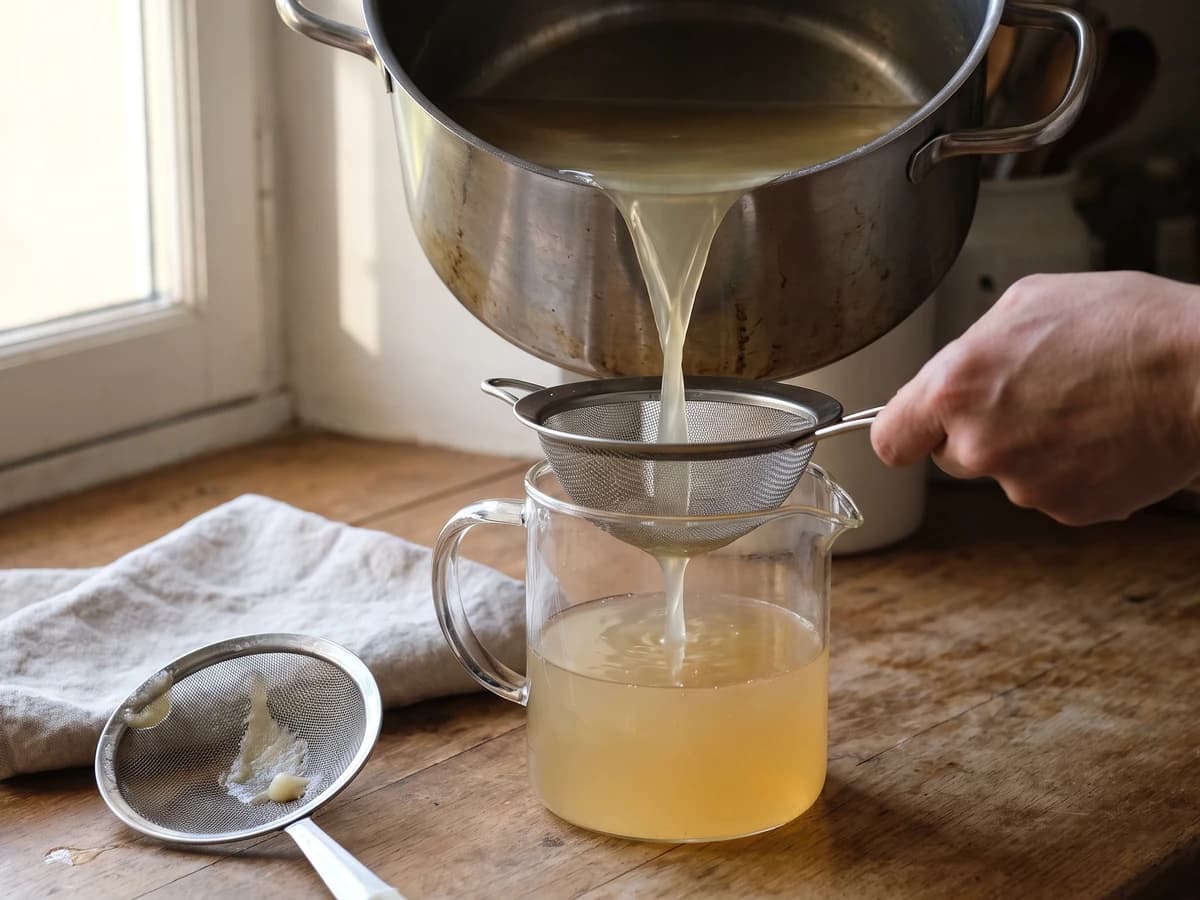
Break the veal bones small, then give them eight hours at a bare tremble. This pale, gelatinous fond becomes the quiet foundation beneath velouté, blanquette, and every sauce that must stay light.
Chef Juliette
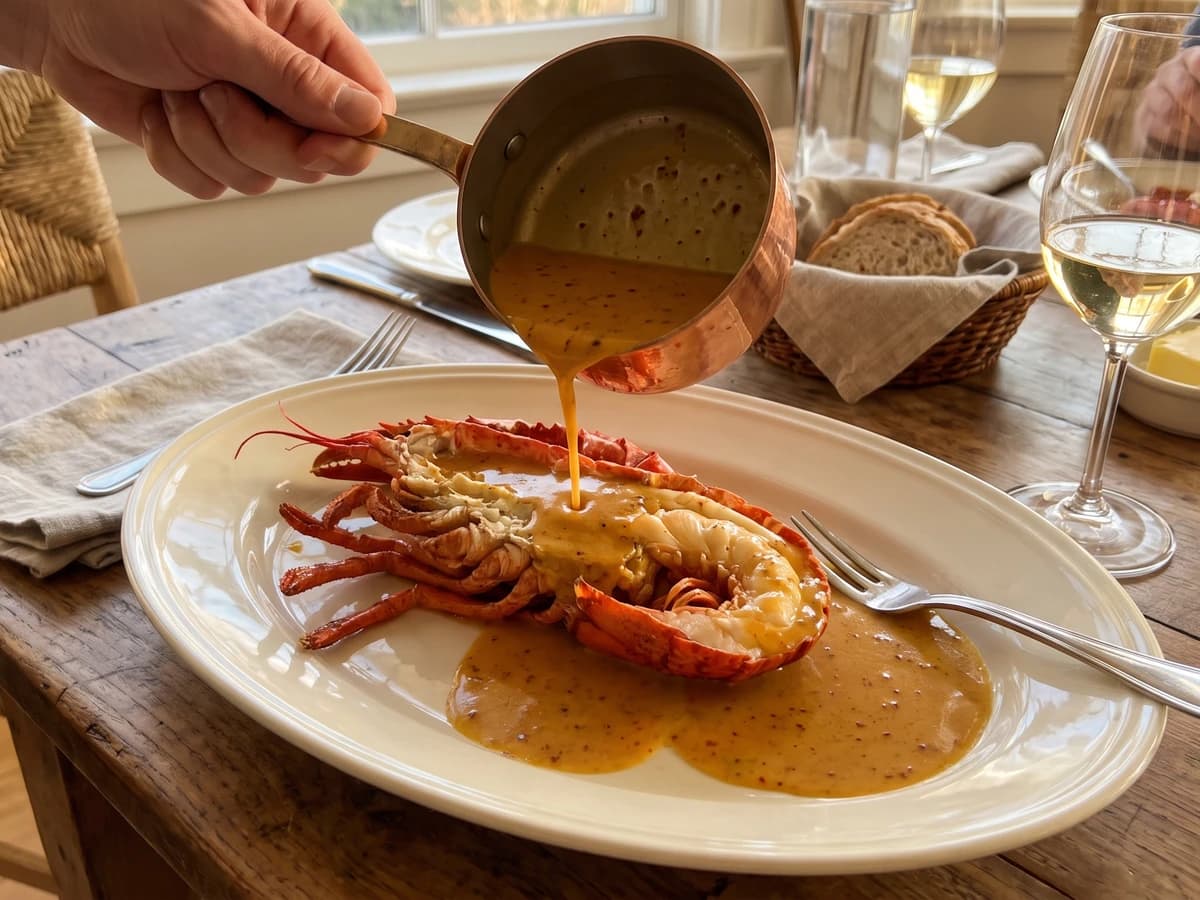
Sauce Orientale concentrates lobster-rich American Sauce with curry, then folds in cream away from the fire: a glossy, gently spiced derivative made for lobster, crayfish, and firm fish.
Chef Juliette
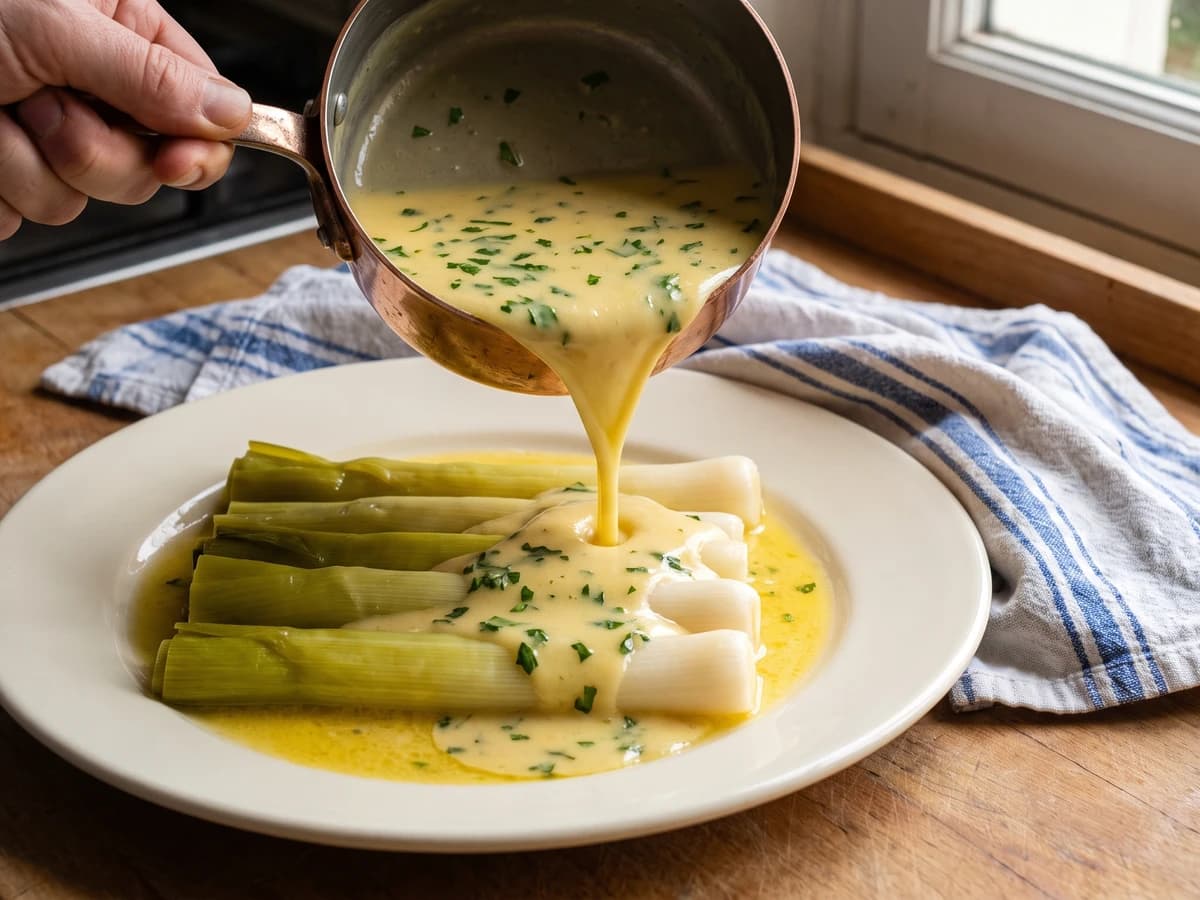
An old lesson in sauce families: Sauce Allemande takes mushroom liquor, then butter, lemon, and parsley, becoming a glossy Poulette for sheep's trotters, leeks, cauliflower, and anything needing gentle richness with a bright edge.