Chef Juliette
Ordinary or White Consommé
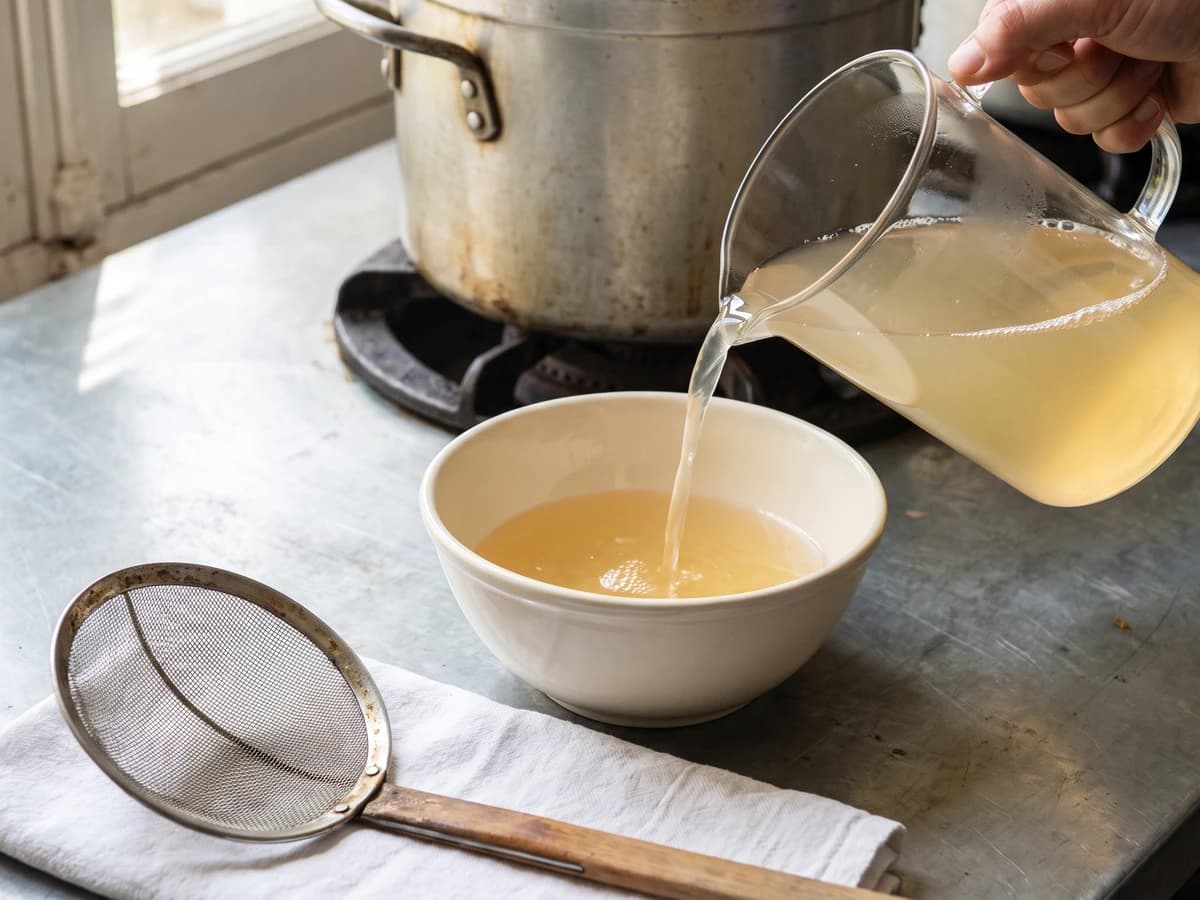
Beef shin, lean beef, and fowl begin in cold water and rise slowly toward a tremble. Skim before the boil, and you learn the quiet discipline that gives every clear French broth its backbone.
A cooking platform built around craft, culture, and the stories behind what we eat.
Created by Chef Juliette
Based on No. 156, Pistachio Butter, from Le Guide Culinaire (1907) by Auguste Escoffier
Beurre de pistache turns one disciplined act, pounding blanched nuts with drops of water before adding butter, into a satin-green seasoning that gives fine cold sauces their colour and quiet perfume.
Beurre de pistache (pistachio butter) teaches a small but exact lesson: when nuts are pounded for a fine classical butter, moisture is a rein, not a liquid ingredient. A few drops of water keep the pistachio oil from running out before the paste forms; a spoonful would loosen the mixture and dull its perfume.
The source entry assumed a garde-manger, the cold kitchen, with a broad mortar, a tamis, and enough sauces waiting to use eight ounces of pistachios at once. For one cook, one stove, one evening, I have halved that service batch, replaced the large tamis with a 15 cm fine-mesh sieve, and used a mini processor as the honest equivalent of prolonged pounding. The four-to-one ratio of pistachio to butter has not moved. Neither have the blanching, peeling, damp grinding, or final sieving, because those steps are the dish; the brigade quantity and large equipment were scaffolding.
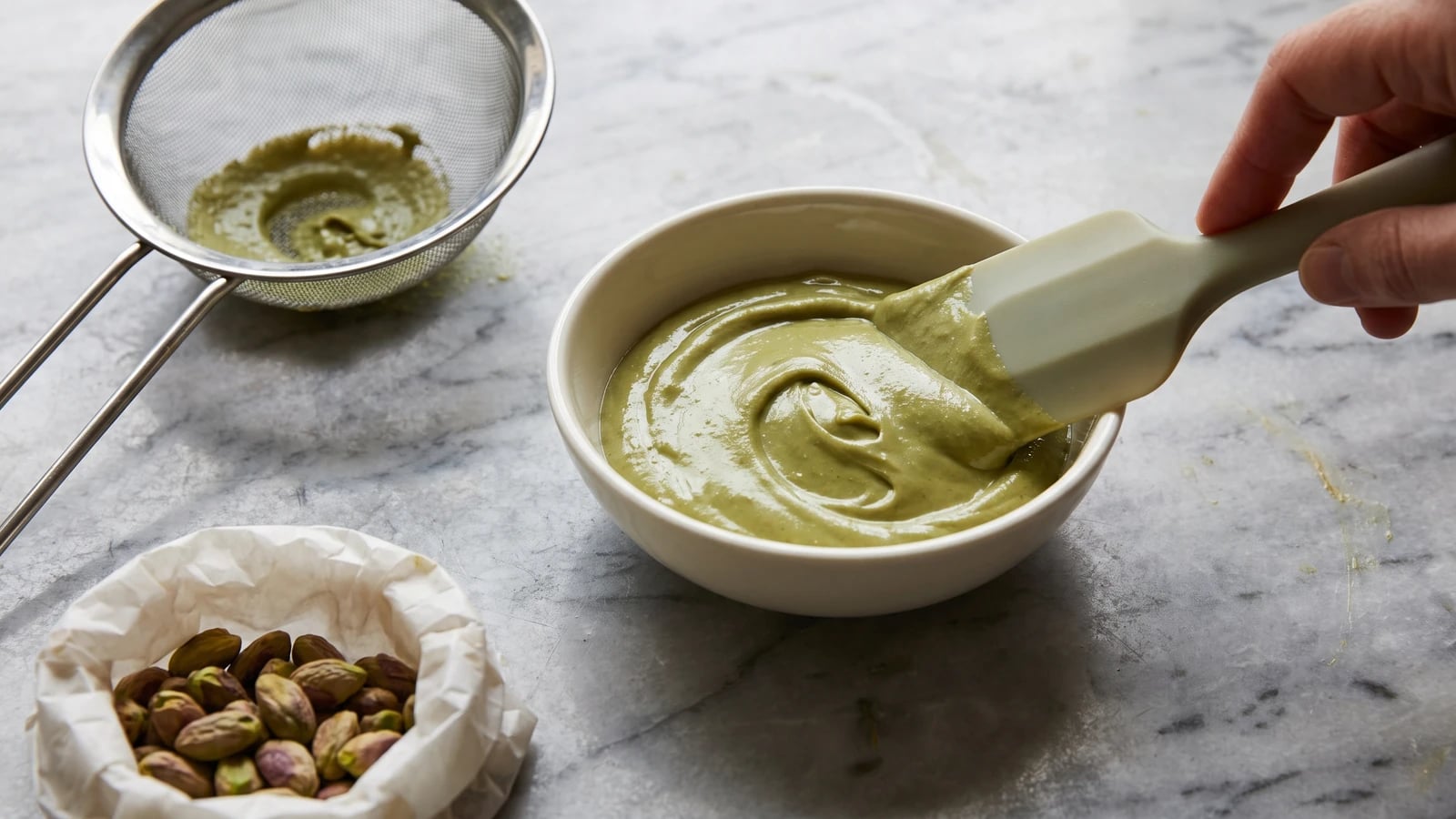
Finished beurre de pistache is dense, smooth, and softly green, with butter carrying the pistachio rather than covering it. Keep the peeled kernels damp and add any extra water only two or three drops at a time. That restraint is the step that decides everything.
In the classical kitchens of Paris, beurre de pistache belonged to the garde-manger repertoire of beurres composés, concentrated butters used to colour and perfume finished cold sauces without leaving coarse nut grit. Its blanching and pounding follow the same practice used for almond and pistachio pastes in French confectionery, but this savory preparation carries no sugar and uses butter as its final binder. The commercial spread sold under the same English name is ground nuts for the table; this is a strained seasoning butter, and the distinction lies in the technique.
Quantity
scant 1 cup (225 ml / 113 g)
Quantity
4 cups (960 ml / 960 g)
brought to a boil for blanching
Quantity
2 cups (480 ml / 480 g)
for cooling the blanched pistachios
Quantity
up to 1/2 teaspoon (2.5 ml / 2.5 g)
used only by drops while pounding
Quantity
2 tablespoons (30 ml / 28 g)
softened but still cool
| Ingredient | Quantity |
|---|---|
| raw shelled unsalted pistachios | scant 1 cup (225 ml / 113 g) |
| waterbrought to a boil for blanching | 4 cups (960 ml / 960 g) |
| cold waterfor cooling the blanched pistachios | 2 cups (480 ml / 480 g) |
| cold waterused only by drops while pounding | up to 1/2 teaspoon (2.5 ml / 2.5 g) |
| unsalted buttersoftened but still cool | 2 tablespoons (30 ml / 28 g) |
Bring the 4 cups of water to a full boil in a small saucepan. Add the pistachios and, as soon as the water returns to the boil, move the pan off the active burner. Leave them at the edge of the heat for 2 to 4 minutes, testing one after 2 minutes. The thin skin should slip away when pinched; the kernel underneath must remain firm, not cooked soft.
Drain the pistachios and immediately drop them into the cold water. Peel each kernel while it is still wet, rubbing away every purple-brown skin that releases. If a few skins cling, cover those nuts with freshly boiled water for another minute, then cool and try again. Ça se rattrape. Keep the cleaned kernels damp beneath a clean cloth, because a dried surface encourages the oil to separate during pounding.
Transfer the damp pistachios to a mini food processor and work in short pulses, scraping the bowl often, until they pass from fine crumbs into a close, smooth paste. Add the measured cold water only two or three drops at a time when the mixture becomes dry or stops circulating. If oil begins filming the bowl, stop at once. Chill the paste for 10 minutes, then resume with two drops of cold water; ça se rattrape. A processor creates heat faster than a mortar, so patience and short pulses matter.
Add the softened butter in three small portions, working each completely into the pistachio paste before adding the next. The sequence matters: the nuts must become a paste before the butter enters, or the mixture stays coarse. When properly worked, the beurre de pistache will look satin-smooth and hold a soft ridge. If it turns glossy and loose because the butter became warm, chill it for 10 minutes and work it briefly again.
Set a 15 cm fine-mesh sieve over a clean bowl and press the beurre de pistache through with a flexible scraper, working in small portions. Scrape the smooth paste from the underside and leave any coarse skin or grit behind. This final sieving is not ceremony; it gives the butter the fineness required to disappear cleanly into a cold sauce. Pack it into a small covered container and chill until needed, or work it into a finished cold sauce by small spoonfuls. À table!
1 serving (about 18g)
Culinary guides, cultural storytelling, and the editorial depth that makes cooking meaningful.
Discover Culinary ExplorerChef Juliette
Beef shin, lean beef, and fowl begin in cold water and rise slowly toward a tremble. Skim before the boil, and you learn the quiet discipline that gives every clear French broth its backbone.
Chef Juliette
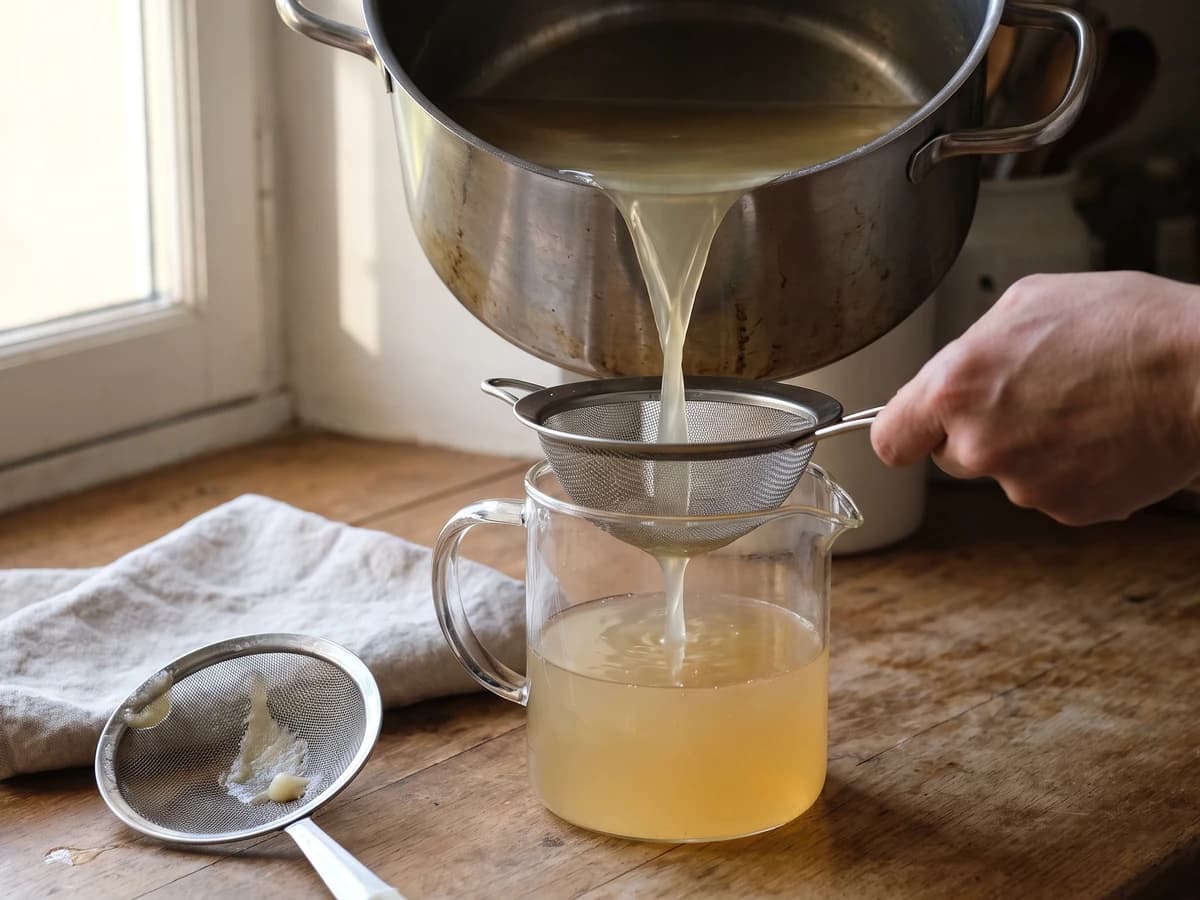
Break the veal bones small, then give them eight hours at a bare tremble. This pale, gelatinous fond becomes the quiet foundation beneath velouté, blanquette, and every sauce that must stay light.
Chef Juliette
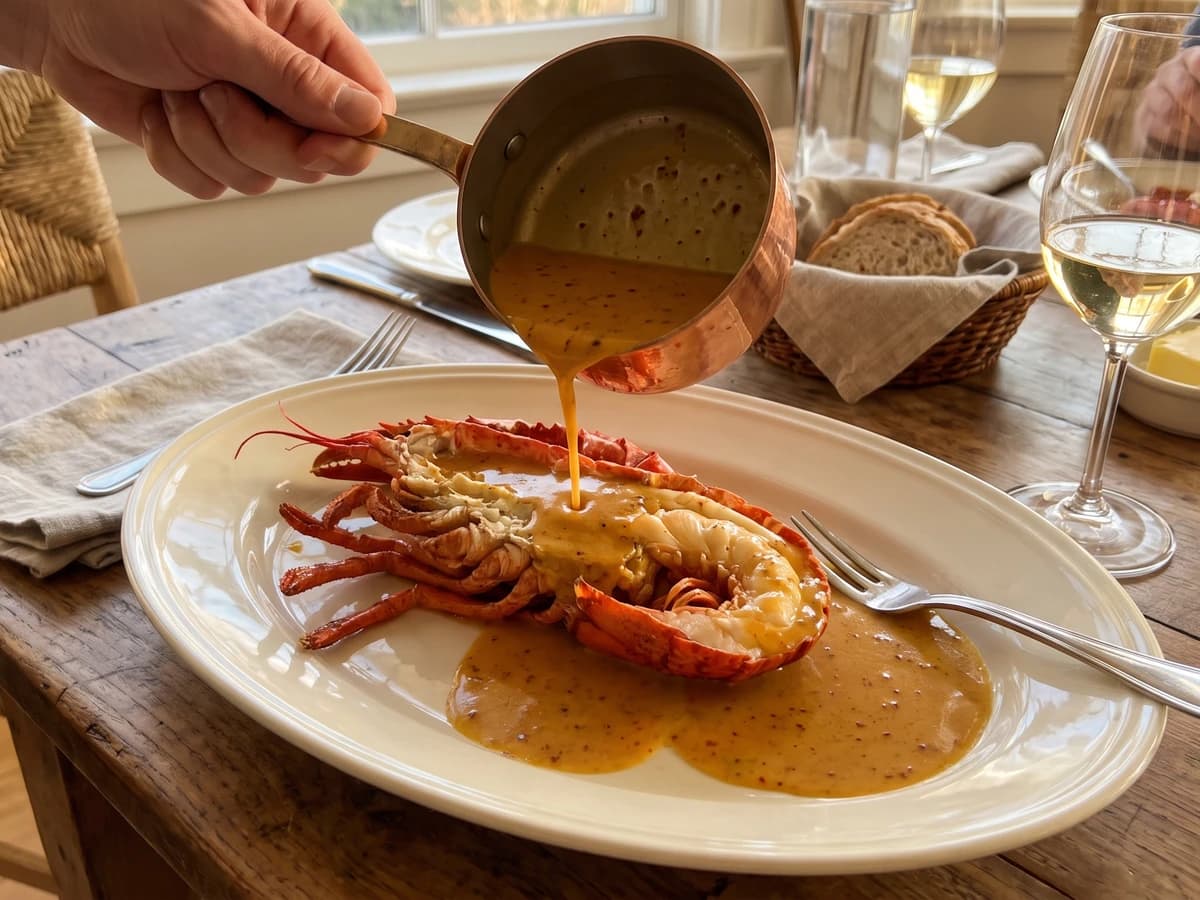
Sauce Orientale concentrates lobster-rich American Sauce with curry, then folds in cream away from the fire: a glossy, gently spiced derivative made for lobster, crayfish, and firm fish.
Chef Juliette
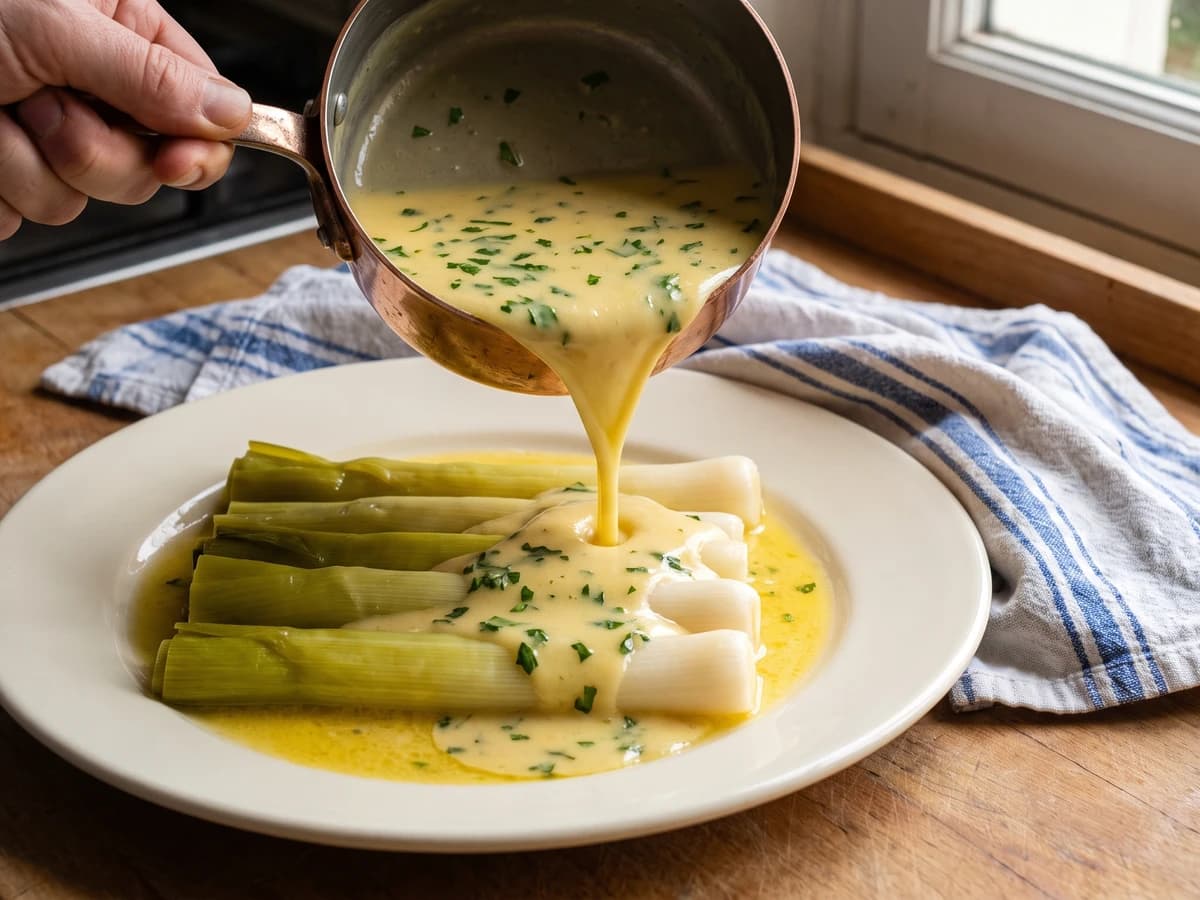
An old lesson in sauce families: Sauce Allemande takes mushroom liquor, then butter, lemon, and parsley, becoming a glossy Poulette for sheep's trotters, leeks, cauliflower, and anything needing gentle richness with a bright edge.