Chef Juliette
Ordinary or White Consommé
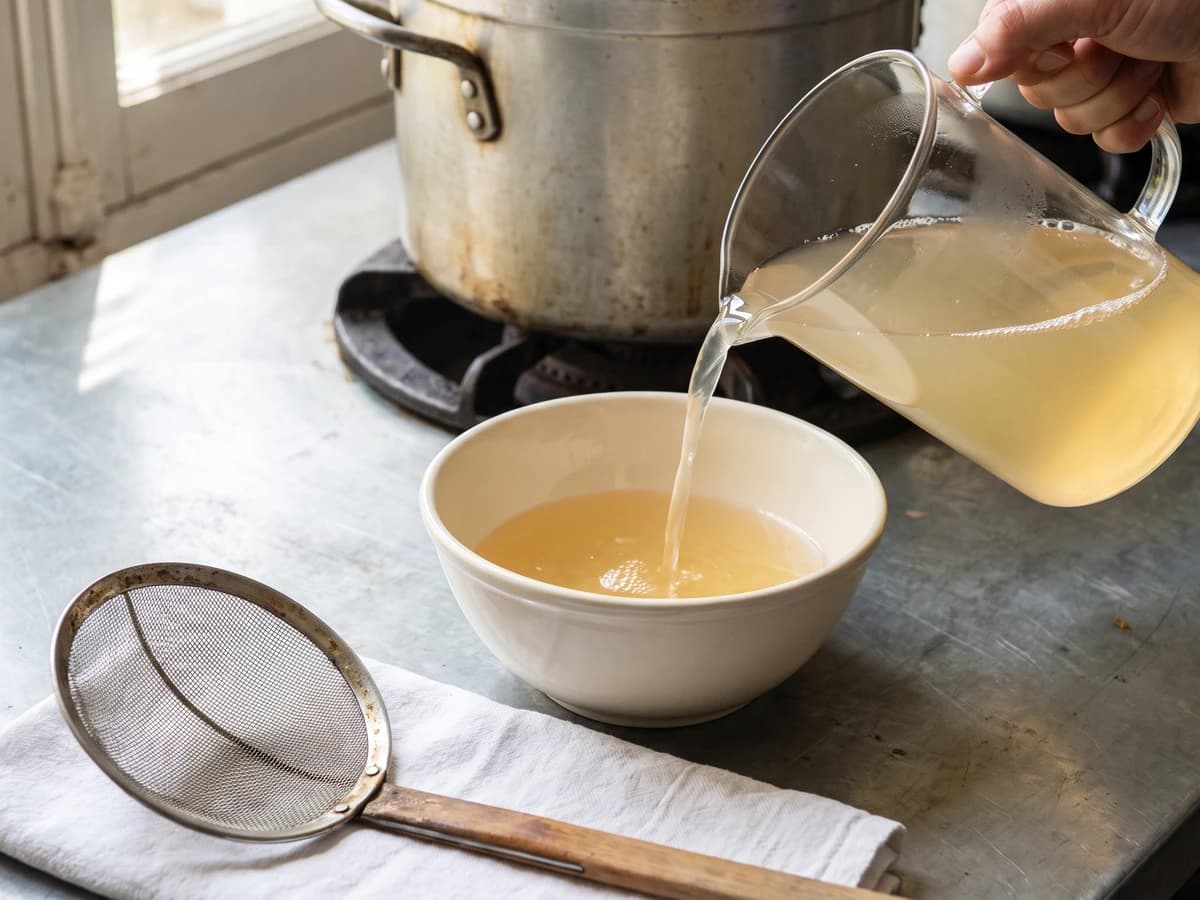
Beef shin, lean beef, and fowl begin in cold water and rise slowly toward a tremble. Skim before the boil, and you learn the quiet discipline that gives every clear French broth its backbone.
A cooking platform built around craft, culture, and the stories behind what we eat.

Created by Chef Juliette
Based on No. 154, Black Butter, from Le Guide Culinaire (1907) by Auguste Escoffier
Beurre noir asks for five watchful minutes: butter carried beyond noisette to deep mahogany, caught at its first thread of smoke with concassed parsley, then poured at once while its toasted edge is still clean.
Beurre noir (black butter) teaches the narrowest and most useful boundary in butter cookery: deep browning gives flavor, burning gives bitterness. The butter is not meant to become black. You carry it beyond beurre noisette, butter the color and aroma of hazelnuts, until it reaches deep mahogany and releases its first wisp of smoke, then add concassed parsley and pour. The one true thing to know before touching the pan is this: whatever the sauce will dress must already be cooked and waiting.
The entry's instruction to use the “necessary amount” assumed a saucier working to order, with the receiving dish at their elbow and no need to write a household measure. Here that becomes 1/2 cup (120 ml / 113 g) butter, enough for four portions, and a pale 20 cm skillet that lets one cook follow the changing color. The brigade handoff is scaffolding and can go; a heatproof bowl beside the burner becomes your emergency brake. The controlled browning and immediate pour are the dish and must stay. No stockpot or salamander belongs here.
This is one cook, one stove, one evening, but it demands your full attention for five minutes. When the foam settles, watch the milk solids rather than the clock. The step that decides the sauce is lifting the pan at deep mahogany, precisely as the butter begins to smoke.
Beurre noir belongs to the Parisian bistro and the wider French cuisine bourgeoise, where it was made à la minute for skate, calves' brains, eggs, and plainly cooked vegetables. Its name is often misunderstood: noir does not mean charred, but butter taken beyond noisette to its deepest clean brown and served before the milk solids turn acrid. Other table formulas sharpen the pan with vinegar, but this codified entry uses only butter and concassed parsley, and that spare sequence governs this version.
Quantity
1/2 cup (120 ml / 113 g)
Quantity
2 tablespoons loosely packed (30 ml / 8 g)
thoroughly dried and concassed (roughly chopped)
| Ingredient | Quantity |
|---|---|
| unsalted whole butter | 1/2 cup (120 ml / 113 g) |
| fresh flat-leaf parsley leavesthoroughly dried and concassed (roughly chopped) | 2 tablespoons loosely packed (30 ml / 8 g) |
Have the cooked fish, eggs, offal, or vegetables arranged on a warm serving plate before the butter meets the heat. Concass the parsley, chopping it roughly rather than mincing it, then blot it completely dry. Set the parsley and a heatproof bowl beside the burner. Beurre noir waits for nothing, and wet parsley dropped into very hot butter spits fiercely.
Put the butter in a clean, pale 20 cm skillet and set it over medium heat. Let it melt and foam, swirling the pan occasionally so the milk solids cook evenly. The bubbling will be lively at first as the butter sheds its water, then grow quieter as the foam thins and the solids become visible on the pan floor.
Keep the pan over medium heat and swirl continuously. The milk solids will pass from straw to hazelnut and then deep mahogany, while the aroma changes from sweet dairy to toasted nuts. The instant the butter begins to smoke, lift the pan from the burner and scatter in the concassed parsley, holding the pan away from your face as it sputters. Swirl once. If the color races while you reach for the parsley, pour the butter immediately into the waiting heatproof bowl and stir the parsley in there; ça se rattrape. If the solids have turned black and smell acrid, the butter has burned and cannot be repaired. Start again in a clean pan.
Pour the beurre noir over the waiting food at once, scraping every toasted milk solid and piece of parsley from the pan. Spread it across the surface rather than leaving it pooled at one edge. Serve immediately, while the butter remains fluid and its toasted flavor is still clean. À table!
1 serving (about 26g)
Culinary guides, cultural storytelling, and the editorial depth that makes cooking meaningful.
Discover Culinary ExplorerChef Juliette
Beef shin, lean beef, and fowl begin in cold water and rise slowly toward a tremble. Skim before the boil, and you learn the quiet discipline that gives every clear French broth its backbone.
Chef Juliette
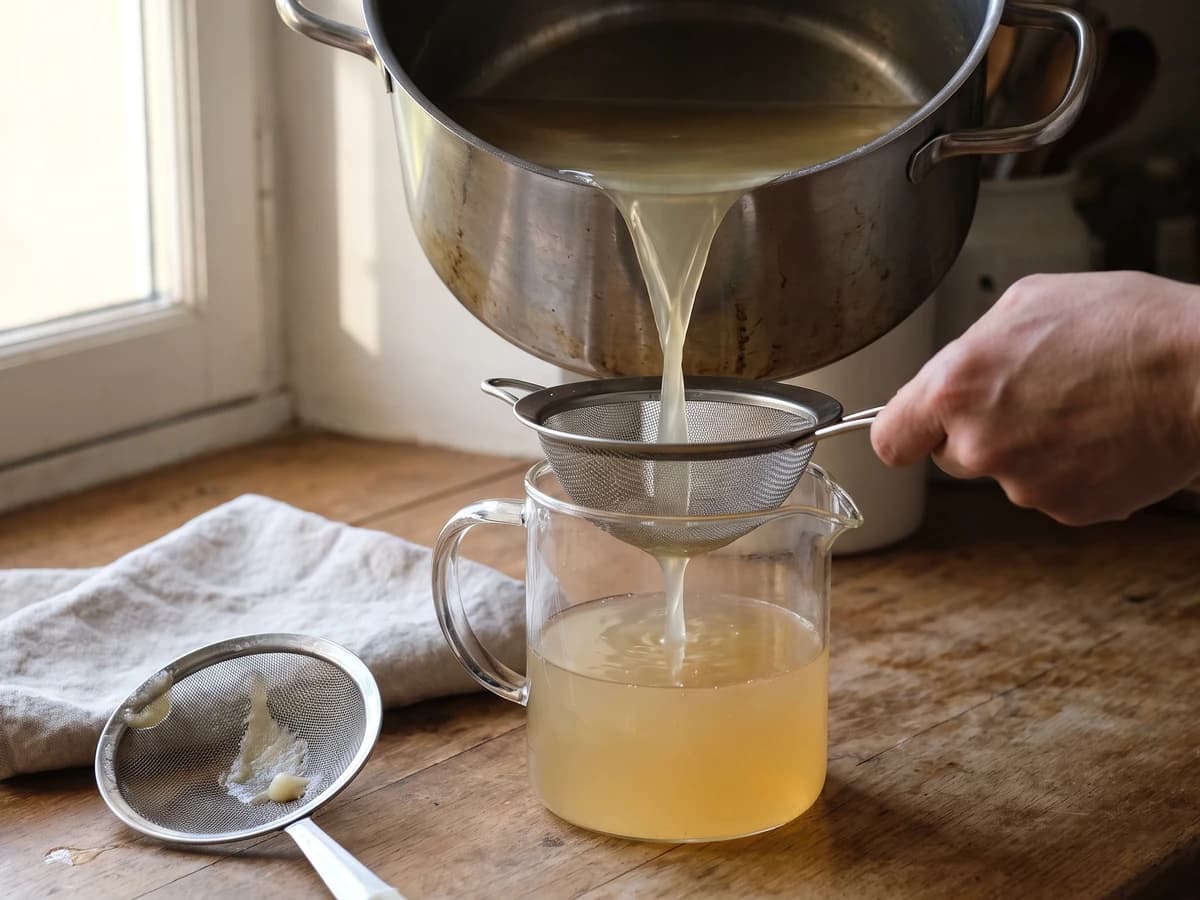
Break the veal bones small, then give them eight hours at a bare tremble. This pale, gelatinous fond becomes the quiet foundation beneath velouté, blanquette, and every sauce that must stay light.

Chef Juliette
Sauce Orientale concentrates lobster-rich American Sauce with curry, then folds in cream away from the fire: a glossy, gently spiced derivative made for lobster, crayfish, and firm fish.
Chef Juliette
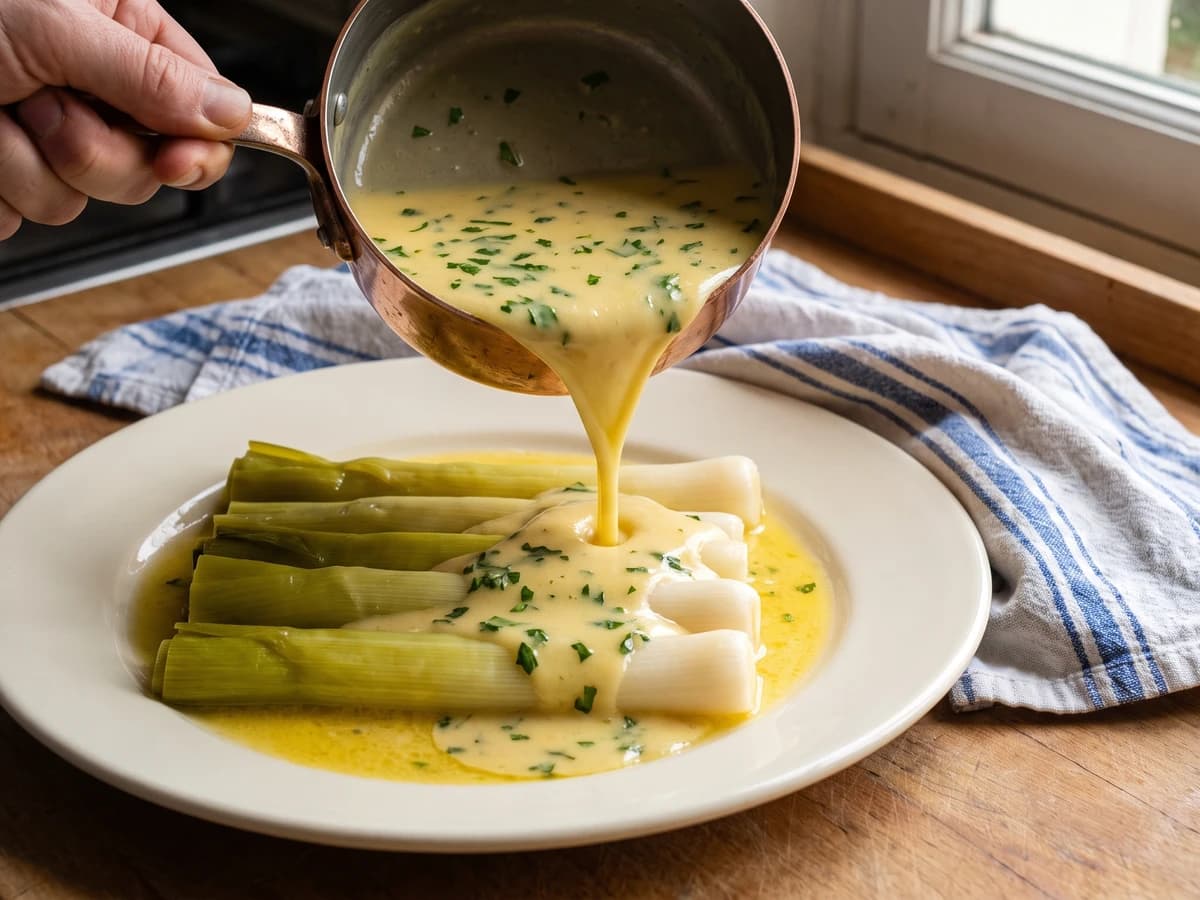
An old lesson in sauce families: Sauce Allemande takes mushroom liquor, then butter, lemon, and parsley, becoming a glossy Poulette for sheep's trotters, leeks, cauliflower, and anything needing gentle richness with a bright edge.