Chef Juliette
Ordinary or White Consommé
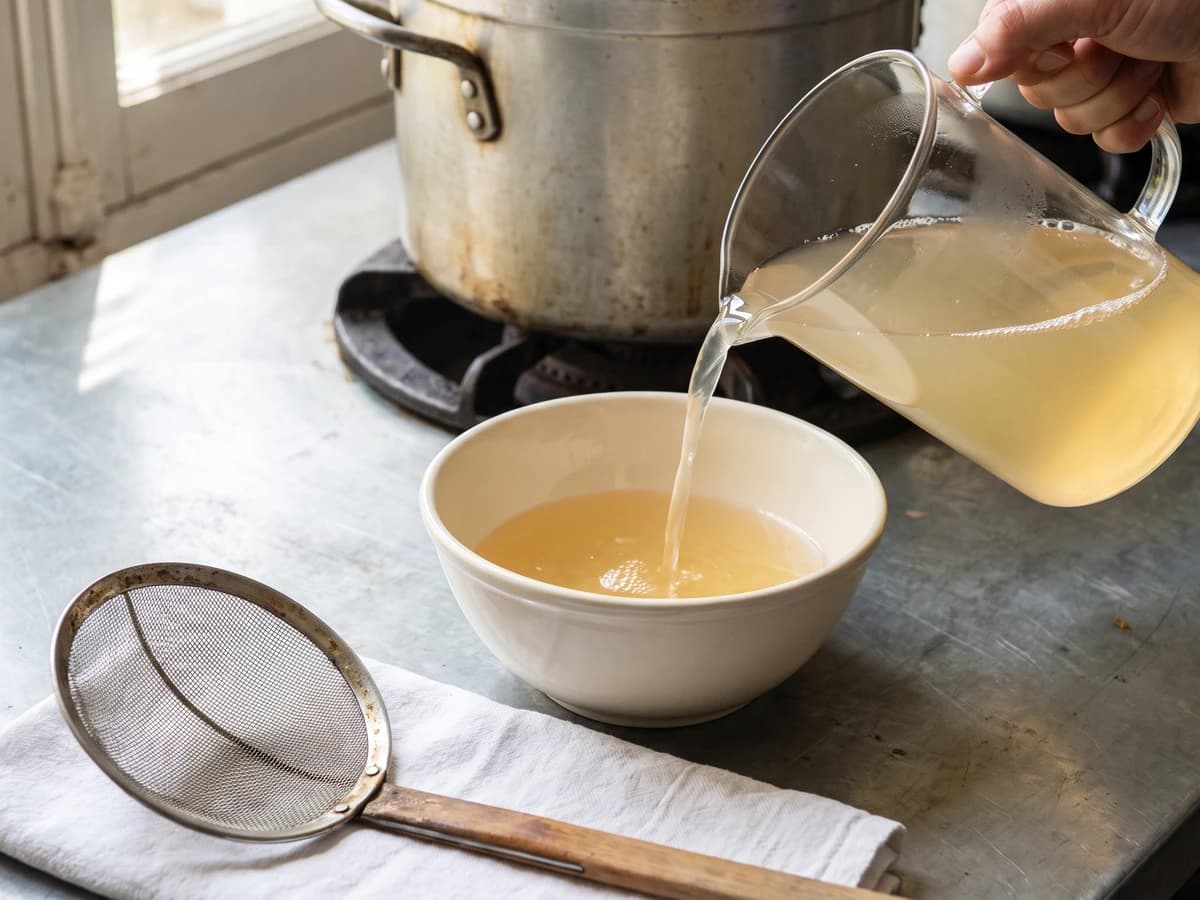
Beef shin, lean beef, and fowl begin in cold water and rise slowly toward a tremble. Skim before the boil, and you learn the quiet discipline that gives every clear French broth its backbone.
A cooking platform built around craft, culture, and the stories behind what we eat.
Created by Chef Juliette
Based on No. 152, Butter à la Meunière, from Le Guide Culinaire (1907) by Auguste Escoffier
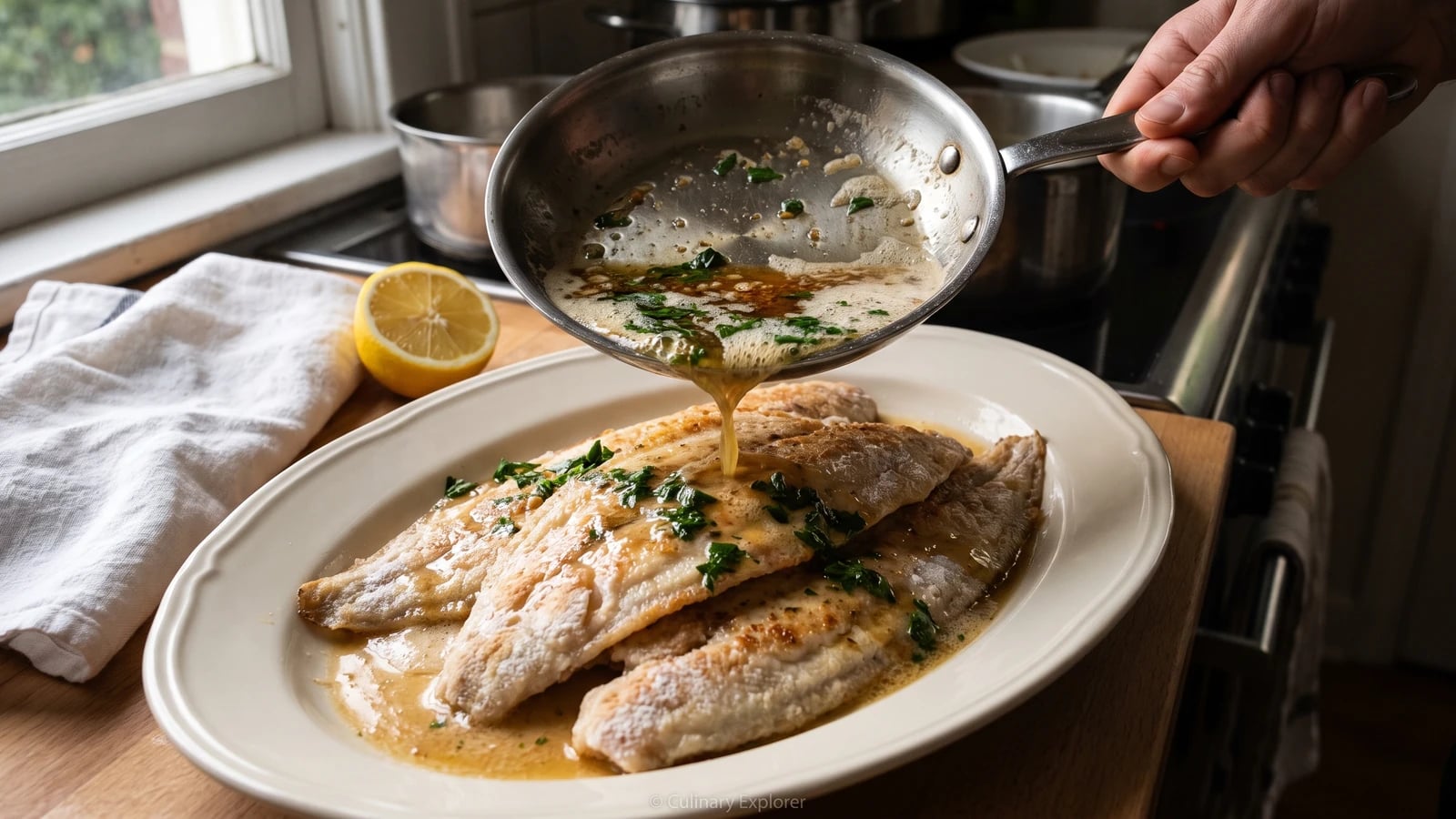
Beurre à la meunière asks for five attentive minutes: butter turned hazelnut-gold, lemon added at the fragrant instant, then the whole gleaming pan poured over parsley-strewn fish.
Beurre à la meunière (butter cooked gently to hazelnut-gold, sharpened with lemon, and poured over parsley-strewn fish) teaches the quickest judgment in the classical sauce family: the nose leads the eyes. The butter is ready at the first clean scent of nuts, while its milk solids are gold, not mahogany. Wait for dramatic colour and the finish tastes scorched.
The source assumes a saucier working at service, fish already cooked and sprinkled with parsley, and a pan of butter made only when the plate is ready. It calls for neither a stockpot nor a salamander because none belongs here. At home, its vague “necessary quantity” becomes eight tablespoons in a pale 20 cm frying pan, enough for four fish portions and small enough to control. The separate station and brigade quantity are scaffolding; they go. The gentle colouring, restrained lemon, and immediate pour are the dish; they stay.
Measure the lemon and have the fish warm before the butter melts. If the colour runs ahead, lift the pan and swirl; ça se rattrape. The one step that matters is stopping at the first clean hazelnut scent, then adding the lemon and pouring without delay.
Beurre à la meunière belongs to the French bourgeois table and the Parisian bistro, where flour-dusted fish, especially sole, is pan-cooked and finished at once with butter, lemon, and parsley. Meunière means “in the miller’s wife style,” a reference to the flour on the fish, so the word names the complete treatment rather than the butter alone. In the classical repertoire this butter is not held in a sauceboat: it is poured directly over parsley-strewn fish, catching the lemon and golden milk solids at their fragrant peak.
Quantity
1/2 cup (120 ml / 113 g)
Quantity
1 teaspoon (5 ml / 5 g)
Quantity
2 tablespoons (30 ml / 8 g)
concassé (roughly chopped)
| Ingredient | Quantity |
|---|---|
| unsalted butter | 1/2 cup (120 ml / 113 g) |
| fresh lemon juice | 1 teaspoon (5 ml / 5 g) |
| flat-leaf parsleyconcassé (roughly chopped) | 2 tablespoons (30 ml / 8 g) |
Arrange four freshly cooked meunière fish portions on a warm platter or warm plates, then sprinkle them evenly with the parsley concassé. This entry begins where the fish cookery ends, so don't start the butter while the fish is still in the pan. Measure the lemon juice and keep it beside the stove.
Put the butter in a pale 20 cm frying pan over medium-low heat. Let it melt and foam, swirling every few seconds as the crackling quiets and the milk solids settle. Cook gently until those solids take an even golden tint and the butter gives off its first clean scent of hazelnuts. If the rim colours before the centre, lift the pan from the heat and swirl until the temperature evens out. Ça se rattrape. If the specks turn black or the aroma becomes acrid, begin again with fresh butter; lemon cannot hide a burn.
At the first hazelnut scent, remove the pan from the heat and add the lemon juice in a thin trickle, angling the pan away from you because water makes hot butter sputter. Swirl once as it foams. If the fish has been delayed, pour the butter immediately into a cool heatproof bowl to stop the colouring, then return it to a clean pan only long enough to liquefy. Do not hold it over heat.
Pour the beurre à la meunière immediately over the parsley-strewn fish, dividing both the clear golden butter and its toasted milk solids among the portions. Scrape the pan clean because those fragrant specks carry the flavour. Serve at once, before the butter cools and loses its gleam. À table!
1 serving (about 29g)
Culinary guides, cultural storytelling, and the editorial depth that makes cooking meaningful.
Discover Culinary ExplorerChef Juliette
Beef shin, lean beef, and fowl begin in cold water and rise slowly toward a tremble. Skim before the boil, and you learn the quiet discipline that gives every clear French broth its backbone.
Chef Juliette
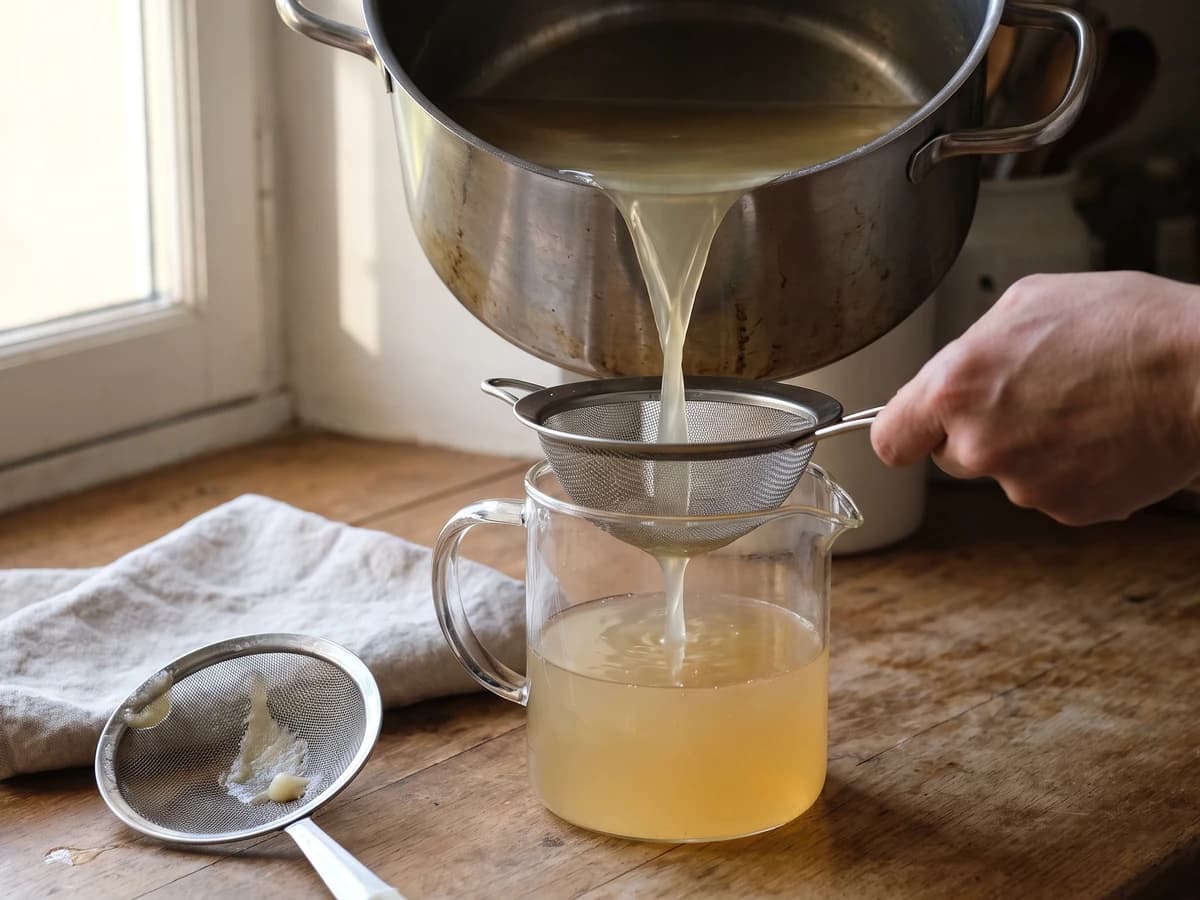
Break the veal bones small, then give them eight hours at a bare tremble. This pale, gelatinous fond becomes the quiet foundation beneath velouté, blanquette, and every sauce that must stay light.
Chef Juliette
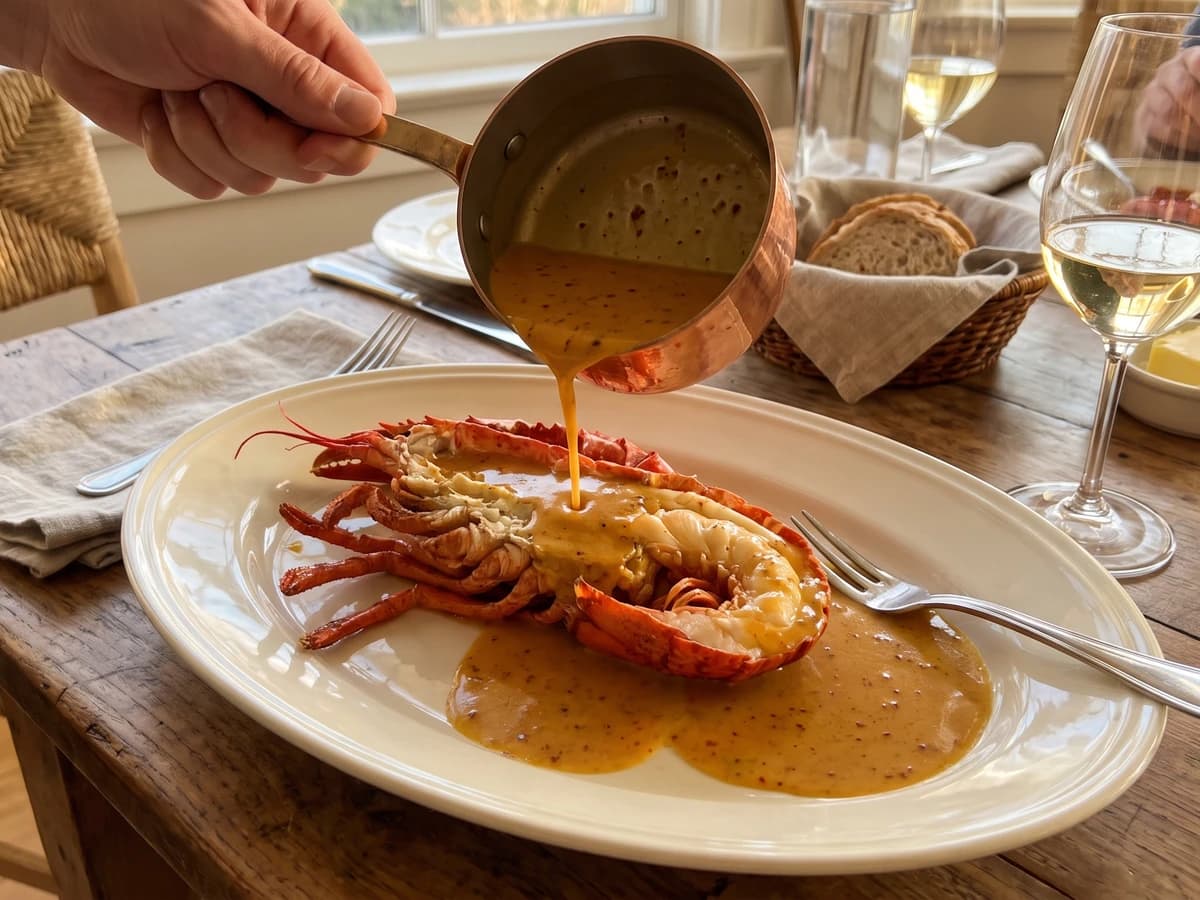
Sauce Orientale concentrates lobster-rich American Sauce with curry, then folds in cream away from the fire: a glossy, gently spiced derivative made for lobster, crayfish, and firm fish.
Chef Juliette
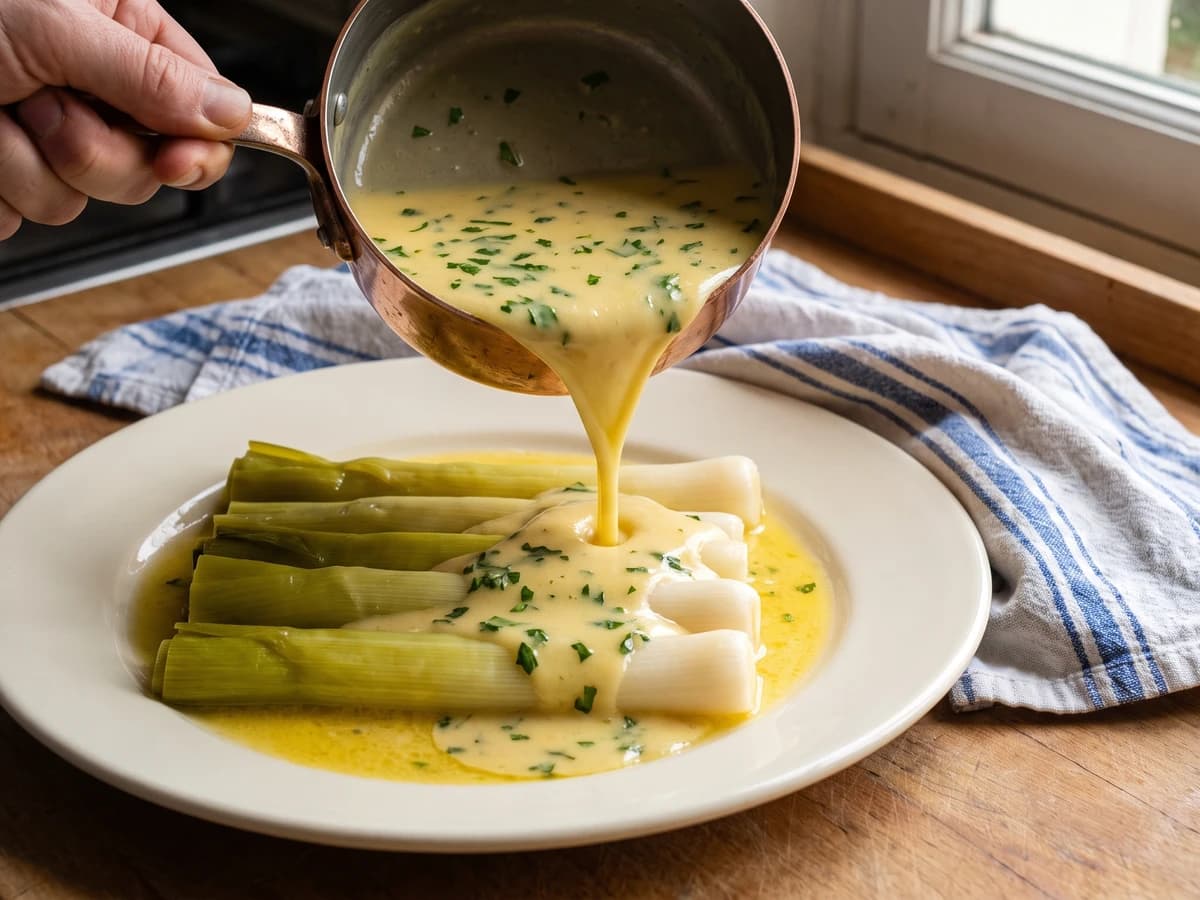
An old lesson in sauce families: Sauce Allemande takes mushroom liquor, then butter, lemon, and parsley, becoming a glossy Poulette for sheep's trotters, leeks, cauliflower, and anything needing gentle richness with a bright edge.