Chef Juliette
Ordinary or White Consommé
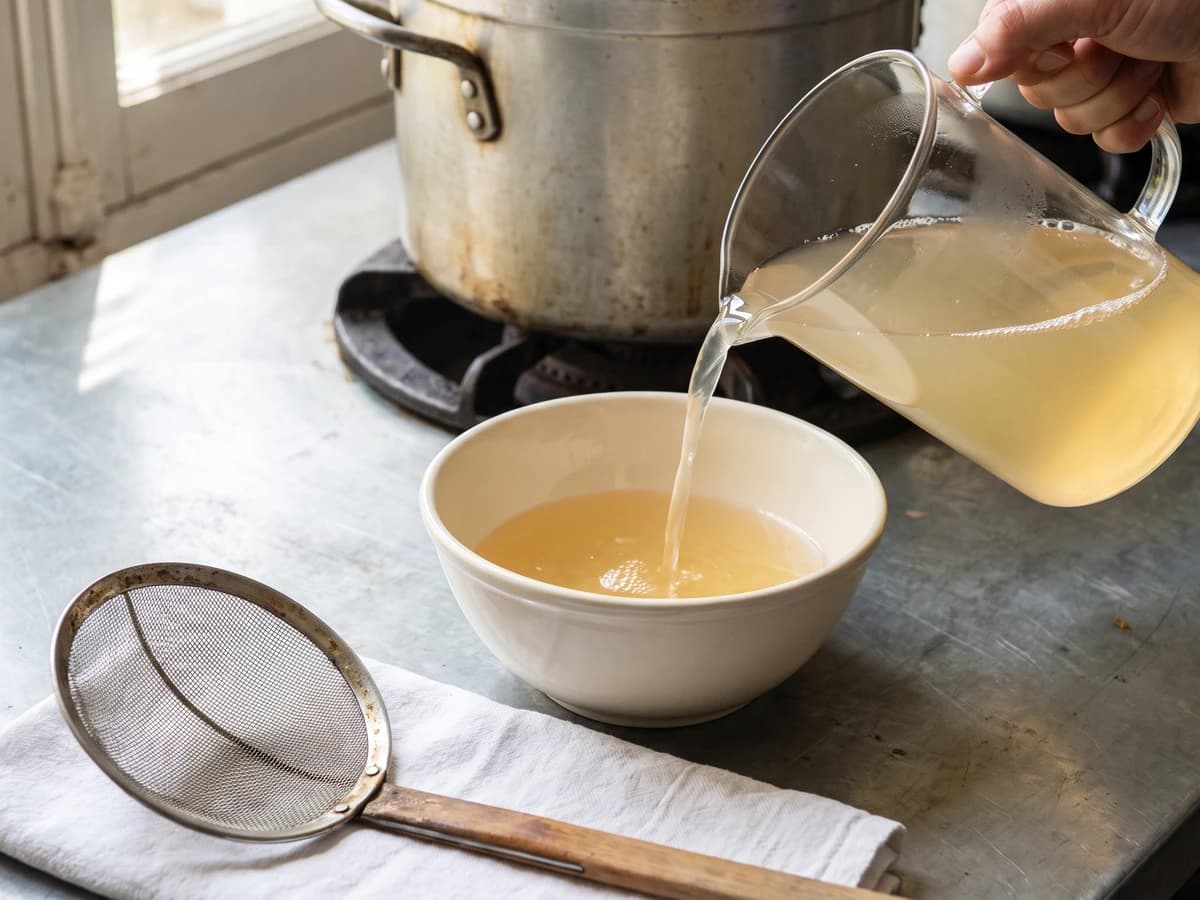
Beef shin, lean beef, and fowl begin in cold water and rise slowly toward a tremble. Skim before the boil, and you learn the quiet discipline that gives every clear French broth its backbone.
A cooking platform built around craft, culture, and the stories behind what we eat.
Created by Chef Juliette
Based on No. 149, Lobster Butter, from Le Guide Culinaire (1907) by Auguste Escoffier
Beurre de homard carries coral colour and deep lobster savour into classical sauces, keeping the old equal-weight rule and trading the brigade’s tammy for a fine home-kitchen sieve.
Beurre de homard (lobster butter) teaches concentration without reduction: shell, coral, and creamy tomalley surrender their colour and flavour because they are pounded into butter, not merely stirred beside it. The one true thing is texture. Unless the shell becomes a very fine paste before the butter goes in, the finished beurre de homard will taste gritty, however handsome its colour.
The original formula assumed a saucier at the mortar, lobster trimmings accumulating through service, and a tamis (drum sieve) large enough for brigade quantities. Your honest equivalents are one cooked lobster’s useful parts, a heavy mortar or sturdy processor, and a very fine sieve. The mortar and tammy are scaffolding and may change; the equal weight of lobster matter and butter, the pounding, and the thorough sieving are the dish and must stay. One cook, one stove, one evening.
Done properly, the butter emerges coral-orange, satin-smooth, and intensely fragrant, ready to carry lobster character into a Cardinal or Newburg preparation without adding shell fragments or watery stock. Keep everything cool while you work. Butter that melts before the sieving turns greasy, but ça se rattrape, and the method catches it at the moment it happens.
Beurre de homard belongs to the classical sauce pantry of Paris rather than one regional household, where coral, tomalley, and shells from whole lobsters passed from the fish station to the saucier instead of being discarded. It brought colour and savour to Cardinal preparations, while Newburg traveled from American dining rooms into French hotel cooking and joined the same working repertoire. This is not principally a butter for bread, but a concentrated seasoning measured into another sauce.
Quantity
About 2 packed cups (475 ml / 225 g), from 1 large or 2 small lobsters
gills, gut sac, intestinal vein, and grit removed; shells snipped small and thoroughly chilled
Quantity
1 cup (240 ml / 225 g)
cool and pliable, never melted
| Ingredient | Quantity |
|---|---|
| cooked lobster coral, tomalley, and clean shell piecesgills, gut sac, intestinal vein, and grit removed; shells snipped small and thoroughly chilled | About 2 packed cups (475 ml / 225 g), from 1 large or 2 small lobsters |
| unsalted buttercool and pliable, never melted | 1 cup (240 ml / 225 g) |
Keep every lobster part cold. Reserve the cooked coral, creamy tomalley, and clean body, leg, claw, and tail shells; discard the feathery gills, gut sac, intestinal vein, and any loose grit. Snip the shells into pieces no larger than ½ inch (1 cm). Weigh the coral, tomalley, and shells together, then weigh exactly the same amount of butter. This batch uses 225 g of each. The volume is guidance for shopping; equal weight is the formula.
Pound the shell pieces in small batches with a heavy mortar until they resemble coarse sand. Add the coral and tomalley, then continue grinding until the mixture becomes a damp, intensely coloured paste with no obvious shell flakes. If using a sturdy processor, first crush the shells beneath a folded kitchen towel with a rolling pin, then pulse in short bursts so the blade and mixture stay cool. Scrape the bowl often. This fineness decides the dish, so don't stop at merely chopped.
Add the pliable butter a quarter at a time, pounding or pulsing until each addition disappears before the next goes in. The paste should become evenly coral-orange and dense, with no yellow streaks. If it begins to shine, smear, or release oil, stop immediately and chill the bowl for 10 minutes. Ça se rattrape: once the butter is cool but still workable, continue gently. Never pour in melted butter, which changes the source method and makes proper sieving far more difficult.
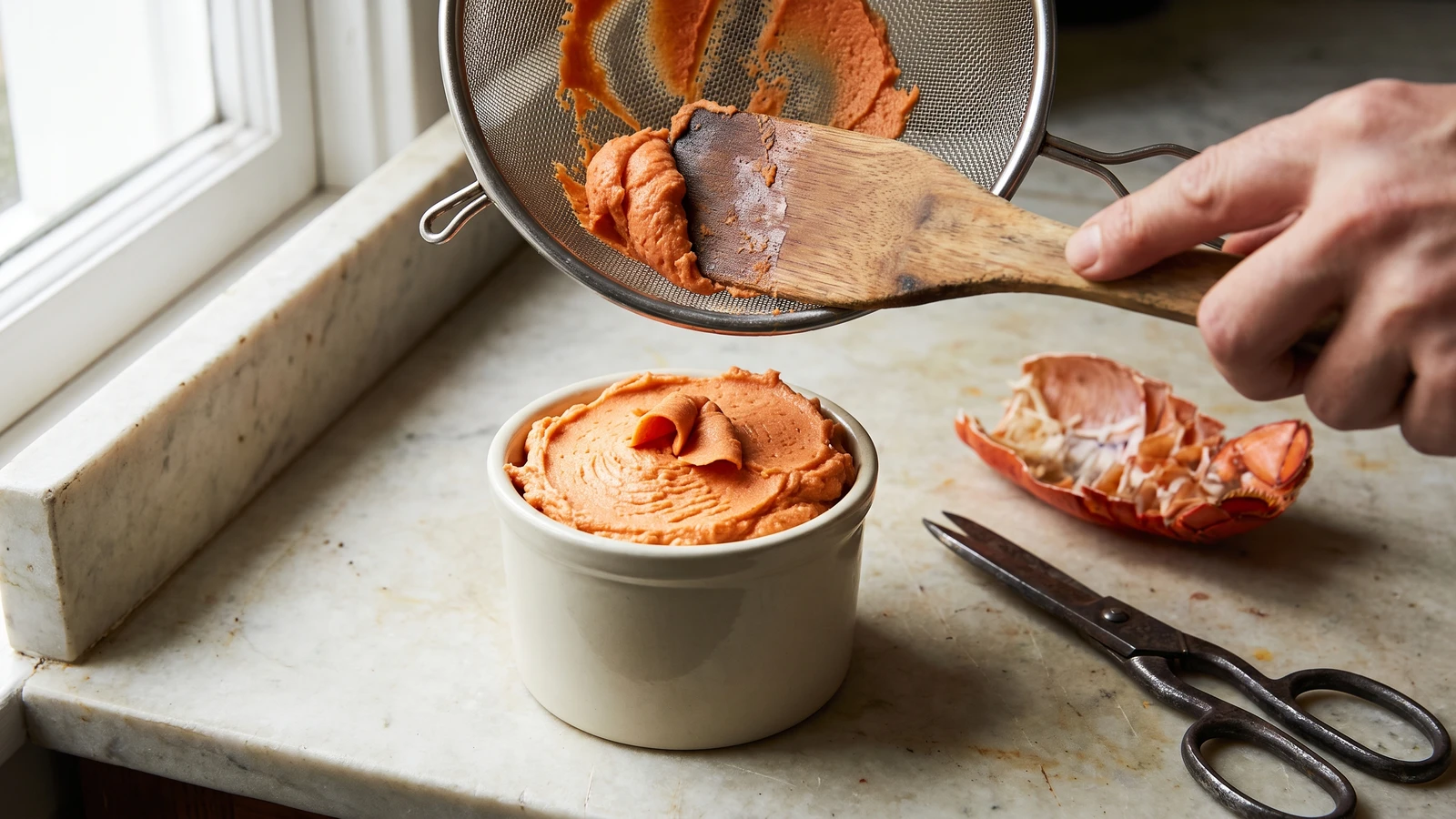
Set a very fine sieve or small tamis over a cold bowl. Press the paste through in small portions with a flexible scraper, working firmly across the mesh, then scrape the smooth butter from the underside. Continue until the shell residue feels dry and chalky. If the butter becomes too firm to pass, leave it for 3 to 5 minutes rather than warming it; if visible shell flecks slip through, chill the butter briefly and pass it through a finer sieve a second time.
Pack the beurre de homard tightly into a small covered crock, or portion it by the teaspoon for freezing, pressing out air pockets as you go. Chill for 1 hour, until firm and evenly coral-orange. To use it in a sauce, whisk in a small piece at a time over gentle heat and never let the sauce boil hard. If the butter separates, remove the pan from the heat, whisk a teaspoon of cold water into one spoonful until it smooths, then incorporate the remainder gradually. Ça se rattrape.
1 serving (about 14g)
Culinary guides, cultural storytelling, and the editorial depth that makes cooking meaningful.
Discover Culinary ExplorerChef Juliette
Beef shin, lean beef, and fowl begin in cold water and rise slowly toward a tremble. Skim before the boil, and you learn the quiet discipline that gives every clear French broth its backbone.
Chef Juliette
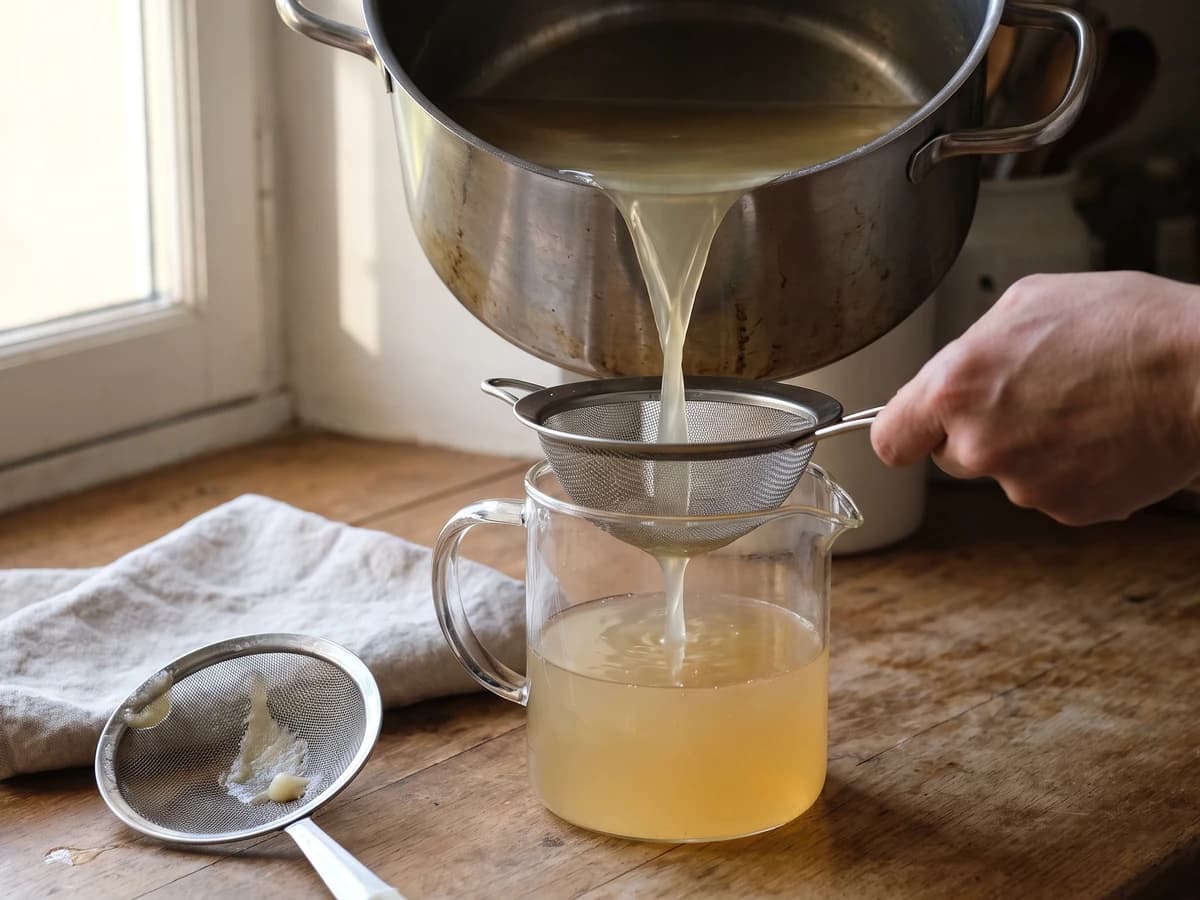
Break the veal bones small, then give them eight hours at a bare tremble. This pale, gelatinous fond becomes the quiet foundation beneath velouté, blanquette, and every sauce that must stay light.
Chef Juliette
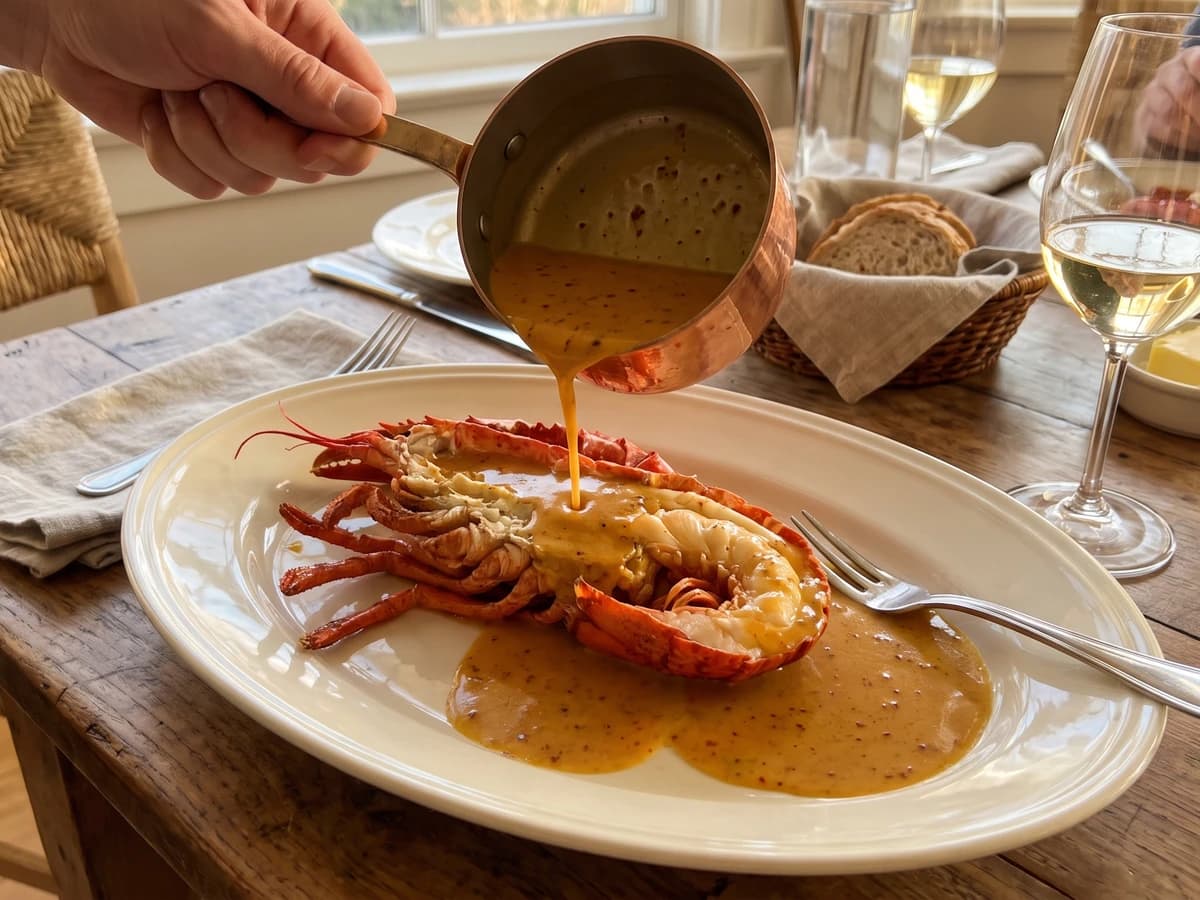
Sauce Orientale concentrates lobster-rich American Sauce with curry, then folds in cream away from the fire: a glossy, gently spiced derivative made for lobster, crayfish, and firm fish.
Chef Juliette
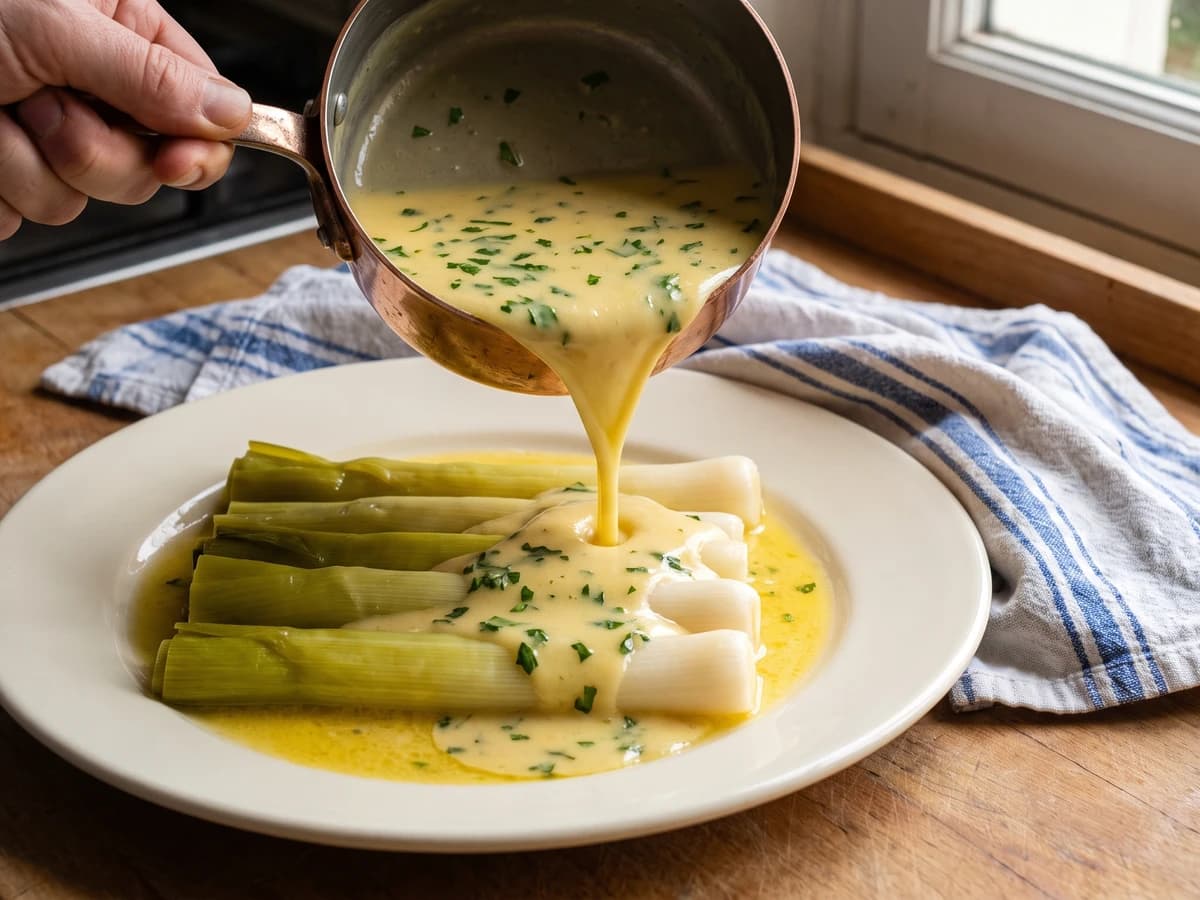
An old lesson in sauce families: Sauce Allemande takes mushroom liquor, then butter, lemon, and parsley, becoming a glossy Poulette for sheep's trotters, leeks, cauliflower, and anything needing gentle richness with a bright edge.