Chef Juliette
Ordinary or White Consommé
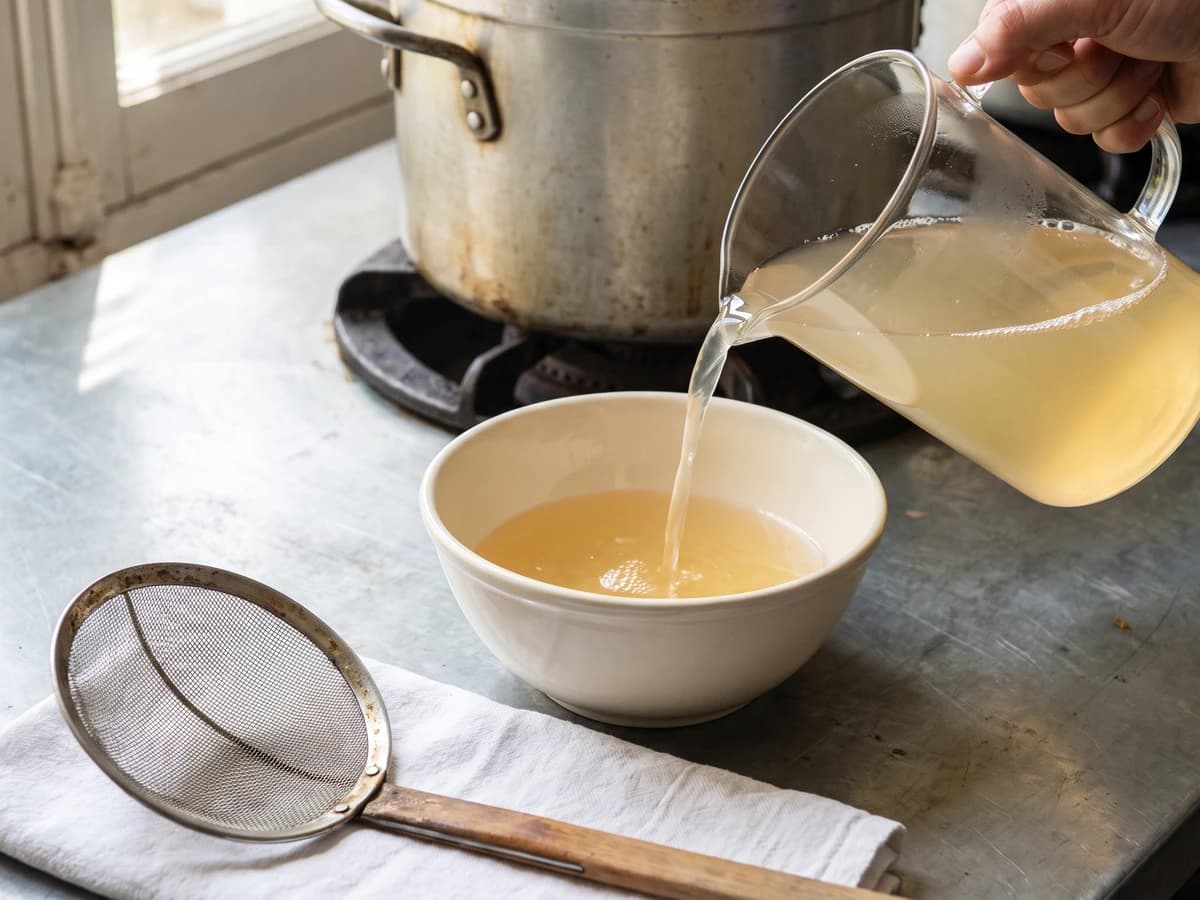
Beef shin, lean beef, and fowl begin in cold water and rise slowly toward a tremble. Skim before the boil, and you learn the quiet discipline that gives every clear French broth its backbone.
A cooking platform built around craft, culture, and the stories behind what we eat.
Created by Chef Juliette
Based on No. 148, Tarragon Butter, from Le Guide Culinaire (1907) by Auguste Escoffier
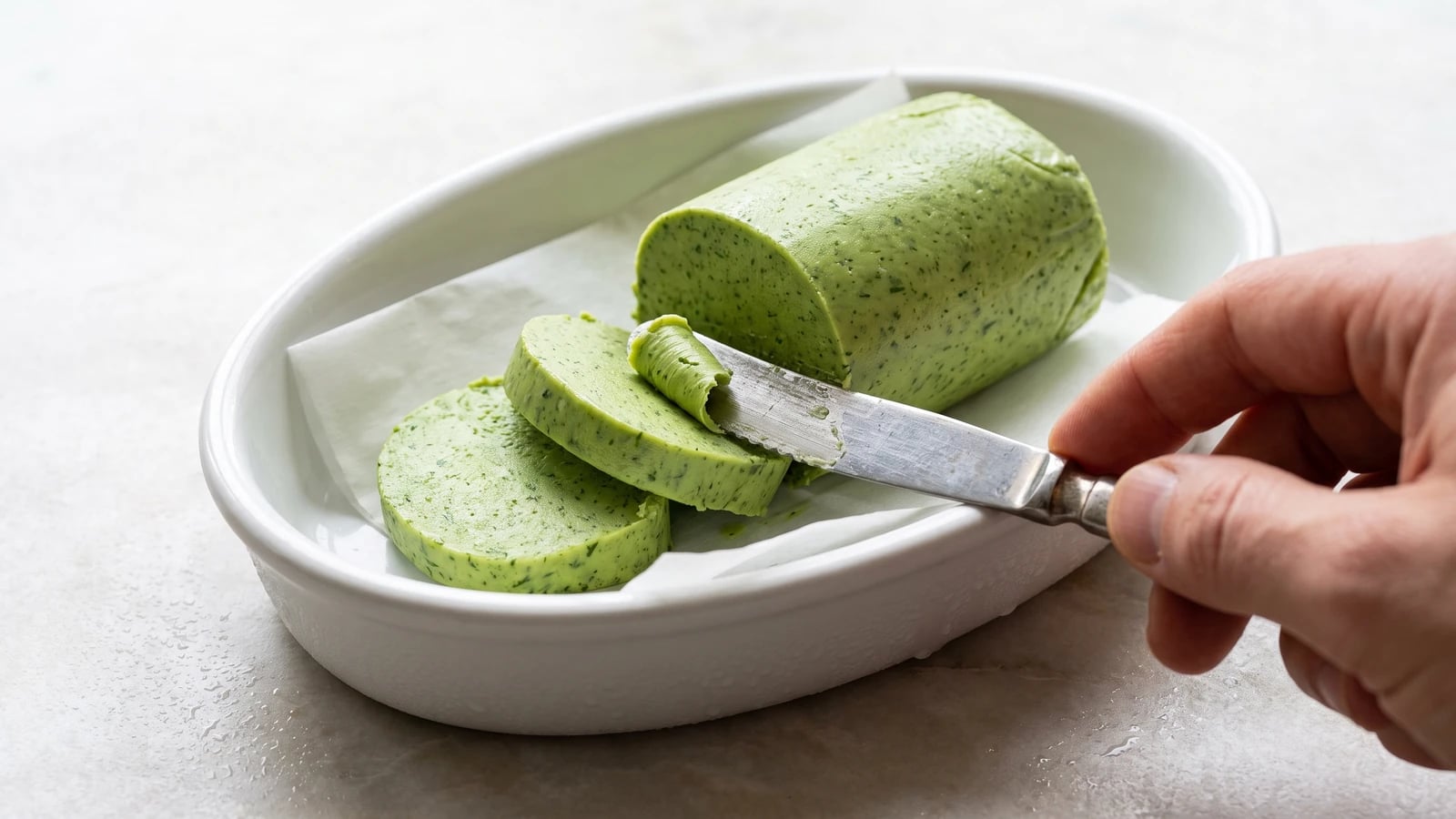
Beurre d'Estragon turns fresh tarragon into a vivid green finishing butter, preserving its anise perfume through a quick scald, an ice-cold shock, and patient sieving.
Beurre d'Estragon (tarragon butter) teaches the cleanest rule of herb butters: protect the herb before it meets the fat. Tarragon scalded for seconds, cooled at once, and pressed nearly dry gives the butter a vivid green colour and a rounded anise perfume without wet, grassy harshness. The quick scald is the dish, not ceremony.
The original formula assumed a saucier who could pound eight ounces of tarragon in a heavy mortar, work it into a pound of butter, and force the whole batch through a tammy. Here the quantity is reduced to one quarter while its one-to-two ratio remains exact. A small processor replaces the pounding arm, and a fine-mesh sieve replaces the tammy. Those tools were brigade scaffolding and can change; the scalding, immediate cooling, thorough pressing, and final sieving must stay. One cook, one stove, one evening.
The finished beurre d'estragon should be cool, satin-dense, and green all the way through, with no visible water and no threads of stem. Before you begin, set out the ice bath and two dry towels: pressing the blanched tarragon nearly dry is the one step that decides the butter.
Beurre d'estragon belongs to the classical sauce pantry of Paris and the wider French grand kitchen, where herb butters were kept cold to finish fish, poultry, vegetables, and sauces at a moment's notice. Its method is more exact than that of a merely chopped compound butter: scalding fixes the green, pounding disperses the herb through the fat, and the tammy removes every fibrous thread. What passed from the sauce station to the bourgeois home table was not a diluted technique, only a smaller batch.
Quantity
3 loosely packed cups (710 ml / 57 g)
tough stems removed
Quantity
1/2 cup (120 ml / 113 g)
softened but still cool
| Ingredient | Quantity |
|---|---|
| fresh French tarragon leaves and tender tipstough stems removed | 3 loosely packed cups (710 ml / 57 g) |
| unsalted buttersoftened but still cool | 1/2 cup (120 ml / 113 g) |
Cut the butter into small pieces and leave it until pliable but still cool, about 18°C to 20°C. Press a piece with your finger: it should yield cleanly without looking shiny or oily. Melted butter cannot hold the herb evenly, so keep it away from the stove while the water heats.
Bring a medium saucepan of water to a full boil and prepare a large bowl of ice water beside it. Lower in the tarragon and blanchir, scald it briefly, for 10 to 15 seconds, pressing floating leaves beneath the water. The herb should collapse and turn a clearer green while retaining its clean anise scent. Lift it immediately into the ice water and stir until completely cold. Do not let it linger in the boiling water; overcooked tarragon loses the perfume the butter is meant to preserve.
Drain the tarragon, squeeze it firmly between your hands, then spread it across a clean dry towel. Roll the towel tightly around the herb and press with both hands until no more water marks the cloth. Open it, move the tarragon to a fresh dry patch, and press again. If droplets appear when you squeeze a pinch, do not proceed. Ça se rattrape: wrap it in the second towel and press once more. Water left here makes the finished butter weep and dulls its keeping quality.
Put the dried tarragon in a small food processor and pulse until very finely minced. Add one quarter of the softened butter and process to a thick green paste, scraping the bowl as needed. Add the remaining butter in three portions, processing only until the colour is even and no large herb pieces remain. If the butter becomes glossy or begins collecting around the blade, stop and chill the bowl for 5 to 10 minutes, then continue. It has grown too warm, not failed.
Set a fine-mesh sieve over a cool bowl and press the tarragon butter through it with a flexible scraper or the back of a sturdy spoon. Work firmly against the mesh, collecting the smooth butter from underneath as you go. Discard the dry threads left behind. This is the home equivalent of the tammy, and it is what turns a chopped herb butter into beurre d'estragon with a fine, even body.
Scrape the butter onto parchment and form it into a compact log about 4 cm thick, twisting the ends closed, or press it into a small covered crock. Chill for at least 1 hour before cutting. Use a coin to finish fish, chicken, green vegetables, or a pan sauce, letting it soften into a glossy green pool rather than frying it. Return the remainder promptly to the cold. À table!
1 serving (about 15g)
Culinary guides, cultural storytelling, and the editorial depth that makes cooking meaningful.
Discover Culinary ExplorerChef Juliette
Beef shin, lean beef, and fowl begin in cold water and rise slowly toward a tremble. Skim before the boil, and you learn the quiet discipline that gives every clear French broth its backbone.
Chef Juliette
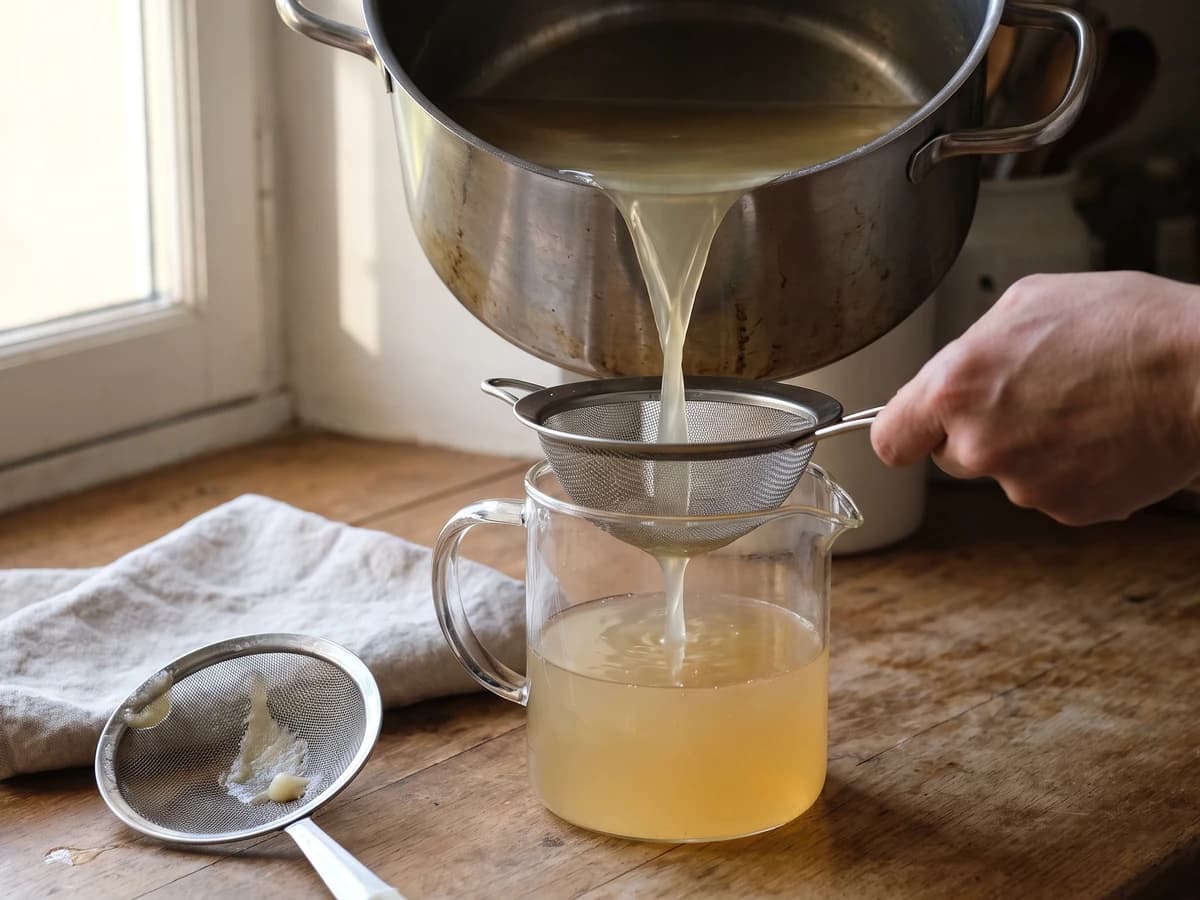
Break the veal bones small, then give them eight hours at a bare tremble. This pale, gelatinous fond becomes the quiet foundation beneath velouté, blanquette, and every sauce that must stay light.
Chef Juliette
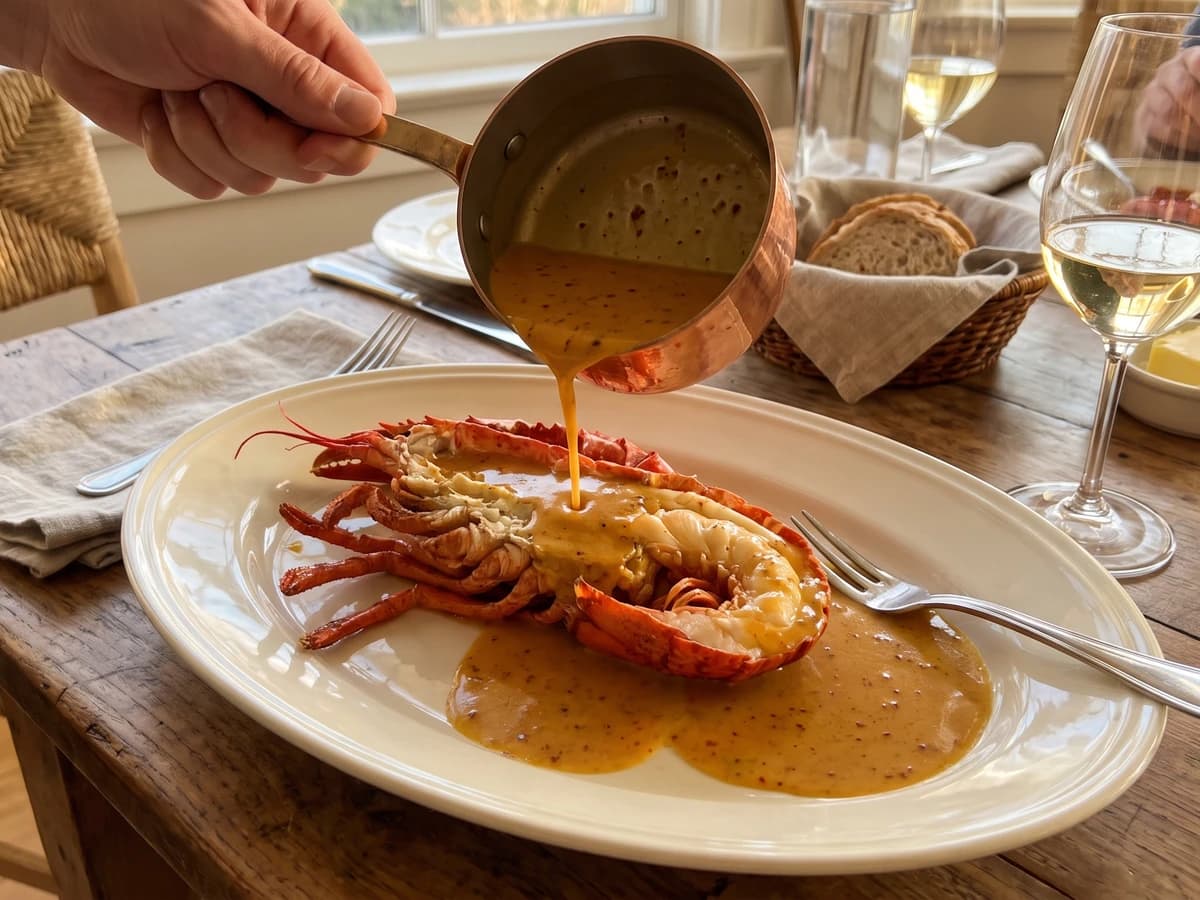
Sauce Orientale concentrates lobster-rich American Sauce with curry, then folds in cream away from the fire: a glossy, gently spiced derivative made for lobster, crayfish, and firm fish.
Chef Juliette
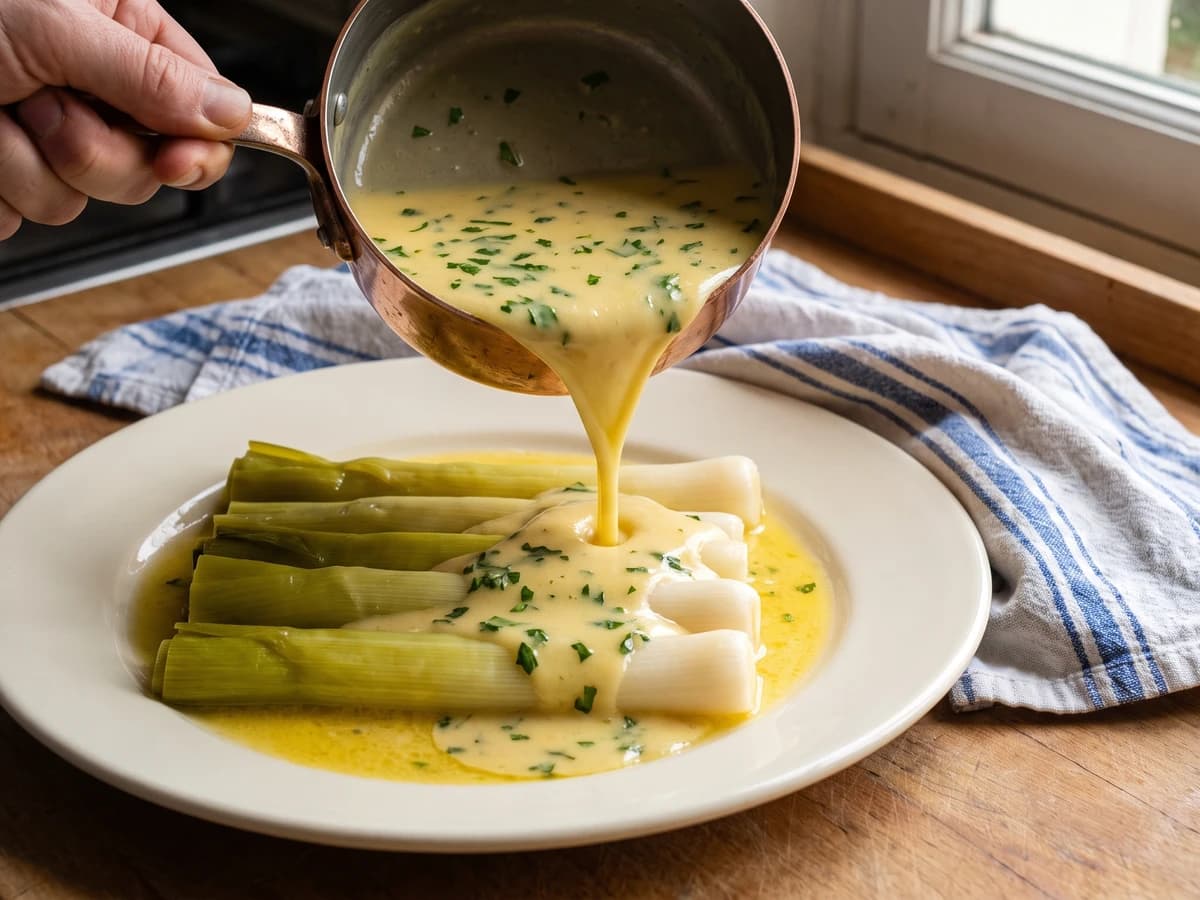
An old lesson in sauce families: Sauce Allemande takes mushroom liquor, then butter, lemon, and parsley, becoming a glossy Poulette for sheep's trotters, leeks, cauliflower, and anything needing gentle richness with a bright edge.