Chef Juliette
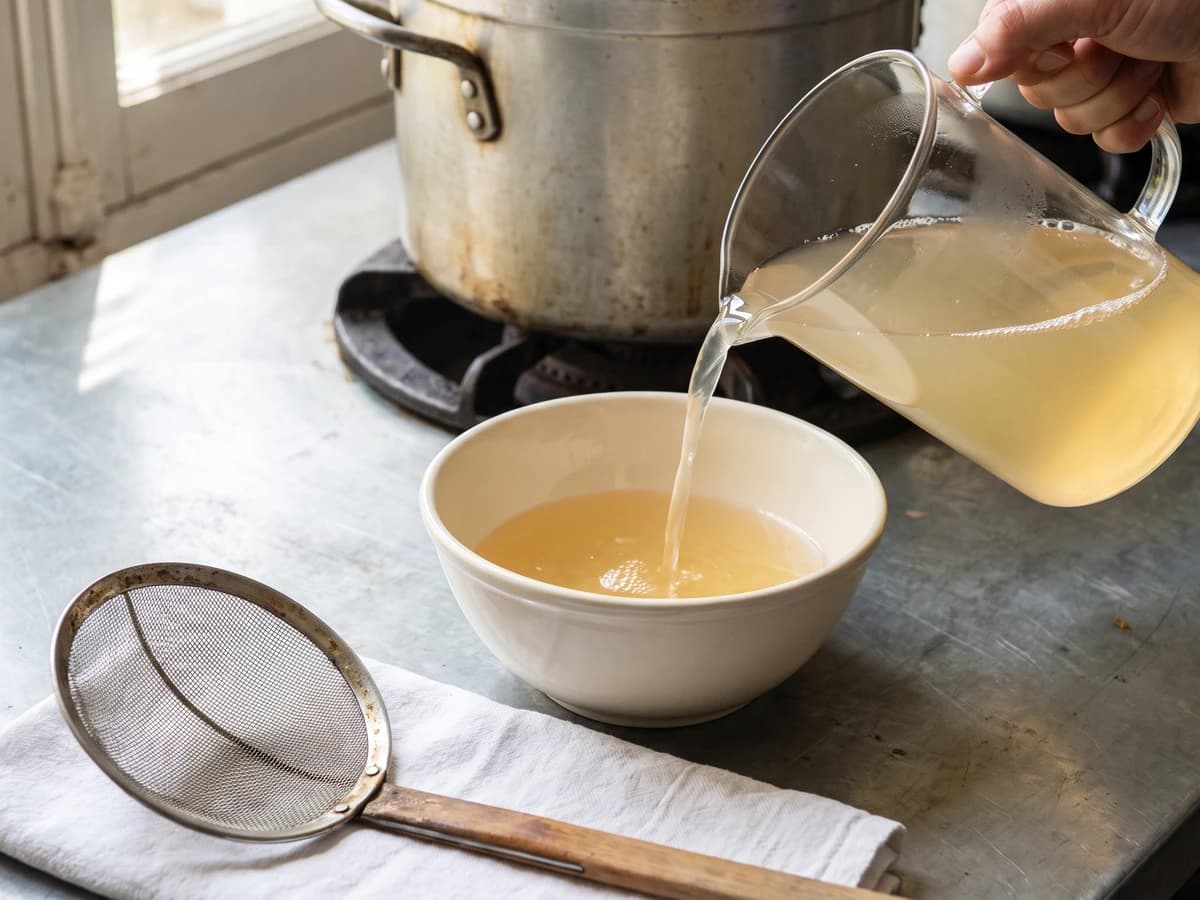
Ordinary or White Consommé
Beef shin, lean beef, and fowl begin in cold water and rise slowly toward a tremble. Skim before the boil, and you learn the quiet discipline that gives every clear French broth its backbone.
A cooking platform built around craft, culture, and the stories behind what we eat.
Created by Chef Juliette
Based on No. 146, Shallot Butter, from Le Guide Culinaire (1907) by Auguste Escoffier
Beurre d'échalote teaches restraint: scald away the shallot's raw bite, press out every drop of water, then bind its perfume into real butter for classical sauces that finish cleanly and gleam.
Beurre d'échalote (shallot butter) teaches one true thing before you touch the pan: perfume and raw bite are not the same. A quick scald takes away the shallot's harshness without cooking out its character, but only if you press it thoroughly afterward. Water left behind makes the butter weep, so dryness decides the dish.
The original method assumed a saucier with a clean cloth, a mortar, a tammy, and enough hands to pound and pass a full pound at a time. For one cook, the cloth bundle becomes a fine-mesh strainer, the mortar becomes a small processor, and the brigade batch is halved to four ounces each of shallot and butter. Those are scaffolding changes. The brief scald, heavy pressing, equal-weight ratio, and final passage through a sieve are the dish and must stay.
The finished beurre d'échalote is pale, smooth, and quietly fragrant, with no raw onion sting and no watery beads. Press the shallots until a fresh section of towel remains dry beneath them. That is the step that matters most.
Beurre d'échalote belongs to the classical sauce pantry of Paris, where compound butters allowed the saucier to finish preparations with precise seasoning at the last moment. It traveled into bistro cooking chiefly as a supporting butter for sauces such as Bercy and Ravigote, rather than as a spread for bread. The boiling-water wash is sometimes mistaken for ordinary blanching, but its purpose is narrower: remove the shallot's acrid edge while preserving its perfume.
Quantity
¾ cup (180 ml / 113 g)
roughly minced
Quantity
½ cup (120 ml / 113 g)
softened to cool pliability and cubed
Quantity
4 cups (950 ml / 950 g)
brought to a full boil
| Ingredient | Quantity |
|---|---|
| peeled shallotsroughly minced | ¾ cup (180 ml / 113 g) |
| fresh unsalted buttersoftened to cool pliability and cubed | ½ cup (120 ml / 113 g) |
| waterbrought to a full boil | 4 cups (950 ml / 950 g) |
Peel and roughly mince the shallots, stopping at small, distinct pieces rather than a wet paste. Measure them after trimming so their weight matches the butter exactly. C'est la même grammaire as any compound butter: control the water first, then the fat can carry the flavour cleanly.
Bring the water to a full boil. Put the minced shallots in a fine-mesh strainer, lower it into the boiling water, and stir for 15 seconds so every piece is washed by the water. Lift the strainer immediately and spread the shallots across it to cool for about 5 minutes. Do not leave them soaking and do not cook them until soft; the scald should remove the raw sting while leaving the shallot's perfume intact.
Gather the cooled shallots in a clean lint-free towel, twist the bundle tightly, and press it beneath a heavy skillet for 5 minutes. Open the towel, move the shallots to a dry section, and press again until no bead of water appears. If the cloth still becomes wet, don't proceed and hope for the best. Ça se rattrape: use a fresh dry towel and press once more. Residual water makes the finished butter bead, dulls its texture, and shortens its keeping time.
Put the pressed shallots and their equal weight of cool, pliable butter into a small food processor. Pulse in short bursts, scraping the bowl often, until the shallots are pounded fine and dispersed evenly through the butter. The mixture should remain creamy but hold its shape. If it turns shiny or greasy, the butter has warmed too far. Ça se rattrape: chill the bowl for 10 minutes, then continue with two or three brief pulses.
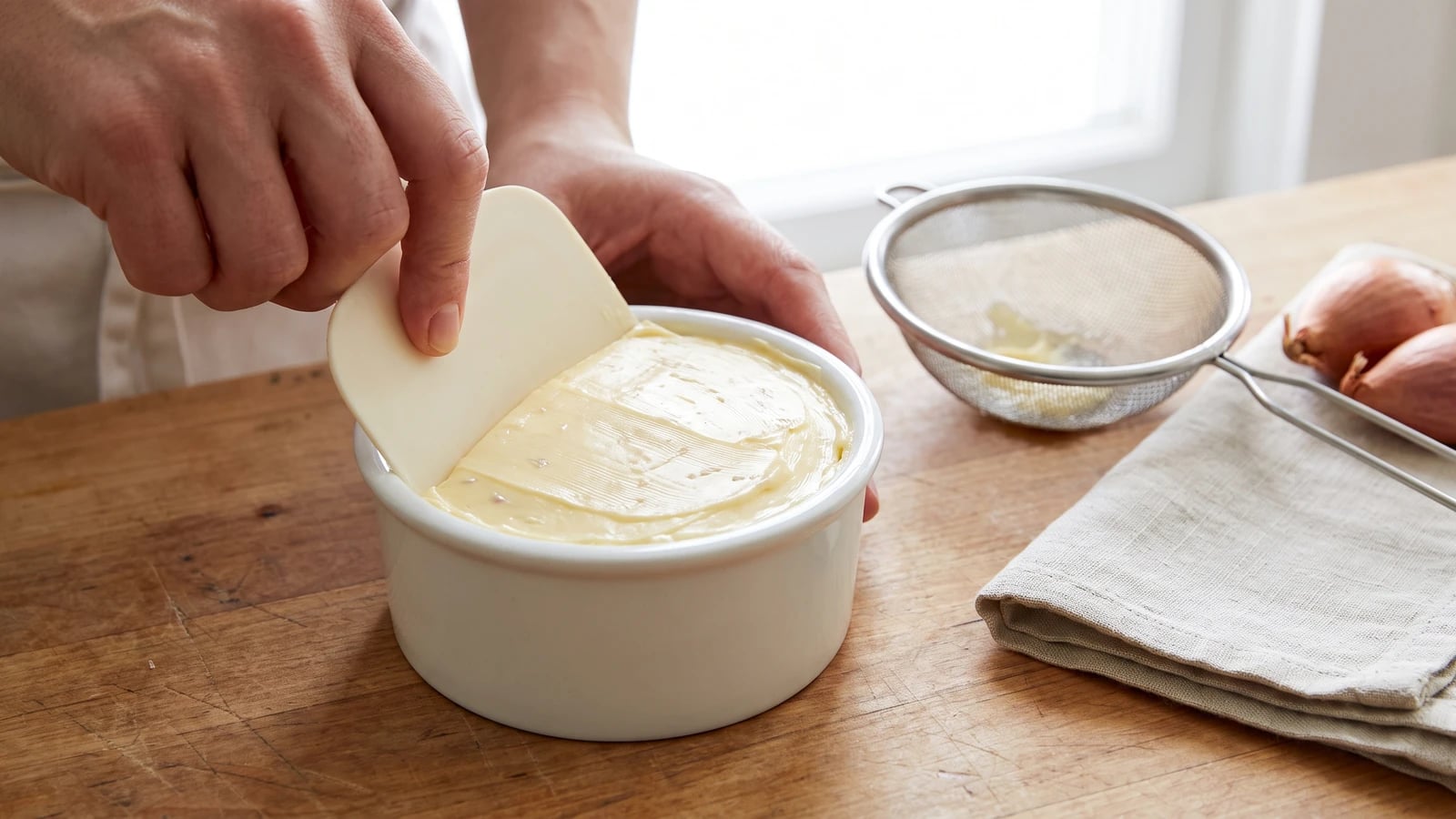
Set a fine-mesh sieve over a cool bowl. Press the butter through with a flexible scraper, working in small amounts, then collect the smooth butter clinging to the underside. This replaces the original tammy without abandoning its purpose: removing coarse shallot fibres and giving the beurre d'échalote its fine, unified texture. If the butter becomes too firm to pass, wait 2 minutes at room temperature. Never warm it over heat.
Pack the beurre d'échalote into a small crock, pressing out air pockets, or shape it into a tight cylinder in parchment. Chill for at least 30 minutes before slicing or measuring. Use it to accentuate Bercy, Ravigote, and other preparations that call for its softened shallot perfume, adding it as the particular sauce formula directs. Keep it cold until needed.
1 serving (about 190g)
Culinary guides, cultural storytelling, and the editorial depth that makes cooking meaningful.
Discover Culinary ExplorerChef Juliette
Beef shin, lean beef, and fowl begin in cold water and rise slowly toward a tremble. Skim before the boil, and you learn the quiet discipline that gives every clear French broth its backbone.
Chef Juliette
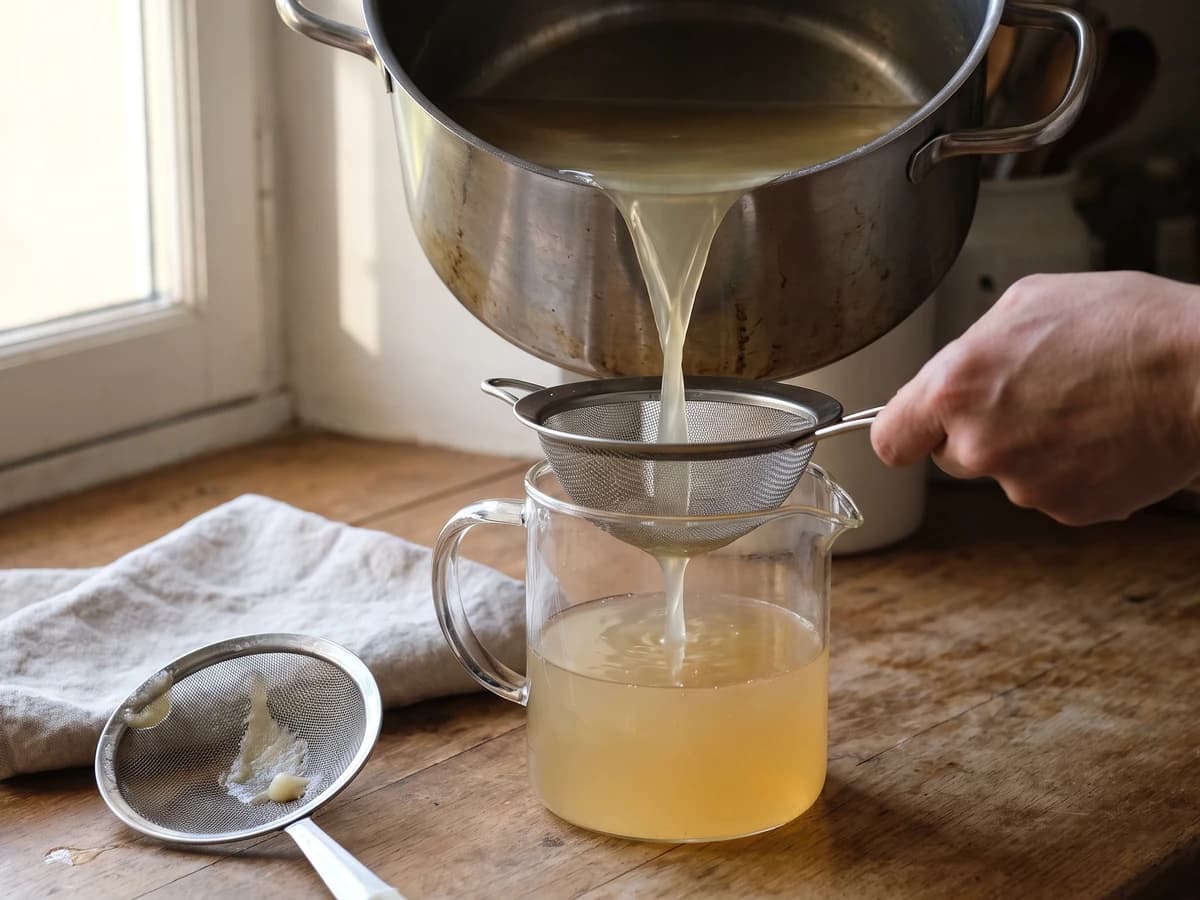
Break the veal bones small, then give them eight hours at a bare tremble. This pale, gelatinous fond becomes the quiet foundation beneath velouté, blanquette, and every sauce that must stay light.
Chef Juliette
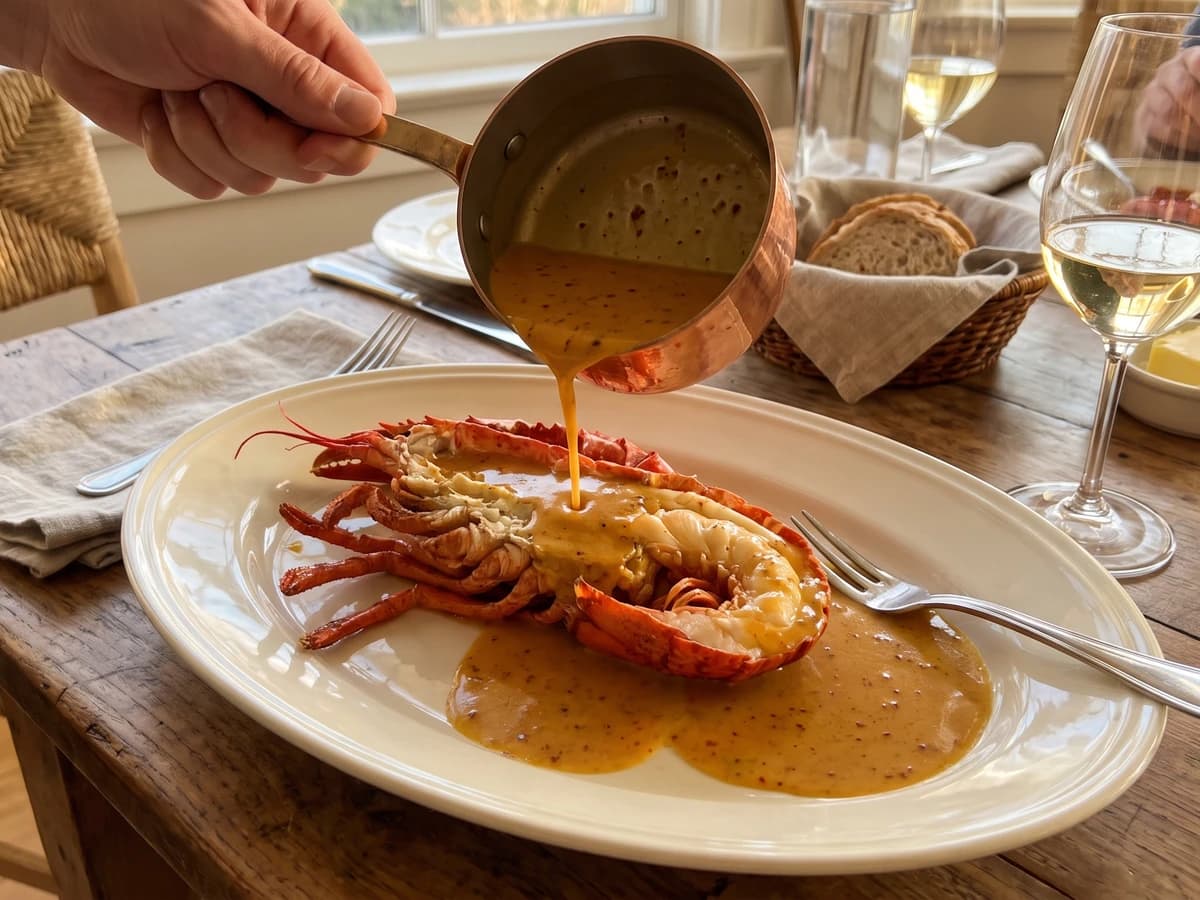
Sauce Orientale concentrates lobster-rich American Sauce with curry, then folds in cream away from the fire: a glossy, gently spiced derivative made for lobster, crayfish, and firm fish.
Chef Juliette
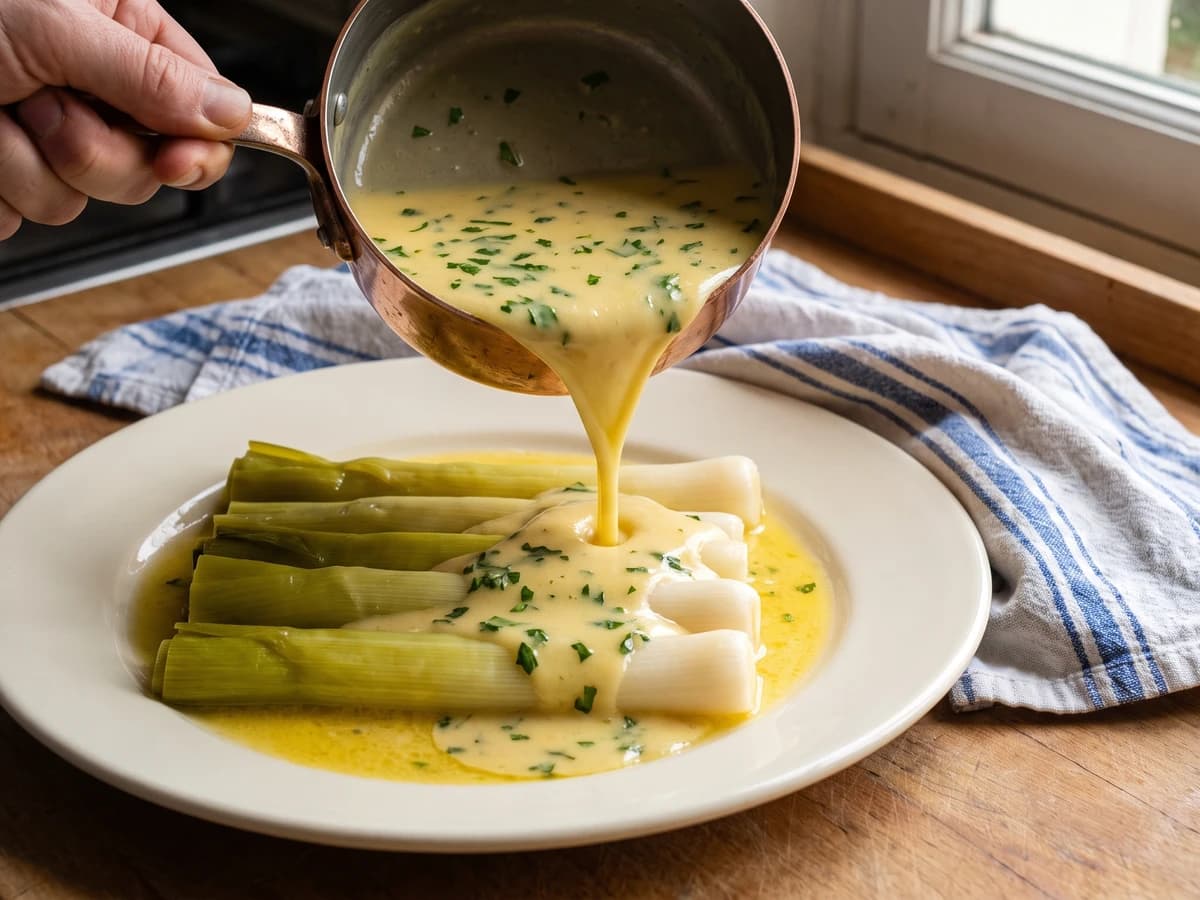
An old lesson in sauce families: Sauce Allemande takes mushroom liquor, then butter, lemon, and parsley, becoming a glossy Poulette for sheep's trotters, leeks, cauliflower, and anything needing gentle richness with a bright edge.