Chef Juliette
Ordinary or White Consommé
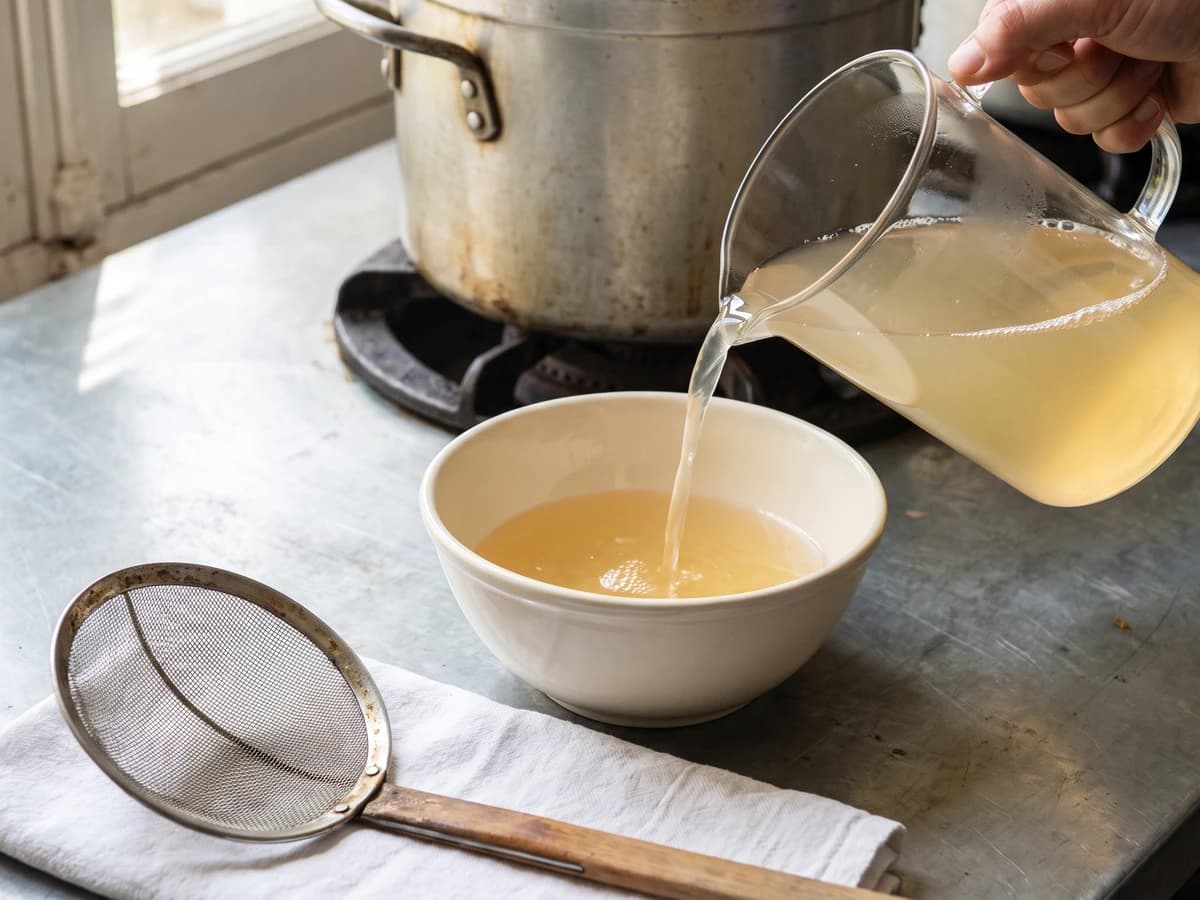
Beef shin, lean beef, and fowl begin in cold water and rise slowly toward a tremble. Skim before the boil, and you learn the quiet discipline that gives every clear French broth its backbone.
A cooking platform built around craft, culture, and the stories behind what we eat.
Created by Chef Juliette
Based on No. 145, Shrimp Butter, from Le Guide Culinaire (1907) by Auguste Escoffier
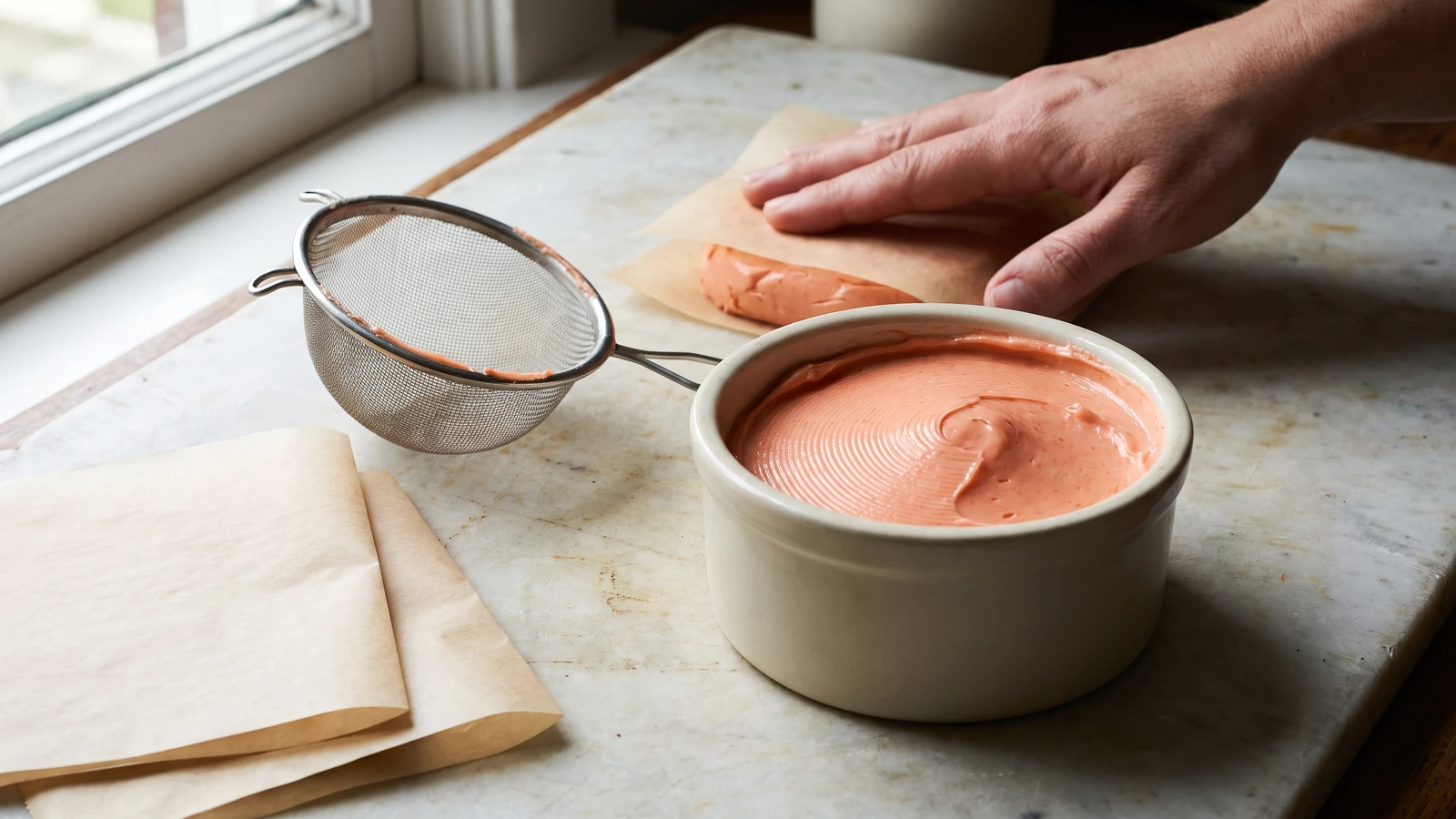
Beurre de crevettes turns the shrimp bowl’s scraps into coral silk: equal weights of cooked remains and real butter, ground fine and passed twice through the sieve until no shell grit survives.
Beurre de crevettes (shrimp butter) teaches the cleanest economy in the sauce canon: shells, heads, and trimmings still hold coral colour and concentrated shrimp flavour, and butter carries both into the finished sauce. The one true thing to know before touching the machine is that sieving is not cleanup after the work. The tamisage (fine sieving) is the work. If shell grit survives, the butter is not finished.
The source formula assumes a saucier on staff, a heavy mortar, a silk-fine tammy, a cool larder, and a steady supply of remains from the fish station. A stock never off the fire and a salamander belonged elsewhere in that kitchen; this preparation needs neither. The home equivalent is a food processor worked in small batches, a fine sieve used twice, and the refrigerator. The open-ended brigade quantity becomes five pounds of cooked remains matched with exactly five pounds of butter, enough for a useful freezer batch while preserving the source’s one-to-one ratio. The machine is scaffolding and may change. The ratio and the tamisage are the dish and must stay.
Keep the mixture cool enough to remain creamy and opaque. If the processor warms it into an oily paste, stop and chill the batch before continuing. Most of all, make the second pass through a clean sieve and test the butter between finger and thumb. Smoothness decides everything here. One cook, one stove, one evening, and the stove can stay cold.
Beurre de crevettes belongs to the classical Parisian saucier’s pantry, where fish-station remains moved into the sauce kitchen instead of the bin. Shells, heads, and clean trimmings were pounded with their own weight of butter, giving sauces both shellfish flavour and the coral colour that water alone could not extract. Its refinement comes from the tammy rather than extra seasoning: generations of sauce cooks understood that the plainest formula demands the most exact sieving.
Quantity
about 20 to 24 cups loosely packed (2.27 kg / 5 lb)
heads, shells, tail shells, and clean meat trimmings, unseasoned and well drained
Quantity
10 cups (2.37 L / 2.27 kg / 5 lb)
pliable but cool, about 18°C / 65°F
| Ingredient | Quantity |
|---|---|
| cold cooked shrimp remainsheads, shells, tail shells, and clean meat trimmings, unseasoned and well drained | about 20 to 24 cups loosely packed (2.27 kg / 5 lb) |
| unsalted butterpliable but cool, about 18°C / 65°F | 10 cups (2.37 L / 2.27 kg / 5 lb) |
Use only cooked, unseasoned shrimp remains that have been kept properly chilled. Remove paper, herbs, lemon pips, or other table debris, then drain and blot the remains thoroughly; trapped water shortens the butter’s keeping life and weakens its flavour. Clip long points from large heads with kitchen shears. Weigh the remains, then weigh exactly the same amount of butter. Divide each into five equal portions so the processor never crowds.
Put one portion of shrimp remains into the food processor and pulse until the heads and shells are reduced to a damp, very fine meal. Add the matching portion of butter a little at a time, scraping the bowl as necessary, then process until the mixture becomes an even coral paste with no visible streaks of plain butter. Repeat with the remaining portions. If friction makes a batch shiny, loose, or oily, stop and chill it for 10 to 15 minutes until opaque, then continue. Do not add water and do not melt the butter.
Set a very fine mesh sieve over a chilled bowl. Press the coral paste through in manageable spoonfuls, working it firmly against the mesh with a flexible scraper or the back of a sturdy spoon. Scrape the smooth butter from the underside of the sieve into the bowl and continue until the coarse shell residue feels nearly dry. If the butter is too firm to pass, leave that portion at cool room temperature for five minutes; warmth should make it pliable, never melted.
Wash and dry the sieve completely, or set a second clean fine sieve over another chilled bowl, then pass every spoonful of butter through again. A domestic sieve is rarely as fine as the source formula’s tammy, so this second tamisage is the honest equivalent, not an optional refinement. Rub a pea-sized amount between finger and thumb. If it feels sandy, ça se rattrape: send the entire batch through a finer sieve once more. Never disguise grit by loosening the butter with liquid.
Pack the finished beurre de crevettes into small airtight containers, pressing out air pockets and laying parchment directly against the surface. Chill for about 1 hour, until firm and evenly coral. The exact yield varies with how much butter the shells retain; collect what passes through without adding extra butter to chase a number. Refrigerate what will be used within three days and freeze the rest in practical portions.
1 serving (about 18g)
Culinary guides, cultural storytelling, and the editorial depth that makes cooking meaningful.
Discover Culinary ExplorerChef Juliette
Beef shin, lean beef, and fowl begin in cold water and rise slowly toward a tremble. Skim before the boil, and you learn the quiet discipline that gives every clear French broth its backbone.
Chef Juliette
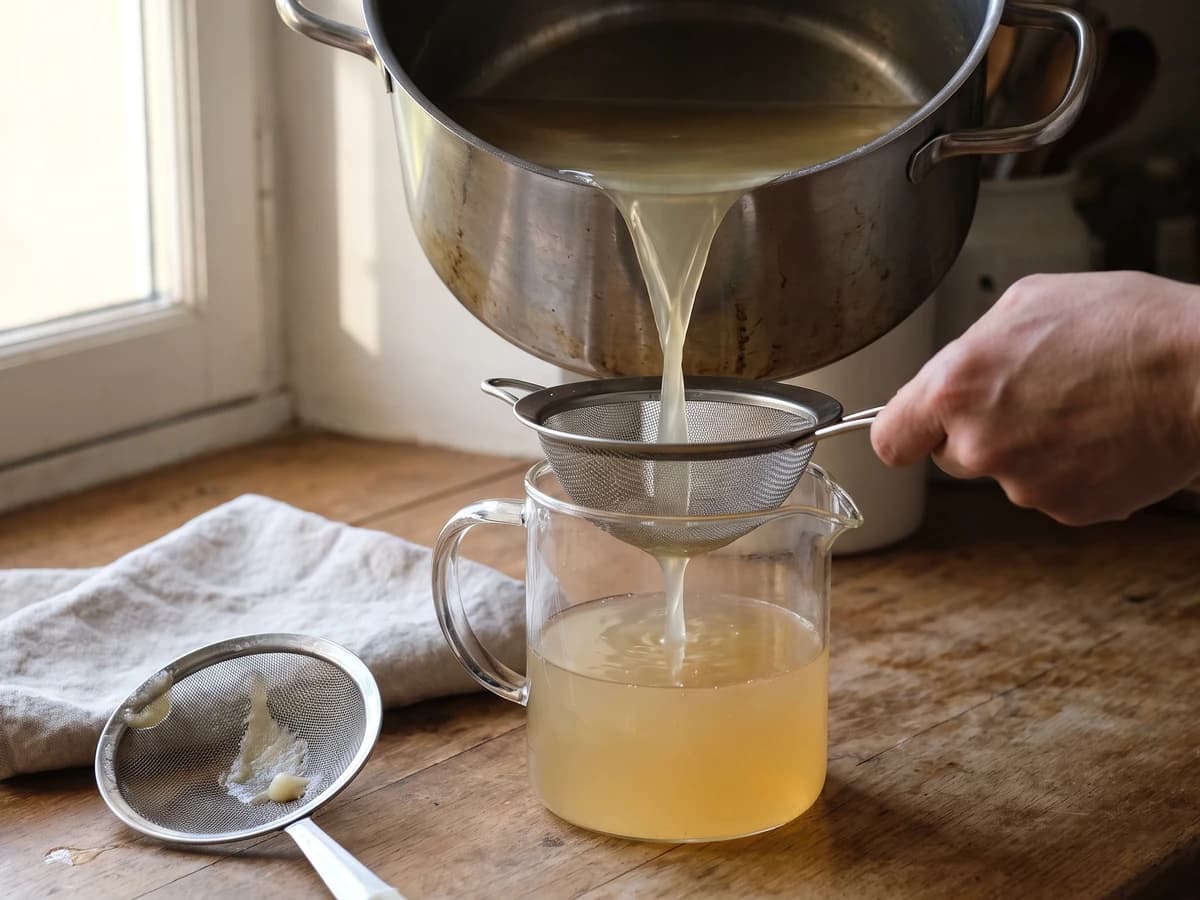
Break the veal bones small, then give them eight hours at a bare tremble. This pale, gelatinous fond becomes the quiet foundation beneath velouté, blanquette, and every sauce that must stay light.
Chef Juliette
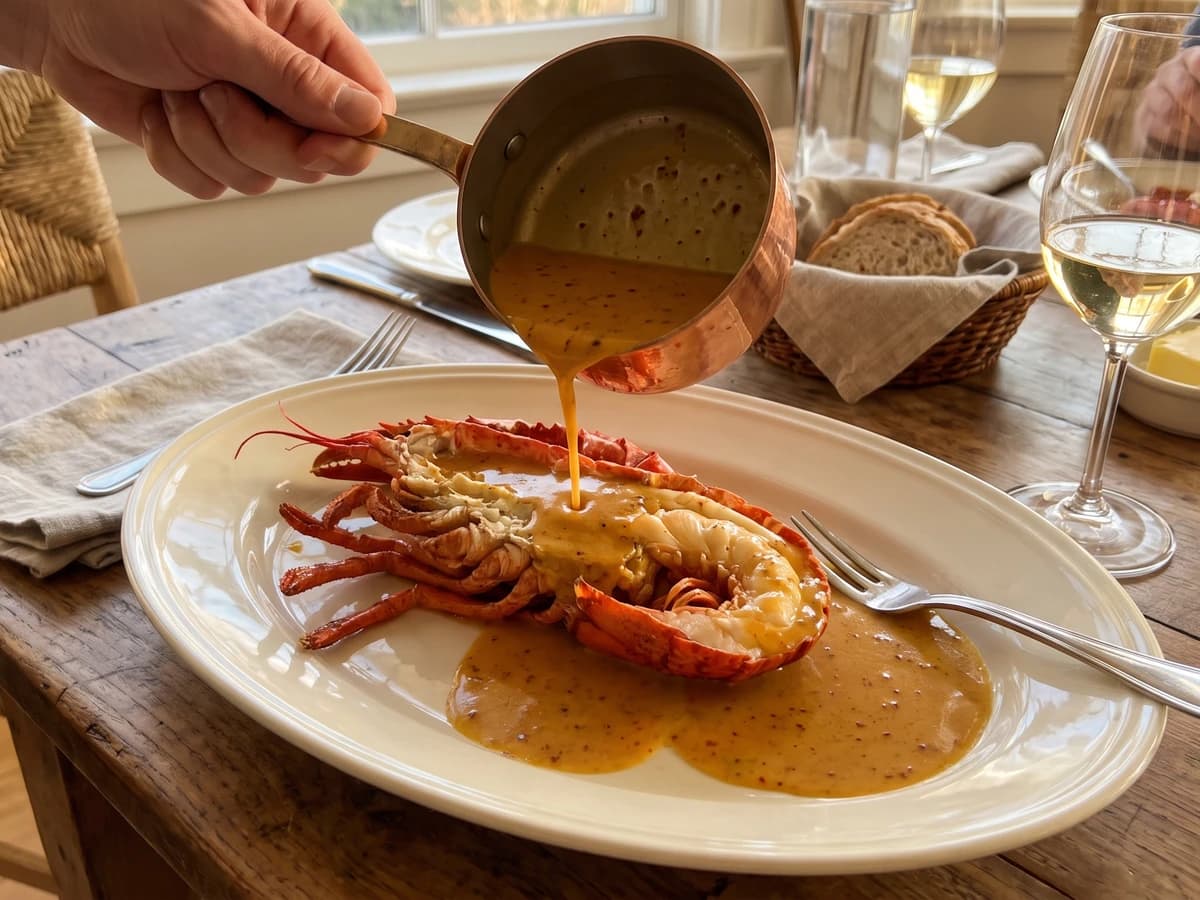
Sauce Orientale concentrates lobster-rich American Sauce with curry, then folds in cream away from the fire: a glossy, gently spiced derivative made for lobster, crayfish, and firm fish.
Chef Juliette
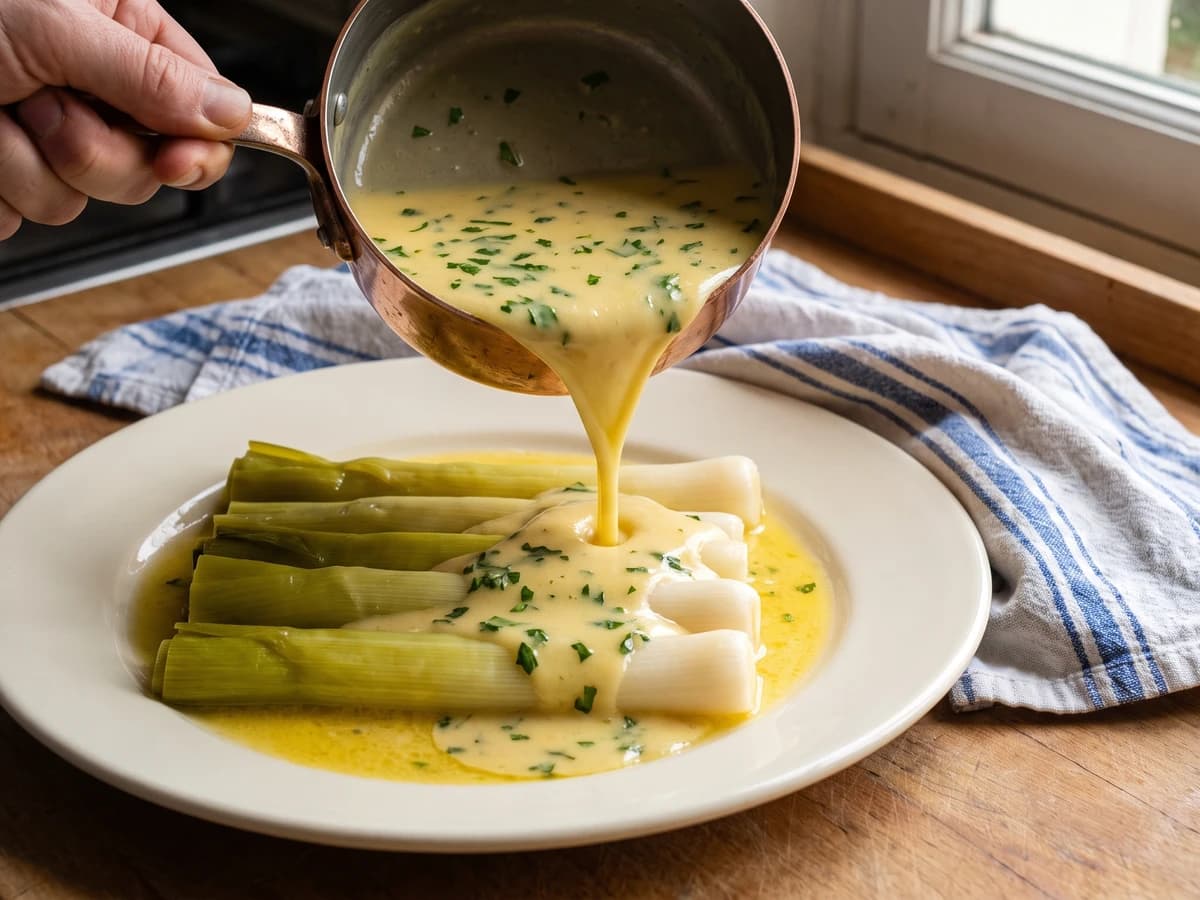
An old lesson in sauce families: Sauce Allemande takes mushroom liquor, then butter, lemon, and parsley, becoming a glossy Poulette for sheep's trotters, leeks, cauliflower, and anything needing gentle richness with a bright edge.