Chef Juliette
Ordinary or White Consommé
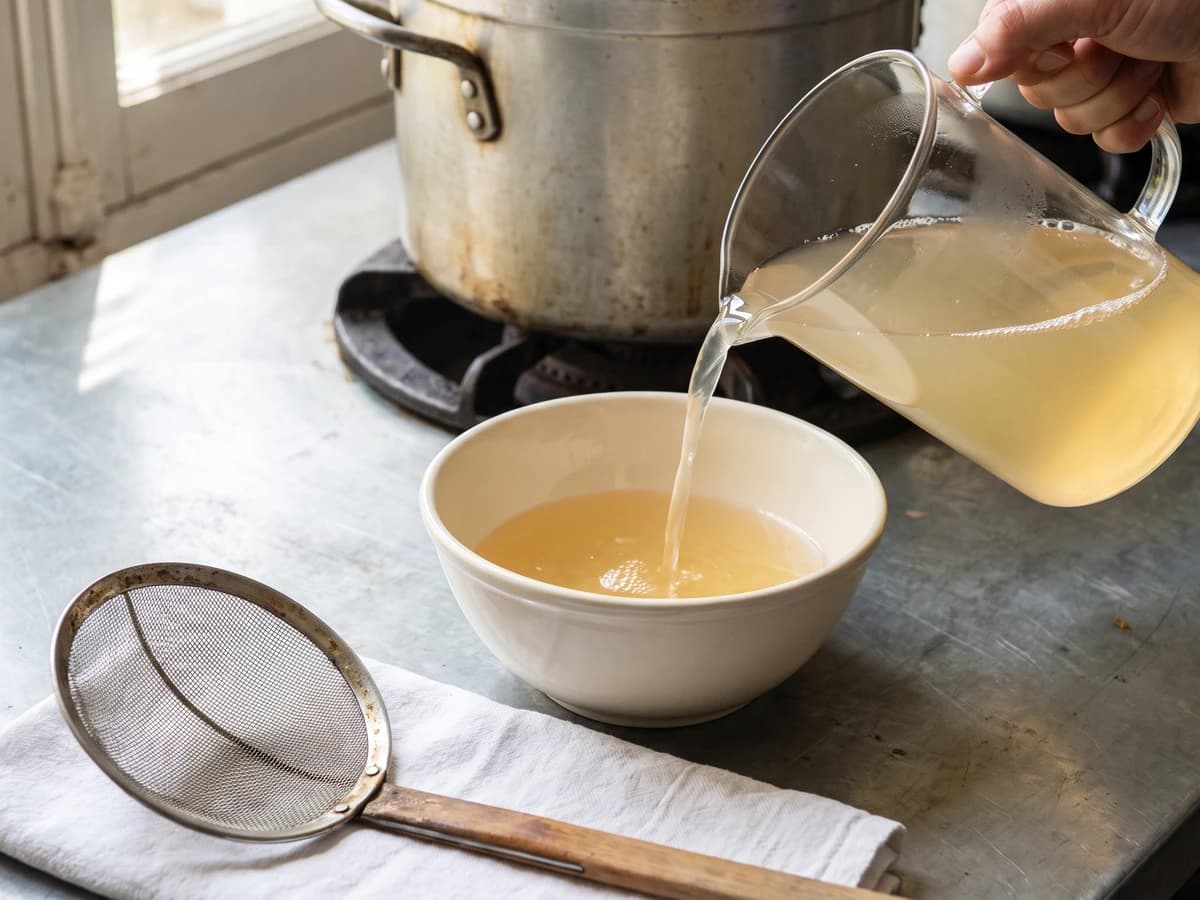
Beef shin, lean beef, and fowl begin in cold water and rise slowly toward a tremble. Skim before the boil, and you learn the quiet discipline that gives every clear French broth its backbone.
A cooking platform built around craft, culture, and the stories behind what we eat.
Created by Chef Juliette
Based on No. 144, Various Cullises, from Le Guide Culinaire (1907) by Auguste Escoffier
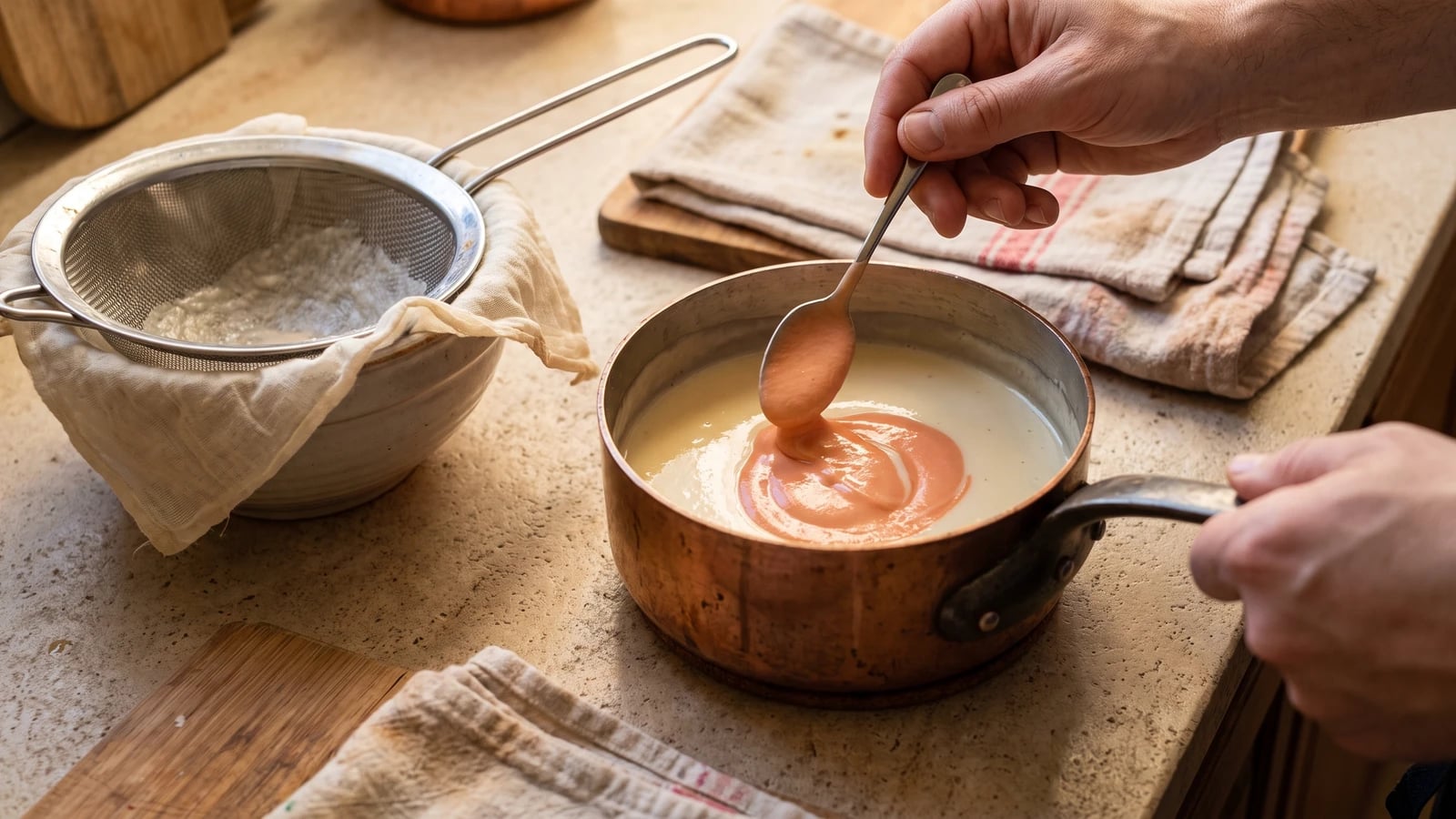
Coulis Variés de Crustacés concentrates shellfish into a coral-ivory ribbon, pounded with cream, twice sieved, and folded into a finished fish sauce at the last possible moment.
Coulis Variés de Crustacés (various shellfish finishing essences) teaches the discipline of the last refinement. The one true thing to know before touching a pan is that this is not a sauce base and cannot wait beside the stove. Finish your fish sauce first, then make the coulis and fold it in as the dish goes out.
The original assumed a saucier on staff, a mortar large enough to pound the remains of a shellfish service, and a tammy waiting for the second passage. At home, a sturdy food processor supplies the arm, a damp butter-muslin lining replaces the tammy, and the brigade pile becomes two pounds of remains, enough to refine sauce for a generous dinner party. The large batch was scaffolding and can go. The proportion of rich cream and the two strainings are the dish, so both stay exactly where they belong.
Done properly, the coulis falls in a smooth coral-ivory ribbon, carrying the sweetness and mineral depth of shellfish without one grain of shell. The second straining decides everything. Rush it and the sauce feels sandy; pass it patiently and the finish turns silken.
These cullises belong less to a province than to the saucier's station of Parisian grande cuisine, where shrimp, crayfish, common lobster, and spiny lobster remains were returned to the sauce rather than discarded. The preparation moved from the mortar into finished fish sauces as a final concentration of flavour and colour. Despite the familiar word coulis, this is not a freestanding purée: it is a refining principle, made at service and used by the spoonful.
Quantity
8 packed cups (about 900 g / 2 lb total)
shrimp and crayfish shells broken small; creamy parts and any legally obtained cooked spawn or coral from common or spiny lobsters reserved separately
Quantity
1 cup plus 3 tablespoons (285 ml / 285 g)
| Ingredient | Quantity |
|---|---|
| freshly cooked mixed shellfish remainsshrimp and crayfish shells broken small; creamy parts and any legally obtained cooked spawn or coral from common or spiny lobsters reserved separately | 8 packed cups (about 900 g / 2 lb total) |
| cold heavy cream, 35% fat or richer | 1 cup plus 3 tablespoons (285 ml / 285 g) |
Use very fresh remains from plainly cooked shellfish, kept cold since the meat was removed. Discard gills, digestive matter, loose grit, and any strongly scorched or heavily seasoned pieces, but do not rinse away the clean creamy matter or coral. Separate the soft parts from the shells, then weigh everything together to reach 2 pounds. The weight governs the cream ratio; the cup measure is only a guide.
Crack thick shell pieces under a cloth with a mallet, reducing them to pieces no larger than 1 inch. Working in small batches, pulse the shells in a sturdy food processor until they resemble fine, damp gravel, stopping to scrape the bowl. Keep the lid closed until the shell dust settles. If the motor or paste grows warm, stop and chill the bowl for five minutes before continuing; warmth dulls the delicate shellfish character.
Return all the finely pounded shells to the processor and add the reserved creamy parts and lobster coral or spawn. Pulse only until evenly combined, then scrape everything into a cold bowl. Stir in the cold heavy cream until every fragment is coated and the mixture resembles a loose coral-coloured paste. Keep the source proportion intact: one-quarter Imperial pint of rich cream per pound of remains, which becomes 285 ml for this home batch.
Press the mixture through a fine-mesh sieve into a clean cold bowl, rubbing firmly with a flexible scraper until the remaining shells look nearly dry. Rinse the sieve, line it with damp butter muslin or a double layer of fine cheesecloth, and pass the liquid through again with light pressure. Taste a drop between your tongue and palate. If you feel grit, do not discard it. Ça se rattrape: line a clean sieve with fresh damp cloth and pass the coulis once more without forcing the final sediment through.
Have the finished fish sauce hot and fully reduced before the coulis reaches it. Pull the sauce below a simmer, then fold in the coulis one tablespoon at a time, beginning with 1 tablespoon (15 ml) per cup (240 ml) of sauce and tasting after each addition. Stop when the shellfish flavour deepens and the sauce gains a coral sheen without losing its own identity. Do not boil it afterward. If excessive heat produces fine flecks, pull the pan off immediately and pass the sauce through a clean fine sieve. Nap the fish and carry it straight to the table. À table!
1 serving (about 15g)
Culinary guides, cultural storytelling, and the editorial depth that makes cooking meaningful.
Discover Culinary ExplorerChef Juliette
Beef shin, lean beef, and fowl begin in cold water and rise slowly toward a tremble. Skim before the boil, and you learn the quiet discipline that gives every clear French broth its backbone.
Chef Juliette
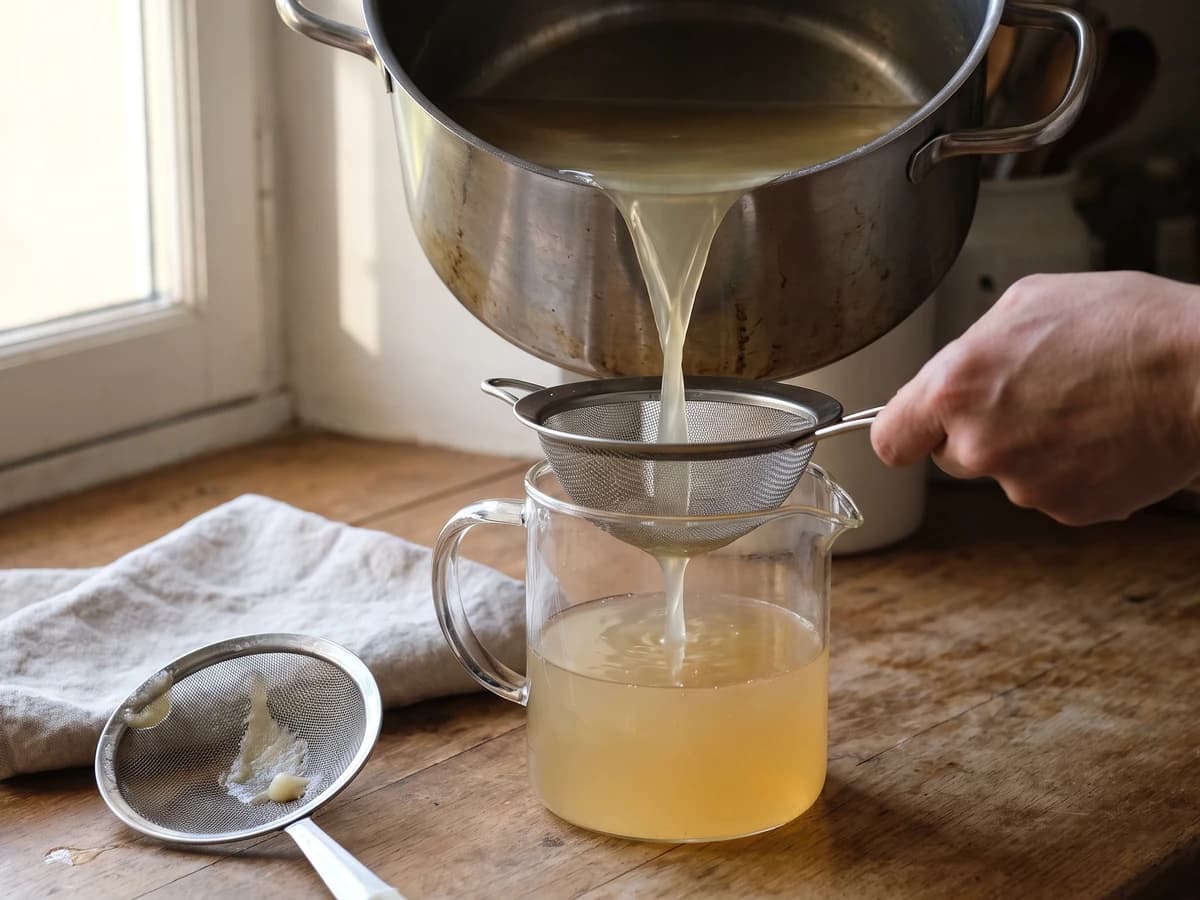
Break the veal bones small, then give them eight hours at a bare tremble. This pale, gelatinous fond becomes the quiet foundation beneath velouté, blanquette, and every sauce that must stay light.
Chef Juliette
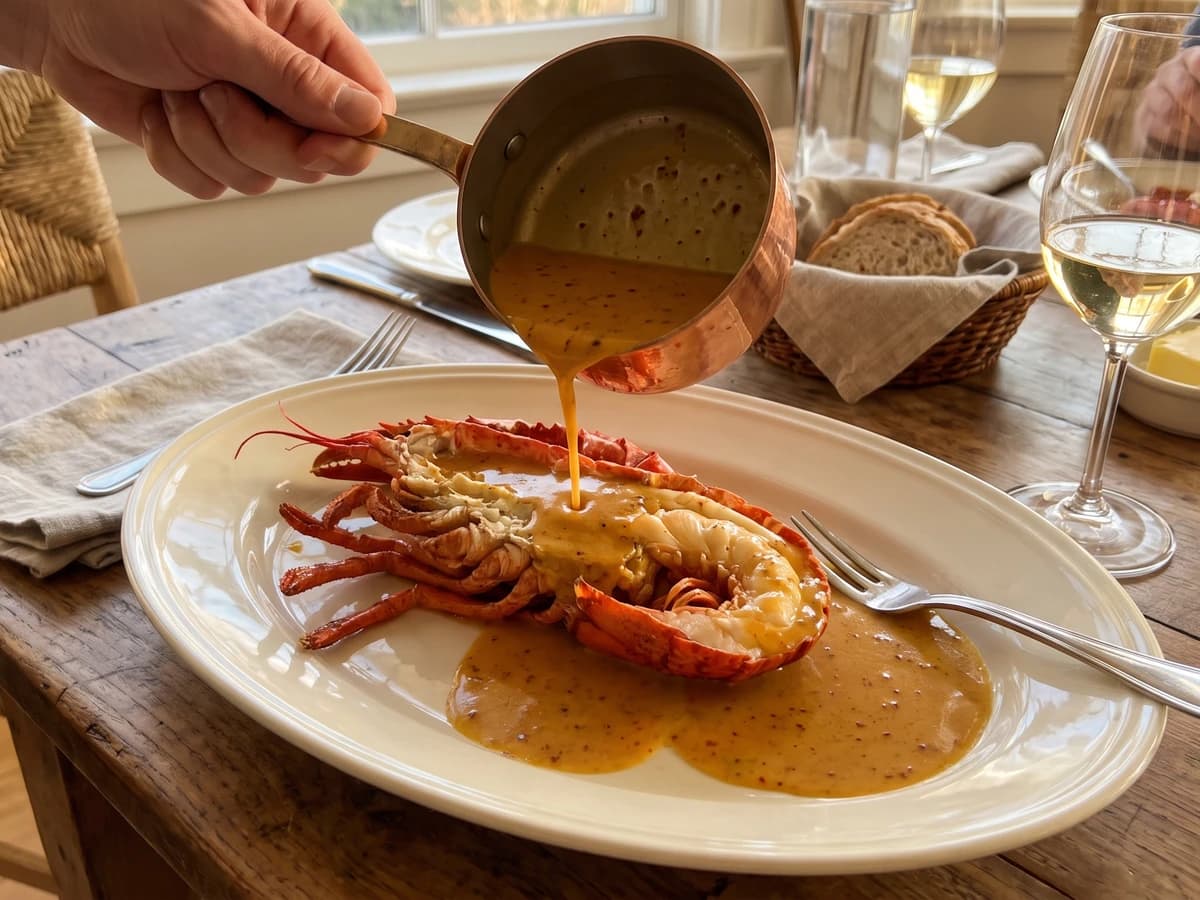
Sauce Orientale concentrates lobster-rich American Sauce with curry, then folds in cream away from the fire: a glossy, gently spiced derivative made for lobster, crayfish, and firm fish.
Chef Juliette
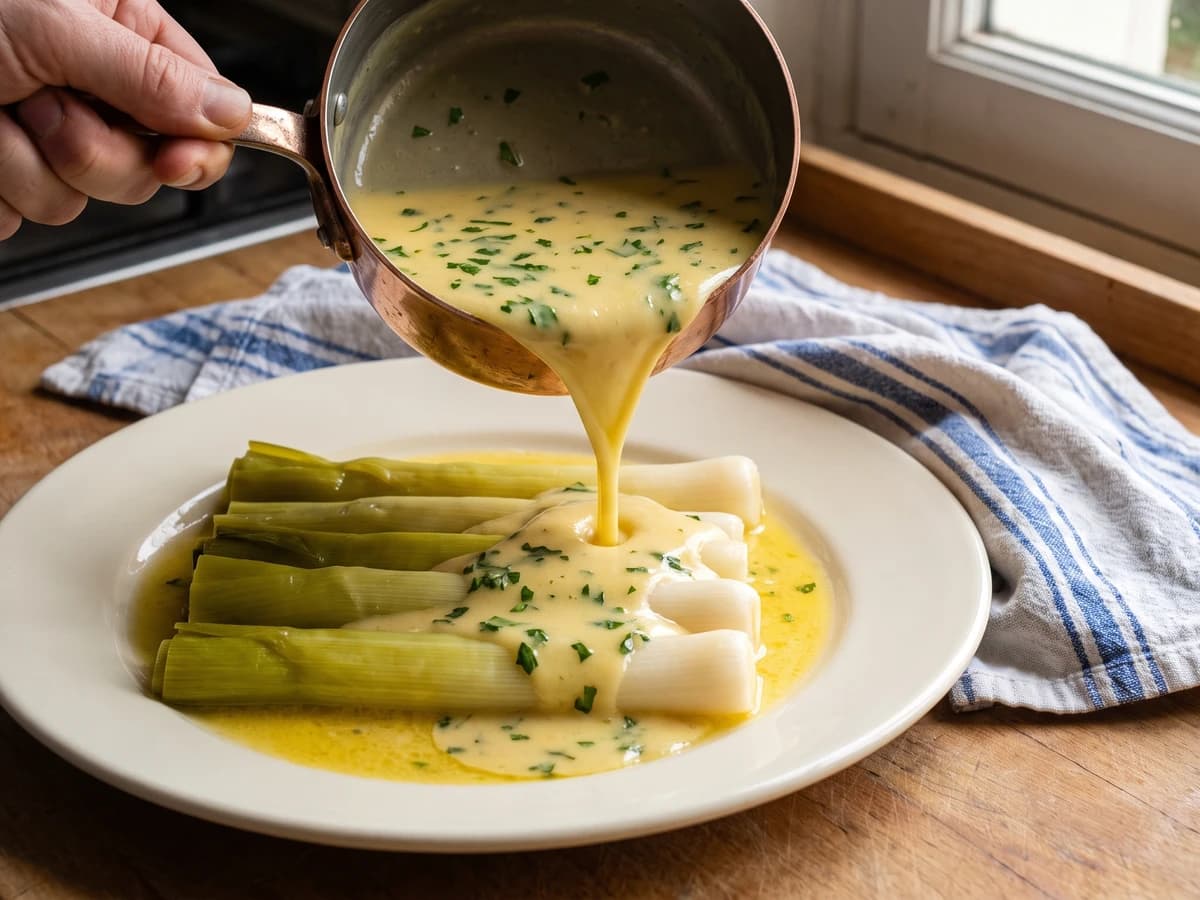
An old lesson in sauce families: Sauce Allemande takes mushroom liquor, then butter, lemon, and parsley, becoming a glossy Poulette for sheep's trotters, leeks, cauliflower, and anything needing gentle richness with a bright edge.