Chef Juliette
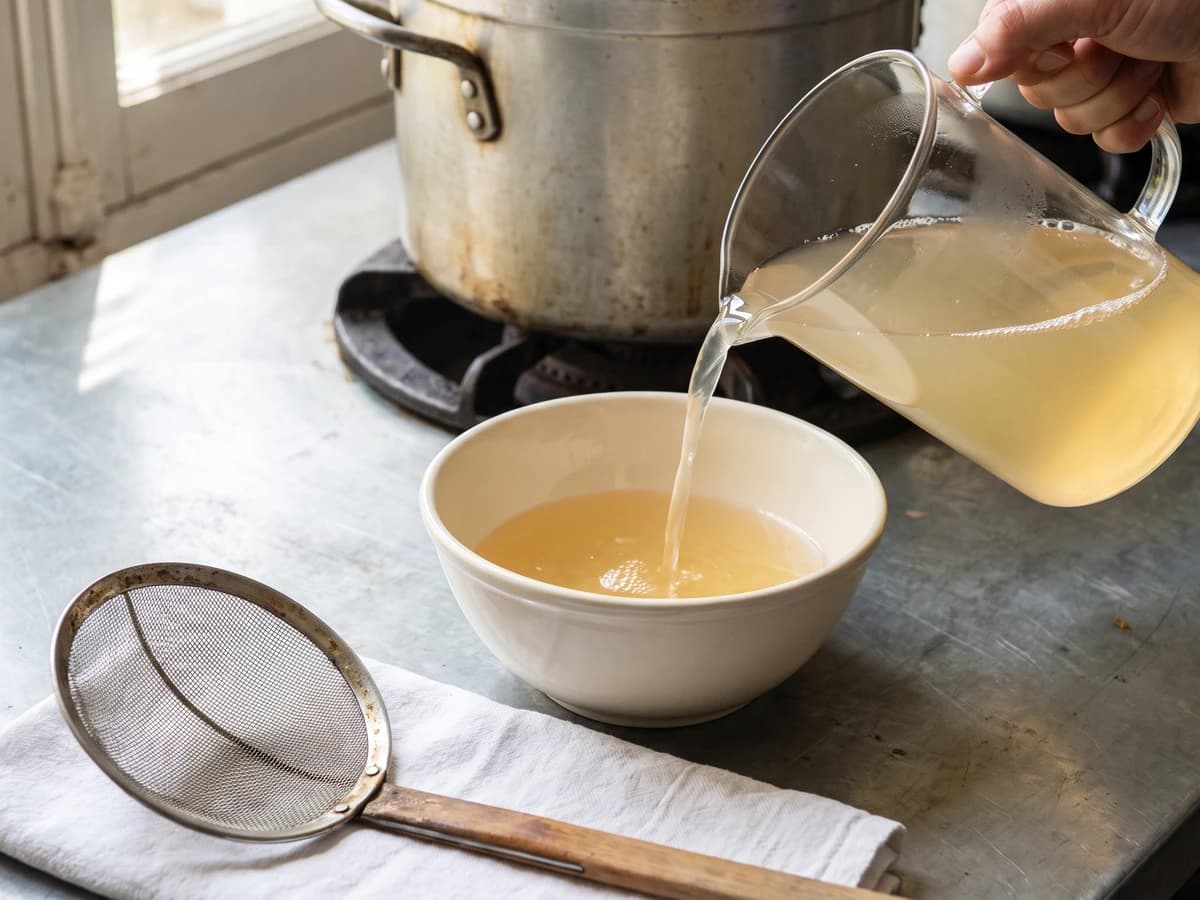
Ordinary or White Consommé
Beef shin, lean beef, and fowl begin in cold water and rise slowly toward a tremble. Skim before the boil, and you learn the quiet discipline that gives every clear French broth its backbone.
A cooking platform built around craft, culture, and the stories behind what we eat.
Created by Chef Juliette
Based on No. 143, Green Colouring Butter, from Le Guide Culinaire (1907) by Auguste Escoffier
Spinach gives up its pure green in a gentle bain-marie, then meets half its weight in butter: a concentrated classical tint for sauces, made honestly from leaves rather than a bottle.
Beurre colorant vert (green colouring butter) teaches one precise thing: the useful colour is caught in the coagulated solid, not left swimming in the vegetable water. Extract the raw spinach juice, warm it gently in a bain-marie (hot-water bath), and the pigment-rich matter gathers into deep green flecks that can be drained and preserved in butter.
The original formula assumed a saucier with time to pick and pound two pounds of spinach, a strong serviette for wringing, a mortar, and a broad tammy for finishing a service quantity. Here the spinach is halved to a manageable home batch, the pounding is done in a food processor, and a flour-sack towel and fine-mesh sieve replace the professional cloth and tammy. Those are brigade scaffolding. Extracting the raw juice, coagulating it gently, draining it thoroughly, and adding butter at exactly half the colouring matter's weight are the dish, and they stay untouched. One cook, one stove, one evening.
The finished butter should be intensely emerald, smooth enough to disappear into a pale sauce, and nearly neutral in taste. Control the bain-marie above all: it must warm the juice until green curds form, never boil it into khaki submission.
Beurre colorant vert belongs to the sauce station of the Parisian classical kitchen, where finishing butters were organized by function and kept ready for precise adjustments during service. Spinach supplied chlorophyll rather than a pronounced flavor, and the method traveled from the saucier's mise en place into bourgeois home kitchens through practical cooking manuals. It is not an herb butter for spreading, but a concentrated tint devised to replace purchased liquid colouring with the vegetable itself.
Quantity
16 packed cups (3.8 L / 450 g)
coarse stems removed, washed and dried completely
Quantity
2 to 3 teaspoons (10 to 15 ml / 10 to 14 g), adjusted to exactly half the weight of the drained colouring matter
softened but not greasy
| Ingredient | Quantity |
|---|---|
| fresh mature spinach leavescoarse stems removed, washed and dried completely | 16 packed cups (3.8 L / 450 g) |
| unsalted buttersoftened but not greasy | 2 to 3 teaspoons (10 to 15 ml / 10 to 14 g), adjusted to exactly half the weight of the drained colouring matter |
Pick over the spinach, removing coarse stalks and any damaged leaves. Wash it thoroughly in two changes of cold water, lift it out so grit stays behind, then spin and spread it on clean towels until every trace of washing water is gone. External water dilutes the juice and lengthens the coagulation, so be severe about the drying.
Process the raw spinach in batches, scraping down often, until it becomes a wet, finely pounded paste. Add no water. If the blades cannot catch the leaves, chop them roughly first and return them to the processor. Scrape the paste into the centre of a strong, lint-free cotton towel, gather the corners, and twist firmly over a bowl until the stream slows to reluctant drops. The juice is what you need; reserve the squeezed pulp for soup or discard it.
Pour the raw juice into a heatproof bowl and set it over a saucepan of barely simmering water, keeping the bowl above the water itself. Warm it gently for 8 to 15 minutes. Deep green flecks will gather while the surrounding liquid becomes thinner and duller. If nothing separates after eight minutes, raise the bath to a quiet simmer and continue. Ça se rattrape. If the spinach juice itself begins bubbling, lift the bowl away at once, lower the heat, and resume more gently.
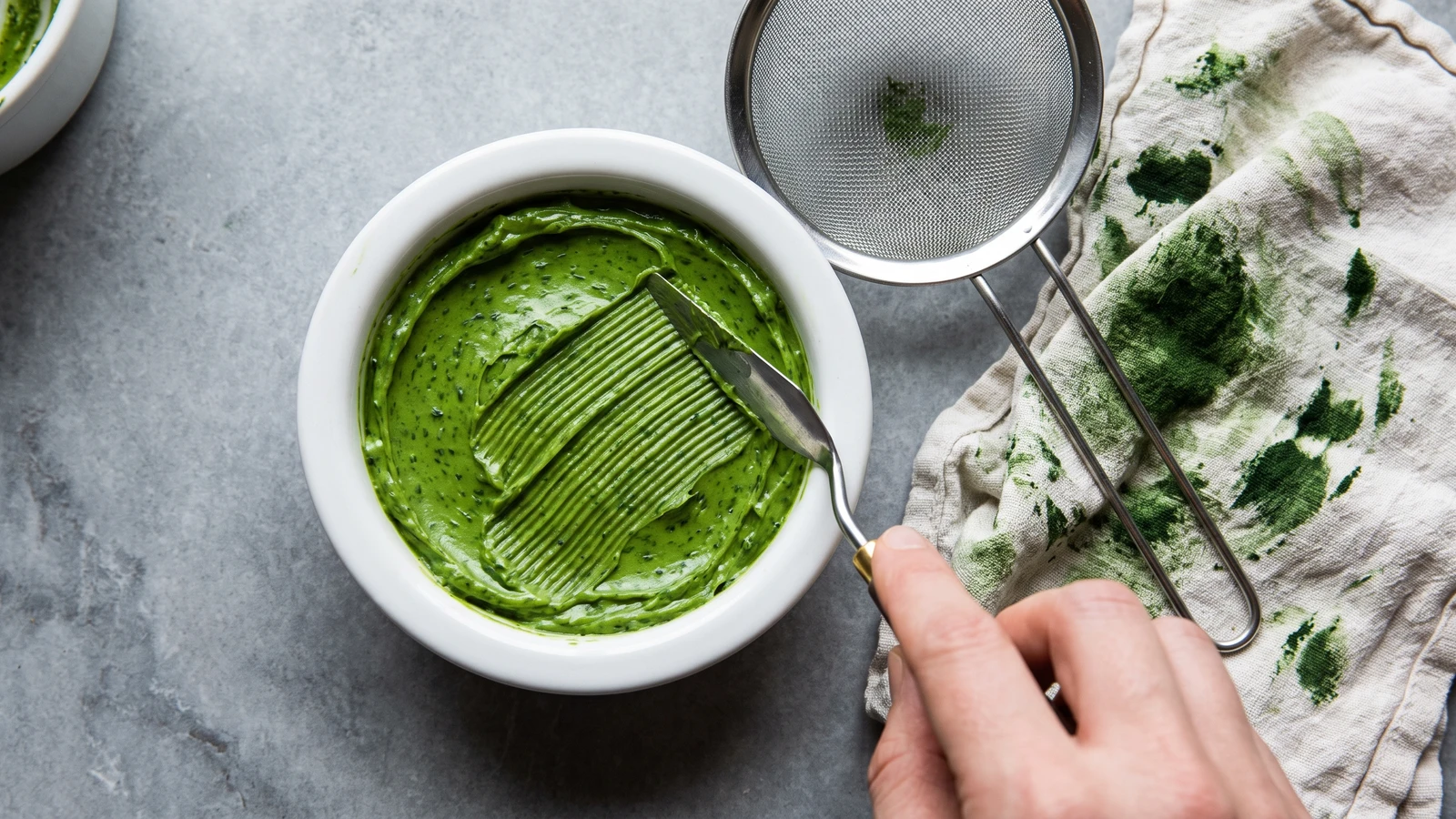
Line a fine-mesh sieve with a dampened, tightly woven lint-free cloth and suspend it over a bowl. Pour in the contents of the bain-marie and leave them to drain for 15 to 20 minutes. Fold the cloth over and press gently to remove free water, then collect every scrap of deep green colouring matter with a palette knife. If green flecks passed through, line the sieve with a coffee filter and strain the collected liquid again.
Weigh the drained colouring matter, then weigh softened unsalted butter equal to exactly half that amount. For example, 28 g of colouring matter takes 14 g of butter. Pound them together in a small mortar or work them firmly with a spatula until no pale butter streaks remain, then press the mixture through a dry fine-mesh sieve and scrape it from the underside. If the butter melts and the mixture turns oily, stop and chill it for 5 to 10 minutes until opaque but pliable, then work it again. The finished beurre colorant vert should be smooth, dense, and intensely green.
Pack the beurre colorant vert into a small covered jar, or spread it between parchment into a thin slab and score it into tiny portions. Chill until firm. To colour a finished sauce, take the sauce off the heat and whisk in a small piece at a time, beginning with about 1/8 teaspoon per cup. Stop when the colour is fresh and clear. Do not boil the sauce afterward, or the green will dull. À table!
1 serving (about 14g)
Culinary guides, cultural storytelling, and the editorial depth that makes cooking meaningful.
Discover Culinary ExplorerChef Juliette
Beef shin, lean beef, and fowl begin in cold water and rise slowly toward a tremble. Skim before the boil, and you learn the quiet discipline that gives every clear French broth its backbone.
Chef Juliette
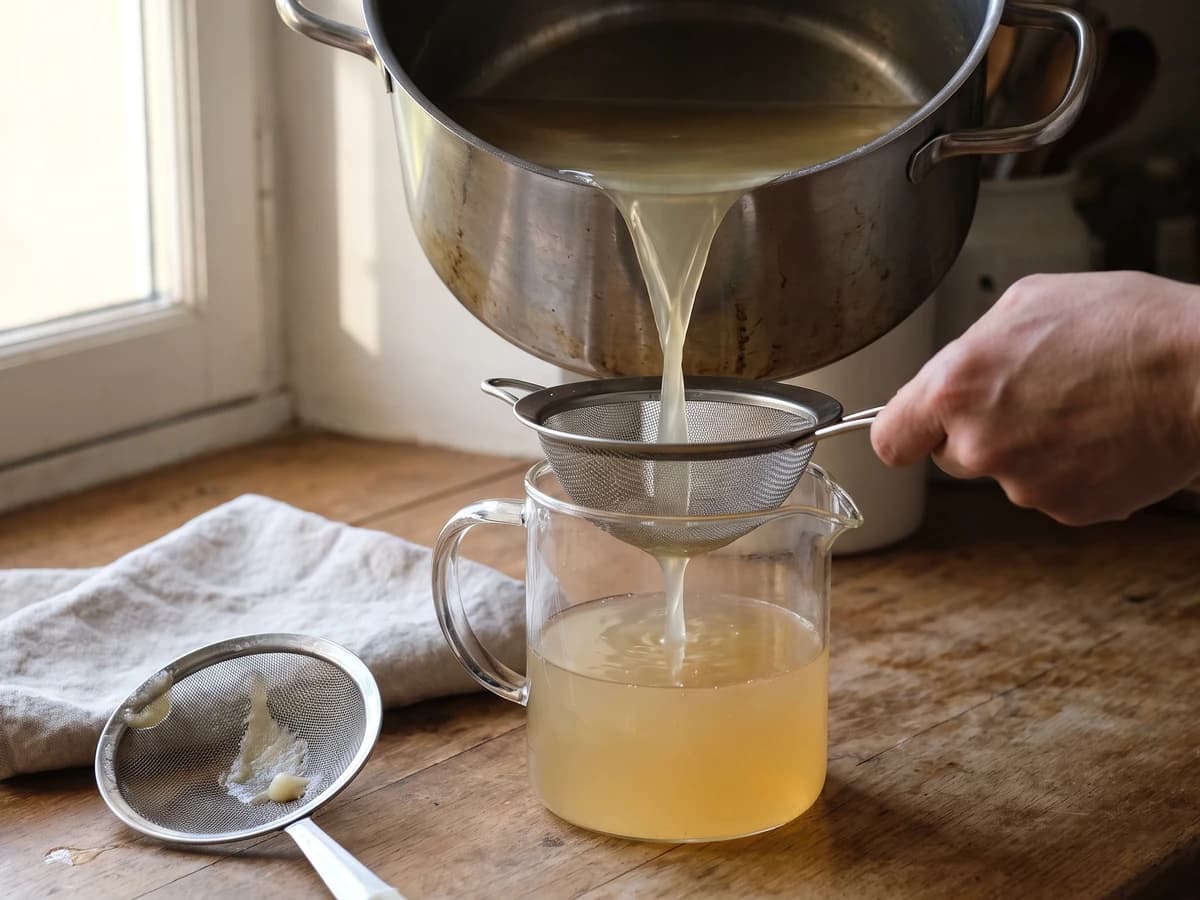
Break the veal bones small, then give them eight hours at a bare tremble. This pale, gelatinous fond becomes the quiet foundation beneath velouté, blanquette, and every sauce that must stay light.
Chef Juliette
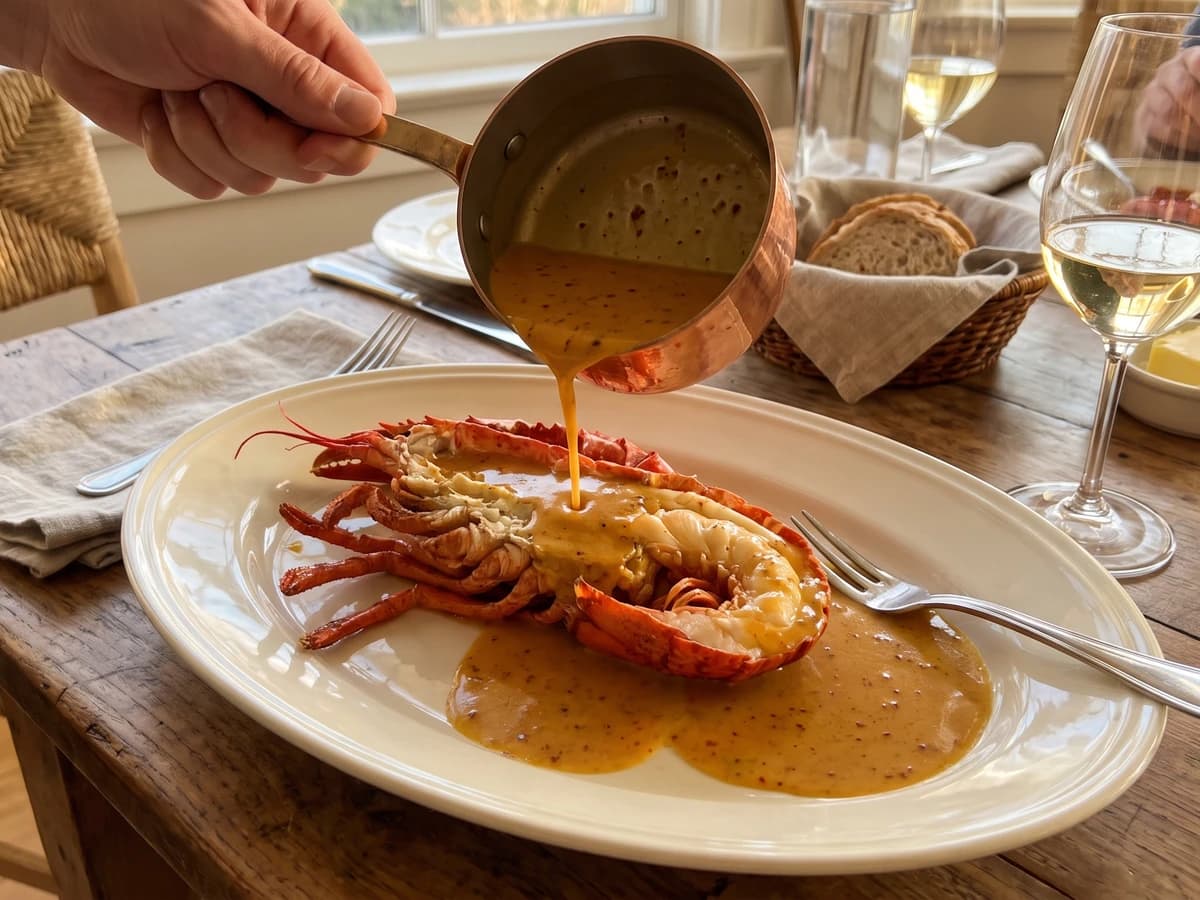
Sauce Orientale concentrates lobster-rich American Sauce with curry, then folds in cream away from the fire: a glossy, gently spiced derivative made for lobster, crayfish, and firm fish.
Chef Juliette
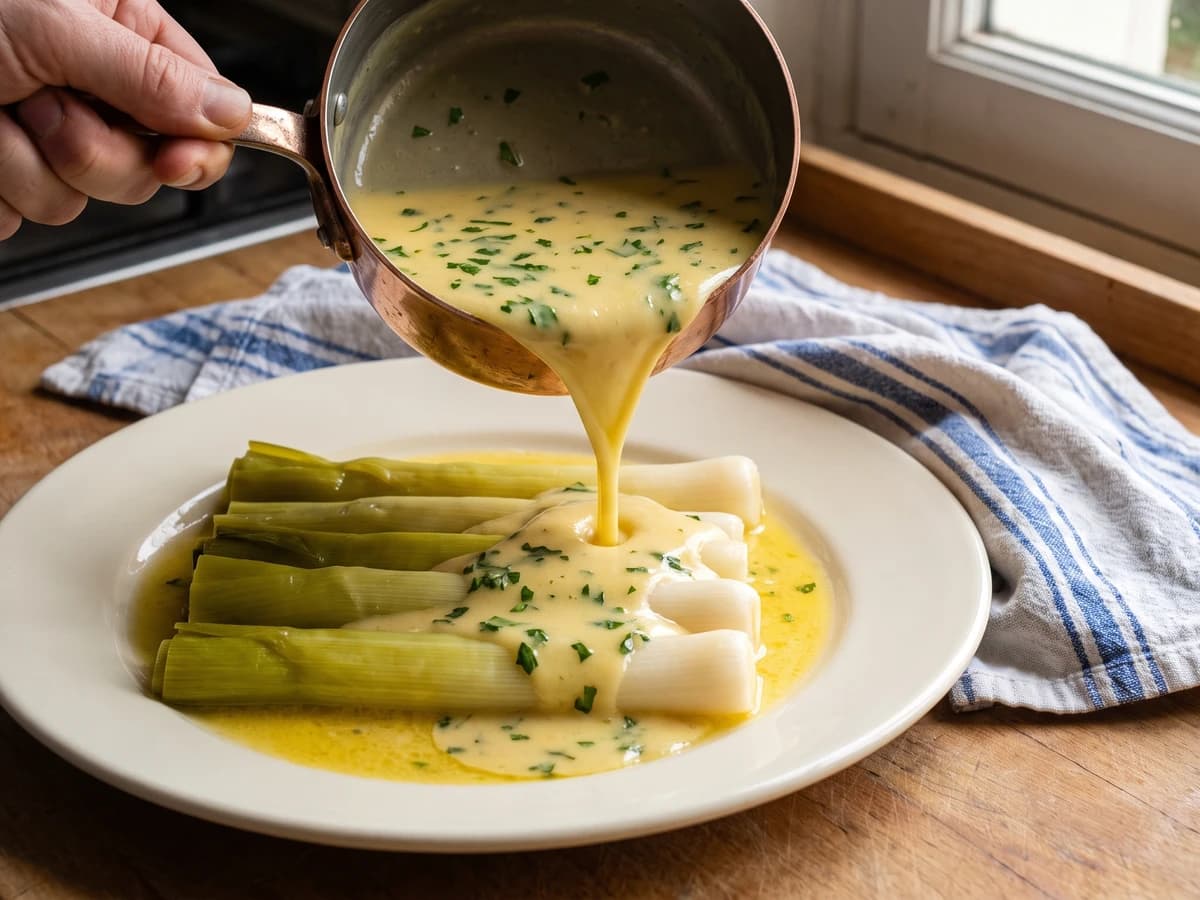
An old lesson in sauce families: Sauce Allemande takes mushroom liquor, then butter, lemon, and parsley, becoming a glossy Poulette for sheep's trotters, leeks, cauliflower, and anything needing gentle richness with a bright edge.