Chef Juliette
Ordinary or White Consommé
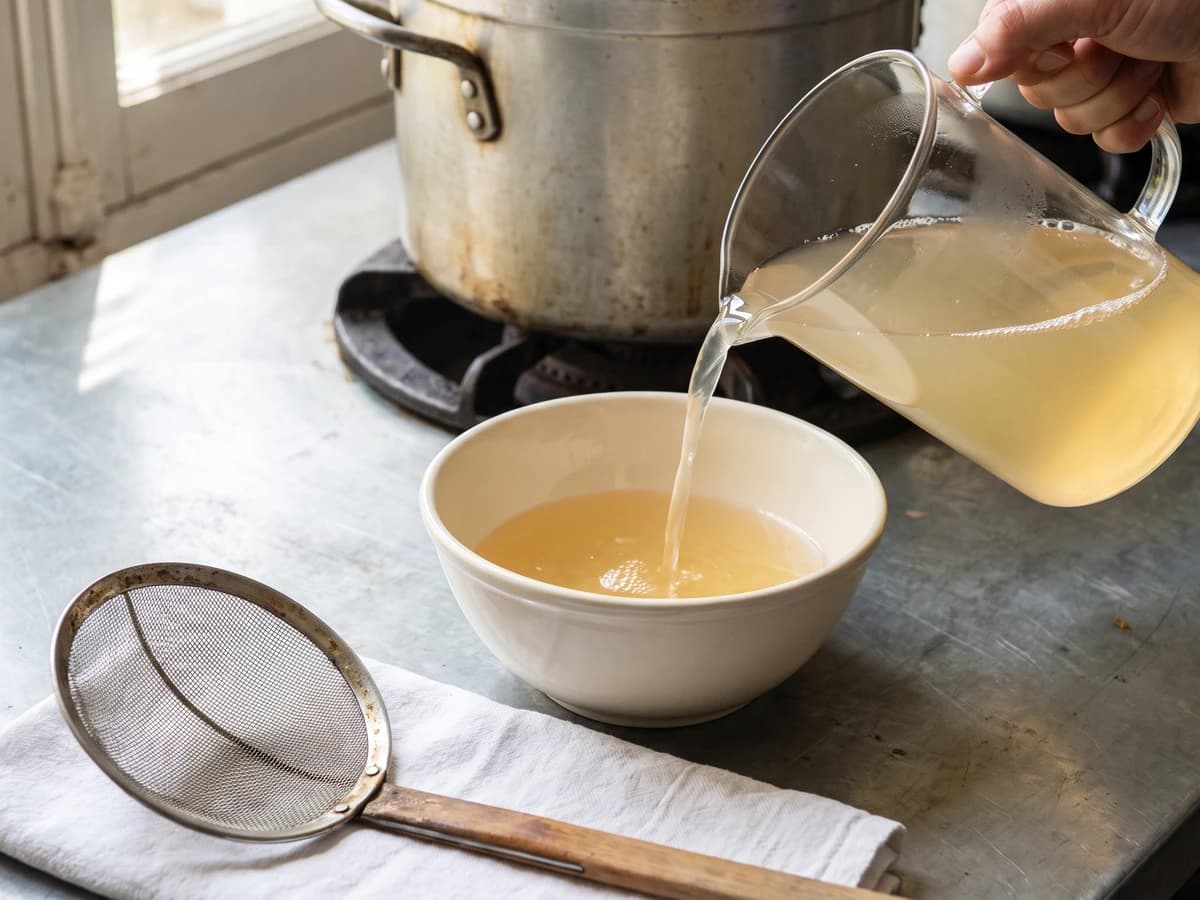
Beef shin, lean beef, and fowl begin in cold water and rise slowly toward a tremble. Skim before the boil, and you learn the quiet discipline that gives every clear French broth its backbone.
A cooking platform built around craft, culture, and the stories behind what we eat.
Created by Chef Juliette
Based on No. 142, Red Colouring Butter, from Le Guide Culinaire (1907) by Auguste Escoffier
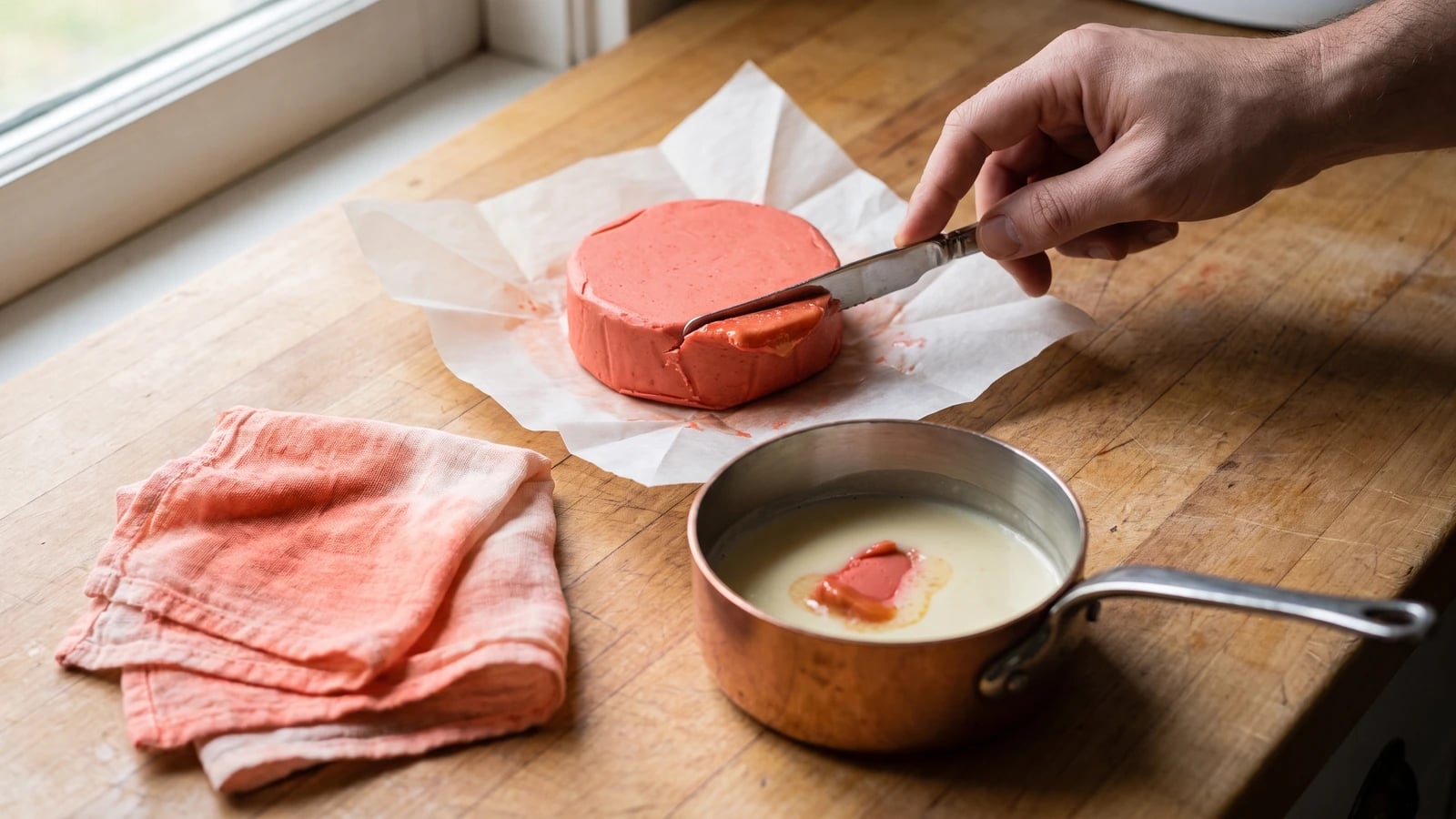
Crustacean shells, dried brittle and ground fine, surrender their coral-red pigment to butter in a gentle bain-marie, making a concentrated finishing fat that colours classical sauces without hiding their character.
Beurre colorant rouge (red colouring butter) teaches one clear principle: the red-orange pigment in cooked crustacean shells moves into fat, not water. Before you touch a pan, dry the shells until they snap and grind them as finely as your tools allow; damp, leathery fragments give up little colour and trap too much butter.
The original formula assumed a saucier on staff, a mortar large enough for a day's shellfish remains, and hands available to pound and wring muslin. At home, save cleaned cooked shells in the freezer, dry one tray, crush them under a rolling pin, and finish them in a spice grinder. I have scaled the batch to 225 grams each of dried shell and butter, but kept the equal-weight ratio, the bain-marie (hot-water bath), the muslin strain, and the iced-water setting. Hand-pounding was brigade scaffolding; those four choices are the preparation itself. One cook, one stove, one evening.
The finished butter should be coral-red when melted, firm and clean when cold, with a restrained crustacean savour rather than the taste of fried shells. Keep the extraction gentle until the butter clarifies. That slow infusion is the step that decides everything.
Beurre colorant rouge belongs to the sauce pantry of Parisian grande cuisine, where lobster, crayfish, crab, and shrimp remains were dried and pounded so their colour could serve another preparation. It carried a thrifty shellfish-kitchen practice into the classical canon, adding a red-orange hue and restrained marine savour to sauces by the spoonful. Paprika offered a separate route for poultry and certain meat sauces, proof that the classical kitchen distinguished colour from flavour rather than treating every red fat as interchangeable.
Quantity
225 g, weighed after oven-drying
all meat, gills, sacs, and soft tissue removed
Quantity
1 cup (240 ml / 225 g), or exactly the same weight as the dried shells
cubed
Quantity
6 cups (1.5 L / 1.5 kg)
Quantity
4 cups (1 L / about 600 g)
| Ingredient | Quantity |
|---|---|
| cooked crustacean shellsall meat, gills, sacs, and soft tissue removed | 225 g, weighed after oven-drying |
| unsalted buttercubed | 1 cup (240 ml / 225 g), or exactly the same weight as the dried shells |
| very cold water | 6 cups (1.5 L / 1.5 kg) |
| ice cubes | 4 cups (1 L / about 600 g) |
Heat the oven to 250°F (120°C). Pick every trace of meat, gill, sac, and soft tissue from the cooked shells; rinse them briefly only if they are gritty, then dry them well. Spread the shells in one layer on a rimmed baking sheet and bake for 60 to 90 minutes, turning them twice, until the thin pieces snap cleanly and the thick pieces feel dry through their joints. Do not let them scorch. Cool completely, then weigh 225 g. If you have less, use precisely the same weight of butter as dried shell.
Put the brittle shells inside a doubled heavy-duty bag and break them into small pieces with a rolling pin or mallet. Grind them in a sturdy spice grinder in small batches until they resemble fine sand, letting the dust settle before opening the lid. Pass the powder through a fine sieve and regrind the larger pieces. The old mortar demanded an afternoon and strong shoulders; the grinder replaces that labour, but not the fine texture the extraction needs.
Set a heatproof bowl over a saucepan holding 1 inch (2.5 cm) of barely simmering water, making certain the bowl does not touch the water. Add the butter and shell powder. Melt gently, stirring often, then continue over the bain-marie for 40 to 50 minutes. The butter should deepen from gold to clear coral-red, while the shell sediment darkens below it. If the water boils hard or the mixture begins to sizzle, lift the bowl off immediately and lower the heat before continuing. The shells must infuse, never fry.
Combine the cold water and ice in a large bowl. Line a fine-mesh sieve with two layers of clean food-safe muslin and set it directly over the iced water. Pour in the shell butter slowly, then gather the muslin around the hot sediment. Wearing heat-resistant gloves, twist and press the bundle firmly so the red butter passes through while the shell grit stays behind. If butter begins setting inside the cloth, do not discard it. Ça se rattrape: hold the closed bundle over the warm bain-marie just until the fat loosens, then press again over the iced water.
Leave the bowl undisturbed for 20 to 30 minutes, until the butter has hardened and floated in a coral-red sheet or cluster of pieces. Lift it out with a slotted spoon and blot it thoroughly. Wrap the butter in a clean lint-free towel, place a small board over it, and weight the board with a heavy pan for 10 minutes. Change the towel and repeat if it remains wet; trapped water makes the butter spit in a sauce and shortens its keeping life.
Pack the dry butter into a small bowl or shape it into a narrow log in parchment. Chill until firm, then cut it into teaspoon portions if it is destined for the freezer. Add it sparingly to a compatible finished sauce, beginning with 1 teaspoon (5 ml / 5 g) per cup (240 ml / about 240 g) and increasing only until the colour is right. This is concentrated seasoning as well as colour, so let the sauce keep its own character.
1 serving (about 14g)
Culinary guides, cultural storytelling, and the editorial depth that makes cooking meaningful.
Discover Culinary ExplorerChef Juliette
Beef shin, lean beef, and fowl begin in cold water and rise slowly toward a tremble. Skim before the boil, and you learn the quiet discipline that gives every clear French broth its backbone.
Chef Juliette
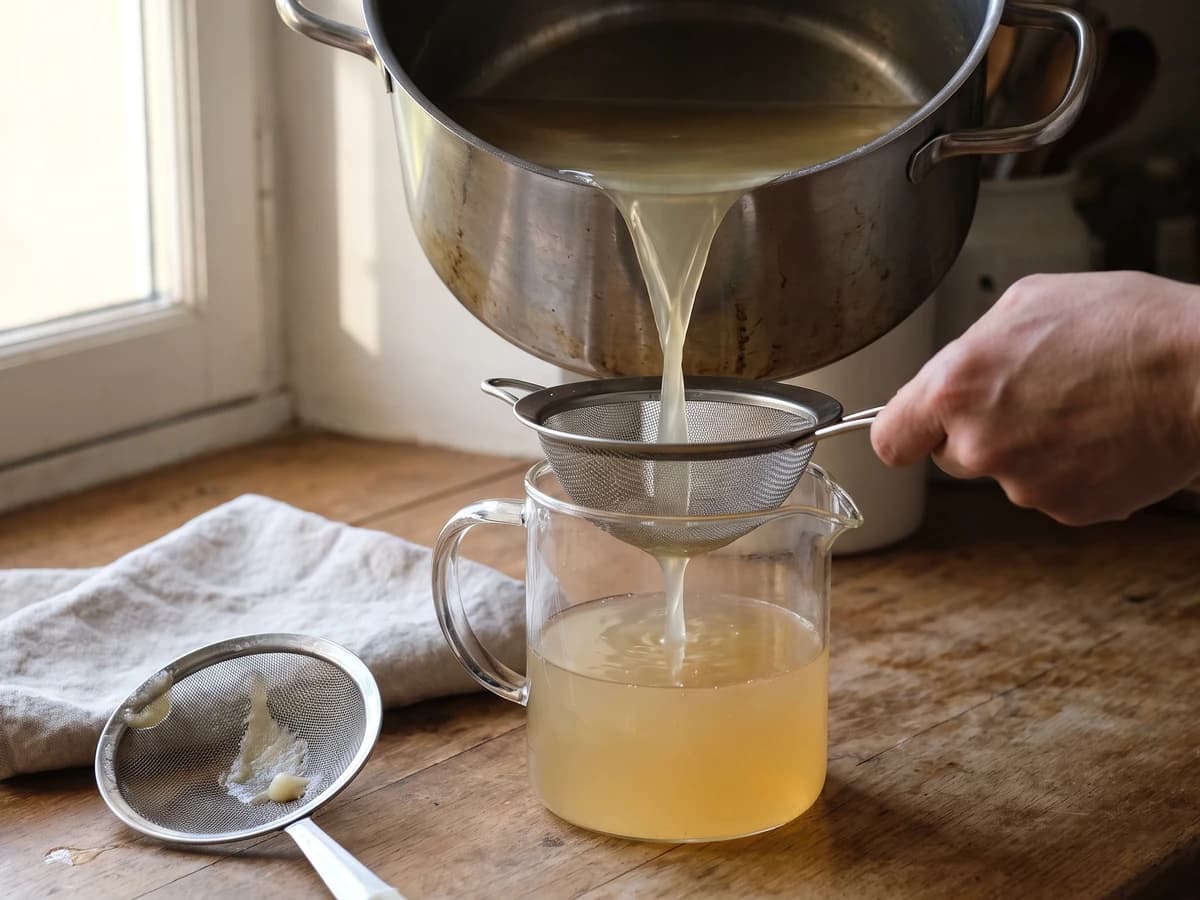
Break the veal bones small, then give them eight hours at a bare tremble. This pale, gelatinous fond becomes the quiet foundation beneath velouté, blanquette, and every sauce that must stay light.
Chef Juliette
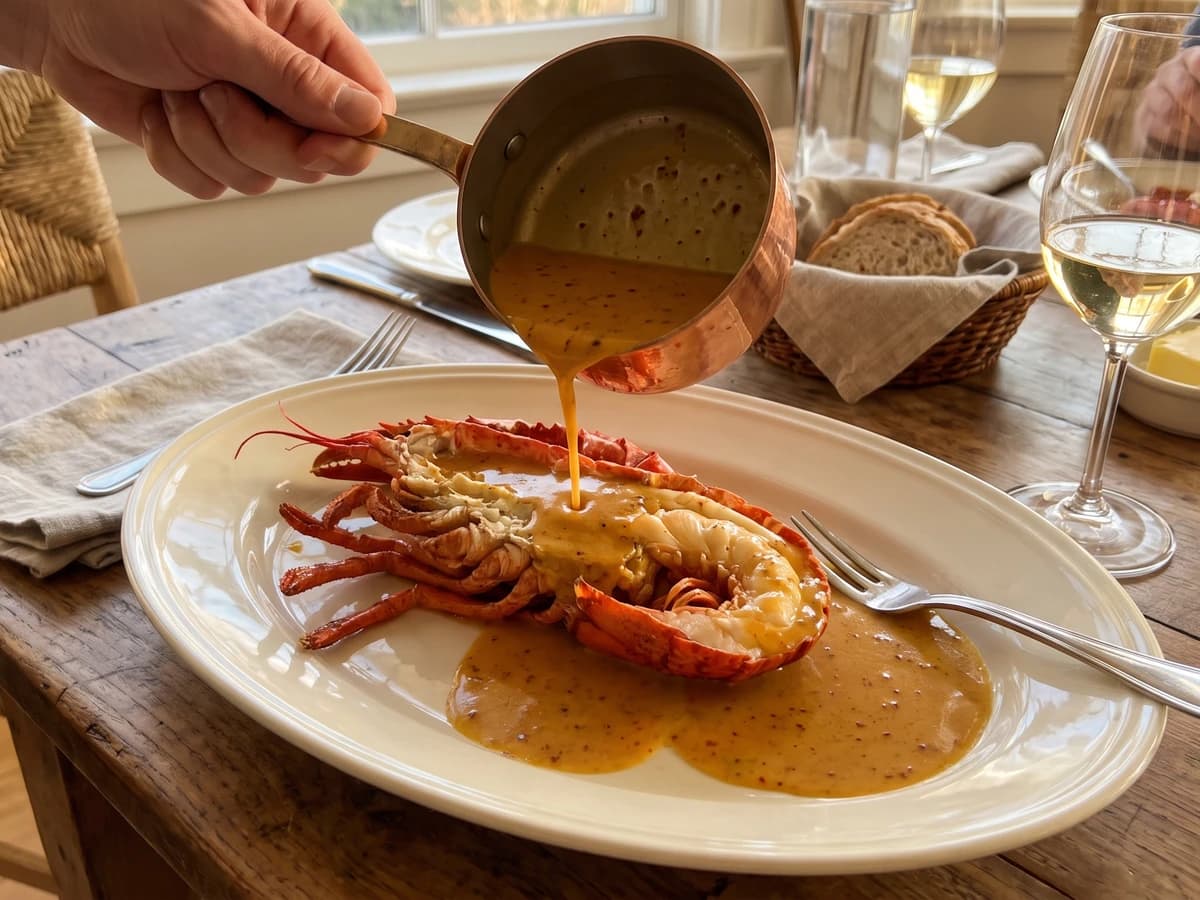
Sauce Orientale concentrates lobster-rich American Sauce with curry, then folds in cream away from the fire: a glossy, gently spiced derivative made for lobster, crayfish, and firm fish.
Chef Juliette
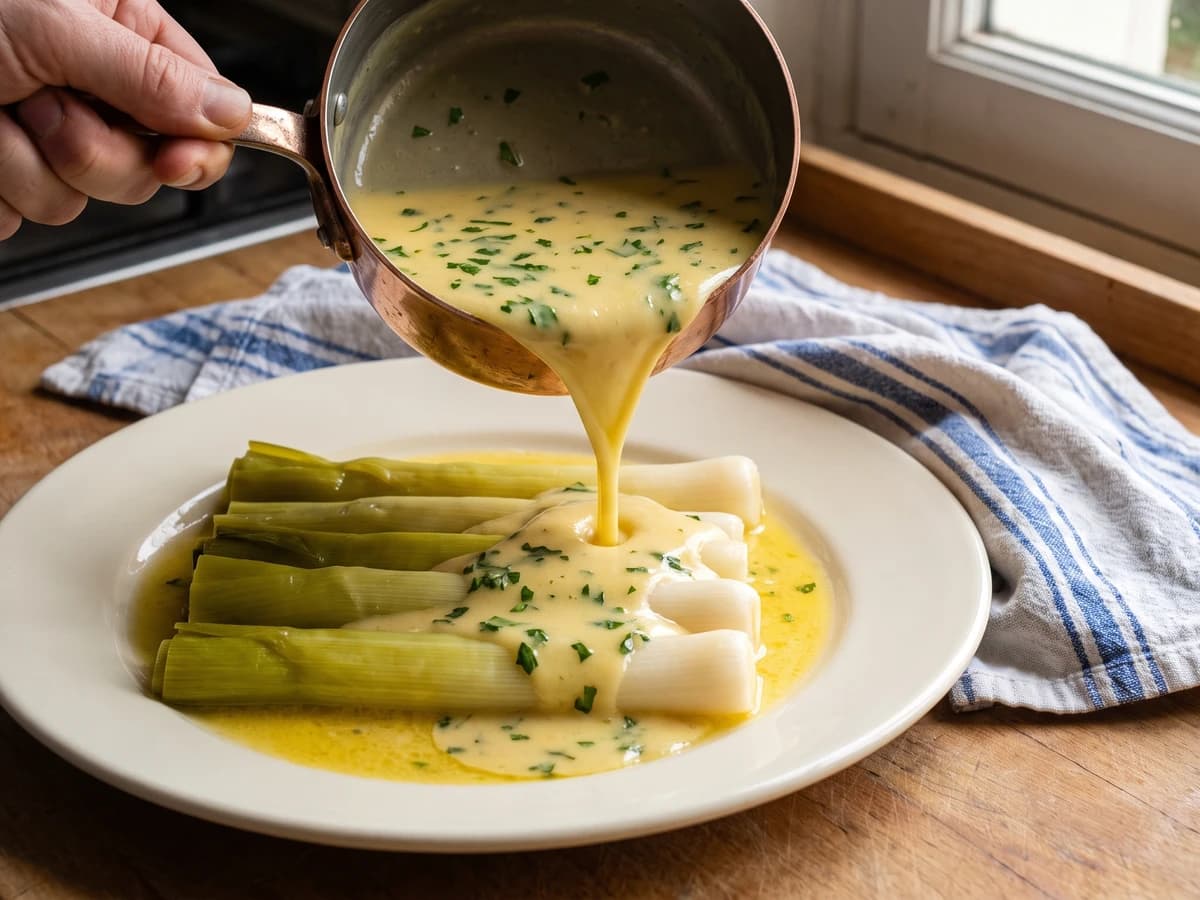
An old lesson in sauce families: Sauce Allemande takes mushroom liquor, then butter, lemon, and parsley, becoming a glossy Poulette for sheep's trotters, leeks, cauliflower, and anything needing gentle richness with a bright edge.