Chef Juliette
Ordinary or White Consommé
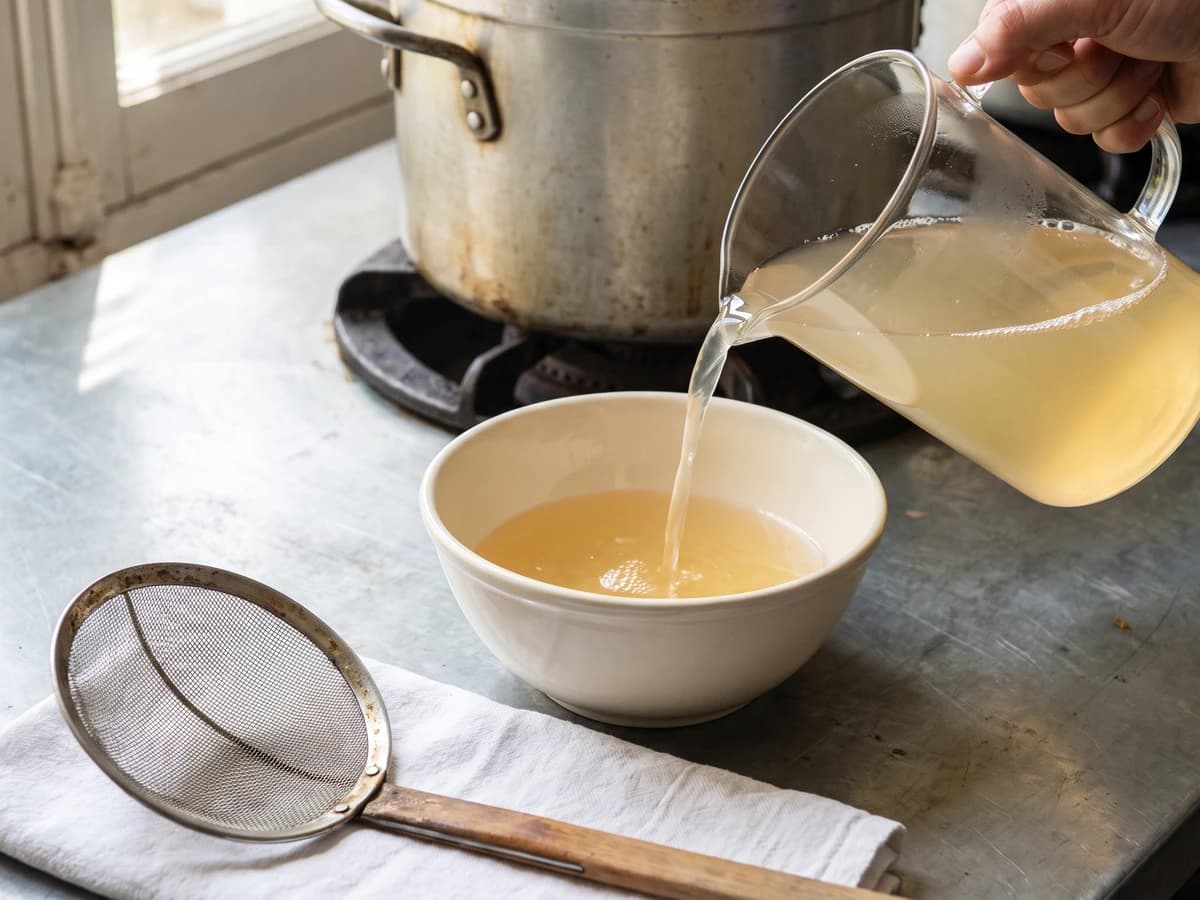
Beef shin, lean beef, and fowl begin in cold water and rise slowly toward a tremble. Skim before the boil, and you learn the quiet discipline that gives every clear French broth its backbone.
A cooking platform built around craft, culture, and the stories behind what we eat.
Created by Chef Juliette
Based on No. 133, Cambridge Sauce, from Le Guide Culinaire (1907) by Auguste Escoffier
A cold sauce with real backbone: hard-boiled yolks, anchovy, capers, mustard, and garden herbs worked with oil until satin-smooth, ready for sliced beef, veal, lamb, ham, or tongue.
Sauce Cambridge (a cold hard-yolk, anchovy, and herb emulsion) teaches a useful branch of the mayonnaise family. C'est la même grammaire: begin with an emulsifying base, introduce the oil slowly, and never ask speed to do the work of attention. The one true thing to know before touching the pan is this: the oil can only be absorbed by a yolk paste already pounded smooth.
The grand-kitchen formula gave six yolks to a saucier equipped with a heavy mortar and a cloth tammy. Neither the perpetual stockpot nor the salamander has any work here. For one cook and four diners, every quantity is halved exactly; a small food processor or home mortar replaces the extra pair of hands, and a fine-mesh sieve replaces the tammy. The old sieve itself was brigade scaffolding and can go. Forcing the sauce through a fine mesh must stay, because that refinement is part of the dish.
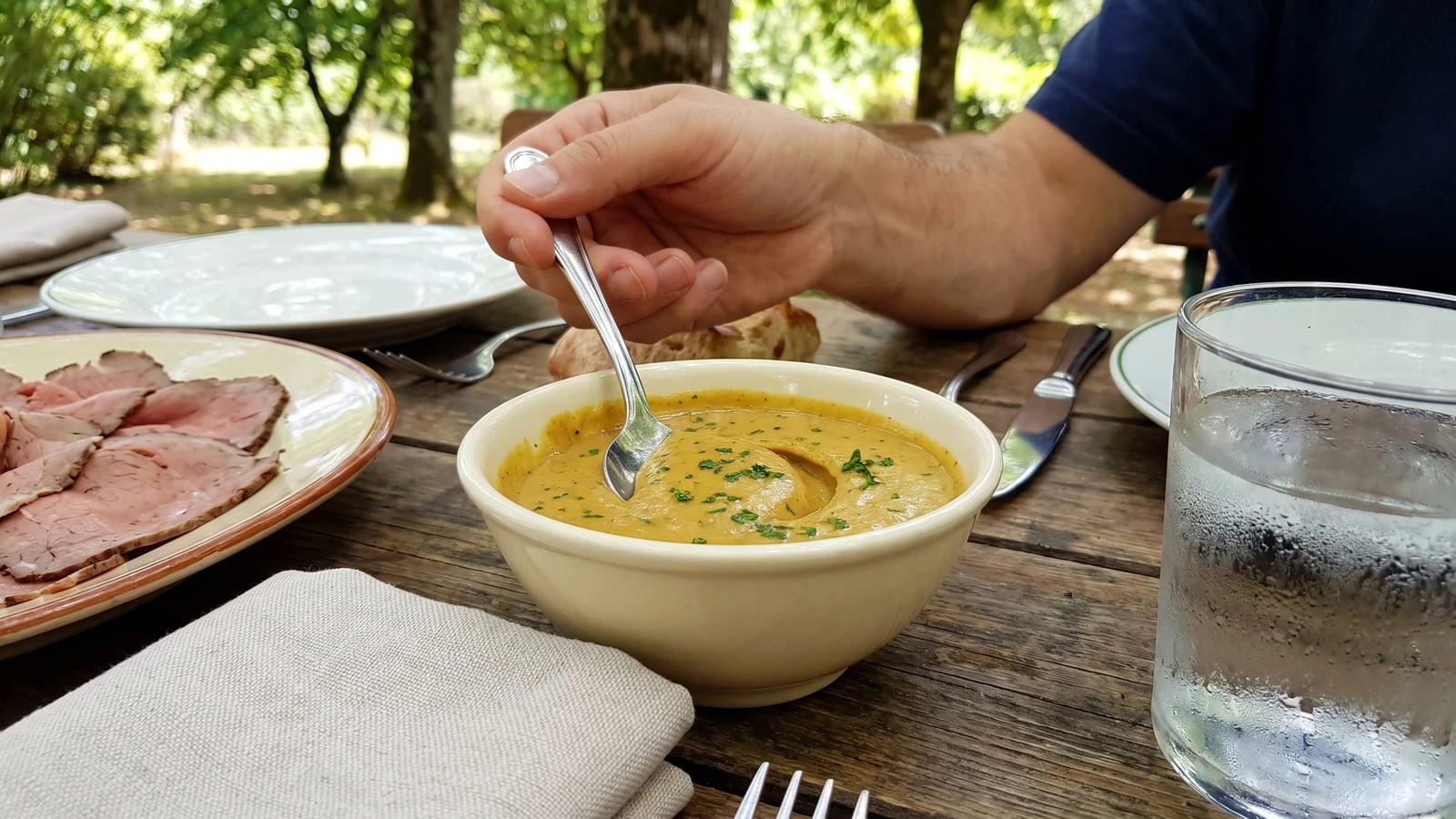
Finished properly, Sauce Cambridge is dense and satin-smooth, mustard-ochre with fresh green parsley running through it, followed by the saline depth of anchovy and caper. It should cling generously to a slice of cold meat rather than run across the plate. Before the first drop of oil goes in, make certain no chalky crumb of yolk remains.
Sauce Cambridge belongs to the French classical repertory of cold sauces shaped around Anglo-French dining tables in London and Paris, rather than to an old household tradition specific to Cambridge. Its classical source calls it an Anglicised version of Sauce Vincent: the fresh-herb character remains, while hard-cooked yolks, anchovy, capers, and mustard give Cambridge greater savor and firmness beside cold meats. It is a derivative by technique and family resemblance, not one of the foundational mother sauces itself.
Quantity
3
hard-boiled and cooled; yolks only
Quantity
2 fillets (about 8 g)
rinsed and dried
Quantity
1/2 teaspoon (2.5 ml / 2 g)
drained and dried
Quantity
1 teaspoon (5 ml / 1 g) total
finely chopped and mixed in roughly equal proportions
Quantity
1 1/2 teaspoons (7.5 ml / 8 g)
Quantity
3 tablespoons plus 2 1/2 teaspoons (57 ml / 52 g)
Quantity
1 1/2 teaspoons (7.5 ml / 7.5 g)
Quantity
1 small pinch (about 1/32 teaspoon / 0.05 g)
Quantity
1/2 teaspoon (2.5 ml / 0.5 g)
finely chopped
| Ingredient | Quantity |
|---|---|
| large eggshard-boiled and cooled; yolks only | 3 |
| salt-cured anchovy filletsrinsed and dried | 2 fillets (about 8 g) |
| capersdrained and dried | 1/2 teaspoon (2.5 ml / 2 g) |
| fresh chervil, tarragon, and chivesfinely chopped and mixed in roughly equal proportions | 1 teaspoon (5 ml / 1 g) total |
| smooth Dijon mustard | 1 1/2 teaspoons (7.5 ml / 8 g) |
| neutral oil, such as grapeseed or sunflower | 3 tablespoons plus 2 1/2 teaspoons (57 ml / 52 g) |
| white wine vinegar | 1 1/2 teaspoons (7.5 ml / 7.5 g) |
| cayenne pepper | 1 small pinch (about 1/32 teaspoon / 0.05 g) |
| fresh parsleyfinely chopped | 1/2 teaspoon (2.5 ml / 0.5 g) |
Put the eggs in a small saucepan and cover them with cold water by 1 inch (2.5 cm). Bring the water just to a boil, cover the pan, remove it from the heat, and leave the eggs for 11 minutes. Transfer them immediately to cold water. Once completely cool, peel the eggs, remove the yolks, and pat the yolks dry; reserve the whites for another meal.
Combine the yolks, anchovies, capers, chervil, tarragon, and chives in a sturdy mortar or small food processor. Pound or process them patiently, scraping the sides often, until they form a fine, cohesive paste with no visible crumbs of yolk. This smooth foundation is the step that decides the sauce. Oil added to a lumpy paste only coats the lumps; it cannot remove them.
Reserve 1/2 teaspoon of the measured vinegar, then beat the mustard into the yolk paste. Add the oil a few drops at a time at first, whisking or processing until each addition disappears before the next goes in. Once the paste has taken the first tablespoon confidently, continue in a very thin thread. Beat in the remaining 1 teaspoon vinegar after all the oil has been absorbed. If the sauce loosens and free oil shines on its surface, stop. Ça se rattrape: put the reserved vinegar in a clean bowl and whisk in the broken sauce one teaspoon at a time until it becomes smooth again. If no rescue is needed, whisk the reserved vinegar into the finished emulsion.
Work in the cayenne, then press the sauce firmly through a fine-mesh sieve with the back of a spoon or a flexible spatula. Keep pressing until only a thin fibrous film remains. The old cloth tammy can leave the kitchen, but this refining step must stay: it removes anchovy fibres, caper skins, and stubborn yolk grains, giving Sauce Cambridge its close, satin texture.
Scrape the sieved sauce into a cold bowl and whisk it briskly for 30 seconds to smooth and lighten it, then stir in the chopped parsley. Chill for at least 30 minutes before serving. Taste before reaching for salt, because the anchovies, capers, and mustard usually provide enough. Serve beside cold sliced beef, veal, lamb, ham, or tongue. À table!
1 serving (about 33g)
Culinary guides, cultural storytelling, and the editorial depth that makes cooking meaningful.
Discover Culinary ExplorerChef Juliette
Beef shin, lean beef, and fowl begin in cold water and rise slowly toward a tremble. Skim before the boil, and you learn the quiet discipline that gives every clear French broth its backbone.
Chef Juliette
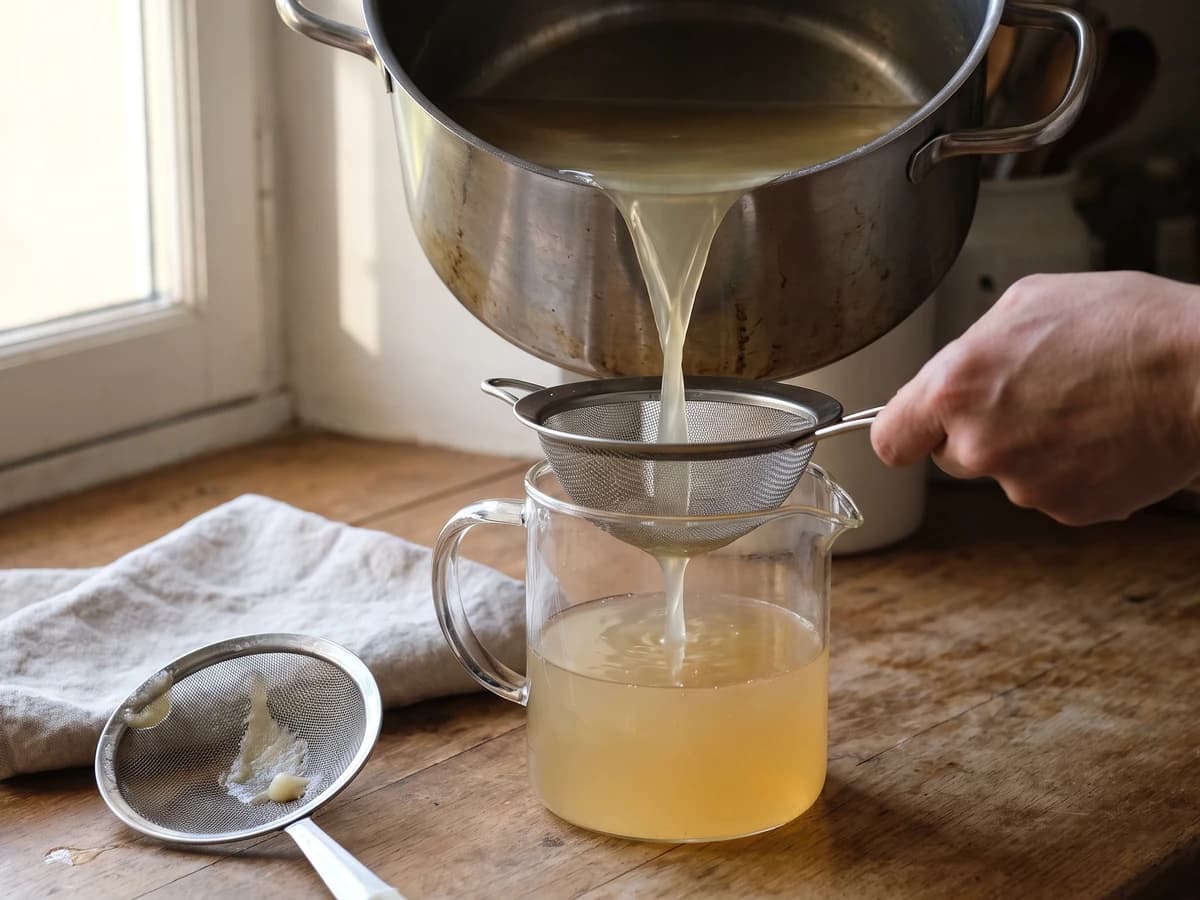
Break the veal bones small, then give them eight hours at a bare tremble. This pale, gelatinous fond becomes the quiet foundation beneath velouté, blanquette, and every sauce that must stay light.
Chef Juliette
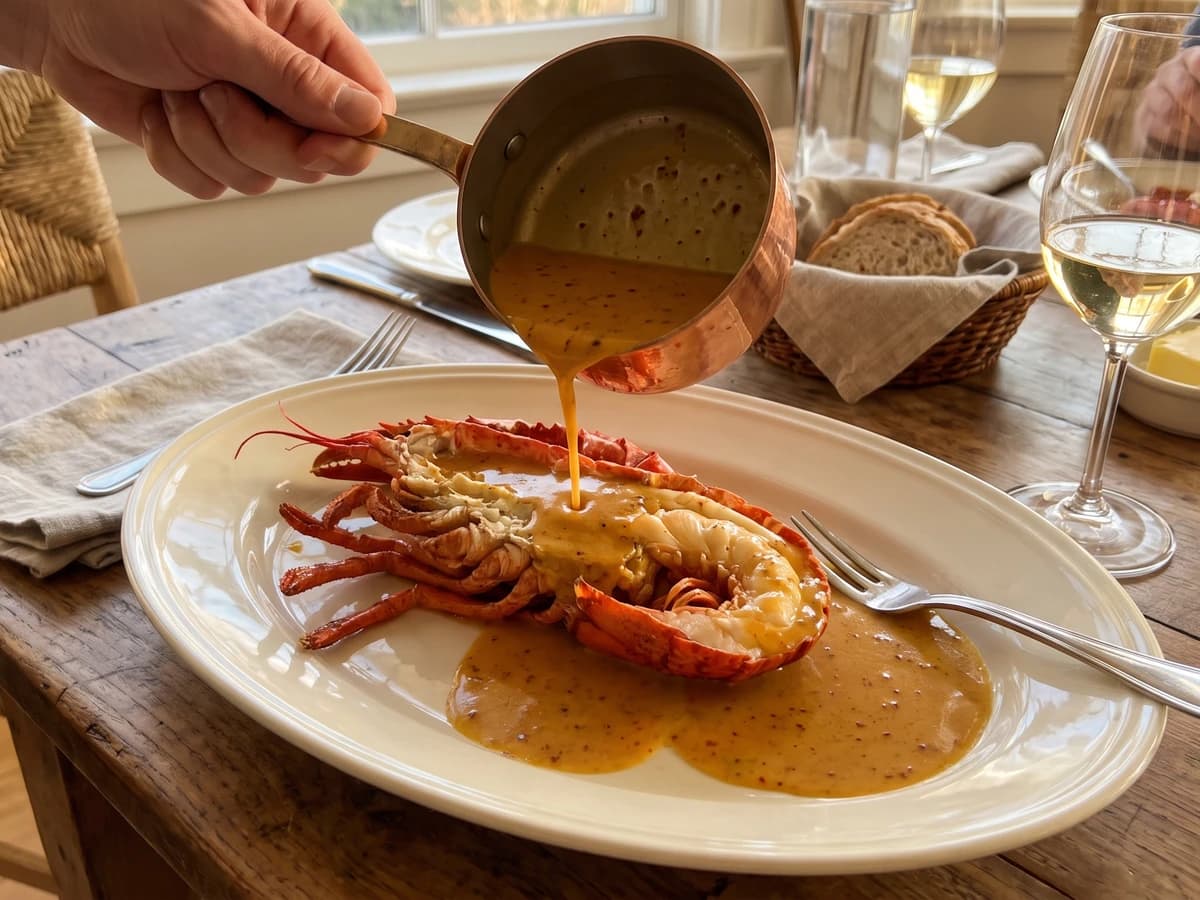
Sauce Orientale concentrates lobster-rich American Sauce with curry, then folds in cream away from the fire: a glossy, gently spiced derivative made for lobster, crayfish, and firm fish.
Chef Juliette
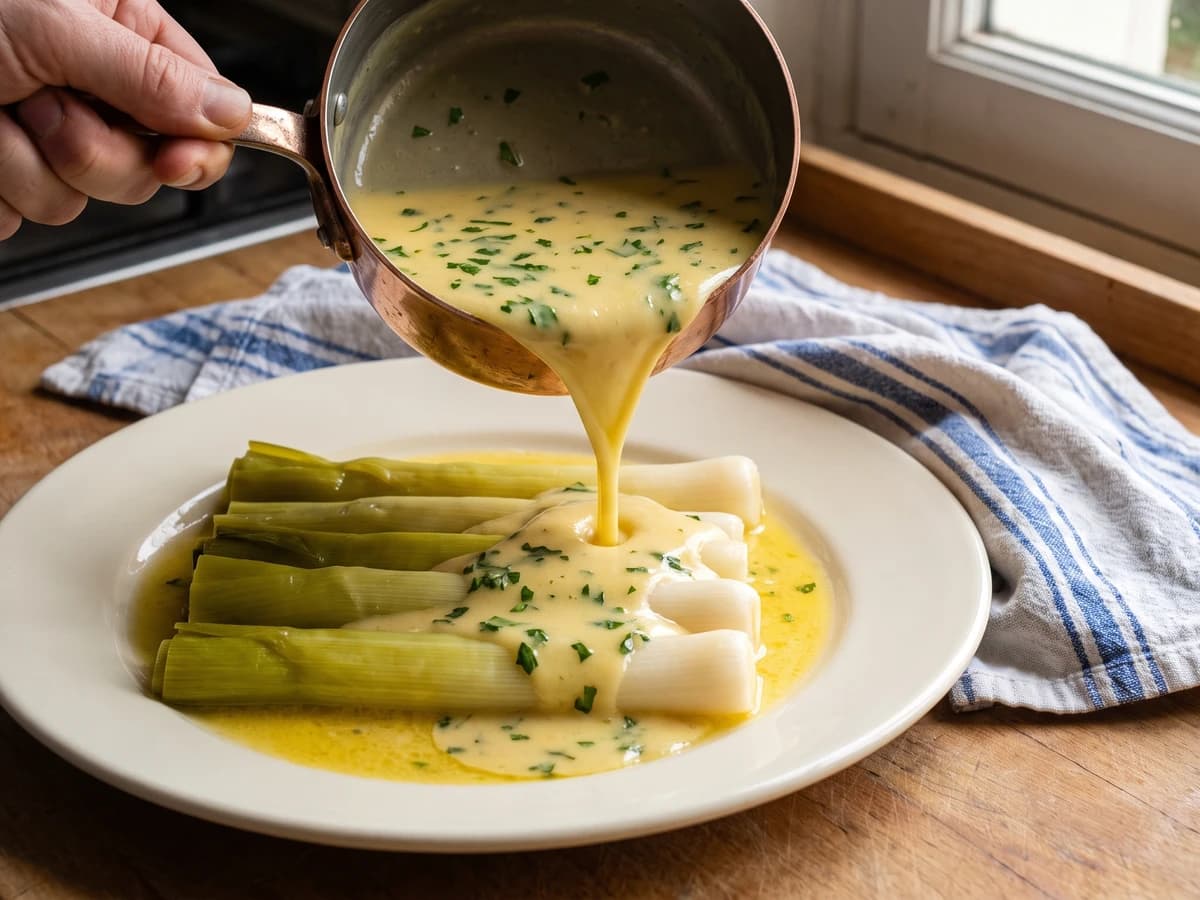
An old lesson in sauce families: Sauce Allemande takes mushroom liquor, then butter, lemon, and parsley, becoming a glossy Poulette for sheep's trotters, leeks, cauliflower, and anything needing gentle richness with a bright edge.